
I tested a range of notebooks for durability, paper quality, and everyday practicality. Here are the ones I reach for at work, travel, and in the field.
I rely on notebooks as much as I rely on my tools — they need to survive meetings, travel, and sometimes bad weather. Over weeks of hands-on use I focused on paper weight, binding, pockets, and portability.
This roundup covers everything from a five-subject, office-ready spiral to pocket-sized weatherproof pads. I’ll tell you where each shines and where it falls short so you can match one to how you actually work.
I compared these notebooks by paper performance (bleed, ghosting, and fountain-pen friendliness), construction (covers, binding, pockets), and practical features (app compatibility, page perforation, size). Where the maker touted sustainability or special finishes, I tested handling and day-to-day durability to confirm it.
1. Five Star 5-Subject Spiral Notebook (6-Pack, College Ruled, 200 Sheets) – Best Overall
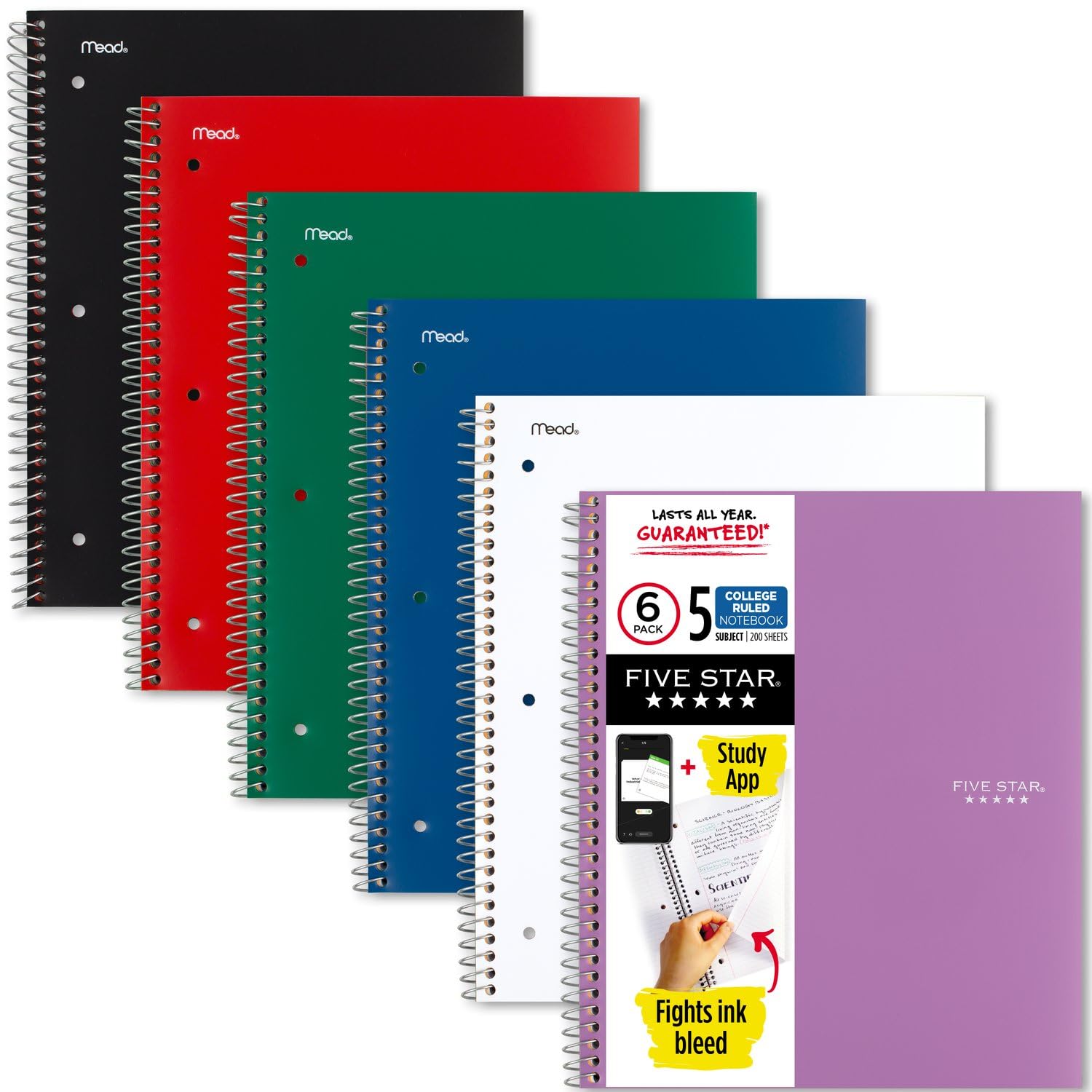
A year-ready, organization-first spiral notebook with five sections, sturdy pockets, and app scanning support.
Why I picked it: Massive page count, five-subject dividers, and durable cover for daily office use.
Best for: People who need one book to hold multiple projects and handouts.
Strong value for an all-in-one, multi-subject kit.
Pros
- Five subject dividers with pockets
- 200 double-sided college-ruled sheets
- Perforated neat-sheet tear-out
- Water-resistant cover
- Compatible with a study/scan app
Cons
- Large and bulky to carry
- Spiral can snag light fabrics
My take
I keep this Five Star on my desk when I need a single notebook to cover multiple projects. The five dividers with two pockets each let me separate client notes, meeting minutes, project to-dos, and reference materials without carrying several books.
The paper feels substantial for a spiral: ink doesn’t bleed easily and the perforated pages tear out cleanly when I hand something in. I also appreciate the water-resistant cover — it protected my notes when a coffee mishap hit my bag.
The scanner/flashcard app integration is genuinely useful for digitizing key pages and syncing them to Google Drive; I’ve used it to archive meeting notes and avoid rewriting actions into my task manager.
If you commute on foot or bike, be aware the full-size 8.5 x 11 format and the thick pack can be bulky. The spiral lock wire helps prevent snags, but I still treat it as a desk-first notebook rather than a pocket companion.
2. Lemome Thick Classic Notebook with Pen Loop (A5, 180 Pages, Hardcover) – Best Hardcover Journal
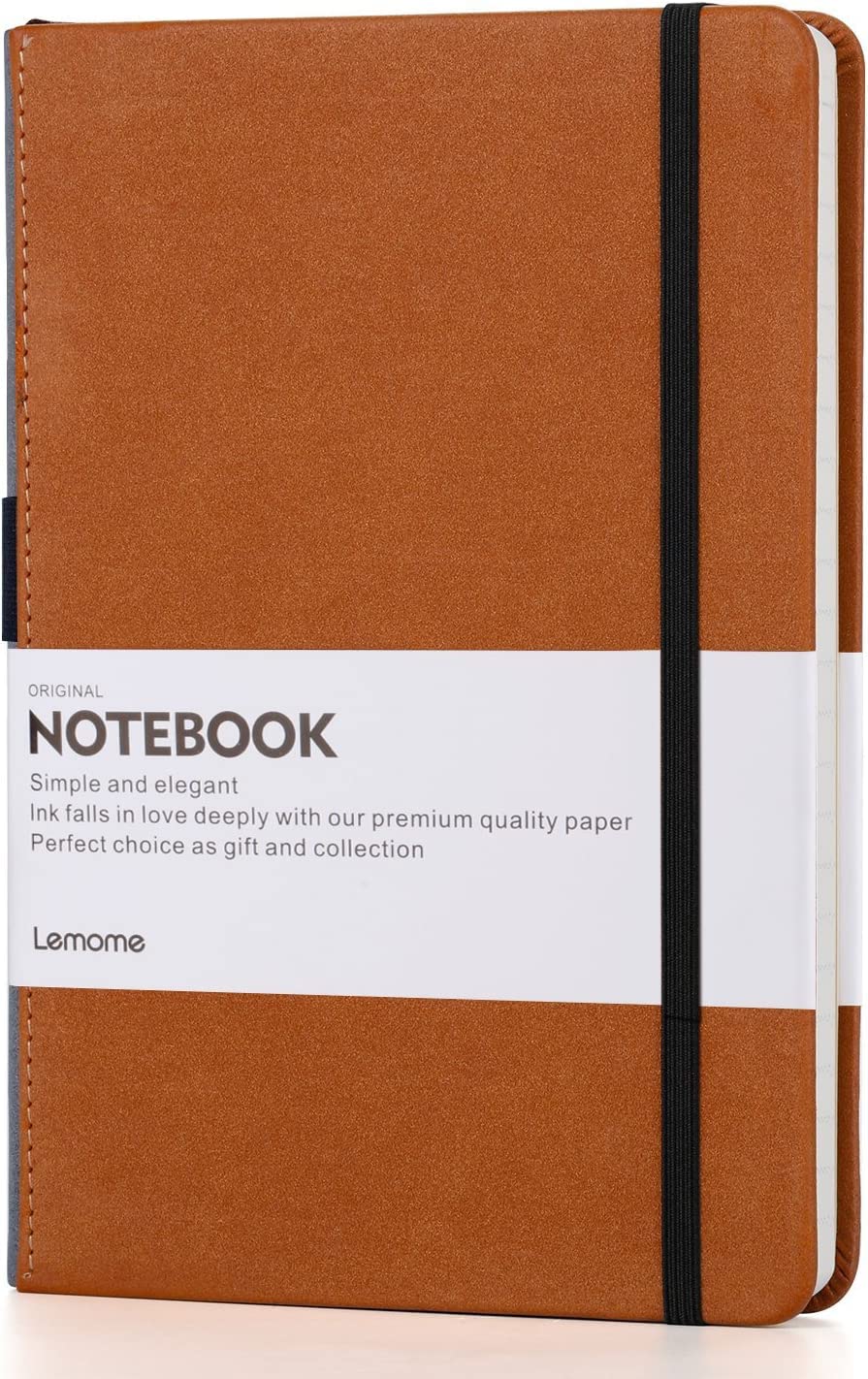
A classic A5 hardcover journal that lies flat, with thick paper, pen loop, pocket, and dividers.
Why I picked it: Lay-flat binding, sturdy cover, and a convenient spine pen loop.
Best for: Meeting notes, travel journaling, and daily planning.
Solid midrange pick for a durable hardcover journal.
Pros
- Hardcover that lies flat
- Elastic band keeps it closed
- Pen loop integrated into spine
- Internal pocket for receipts
- 180 pages of thicker paper
Cons
- Not as fountain-pen friendly as heavier paper
- No numbered pages or index
My take
I reached for the Lemome when I wanted a professional-looking A5 that would survive the commute and sit open on my desk. The hardcover is durable and the notebook really does lie flat, which makes note-taking in meetings much less fiddly.
The pen loop inserted into the spine is a small design win — my pen stays docked in a predictable place rather than flopping off the cover edge. I keep business cards and receipts in the internal pocket and use the included dividers to mark active projects.
Paperweight and feel are comfortable for everyday pens and pencils. If you write with heavy fountain pens you’ll want something thicker, but for ballpoints and gel pens this notebook is a dependable daily companion.
3. Minimalism Art Premium Hard Cover Notebook (5 x 8.3 in, 120gsm Dotted, 122 Pages) – Best for Bullet Journaling
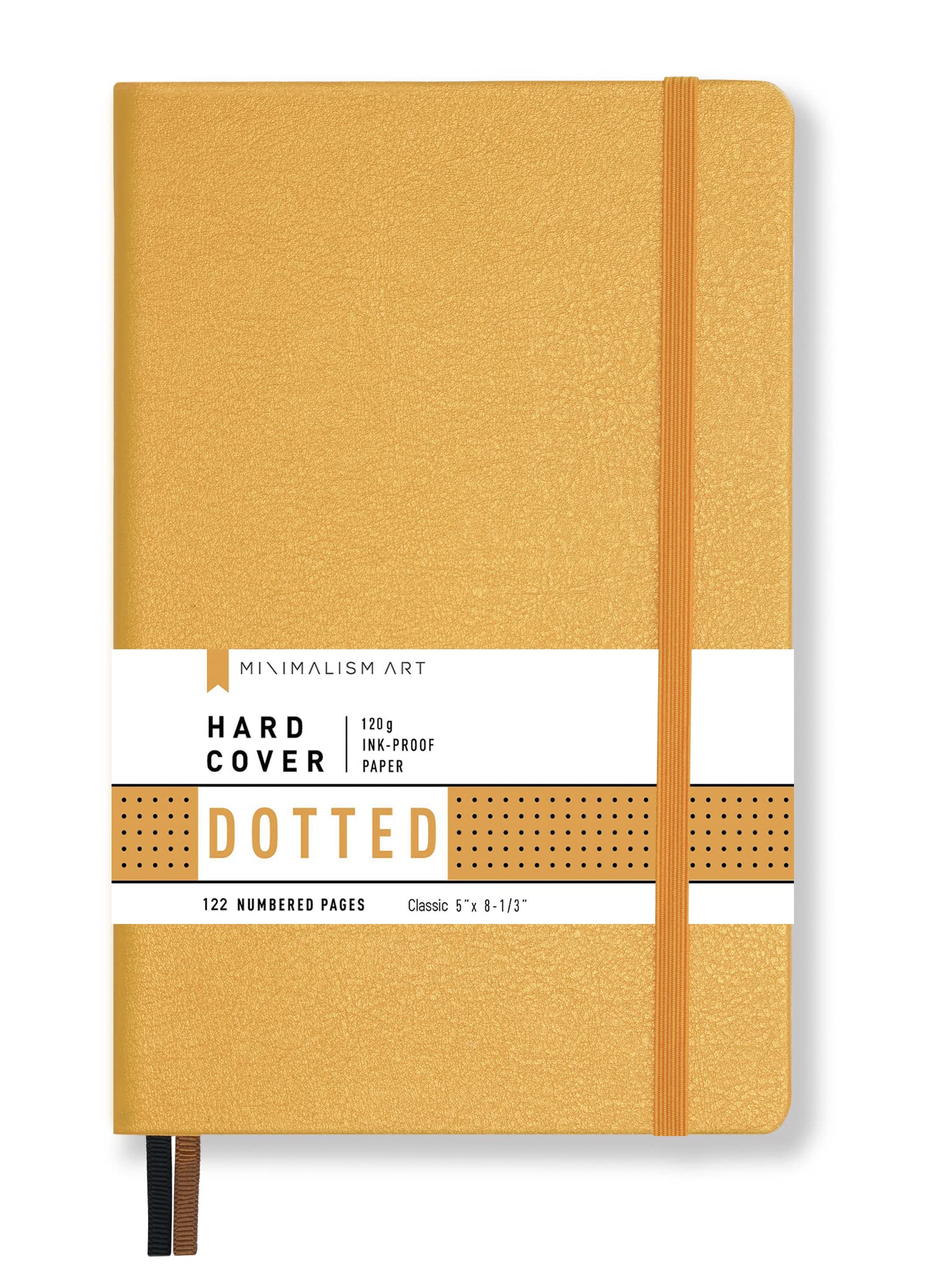
A compact, well-appointed dotted notebook with thick 120gsm paper, numbered pages, and a table of contents.
Why I picked it: 120gsm ink-proof paper and numbered pages make structured bullet journaling easy.
Best for: Bullet journaling, sketching, and idea capture on the go.
Affordable option with premium paper for creative work.
Pros
- 120gsm thick, ink-proof paper
- Numbered pages and table of contents
- Ribbon bookmark and inner pocket
- Durable thread-bound cover
Cons
- Fewer pages than larger journals
- Small size limits long-form notes
My take
I bought this Minimalism Art notebook specifically for bullet journaling and appreciated how the 120gsm paper handled pens — gel pens showed only minimal ghosting and fountain pen feathering was reduced.
Numbered pages plus a built-in table of contents saved me time when I needed to find a past spread. The dots are subtle enough that they guide layouts without dominating the page.
Its compact footprint makes it a grab-and-go journal for ideas and habit tracking. If you want something to last all year, consider its 122-page capacity, but for monthly or project journals it’s perfectly suited.
4. Dingbats* Wildlife Lined Journal (A5, Vegan Leather, 100gsm, 192 Pages) – Best Eco-Friendly Hardcover
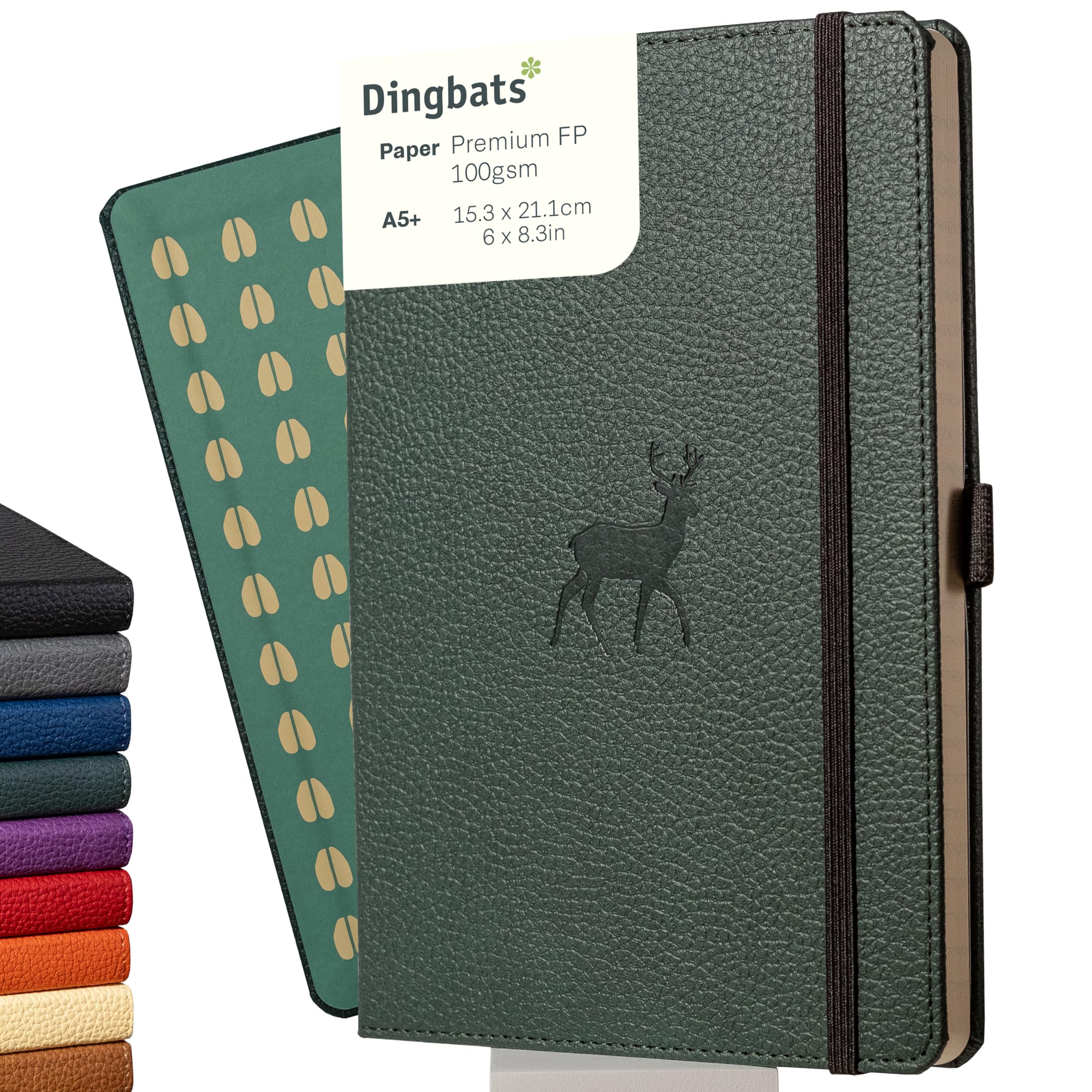
A vegan leather A5 notebook with cream 100gsm pages, micro-perforation, and eco-conscious sourcing.
Why I picked it: Fountain-pen-friendly 100gsm paper and thoughtful, sustainable construction.
Best for: Fountain-pen users and anyone who values sustainable materials.
A higher-end feel with eco credentials and quality paper.
Pros
- 100gsm paper great for fountain pens
- Vegan leather hardcover
- Micro-perforated pages
- Pen holder and inner pocket
Cons
- Slightly heavier than similar A5 notebooks
- Limited color choices in some markets
My take
I keep a Dingbats notebook for notes I want to last. The 100gsm cream paper is smooth and almost fountain-pen friendly — I’ve had no bleeding or feathering with my everyday pens and light-filling fountain nibs.
The vegan leather cover has a pleasant texture and survives daily handling without marking badly. I like the included pen holder and the micro-perforated pages when I need to remove a clean sheet.
Beyond feel, the sustainability angle resonated with me: FSC certification and environmentally conscious sourcing fit my preference for notebooks that are both tactile and responsibly made.
5. Rite in the Rain Weatherproof Top Spiral Notebooks (3 x 5, Tan, 3-Pack) – Best for the Field
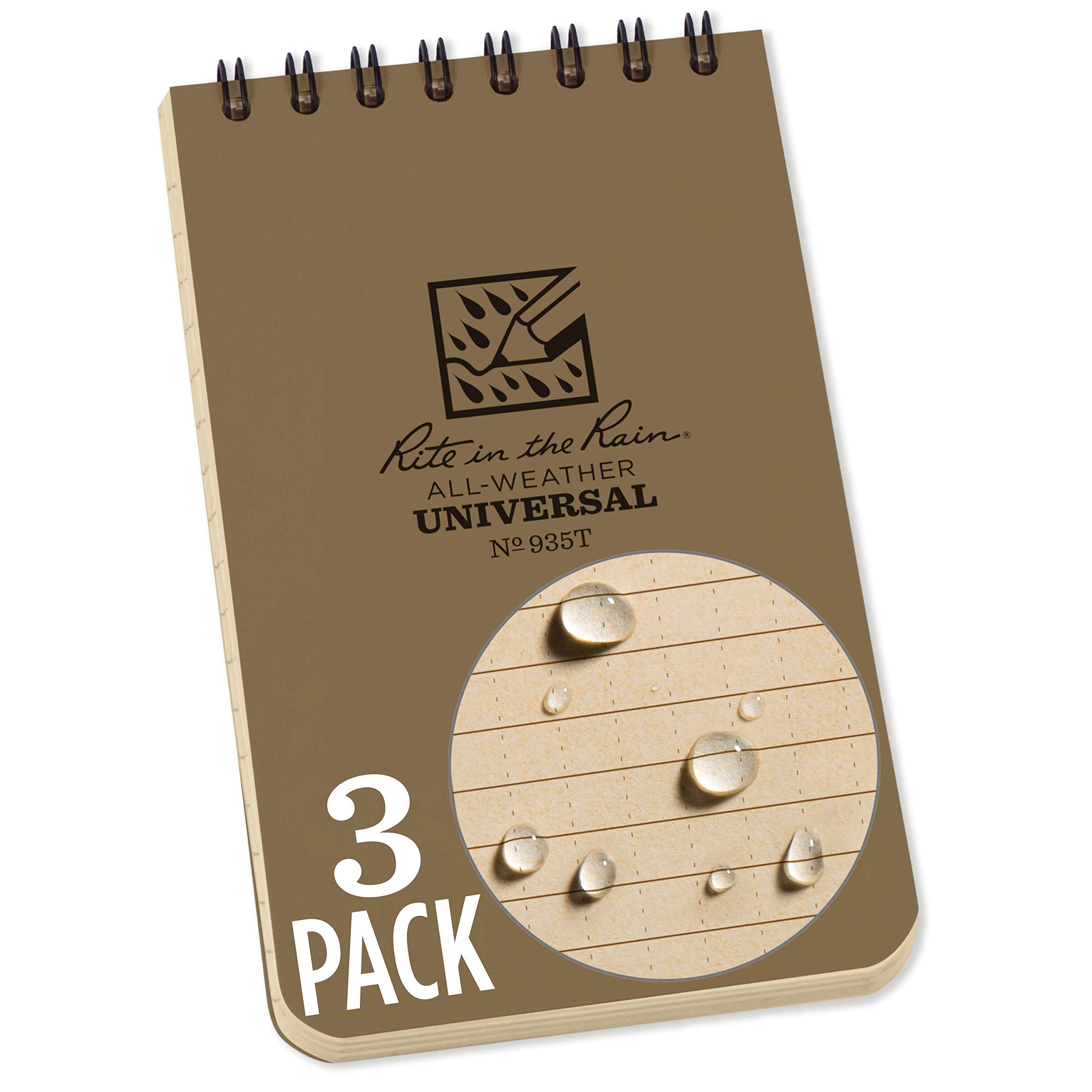
Compact, field-ready top-spiral notebooks with waterproof paper that survives rain, mud, and sweat.
Why I picked it: True all-weather paper that stays legible when wet and carries easily in a pocket.
Best for: Outdoor work, field notes, and any situation where weather is unpredictable.
Specialized, worth the extra for weatherproof reliability.
Pros
- All-weather, water-repellent paper
- Compact pocket-friendly size
- Impact-resistant Wire-O binding
- Polydura protective cover
Cons
- Not compatible with gel pens when wet
- Different writing feel than regular paper
My take
I carry a Rite in the Rain pad on outdoor jobs and it consistently performs – rain, mud, or sweat, notes stay legible. When wet the paper accepts a pencil or an all-weather pen without turning to pulp.
The tan, non-glare pages are surprisingly readable in bright sunlight and the Wire-O binding resists deformation in a back pocket. I put one under running water to test it and still wrote cleanly afterward.
This isn’t a daily-desk replacement if you prefer fountain pens or highlighters, but for fieldwork where exposure is likely, it removes the worry of losing notes to the elements.
6. RETTACY Graph Grid Paper Notebook (2-Pack, A5, 100gsm, 192 Pages per Pack) – Best for Technical Work
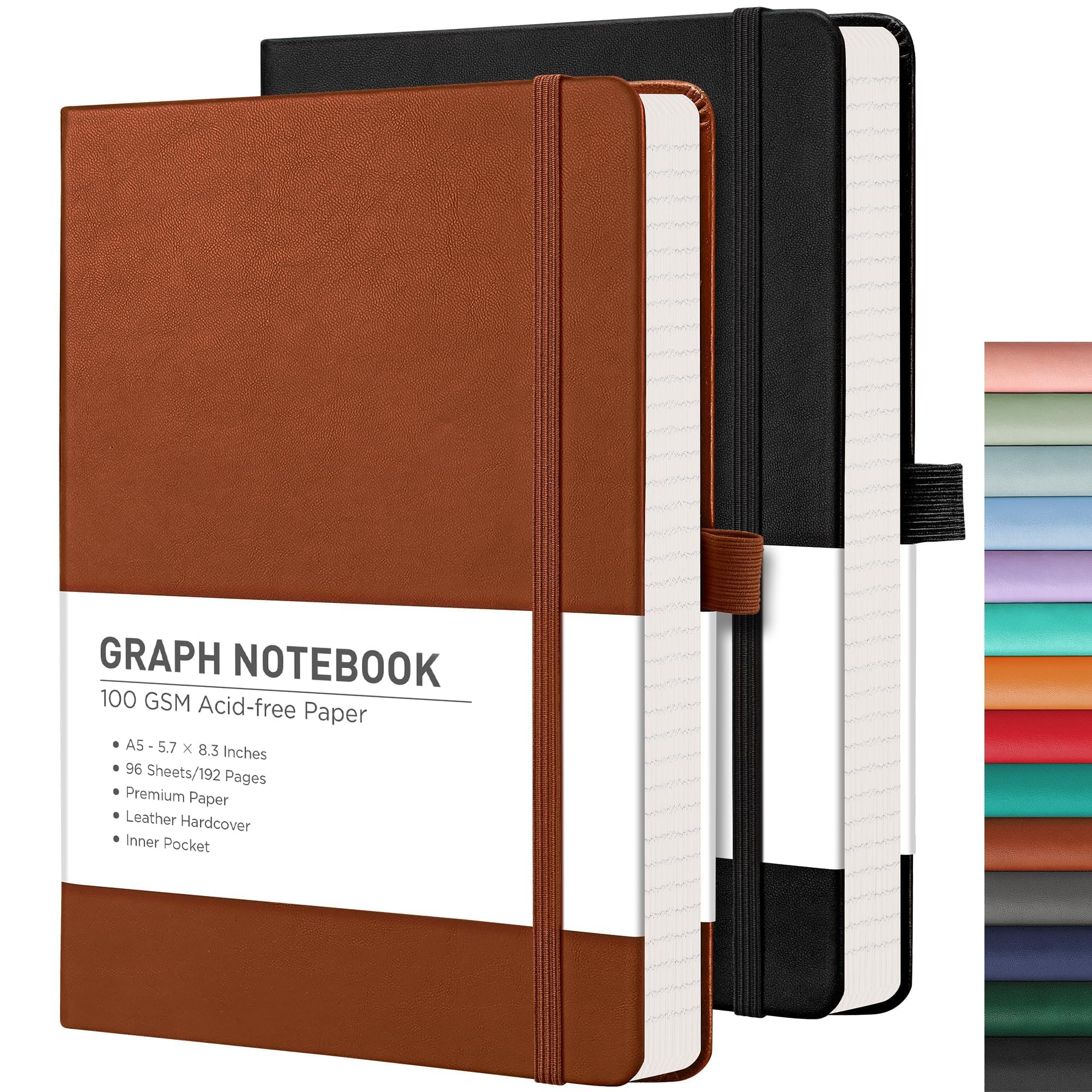
A two-pack of A5 grid notebooks with 100gsm paper, leather hardcover, and practical accessories like stencils.
Why I picked it: Thick 100gsm grid paper and durable cover ideal for math, sketches, and technical notes.
Best for: Students, engineers, and anyone who needs precise grids and heavy paper.
Good value for a 2-pack of sturdy, technical notebooks.
Pros
- 100gsm thick, grid paper
- Leather hardcover for daily wear
- Elastic band and two bookmarks
- Includes drawing stencils
Cons
- Binding could be more flexible
- Covers show fingerprints
My take
I use the RETTACY grid books when I sketch diagrams and draft charts. The 100gsm paper handles fine liners and heavier pens with minimal ghosting, and the grids keep line work tidy.
The pair format is convenient — one becomes my current lab notebook, the other an archive. I also appreciated the small stencils tucked in the pocket; they’re handy for on-the-fly symbols and neat layout work.
If you prefer ultra-flexible bindings, these feel a touch rigid at first, but they hold up well to daily bag travel and the leather-like hardcovers protect the pages effectively.
How I Choose Notebooks for Work
Paper weight and ink behavior
I always check paper gsm and test pens I actually use. Thicker paper (100–120gsm) resists bleed and ghosting; 120gsm is ideal for fountain pens and heavy markers.
If you need notes to survive wet conditions, waterproof paper (like Rite in the Rain) is the only reliable option.
- 100–120gsm: great for fountain pens and markers
- 70–90gsm: fine for ballpoints and pencils
- Waterproof paper: use pencils or all-weather pens when wet
Binding and format
I choose binding based on where I’ll use the notebook. Spirals are easy for full-sheet tear-out and multi-subject layouts; thread-bound or hardcover journals lay flat and feel professional.
Pocket-sized top-spirals are perfect when mobility matters; A5 is my go-to for a balance between portability and writing space.
- Spiral: easy page removal, bulky in backpacks
- Thread-bound/Hardcover: durable, lies flat, professional
- Top-spiral: best for pocket and field use
Extras that matter
Pockets, pen loops, and app integration can make a notebook a workflow tool rather than just paper. I pick items with useful extras I’ll actually use, like pocket dividers or a ribbon bookmark.
Sustainability can be a deciding factor for long-term use—FSC certification and recyclable materials matter to me.
- Pockets: hold receipts and reference sheets
- Pen loop/bookmark: reduce time hunting for tools
- App scan support: quick digitization of key notes
Frequently Asked Questions
Which notebook here is best for fountain pens?
I recommend the Dingbats* Wildlife or the Minimalism Art for fountain-pen-friendly paper. Dingbats uses 100gsm cream paper that handled my nibs without bleed, while Minimalism Art’s 120gsm stock is even more resistant to feathering and bleed-through.
Can I use any of these notebooks for bullet journaling?
Yes — I prefer the Minimalism Art dotted notebook for bullet journaling because of its numbered pages and table of contents. The RETTACY grid books also work well if you prefer grids for trackers and charts.
Are any of these notebooks truly weatherproof?
Rite in the Rain is the one I reach for in the field — its wood-based, water-repellent paper survives rain, mud, and sweat. Keep in mind it requires pencils or all-weather pens when wet.
Final Take
I keep multiple notebooks in rotation: a multi-subject Five Star for heavy desk work, a Dingbats or Lemome for polished, daily journaling, and a Rite in the Rain for anything outdoors. Choose the one that matches how you write and where you carry it.
If you want a single recommendation: pick the notebook that fits your primary use — office organization, fountain-pen writing, field durability, or precise technical work — and you’ll end up with a tool that makes your day easier.
