
I tested compact fabric dressers and storage towers that work in nurseries, closets, and small bedrooms. I looked for sturdy frames, roomy fabric bins, easy assembly, and a stable wood top for nightlight or decor.
I tried a group of compact fabric dressers so I could recommend storage that actually fits tight nursery spaces and still looks good. My focus was on units with steel frames, removable fabric drawers, and a hard wood top I felt comfortable using for a lamp or baby monitor.
Across these options I concentrated on footprint, drawer depth, and real-world stability—so you can pick a dresser that organizes onesies, diapers, toys, and linens without taking over the room.
These dressers trade the heavy permanence of wood for lighter portability and lower cost. If you need maximum drawer count and flexible layout, the 9-drawer Sorbus units give me the most cubbies. If space is the constraint, the mDesign narrow tower fits in a tight gap and still holds plenty. The 5- and 6-drawer Sorbus pieces strike a middle ground between capacity and tabletop surface.
1. Sorbus 6-Drawer Fabric Dresser – Best Overall
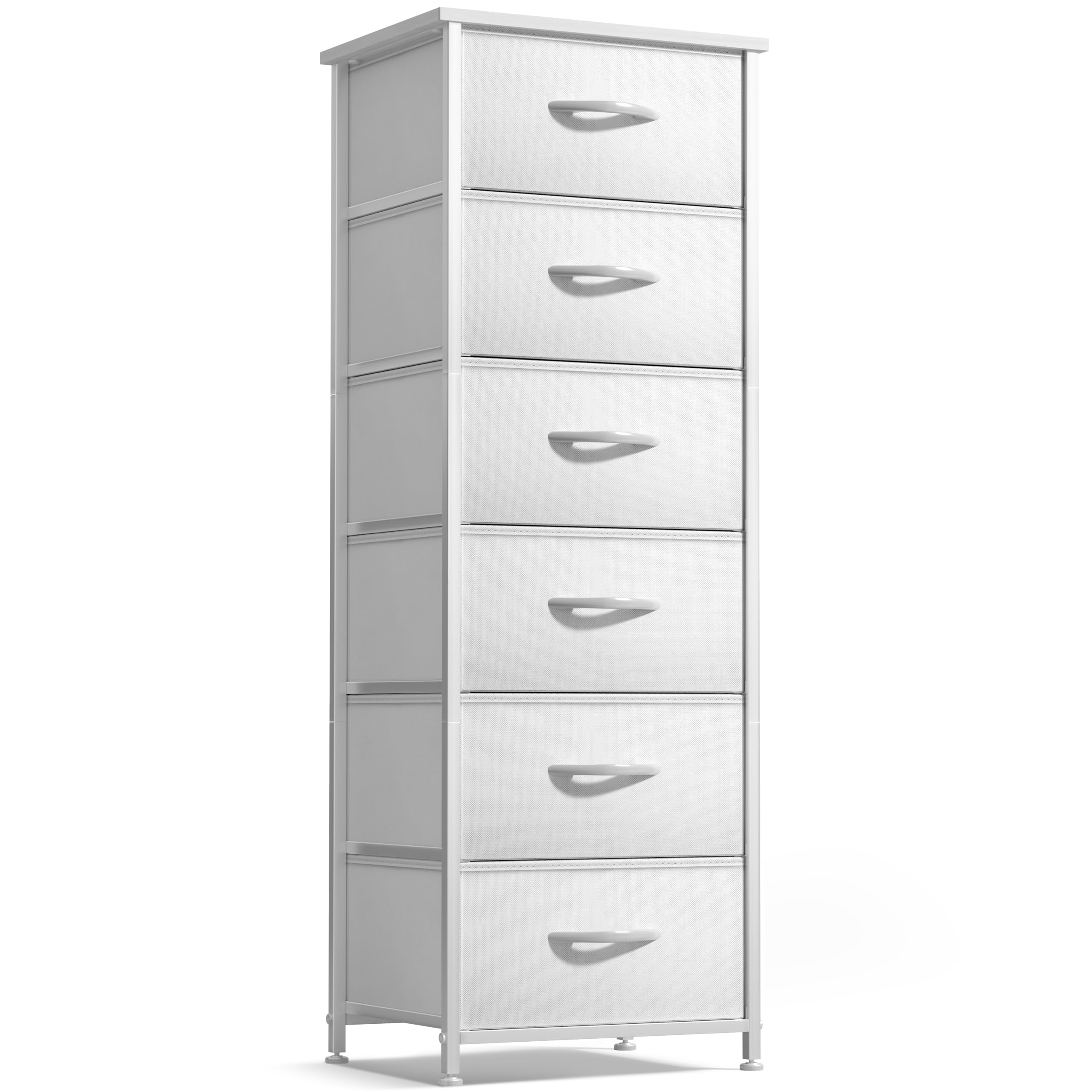
I like this six-drawer Sorbus for overall balance: it has a sturdy steel frame, a wipe-clean wood top, and six roomy fabric drawers that handle nursery basics without crowding the room.
Why I picked it: Six drawers give flexible sorting and the wood top is solid for a lamp or monitor.
Best for: Nurseries that need compact, multi-bin storage and a usable tabletop.
Budget-friendly, great value for the features included.
Pros
- Six roomy drawers for organized storage
- Sturdy steel frame and wood waterproof top
- Easy, fast assembly
- Smooth drawer action with durable handles
Cons
- Fabric drawers can lose shape if overloaded
- Not as heavy-duty as solid-wood dressers
My take
I assembled this unit in minutes and appreciated how the frame lined up—no wrestling parts. The wood top wipes clean and feels solid enough to hold a lamp and baby monitor without flexing.
The drawers are roughly eight inches deep and I could fit folded onesies, sleepers, and small toys comfortably. Handles feel sturdy; I don’t worry about them ripping out with normal use.
I’ve kept heavier items on the bottom drawer to reduce wobble and recommend anchoring the unit to the wall if kids will be in the room. For the price and footprint, this is the most practical dresser I reached for most days.
2. mDesign 4-Drawer Narrow Storage Tower – Best Slim
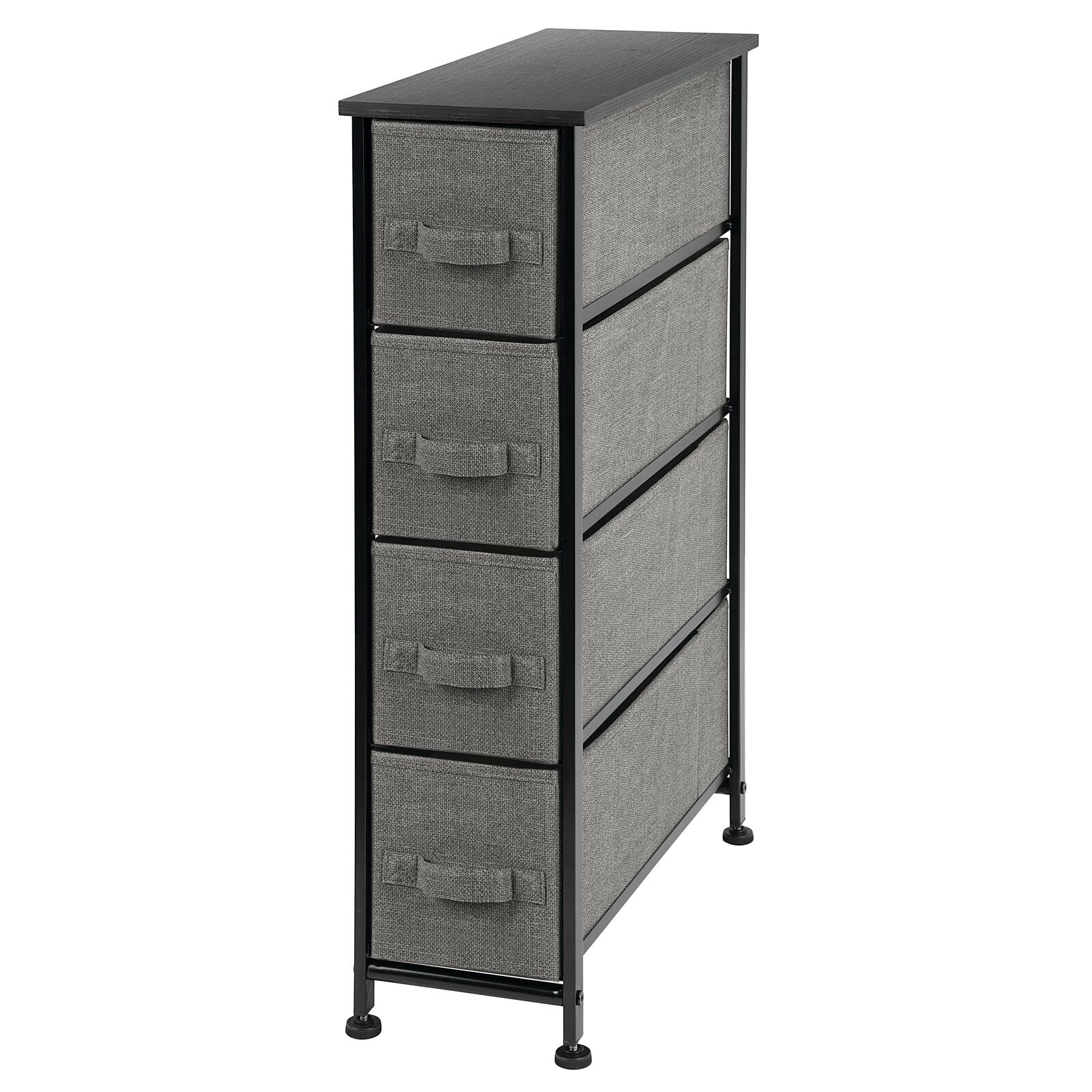
When space is tight I picked the mDesign slim tower. It fits narrow gaps, offers a solid MDF top, and the adjustable plastic feet helped level it on uneven floors in my apartment.
Why I picked it: Ultra-slim footprint that still delivers deep, removable drawers.
Best for: Tight spaces between bed and wall, bathrooms, or narrow closets.
Affordable and space-smart option.
Pros
- Very narrow footprint for tight gaps
- Deep removable drawers for folded items
- Adjustable feet for stability
- Quick assembly with included hardware
Cons
- Canvas drawers can bulge with heavy loads
- Too shallow for tall bottles or large items
My take
I slid this unit into a skinny space between my bed and wall and it fit perfectly where other pieces wouldn’t. The wood top is useful for a clock and phone.
Assembly was straightforward; I left screws slightly loose until everything aligned, then tightened them—this made the process painless. The included board inserts help the drawers keep their shape.
The drawers hold towels, folded pajamas, and small supplies effectively. I would avoid storing very heavy or bulky items in the top drawers to prevent bulging.
3. Sorbus 9-Drawer Fabric Dresser – Best Large Storage
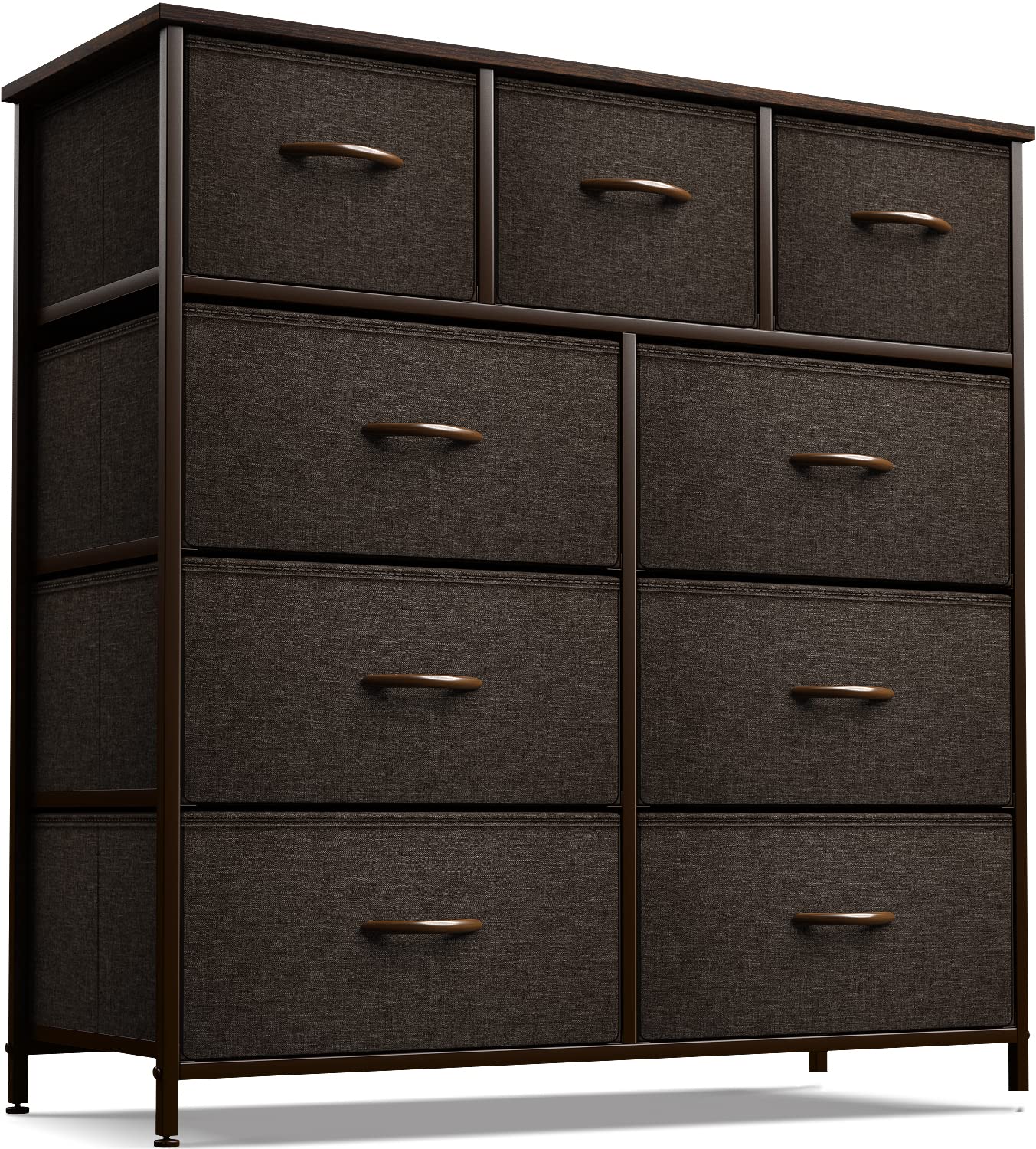
I reached for the nine-drawer Sorbus when I needed the highest drawer count for organizing small clothing items across categories and rooms.
Why I picked it: Plenty of cubbies for dividing socks, underwear, pajamas, and accessories.
Best for: Homes that need many small bins rather than few deep drawers.
Good value if you want maximum compartments.
Pros
- Nine separate drawers for detailed organization
- Removable, foldable bins for flexible storage
- Lightweight and easy to move
- Wood top gives a hard surface
Cons
- Can be slightly wobbly under heavy top loads
- Initial factory smell may need airing out
My take
I used this in a closet and loved how many separate bins I had for tiny items—everything from socks to hair accessories has its own home now.
The drawers fold flat when not needed, which made storage before assembly easy. The metal frame and top give it a cleaner look than many fabric-only cubes.
It’s lighter than a conventional dresser, so I don’t treat it like a piece of heavy furniture. I anchored it to the wall when I used the top for a small flatscreen, and that solved any wobble I noticed.
4. Sorbus 9-Drawer Tie-Dye Dresser – Best Colorful
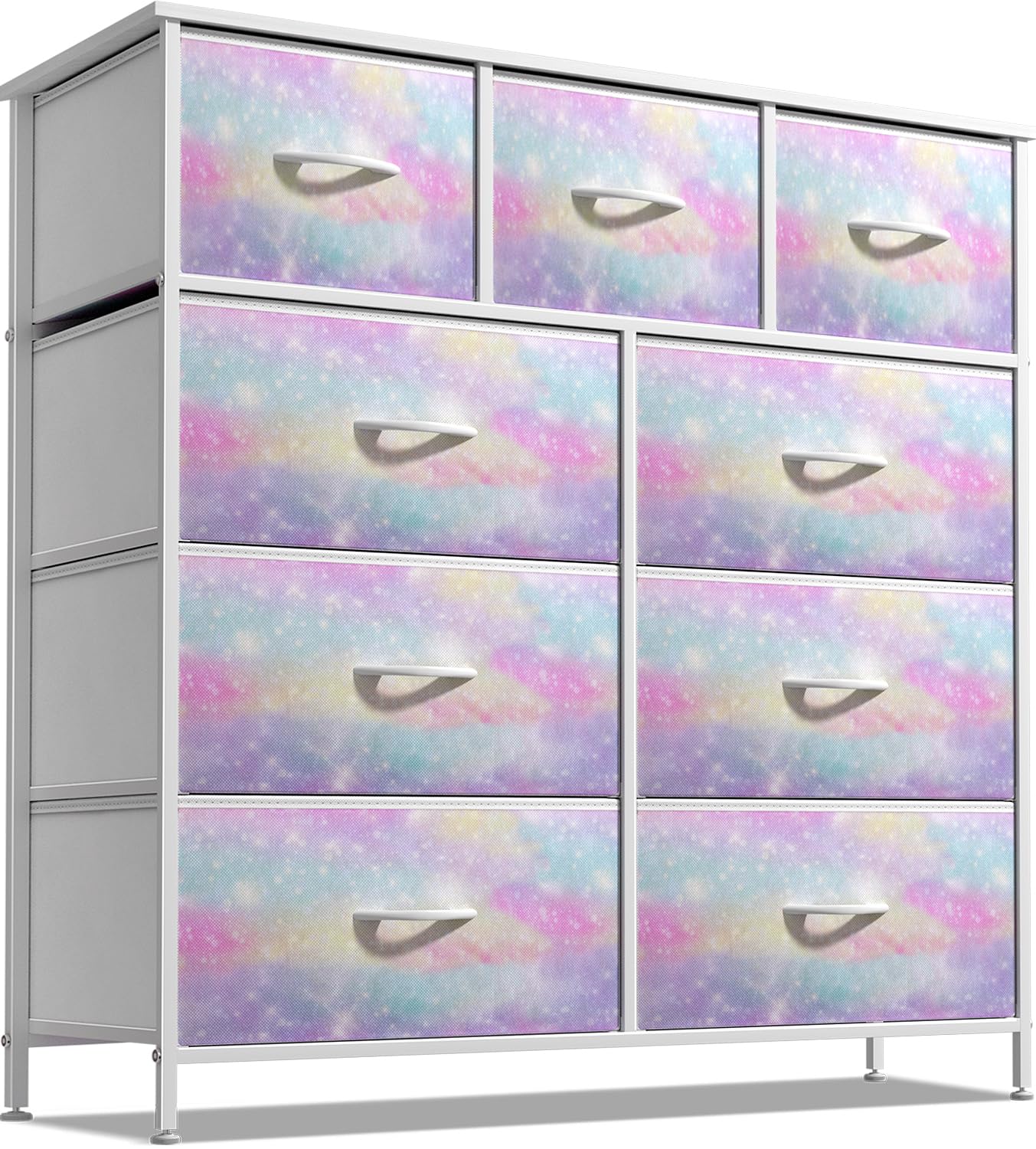
I picked the tie-dye Sorbus for rooms that need a playful pop. It matches kid spaces while offering the same nine-drawer utility and a durable metal frame.
Why I picked it: Fun pattern for a child's room without sacrificing organization.
Best for: Playrooms and kid bedrooms that benefit from colorful storage.
A lively option that remains budget-conscious.
Pros
- Bright, playful tie-dye finish
- Nine drawers for versatile sorting
- Lightweight and portable
- Quick, tool-free assembly
Cons
- Shipping can be delayed at times
- Lightweight frame isn’t for heavy adult clothes
My take
I assembled this in about 20 minutes and the tie-dye pattern immediately lifted the room. The wood top gives it a finished look compared with plain cube organizers.
Drawers slide smoothly and pull handles are easy for kids to use. Because it’s lightweight, I moved it between bedrooms without trouble.
It’s ideal for lightweight items—onesies, small toys, and craft supplies. I wouldn’t store heavy blankets here long-term, but for everyday kid gear it’s been perfect.
5. Sorbus 5-Drawer Wide Kids Dresser – Best Wide
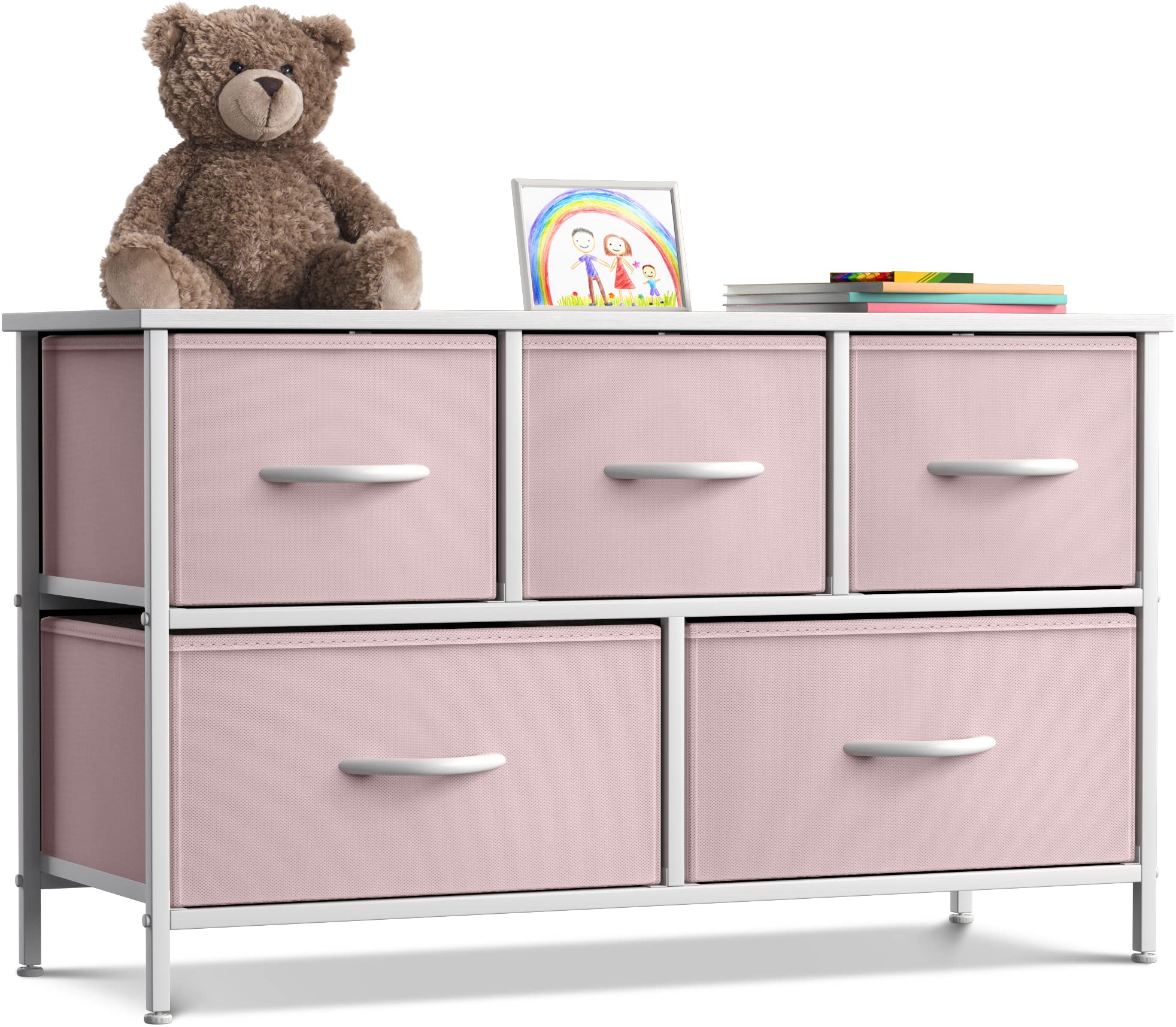
This five-drawer Sorbus gives a wider surface that doubles as a TV or media stand while still providing five generous fabric drawers for nursery storage.
Why I picked it: Wider top for a lamp or small TV plus colorful drawer options.
Best for: Rooms that need a low, wide storage piece or TV stand alternative.
Solid midrange pick in the fabric-dresser category.
Pros
- Wide top works as a TV stand
- Five full-width drawers for bulkier items
- Kid-friendly pastel colorways
- Simple assembly and lightweight
Cons
- Colors are subtler than product photos
- Not meant for very heavy items
My take
I used this unit as both a storage chest and a short media stand; the top handled a small TV and a nightlight without issue.
The drawers are wider than the 9-drawer units, so they’re better for folded shirts and bulkier toddler pieces. The pastel colors are pleasant though slightly muted compared with online photos.
Assembly was quick and the unit fit perfectly along a low wall in the nursery. For a child’s room it hits the right balance of storage and style.
How I Picked and Used These Nursery Dressers
What I prioritized
I focused on footprint first—I measured the narrowest gap in the rooms where I planned to place a dresser so nothing would block a doorway or closet.
I prioritized a hard wood or MDF top because I wanted a surface I could clean and place a lamp or monitor on without worrying about damage.
Durability mattered: steel frames and reinforced drawer bases were my preference since fabric bins can sag if unsupported.
- Measure your space: depth, width, and clearance for drawers.
- Count drawers by function: more drawers equals finer sorting.
- Keep heavy items low to reduce wobble and stress on fabric bins.
- Anchor taller, lightweight units to the wall for safety.
Materials and maintenance
I looked for breathable non-woven fabric drawers with a reinforced base so they keep shape longer and are easier to move.
A wipe-clean wood top is helpful for quick spills and nursery messes—avoid placing very heavy items on these tops.
To freshen a new fabric unit, I air it out and, if needed, place bowls of baking soda in the drawers for a day or two.
- Spot-clean fabric drawers with a damp cloth and let air dry.
- Replace the cardboard inserts in base if they warp over time.
- Tighten hardware after a few weeks of use to remove any wobble.
Frequently Asked Questions
Are fabric drawers washable?
I don’t machine-wash the fabric bins. I spot-clean them with a damp cloth and mild soap, then let them air dry. The reinforced bottoms usually mean I avoid submerging them to protect the structure.
Can the top support a changing pad or small TV?
I use the wood tops for lamps, monitors, and small TVs without issue, but I avoid placing very heavy changing pads with large supplies directly on these lightweight units. If you plan to use one as a changing surface, I anchor the dresser and keep a light changing pad on top, never leaving a baby unattended.
How stable are these fabric dressers?
They’re lighter and more portable than solid wood dressers, so I always keep heavier items on the bottom drawers and anchor taller units to the wall. That approach has eliminated wobble for me.
Final Take
I chose this set of dressers to cover common nursery needs: narrow gaps, lots of small compartments, and a usable tabletop. Each option has trade-offs between drawer count and tabletop surface—so match the unit to how you plan to sort clothes and gear.
If you want the most compartments, go with a 9-drawer Sorbus. If space is your limiter, the mDesign narrow tower is the one I’d slide into that tight spot. For a wider surface that can double as a media stand, the five-drawer Sorbus is the most useful in my home.
Measure, anchor when necessary, and keep heavier items low. With those steps, I found these fabric dressers to be practical, fast to assemble, and very useful in a nursery setup.
