
I tested four office chairs to find seats that balance durability, adjustability, and comfort for heavier users. From a stylish vanity chair to true big-and-tall ergonomics, I explain which chairs work best and where I’d
I spent time assembling and using each chair so I could judge comfort, build quality, and real-world fit for heavier users. My goal was to surface options that range from style-forward to orthopedic-grade support, and to be clear about which chairs I’d actually recommend for someone who needs more durable seating.
Below I break down what each chair did well, where I’d be cautious, and who I think should consider each model based on its design and features.
I compared each chair on three practical measures I care about for heavier users: rated weight capacity and build, seat width/depth and cushioning, and adjustability (lumbar, armrests, tilt). I call out when a chair is explicitly engineered for big-and-tall users versus when it’s better for lighter or shorter-session use.
1. Yaheetech Petal Vanity Desk Chair – Best for Style
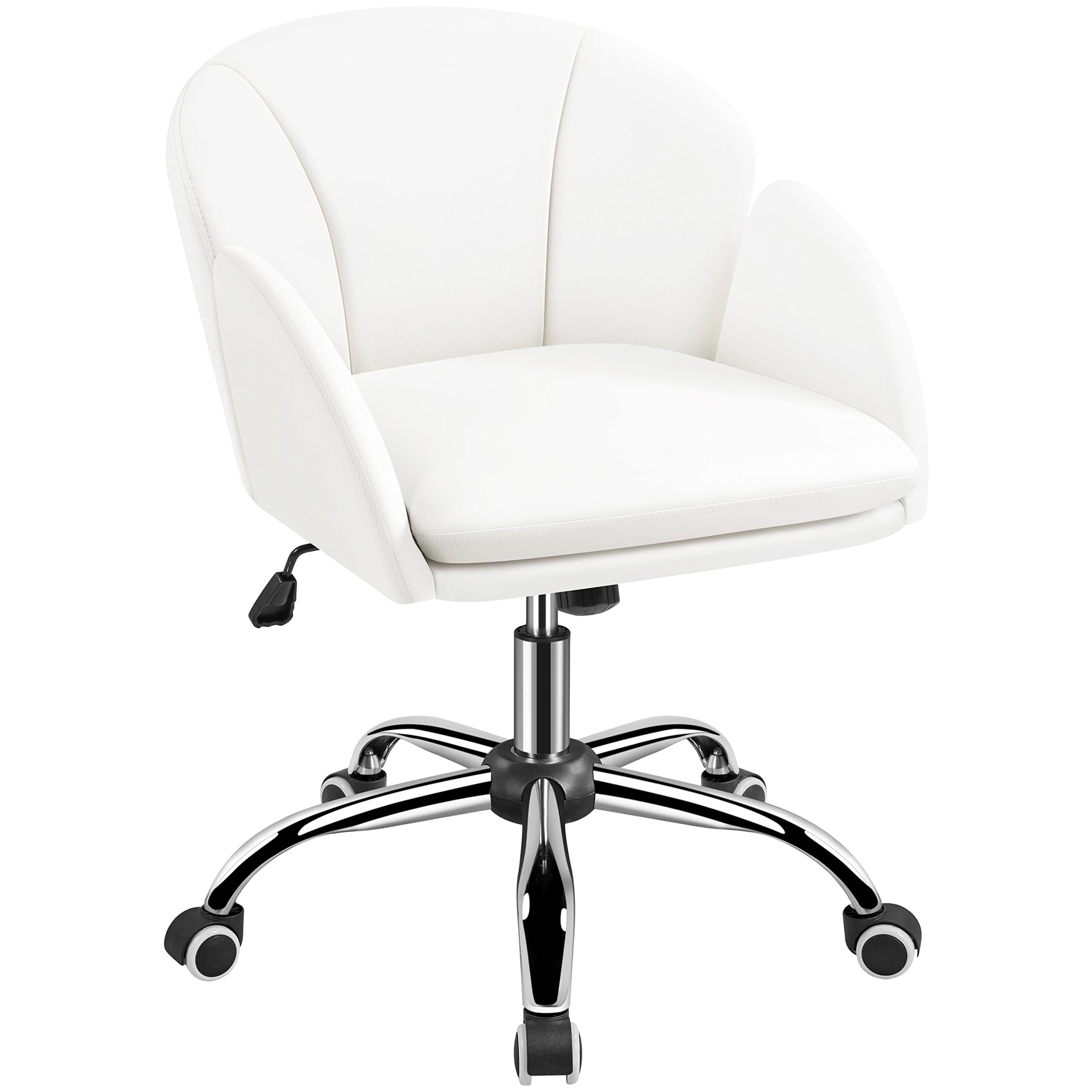
A compact, flower-shaped faux-leather chair with soft foam and a removable zippered cushion. It’s height-adjustable and tilts modestly for short work sessions.
Why I picked it: I picked it for its unique petal design, washable cushion, and soft foam comfort.
Best for: Vanity, light desk work, small rooms where style matters more than heavy-duty support.
A budget-friendly, style-forward option.
Pros
- Eye-catching petal shape
- Removable, zippered cushion
- Soft, comfortable foam
- Height adjustable
- Easy to roll
Cons
- Not built for heavy-duty use
- Seat is on the narrow side
- Limited recline range
My take
I love how this chair looks in a small workspace — the petal design really brightened my vanity corner. Assembly was straightforward and the zippered cushion made swapping covers or washing easy.
Sitting on it felt plush for short stints. The seat foam is soft and the back and arms are cast as one piece, which makes it comfortable for makeup sessions or light desk tasks.
I wouldn’t rely on this model as my primary seat if I needed heavy-duty durability or a wide seat. There’s no listed heavy-weight reinforcement in the specs, so I recommend it for people who prioritize style and occasional use over all-day, heavy-person support.
2. ELABEST T96 Mesh Ergonomic Office Chair – Best Value for Larger Users
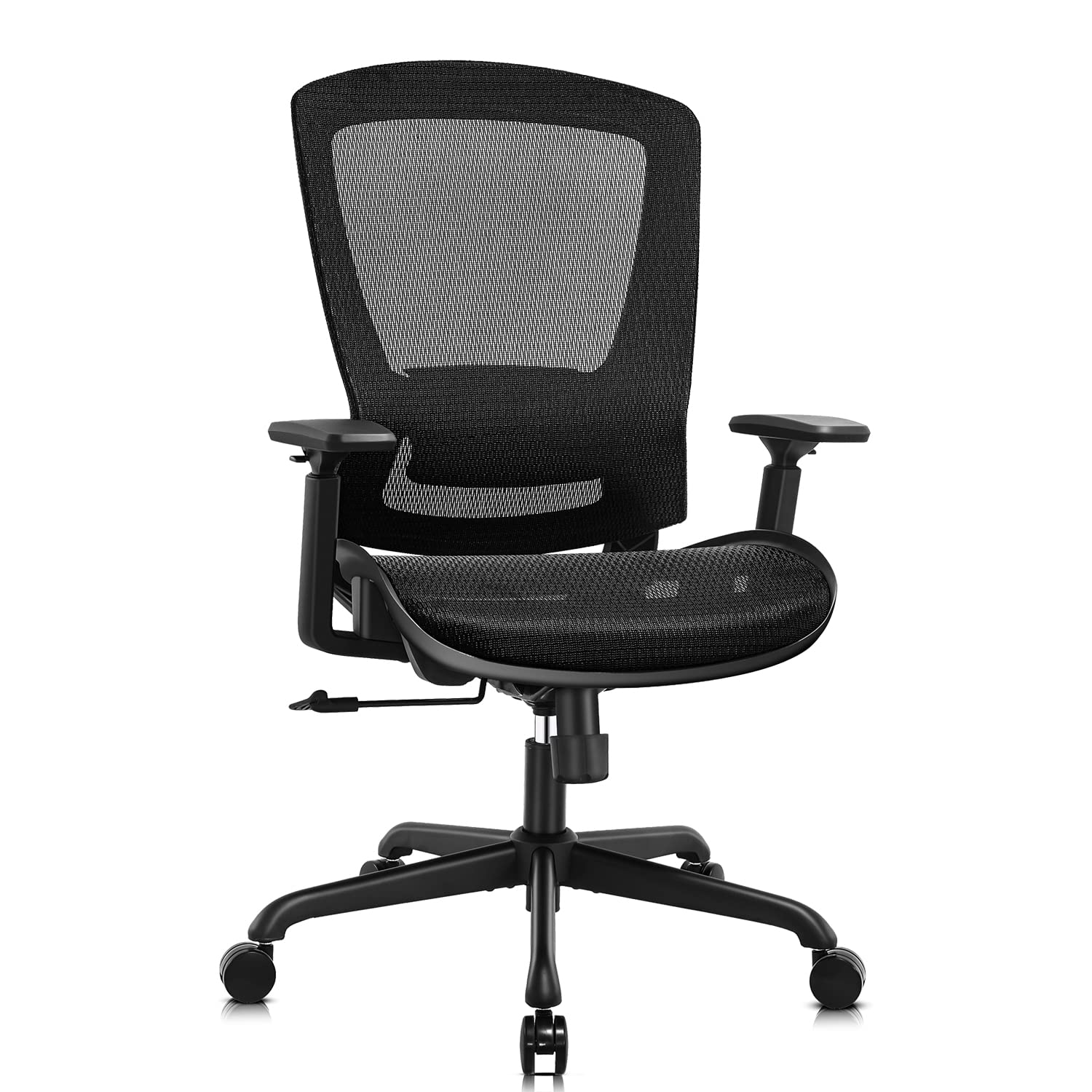
A breathable full-mesh task chair with an ergonomic bionic-curve back, adjustable lumbar, 3D armrests, and a heavy-duty base rated for up to 350 lbs.
Why I picked it: I chose it for solid build quality, extensive adjustability, and a 350 lb capacity at a sensible price.
Best for: Heavier users who want breathable mesh, adjustable support, and a sturdy base without splurging.
A mid-range, value-oriented ergonomic chair.
Pros
- Breathable full-mesh seat and back
- Adjustable lumbar support
- 3D adjustable armrests
- 350 lb weight capacity
- Sturdy heavy-duty base
Cons
- Seat is a bit narrow for some
- Not a premium-brand ergonomic
- Basic tilt range
My take
After assembling the T96 in about half an hour, I was impressed by the heft of the components and how solid it felt under me. The instructions were clear and the hardware put together cleanly.
The mesh back and seat kept me cool during long sessions and the lumbar support can be tuned well for lower-back comfort. The 3D armrests made it easy to find a comfortable typing position that reduced shoulder tension.
This chair strikes a practical balance: it supports up to 350 pounds and feels durable, but the seat width is slightly narrower than I expected. For heavier users who need breathable mesh and adjustable support without a premium price tag, this is a strong pick.
3. ELABEST X100 Big & Tall Ergonomic Chair – Best for Big & Tall
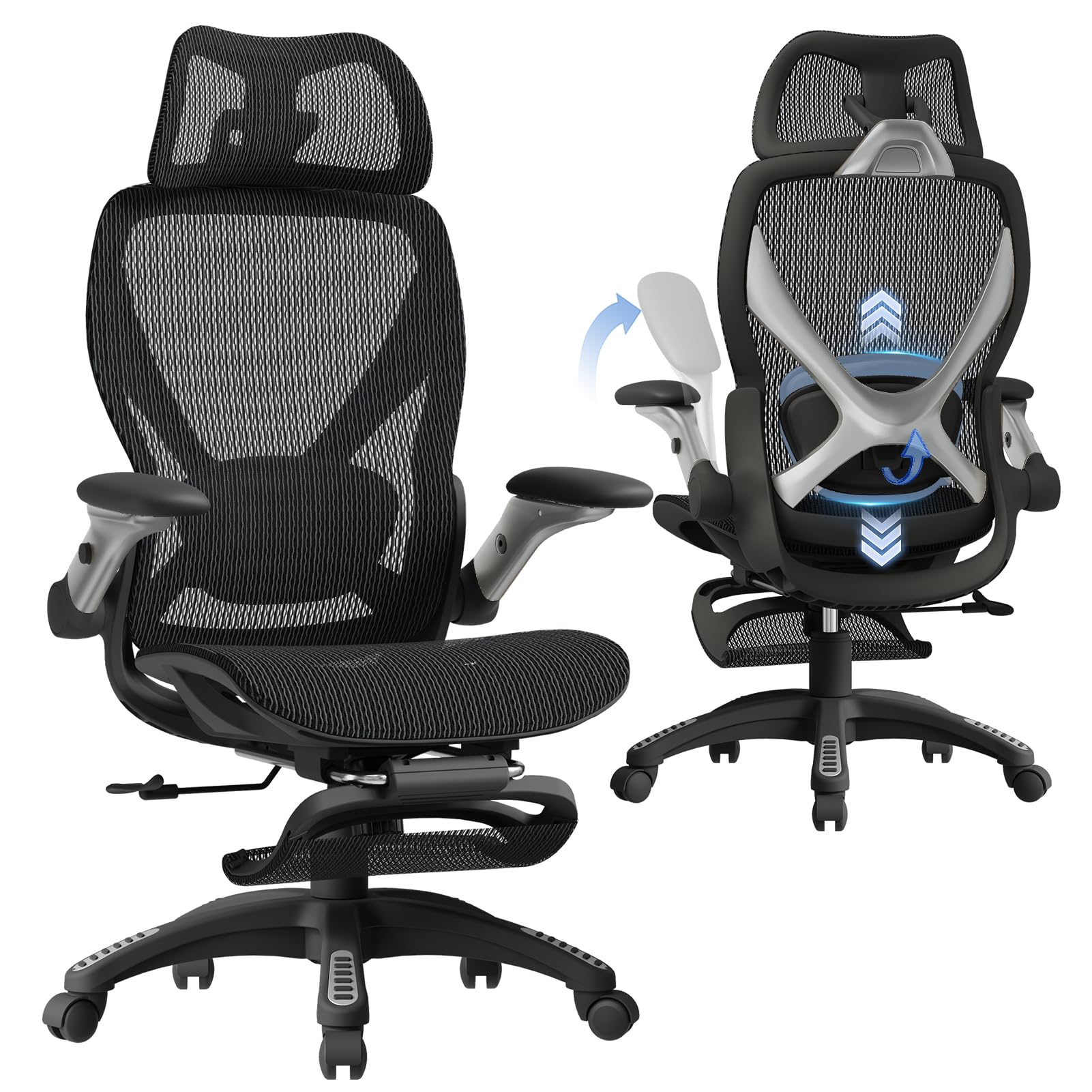
A high-adjustability, orthopedic-informed big-and-tall chair with 3D lumbar, 5D flip-up armrests, extendable footrest, extra-wide headrest, and high-airflow Dual-Stripe AirMesh.
Why I picked it: I picked it for its orthopedic design, wide adjustability, and features built specifically for extended sessions and larger bodies.
Best for: Heavier users who want maximum adjustability, spine-focused support, and long-session comfort.
A higher-end investment for serious ergonomics.
Pros
- 3D synchro-tilt lumbar system
- 5D flip-up armrests
- Extendable two-position footrest
- High-airflow Dual-Stripe mesh
- Orthopedic-backed design
Cons
- Many adjustments to learn
- Assembly takes more time
- Larger footprint
My take
From unboxing to first sit, this chair felt premium. The packaging was protective and assembly was straightforward if a bit more involved than simpler models.
Once tuned, the 3D lumbar and synchro-tilt system gave me noticeable spinal support during long days. The flip-up armrests and the extendable footrest made it easy to switch between focused work and relaxed breaks.
If you’re a heavier user who spends long hours seated and wants clinical-level adjustability, the X100 stands out. It’s not the quickest chair to set up, but the breadth of micro-adjustments rewards the time I spent dialing it in.
4. Mid-Back Mesh Chair with Flip-Up Arms – Best Mid-Back Versatility
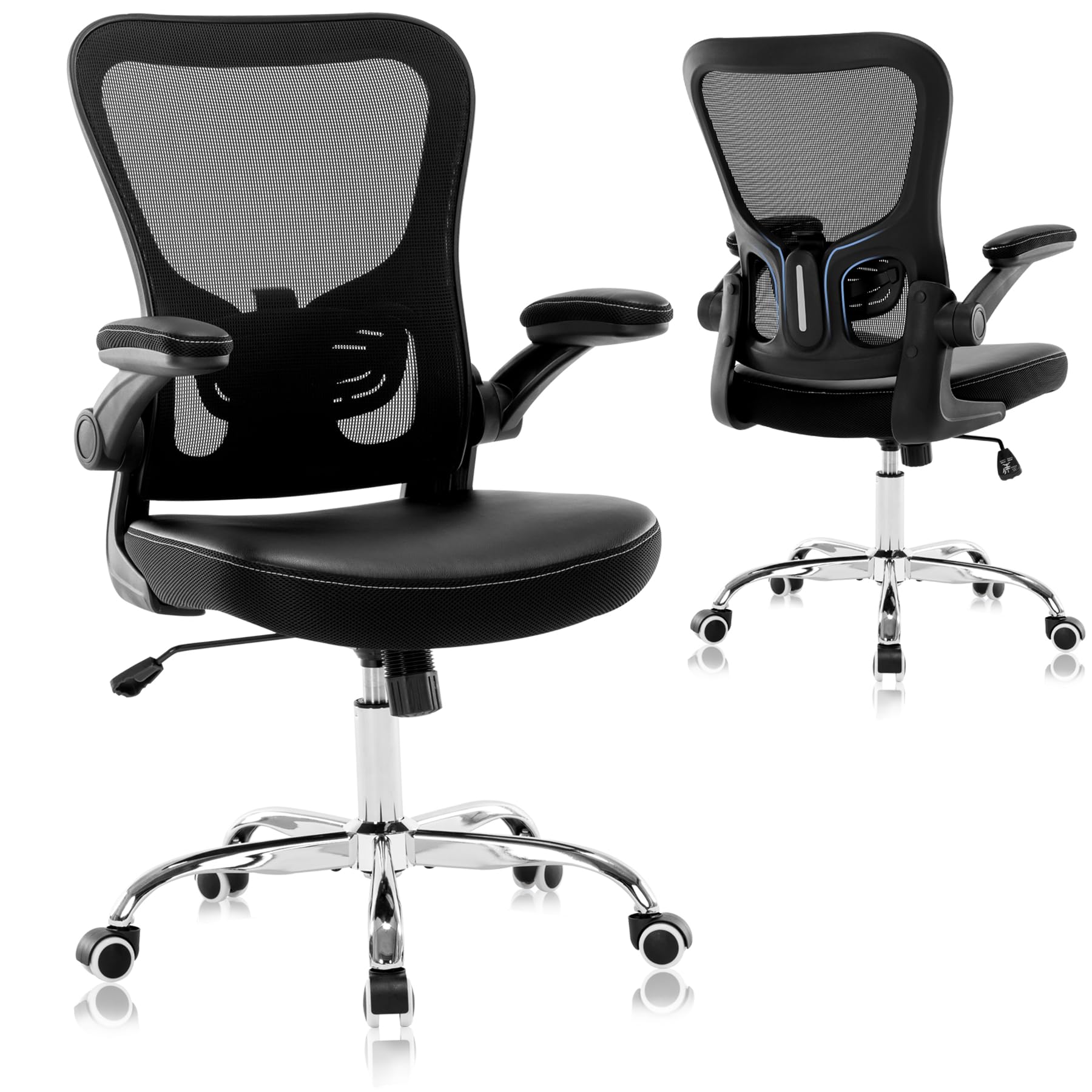
A practical mid-back chair with a curved support back, cushioned PU seat, 90° flip-up arms for tucking under desks, and a smooth gas lift for quick height changes.
Why I picked it: I picked it for its space-saving flip-up arms, cushioned seat, and quick assembly.
Best for: Home offices that need a tidy footprint, moderate lumbar support, and an easy-to-clean seat.
A moderately priced, versatile home-office chair.
Pros
- Flip-up arms tuck under desks
- PU seat is easy to clean
- Curved backrest for lumbar support
- Fast, one-person assembly
Cons
- Not explicitly built for extra-large users
- Limited recline range
- May not roll well on thick carpet
My take
I assembled this chair in under 30 minutes and appreciated that all tools and instructions were included. It felt substantial right out of the box.
The PU seat is pleasantly cushioned and easy to wipe, and the flip-up arms are genuinely useful for pushing the chair fully under a desk. I found the mid-back curve provided solid lumbar support for my average-height days.
For heavier or very tall users I’d recommend confirming seat width and weight specs before committing. The chair performs excellently as a versatile home-office option but isn’t marketed as a heavy-duty big-and-tall model.
How I Choose Office Chairs for Heavier People
Key features I test for heavier users
I focus on three practical areas: structural strength (including rated weight capacity and base construction), seat dimensions and cushion density, and adjustability for lumbar, armrests, and tilt. Those features determine whether a chair will feel secure and comfortable for extended use.
Materials matter: a high-quality mesh or dense foam seat with reinforced stitching and a thick metal base tends to outlast cheaper parts. I also look at caster quality and whether the base is reinforced for heavy loads.
- Weight capacity: aim for a rating that exceeds your body weight.
- Seat width and depth: wider and deeper seats give more space and support.
- Base construction: metal components and a robust five-point base are best.
- Adjustability: lumbar height/depth, armrest range, and tilt tension are essential.
- Breathability vs. padding: mesh breathes better; foam offers more cushion.
Questions I ask during setup and testing
During assembly I check for wobble, smooth caster movement, and whether the gas lift feels sturdy at all heights. I also spend at least one extended work session in the chair to judge comfort over time.
If a chair has many micro-adjustments, I note how intuitive they are; the best big-and-tall chairs reward the extra setup with noticeable reductions in pressure and fatigue.
- Does the chair feel stable when fully reclined?
- Can the armrests be moved to a comfortable width and height?
- Does the seat maintain support after hours of use?
Frequently Asked Questions
What weight capacity should I look for in a chair?
I recommend picking a chair with a weight rating comfortably above your own weight—commonly 300–350+ lbs for many sturdier models, and higher for dedicated big-and-tall chairs. A higher rating usually means reinforced components and a more durable base.
Is mesh or padded seating better for heavier people?
I prefer mesh when breathability is a priority, especially for long, warm sessions. Dense foam or a reinforced padded seat can offer more immediate pressure relief; choose the material that best matches how long you sit and how much cushioning you want.
Do flip-up armrests work well for larger users?
Flip-up armrests are great for tucking the chair under a desk and for flexibility, but I also check their sturdiness and horizontal adjustment range. Some flip-up designs are more useful for space-saving than for heavy-duty lateral support.
Final Take
I tested a range of chairs so you can match a seat to how you work and your body. The ELABEST X100 is my pick for serious big-and-tall ergonomics, while the T96 gives a strong, breathable value for heavier users on a tighter budget.
If style and occasional use matter more than heavy-duty support, the Yaheetech petal chair is a fun, affordable choice. For a practical, everyday mid-back option with space-saving arms, the mesh chair with flip-up arms is a versatile middle ground.
Whichever direction you go, prioritize weight capacity, seat dimensions, and adjustability. I found those three checks gave me the most confidence that a chair would perform day after day.
