
I tested five oil filter tools across cars, trucks, and small engines. Here are the ones I reach for when filters are stuck, space is tight, or I need a precision fit for Toyota cartridge caps.
I change my own oil and have sorted through every style of removal tool: adjustable pliers, band wrenches, cap-style sockets, and specialty cartridge wrenches. Each design has a role depending on filter size, mounting orientation, and how stubborn the filter is.
In this roundup I focused on fit, grip, build quality, and how each tool handled real-world stuck filters. I also called out where a tool can damage a reusable filter or fail in tight clearance situations so you can pick the right tool for your job.
I compared adjustable pliers, band-style wrenches, cap/socket tools, and cartridge-specific wrenches. Pliers give brute-force versatility, bands work well for small-diameter filters, and cap or flute wrenches deliver the cleanest, non-damaging engagement on cartridge-style housings.
1. WORKPRO 12in Adjustable Oil Filter Pliers – Best Overall
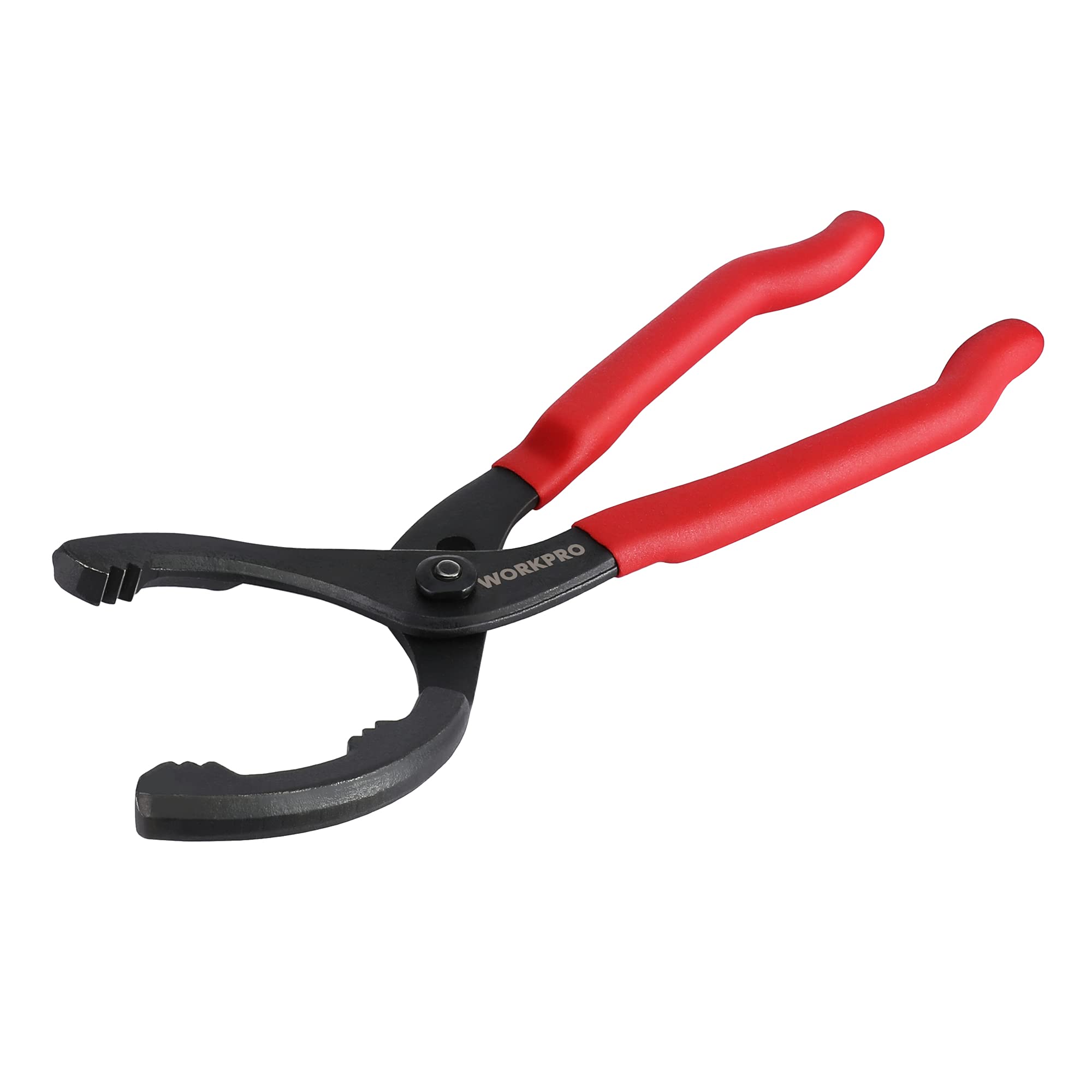
A versatile, budget-friendly adjustable plier that fits a wide range of oil filters and gives solid leverage in tight spots.
Why I picked it: Versatile size range, bent head for clearance, and non-slip grips make it my go-to general-purpose plier.
Best for: DIYers who want one adjustable tool to handle most filter sizes.
Budget-friendly choice.
Pros
- Fits a broad range of filter diameters
- Bent head helps reach tight spots
- Non-slip soft grips for better leverage
- Permalock fastener for solid joint strength
Cons
- All-metal jaws can mar reusable filters
- Some wobble between the arms
My take
I use these WORKPRO pliers on most oil changes because they handle a surprising variety of filter locations. The bent head is genuinely useful when the filter sits near hoses or the frame, and the soft red grips give me extra leverage without my hands slipping.
The permalock joint and high carbon steel body feel durable enough for regular use, although I noticed a little play between the arms on heavier torque jobs. That didn’t stop the pliers from getting the job done, but it’s something to watch if you rely on a very tight, precise grip.
One big caveat: the metal-contact prongs will damage filters you plan to reuse. I only use these when I intend to discard the filter. If you want to remove and reinstall filters without scarring them, choose a tool with rubber contact points or use a cap-style wrench.
2. Motivx 64.3mm 14-Flute Oil Filter Wrench – Best for Toyotas
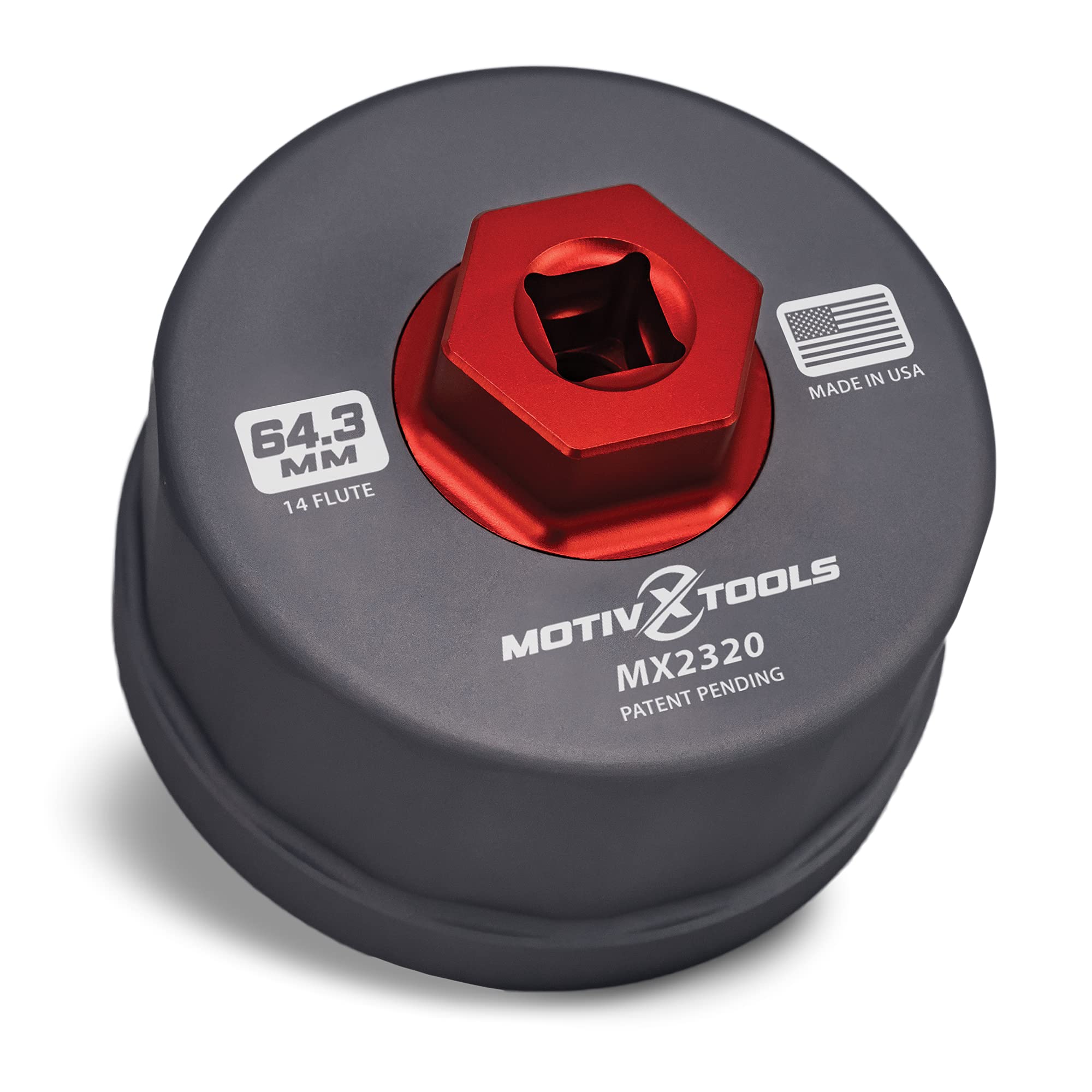
A precision CNC-machined aluminum wrench that engages fluted cartridge caps without stressing the plastic tabs.
Why I picked it: Notch-less, precision fit for Toyota/Lexus cartridge housings that avoids broken tabs.
Best for: Owners of Toyota and Lexus cartridge-style filters who want a durable, exact fit.
Premium investment for precision and longevity.
Pros
- Precision CNC machining for a snug fit
- Notch-less design avoids tab breakage
- Dual-drive: 3/8” drive or 24mm socket
- Made in USA with a lifetime warranty
Cons
- Higher cost than basic wrenches
- May have clearance issues in some horizontal mounts
My take
When I need a clean, non-destructive removal on Toyota cartridge caps, I reach for the Motivx tool. The notch-less design grabs the fluted plastic body without engaging the fragile tabs, and I no longer worry about cracking a housing.
The CNC-machined aluminum feels precise and solid in hand—this is markedly different from stamped or thin-walled alternatives. Dual-drive compatibility means I can use a ratchet or a socket depending on the workspace.
I have seen fitment challenges in tight, horizontally mounted housings on a couple of vehicles, so I keep an eye on clearance near the oil pan. Even so, when it fits, it makes the whole job faster and less nerve-racking than using pliers or hammers.
3. Lisle Small Swivel Oil Filter Wrench (73–82.5mm) – Best for Small Filters
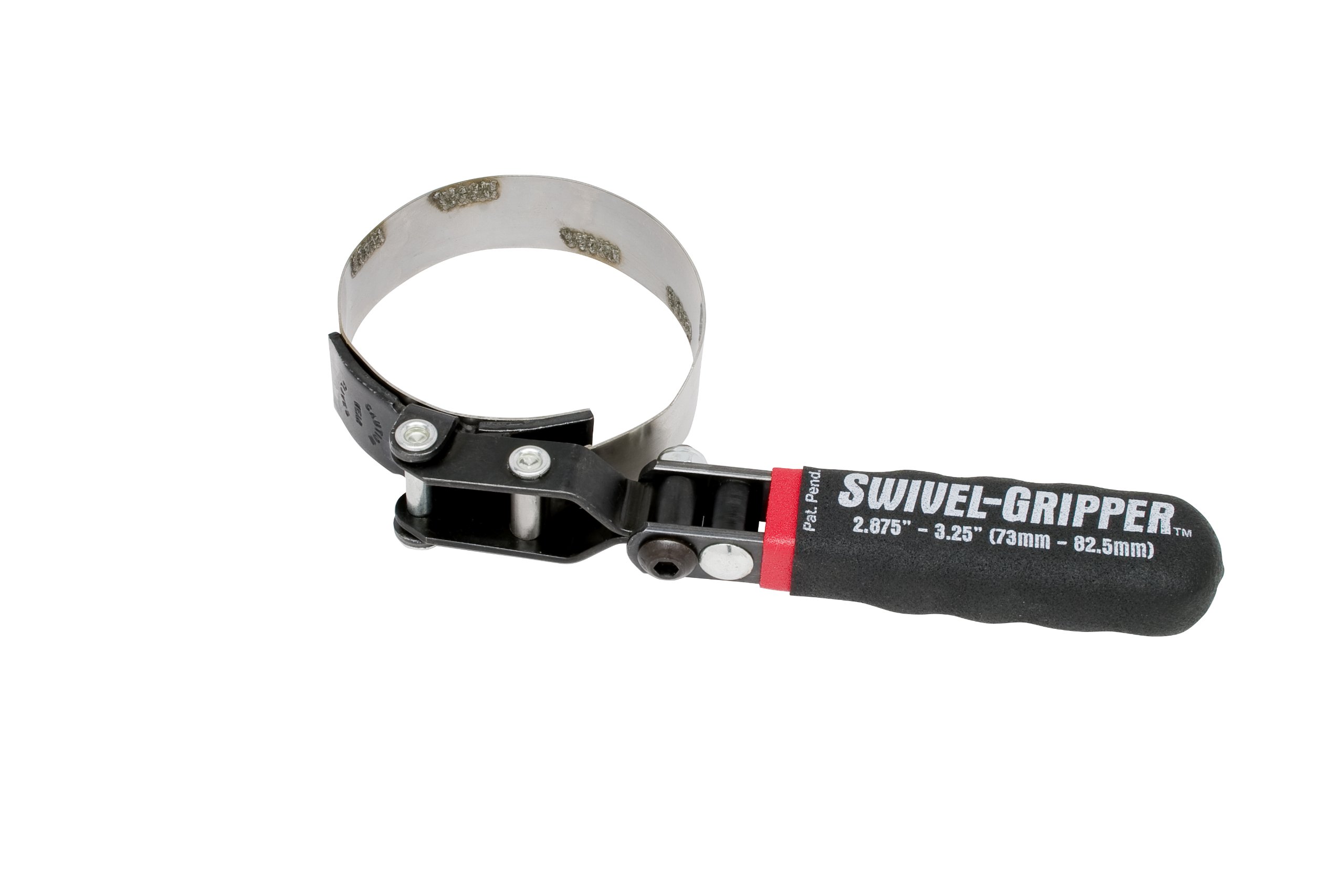
A compact band-style wrench with a textured coating and a swivel handle that excels on smaller-diameter filters.
Why I picked it: Textured, bonded band and a swiveling handle deliver reliable grip on small filters.
Best for: Vehicles with smaller-diameter filters and cramped engine bays.
Moderately priced, great value for the size.
Pros
- Permanently bonded textured band grips well
- Swivel handle rotates more than 180°
- Adjustable tension prevents floppy handles
- Durable stainless-steel construction
Cons
- Limited to smaller diameters
- Some users may want stronger swivel tension
My take
I swapped this Lisle band wrench in for a strap wrench and noticed an immediate improvement in grip and control. The textured coating adds many gripping points and I rarely experienced slippage on the smaller filters I work with.
The swivel handle makes it easy to work in tight spots—loosening the tension nut to set pivot resistance is a small step that pays off when I’m turning filters at odd angles.
If you mostly change small filters, this tool speeds the job and is less likely to butcher the filter body compared with metal-prong pliers.
4. Lisle 63600 Oil Filter Wrench (2.5–3.125in) – Best Compact Range
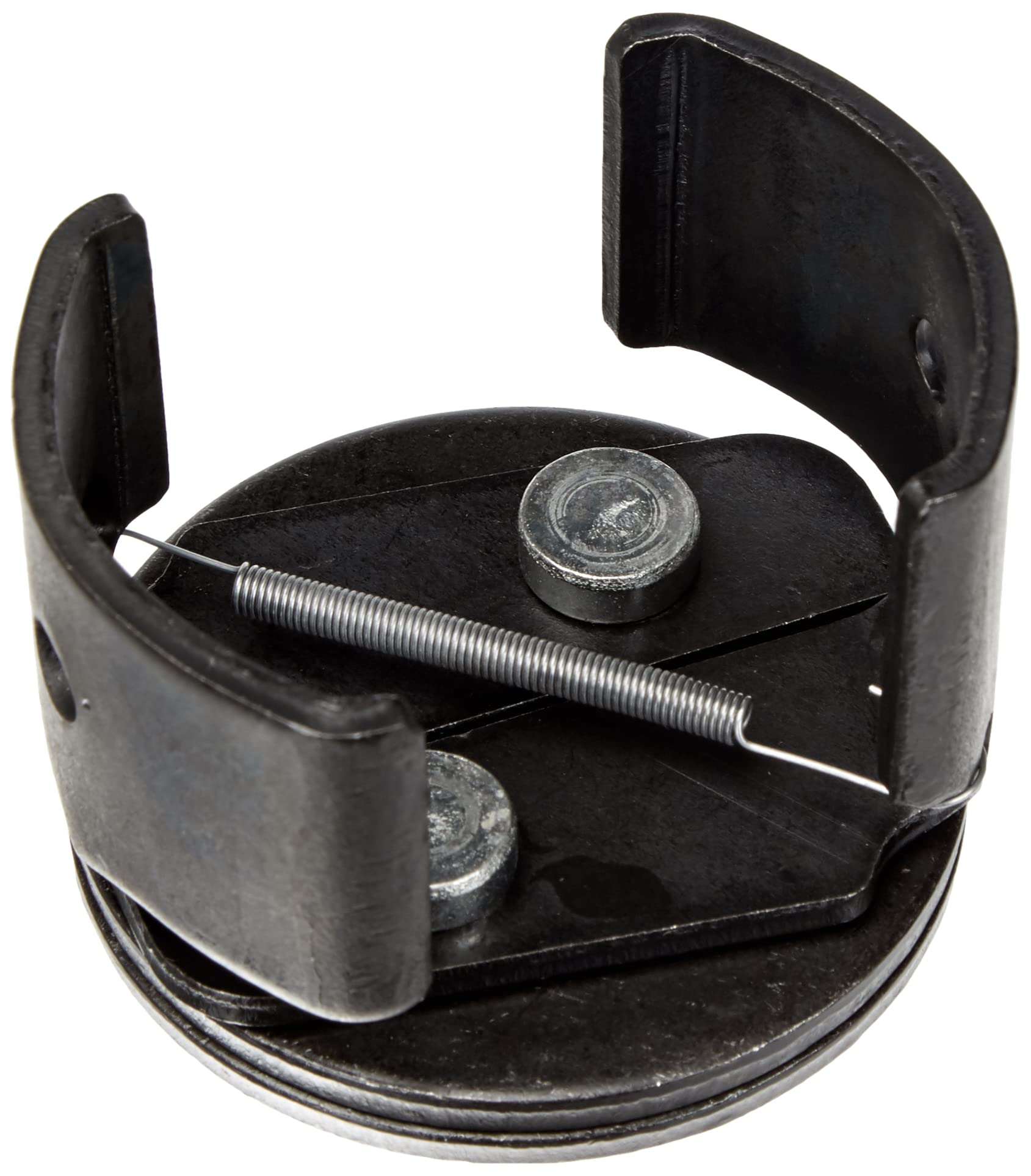
A compact, front-access wrench with steel jaws that covers most import and common domestic filter sizes.
Why I picked it: Front-access design and broad fit range make it my go-to for tight engine bays.
Best for: Import cars and domestic vehicles with ~3in filters where front access is easier.
Affordable, no-frills option.
Pros
- Covers a wide filter range
- Steel jaws provide a strong grip
- Works from the front using 3/8" drive
- Compact for tight engine bays
Cons
- Can slip on over-tightened filters
- Designed for removal only, not installation
My take
This Lisle wrench is compact and predictable—I use it when access from the filter face is best. The steel jaws bite into the filter reliably and the tool stands up to repeated use without bending.
Occasionally it will slip if the previous tech has torqued the filter on extremely tight, but for routine changes it removes filters quickly and cleanly. It’s also handy for lawnmower and small-engine filters.
Because it’s strictly a removal tool, I don’t use it for reinstalling filters; I prefer to hand-thread and torque new filters to service specs.
5. CHANNELLOCK OF-2 Oil Filter/PVC Pliers Set – Best Heavy-Duty Set
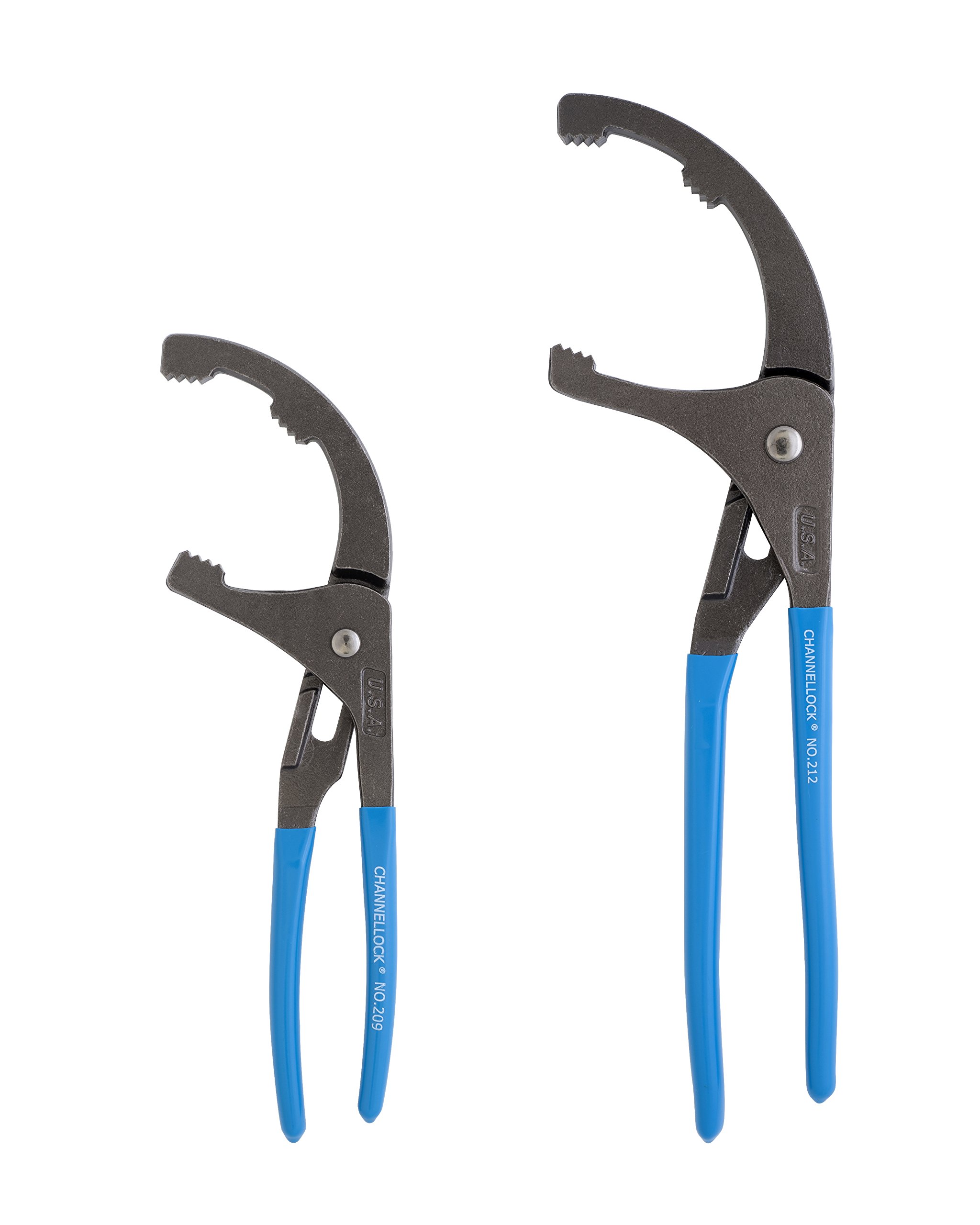
A forged, American-made two-plier set that covers small to large filters with professional-grade strength and safety features.
Why I picked it: Forged construction, Safe-T-Stop, and two sizes cover nearly every stubborn filter task I face.
Best for: Professionals and DIYers who need reliable, heavy-duty pliers for stubborn or large filters.
Higher-end, built to last.
Pros
- Forged high-carbon steel construction
- Safe-T-Stop prevents finger pinches
- Permalock fastener for durable joint strength
- Set covers small and large filters
Cons
- Bulkier in tight engine compartments
- Heavier than single-piece wrenches
My take
ChannelLock’s OF-2 set is my go-to when other methods fail. The forged jaws and strong rivet joint give me confidence on filters that have been overtightened or corroded in place.
I keep the smaller plier for cramped engine bays and reach for the larger one when I need maximum torque. The Safe-T-Stop feature is a small but appreciated safety improvement during longer jobs.
These pliers are heavier and less nimble than a band or cap wrench, but when brute force and reliability matter, they’re the ones I reach for.
How I Choose an Oil Filter Pliers or Wrench
Match the tool to the filter style
I always identify whether the vehicle has a spin-on filter, a cartridge housing, or a small accessory filter. Each requires a different approach: cap or flute wrenches for cartridge caps, band wrenches for smaller spin-ons, and pliers for stuck filters.
If you’re working on a Toyota or Lexus with a fluted cartridge cap, a precision flute/cap tool prevents damaging the plastic housing tabs; if you have standard spin-on filters, pliers or band wrenches usually work fine.
- Cartridge-style housings: use a cap/flute wrench (not metal-prong pliers)
- Small-diameter spin-ons: band or swivel wrenches work best
- Seized or corroded filters: forged pliers provide the most torque
Consider clearance and drive compatibility
I check engine bay clearance before choosing a tool. Socket-style cap tools need room for a ratchet; long pliers need vertical clearance; band wrenches are often best in tight, shallow spaces.
Dual-drive cap wrenches that accept a ratchet or socket give me flexibility when space changes between jobs.
- Tight vertical clearance: prefer band or low-profile cap tools
- Limited horizontal space: bent-head pliers can help
- Want ratchet leverage: choose dual-drive cap wrenches
Build quality and material
I look for forged steel or CNC-machined aluminum for tools I expect to use often. Thin stamped steel will bend or fatigue long before forged tools do.
Also consider whether you need a set: a matched small and large plier set covers more scenarios than a single tool.
- Forged high-carbon steel for heavy use
- CNC-machined aluminum for precision cap wrenches
- Permanently bonded bands resist slipping better than straps
Avoid damaging reusable filters
If I plan to reuse a filter, I avoid metal-prong pliers that can nick the canister. Band wrenches or cap tools engage more gently and preserve the filter body.
When removing a reusable filter, I loosen by hand where possible and use a non-marring tool only for the final turns.
- Reusable filters: prefer cap or band tools
- Disposable filters: pliers are acceptable and effective
- When in doubt, protect the canister with a rag under plier jaws
Practical tips for removal
I let the engine cool a bit before starting and position a drain pan directly under the filter to catch drips. A little penetrating oil applied to a stuck filter’s rim can help.
I also keep a rag and a spare glove handy—filters can be greasy, and better grip equals less chance of slips.
- Place a drain pan beneath the filter
- Use penetrating oil on stuck filters
- Have rags and gloves ready to maintain grip
Frequently Asked Questions
Will oil filter pliers damage a reusable filter?
Yes—metal-prong pliers can scratch or deform a filter’s canister. I avoid using them when I plan to reinstall a filter, opting instead for a band wrench or cap-style tool that engages the filter more gently.
Which tool is best for Toyota cartridge-style filters?
I use a flute/cap-style wrench for Toyota cartridge housings. A precision, notch-less design prevents cracking the plastic tabs and delivers a secure, non-destructive grip.
What do I do when a filter is seized?
I try penetrating oil around the base, let it sit, then use forged pliers or a heavy-duty plier set to break it free. If possible, I work from the filter face with a cap tool to avoid deforming the housing.
Final Take
There’s no single perfect oil filter tool for every job—my approach is to match the tool to the filter type and clearance. WORKPRO’s adjustable pliers are my everyday grab, Motivx shines on Toyota cartridge caps, Lisle’s band and compact wrenches are great for smaller filters and tight spots, and ChannelLock’s forged pliers cover heavy-duty, stuck filters.
Keep a couple of these tools in your toolbox and you’ll be prepared for almost any oil-filter situation I’ve encountered.
