
I tested a range of oscillating and spot sprinklers for coverage, durability, and ease of use. Here are the ones I kept and recommend for different yard needs.
I spend a lot of time keeping my lawn and garden irrigated, so I put a wide variety of oscillating and spot sprinklers through real-world use. In this roundup I focus on how well each unit covers its claimed area, how easy it is to set and maintain, and whether it stands up to season-long use.
The list that follows includes everything from heavy traveling sprinklers that roam your hose to compact metal spot sprayers for small beds. I explain where each sprinkler shines and where it falls short, so you can pick the right tool for your yard and watering style.
I compared coverage, nozzle control, build quality, clog resistance, and real hose-connection behavior to separate practical winners from the rest.
1. Eden Turbo Oscillating Sprinkler – Best Overall
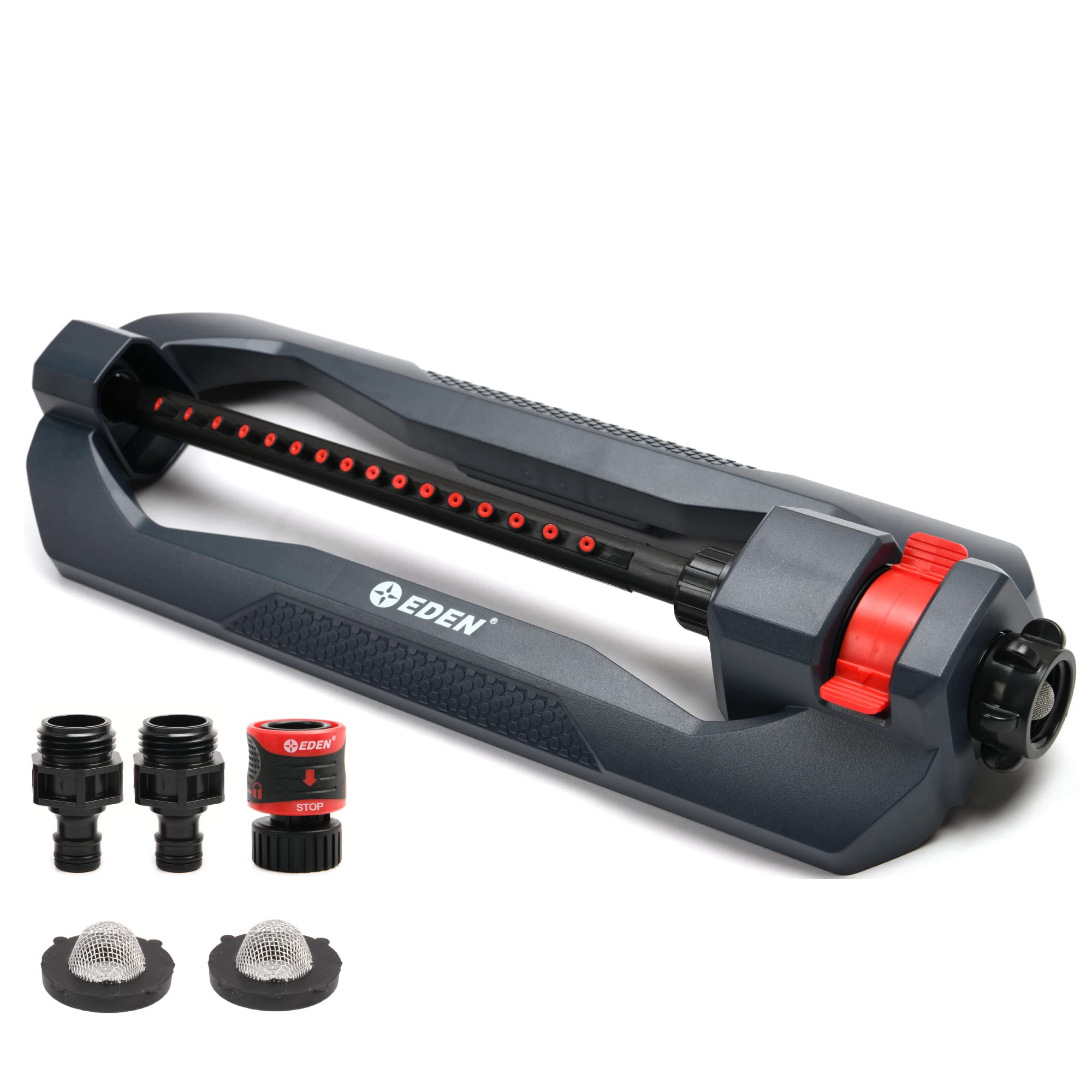
A versatile oscillating sprinkler with 16 precision nozzles, sliding-range controls, a sealed turbo drive motor, and a weighted base for stable, broad coverage.
Why I picked it: Gives wide, even coverage with precise length control and a durable turbo drive.
Best for: Medium lawns and mixed garden beds that need reliable, adjustable coverage.
Affordable option with extra connectors and quick-connect convenience.
Pros
- 16 precision nozzles for broad coverage
- Sealed turbo drive for smooth operation
- Sliding tabs for easy range adjustment
- Weighted base that resists tipping
- Included quick-connect starter set
Cons
- Mostly plastic construction
- Limited side-to-side width control
My take
I relied on the Eden Turbo for several weeks across my front lawn and raised beds. The 16 nozzles deliver a consistent, even spray and the sliding tabs make it simple to change the length of the watering run without fiddling with the hose.
The sealed turbo drive keeps the oscillation smooth even when pressure varies, and the extra-large base actually does a good job of keeping the unit stable while running. The built-in cleaning tool is a small but useful touch when a nozzle needs a quick unclog.
My only real gripe is the plastic-heavy build — it’s held up so far, but I treat it as a good-value tool rather than an heirloom. Also, I found I couldn’t independently narrow the sideways spread, so it can splash up against fences when you want a narrower band.
2. Nelson Rain Train Traveling Sprinkler – Best for Huge Yards
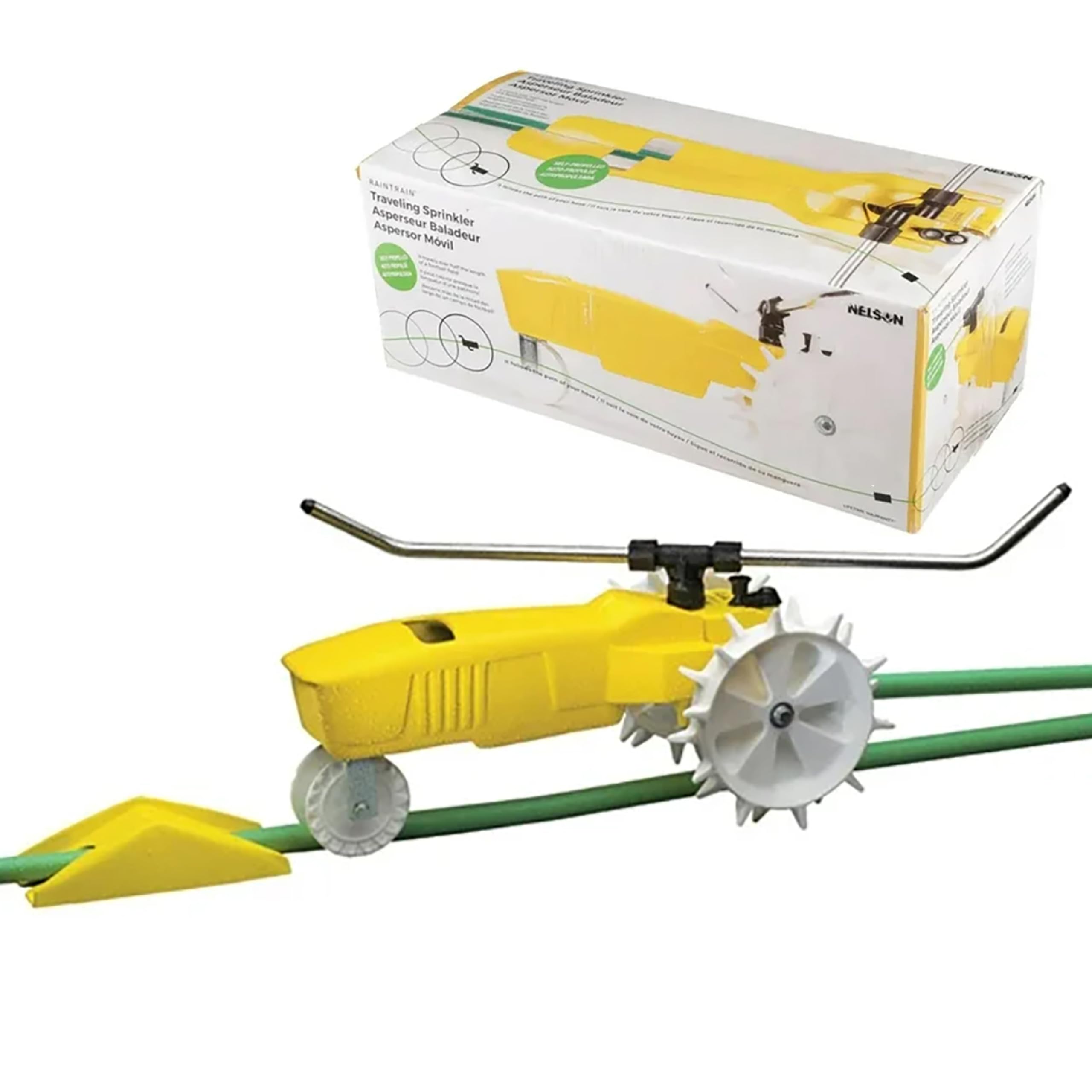
A cast-iron traveling sprinkler that walks the hose and covers very large areas with three speed settings and an automatic shutoff ramp.
Why I picked it: Covers massive areas without moving the sprinkler; heavy-duty cast-iron construction.
Best for: Very large, open lawns where you want hands-off watering.
A heavier-duty, longer-term investment compared with simple oscillators.
Pros
- Covers very large areas up to hundreds of feet
- Three speeds for saturation control
- Durable cast-iron body
- Automatic shutoff ramp
Cons
- Very heavy to move
- Can jump the hose if not set carefully
My take
For open, long lawns I let the Rain Train do the walking while I get other chores done. It really shines when you want to cover many thousands of square feet without constantly relocating a stationary sprinkler.
The cast-iron housing means it survives rough handling and sun exposure. I did replace a gearbox once after heavy seasonal use, but overall it’s a workhorse that tolerates gloomier maintenance routines.
A few practical notes from use: the unit benefits from a 5/8" hose to minimize pressure loss over long runs, and it’s so heavy that moving it around takes effort. It will occasionally ride off the hose if it encounters obstacles, so I set guide stakes on longer routes.
3. Gardena AquaZoom Compact – Best for Precise Beds
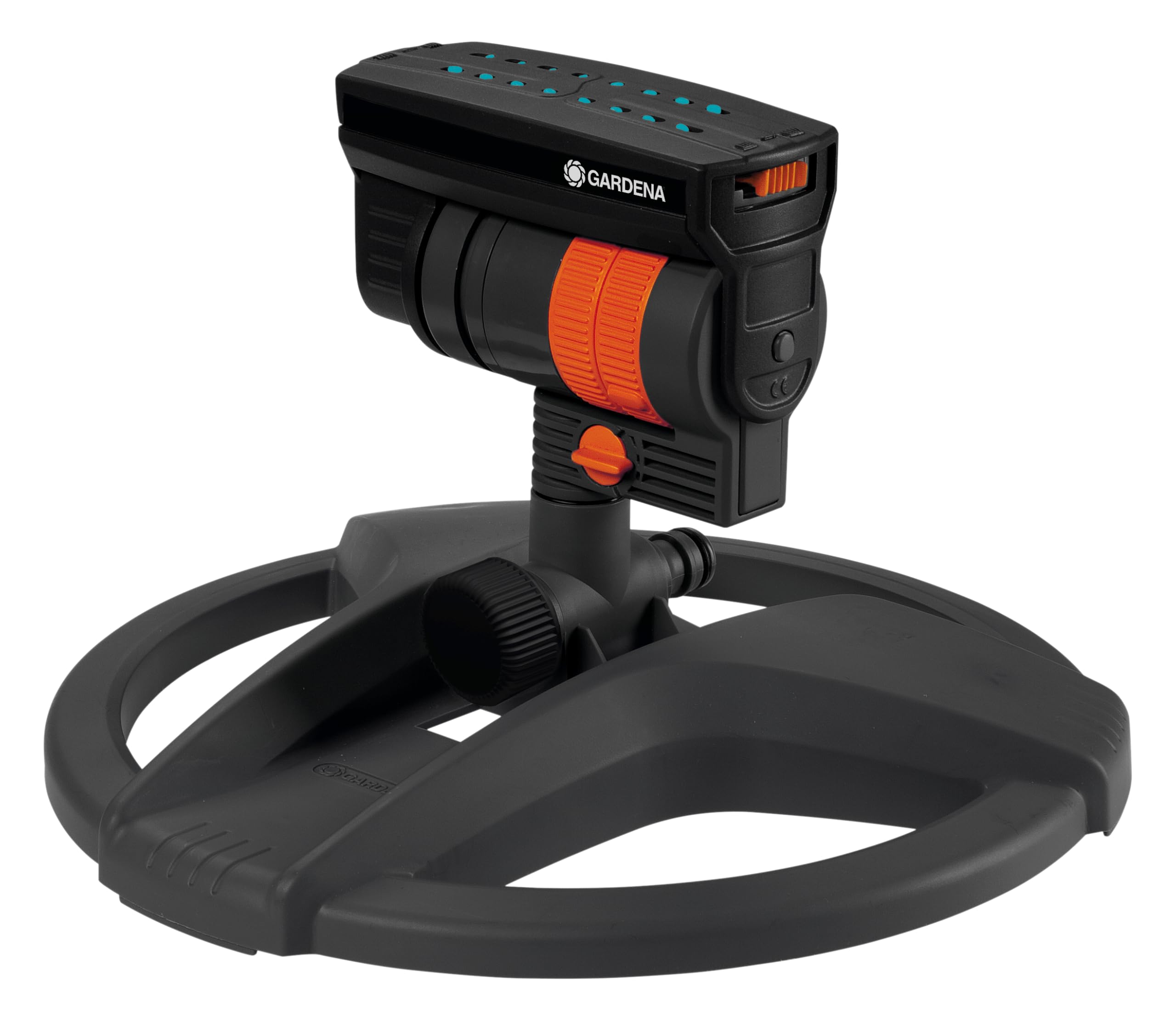
A precision rectangular sprinkler with infinite range adjustment, soft nozzles, built-in filter, and frost/UV resistance for year-round use.
Why I picked it: Offers the finest control over range and width for vegetable and flower beds.
Best for: Vegetable patches, flower beds, and any area needing exact coverage.
Mid-range, quality European build with a long warranty.
Pros
- Precise range and width adjustment
- Built-in removable filter
- Soft nozzles that are easy to clean
- Frost and UV resistant
Cons
- Occasionally ships without connector
- Smaller footprint than large oscillators
My take
I kept a Gardena AquaZoom on my veggie beds because its fine-tuned controls let me dial in exactly how far and wide the water lands. That precision cut down on puddles and ensured even watering where seedlings sit.
The removable filter and soft rubber nozzles make maintenance simple — a quick rinse and it’s back to work. I was impressed enough that I bought a second unit for another bed.
You do need to watch the package contents: one unit arrived missing the hose connector, which made setup take a little longer. Once connected, however, its German-made fit and finish felt noticeably more robust than many cheaper oscillators.
4. Gilmour Circle Spot Sprinkler – Best Spot Sprinkler
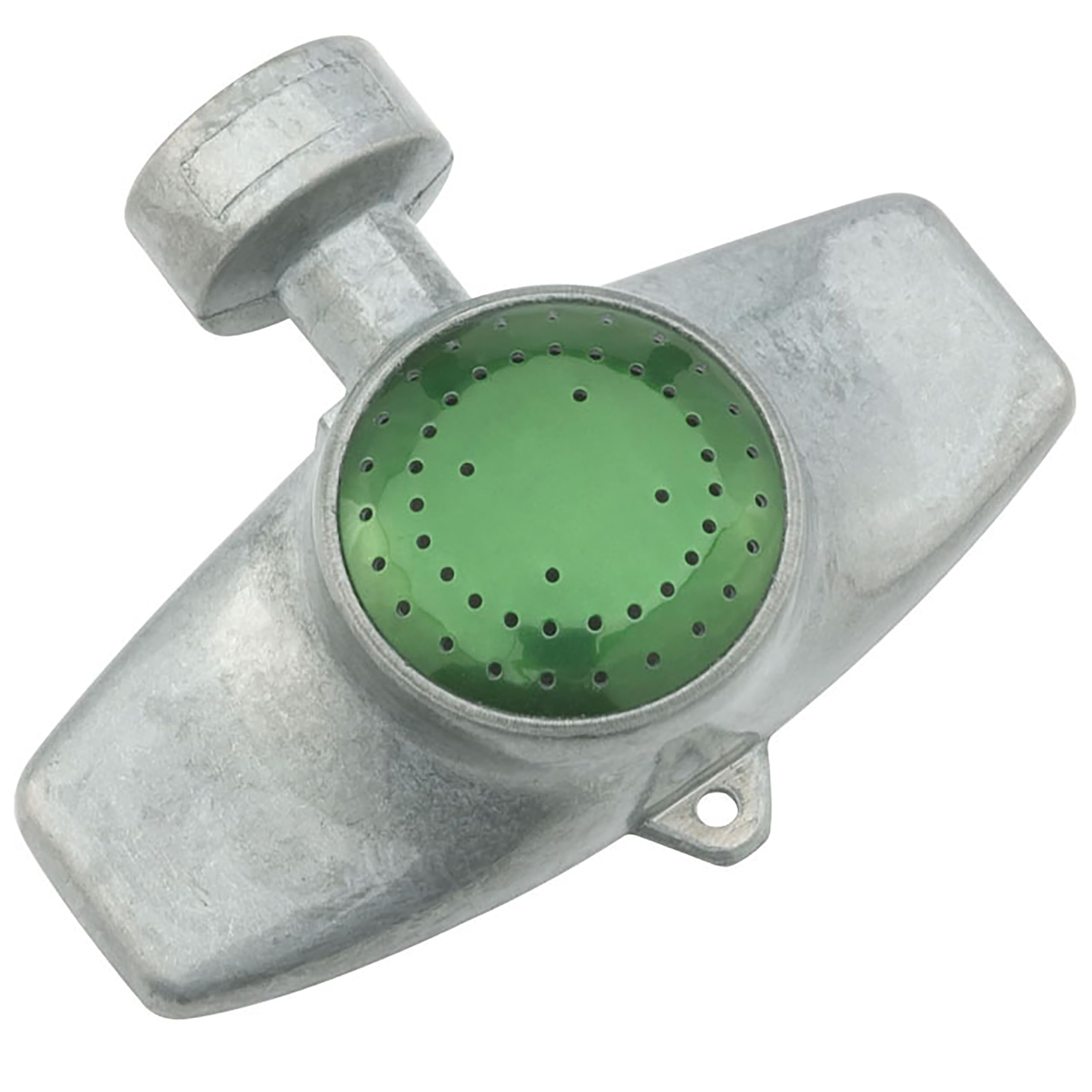
A simple, metal circle-pattern spot sprinkler that delivers a gentle, fountain-like spray for small areas and low-pressure systems.
Why I picked it: Sturdy metal build and dependable circular spray for small problem areas.
Best for: Small lawns, trouble spots, new seed, and low-pressure connections.
Very budget-friendly — great as a spare or for tight spots.
Pros
- Metal construction for durability
- Works at low water pressure
- Gentle, fountain-like spray
- Compact and easy to position
Cons
- Too small for large lawns
- Requires moving for broader coverage
My take
When sections of my lawn needed targeted attention, the Gilmour spot sprinkler was the quickest fix. It delivers a gentle, even spray that’s ideal for seedlings and small patches without wasting water.
The metal body means it stays put and resists breakage that kills many plastic heads. I found it especially useful where my irrigation system lacked pressure — it still put out a steady stream.
This isn’t the tool for whole yards, but for targeted work and low-pressure situations it’s an inexpensive, rugged solution I use regularly.
5. Gardena ZoomMaxx Oscillating Sprinkler – Best for Small-to-Mid Lawns
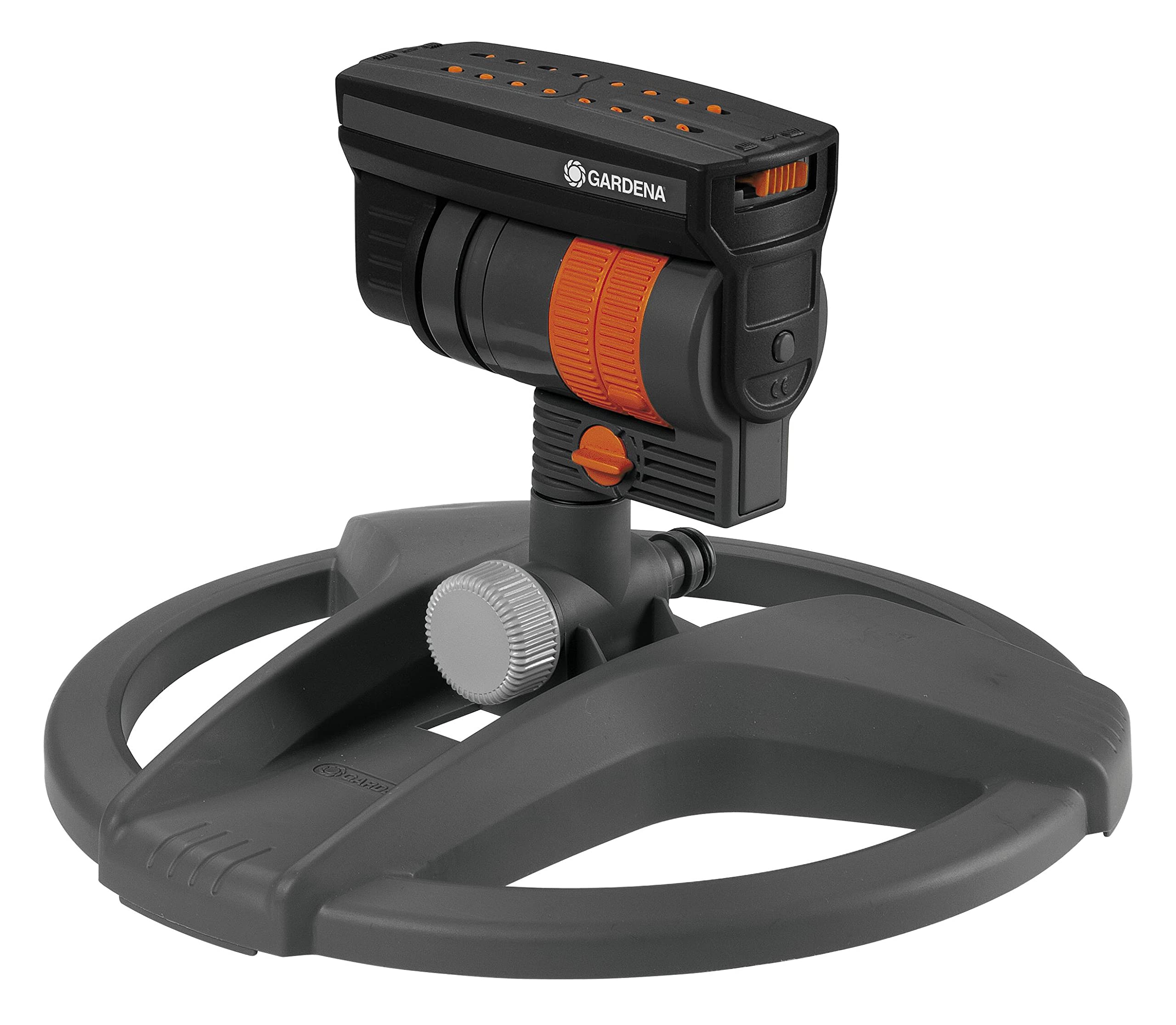
A compact rectangular sprinkler that offers stepless adjustments of range and spray width, plus flow control and a sturdy base for asymmetric areas.
Why I picked it: Excellent geometry and flow control for oddly shaped lawns.
Best for: Small to mid-sized rectangular or irregular lawns.
Higher-end compact option for gardeners who want precise control.
Pros
- Stepless range and width adjustment
- Flow control for water saving
- Sturdy base holds position
- Good for asymmetric layouts
Cons
- Not ideal for very large lawns
- Requires standard hose connector (not included)
My take
I use the ZoomMaxx where I need to tailor watering to narrow beds and odd corners. The multiple adjustment wheels let me independently set left/right amplitude and jet angle — great for avoiding sidewalks or house walls.
The integrated fine filter keeps grit out and the flow control helps me conserve water when plants don’t need a heavy soak. It’s compact but feels solid, and it handles lower pressure well.
If you want something that adapts to weird garden geometry, this is one of the most flexible oscillators I’ve used.
6. Gardena Classic Polo 220 – Best Durable Classic
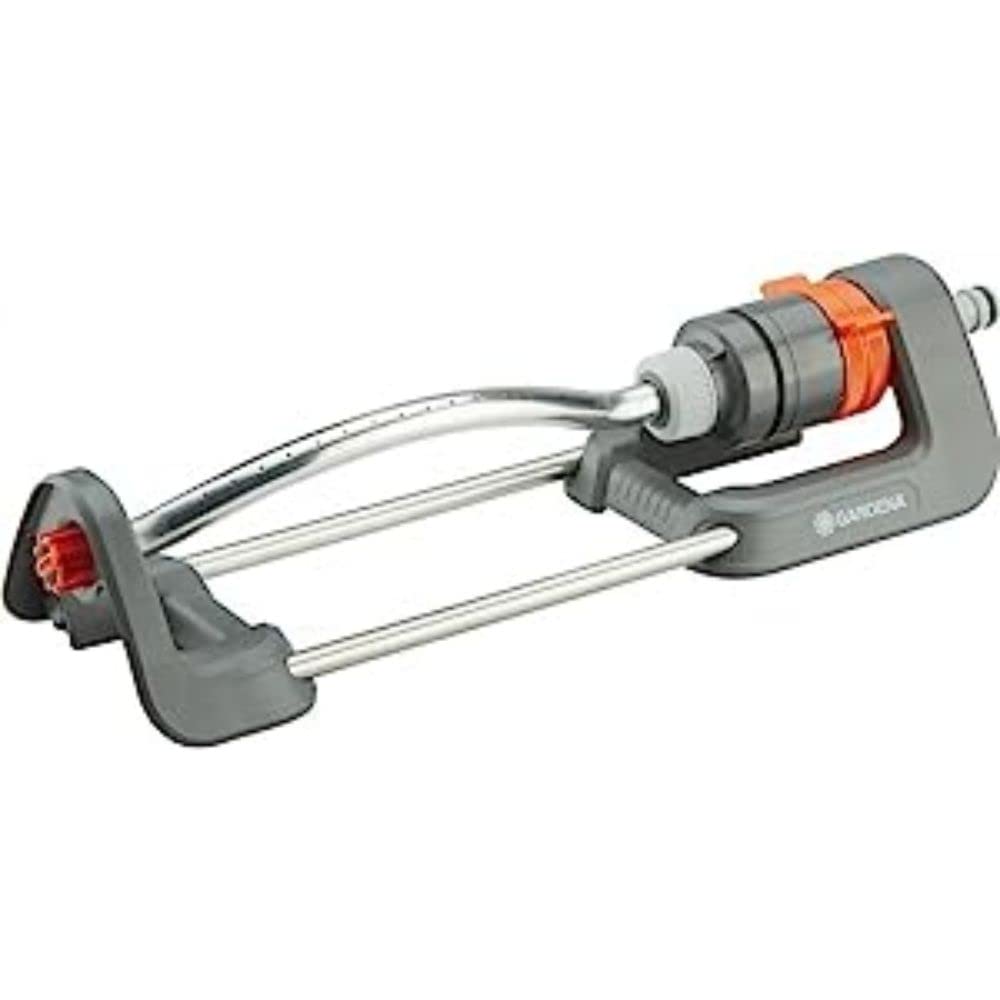
A reliable square sprinkler that emphasizes even, puddle-free watering via a multi-stage turbine gear and a stainless-steel fine mesh sieve for maintenance-free operation.
Why I picked it: Delivers consistently even coverage and low-maintenance filtration.
Best for: Medium rectangular lawns where consistent, puddle-free watering matters.
A durable, low-maintenance choice from a reputable brand.
Pros
- Very even, puddle-free watering
- Continuously adjustable range
- Stainless steel dirt sieve
- Easy nozzle cleaning
Cons
- Limited to rectangular coverage patterns
- Higher-priced than basic models
My take
I appreciated how the Classic Polo spreads water without creating puddles. The multi-stage turbine gear evens out the spray so turf soaks uniformly rather than getting splashed in the center.
The stainless-steel mesh keeps dirt out and makes this nearly maintenance-free — I haven’t had to baby it between seasons. It’s especially handy when I need predictable, even coverage without constantly repositioning.
This is the sort of dependable tool I reach for when I want professional-like results without installing a permanent system.
7. Hourleey 360° Metal Spot Sprinkler (2-Pack) – Best Metal Spot (2-Pack)
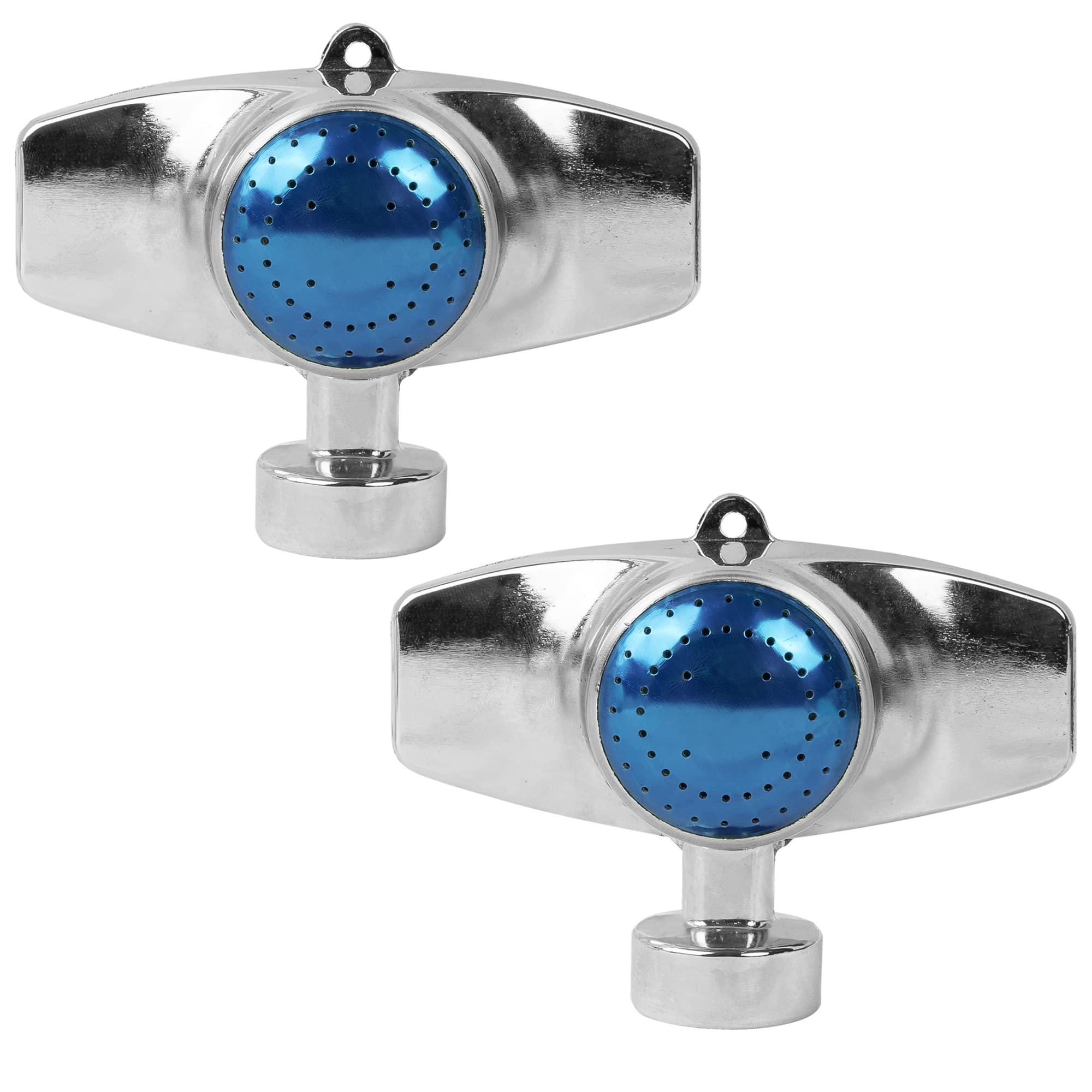
A pair of alloy metal circular-pattern sprinklers that provide gentle 360° coverage up to about 30ft diameter depending on pressure, built with O-rings to prevent leaks.
Why I picked it: Metal build and two-pack value make it a reliable, movable solution for small lawns.
Best for: Small front yards, patios, and multiple small garden zones.
Low-cost, durable metal alternative to plastic spot heads.
Pros
- Solid alloy metal construction
- 360° coverage up to 30ft
- Includes O-rings to reduce leaks
- Simple, maintenance-free design
Cons
- Coverage varies with water pressure
- Lighter metal than cast-iron units
My take
I liked having two of these on hand to cover different small zones without moving a single unit. The metal construction feels tougher than most plastic heads and the blue finish looks neat in the yard.
They’re dead-simple: screw onto a standard hose, tweak the faucet, and the spray adjusts naturally with pressure. I used one on a front garden bed and one on a small lawn patch — both worked well.
If you want something you can stash and forget, these metal spot sprinklers are an excellent, inexpensive option.
8. SYOOY 360° Metal Spot Sprinkler – Best Budget Metal Spot
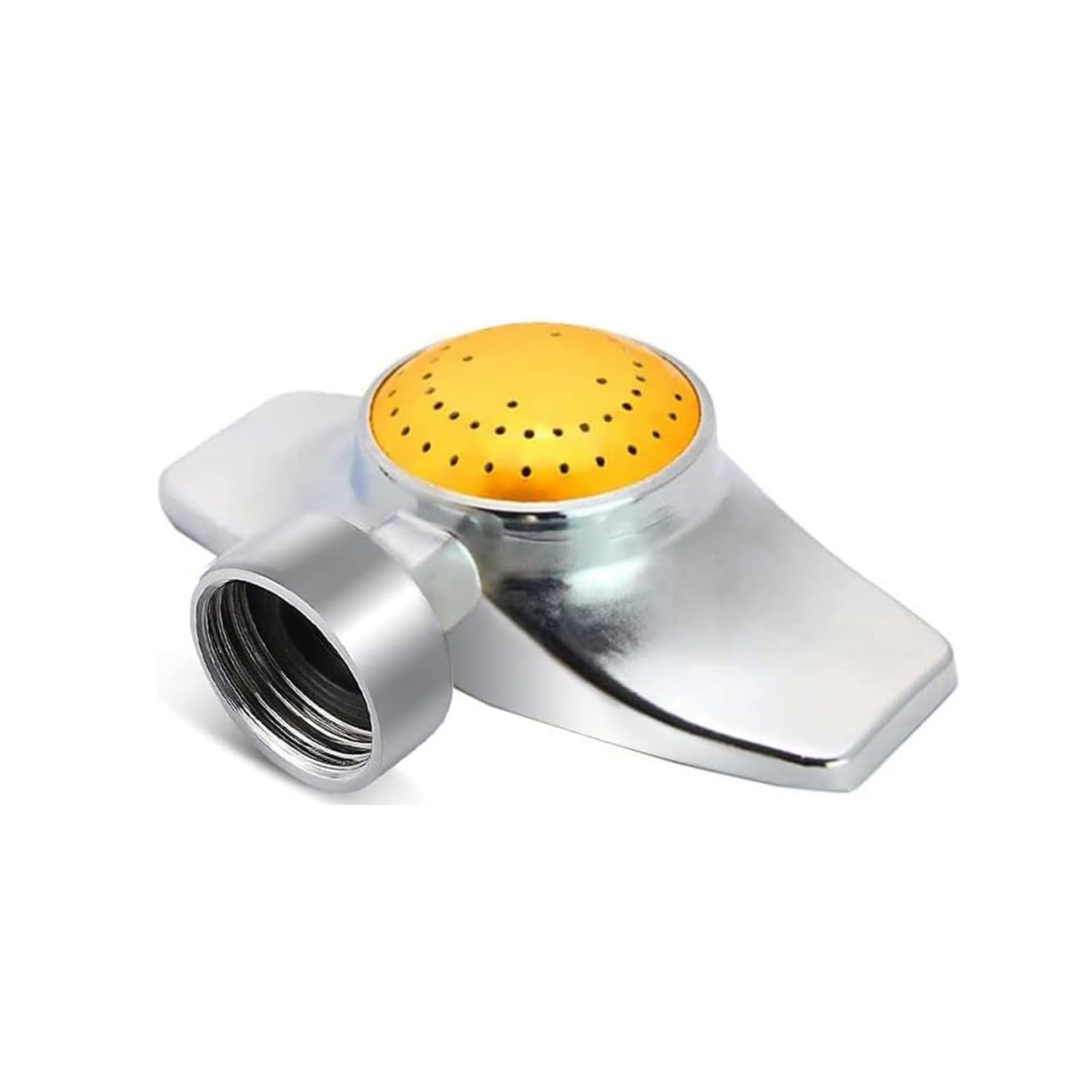
A small, heavy-duty metal circular sprinkler that provides even 360° spray for very small yards, gardens, and patios at a bargain price.
Why I picked it: Simple, real-metal construction and solid performance at a very low cost.
Best for: Tiny lawns, container gardens, and quick spot watering.
Extremely budget-friendly — great as a backup or for tight budgets.
Pros
- Durable metal body
- Easy to use and position
- Good spray for small areas
- Very low price
Cons
- Not heavy enough to always stay put
- Limited to small coverage areas
My take
I bought this as a cheap, honest solution for a small backyard garden. It screws onto the hose and performs exactly as expected — even coverage and easy adjustment via the faucet.
The metal feels good for the price, though I’d prefer a slightly heavier alloy so it stays put without anchoring. Still, for simple spot-watering tasks it’s hard to beat on value.
I move it around the yard as needed and it reliably soaks the intended area without fuss.
How I Choose an Oscillating Sprinkler
Match the sprinkler type to your yard
I start by deciding whether I need a roaming traveling sprinkler, a broad oscillating unit, or a small circular spot sprinkler. Traveling units like the Rain Train are perfect for very long, open lawns. Oscillators with multiple nozzles are my go-to for rectangular lawns and mixed beds. Metal spot sprinklers are ideal for tiny areas and low-pressure situations.
- Large, open yards: choose a traveling sprinkler
- Rectangular or mixed beds: use an oscillating rectangular sprinkler
- Small patches or low pressure: pick a metal spot sprinkler
Consider coverage and adjustability
I always check the claimed spray length and width and then look for fine adjustments — sliding tabs, flow control, and separate left/right amplitude adjustments make a practical difference in the yard.
Precision controls save water and prevent overspray onto sidewalks and foundations.
- Look for independent left/right amplitude controls
- Flow control helps when water needs are variable
- Built-in filters reduce nozzle clogs
Account for water pressure and hose size
I measure or estimate my household water pressure before buying. Traveling sprinklers perform best with larger hoses (I prefer 5/8") to minimize pressure loss over long runs. Spot sprinklers perform acceptably at low pressure, but coverage will shrink as pressure drops.
- Low pressure: choose spot sprinklers or adjustable oscillators
- Long hose runs: use 5/8" hose to reduce pressure loss
- Higher pressure: larger oscillators and traveling units reach farther
Look for durability and maintenance features
I favor metal housings or robust plastics, plus features like sealed drive motors, stainless-steel filters, and soft nozzles that are easy to clean. Those details cut down on downtime and repair chores for me.
- Sealed motors extend gear life
- Stainless or removable filters prevent clogs
- Metal bodies resist breakage but may be heavier to move
Think about connection and convenience
Quick-connect fittings and swivel hose connections remove a lot of the frustration of kinked hoses and leaking joints. If I’m frequently swapping tools, that feature is worth prioritizing.
- Quick-connect adapters save setup time
- Weighted bases and stakes keep units stable
- Check whether connectors are included in the box
Frequently Asked Questions
Which sprinkler should I pick for a very large yard?
For very large, open areas I use a traveling sprinkler like the Nelson Rain Train — it walks the hose and covers long distances without constant repositioning. Pair it with a wider hose to maintain pressure on long runs.
Can I use a small metal spot sprinkler with low water pressure?
Yes. I often use metal spot sprinklers in low-pressure situations because they produce a steady, gentle spray where oscillators might stall or produce uneven coverage.
How do I prevent nozzle clogs?
I use units with removable or stainless filters and soft nozzles that can be cleaned easily. When filters aren’t available, I run the sprinkler backwards under clean water and use the included cleaning tool if supplied.
Are these sprinklers safe to leave outside year-round?
Some models are UV- and frost-resistant (for example Gardena units) and can be left outside, but I usually store most plastic and metal units over winter to extend their life, especially if freezes are frequent in my area.
Final Take
I’ve tried everything from compact metal spot heads to heavy-duty traveling sprinklers, and the best choice for you depends on yard size and how much hands-off watering you want.
For broad, reliable coverage in a typical suburban yard I reach first for the Eden Turbo. For very large fields the Rain Train saves hours, and for precise beds the Gardena AquaZoom and ZoomMaxx give me control I can’t get from cheaper oscillators.
Pick the one that matches your watering pattern, hose setup, and durability needs, and you’ll cut watering time while keeping plants healthier.
