
I tested four practical fans for patios and covered outdoor spaces — from portable blowers to a wet-rated ceiling fan — and I share which one worked best in each situation.
I spend a lot of time testing fans across porches, garages, and covered patios to find options that actually move air where you need it. For this roundup I focused on portability, raw airflow, outdoor suitability, and ease of installation.
My selections range from compact utility blowers to heavy-duty floor fans and a wet-rated ceiling fan. I tried each on real patios and in workshop settings so I could compare power, noise, and fit for different outdoor setups.
If you need raw blast power for an open garage or covered patio, I lean toward the 20-inch industrial fans. For a finished porch that needs quiet, steady circulation and weather protection, I prefer the Honeywell ceiling fan. The Lasko is my pick when I want compact, targeted airflow and portability.
1. Lasko Pivoting Utility Fan – Best Portable Utility
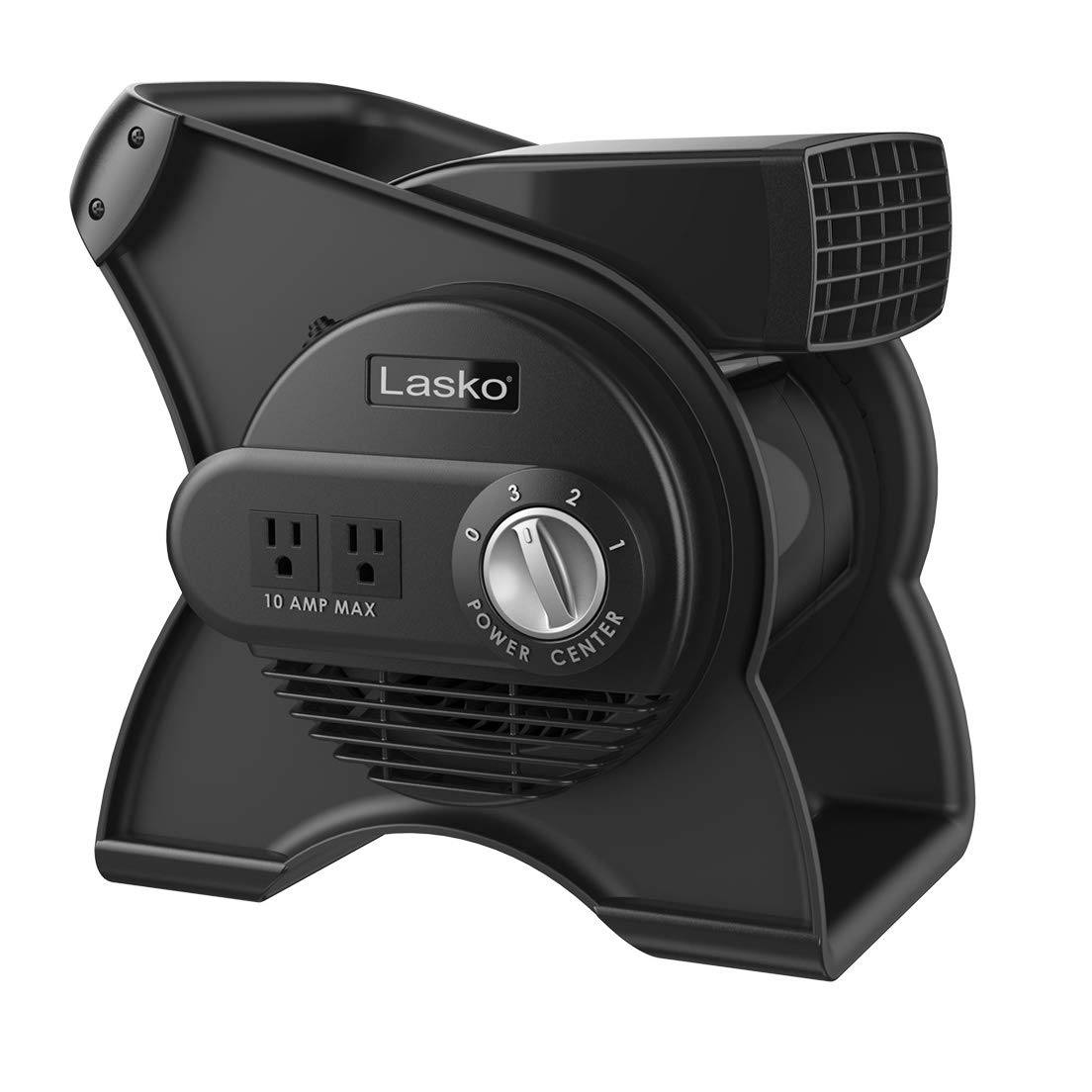
A compact, powerful blower I use when I need targeted airflow and portability.
Why I picked it: Compact footprint with strong 3-speed airflow and handy built-in outlets.
Best for: Spot cooling, drying damp spots, garages, and tight patio corners.
Affordable utility-level performance.
Pros
- Compact but surprisingly powerful
- Three-speed control
- 270-degree pivot for aiming
- Two grounded accessory outlets
- Lightweight and easy to carry
Cons
- Louder at top speed
- Cord could be longer
My take
I brought this Lasko fan to my back porch and into the garage and relied on it for quick, directional airflow. The pivot lets me aim a focused stream where I need it — over wet carpet to dry it out and toward seating when guests wanted a breeze.
The three speeds cover everything from gentle circulation to a strong air mover; I found even the lowest setting useful for sleeping white-noise and light circulation. The unit feels sturdy out of the box and the built-in carry handle makes it simple to move between rooms.
Two grounded outlets on the housing are handy when I'm running a work light or plugging a second fan in the same circuit. Safety features like the ETL listing and the resettable breaker give me confidence when using it around outdoor outlets.
Noise rises on the highest setting, so I avoid max power when we're sitting on the porch. For focused, portable airflow and quick drying tasks, this fan is a reliable, no-fuss tool.
2. BILT HARD 20-inch High Velocity Fan – Best Heavy Duty
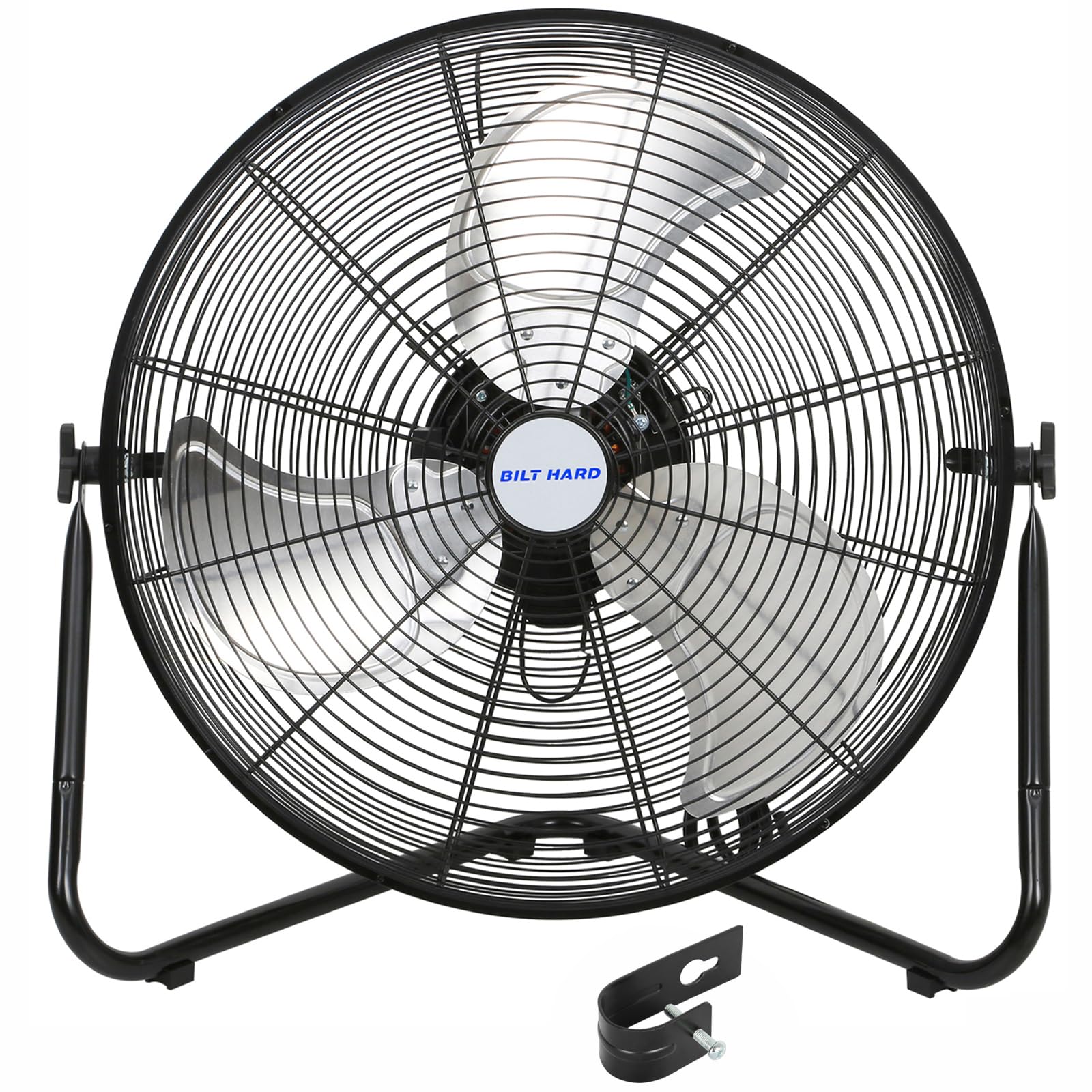
A rugged, all-metal fan I use when I need maximum airflow and optional wall mounting.
Why I picked it: Extremely high airflow, metal construction, and a wall-mount option for versatile placement.
Best for: Large covered patios, garages, workshops needing powerful circulation.
More powerful option at a sensible mid-range cost for industrial fans.
Pros
- Very high airflow output
- Sturdy all-metal construction
- Tilts 360 degrees
- Wall-mountable bracket included
- Three practical speed settings
Cons
- Noticeably loud on high
- Bulky to move around
My take
When I want to move serious air across a big covered patio or garage, this Bilt Hard fan is my go-to. The 20-inch aluminum blades and heavy-gauge housing deliver a blast of air that clears humidity and keeps workout areas comfortable.
I mounted it on a shop wall and the included bracket made the transition from floor to wall straightforward. The tilt and pivot let me aim the airflow exactly where I want it, which is great for exhausting hot pockets or directing a breeze over a seating area.
The three speed settings are useful — even the lowest setting feels strong compared with standard box fans. Expect more motor and airflow noise than smaller enclosed units; this is an industrial fan built to move volume, not disappear into the background.
Build quality and the rubber-footed tube base keep the fan stable during operation. For high-demand outdoor or semi-outdoor jobs where power matters more than whisper-quiet operation, this fan performs exactly as I need.
3. Honeywell Belmar 52-inch Outdoor Ceiling Fan – Best Ceiling Fan
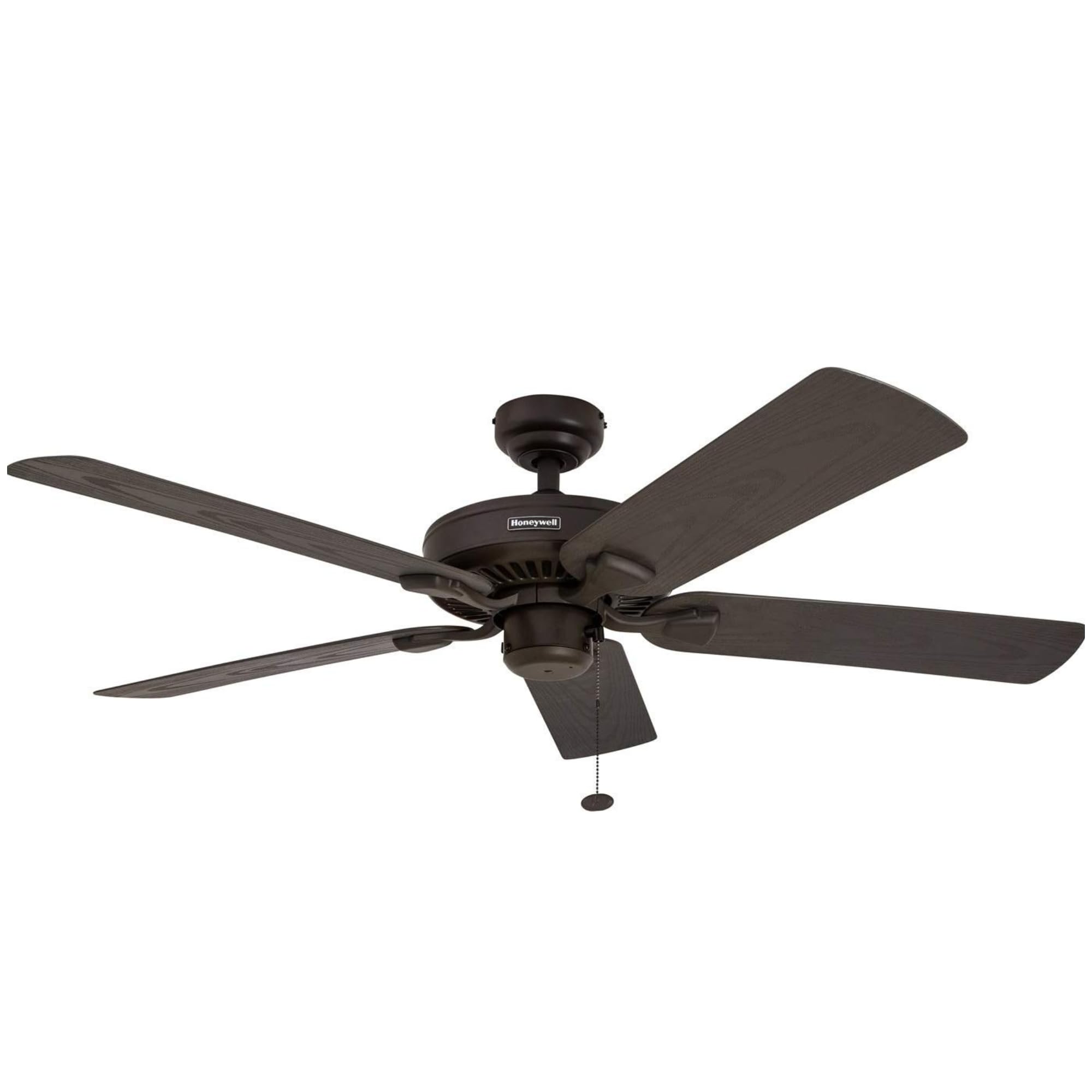
A wet-rated ceiling fan I installed on a covered porch for quiet, balanced airflow.
Why I picked it: Wet-rated design, quiet motor, and reversible airflow for year-round use.
Best for: Covered porches, gazebos, and outdoor kitchens needing steady, quiet ceiling circulation.
Quality ceiling-fan value with long-term warranty coverage.
Pros
- ETL wet-rated for outdoor use
- Quiet, balanced motor
- Reversible for year-round comfort
- Classic 5-blade styling
- Tri-mount hanging options
Cons
- Remote control sold separately
- Light kit not included
My take
I installed the Honeywell Belmar on a covered porch and appreciated how quietly it moves air compared with box and floor fans. The blades are well balanced out of the box, so I didn't have to fiddle with adjustments to stop wobble.
The wet rating gave me confidence using it under an open-sided porch; it's designed for covered outdoor spaces where weather exposure is possible. Reversing the motor for winter circulation also helped me even out heat in the house during colder months.
Control is local via pull chains, and I paired it with a universal remote I already had to make operation simpler. The included short downrod works for standard ceilings, but I installed a longer rod for better blade clearance on a steeper roof pitch.
Overall, this fan delivers steady, quiet airflow and a style that fits finished porches. Expect to wire it into your home's circuit or have an electrician help with installation for the cleanest result.
4. Simple Deluxe 20-inch Industrial Fan – Best Value
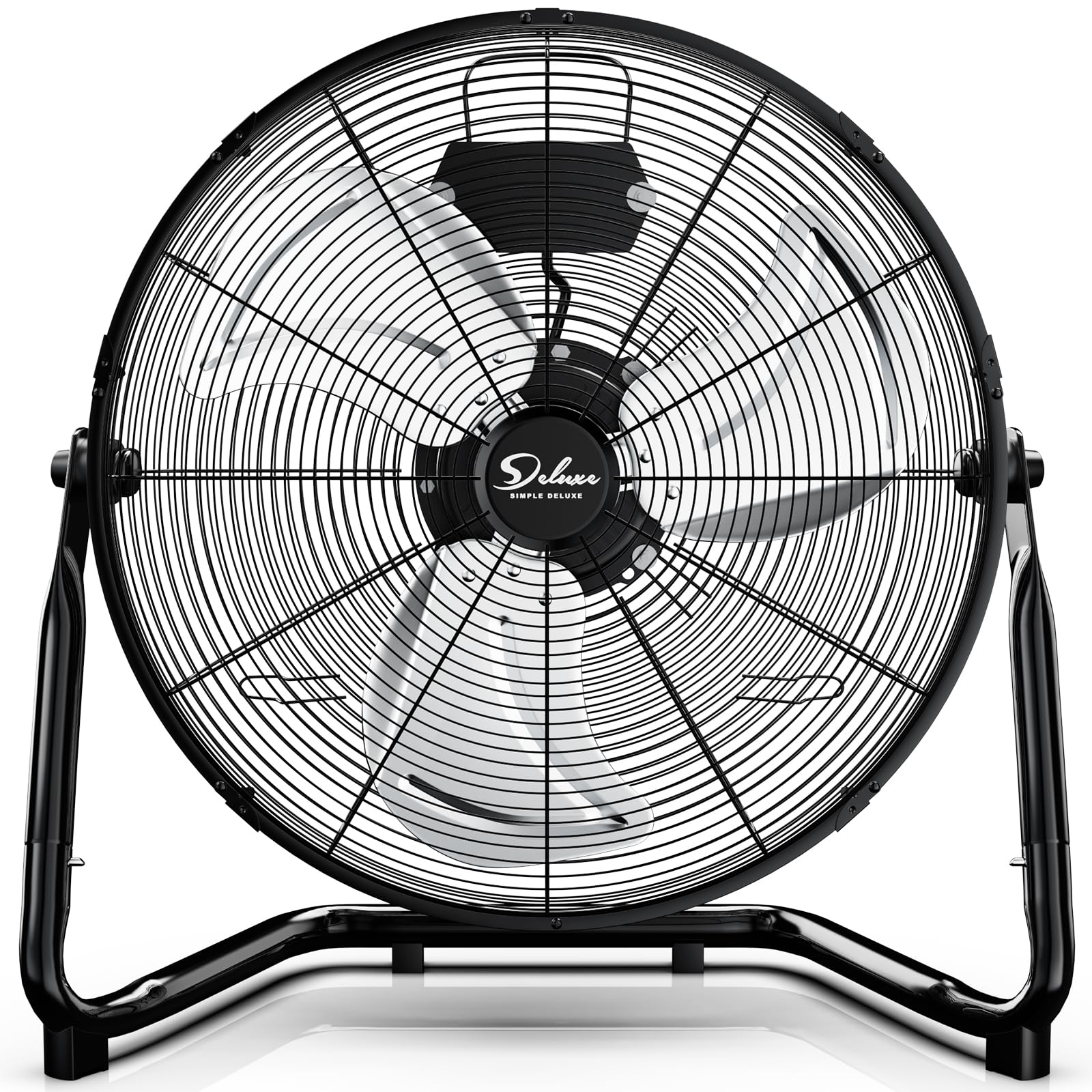
A no-nonsense metal fan that pushes a lot of air for the price.
Why I picked it: Solid metal construction, ball-bearing motor, and high CFM for the money.
Best for: Workshops, basements, garages, and larger covered patio areas.
Very affordable for heavy-duty air movement.
Pros
- High airflow capacity
- Durable ball-bearing motor
- All-metal construction
- 360-degree tilt adjustment
- Reinforced safety grill
Cons
- Louder than enclosed fans
- Short power cord
My take
I used the Simple Deluxe fan to push cool basement air upstairs and for garage circulation during summer projects. Even on low it moves noticeable air; on high it’s powerful enough to stir blinds and papers in adjacent rooms.
Construction is heavy and straightforward — metal blades, solid cage, and rear handles that make it manageable to reposition. The grill spacing is tight, which gives me peace of mind when pets or kids are nearby.
Noise is the trade-off: this fan is not subtle. I wouldn’t place it in a TV room or quiet porch, but for a workshop or space where airflow matters most, it’s an excellent value. Routine oiling and basic maintenance keep the ball-bearing motor running smoothly over time.
If you want raw performance on a budget and don’t need whisper-quiet operation, this unit delivers consistent, dependable airflow.
How I Choose an Outdoor Fan
Match the fan to the space
I start by assessing the size and type of the outdoor area. A covered porch with seating benefits from a ceiling fan or a quieter oscillating unit, while an open garage or workshop usually needs a high-CFM floor fan.
Think about where you can mount the fan and whether you need portability to move it between areas.
- Small covered porch — choose a ceiling fan with a wet rating.
- Large open patio or garage — favor high-CFM floor or wall fans.
- Spot cooling and drying — pick a compact pivoting blower.
Weather rating and mounting
I always check whether a fan is wet-rated or just damp-rated. For exposed outdoor areas that get direct moisture, a wet-rated ceiling fan is the safer choice.
Consider whether you want a floor fan, a wall-mounted option, or a hard-wired ceiling unit; each has different installation needs and placement flexibility.
- Wet-rated = safe for direct exposure to rain.
- Damp-rated = fine for covered patios, not direct rain.
- Wall brackets add versatility without sacrificing floor space.
Power, airflow, and noise
I compare advertised airflow numbers with how the unit feels in real life — more CFM means more air but usually more noise. For conversation areas I pick quieter motors; for workshops I prioritize airflow over silence.
Three-speed controls give the flexibility I need for different activities and times of day.
- High CFM = strong airflow, typically louder.
- Multiple speeds let you balance comfort and noise.
- Metal fans often move more air than plastic counterparts.
Practical features I care about
I look for long power cords, grounded outlets on the housing, pivoting heads, and mounting hardware. Small conveniences like handles and easy-clean grills make using the fan day-to-day far more pleasant.
Warranty and safety certifications (ETL/UL) are features I prioritize when using fans in outdoor or semi-outdoor environments.
- Check cord length and outlet placement before finalizing location.
- Handles and brackets make seasonal storage and repositioning easy.
- ETL/UL listings and resettable breakers are nice safety additions.
Frequently Asked Questions
Can I use these fans on an uncovered patio?
I avoid placing floor and utility fans on fully uncovered patios during rain. The Honeywell Belmar I included is wet-rated and safe for covered outdoor use; the metal floor fans perform well on covered patios or in garage/ workshop settings but should be sheltered from direct exposure.
Do I need an electrician to install the ceiling fan?
I recommend hiring an electrician unless you’re comfortable with household wiring. The Honeywell fan requires hardwiring for permanent installation; a pro ensures the wiring and mounting are safe and the fan is balanced.
Are high-velocity fans noisy for social spaces?
In my experience, yes — industrial 20-inch fans and high-velocity blowers are noticeably louder on higher settings. I use them for workshops, drying, or when loud operation isn’t a concern. For conversation-friendly porches, I prefer a quiet, wet-rated ceiling fan.
Final Take
I picked these four fans because they meet different patio needs: portability and targeted airflow, heavy-duty power, quiet ceiling circulation, and strong value performance.
If I must choose one for a finished porch, I reach for the Honeywell Belmar. For raw airflow on a covered patio or garage, the BILT HARD or Simple Deluxe units have the muscle. For quick drying or moving air to a tight spot, the Lasko utility fan is my go-to.
Whichever you choose, match the fan to your space, consider weather protection, and plan for the noise level you can live with.
