
I tested four firewood storage options — bracket kits, full steel racks with covers, compact racks, and decorative hoops — to find dependable ways to keep logs dry and organized. Here’s what worked for me and which setup
I spent time assembling and living with several firewood storage solutions so I could tell you which designs actually make seasonal wood storage easier. I evaluated build quality, ease of setup, capacity, weather protection, and how the cover systems perform when wind or snow arrive.
Below I summarize what I used, why each piece stood out, and which one I’d pick depending on how much wood you need to store and where you plan to put it.
If you want a DIY, low-cost solution, the bracket kit is the fastest path. For long-term, heavy-capacity storage choose the full-size Woodhaven racks with covers. The smaller Woodhaven model is my pick when space is limited. The tubular hoop is a stylish short-term holder for patio or indoor use.
1. MOFEEZ Firewood Bracket Kit – Best DIY Bracket Kit
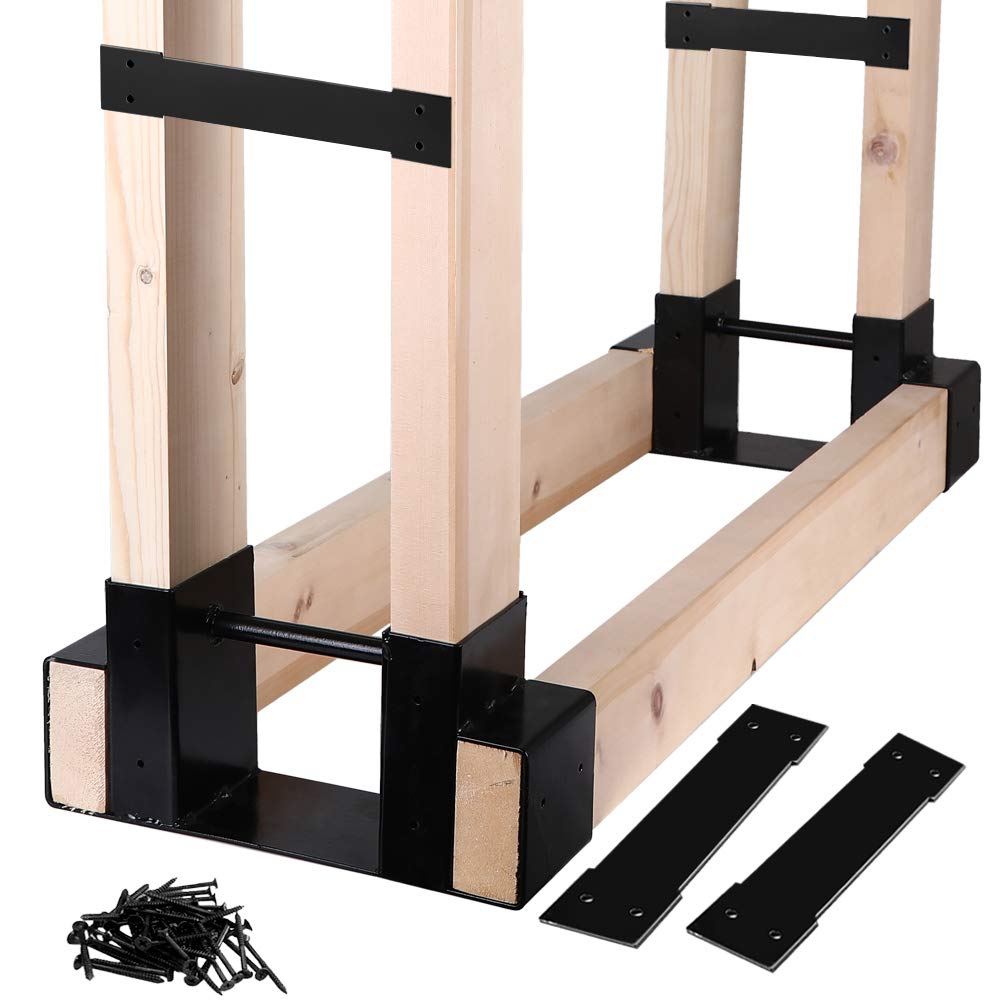
A pair of heavy-gauge steel brackets that let me build a custom-length rack using my own lumber. I liked the powder-coat finish and the pre-drilled drain holes for breathability.
Why I picked it: Simple, heavy-duty brackets I used to create a custom rack without buying a full assembly.
Best for: DIYers who want a customizable, low-cost rack built from standard lumber.
The most affordable way to build a long rack using your own timber.
Pros
- Sturdy 14-gauge steel construction
- Powder-coated for rust resistance
- Pre-drilled drain holes
- Customizable length with lumber
- Includes mounting screws
Cons
- Lumber not included
- Boards can be slightly loose in slots
- Requires cutting/assembling lumber
My take
I used the MOFEEZ brackets to build a 6-foot-wide rack from pressure-treated 2x4s and the result felt impressively solid. The 14GA steel is heavier than I expected and the welds looked clean, which gave the whole assembly a reassuring heft once loaded with split oak.
Assembly was straightforward — the kit includes wood screws and the bracket openings accept standard dimensional lumber. I noticed the openings are a bit roomy on some 2x4s, so I secured the uprights with exterior screws to eliminate wobble. The pre-drilled drain holes along the bottom are a small but practical touch that helps prevent trapped moisture.
The powder-coated finish stood up to outdoor exposure on my deck, and since the brackets are just steel plates they’re easy to position for any length. If you want a no-frills, customizable rack that won’t break the bank and will last, this bracket kit delivered exactly that for me.
2. Woodhaven 8-Foot Firewood Rack with Cover – Best Heavy-Duty Full Rack
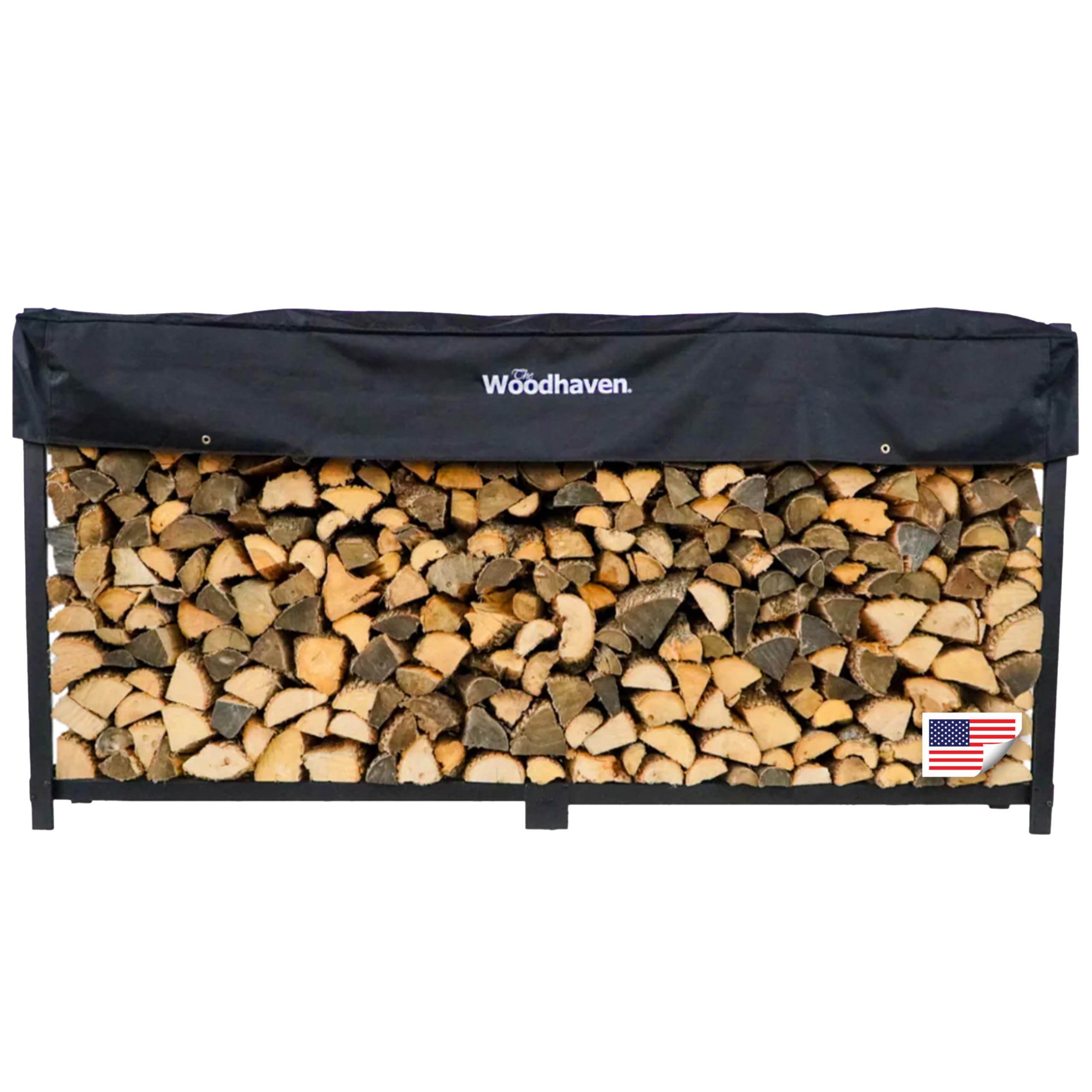
A heavy-gauge, American-made steel rack that holds a large supply of logs and comes with a top covering system designed to protect the top layer while allowing airflow.
Why I picked it: A very sturdy, large-capacity steel rack with a functional cover for year-round outdoor use.
Best for: Homes that need to store a big supply of seasoned logs near the house or patio.
A premium, long-lasting option worth the investment for heavy use.
Pros
- Heavy 16-gauge steel frame
- Holds a large log supply
- Raised design improves airflow
- Cover with elastic and velcro
- Made in USA craftsmanship
Cons
- Cover can shift in high winds
- Heavier to move once assembled
- More expensive than basic racks
My take
I put the Woodhaven 8-foot rack on my deck to hold a serious amount of seasoned wood. The steel is thick and the assembly hardware lined up precisely, so the build went quickly and produced a rock-solid structure that didn’t wobble under a full load.
The included cover is well thought out: elastic ends let me lower it as the pile shrinks and Velcro access flaps make grabbing wood easy. In high winds I had to tuck it in more carefully, but it handled heavy snow and rain without letting the top layer get saturated.
Because the rack keeps wood several inches off the ground it improved drying time on my wetter logs and reduced rot and critter access. I view this one as a long-term investment if you want a dependable, high-capacity outdoor rack.
3. Woodhaven 4-Foot Firewood Rack with Cover – Best Compact Covered Rack
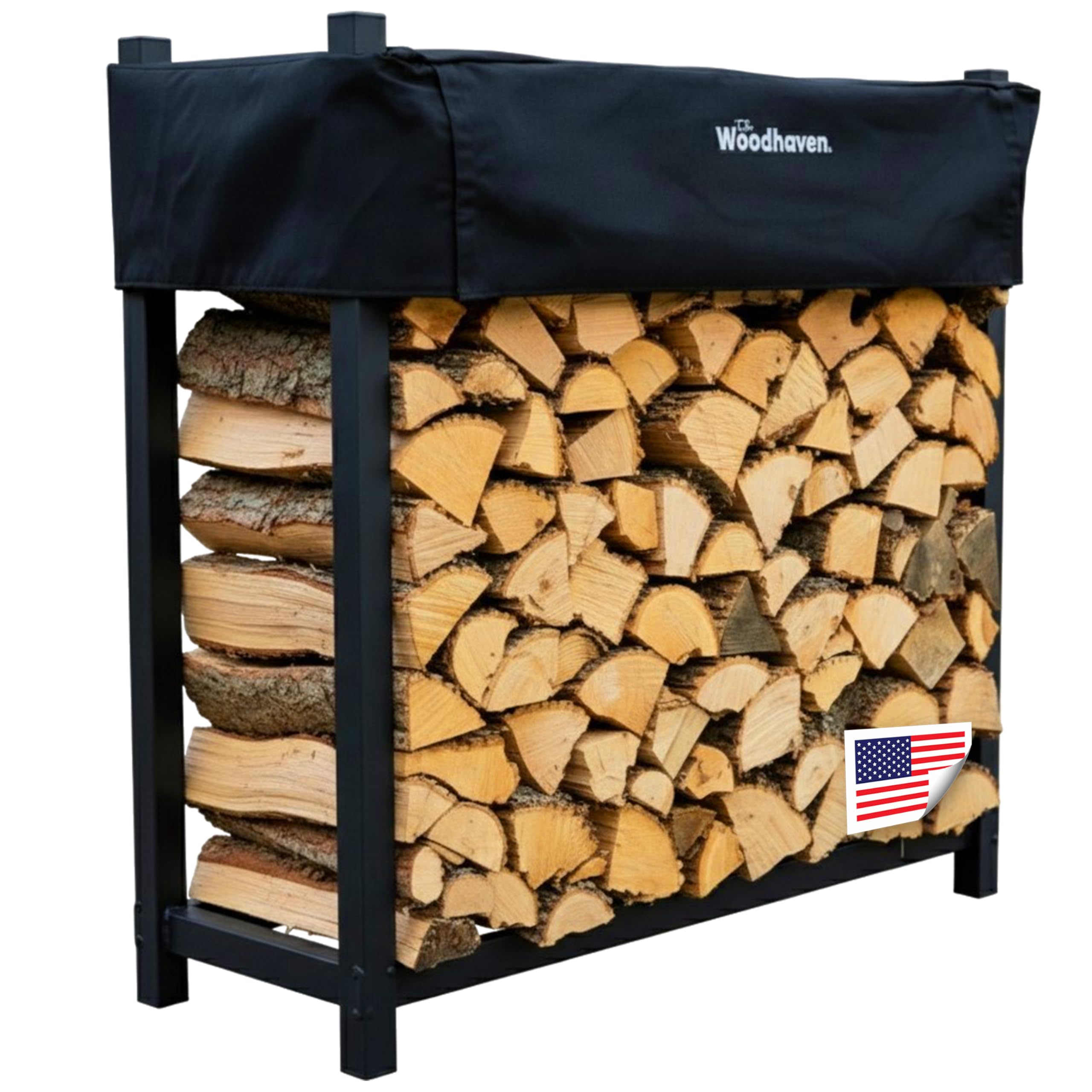
A compact, heavy-duty steel rack that’s easier to site on porches or small patios while still offering the same build quality and a cover that slides down the uprights.
Why I picked it: Compact footprint without sacrificing the same robust construction as larger models.
Best for: Small spaces, cabins, or users who want a tidy, weather-protected stack near the house.
Midrange option that balances size and durability.
Pros
- Stout steel in a compact size
- Cover slides over uprights
- Easy, precise assembly
- Keeps wood elevated
Cons
- Smaller capacity than full racks
- Instructions could be clearer
My take
For tight spaces I found the Woodhaven 4-foot rack to be an ideal compromise: it’s heavy-duty but easy to situate on a porch or by a fire pit. The fit and finish matched the larger model — stout posts and precisely punched holes made assembly a clean process.
The cover operates smoothly and I appreciated that it slides down over the uprights and secures, which lets the pile breathe while shielding the top. On my porch it prevented rain and snow on the top rows and made grabbing ready-to-burn logs convenient.
If you don’t need a half-cord capacity but still want a built-to-last rack with a proper cover, this compact Woodhaven is the unit I’d choose.
4. Goplus Tubular Log Hoop – Best Decorative Hoop
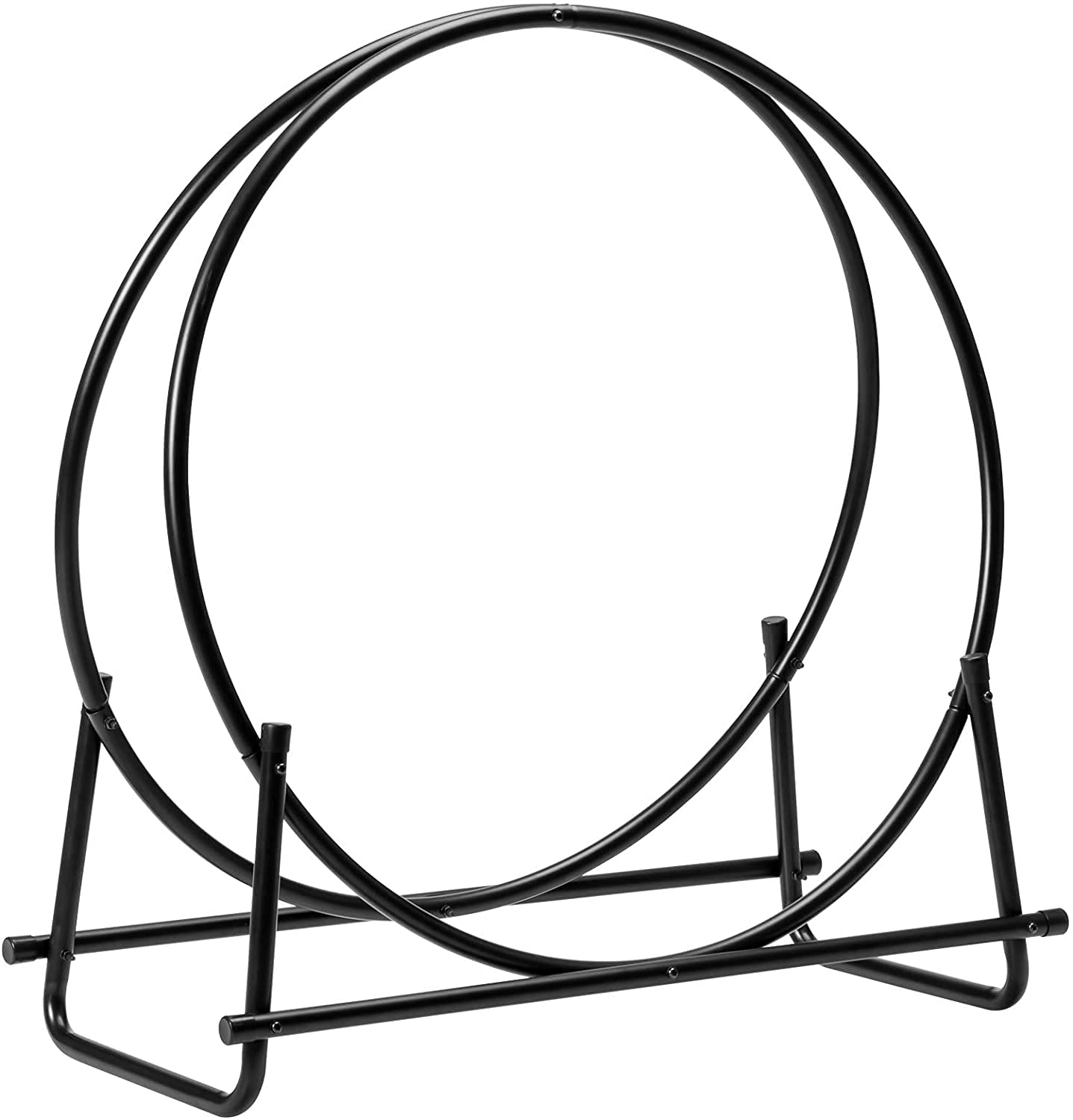
An attractive round hoop that stores an evening’s worth of logs. I used it near an outdoor fire pit and inside next to a woodstove for short-term, stylish storage.
Why I picked it: A visually pleasing, lightweight option for holding a modest amount of wood neatly.
Best for: Patio or indoor use where style and convenience matter more than large capacity.
An affordable, attractive short-term storage option.
Pros
- Attractive arc design
- Holds about a quarter face-cord
- Upgraded A-frame stability
- Lightweight and easy to move
Cons
- Some hardware holes needed filing
- Not as weather-sealed as covered racks
- Assembly instructions could be clearer
My take
I placed the Goplus hoop beside my fire pit and it immediately improved the look of the space. The double-ring shape is pleasing and the tubular steel supports the pile without letting logs scatter.
Assembly was mostly simple, though I did encounter a couple of burrs in the bolt holes and had to tidy them before everything mated smoothly. Once together the hoop felt stable and the reinforced crossbars at the base stopped any sagging when I loaded it up.
This isn’t a full-season outdoor shelter for long-term storage, but for keeping an evening’s worth of burnable wood handy or providing a stylish indoor holder, it performed exactly as I wanted.
How I Choose an Outdoor Firewood Rack
Capacity and footprint
I start by matching rack capacity to how much wood I want ready at a time. Full 8-foot racks are ideal for storing large seasonal supplies, while 4-foot or hoop options work when space is limited or I only need an evening’s worth of logs.
- Decide if you need a half-cord, quarter-cord, or just short-term storage
- Measure the placement area — height and depth matter for covered models
Material and weather protection
Steel racks with powder coat will outlast thin metal or untreated options in wet climates. I always prefer a raised design or a cover to keep the bottom layer off damp ground and the top layer dry.
- Look for heavy-gauge steel (16–14GA) for long-term durability
- Covers should allow air flow while shielding the top from rain
- Drain holes or elevation help prevent rot
Ease of assembly and maintenance
I value racks that assemble with basic tools and have well-drilled holes. Bracket kits require lumber and a bit more DIY work but let me scale length; full racks arrive more complete and straightforward to erect.
- Bracket kits: cheap and customizable, but require lumber
- Pre-drilled panels and clear hardware speed up assembly
- Inspect bolt holes for paint burrs and keep spare hardware
Placement and stability
Where you place a rack changes what I choose: sheltered porches let me skip a heavy cover, exposed yards make a durable cover and anchored uprights a priority. I also consider wind — elasticized covers and Velcro tabs stay put better.
- Keep racks elevated and level for airflow
- Anchor tall racks to prevent tipping in wind
- Consider aesthetic options for near-deck or patio placement
Frequently Asked Questions
Do I need a cover for my firewood rack?
I recommend a cover for outdoor racks in rainy or snowy areas. It protects the top row while still allowing side airflow; I find covered racks keep the burnable wood ready and reduce rot.
Can I use untreated lumber with a bracket kit?
I’ve used pressure-treated and untreated boards. Untreated lumber will work but I prefer treated or sealed lumber for long-term outdoor racks to resist moisture and decay.
How high should I stack firewood on a rack?
I keep stacks below the top rail so the cover can sit properly and I can safely access logs. For stability, I avoid overly tall, unsupported piles and spread weight evenly along the length.
Are these racks suitable for indoor use?
Yes. The tubular hoop and the compact Woodhaven rack worked well indoors near my woodstove, but I avoid using outdoor-only covers inside where debris or moisture could transfer.
Final Take
After trying these options, I’d choose the MOFEEZ brackets when I want a customizable, budget-friendly rack built from my own lumber. For long-term, large-capacity storage the Woodhaven 8-foot model gave me the most confidence, while the 4-foot Woodhaven was my pick for small spaces. The Goplus hoop is what I reach for when I want a tidy, attractive holder for short-term use.
Pick the type that matches the space, how much wood you store, and how hands-on you want to be with assembly. I found each product here excels in the role it was designed for.
