
I tested presses, portable griddles, organizers, and a propane extension hose so you can outfit a practical outdoor kitchen that cooks well, packs up fast, and cleans easily.
I spend a lot of time cooking outside — from quick weekend breakfasts on a campsite to full backyard dinner shifts for friends. Over the last season I focused on tools that make outdoor cooking faster, neater, and more reliable.
This roundup collects the specific appliances and accessories I reached for most often: a heavy-duty bacon press for crisp results, two sizes of Blackstone griddles depending on how many people I feed, a caddy that keeps my countertop tidy, and a propane extension hose that lets me position tanks where they won’t be in the way.
Below I explain why each item earned a spot in my kit and exactly when I use them, so you can match the gear to how you cook outdoors.
If you cook for two to four people or need a truly portable setup, choose the 17" Blackstone. If you feed bigger groups or want separate heat zones, go with the 22" two-burner. Add the bacon press for crisp bacon and sandwiches, the caddy to keep tools within reach, and the extension hose to hide or relocate propane safely.
1. HIC Kitchen Cast Iron Bacon Press – Best for Crisp Bacon
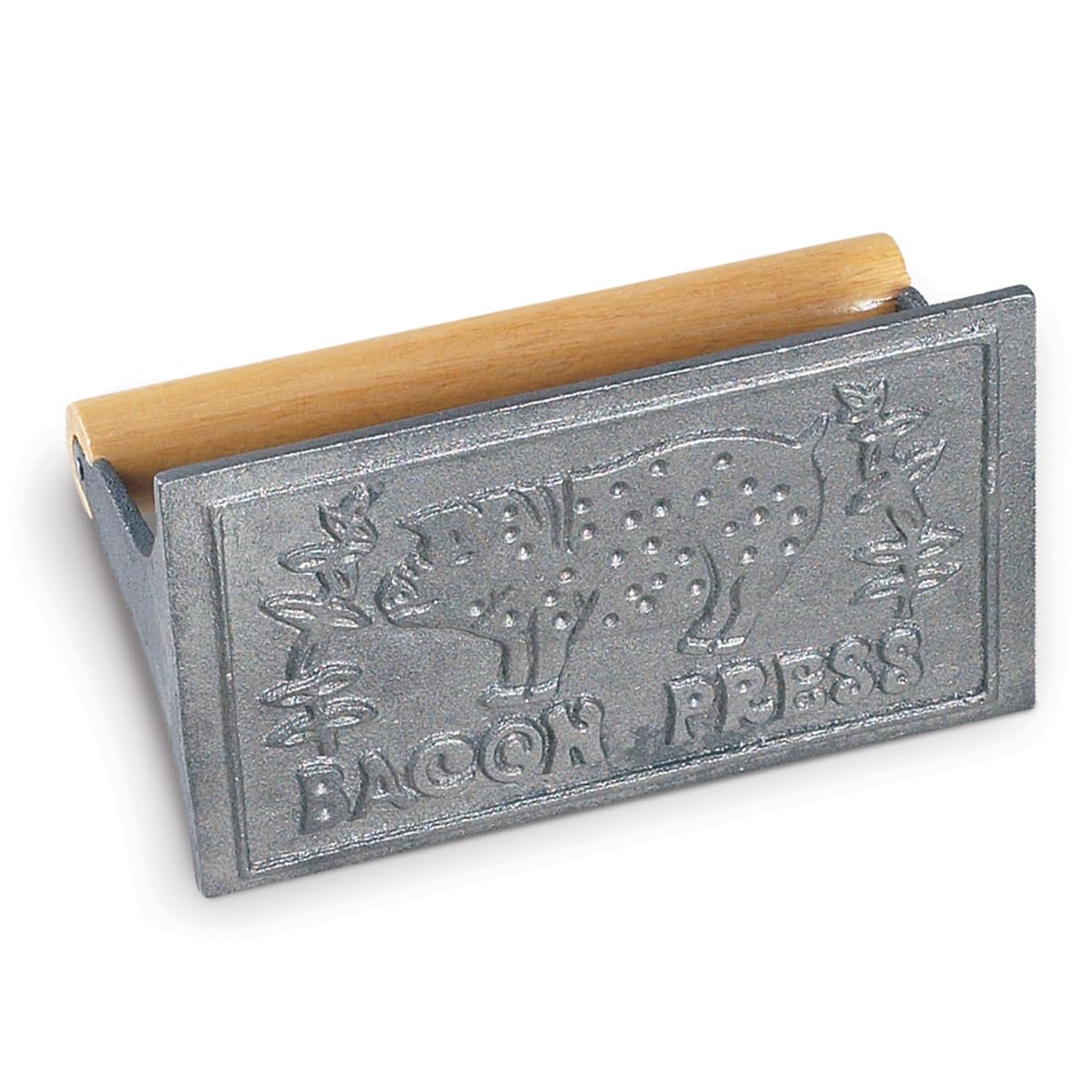
A heavyweight cast-iron press with a wooden handle that flattens bacon, reduces curling, and doubles as a sandwich and burger press.
Why I picked it: Solid cast iron construction that holds heat and flattens food for even contact and crisping.
Best for: Getting evenly cooked, flat bacon and seared sandwiches on a griddle or stovetop.
A very affordable small tool that pays for itself in faster, cleaner cooking.
Pros
- Heavy cast iron for even heat
- Stay-cool wooden handle
- Covers multiple strips or a sandwich
- Reduces splatter and curling
- Multi-use for burgers and paninis
Cons
- Hand-wash only
- Needs initial seasoning
- Can be a bit bulky in storage
My take
I use this press every week when I want bacon that lays flat and crisps evenly. Preheating the press on the griddle for a minute makes a noticeable difference in sear and cook time.
Because the press is cast iron it holds heat really well, so it helps me finish thicker cuts and melts cheese into sandwiches faster without chasing hot spots. The wooden handle stays comfortable during short presses.
I take care with non-stick pans—this is best on a seasoned griddle or stainless pan. After each use I hand wash, dry thoroughly, and keep a light oil layer after seasoning; that maintenance keeps it performing like new.
2. Blackstone 17-Inch Portable Griddle – Best Portable Griddle
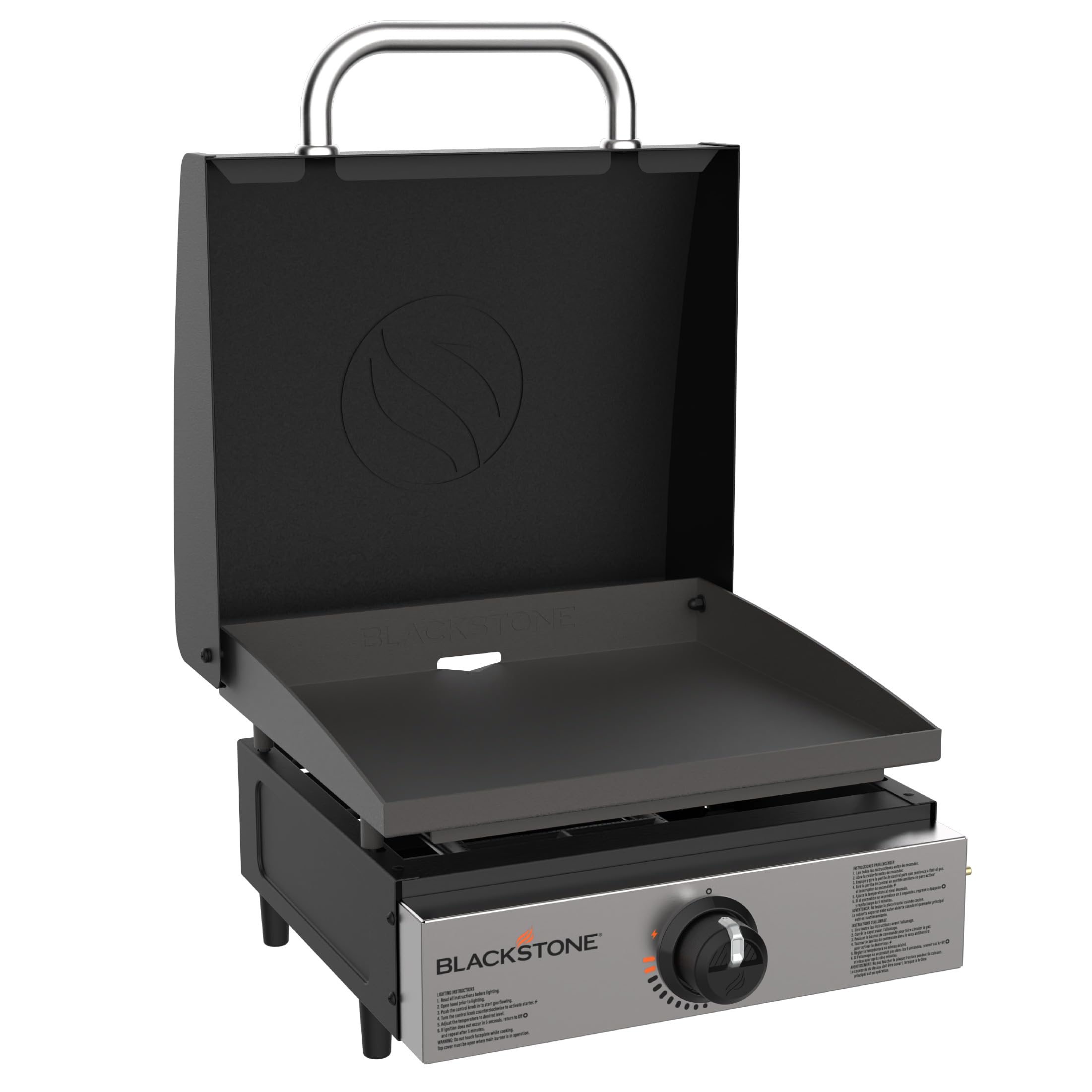
A compact, fast-heating flat top with an integrated grease tray and a hood — ideal for tailgates, camping, and small patios.
Why I picked it: Small footprint with surprisingly roomy cooking area and quick heat-up thanks to a powerful H-style burner.
Best for: Portable cooking for two to four people, breakfasts on the road, and tailgate feasts.
A practical midrange portable griddle that balances power and portability.
Pros
- Fast 12,000 BTU heat-up
- Compact and portable
- Integrated grease tray
- Even H-style burner heat
- Hood adds wind protection
Cons
- Requires proper seasoning
- Corners run slightly cooler
- Needs propane hookups or adapter
My take
I packed this 17" griddle for several camping trips and it became my go-to for breakfast and quick dinners. It heats up incredibly fast and gets to temperatures I use for searing with little wait.
Seasoning is the step that changes everything — once I built a good polymerized layer the surface was essentially nonstick and cleaning was just a quick scrape and wipe after cooking.
The grease tray makes life outdoors much less messy, and the height-adjustable feet keep the unit stable on uneven ground. I also used a propane adapter to hook it to my RV line, which made cooking on the road much simpler.
3. Blackstone 22-Inch Two-Burner Griddle – Best for Bigger Groups
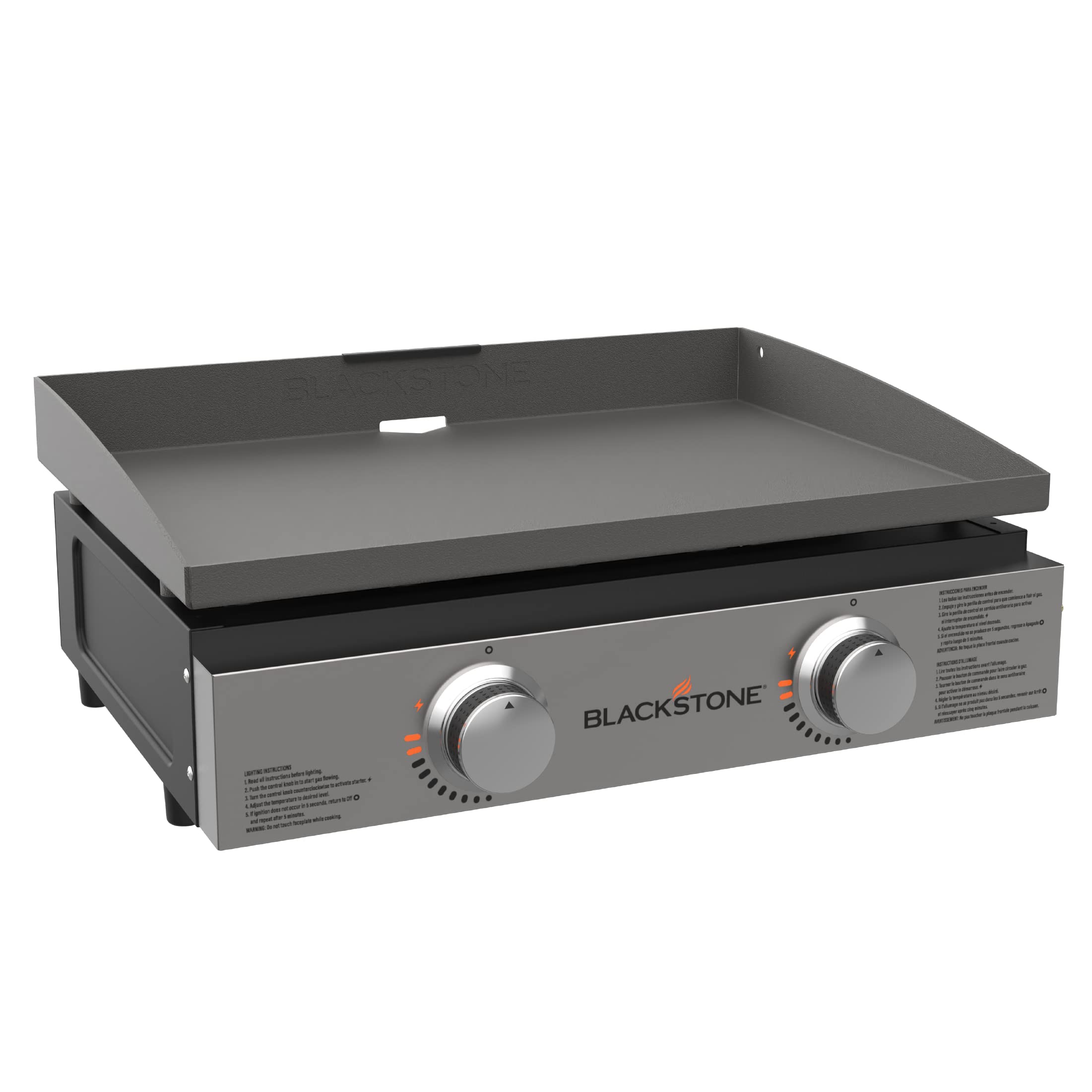
A heavy-duty two-burner griddle with a large cooking surface and independent heat zones, built for feeding crowds and multi-item cooking.
Why I picked it: Two independently controlled burners let me run high heat for sears and low heat for eggs at the same time.
Best for: Feeding families or groups and running multiple dishes in parallel while camping or at the tailgate.
A bigger investment but worth it when you need capacity and precise heat control.
Pros
- Two adjustable heat zones
- Large 361 sq. inch surface
- 24,000 BTU combined power
- Durable rolled carbon steel top
- Integrated grease management
Cons
- Quite heavy to move
- Seasoning is fuel intensive
- Accessories sold separately
My take
When I want to cook a full breakfast for a group or run burgers and veggies side-by-side, this 22" two-burner griddle is the tool I reach for. The split zones are genuinely useful for controlling doneness.
Proper seasoning took effort, but after the initial work the griddle performed like a workhorse — quick cooking, easy scraping, and consistent results even in cold weather.
I recommend prepping ingredients before you heat the plate because cooking moves fast. The construction feels robust and I’ve used it repeatedly while camping and at home with no structural issues.
4. Griddle Caddy Organizer with Paper Towel Holder – Best Accessory Organizer
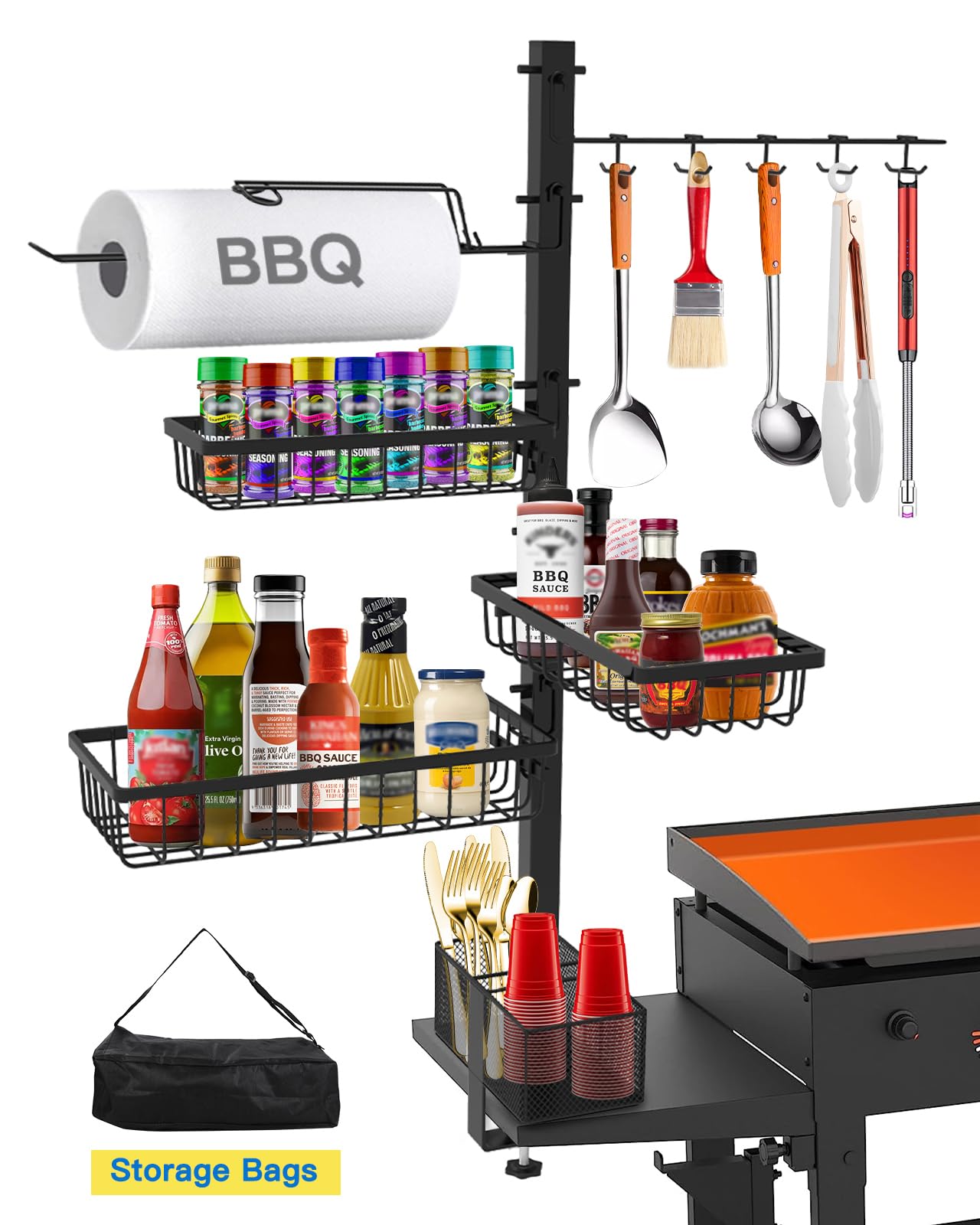
A multi-hook condiment and tool caddy with a windproof paper towel arm and three spice racks to keep an outdoor cooking area organized.
Why I picked it: Keeps spices, tools, and paper towels within reach and prevents papers from blowing away while I cook outdoors.
Best for: Campers, tailgaters, and anyone who needs a tidy prep area next to a griddle or picnic table.
An inexpensive but transformative accessory for keeping a busy outdoor station organized.
Pros
- Multiple spice racks
- Windproof paper towel arm
- Powder-coated steel durability
- 10-in-1 tool hooks
- Includes a storage bag
Cons
- Limited spacing for tall bottles
- Takes a bit to assemble
- Mounting needs a flat edge
My take
I clipped this organizer to my picnic table and it instantly cleared clutter. Everything I need for a cook — spatula, seasonings, and wipes — stayed right where I wanted it.
The windproof paper towel arm is a small design detail that made a big difference on breezy days; I stopped chasing rolls that blew away.
Assembly is straightforward and the powder-coated finish has held up against grease and weather during a season of use. My only gripe is I wish the spacing accommodated taller bottles more flexibly.
5. SHINESTAR 5-Foot Propane Extension Hose with Gauge – Best for Fuel Management
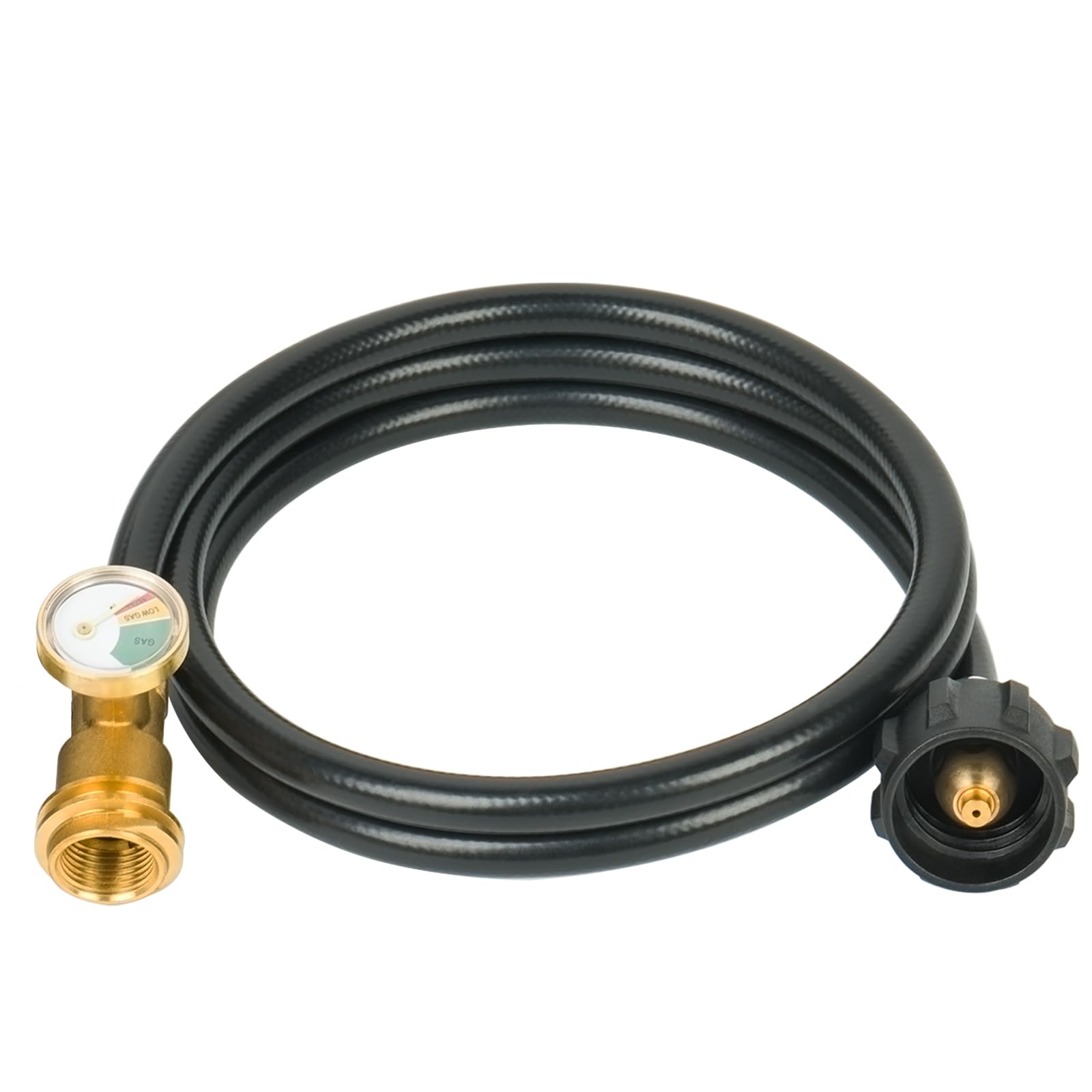
A 5-foot extension hose with a built-in gauge and brass fittings that lets me place propane tanks out of the way while keeping a clear view of fuel level.
Why I picked it: The gauge is genuinely useful and the length gives flexible placement options for tanks and grills.
Best for: RV setups, concealing tanks off the cooking surface, or adding reach in tight campsites.
An affordable upgrade that improves safety and convenience when using portable propane.
Pros
- Built-in tank gauge
- Five-foot reach
- Solid brass fittings
- Works with common QCC1 connections
- Prevents dragging heavy tanks
Cons
- Not a direct appliance connector
- Gasket can be damaged if overtightened
- Requires compatible fittings
My take
I used this extension hose to move my propane tank under a bench and it made the cooking area cleaner and safer. The gauge lets me glance at remaining fuel without undoing anything.
Installation was straightforward and the brass connections felt sturdy. In a couple of cases I noticed the gasket can be vulnerable to overtightening, so I tightened with a measured hand.
This hose doesn’t replace a regulator for older appliances, but it’s a great extension when used as intended between the tank and the appliance’s original hose.
How I Pick Outdoor Kitchen Gear
Key factors I consider
I pick outdoor appliances based on what I cook and how I transport gear. Size, fuel delivery, and surface material determine how an item performs on a trip or in the backyard.
Durability and ease of cleaning are non-negotiable for me — rust-prone steel or finicky finishes add hassle when I’m outdoors.
- Cooking surface size: Small griddles win for portability; larger plates win for feeding groups.
- Heat control: Multiple burners let me run sear and low-heat zones simultaneously.
- Seasoning and materials: Carbon steel and cast iron require seasoning but reward you with nonstick performance.
- Grease management: I always choose units with integrated grease trays or easy-wipe surfaces.
- Portability: Look at weight, footprint, and whether the unit fits in your vehicle or RV storage.
Accessories and safety I rely on
A simple caddy and a propane extension hose transformed how I set up my station. They reduce clutter and keep tanks away from high-traffic areas.
I never skip a pressure-tested hose and I avoid improvised fittings. A visible gauge and solid brass ends give me peace of mind on trips.
- Paper towel holder: Windproof designs save a lot of frustration.
- Hoses: Match connections (QCC1 or POL) to your appliance before you leave home.
- Covers and storage: Protect griddles with a cover if you store them outdoors.
Frequently Asked Questions
How do I season a griddle properly?
I clean the plate, heat it until it smokes slightly, then rub a thin coat of high-smoke-point oil and repeat heating cycles. It takes time up front, but that first seasoning creates the nonstick surface I rely on for quick cleanup and better browning.
Can I use the cast-iron bacon press on a non-stick pan?
I avoid heavy cast iron on delicate non-stick surfaces to prevent scratching. I either use the press on a seasoned griddle or place a thin piece of parchment between the press and a fragile pan when I must.
Will the SHINESTAR hose connect to my RV line?
In my setup the hose worked well as an extension between compatible QCC1 fittings and the appliance hose; for connecting to an RV bulk tank you may need the appropriate adapter. I always check thread types before I head out.
Final Take
I assemble my outdoor kitchen with a mix of compact power and clever organization: a portable griddle for quick trips, a larger two-burner when I need capacity, a cast-iron press for crisp results, and simple accessories that keep the workspace tidy and safe.
Pick the single item that solves your most frequent pain point — portability, capacity, or cleanup — and build from there. Between the Blackstone griddles, the bacon press, a good organizer, and a reliable hose, I have everything I need for consistent outdoor cooking.
