
I tested a range of outdoor water timers — from no-battery mechanical dials to Wi‑Fi, multi‑zone controllers. Here are the options I keep reaching for and why each one earns a spot in my yard.
I’ve spent seasons wiring up drip lines, moving sprinklers, and swapping timers until I found tools that actually make watering easier. In this guide I cover the mechanical, digital, and smart timers I still use around my property.
I focused on durability, programming flexibility, leak control, and real-world ease of use — the qualities that matter when I set a schedule and walk away.
I grouped these by how I actually use them: simple no‑battery runs, programmable digital timers, and smart Wi‑Fi controllers for multi‑zone setups.
1. Orbit Mechanical Hose Timer – Best Budget Mechanical
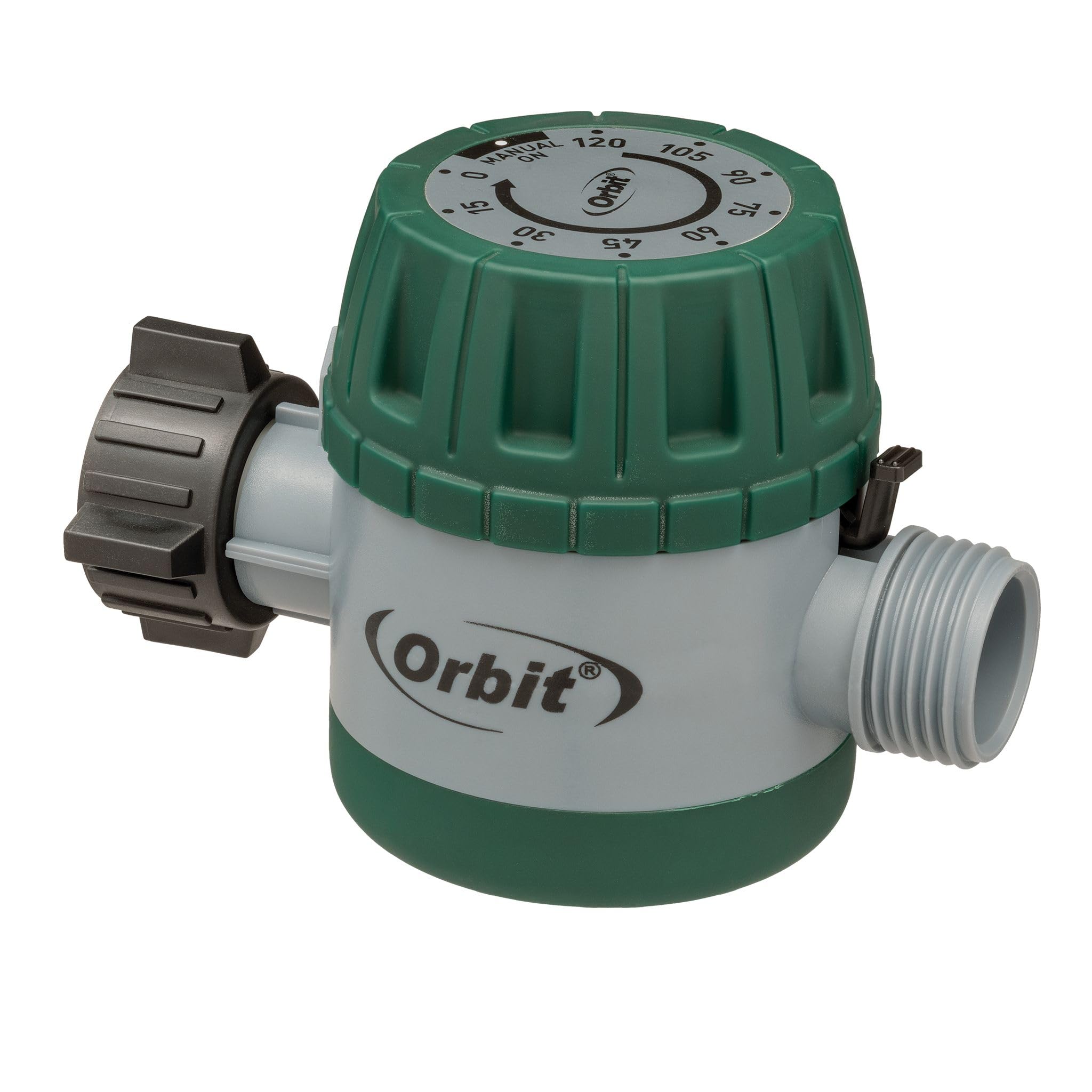
A battery‑free, twist‑dial timer I use for quick, reliable runs up to two hours.
Why I picked it: I value its simplicity and zero‑battery operation for hassle‑free short runs.
Best for: People who want a straightforward, low‑maintenance timer for sprinklers and soaker hoses.
Very affordable mechanical option.
Pros
- No batteries required
- Oversized dial for wet/gloved hands
- Manual on/off option
- Simple install
- Reliable shutoff
Cons
- Minimum 15‑minute interval
- Plastic threads can leak
- Not ideal in freezing weather
My take
I use this Orbit on a laundry‑room faucet to run a light misting line and on several spigots for sprinklers and soaker hoses. Turning the big dial feels like using an old kitchen timer — there’s no app, no programming, just set it and walk away.
Because it’s mechanical, I never worry about dead batteries. It shuts off reliably at the end of the cycle; I’ve trusted it to fill tanks and run sprinklers when I’m not watching. I do wrap thread tape on a couple of fittings to stop minor leaks.
If you need runs shorter than 15 minutes or live somewhere with freezing winters, this model is less ideal. For everyday summer watering where simplicity and reliability matter, it’s been one of the handiest tools in my shed.
2. RAINPOINT Programmable Sprinkler Timer – Best Budget Programmable
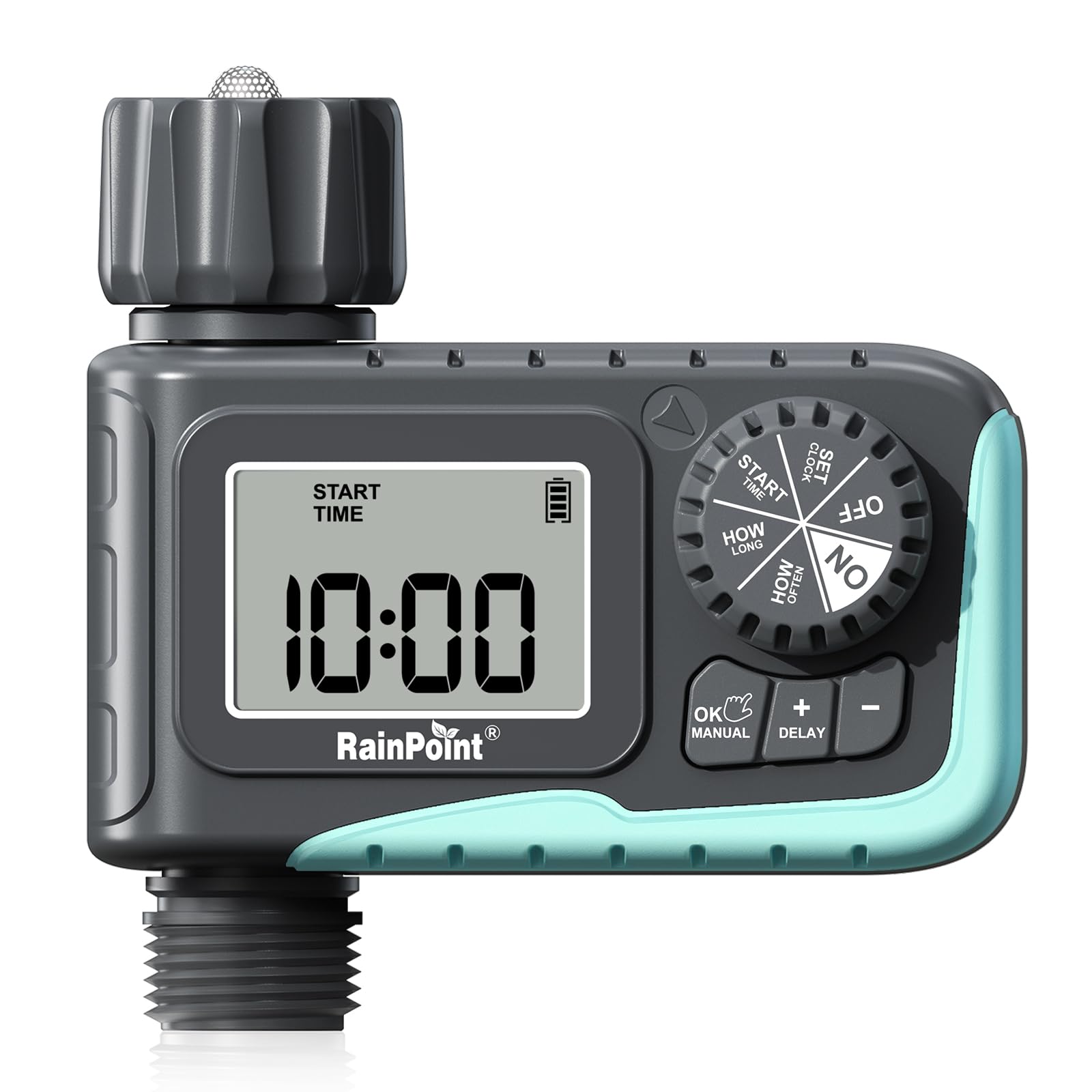
A budget digital timer with flexible durations, rain delay, and a readable LCD I use for small-to-medium zones.
Why I picked it: I liked the flexible start times, long duration range, and built‑in rain delay.
Best for: Small lawns, container gardens, and renters who want programmability without a complex system.
Budget‑friendly programmable option.
Pros
- Very flexible duration settings
- Rain delay and manual mode
- Large, easy‑to‑read LCD
- Easy to program
Cons
- Plastic fittings feel light
- Battery compartment fiddly
- Sequence can be interrupted
My take
I used this RAINPOINT on an orange tree that needed daily water and found setup straightforward. The LCD makes start times, duration, and frequency easy to confirm at a glance.
I appreciate the fine granularity — durations down to one minute and multi‑day frequency options let me tune shorter, repeat cycles for seedlings or longer runs for established beds. The rain delay (24/48/72 hours) has saved me from overwatering after unexpected storms.
The plastic fittings are a bit light‑duty and the battery compartment takes some care to open, but a little thread tape and attention to connections eliminated the initial tiny leaks I saw when the unit first kicks on. For the price, I’ve found it dependable and flexible for several small zones.
3. Gardena Water Timer – Best for Multiple Schedules
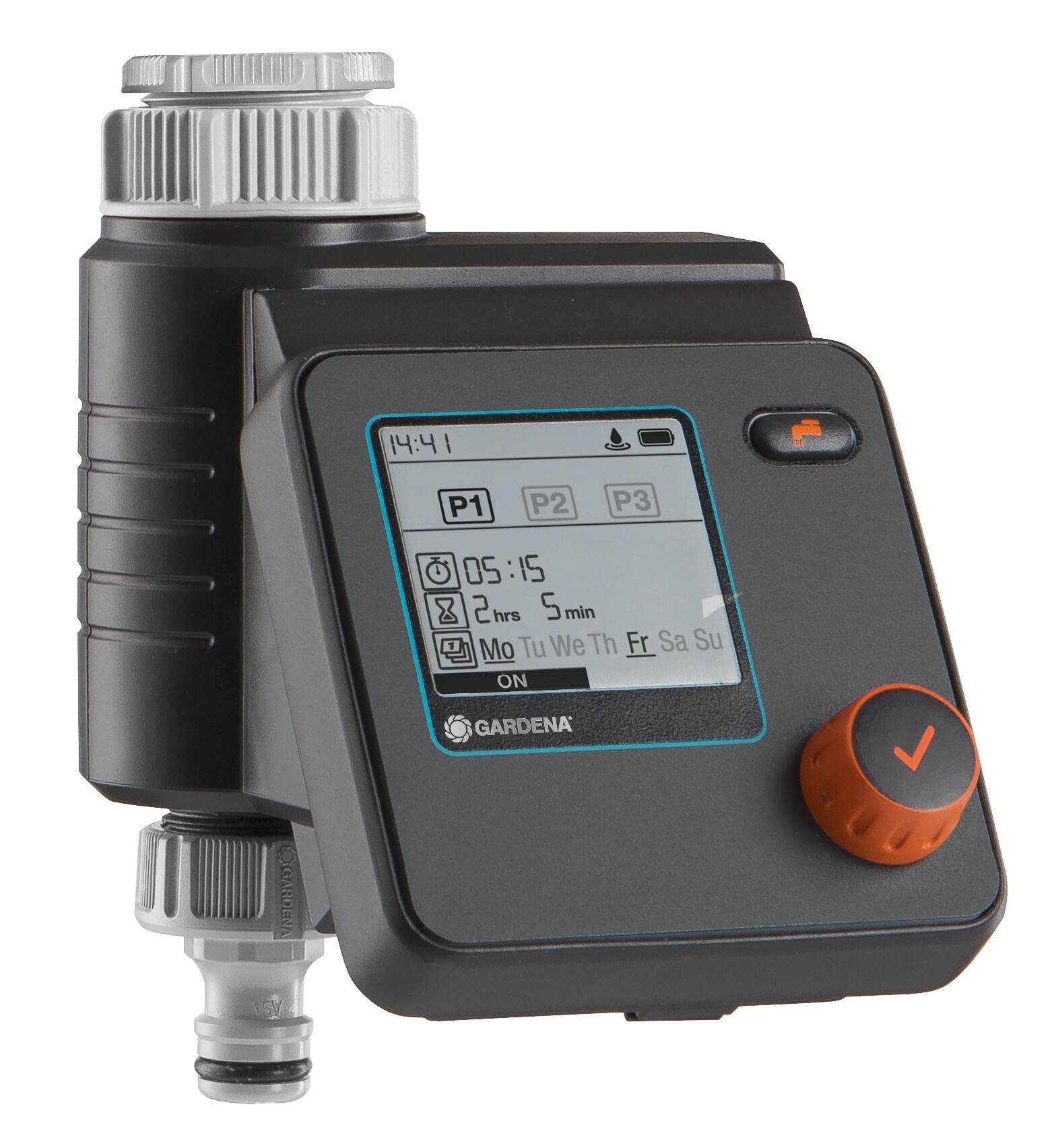
A more capable unit with three independent schedules and sensor compatibility I use for staggered watering cycles.
Why I picked it: The three programmable start times and sensor support make rotation patterns easy.
Best for: Users who run multiple timed zones or want sensor‑based control.
Mid‑range option with advanced features.
Pros
- Three independent schedules
- Sensor compatibility
- Intuitive programming knob
- Well built
Cons
- More complex to learn
- Higher cost than basics
- Occasional schedule glitches
My take
I’ve run this Gardena in spots where I need to water different areas at different times of day. I program two of the three open/close times and then manually move sprinklers or lines as needed; that workflow eliminates extra hardware for additional zones.
The single‑knob interface is concise once you get used to it, and the sensor compatibility is useful if you want soil or rain sensors to influence runs. I’ve seen these last for years if they’re brought in during freezing weather.
A caveat: a few units — and I’ve seen reports from other owners — can sometimes refuse to follow a scheduled run, even with fresh batteries. It’s not universal, but I recommend testing schedules after install and keeping firmware/batteries fresh for critical areas.
4. Raindrip 3‑Dial Analog Timer – Best Simple Analog
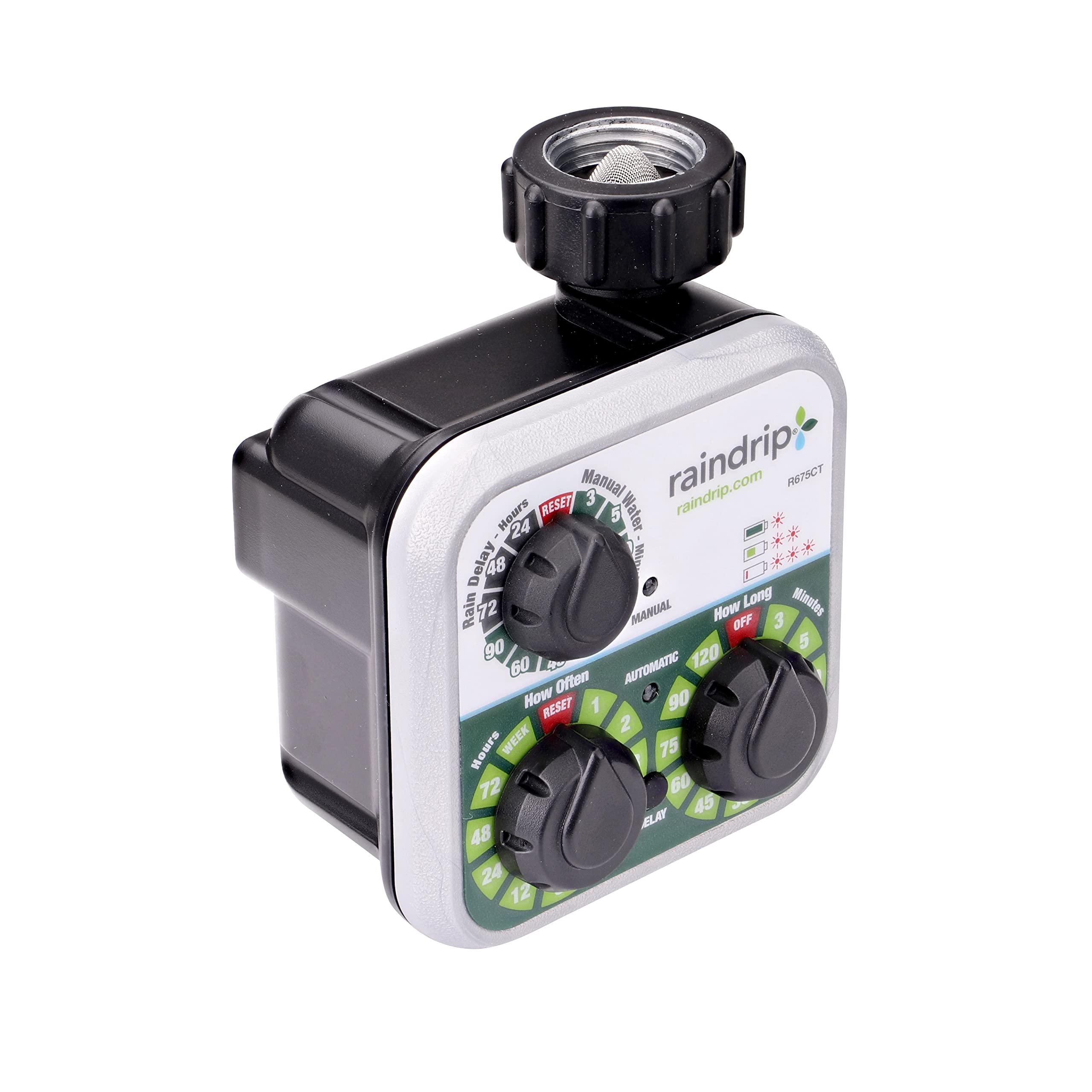
A three‑dial analog timer I rely on for drip systems and straightforward schedules.
Why I picked it: I use it for its no‑nonsense dials and dependable automatic shutoff on dead batteries.
Best for: Drip irrigation and gardeners who want ultra‑simple controls.
Affordable, straightforward choice.
Pros
- Three easy control dials
- Rain delay and manual override
- Shuts off if batteries die
- Simple to program
Cons
- Plastic outlet can leak if cross‑threaded
- Faceplate fades in strong sun
- Single zone only
My take
I put Raindrip timers on several drip lines and have one that’s been in service for multiple seasons. The three dials (how often, how long, and manual/rain delay) make it fast to set up irrigation without a smartphone.
What I like most is how forgiving the interface is — I can hand the task to someone else and they can still run a manual cycle without changing the schedule. Battery life has been solid, and the unit smartly turns the valve off if the batteries die so water isn’t wasted.
Be careful when threading hoses onto the plastic outlet; cross‑threading can cause persistent leaks. Otherwise I find these very reliable for routine drip irrigation and short‑term automatic watering while I’m away.
5. RAINPOINT Sprinkler Timer V2 – Best Improved Digital
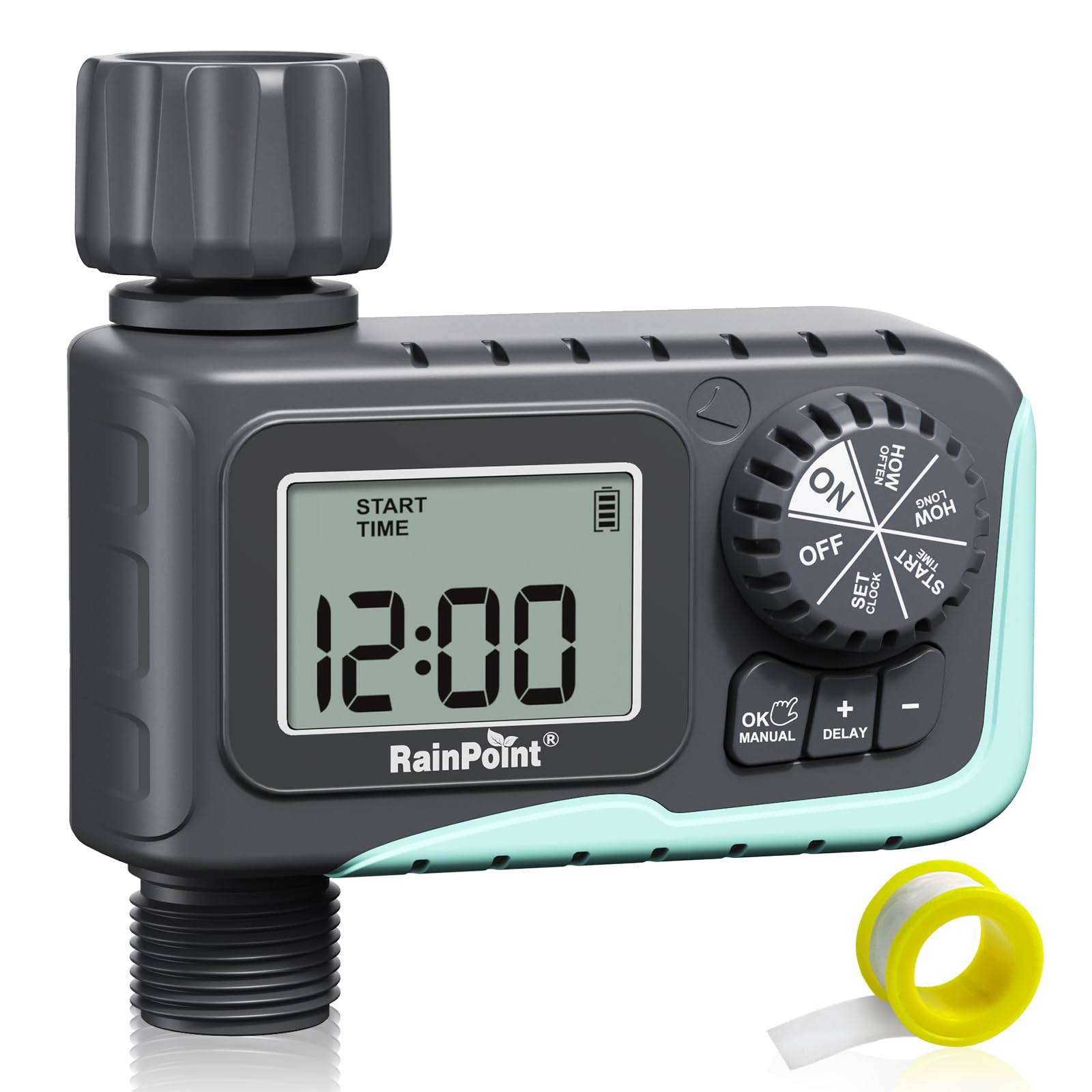
An improved RAINPOINT digital unit with a sealed battery compartment and built‑in inlet filter I’ve deployed across my property.
Why I picked it: The upgraded inlet and gasketed battery seal gave me better leak protection and longevity.
Best for: Large gardens that need a rugged, easy digital controller.
Budget upgrade with better durability.
Pros
- Built‑in filter inlet
- Durable inlet and seal
- Large, clear LCD
- Low‑battery warning
Cons
- Plastic housing
- Single‑zone output
- Limited professional features
My take
I own multiple units of this V2 model and find setup nearly foolproof. The battery compartment uses a gasketed seal so moisture hasn’t been an issue, and the onboard filter at the inlet helps prevent grit from damaging valves.
The simple menu walks you through clock, frequency, and duration, and the low‑battery indicator is useful for season‑long reliability. I used rechargeable batteries for a full season with no problems.
For a larger DIY irrigation installation, this was the unit that let me stop hand‑watering entire sections of my garden. It’s not a multi‑zone controller, but it’s a solid, dependable single‑spigot controller that held up through months of regular use.
6. RAINPOINT Wi‑Fi 2‑Zone Timer – Best Smart 2‑Zone
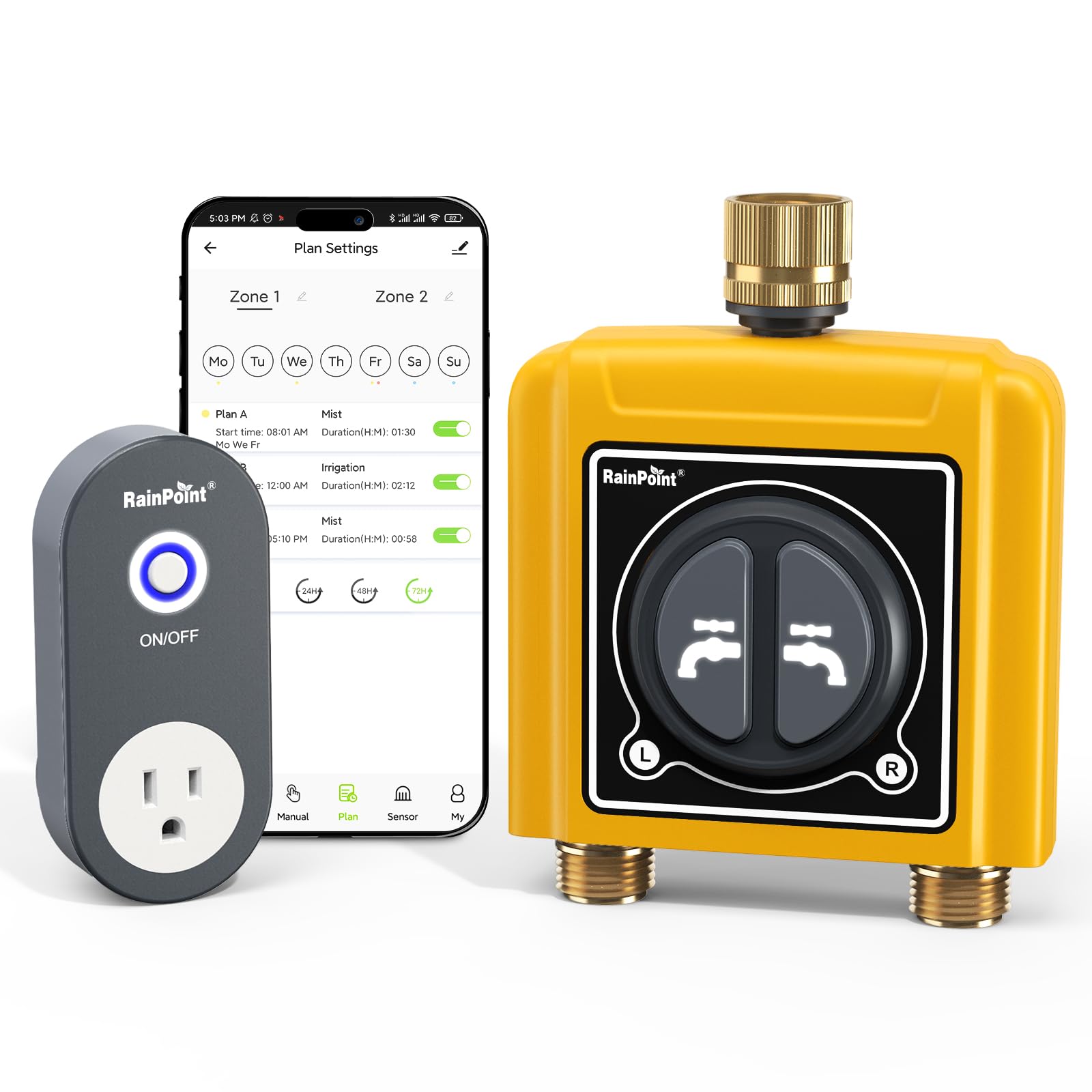
A Wi‑Fi, app‑controlled two‑zone controller with brass fittings and weather/soil features I use for high‑traffic areas.
Why I picked it: I picked it for app control, brass inlets, and weather/soil‑aware watering.
Best for: Tech‑minded gardeners running drip networks or multiple zones remotely.
Higher‑end smart investment.
Pros
- Brass inlet and outlet
- Wi‑Fi app control and voice support
- Weather‑based watering
- Flow metering per zone
Cons
- Requires 2.4 GHz Wi‑Fi
- More expensive than basics
- Possible part failures over time
My take
I’ve been running the RAINPOINT Wi‑Fi timer as the brain for several drip lines and planters. The app is the feature I use most — creating schedules, pausing runs, and receiving notifications made vacation mode stress‑free.
The brass inlet and outlet feel noticeably more robust than the plastic fittings on cheaper units. I also rely on the flow meter when I’m establishing new lines; seeing gallons per run helped me dial in emitter counts and detect a small clog quickly.
On one unit a component failed after months of regular use, but the company’s support sent a replacement part and got me back online. For anyone who wants remote control, weather‑based skip, and soil sensor pairing, this is the step up I keep coming back to.
How I Choose an Outdoor Water Timer
Decide how hands‑off you want to be
If I want pure simplicity and no batteries, I pick a mechanical dial. For scheduled, repeatable runs I choose a digital timer. When I need remote control and smart skipping, I go Wi‑Fi.
- Mechanical: no batteries, very simple, best for basic sprinklers and infrequent runs.
- Digital: programmable durations, rain delay, good for most gardens.
- Wi‑Fi/Smart: remote control, weather/soil features, ideal for vacation or complex systems.
Check inlet/outlet materials and leak protection
I look for brass inlets or a sturdy plastic inlet with a gasketed battery compartment to avoid shutdowns from moisture or leaks.
- Brass inlets last longer and resist leaks.
- Gasketed battery compartments prevent water damage.
- Always use thread tape on questionable threads.
Match programming flexibility to your needs
I match timer features to the plants: short frequent cycles for seed or seedlings, longer less‑frequent runs for established beds.
- Minute‑level duration lets you fine‑tune drip systems.
- Multiple start times help rotate sprinklers without extra hardware.
- Rain delay and weather‑based skip reduce waste.
Consider installation and environment
I bring non‑weatherproof timers inside over winter and protect timers from direct sun to extend service life.
- Avoid leaving plastic‑threaded fittings exposed to freeze/thaw.
- Choose brass for permanent outdoor installs.
- Test schedules after setup to confirm reliable operation.
Frequently Asked Questions
Do mechanical timers really need no batteries?
Yes — mechanical dial timers run off the internal spring mechanism. I use them when I don’t want to replace batteries, but I accept longer minimum run increments and less precise scheduling.
How do I prevent leaks at the hose connections?
I wrap Teflon or plumbers tape around threads and hand‑tighten carefully. For plastic outlets I avoid cross‑threading and check for drips after the first cycle.
Are Wi‑Fi timers worth the extra cost?
For me they are when I need remote control, weather‑based skipping, or multiple schedules across zones. They save time and give peace of mind on vacations.
What maintenance do timers need?
I swap batteries seasonally, bring units inside for freezing weather, and inspect seals and washers yearly to prevent leaks.
Final Take
I keep a mechanical dial for simple tasks, a compact digital unit for everyday programmable needs, and a Wi‑Fi two‑zone controller where I need remote control and analytics.
Pick the type that matches your watering style: simple and battery‑free, flexible and budget‑friendly, or smart and multi‑zone. I use all three depending on the job.
