
I tested a range of shredders, foraging toys, treat dispensers, and heavy-duty chews to find toys that keep parrots engaged, help wear down beaks, and encourage natural foraging behavior.
I live with an assortment of parrots and I rotate toys constantly to keep them engaged. In this roundup I focused on shredders, foraging toys, treat dispensers, and heavy-duty chews so you can match a toy to your bird’s instincts and beak strength.
All of the picks below are based on hands-on time—hanging them in cages, stuffing them with treats, watching shredding sessions, and checking how durable each toy stays under sustained play.
If your bird is a prolific shredder I favored shredded-paper and loofah toys; foragers and curious parrots do best with treat-dispensing options like the HOL-ee Roller; heavy chewers and large parrots need solid wood and thicker hardware—pick the toy that matches your bird’s size and play style.
1. EBaokuup Shredding Bird Toys (5-Pack) – Best for Shredders
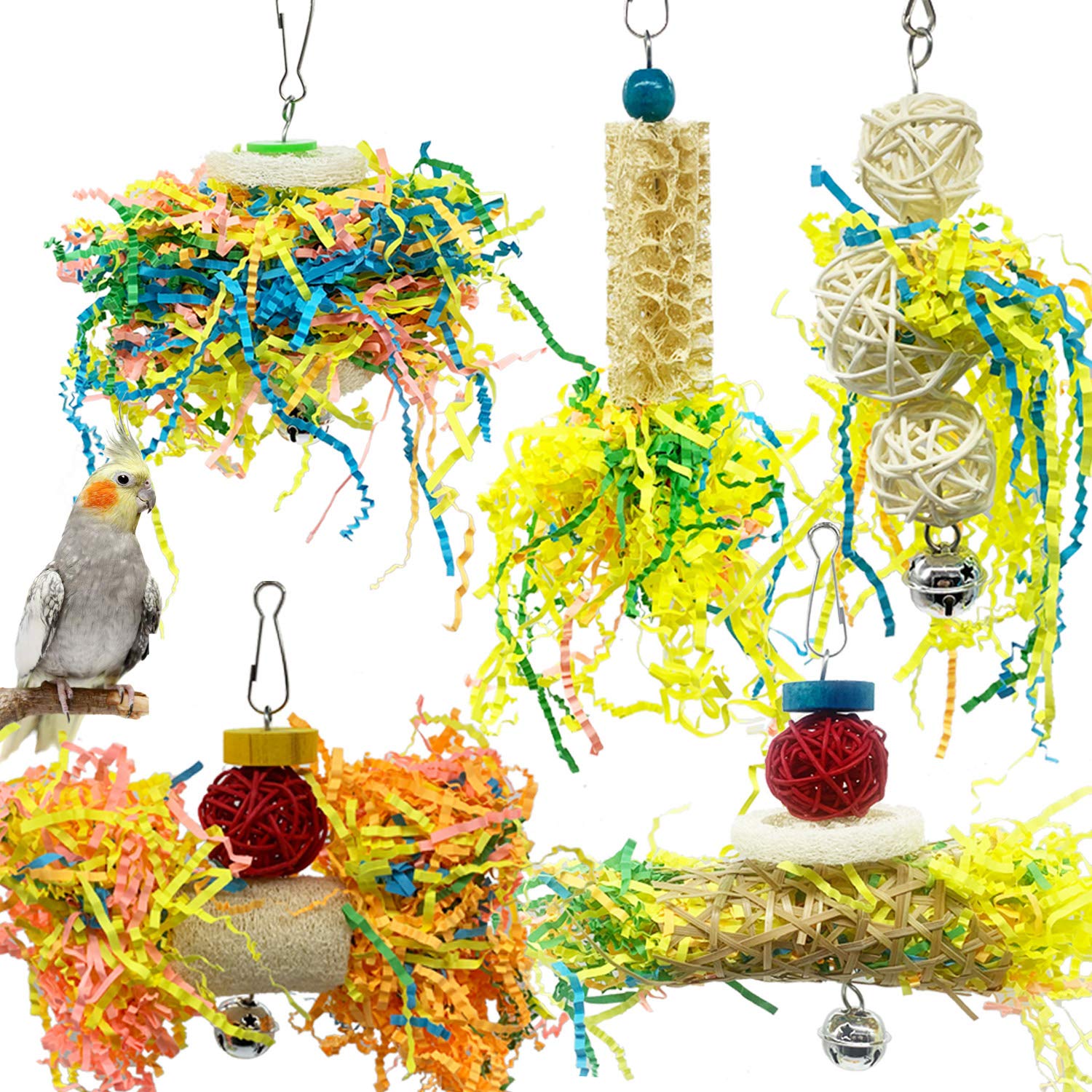
A five-piece set of loofah, rattan and crinkle-paper shredders that my small and medium birds tore into immediately.
Why I picked it: Bright, varied shredders that keep birds busy for long periods.
Best for: Parrots and parakeets that love tearing and foraging.
Affordable multi-pack that refreshes a cage with new textures.
Pros
- Made from loofah, rattan and crinkle paper
- Bright colors that attract attention
- Pack of five for rotation
- Keeps birds occupied for long sessions
Cons
- Small paper scraps can fall off
- Some bells may be nonfunctional
My take
I hung one of these in a spare cage and my green cheek conure spent hours pulling the crinkled strips out and shredding them into nest-like piles. The loofah and rattan give different bite textures, which kept her switching tactics instead of getting bored.
The toys come in lively colors and feel sanitary out of the package—materials are basic and chew-safe. I did notice small paper bits shed during enthusiastic play, so I watch for loose pieces and swap toys sooner than I would with all-wood options.
For the price and the set size I kept a rotation ready; having multiple pieces meant I could swap a worn one out without leaving the cage empty. Overall these are my go-to when I want a low-cost way to satisfy nightly shredders.
2. Foraging Shredding Toy Set with Rope Perch – Best Value Foraging Set
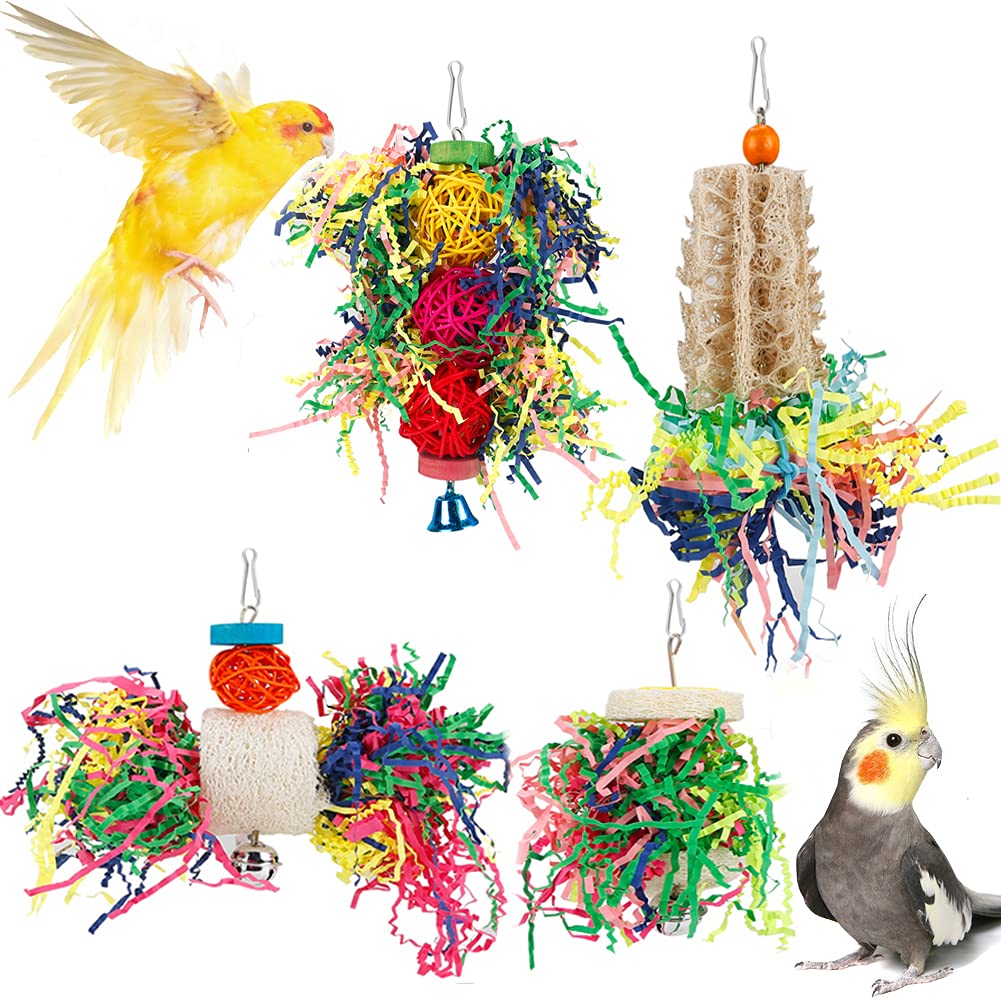
A budget-friendly foraging kit with refillable rattan, crinkle paper and a flexible rope perch that I used for parakeets and cockatiels.
Why I picked it: Combines foraging and a soft rope perch in one inexpensive kit.
Best for: Small to medium birds that love crinkle paper and foraging tasks.
Good value with multiple accessories for cage enrichment.
Pros
- Includes rope perch and rattan balls
- Stuffable with treats for foraging
- Bright, crinkly paper attracts interest
- Ready-to-hang with included hook
Cons
- Provided hooks can open — check security
- Not ideal for heavy beak chewers
My take
I used this set with two budgies and a cockatiel; they took to the crinkle paper quickly and spent time pulling strips and rearranging stuffing into nests. The rope perch added a comfy spot and gave them another texture to manipulate.
One caution: I inspected the hanging hardware before mounting. The cheap hooks can open under determined beaks, so I replaced them with bird-safe clips to be sure. With that tweak the set worked very well for daily enrichment.
Because the rattan balls can be refilled, I started hiding small treats and extra paper inside to stretch playtime. For smaller parrots this combo is a practical, low-cost way to introduce foraging behavior.
3. JW HOL-ee Roller Treat Toy – Best for Treat Foraging
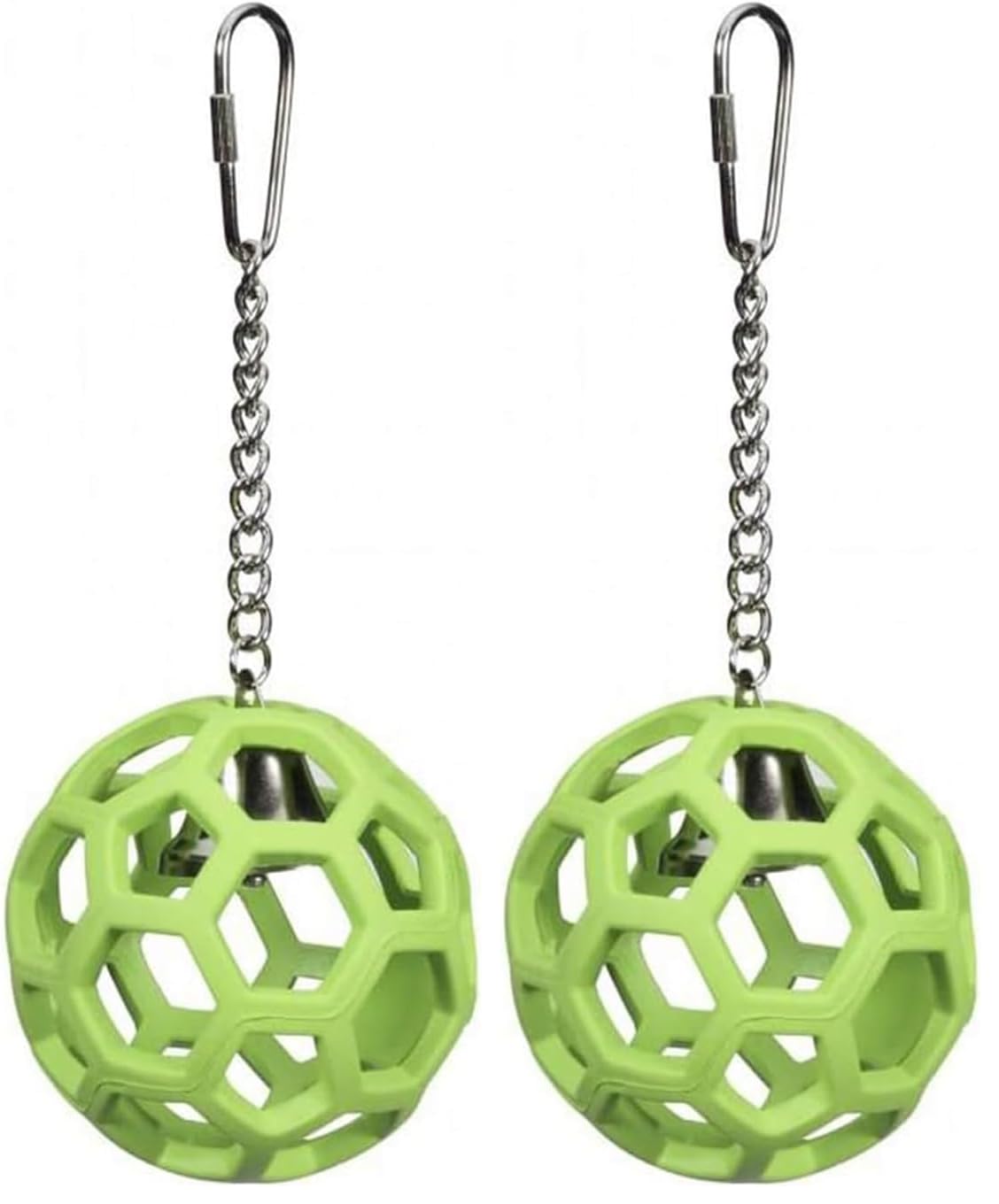
A natural-rubber treat dispenser that I use for stuffing nuts, pellets, and paper for foraging—tough and versatile for many parrot sizes.
Why I picked it: Durable rubber design that converts treats into a stimulating foraging game.
Best for: Birds that enjoy treat-dispensing challenges and chewing rubber.
A midrange pick for long-lasting foraging play.
Pros
- 100% natural rubber
- Holds treats for foraging
- Durable and flexible
- Works across many parrot sizes
Cons
- Colors vary by pack
- Takes time to get used to
My take
I fill the HOL-ee Roller with chopped nuts or shredded paper and hang it in the cage; my conure learned to ring the bell and fish out treats in just a few sessions. The bell gives a gentle feedback that encourages repeat play.
The rubber is tough—my birds chewed and swung on this toy for months before it needed replacement. Foraging toys like this one get double duty: mental challenge plus oral activity.
Because colors arrive randomly, I don’t rely on aesthetics; I buy these for function. They’re one of the most durable treat-dispensers I’ve used and worth keeping in a permanent rotation.
4. Rypet Wooden Block Chew Toy – Best Climbing & Chew Toy
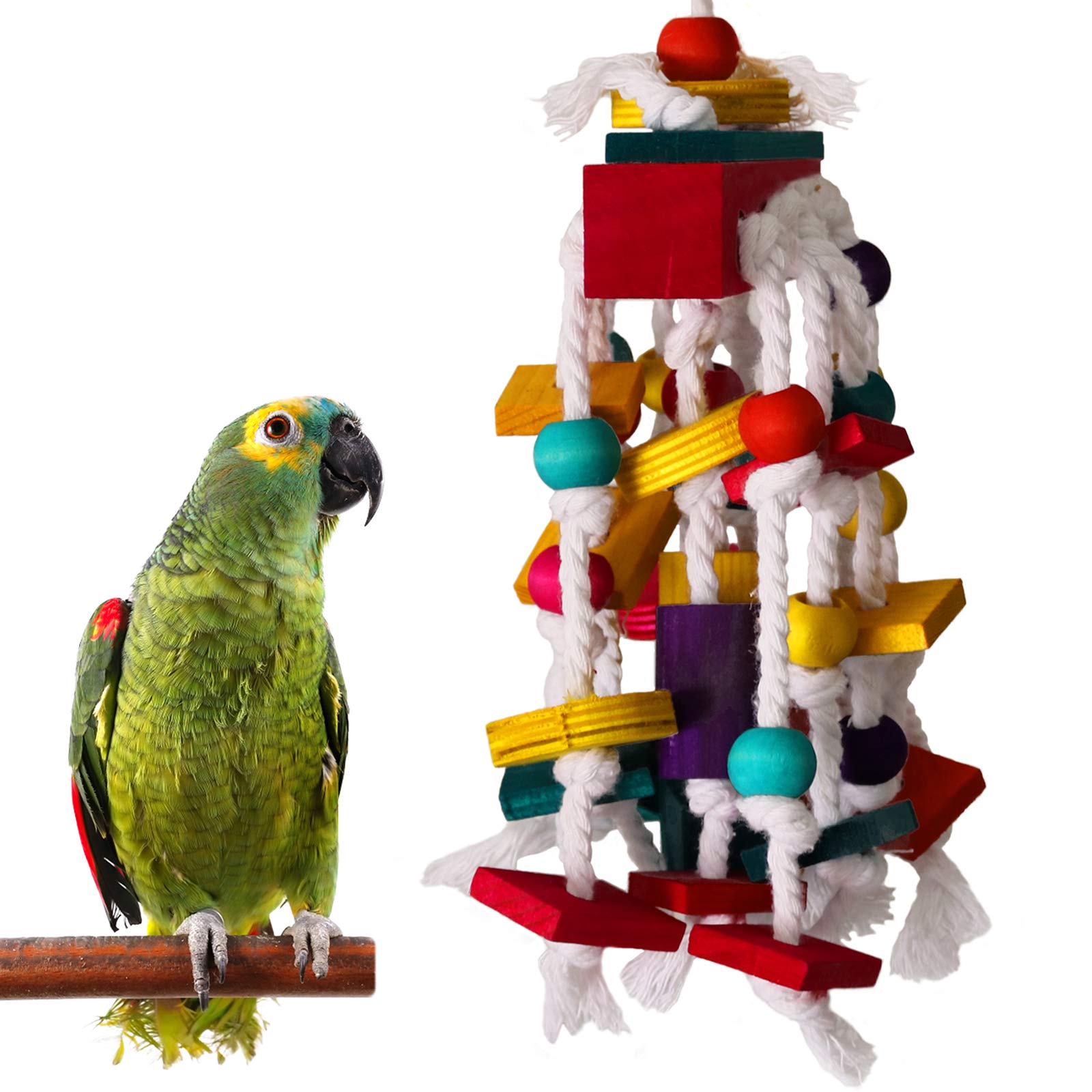
A multi-layered wooden and cotton-rope toy that my medium parrots used for climbing, chewing, and beak conditioning.
Why I picked it: Combines climbable blocks with cotton knots for chewing and manipulation.
Best for: African greys, conures, cockatiels and similar-sized parrots.
Moderately priced with sturdy construction for daily use.
Pros
- Multiple colored wooden blocks
- Cotton rope knots for chewing
- Helps trim and condition beaks
- Sturdy for moderate play
Cons
- Can be destroyed by very heavy chewers
- May need replacing after intensive use
My take
I put this toy on a play stand and my Amazon and younger conure both used it differently—one climbed and swung, the other chewed selectively to trim his beak. The bright blocks kept curiosity high.
The cotton rope knots provide a satisfying pull-and-untie action, which is great for boredom-prone birds. I was impressed that even my older parrot gave it attention after years of ignoring other toys.
It’s not indestructible against an obsessive macaw, but for small and medium parrots this felt like a balanced, durable option that promotes activity and beak maintenance.
5. Extra-Large Natural Wood Toy for Large Parrots – Best for Large Parrots
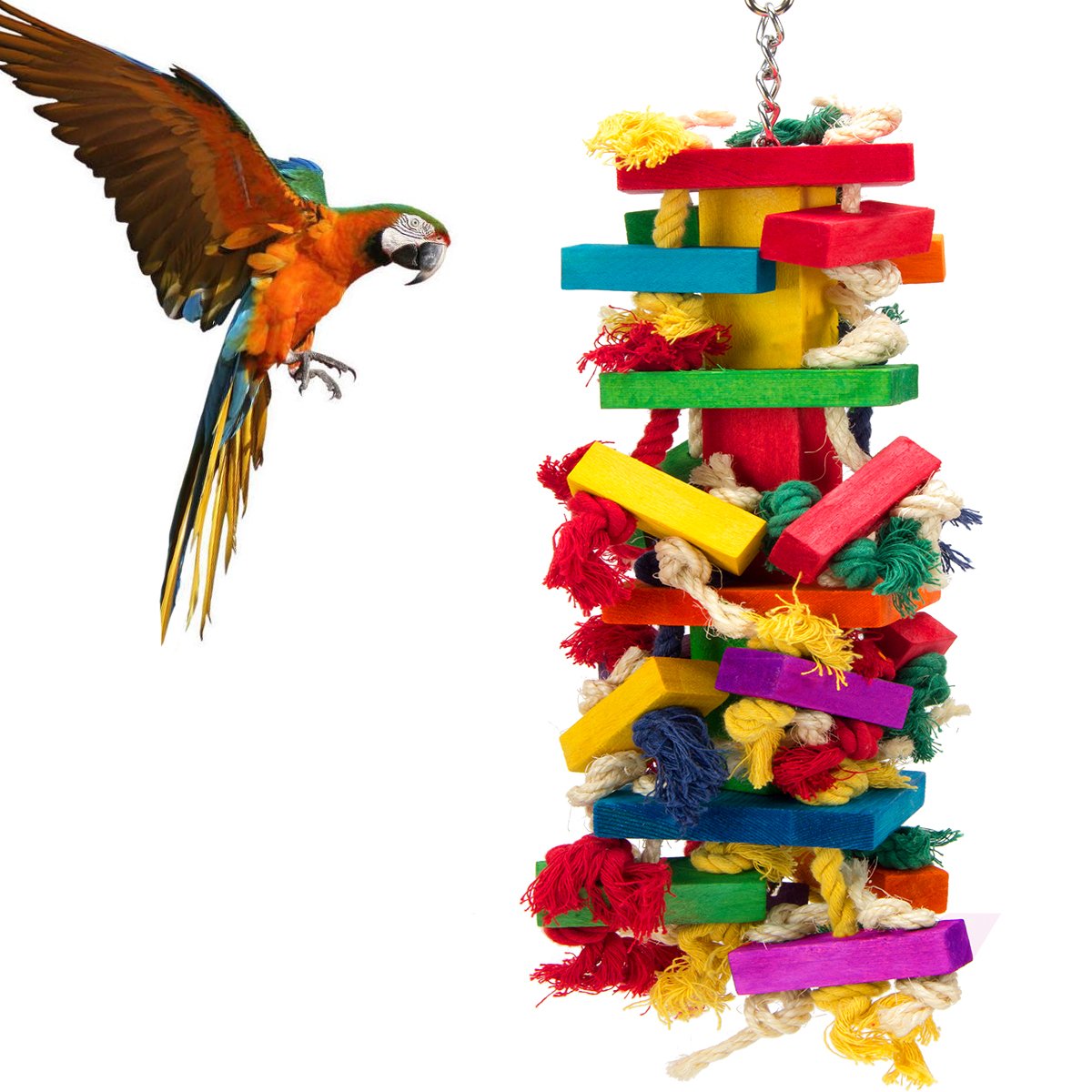
A long, chunky wood-and-chain toy designed for macaws, African greys and other big parrots that need heavy-duty chewing options.
Why I picked it: Extra-large size and heavy chain fit big parrots' play habits.
Best for: Large parrots that need big blocks and sturdy hardware.
A larger investment that suits long-lived heavy chewers.
Pros
- Extra-large 18-inch size
- Non-toxic natural wood
- Heavy-duty chain and hook
- Lots of blocks and knots for chewing
Cons
- Large parrots can still destroy it over time
- Heavier hardware requires secure hanging
My take
I hung this extra-large toy for a cockatoo and a macaw; both attacked the blocks with gusto and appreciated the size and heft. The chain held up well under sustained tugging.
The natural wood is straightforward and safe; I liked that the pieces offered multiple textures so birds could chew, climb, and swing. Expect to replace it occasionally with very determined beakers, but it lasted longer than many other large toys I’ve tried.
Because the toy is heavy, I always double-check mounting points. When secured properly, this one gives a big-parrot-sized outlet for biting and play.
How I Choose Parrot Toys
Match toy to beak strength and size
I always pick toys sized for my bird’s beak and body. Small birds get lightweight paper and loofah; medium birds do well with wooden blocks and rope; large parrots need thick wood and heavy hardware.
A toy that’s too small can be torn into hazardous pieces; a toy that’s too large won’t engage smaller species.
- Small parakeets: paper, loofah, small rattan balls
- Medium parrots: wooden blocks, cotton knots, rubber foragers
- Large parrots: thick wood, heavy chains, extra-large blocks
Look for safe, non-toxic materials
I prefer toys made from natural loofah, untreated wood, cotton rope, and non-toxic rubber. These materials are chew-safe and less likely to introduce contaminants.
Avoid toys with loose or sharp metal pieces; if a hook looks flimsy I swap it for a bird-safe clip.
- Edible pigments and natural fibers are preferable
- Check metal hardware for secure crimps and welds
- Replace frayed rope or loose small parts immediately
Choose toys that encourage natural behaviors
Foraging toys stimulate mental activity; shredders satisfy nesting and chewing instincts; heavy chew toys wear down continuously growing beaks. I balance all three types in a rotation.
Treat-dispensers double as meal enrichment and extend playtime.
- Rotate foragers and shredders to prevent boredom
- Use treat toys sparingly to maintain challenge
- Observe play style to identify preferred toy types
Inspect and maintain toys regularly
I inspect toys weekly for loose bits, exposed metal, or frayed rope. Anything that can be swallowed or snag feathers gets removed immediately.
Keep an active replacement plan—some toys are intentionally consumable and meant to be swapped often.
- Cut away loose threads and dispose of small fragments
- Tighten or replace hooks and clips as needed
- Sanitize rubber toys periodically with bird-safe cleaners
Frequently Asked Questions
How often should I rotate my parrot’s toys?
I rotate toys every one to two weeks to keep interest high; foragers and treat toys I swap more frequently to preserve novelty.
Are shredded-paper toys safe for nesting birds?
I use shredded-paper toys for nesting behavior but I watch for tiny loose bits—if a bird ingests fragments or creates an unsafe mess I remove the toy and choose larger-fiber options.
Can I leave my bird unsupervised with these toys?
I don’t leave birds unsupervised with toys that shed small parts or have flimsy hooks. For heavy-duty wood and solid rubber toys I feel comfortable leaving supervised sessions longer, but I still check regularly.
Final Take
After testing these toys across different birds and play styles I keep a mix of shredders, foragers, rubber treat dispensers, and durable wooden chews on hand.
Match the toy to your bird’s size and behavior, inspect hardware before hanging, and rotate regularly to keep playtime fresh.
A balanced toy rotation makes my parrots more active, less destructive, and a lot more entertaining.
