
I tested seven different strainers — from collapsible silicone to micro-perforated stainless — and I explain which one I reach for and why.
I’ve owned and used a wide range of pasta strainers over the years, and I put seven popular options through real kitchen work: draining pasta, rinsing produce, air-drying small items, and storing between uses.
In this guide I focus on build quality, drainage speed, sink fit, and everyday usefulness so you can pick the right strainer for your routine.
I compared materials (silicone vs. stainless), hole size (micro-perforations versus standard holes), capacity, sink compatibility, and whether the piece collapses or stacks for storage. My choices reflect which design worked best in actual cooking and cleanup scenarios.
1. Blue Ginkgo Over-the-Sink Colander – Best Over-the-Sink

An expandable, raised-bottom plastic colander that stretches to fit most sinks and doubles as a drying basket.
Why I picked it: Expandable fit, raised bottom prevents backflow, and it’s dishwasher safe.
Best for: Rinsing produce, draining pasta while keeping counters clear.
Affordable, versatile plastic option with good everyday utility.
Pros
- Expandable 14–19 inch fit
- Raised base prevents backflow
- BPA-free plastic
- Top-rack dishwasher safe
- Heat resistant to boiling temperatures
Cons
- Hole size too large for rice/quinoa
- Better suited to single large sinks than some dual sinks
My take
I use this Blue Ginkgo colander whenever I want a hands-free drain that sits across my sink. The expandable arms let me stretch it to match my basin and the raised bottom keeps drained water from splashing back into food.
The evenly spaced holes drain quickly and the plastic feels sturdy enough to double as a drying basket for cups and small plates. Because the holes are about 0.2 inches, I don’t use it for very fine grains like quinoa or rice.
Cleanup is simple — I toss it on the top rack — and the material stands up to boiling-water tasks, so it handles hot pasta straight from the pot without warping.
2. Qimh Collapsible Over-the-Sink Colander – Best Collapsible
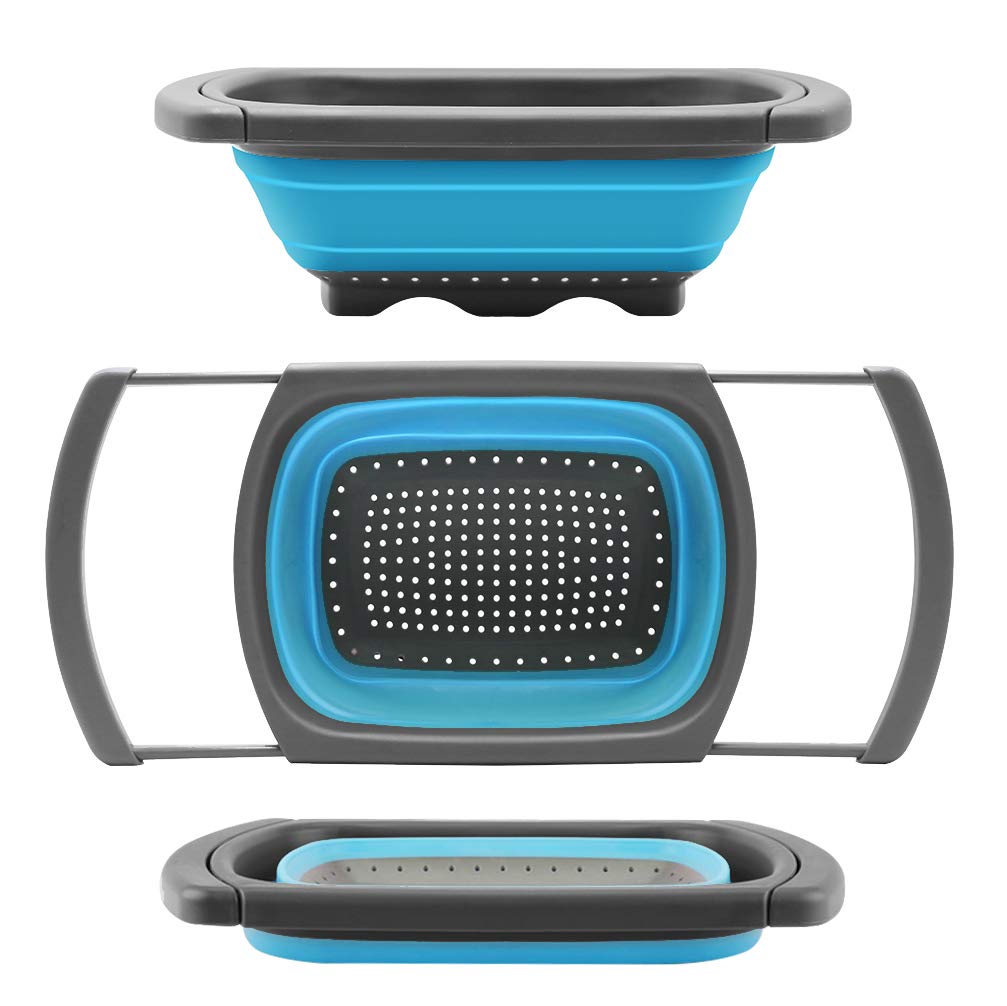
A 6-quart silicone colander that collapses flat for storage and extends to sit over the sink with non-slip handles.
Why I picked it: Collapses flat for storage, large 6-qt capacity, and extendable handles.
Best for: Small kitchens that need space-saving, sink-mounted strainers.
Budget-friendly with high space-saving value.
Pros
- Collapsible for compact storage
- 6-quart capacity
- BPA-free silicone
- Non-slip handles
- Dishwasher safe
Cons
- Can feel bulky when fully extended
- Extendable arms can slip on some sink edges
My take
This Qimh collapsible colander is my go-to when cabinet space is tight. It flattens down to a low profile and pops back up quickly, which makes it easy to grab for quick pasta or veggie tasks.
The 6-quart bowl holds a family-sized portion, and the telescoping handles let me leave it hands-free across the sink so I can pour without juggling. I have noticed the underside of the arms could use a stronger non-slip surface on slick sink edges, so I sometimes steady it while pouring large pots.
Performance-wise it drains well and cleans up easily in the dishwasher, which is exactly what I want from a collapsible silicone option.
3. HiramWare Stainless Steel Colander – Best Classic Stainless
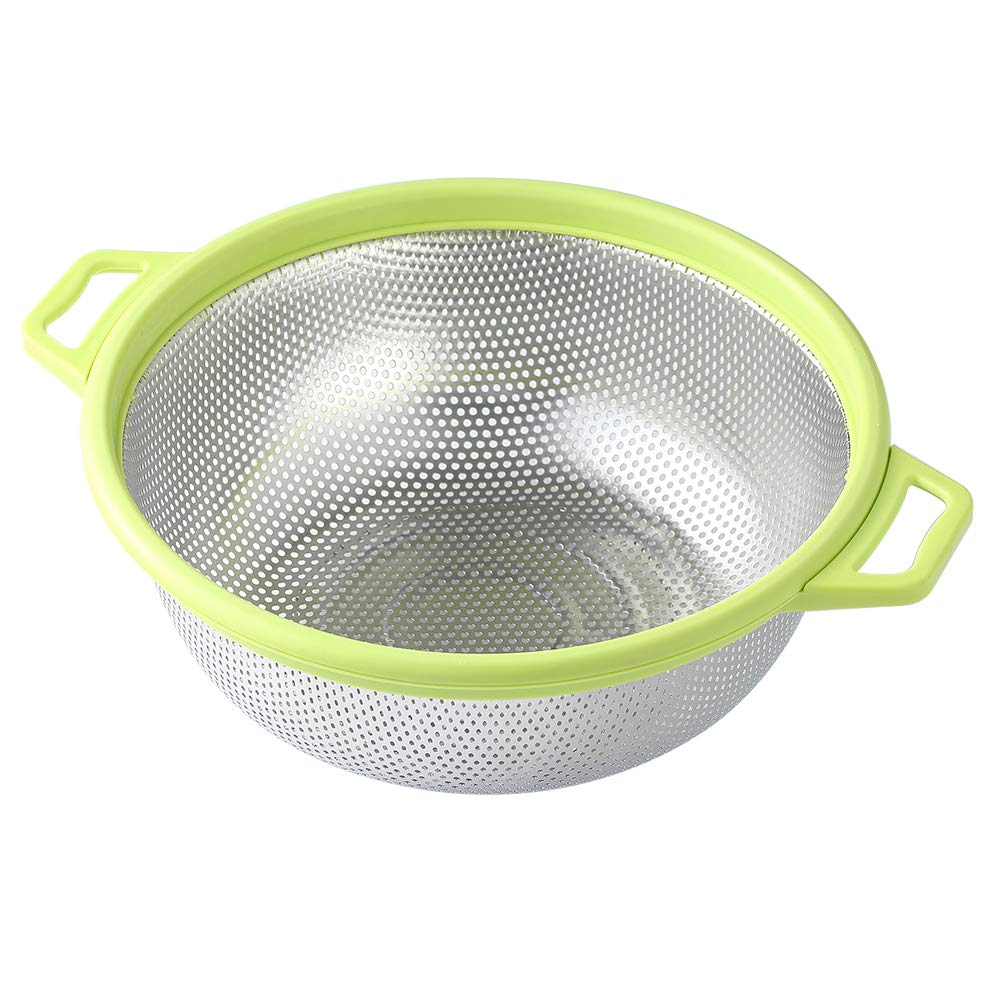
A heavy-duty stainless steel colander with ergonomic handle, legs, and closely spaced holes for fast draining.
Why I picked it: Solid stainless construction, ergonomic handle, and quick drainage.
Best for: People who want a long-lasting metal strainer for pasta and vegetables.
A midrange choice that feels built to last.
Pros
- Durable stainless steel
- Ergonomic handle
- Fast draining holes
- Stable legs
- Large capacity
Cons
- Top rim/handles include plastic elements
- I hand-wash to protect the finish
My take
When I want a traditional, heavy-duty colander, I reach for this stainless piece. The bowl shines out of the box and the perforations are dense enough to drain quickly while keeping solids in the bowl.
It sits solidly on its little feet and the handle feels comfortable when I’m pouring steaming pasta. Because I’ve seen metal finishes degrade in dishwashers over time, I personally hand-wash this colander to keep the stainless looking new.
The mix of metal and plastic on the rim and handle makes it lighter in the hand but I treat it a bit more gently than an all-metal rig to avoid cracking plastic parts if dropped.
4. Qimh Collapsible Colander Set (3-Piece) – Best for Storage
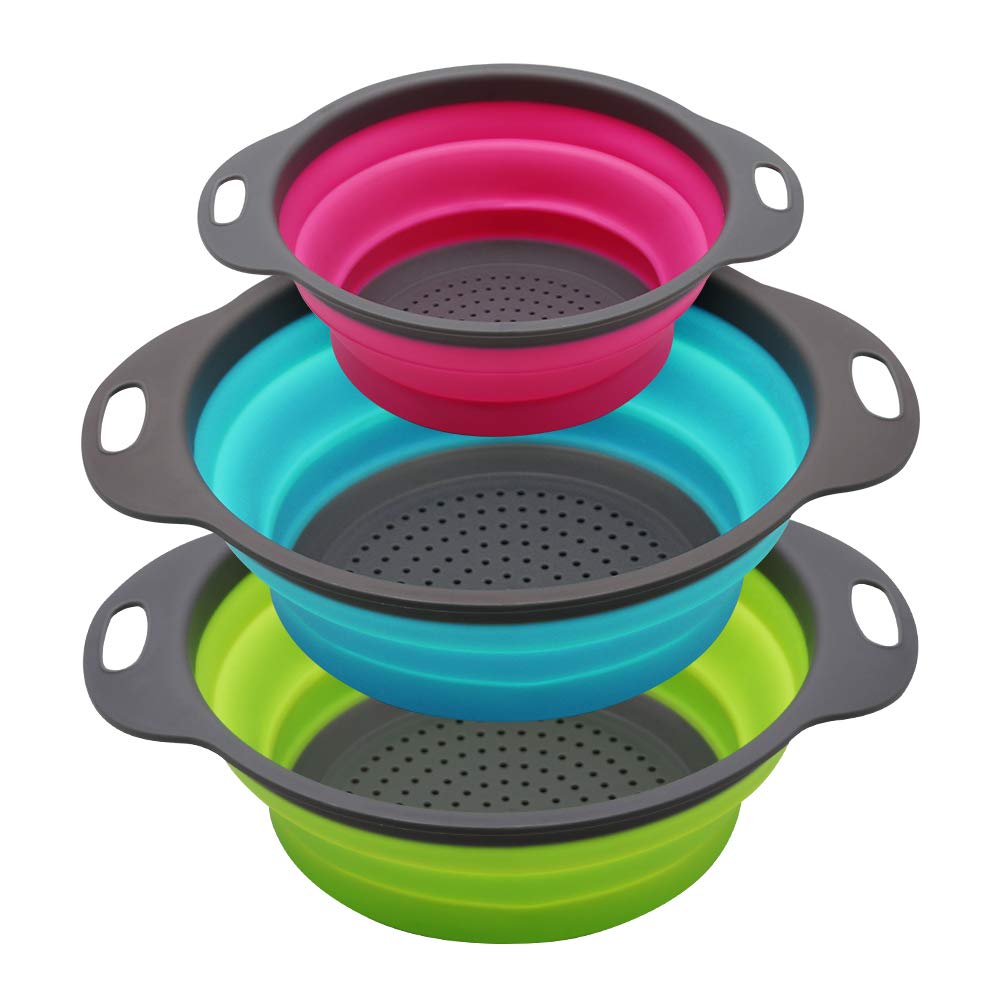
A three-piece silicone set that collapses flat for tight cabinets and gives small, medium, and large options for different tasks.
Why I picked it: Three collapsible sizes cover every prep need and stack away easily.
Best for: Kitchens that need multiple sizes without storage bulk.
Strong value — three pieces for everyday versatility.
Pros
- Three useful sizes
- Collapses flat for storage
- Dishwasher safe
- Sturdy when open
- Colorful options
Cons
- No raised legs for elevated draining
- Holes only on bottom slow side drainage
My take
I keep this 3-piece set in a crowded cabinet and the collapsible design is a real space-saver. Each size opens to a usable bowl and stacks neatly when collapsed.
They work well for pasta, rinsing berries, and washing greens. The set lacks small feet, so I sometimes rest them on a wire rack rather than the sink base to avoid backwash. Also, these have drain holes only on the bottom, which makes full drainage slower than bowls with side perforations.
For everyday tasks and limited storage, this set has been one of the most useful additions to my kitchen.
5. Bellemain Micro-Perforated Stainless Colander – Best for Grains
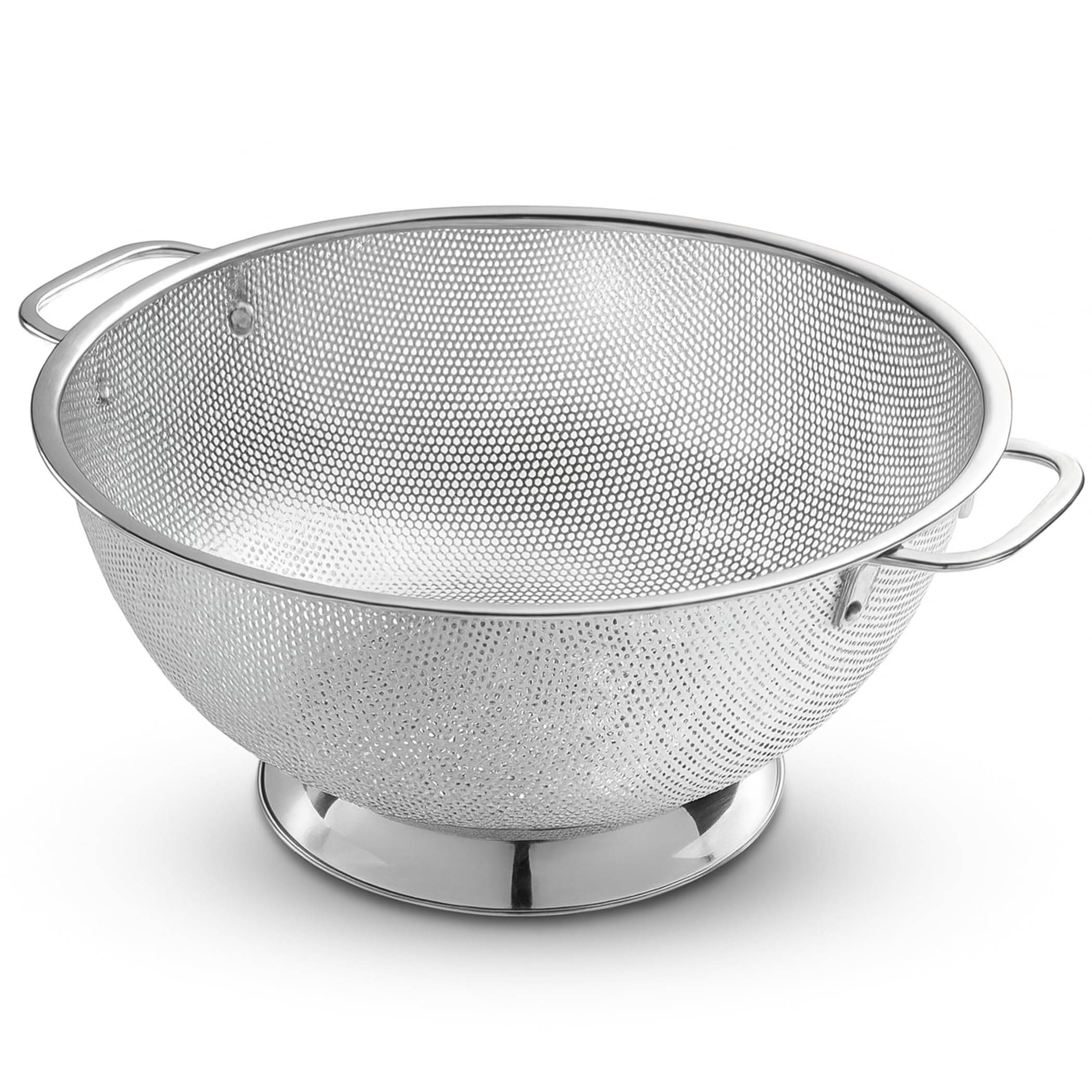
An 18/8 stainless colander with micro-perforations that drains quickly and keeps small grains and tiny pasta contained.
Why I picked it: Micro-perforations trap rice and quinoa while still draining very quickly.
Best for: Rinsing rice, quinoa, tiny pasta, and handling boiling-water tasks.
A slightly higher-cost option focused on precision draining.
Pros
- Fine micro-perforations
- 18/8 stainless steel
- Stable ring base
- Ergonomic riveted handle
- Polished, easy-clean finish
Cons
- Not perfect for the finest angel-hair pasta
- Large 5-quart size for solo cooks
My take
This Bellemain colander is the one I pick when I’m rinsing rice or quinoa because the tiny, closely spaced holes let water escape fast while preventing grains from falling through.
The 18/8 stainless feels substantial and resists denting; the stable ring base means I can set it down and multitask without tipping. The polished finish wipes clean easily and stands up well to heavy use in my kitchen.
If you mostly cook for one, the 5-quart capacity can be overkill, but for families or larger batches it’s ideal.
6. Tiawudi 18/8 Stainless Steel Colander – Best Heavy-Duty
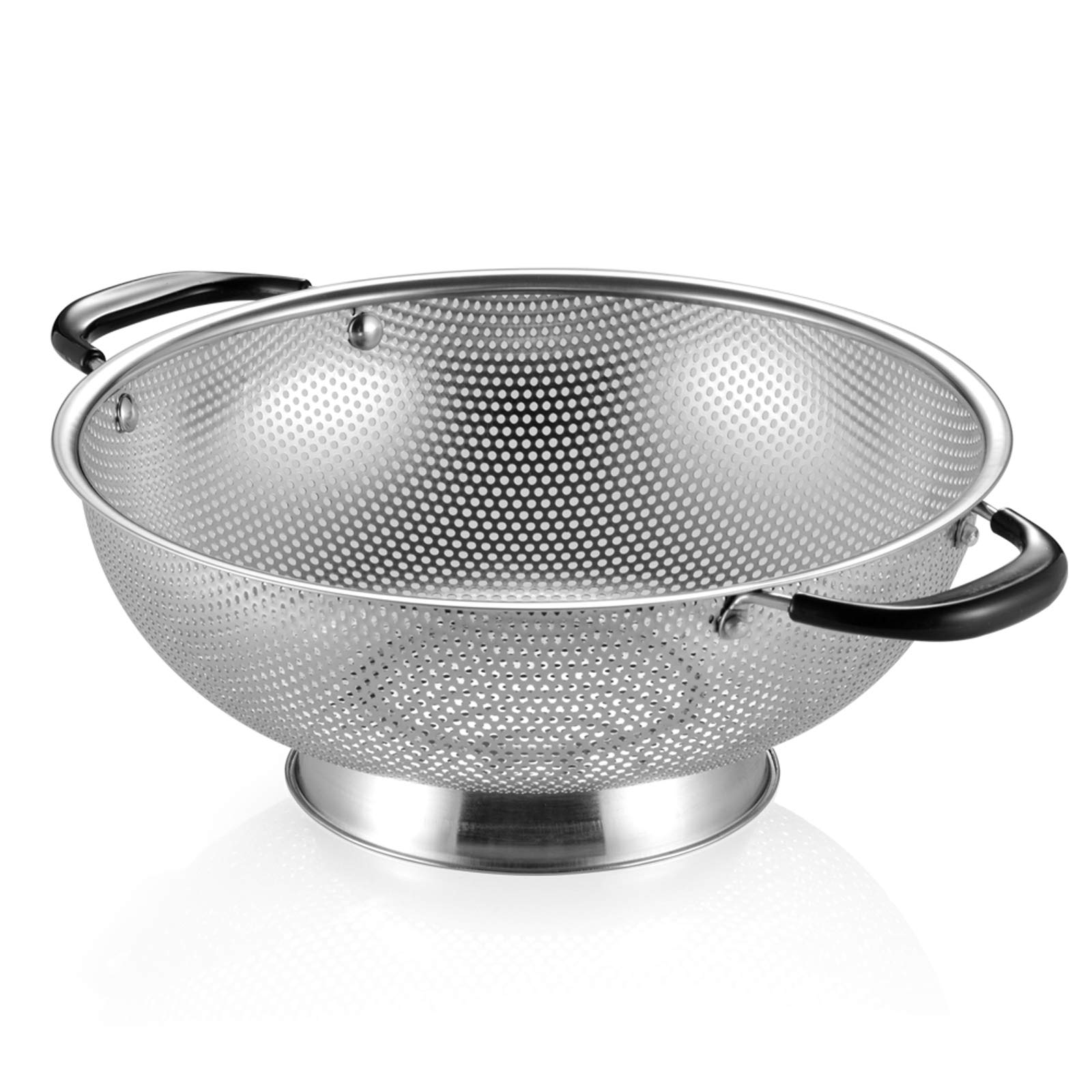
A thicker 18/8 stainless colander with riveted, heat-resistant handles and micro-perforations for fast draining and heavy use.
Why I picked it: 20% thicker steel, riveted handles, and tiny holes for fast, secure draining.
Best for: Large families and cooks who need a rugged, long-lasting colander.
Great value for a heavy-duty stainless option.
Pros
- 20% thicker stainless steel
- Riveted heat-resistant handles
- Micro-perforated for quick drainage
- Solid ring base
- Dishwasher friendly
Cons
- Bulky to store in small cabinets
- May be oversized for single-person meals
My take
I appreciate the heft of this Tiawudi colander — the thicker steel gives me confidence that it will last through heavy daily use.
The riveted handles are comfortable and the heat-resistant grips let me drain very hot pasta without second-guessing my grip. The micro-perforations drain quickly while holding even thin spaghetti.
I do keep this one in a cupboard with some room since it’s large, but when I need a dependable metal strainer it’s the first one I reach for.
7. PriorityChef Stainless Steel Colander – Best Compact Stainless
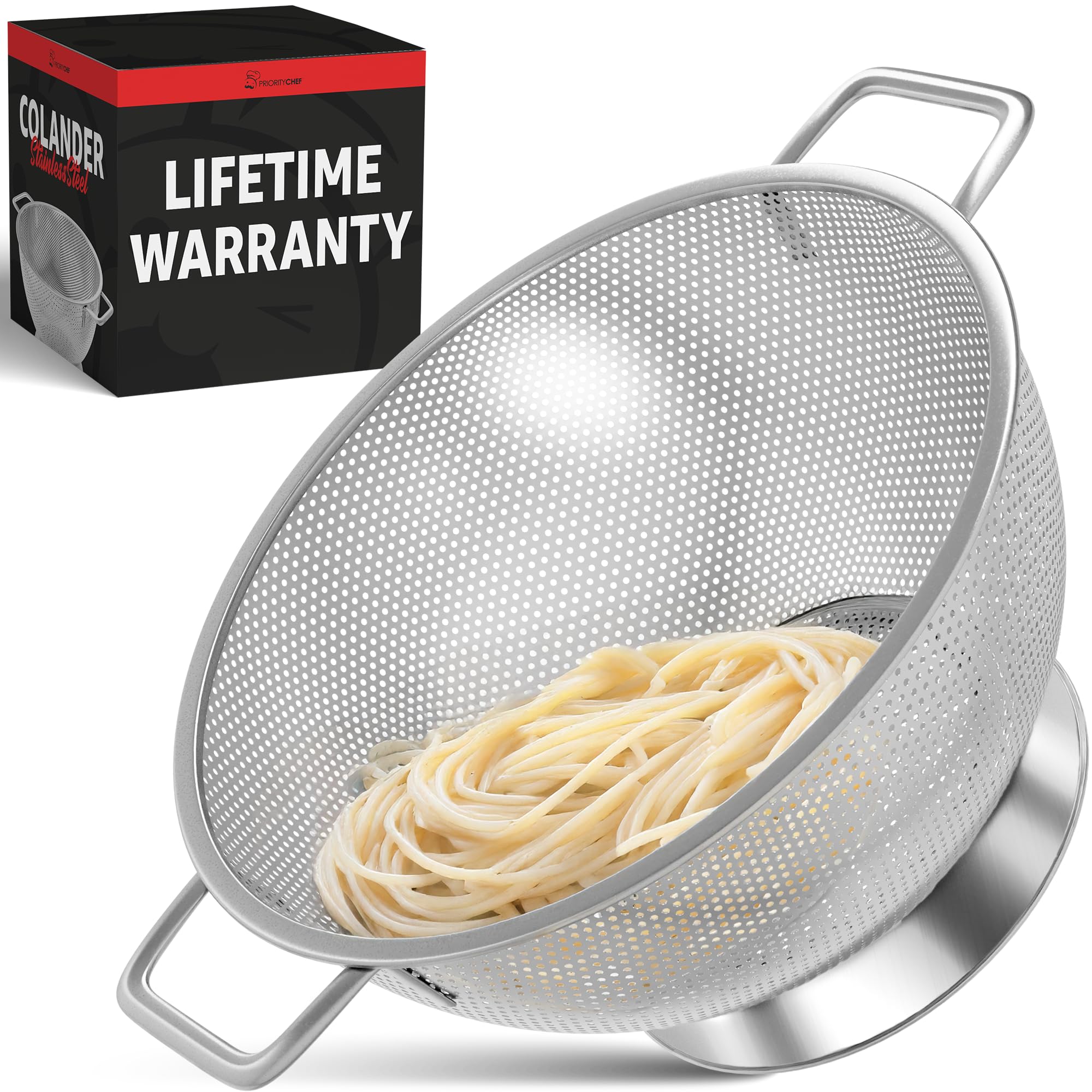
A 3-quart stainless colander with micro-perforations and a raised base that keeps counters dry while draining.
Why I picked it: Compact size with micro-perforations and an elevated base for cleaner counters.
Best for: Everyday use, countertop tasks, and small to medium meal prep.
An affordable stainless option that performs above its size.
Pros
- Fast-draining micro-perforations
- Raised base prevents counter mess
- Sturdy stainless steel
- Easy-grip handles
- Dishwasher safe
Cons
- Not ideal for ultra-fine grains like couscous
- Smaller capacity than family-size colanders
My take
This PriorityChef colander has become my kitchen workhorse when I want something that looks good on the counter and drains efficiently.
The raised base keeps water from pooling under the bowl and the hole pattern moves liquid quickly away from food. I find it especially handy for single-pot meals and smaller batches.
If I need to rinse very fine grains I reach for a micro-perforated larger colander, but for everyday rinsing and draining this compact option covers most tasks effectively.
How I Choose a Pasta Strainer
Materials and durability
I prioritize stainless steel if I want something that will last for years and can handle boiling water and heavy loads. Silicone and BPA-free plastics are great for collapsible designs and lighter duties.
If rust resistance is important to you, I look for 18/8 stainless or confirm the manufacturer’s rust guarantees and my own washing habits.
- Stainless steel: durable, heat-resistant, long-lasting.
- Silicone/plastic: lightweight, collapsible, and dishwasher-safe.
- Check rivets and handles for solid attachment.
Hole size and drainage
I match hole size to intended foods: micro-perforations for rice and tiny grains, larger holes for pasta and vegetables.
Drainage speed matters: more perforations usually means quicker draining without needing to tilt the bowl.
- Micro holes trap grains like rice and quinoa.
- Standard holes work best for pasta and produce.
- Holes only on the bottom can slow side drainage.
Sink fit and hands-free use
I think about whether I want an over-the-sink option that frees my hands, or a bowl-style strainer that sits on counters. Expandable arms or extendable handles are helpful if you plan to strain directly from pots.
Raised bases prevent backflow and keep counters clean during draining.
- Over-the-sink strainers: great for hands-free pouring.
- Raised feet keep food out of drained water.
- Test arm grip if your sink has a curved lip.
Storage and size
I consider how often I will use the strainer and how much space I have. Collapsible options are a lifesaver in small kitchens, while larger metal colanders suit batch cooking.
A multi-piece set can replace several single bowls and cover different tasks without crowding your cabinets.
- Collapsible = best for tight cabinets.
- Single large metal colander = best for batch cooking.
- Choose capacity to match household meals.
Frequently Asked Questions
Can I use a silicone collapsible colander with boiling water?
I use silicone colanders for hot pasta and for the most part I trust brands rated for boiling temperatures; check the product’s heat-resistance claims. If a silicone model lists a boiling-point rating or 212°F tolerance, I’ll use it straight from the pot.
Which strainer is best for rice or quinoa?
I reach for a micro-perforated stainless colander for rice and quinoa. The tiny holes let water escape quickly while holding grains in the bowl; standard-hole colanders usually let small grains slip through.
Are over-the-sink strainers stable on every sink?
In my experience, most expandable over-the-sink strainers fit a wide range of sinks, but very shallow or double-basin setups can be less stable. I test the arms on my sink edge before pouring and sometimes steady the colander if the grip feels loose.
Final Take
I tested a range of designs so you can match a strainer to your kitchen habits: collapsible silicone if you need storage savers, micro-perforated stainless for grains, and sturdy all-metal options for heavy daily use.
Pick the one that fits your sink, the foods you cook most often, and how much storage space you have — I’ve included my favorite for each scenario so you can get the right tool quickly.
