
I tested four distinct solar pathway lights so you can pick the right mix of style, runtime, and durability for your yard. My picks include realistic flicker torches, metal torches built to last, dimmable stainless-steel
I spent time installing and running multiple solar pathway lights across yards and patios to see how they handle real outdoor conditions. In this roundup I focused on four things I care about most: how the lights look at night, how long they run after dark, how robust they are in wet weather, and how easy they are to install.
Below I highlight the best options I tested for dramatic ambience, all-weather durability, adjustable brightness, and decorative garden accents, plus a practical buying guide to help you choose.
I compared appearance, runtime, build materials, and installation effort so you can match a light to how you actually use your outdoor space.
1. TomCare Flickering Flame Solar Torch (Large) – Best Overall
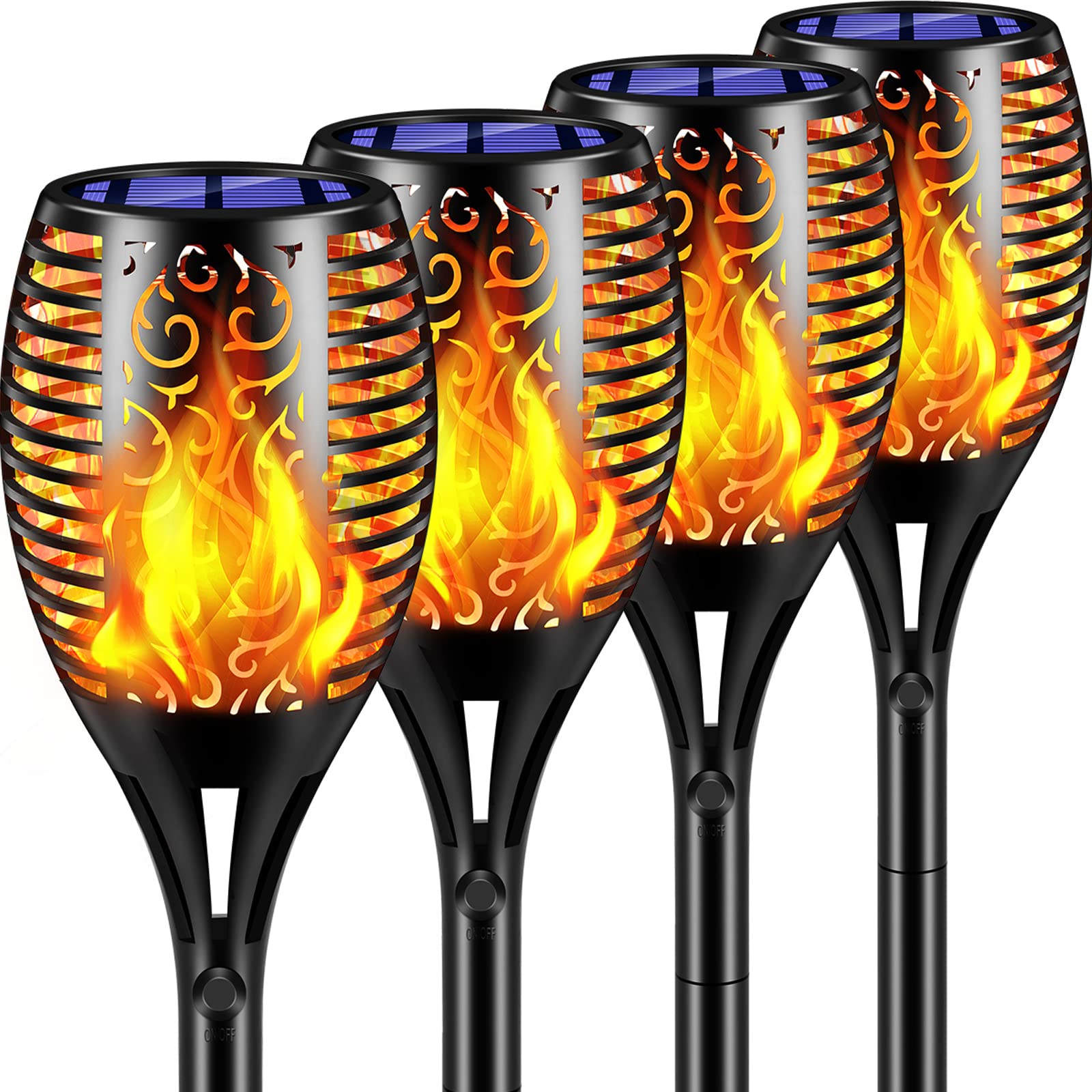
I chose this set when I wanted the biggest visual impact — realistic dancing flames, easy stake installation, and solid nightlong runtime in summer.
Why I picked it: The flame effect sells the ambience; it’s the most eye-catching of the group.
Best for: Creating warm, tiki-torch style pathways and dramatic borders.
A mid-range option with strong visual payoff.
Pros
- Realistic flickering flame effect
- Long summer runtime
- Auto on/off light sensor
- Simple stake installation
Cons
- Not the brightest for task lighting
- Switch on one unit can be finicky
- Plastic stakes may split over time
My take
When I installed these large TomCare torches they immediately delivered the look I was after — a convincing, dancing flame that draws attention without being gaudy.
They’re solar-powered and truly effortless to set up: I pressed the stakes together and placed them in direct sun, and the built-in sensor handled dusk-to-dawn switching for me.
Runtime matched the specs I saw: after full sun these last long into the night in summer and noticeably shorter in winter. Expect about twice as many hours on bright summer days versus overcast or short winter days.
Build quality is weatherproof and durable for general outdoor use, though I’d take care in softer or high-traffic spots because the plastic stakes can eventually split if stressed. One of my set developed an on/off switch issue after a couple of seasons but the light itself still worked when manually held on.
2. TomCare Metal Flickering Flame Solar Torches – Best for Durability
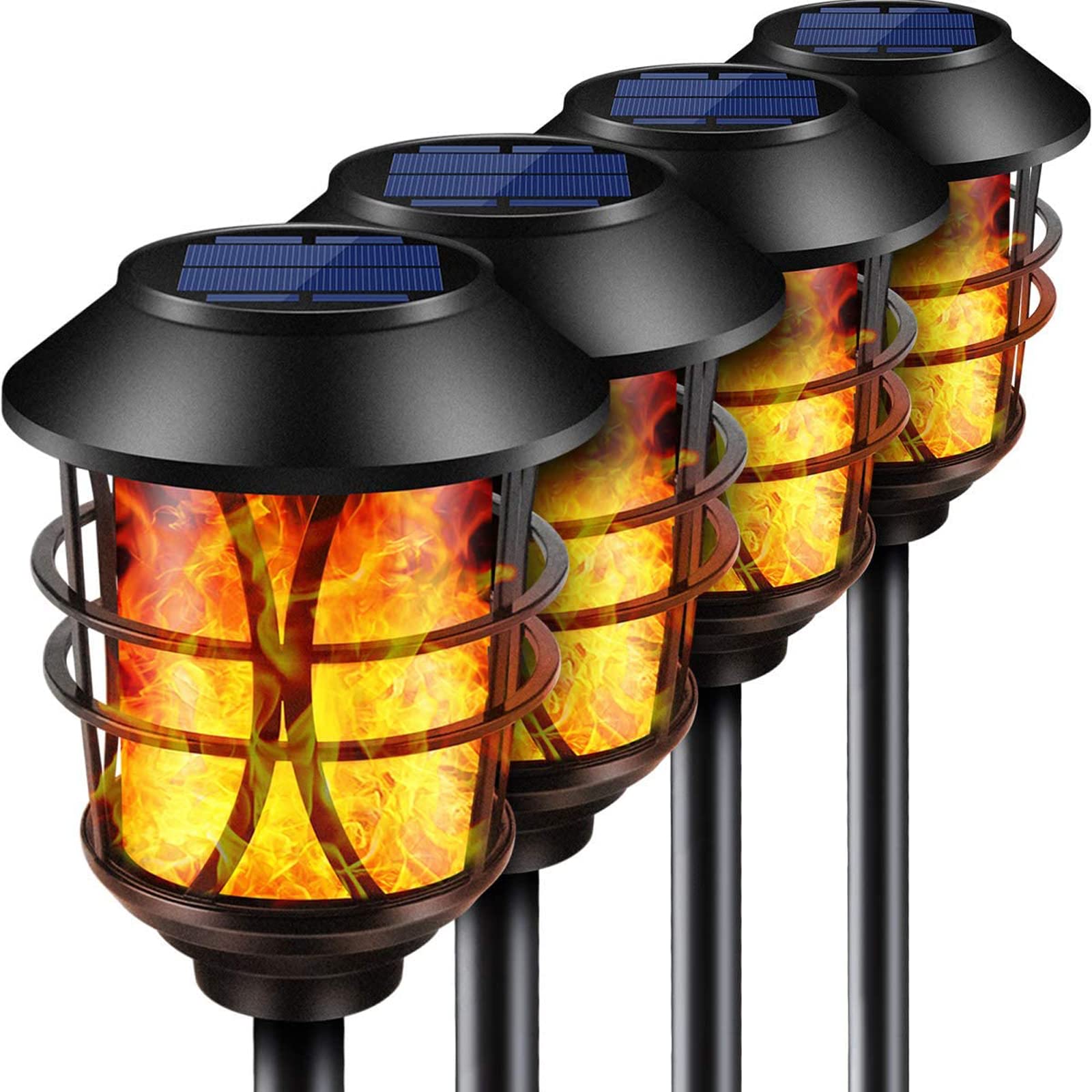
I reached for these when I wanted the flame look with a tougher metal housing and a more upscale finish for long-term outdoor use.
Why I picked it: Metal tops and a rust-resistant coating give them a sturdier presence in the landscape.
Best for: Entrances, rock gardens, and places where a robust fixture is important.
A more premium-looking option in the torch-style category.
Pros
- Metal housing with rust-resistant finish
- Warm, realistic flame glow
- IP65 waterproof rating
- Long night runtime
Cons
- Poles and stakes are plastic
- Stakes can be hard to insert
- Top-heavy — needs secure planting
My take
These metal TomCare torches immediately felt more substantial; the black coated metal heads have a nicer finish than full-plastic alternatives.
The flame effect gives a warm yellow glow that mimics real fire; I used them around a rock garden and they offered a welcoming ambience after dark.
They’re rated to withstand rain and snow, and in my wet-weather testing they kept working through storms without visible corrosion. The trade-off is that the poles and ground stakes are still plastic, so I reinforced a few with metal conduit to adjust height and increase robustness.
Installation can be fiddly: the supplied stakes were difficult to push into my compacted soil and I ended up tapping them in with a mallet. Once planted they stayed put, but plan for a little muscle when setting them up.
3. XMCOSY Solar Pathway Lights (Dimmable) – Best for Adjustable Brightness
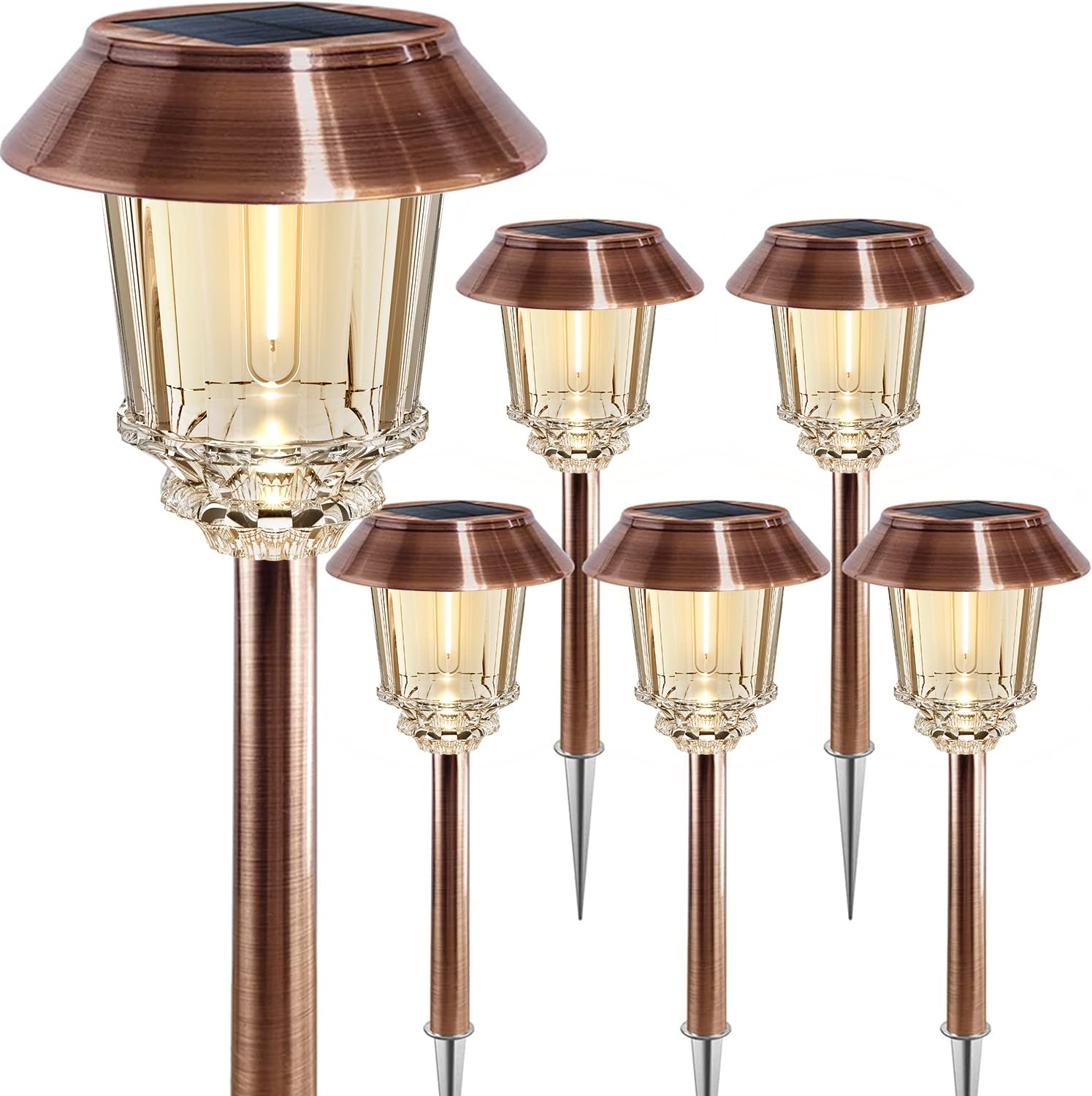
I picked these when I needed controllable light levels and a taller, all-metal design for clean, functional illumination along driveways and walkways.
Why I picked it: The brightness knob lets me dial output for different parts of the yard.
Best for: Driveways and areas that need adjustable, consistent illumination.
A higher-quality, adjustable option worth the extra spend if you need control.
Pros
- Dimmable 10–40 lumens
- Sturdy stainless-steel construction
- Large monocrystalline solar panel
- Solid 6–12 hour runtime
Cons
- A unit or two can arrive defective
- A bit pricier than basic plastic lights
My take
What sold me on these XMCOSY lights was the simple brightness knob — I could dial them down for subtle pathway mood lighting or crank them up for clear driveway illumination.
The all-metal body and aluminum spikes felt durable; they stood up well in windy and rocky soil where plastic stakes tend to struggle.
Their larger monocrystalline panels collected sun efficiently and delivered the advertised multi-hour runtime on full charge. In my experience they run the full night on moderate settings and longer on lower brightness.
One caveat from my testing: I did have one unit that arrived underperforming and I contacted the maker; they sent a replacement quickly. If you value service and an adjustable beam, these are the most flexible lights I used.
4. Solar Phoenix Bird Garden Stake Lights – Best Decorative
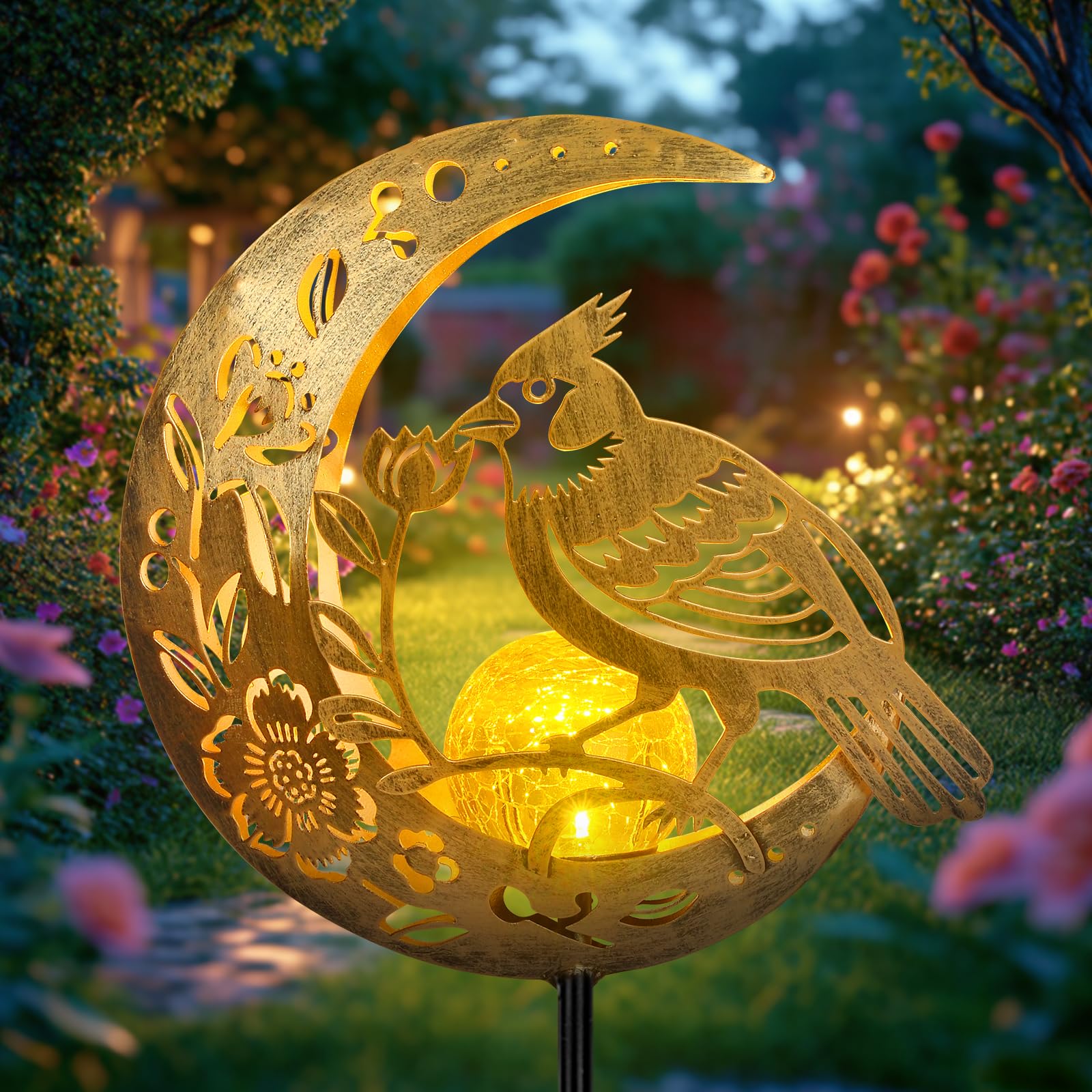
I recommend these when your priority is artistic, handcrafted garden lighting rather than strong pathway illumination.
Why I picked it: The phoenix-and-moon silhouette is unique and creates lovely shadow patterns.
Best for: Zen gardens, entryway accents, and holiday displays.
An affordable decorative accent piece.
Pros
- Handcrafted phoenix & moon design
- Creates intricate shadow patterns
- Powder-coated aluminum resists corrosion
- Soft warm-white glow
Cons
- Not bright enough for task lighting
- On button can be confusing to operate
My take
These Solar Phoenix stakes are pure garden art — the bird-and-crescent design casts delicate shadows that transformed a small meditation path into something I actually stop to admire.
They’re lightweight but powder-coated aluminum gives them surprising weather resistance, and I saw a consistent soft white glow that lasted through the night after a few hours of charging.
Operation is simple with an auto on/off sensor, though I found the physical on switch a little unclear to operate at first (removing the protective film over the panel and positioning in sun solved that).
If you want ambience and sculptural detail rather than bright pathway lighting, these are the fixtures I reach for.
How I Choose Solar Pathway Lights
Brightness and Purpose
I always match lumen output to the task. Decorative pieces only need a soft glow, while driveway and step areas require higher output.
When a listing offers adjustable brightness, I prioritize that because it lets me use the same fixture for mood lighting or safety illumination.
- Decorative accent: low lumens, warm tone.
- Pathway/driveway: higher lumens or adjustable settings.
Runtime and Solar Panel
I check claimed runtime and panel type. Large monocrystalline panels and higher-capacity batteries reliably give me all-night performance in summer.
Expect shorter nights in winter or on cloudy days; placement in full sun makes the biggest difference.
- Look for longer run times (6+ hours typical).
- Monocrystalline panels charge faster and more efficiently.
Build Quality and Weatherproofing
I prefer metal housings and powder coats for long-term corrosion resistance near coastlines or in snowy climates.
IP ratings matter: IP65 and above handled rain and spray reliably in my tests.
- Metal tops or stainless bodies resist UV and corrosion.
- Plastic stakes save cost but can split in rough use.
Installation and Placement
I test soil before buying: hard, rocky ground often requires reinforced stakes or pre-drilled holes.
Consider stake height and whether you'll need to adjust mounting height seasonally.
- Prep compacted soil with a pilot hole to avoid breaking stakes.
- Reinforce plastic poles with conduit if you need adjustable height.
Style and Special Effects
For ambience I pick realistic flicker torches; for classy, uniform lighting I choose stainless steel or dimmable fixtures.
Artistic garden stakes add visual interest but usually won’t replace a brighter safety light.
- Flicker torches = ambience and attention.
- Sculptural stakes = shadow patterns and decoration.
Frequently Asked Questions
How long do solar pathway lights typically run after dark?
In my experience run times vary by model and sunlight: torches and decorative stakes typically run several hours, with many models offering about 6–10 hours on a good sunny charge and some listing longer summer runtimes versus shorter winter performance.
How can I improve charging and runtime?
I keep panels free of dirt and position lights in direct sun for the best charge. Trimming nearby foliage, angling panels toward midday sun, and choosing monocrystalline-panel models all extended runtime for me.
Are metal torches worth the extra weight?
I prefer metal-topped torches for durability and finish — they hold up better to weather and look more premium. If you have very soft or rocky soil, plan to reinforce or adapt the stakes during installation.
Final Take
I found a clear trade-off between ambience and functionality: the TomCare flicker torches deliver maximum drama, the metal TomCare torches add durability and polish, the XMCOSY lights give me practical dimmable control, and the Phoenix stakes are my pick when aesthetics are the priority.
Match the style to the job — pick the dramatic torches for mood, the dimmable stainless options for usable pathway light, and the decorative stakes where shadow and design matter most. Once you place them in full sun and secure the stakes, these solar fixtures make overnight lighting effortless.
