
I tested five pergolas and gazebos — from quick pop-ups to heavy-duty hardtops and a cedar pergola — to find reliable shade, weather resistance, and real-world assembly needs.
I spent hands-on time assembling and using a range of pergolas and gazebos so I could tell you which builds deliver the most reliable shade, durability, and value.
This roundup covers quick pop-ups, permanent hardtops, a large double-wide option for big entertaining spaces, and a true cedar pergola with integrated power. I focused on wind and snow resistance, materials, ease of assembly, and the features that actually matter once the structure is in place.
I compared these models by how quickly I could get them set up, how confident I felt leaving them in place through changing weather, and how useful their extras (curtains, netting, gutters, PowerPort) proved during everyday use.
1. Crown Shades 13×13 Pop-Up Gazebo – Best Quick-Setup Pop-Up
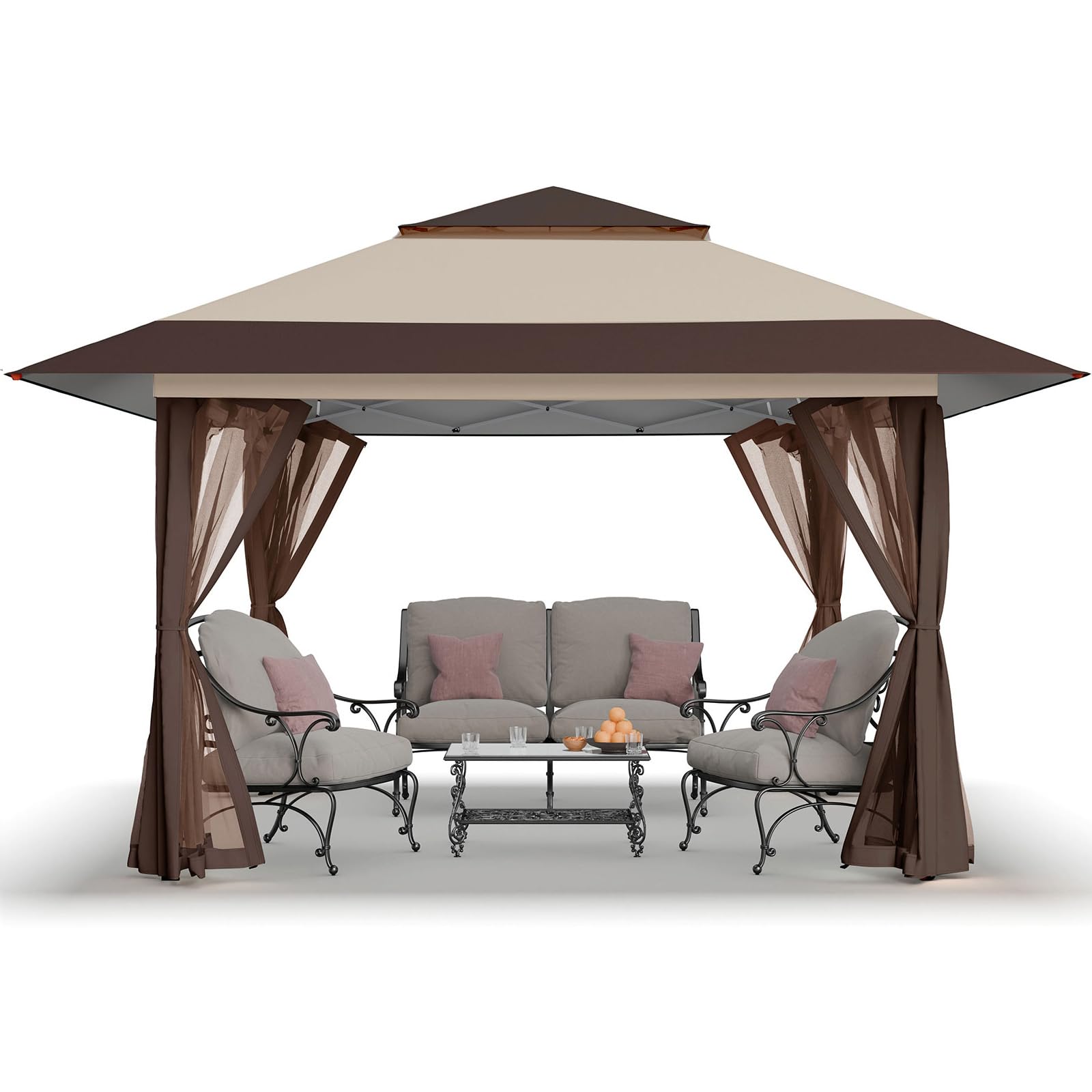
I reached for this when I needed shade fast. It sets up in minutes, packs into a wheeled bag, and delivers generous covered space.
Why I picked it: Fast, tool-free setup and a roomy 13' canopy that packs away compactly.
Best for: Weekend shade, tailgates, temporary deck cover.
Affordable pop-up option.
Pros
- One-push central hub setup
- Generous 169 sq ft shade area
- UPF 50+ silver-coated fabric
- Includes wheeled Sto 'N Go storage bag
Cons
- Not built for sustained storms
- Canopy can develop an odor in storage
- Limited long-term weather durability
My take
This is the fastest shelter I assembled: two people can latch the patented one-push center lock and have the canopy up in minutes with no tools. The leg-height pinch-free buttons make leveling simple.
The 13' canopy gives a lot of usable shade — I comfortably seated a group and had over 9' of interior height. The 300D silver-coated fabric blocks sunlight effectively and includes waterproof sealing tape to reduce pooling.
Crown Shades includes practical extras I used: removable netting to keep pests out, 4 weight bags, stakes, and guy ropes. The Sto 'N Go wheeled bag made transport and seasonal storage much easier.
Be realistic about weather: I had one version of this shelter that didn’t survive strong winds and another that developed a strong odor when stored. The manufacturer replaced a damaged unit quickly for me, but I always take this down when storms approach — it isn’t a permanent structure.
2. Kozyard Alexander 10×12 Hardtop Gazebo – Best for Wind & Snow Resistance
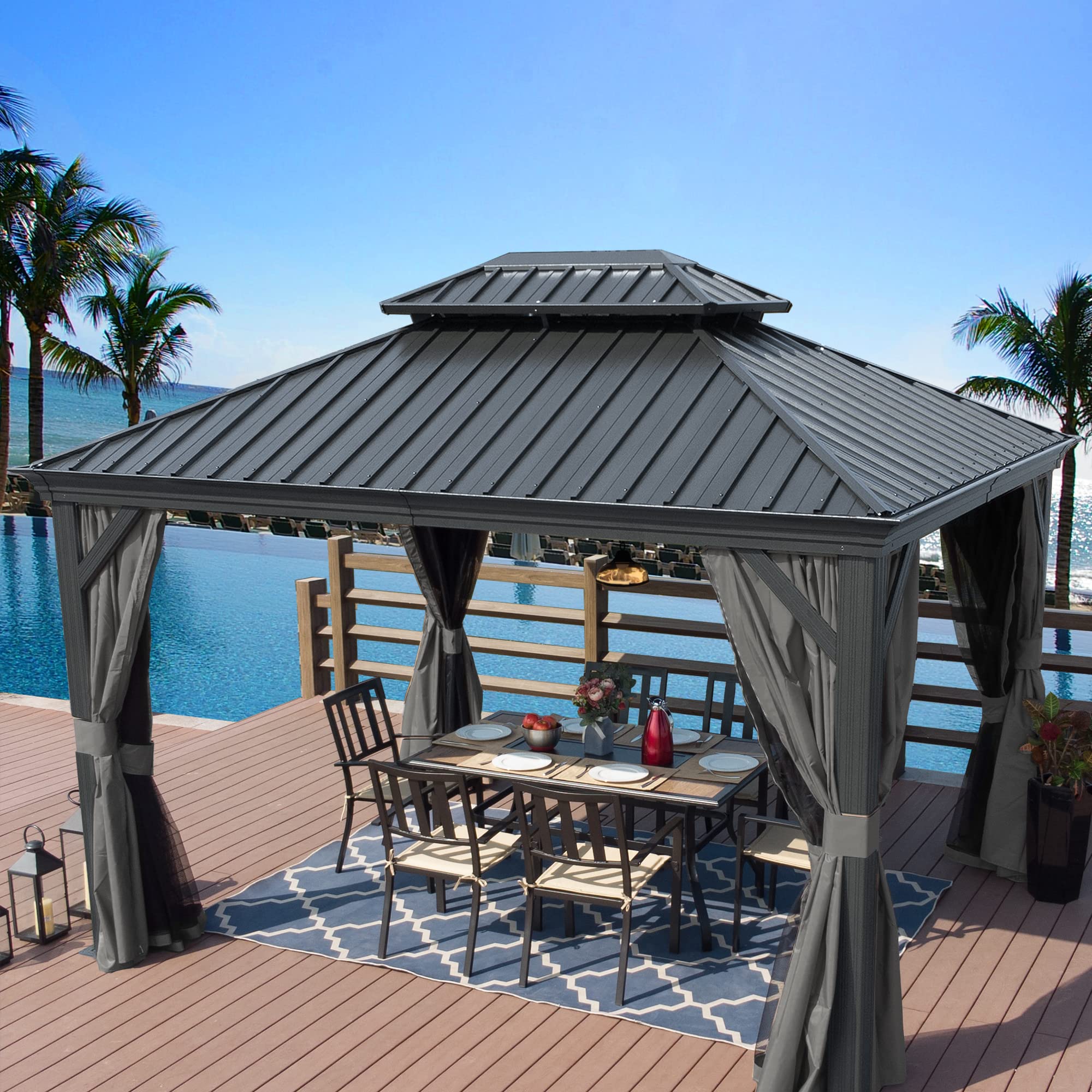
I relied on this hardtop when I wanted a durable, all-metal pavilion that can handle heavy snow and strong winds when properly anchored.
Why I picked it: All-metal roof, reinforced frame, and engineered snow/wind capacity for year-round use.
Best for: Permanent patio cover and year-round outdoor living.
Higher-end hardtop option.
Pros
- Galvanized steel double roof
- Engineered for heavy snow loads
- Built-in gutter system
- Curtains and netting included
Cons
- Lengthy assembly needing multiple people
- Premium cost relative to soft-top canopies
My take
This hardtop feels substantive from the moment the boxes arrive — heavy-duty aluminum posts, reinforced beams, and a 29-gauge galvanized steel roof that gives obvious confidence in storms and winter.
The double-roof design noticeably improves airflow and reduces heat buildup; the integrated gutters direct water down the posts instead of letting it run off the edges.
Assembly took me a few weekends and is much easier with an extra pair of hands for some roof steps. Pre-drilled holes lined up well, and the parts fit together without forcing, but patience and methodical work make a big difference.
The included curtains and netting create a comfortable, private space. I hung string lights from the reinforced ceiling hook and used the gazebo for evening dinners — it feels like a permanent outdoor room when anchored correctly.
3. Purple Leaf 12×24 Hardtop Gazebo – Best for Large Entertaining
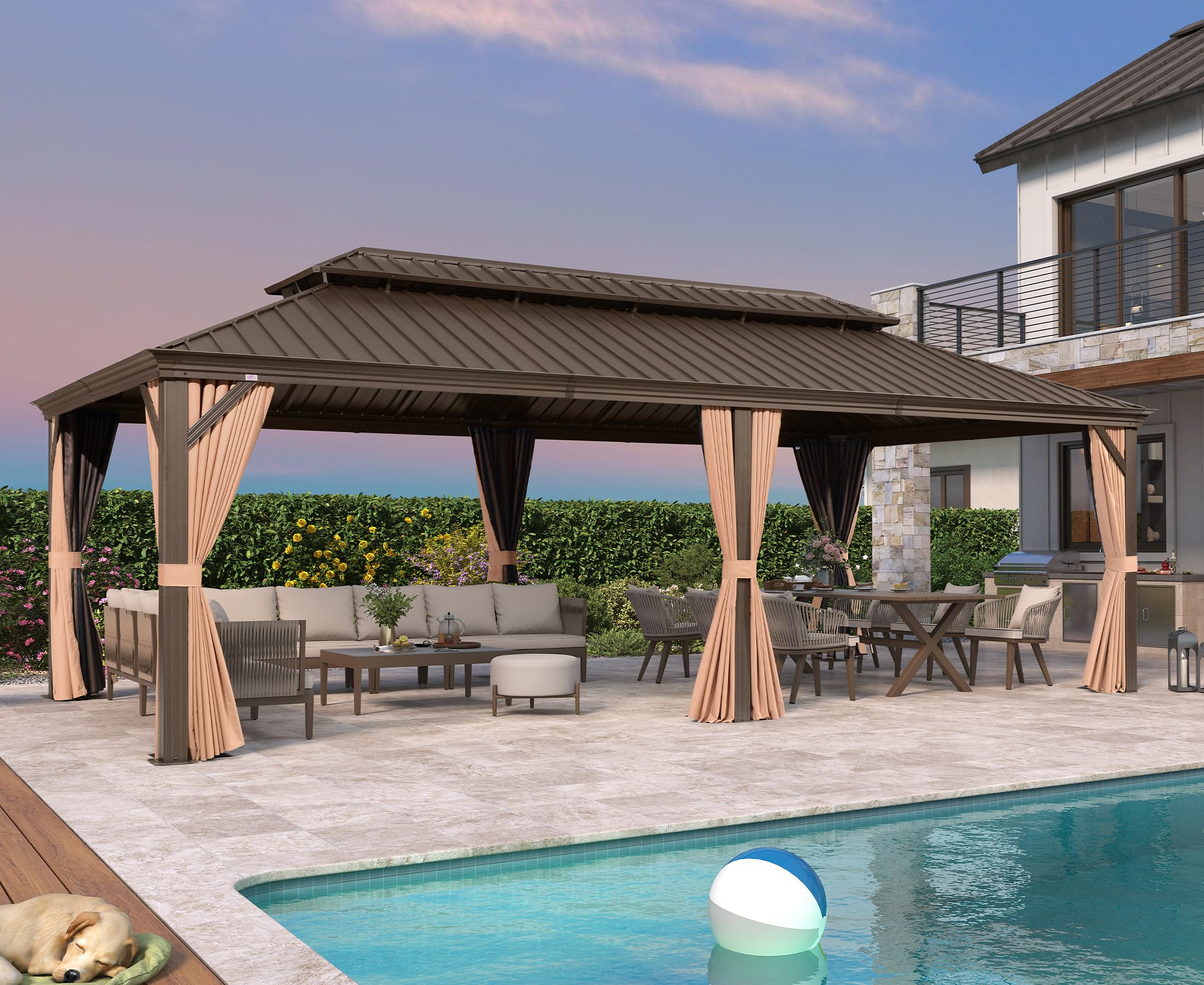
When I needed maximum covered space, this double-wide hardtop delivered a roomy, well-built pavilion with heavy-duty netting and a beefy frame.
Why I picked it: Expansive 12'x24' footprint with reinforced double roof and heavy netting.
Best for: Large gatherings, extended outdoor living spaces.
Premium large-format option.
Pros
- Very wide 4.7" frame
- Reinforced double roof
- 260 GSM heavy-duty netting
- Designed drainage system
Cons
- Complex assembly for solo builders
- Some parts may need adjustment
My take
This gazebo gives you the square footage of two 12'x12' structures in one build. The frame is noticeably thicker than many competitors, and the reinforced double roof handles snow loads confidently on paper — the design also channels water down to the poles.
I built this on a raised deck and managed most of the assembly myself; a partner helped for a few roof steps. The kit ships in multiple heavy boxes and the packaging was excellent.
Be prepared to improvise in a couple of places: I encountered a few welds that required enlarging holes, which I solved without compromising overall rigidity. Purple Leaf offered replacements but I chose to proceed to avoid delays.
If you plan this project, sort parts in trays and study the diagrams first. Once assembled, the structure feels spacious, stable, and polished for large outdoor living setups.
4. Backyard Discovery Beaumont Cedar Pergola – Best Wooden Pergola
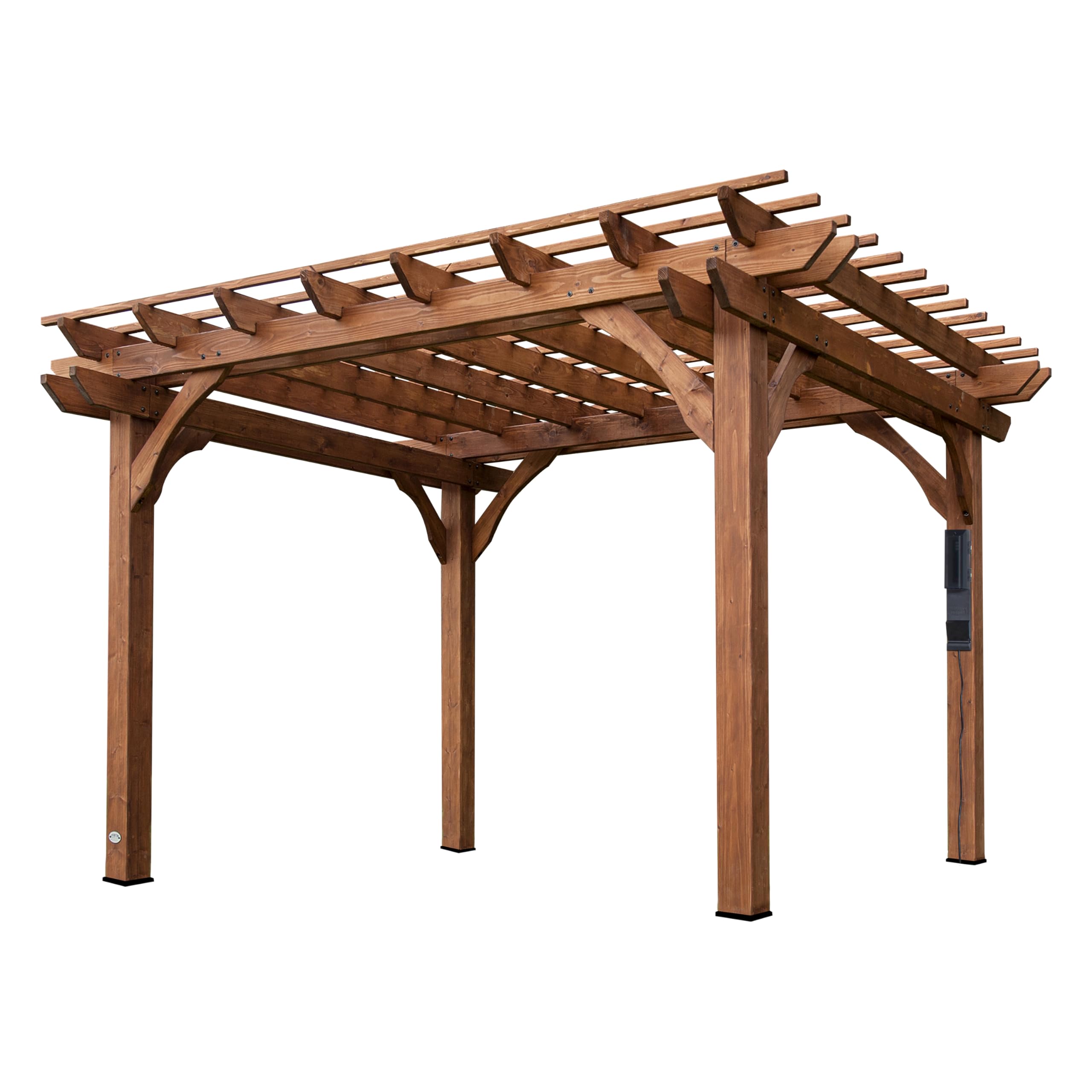
I chose this cedar pergola when I wanted a classic wood look with built-in power and proven wind protection for a permanent backyard feature.
Why I picked it: 100% cedar construction with integrated PowerPort and high wind rating.
Best for: Natural aesthetic, long-term patio upgrade, mounting lights and plants.
Mid-to-premium wooden pergola.
Pros
- 100% cedar wood construction
- Pro-Tect tested to high winds
- Integrated PowerPort for outlets/USB
- Pre-cut, pre-drilled pieces
Cons
- Heavy boxes and need extra hands
- Assembly is time-consuming
My take
This pergola feels like a proper piece of outdoor furniture rather than a temporary shelter. The cedar has that warm look and the kit arrives pre-stained and pre-drilled, which saved me significant time on measuring and cutting.
I assembled it over multiple sessions with a helper; moving the heavy boxes into place and lifting assembled beams requires at least two people. The BILT app guidance was helpful and the parts lined up precisely.
The PowerPort is a practical touch — I mounted it to a post and used it for lighting and charging devices during evenings on the deck. Structurally, the dual cross beams and thick posts inspire confidence; the pergola is built for long-term exposure if you maintain the wood.
If you want a natural-look permanent feature and are willing to invest time in assembly and occasional maintenance, this cedar kit is very satisfying.
5. Domi 10×12 Hardtop Gazebo – Best Value Hardtop
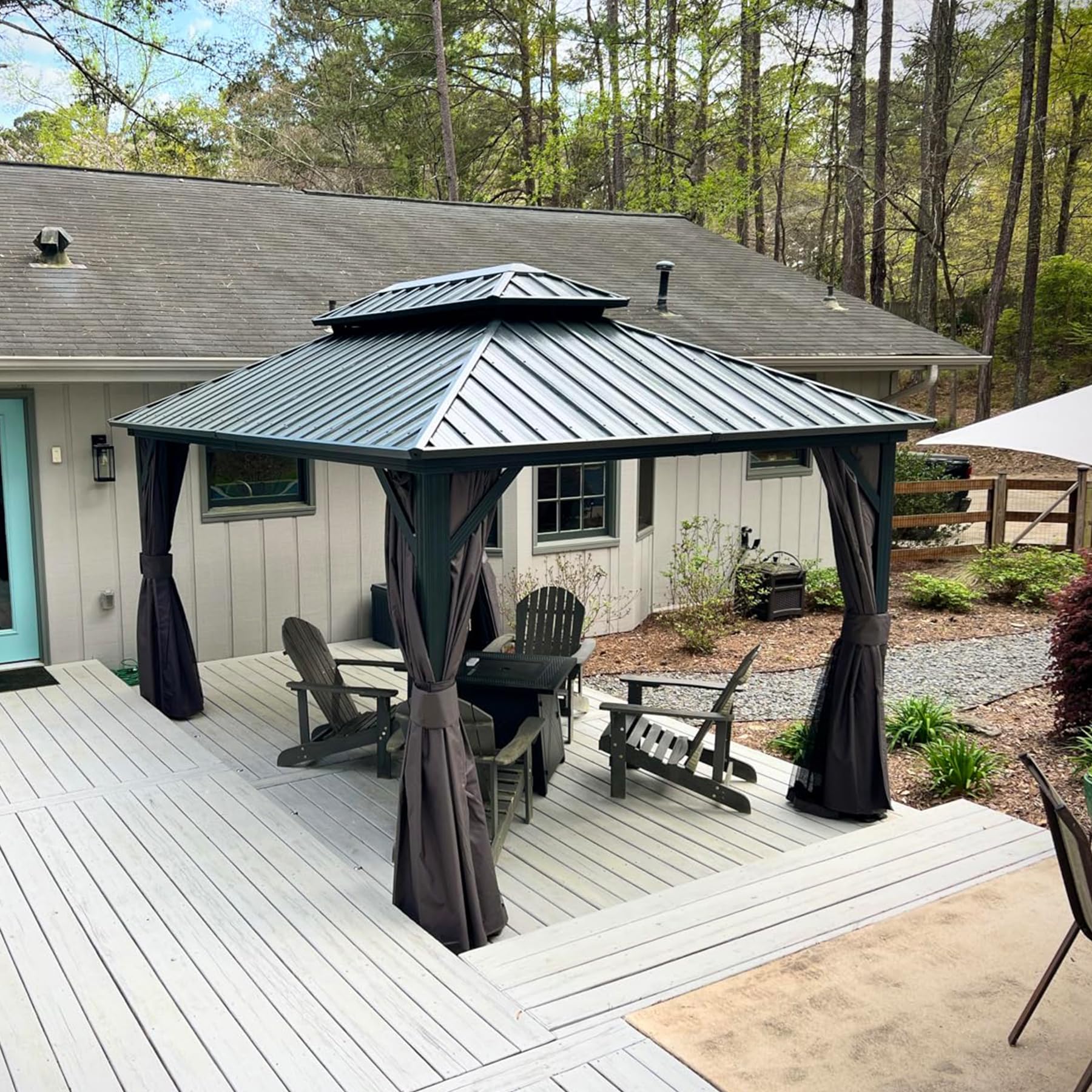
I picked this as a value-oriented hardtop that brings a double roof, curtains, and galvanized panels without the premium price tag.
Why I picked it: Double roof ventilation and practical curtains at a lower price point.
Best for: Budget-conscious buyers wanting a durable hardtop.
Entry-level hardtop value.
Pros
- Double roof for ventilation
- Galvanized steel roof panels
- Curtains and netting included
- Good packaging and customer support
Cons
- Screen anchoring could be improved
- Assembly is lengthy and needs helpers
My take
This gazebo gave me the metal roof longevity I wanted without the premium price. The packaging protected the parts well and the components were labeled, which helped during assembly.
Expect to spend time assembling: I needed multiple people and roughly a full day-plus to get it fully together. The instructions were serviceable but I had to adapt in a few spots, especially with roof panel handling.
Two practical issues I encountered were slightly inconsistent dimensional conversions in the paperwork — I verified critical measurements before bolting to a deck — and the screen system only anchors at the top, so the lower panels can flap unless you add extra fastenings.
Customer support responded quickly for a missing box I reported, and overall the structure feels sturdy once assembled and anchored. For an entry-level hardtop, it hits the right balance of features and value.
How I Choose a Pergola or Gazebo
Key things I test and look for
I prioritize material and roof type first — soft canopies are great for portability while galvanized steel or hardtop roofs are best for year-round installations.
Wind and snow capacity matters for permanent installs. I always check manufacturer engineering numbers and plan to anchor foundations accordingly.
Ease of assembly and the quality of instructions determine whether a project is a weekend job or a multi-day build for me.
- Materials: cedar for aesthetics and rot resistance; aluminum/steel for low maintenance.
- Roof: solid hardtop for permanence, double roofs for airflow.
- Anchoring: confirm how you’ll bolt to deck or concrete before buying.
- Extras: built-in gutters, netting, curtains, and power ports are practical daily features.
- Portability vs permanence: pop-ups for short-term use; hardtops/pergolas for long-term investment.
Assembly and installation tips I use
I always unpack and sort parts before I start so I can verify everything and avoid surprises.
Get helpers for roof steps and heavy posts — I don’t recommend attempting large hardtops solo unless you have mechanical lifting help.
- Use trays to organize fasteners and label them.
- Follow torque and anchoring recommendations exactly.
- Plan for electrical runs early if you want outlets or fans.
- Treat wood with a sealer after assembly for longer life.
Frequently Asked Questions
Can a pop-up gazebo be left up in wind or rain?
I don’t leave pop-ups up in strong wind or heavy rain. They’re great for temporary shade but I always take them down when storms approach and use stakes, guy lines, and weight bags for calm-weather use.
Do hardtop gazebos require a concrete foundation?
Not always. I anchor many hardtops to decks or concrete with appropriate anchors; anchoring method depends on the surface and local wind requirements. Follow the manufacturer’s guidance and local codes.
How many people do I need to assemble a hardtop or pergola?
For anything with roof panels or large beams I plan for at least two people. For the larger hardtops and the cedar pergola I worked with helpers during the heavier steps; having three people makes roof assembly smoother.
Final Take
I found a clear trade-off between portability and permanence: pop-ups like the Crown Shades are unbeatable for quick shade, while hardtops and the cedar pergola offer lasting coverage and higher weather confidence.
If you want a fast, affordable solution, choose the pop-up. If you need an all-season covered room, prioritize galvanized or double-roof hardtops and proper anchoring. For natural wood appeal and integrated power, the cedar pergola is my pick.
Use my assembly tips and the comparison notes here to match the structure to your site, climate, and how you plan to use the space.
