
I tested markers for durability, water resistance, and visibility on common outdoor surfaces. These are the tools I reach for when I need marks that last outside.
I spend a lot of time marking bins, signs, metal racks, and outdoor equipment, so I focused my testing on permanence, water resistance, tip durability, and surface versatility.
My goal was to find markers that hold up to sun and wet weather, stay readable at a distance, and still let me work quickly without worrying about smears.
Below are the products I used most, what I liked about each one, and where each marker fits into an outdoor workflow.
I compared these markers by writing on wood, plastic, metal, and painted surfaces, tracking how quickly the ink dried, how visible marks stayed after light water exposure and sun, and how each tip handled repeated use.
1. Sharpie Fine Point Permanent Marker – Best Overall
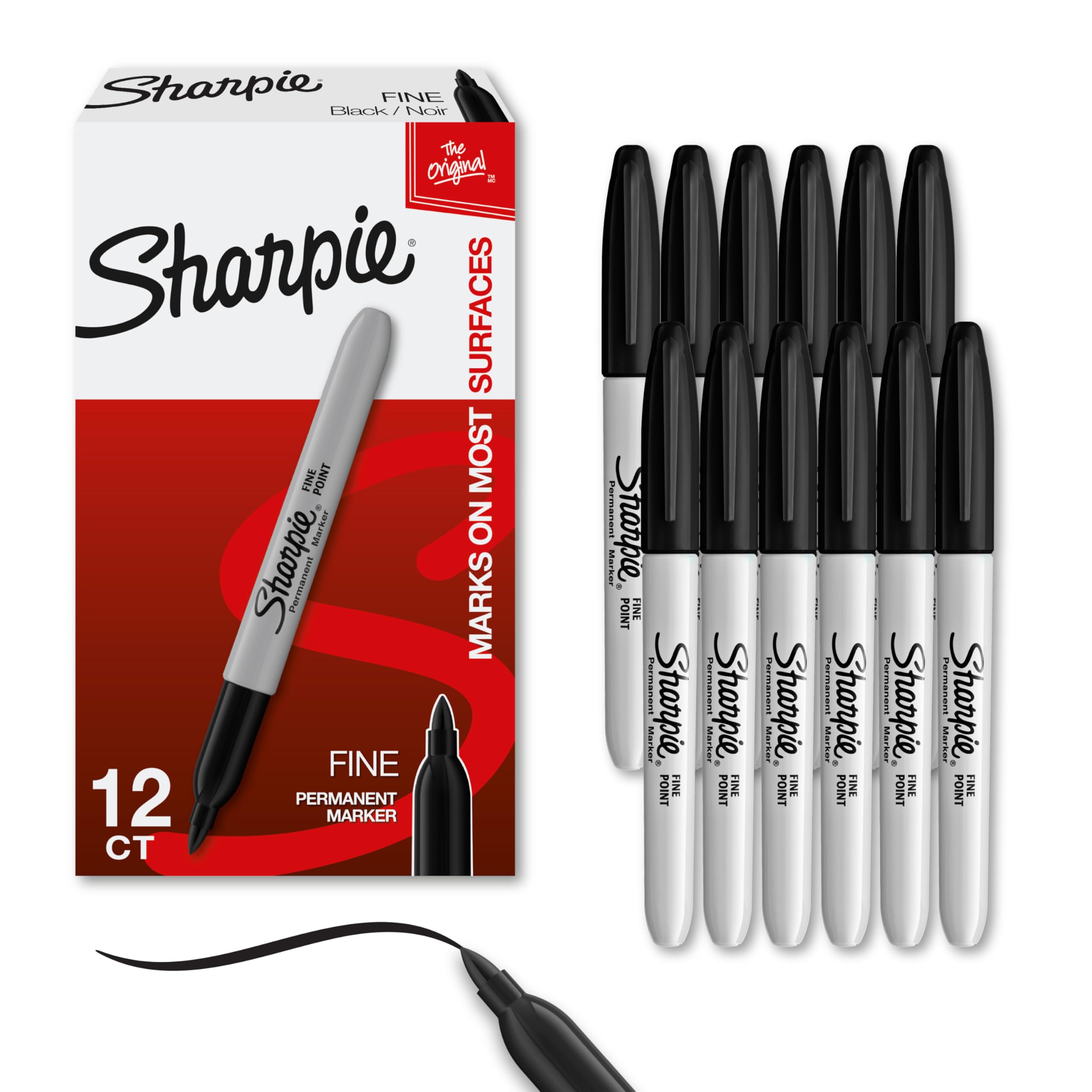
My go-to all-purpose permanent marker for outdoor labeling and general marking tasks.
Why I picked it: Fast-drying, water- and fade-resistant ink that writes on most surfaces.
Best for: Long-lasting marks on metal, plastic, wood, and painted surfaces.
A reliable, affordable workhorse in multi-packs.
Pros
- Dries quickly
- Water- and fade-resistant
- Writes on most surfaces
- Consistent ink flow
- Durable fine tip
Cons
- Only black in this pack
- Can smear briefly before fully dry
My take
I rely on this Sharpie when I need a permanent, no-fuss mark outdoors. The ink dries fast and resists water and fading, which is exactly what I want for labels on storage bins and outdoor signs.
The fine tip balances detail and boldness; I can write legibly for small tags and still get good visibility on larger items. I gave a set to our building management team for package marking, and they stayed usable through regular handling.
On slick plastics or freshly painted metal I’ll wait a few seconds to avoid smearing, but once set the marks stay put for a long time. For straightforward, dependable outdoor marking this is the one I reach for first.
2. Sharpie Fine Point Permanent Markers — Assorted – Best Color Variety
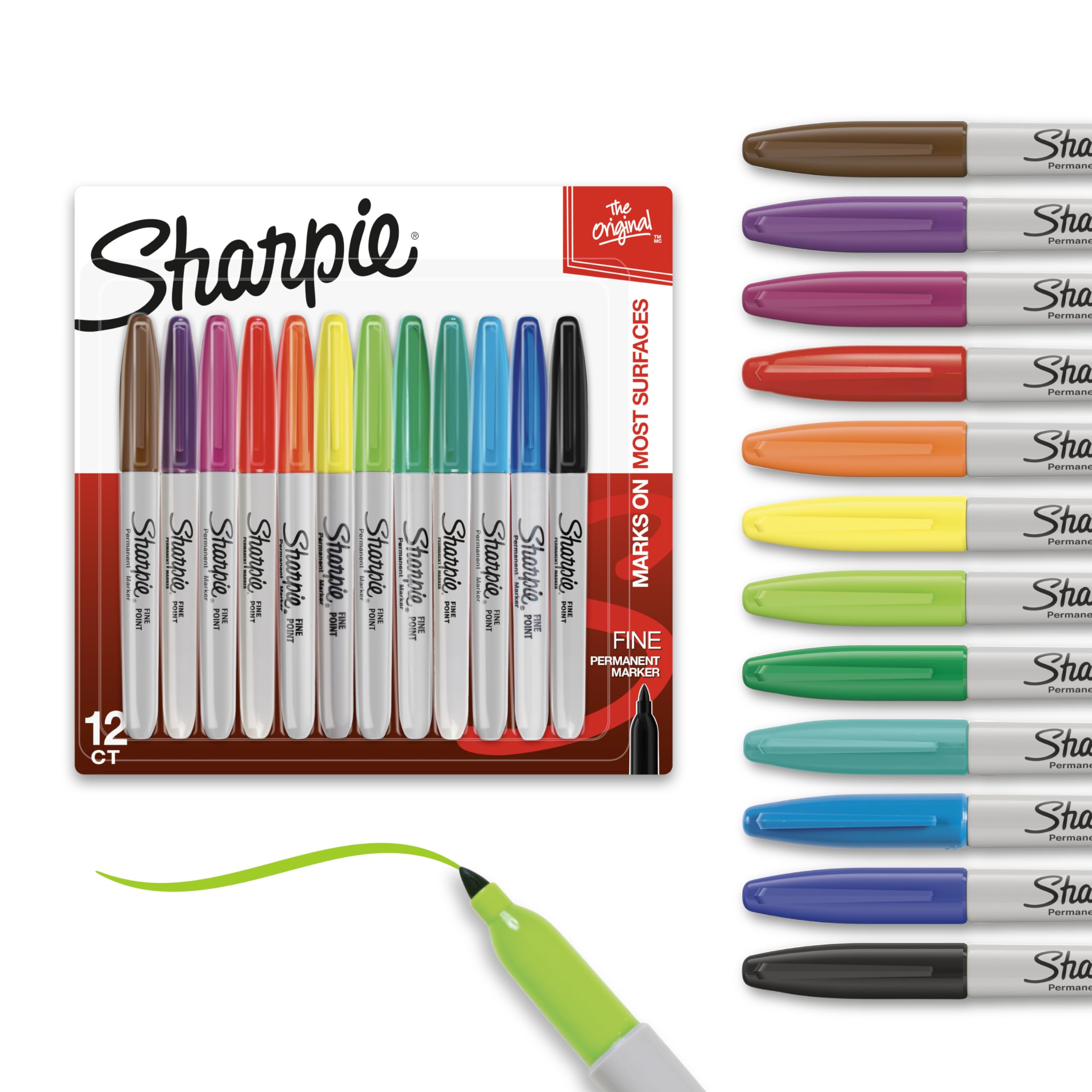
The same dependable Sharpie formula with a wide color range for color-coding outdoors.
Why I picked it: Brilliant, quick-dry colors that help me organize and code items visually.
Best for: Color-coding boxes, labeling equipment, and marking hazards outdoors.
Practical value for a multi-color set.
Pros
- Vivid assorted colors
- Quick drying
- Works on many surfaces
- Great for color coding
- Consistent nibs
Cons
- Some lighter colors less visible
- Colors vary in contrast on dark surfaces
My take
When I need to separate items by category at a glance, this Sharpie assortment is my pick. The colors are bright and dry quickly, which keeps my workflow moving on packing and outdoor labeling tasks.
I used these on cardboard, plastic, and painted wood while prepping for a move, and the marks held up well during handling and brief rain exposure. For distance readability I stick to the darker shades; yellows and light pinks are fine for close-up work.
If you want a palette for organization or temporary outdoor signage, these give me the flexibility I need without sacrificing permanence.
3. Posca 5M Medium Acrylic Paint Markers (15-pack) – Best for Opaque Outdoor Marks
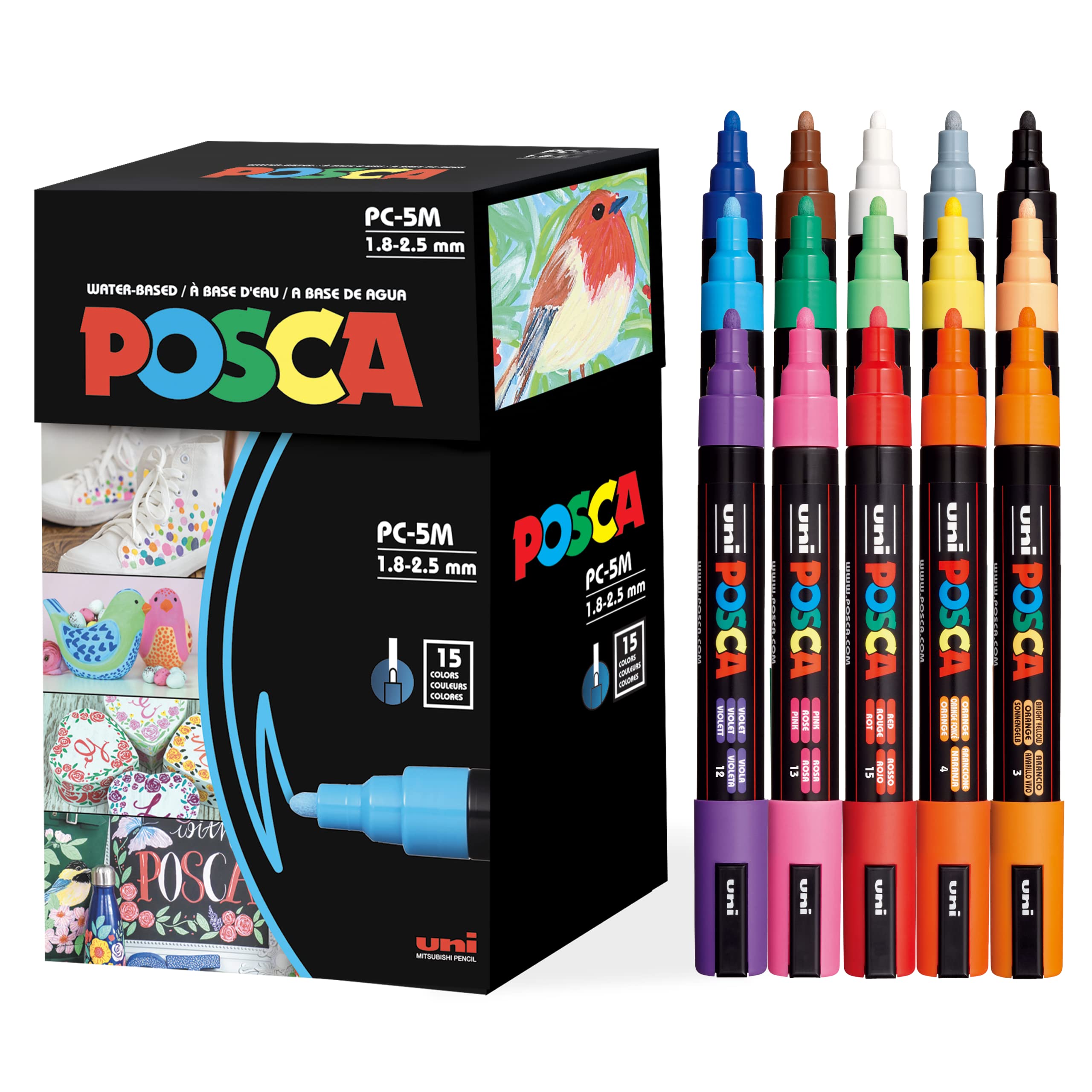
Opaque, water-based paint markers that give bright, lightfast coverage on many surfaces.
Why I picked it: Highly opaque pigment and reversible tips for crisp lines and filled areas.
Best for: Vibrant signage, painted artwork on wood or porous surfaces, and detailed outdoor decorations.
A higher-end choice for quality and coverage.
Pros
- Opaque, vibrant pigment
- Marks 50+ surfaces
- Water-based and non-toxic
- Reversible tips for versatility
- Lightfast when dry
Cons
- Needs shaking and priming
- Can fling paint if handled roughly
My take
I turn to Posca markers when I want bold, opaque marks that read well outdoors. Their water-based pigment is surprisingly durable once dry and gives great coverage on wood, stone, and canvas.
These require a shake-and-pump routine before use, and I control flow with pressure. Once I got used to that, filling large areas and making clean lines became fast and repeatable. Be mindful: if you swing the pens around you can fling paint—so I lay down a drop cloth for large projects.
On nonporous surfaces like glass the paint can be scraped off, which is useful if I need temporary window signage. On porous surfaces the marks adhere permanently and hold up to weathering better than many other craft markers.
4. Amazon Basics Dry Erase Markers (Chisel Tip) – Best for Temporary Indoor Use
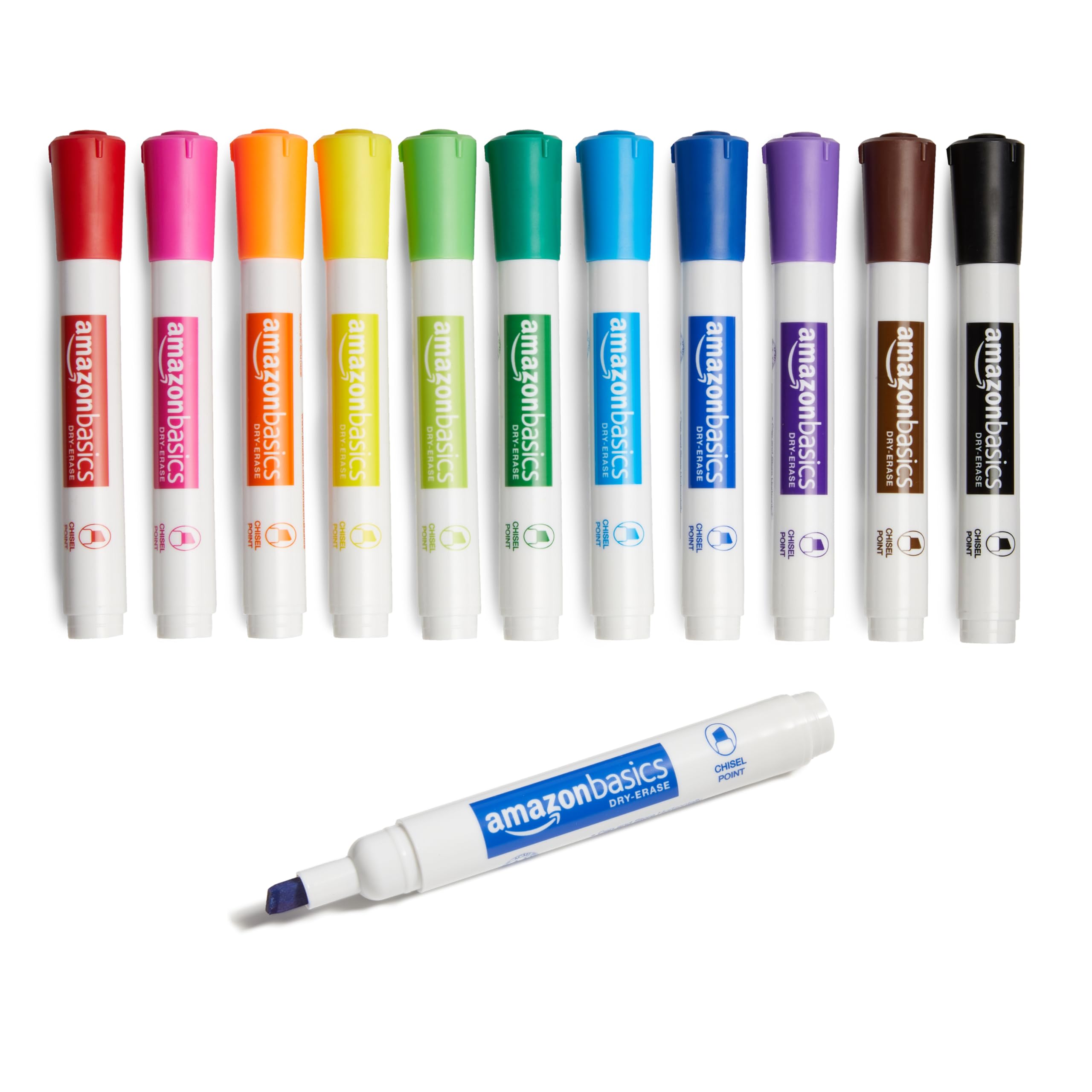
Low-odor dry erase markers that erase cleanly—great indoors but not for outdoor permanence.
Why I picked it: Affordable, smooth-writing dry erase markers for whiteboards and temporary signs.
Best for: Indoor whiteboards, temporary planning, and short-term markings.
Very budget-friendly for indoor use.
Pros
- Low odor
- Chisel tip versatility
- Erases cleanly
- Bright color range
Cons
- Not permanent outdoors
- Light pink and yellow low visibility
My take
These Amazon Basics markers are excellent for whiteboards and short-term indoor signs. They write smoothly, erase cleanly, and the chisel tip lets me switch between thick and thin strokes.
I tested the range of colors on a small whiteboard and found the darker shades pop; the light pink and yellow are fine for close work but don’t show up from a distance. Because the ink is designed to erase, I don’t use these for outdoor permanent marking.
If your project needs temporary or frequently changing marks inside, they’re a very economical choice that performs well.
How I Choose Permanent Markers for Outdoor Use
Key factors I test
When I evaluate markers for outdoor use I focus on four things: permanence, water resistance, visibility, and surface compatibility.
Tip shape matters depending on the task—fine tips for labels and writing, medium or chisel tips for signage and broad strokes.
I also consider safety and ink type: alcohol-based inks tend to be more permanent, while some water-based paint markers offer excellent opacity and lightfastness without alcohol.
- Permanence: Will the mark resist rubbing and weathering?
- Water resistance: Can it survive rain or humidity?
- Visibility: Is the color readable from the intended distance?
- Surface compatibility: Does it adhere to plastic, metal, wood, or paint?
- Tip type: Fine for detail, medium/chisel for signs and filling areas
Practical tips from my testing
Let marks dry fully before exposing them to weather. Even fast-drying inks sometimes need a few seconds to set on slick surfaces.
For long-term outdoor signage use darker, more opaque colors or paint markers on porous surfaces.
If you need removable signage on glass or nonporous material, choose paint markers that can be scraped off rather than true permanent ink.
- Test on a hidden spot first to check adhesion and visibility
- Store markers capped and upright when possible to prolong tip life
- Shake and prime paint markers per manufacturer instructions for consistent flow
Frequently Asked Questions
Are Sharpies good for outdoor use?
I use Sharpies outdoors frequently; their ink is quick-drying and resists water and fading on many materials. For long-term exposure to sun and severe weather I prefer darker, more opaque shades or a paint marker on porous substrates.
Do Posca paint markers hold up outside?
Posca markers dry to a water-resistant, lightfast finish on porous surfaces and offer excellent opacity. I avoid using them on slick nonporous surfaces where they can be removed; for wood, stone, and canvas they perform very well outdoors.
Can I use dry erase markers for outdoor labeling?
I don’t recommend dry erase markers for outdoor permanence. They erase easily by design and fade with moisture and handling—Amazon Basics dry erase pens are great indoors but not for lasting outdoor marks.
How do I make outdoor marks last longer?
From my experience, let the ink cure fully, choose inks rated for water and UV resistance, use darker or opaque colors for visibility, and seal marks on porous surfaces with a clear outdoor-rated sealant when longevity is critical.
Final Take
For reliably permanent outdoor marks I reach for Sharpie fine-point pens for general tasks and Posca paint markers when I need opacity and color coverage.
If your work is temporary or indoors, dry erase options are a sensible, budget-friendly choice.
Pick the tool that matches the surface and the lifespan you need, and remember to let marks dry fully before they face the elements.
