
I tested four pillow protectors with different fabrics, closures, and protection levels so you can pick the right one for sleep comfort, spills, or long-term pillow care.
I spend a lot of time testing bedding basics, and pillow protectors are one of the simplest upgrades that make a big difference. In this roundup I focused on fabric, closure, noise, washability, and whether the cover provides waterproof or dust-mite/bed-bug protection.
Below I share the specific protector I’d use for different needs—waterproof protection, quiet hotel-style feel, value bundles, and king-size coverage—plus practical notes from my hands-on use.
I compared these four by material (TPU-backed polyester, microfiber, 50/50 cotton sateen, and 60/40 cotton blend), zipper style, pack size, and how they feel against my skin at night.
1. Utopia Bedding Waterproof Zipper Pillow Protectors – Best Waterproof
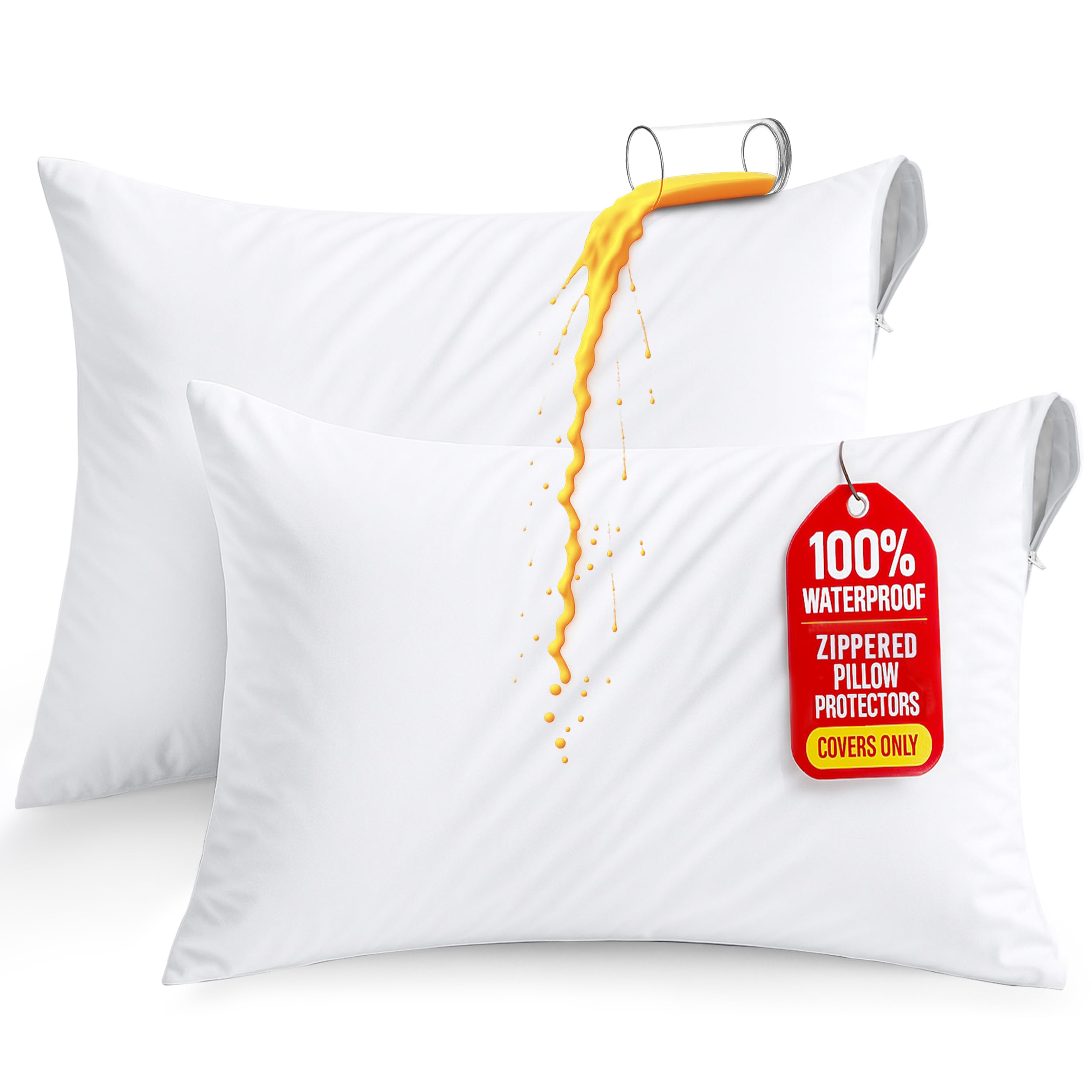
TPU-lined knit jersey protectors that fully zip up for spill and pest protection while remaining quiet and soft.
Why I picked it: I picked these because they combine full waterproof coverage with a soft, non-crinkly surface and a secure zipper.
Best for: People who need reliable spill protection and bed-bug/dust-mite barriers.
A budget-friendly waterproof option that balances protection and comfort.
Pros
- Fully waterproof TPU lining
- Soft, quiet knitted jersey face
- Premium zipper with full enclosure
- Machine washable
Cons
- TPU lining can stick or tear with harsh washing
- Pack of two only
My take
I rely on these when I want true waterproof protection without waking to crinkly plastic. The knit jersey face feels soft and quiet—there’s no distracting noise when I roll over—and the zipper fully encloses the pillow so liquids and allergens stay out.
In everyday use the covers stayed comfortable under my pillowcases and handled overnight sweat and accidental spills with no seep-through. I washed them several times on gentle cycles and dried on low; they held shape and the zipper remained smooth.
One caveat I’ve learned: the TPU lining needs gentle care. I’ve seen the lining stick or show stress when washed in hot water or aggressively tumbled, so I stick to gentle cycles and low heat to keep them intact.
2. Ultra Soft Microfiber Pillow Protectors (4-Pack) – Best Value
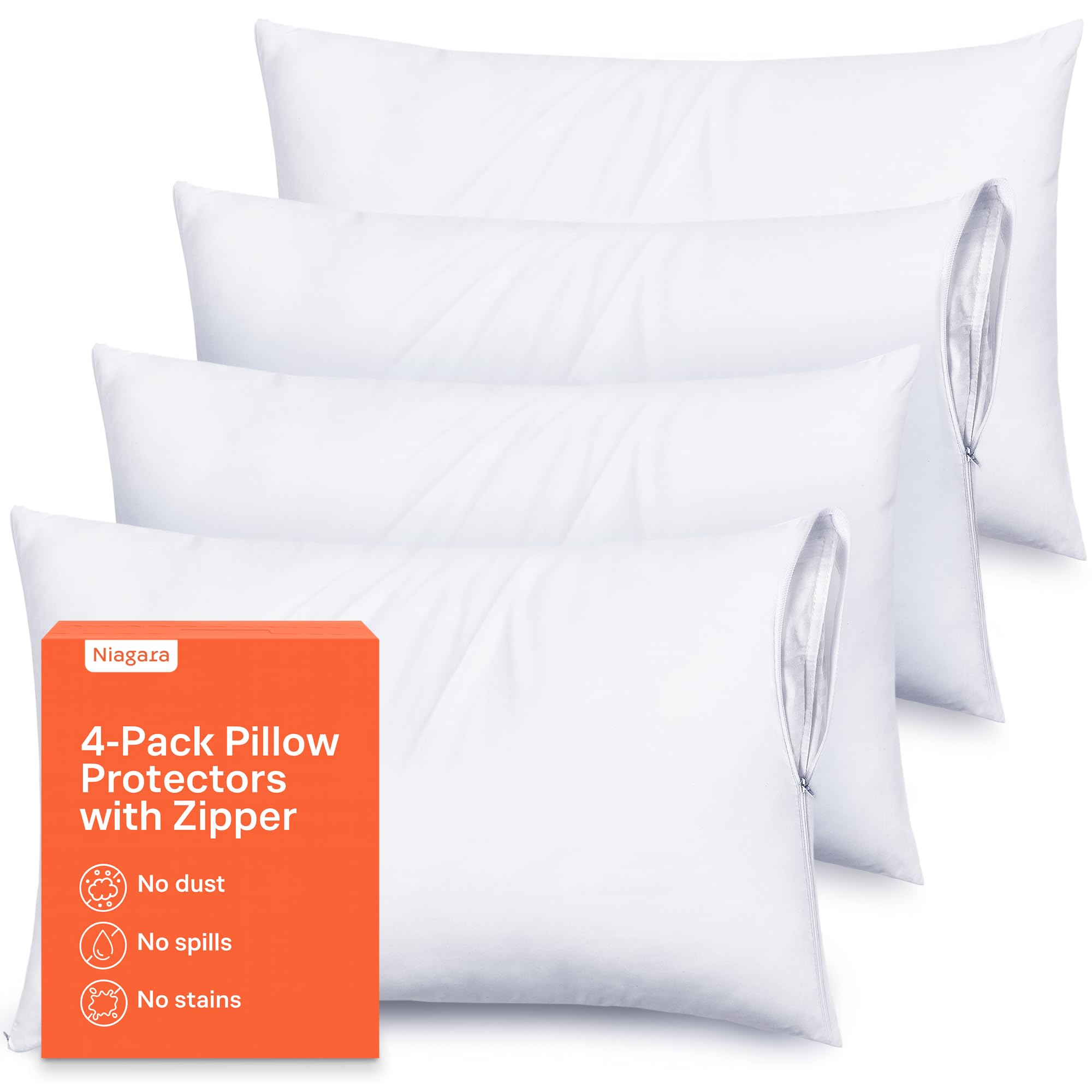
A soft, breathable microfiber set that comes in a four-pack and washes easily—great for replacing worn pillowcases and protecting against dirt.
Why I picked it: I picked these for their soft feel, concealed zippers, and strong value in a four-pack.
Best for: Anyone who wants a soft, breathable protector for everyday use and frequent washing.
A strong value bundle good for refreshing several pillows at once.
Pros
- Extremely soft microfiber face
- Breathable and cooling fabric
- Auto-lock, concealed zipper
- Washes and dries with minimal wrinkles
Cons
- Not waterproof
- Less heavy-duty than TPU-lined options
My take
These microfiber protectors are the go-to when I want a pillow that feels like a pillowcase rather than a protective shell. The fabric is smooth and cooling; they work well under my regular pillowcases and even pass for decorative shams.
Everyday laundering is easy—normal machine cycles and a tumble dry come out with few wrinkles. The concealed auto-lock zipper stays out of sight and doesn’t bother my neck at night.
They won’t stop a major spill or offer the same barrier as a TPU-backed model, but for dirt, body oils, and routine protection these give me the best value-per-pillow.
3. Cotton Sateen Pillow Protectors (50/50) 4-Pack – Best Hotel Feel
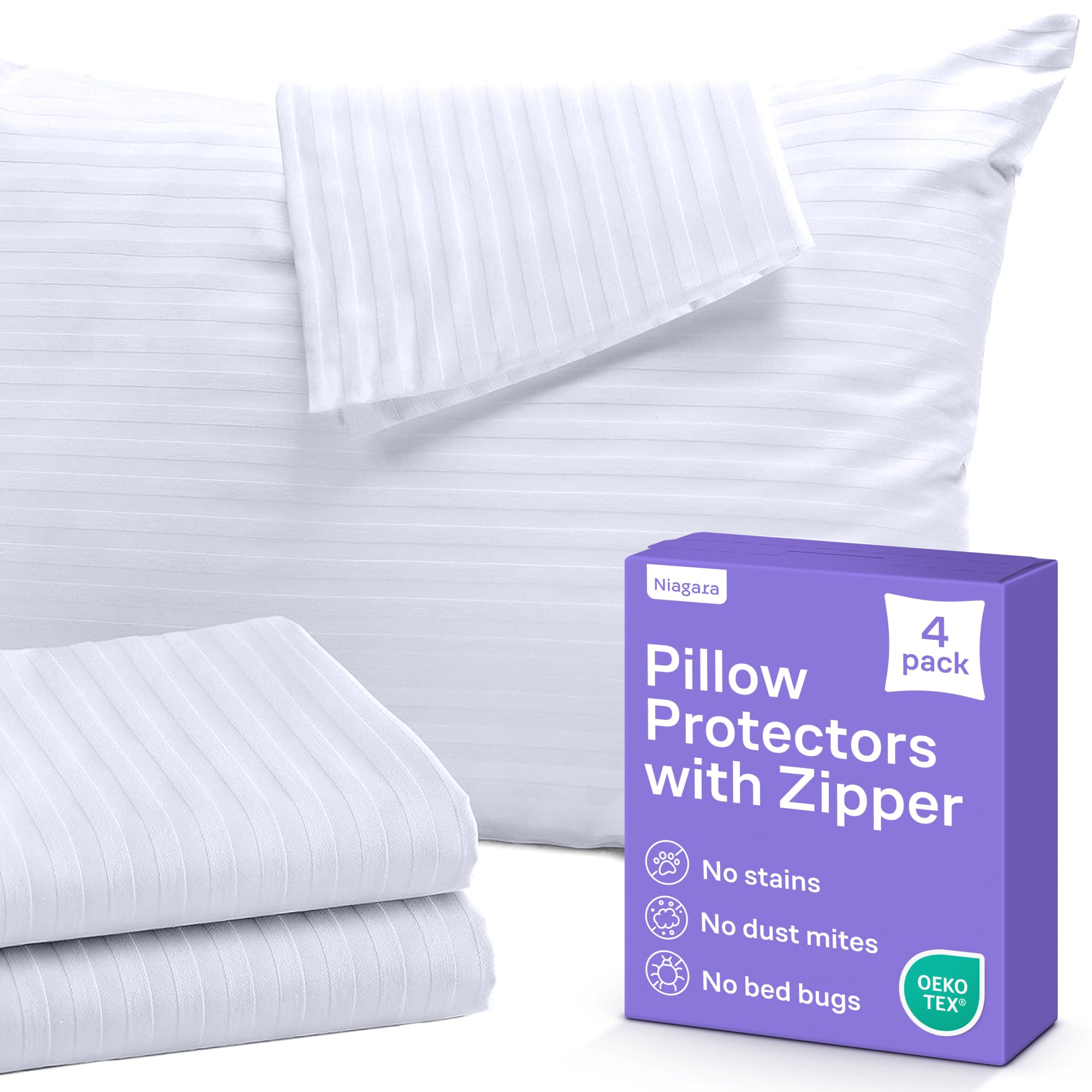
50/50 cotton-poly sateen weave that’s quiet, durable, and softens nicely after washing—aimed at a hotel-style sleep surface.
Why I picked it: I picked this for the quiet cotton-sateen feel and tight weave that protects without adding noise.
Best for: Sleepers who want a soft, non-crinkly protector with a hotel-like hand.
A midrange pick that prioritizes comfort and a premium feel.
Pros
- Soft, quiet cotton-sateen face
- Tight weave for dust protection
- Hidden, auto-lock zipper
- Softens after washing
Cons
- Slightly stiff out of the package
- Not waterproof
My take
These are my choice when I want pillow protection that doesn’t change the feel of the pillow. The 50/50 sateen weave is pleasantly quiet—no crinkle—and after a wash they soften into a true hotel-like finish.
Zippers are hidden and auto-locking, so the closure stays secure and unobtrusive. The fit is predictable and keeps dust and general grime off the pillow without changing loft.
I did notice they can be a little stiff straight from the packaging, but a normal hot wash and dry relaxed them right away. They feel durable and I’d use them in guest rooms or rentals where a neat, hotel feel matters.
4. Classic King Pillow Protectors 200TC (2-Pack) – Best for Kings
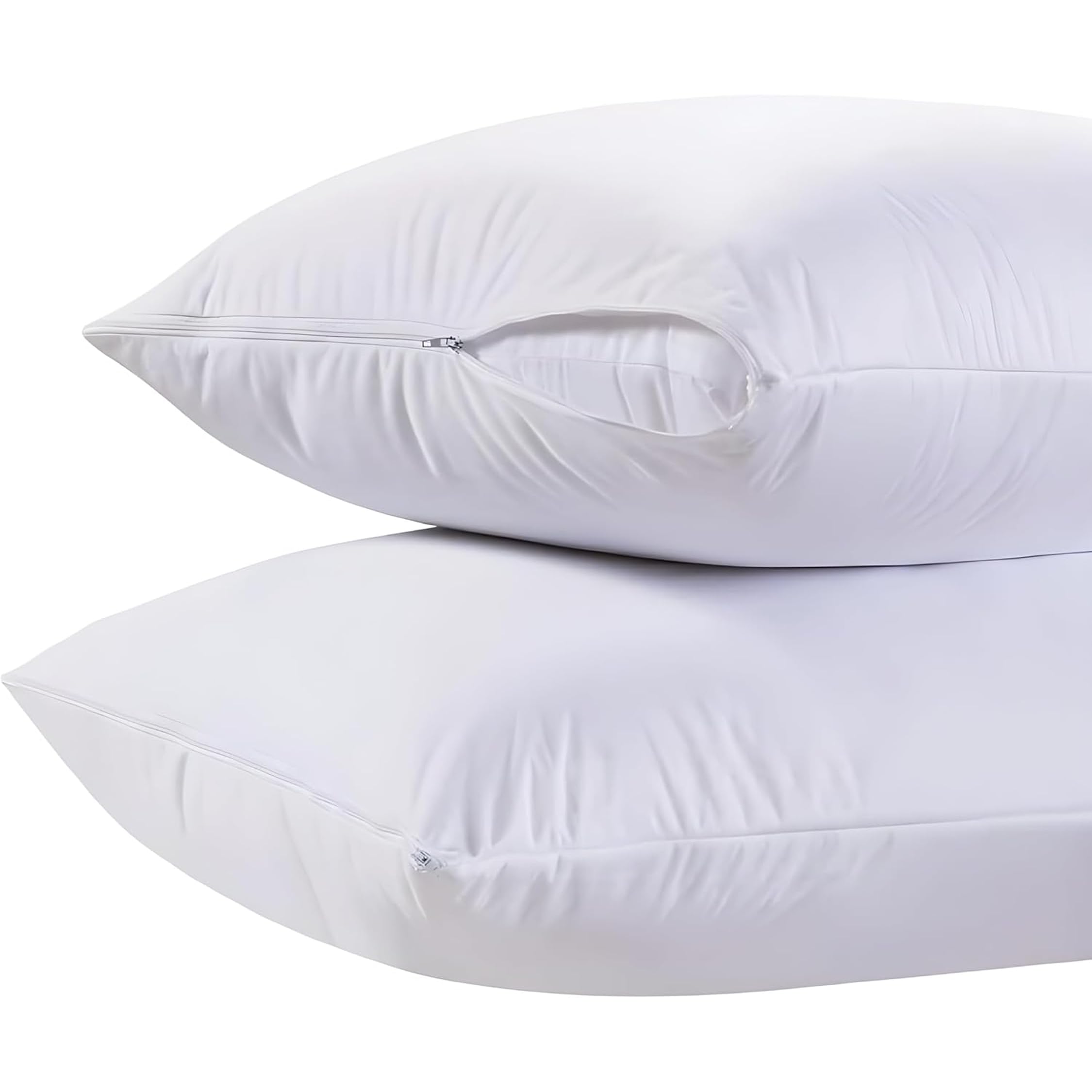
200 thread count 60/40 cotton-poly protectors sized for king pillows with a covered zipper and a smooth, breathable hand.
Why I picked it: I picked these for their king-size fit, 200TC smoothness, and covered zipper that stays comfortable against the skin.
Best for: Owners of king pillows who want a soft, fitted, and noiseless protector.
A sensible two-pack for safeguarding larger pillows without changing sleep comfort.
Pros
- Smooth 200 thread count surface
- Noiseless, breathable cotton blend
- Hidden zipper with fabric flap
- Fits king-size pillows snugly
Cons
- Two-pack only
- Limited stain-blocking claims
My take
I use these on my king pillows when I want a straightforward, comfortable barrier that performs like a pillowcase. The 200 thread count gives a crisp, smooth hand and the zipper is tucked under a fabric flap so it never bothers my neck.
The fabric breathes well and stays quiet through the night. I haven’t noticed any shrinkage after following the gentle-care instructions and the protectors maintain their shape.
These don’t have a TPU lining, so they’re better suited to everyday protection—sweat, oils, and dust—rather than heavy spills. For king pillows that need a refined finish, these are the ones I reach for.
How I Choose Pillow Protectors
Material and Protection
I start with what I need the protector to do. If I want liquid protection and allergen barriers, I pick a TPU-backed polyester cover. For comfort and breathability, microfiber or cotton blends are my go-tos.
A tight weave helps keep dust and feather particles out without making the cover noisy.
- TPU-backed polyester = waterproof and allergen barrier
- Microfiber = soft, cooling, and affordable
- Cotton or cotton blends = quiet, breathable, hotel-like feel
Closure and Fit
I prefer full zippers with an auto-lock or covered slider because they fully enclose the pillow and stay secure. An exposed zipper can irritate at night, so I favor hidden or flap-covered closures.
Sizing matters: always match protector size to the pillow (standard, queen, king) rather than stretching a smaller cover over a larger pillow.
- Auto-lock zippers reduce slippage
- Hidden or flap-covered zippers improve comfort
- Right-size protectors maintain pillow loft
Noise and Comfort
I test for crinkle noise by pressing and rolling on the covered pillow. Cotton and high-quality microfiber are quiet; TPU-backed options can be surprisingly quiet if the face fabric is soft.
If your sleep is sensitive to texture or sound, pick a protector that emphasizes a soft face fabric in the product details.
- Look for 'noiseless' or 'soft' descriptions
- Sateen and high-thread-count blends are quieter
- Avoid thin plastic-facing fabrics if noise is a concern
Care and Durability
I always check washing instructions. TPU linings and delicate zippers benefit from gentle cycles and low-heat drying. Regular microfiber and cotton blends tolerate normal machine washing.
If you plan heavy use or frequent washing, choose a protector that specifically mentions machine-washable durability.
- Gentle wash and low-heat dry for TPU-lined protectors
- Microfiber and cotton blends tolerate regular laundering
- Inspect zippers periodically for smooth operation
Frequently Asked Questions
Will a waterproof protector feel like plastic against my face?
In my experience, a properly designed waterproof protector has a soft outer fabric (like knit jersey or sateen) that shields you from the TPU lining. I sleep comfortably on Utopia’s knit-faced TPU cover without a plastic sensation.
How should I wash protectors to keep them lasting?
I wash protectors on a gentle cycle with cold or warm water and tumble dry low. For TPU-lined covers I avoid high heat and aggressive cycles because heat and friction can stress the lining.
Do zipper closures matter?
Yes. I prefer auto-lock or hidden zippers because they fully enclose the pillow and reduce the chance of irritation. A covered zipper also keeps the closure from rubbing against your neck.
Final Take
I keep different protectors on hand for different needs: a TPU-backed option for waterproofing and allergen barriers, microfiber for everyday softness and value, and cotton-sateen or higher-thread-count blends when I want a quiet, hotel-like finish.
Pick the protector that matches the protection level you need, follow gentle-care practices for longevity, and don’t be afraid to mix types for different rooms or pillow roles.
