
I tested rollers and wheel cutters across dough, pizza, and pastry tasks so you can pick the right tool for slicing, lattice work, or making ravioli.
I spent time using different pizza roller cutters on everything from thin‑crust pies to thick focaccia and lattice pastry tops. My goal was to see which tools make cutting fast, consistent, and mess‑free in a real kitchen setting.
Across these picks I looked for clean cuts, durable materials, ease of use, and whether a tool actually speeds up prep. Below I break down what worked, what didn’t, and which cutter I reach for depending on the task.
I focused on wheel size, construction (stainless steel vs. plastic vs. zinc alloy), adjustability, and how each cutter handles chilled dough, sticky dough, and thick crusts.
1. Boska Copenhagen Stainless Steel Pizza Cutter – Best Overall
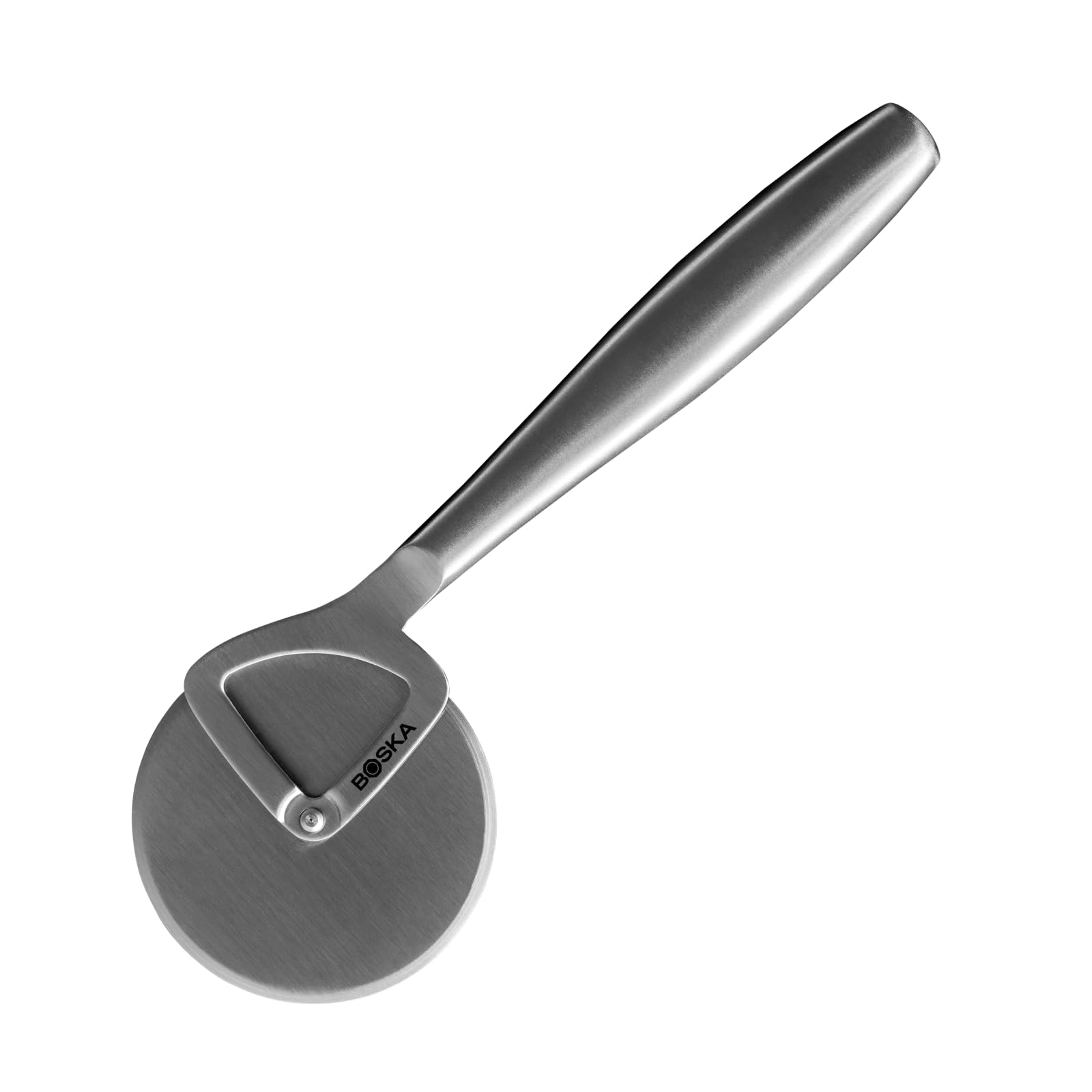
A compact stainless pizza wheel that slices smoothly and holds up to repeated pizza nights.
Why I picked it: Cuts like butter with a thin, well‑machined wheel and a comfortable handle.
Best for: Everyday pizza slicing and controlled single‑handed cuts.
Affordable mid‑range option with premium feel.
Pros
- Very smooth, thin wheel
- Secure, wobble‑free rotation
- Comfortable ergonomic handle
- Lightweight and easy to control
Cons
- Smaller 2.5" wheel
- Wood handle needs care
- Handle can swell if left wet
My take
This Boska wheel surprised me: the small 2.5‑inch blade cuts with very little pressure and leaves even slices. I ran it through a pizza party where I cut regular pies, a calzone, and a thick focaccia — it handled all of them cleanly.
The wheel is machined thin and doesn’t wobble, which is why the cuts feel effortless. The wooden handle felt a bit rough right out of the box on my unit, so I smoothed it and treated it, which fixed the issue quickly. I recommend hand drying the handle after washing to prevent swelling.
If you want a compact, precise cutter that still has a premium feel, this is the one I reach for most nights.
2. Juome 5‑Wheel Adjustable Pastry Cutter – Best Multi‑Wheel
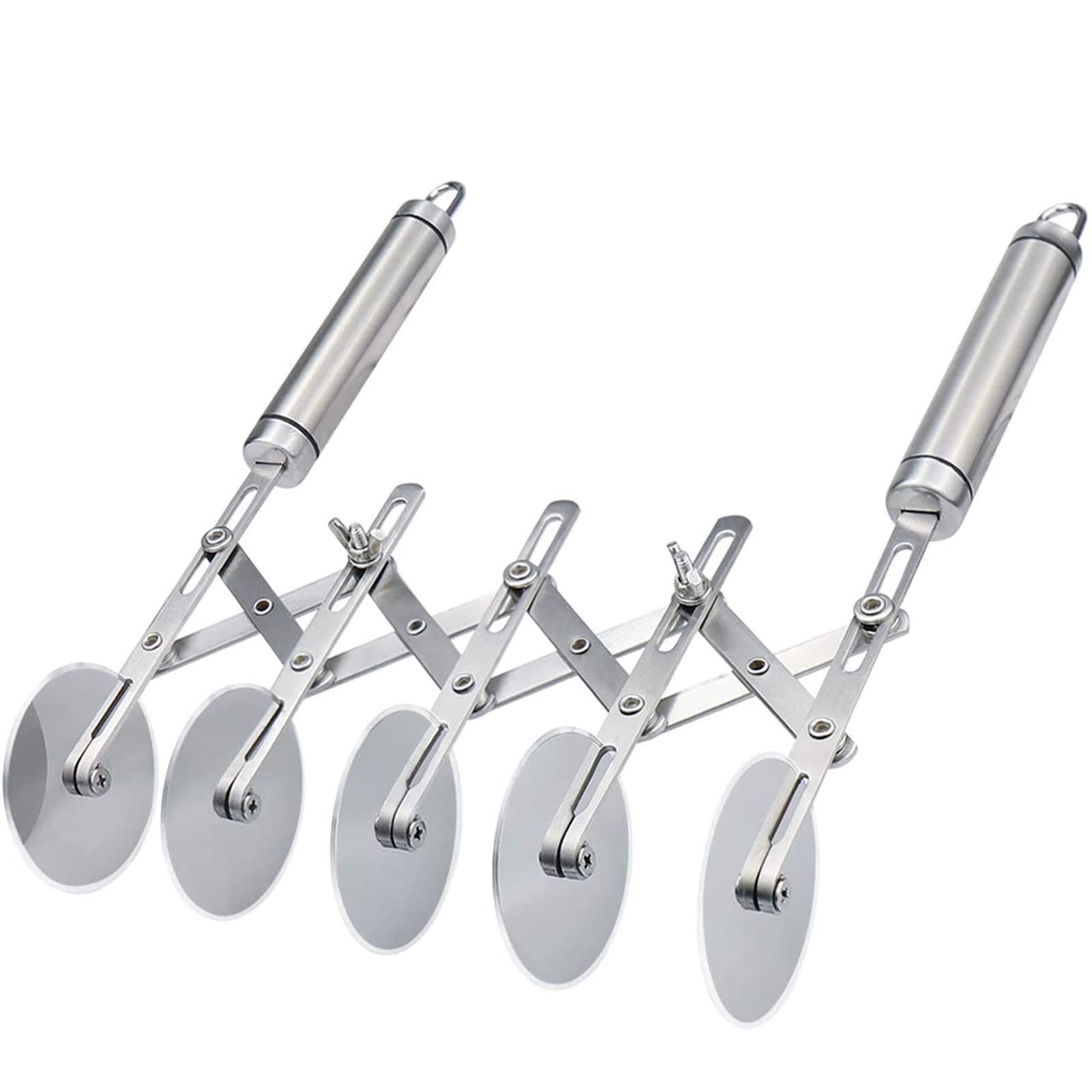
An expandable five‑wheel cutter for marking and cutting even strips — great for pastry and dough batching.
Why I picked it: Adjustable spacing and a locking nut let me cut multiple even strips in one pass.
Best for: Batch pastry work, noodles, brownies, and dividing dough quickly.
Mid‑priced multi‑wheel option with adjustable spacing.
Pros
- Adjustable wheel spacing
- Stainless steel construction
- Locks in place for consistent cuts
- Saves a lot of time
Cons
- Doesn’t extend extremely wide
- Needs firm center pressure
- Can be awkward for very thick dough
My take
The Juome five‑wheel saved me time when I needed multiple, even strips — especially useful for brownies and cookie bars. I like that the center nut locks the arms so spacing stays consistent once set.
In practice I found the cutter doesn’t open to huge widths, so it’s best for medium‑sized strips rather than very wide sheets. It also demands a solid push in the middle or the center wheels won’t cut fully through denser dough.
Overall it’s a useful tool when you want uniform pieces quickly, but I wouldn’t use it for very thick or oversized pastry.
3. Lamoutor Lattice Roller Cutter (2‑Pack) – Best Budget Lattice
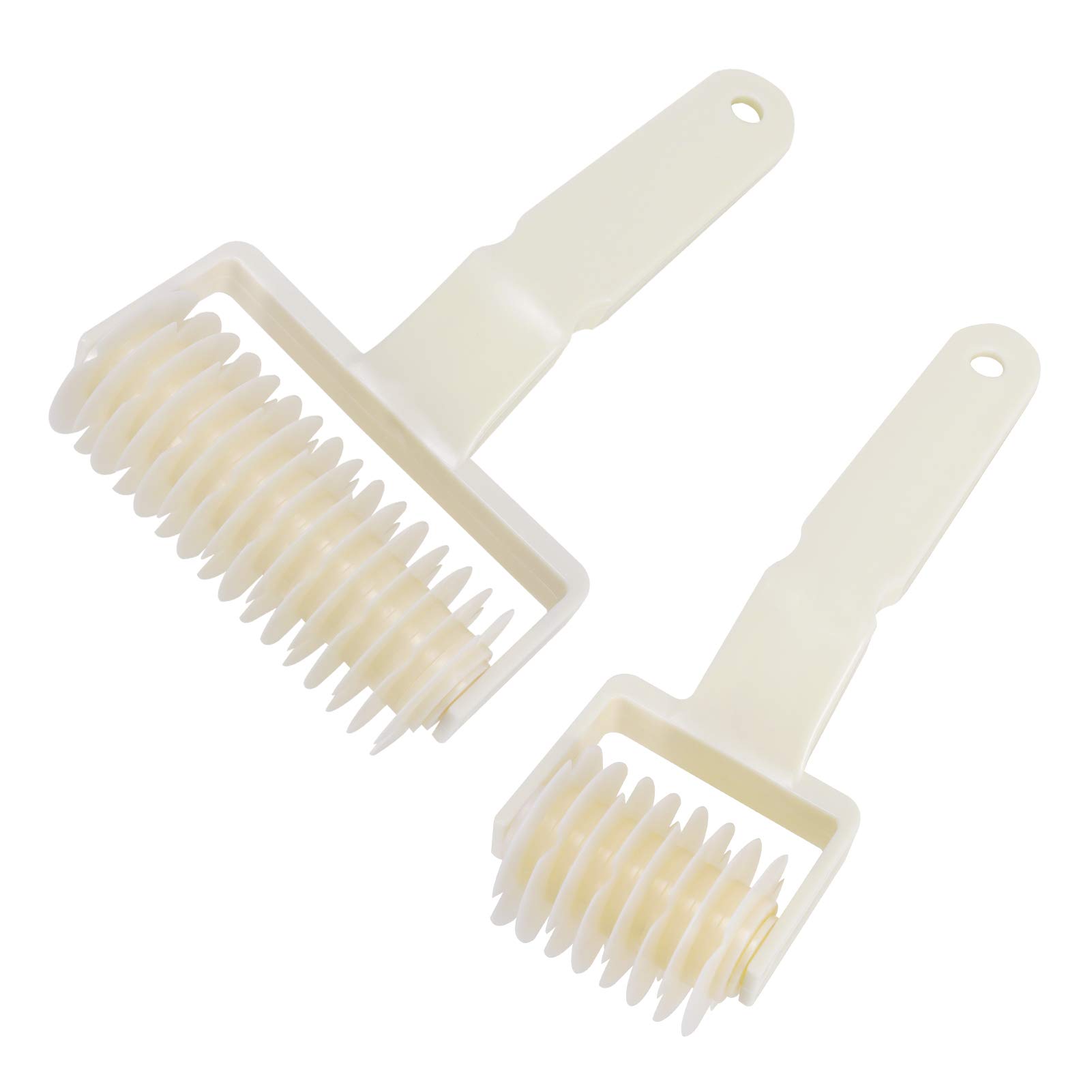
Plastic lattice rollers that give decorative lattice patterns; inexpensive and great when used carefully.
Why I picked it: Two sizes let me match lattice pattern to pie size and presentation needs.
Best for: Cold, lightly floured dough and decorative pastry tops.
Very budget‑friendly solution for occasional lattice work.
Pros
- Two sizes included
- Lightweight and easy to store
- Creates impressive lattice patterns
- Works well on chilled dough
Cons
- Plastic feels fragile
- Can stick to warm dough
- Takes practice to release lattice
My take
I like these Lamoutor rollers for the visual result — the lattice they produce looks professional and draws compliments. They work best on cold, lightly floured dough; warm or very soft pastry will stick and tear.
Using a gentle hand and a dusting of flour prevented most sticking issues for me. The plastic construction keeps them inexpensive, but they’re not as robust as metal rollers and require a bit more care when removing the patterned dough.
If you want a simple way to get attractive lattice tops without committing to a pricier steel tool, these deliver good results when handled gently.
4. Stainless Steel Pastry Lattice Roller – Best Stainless Lattice
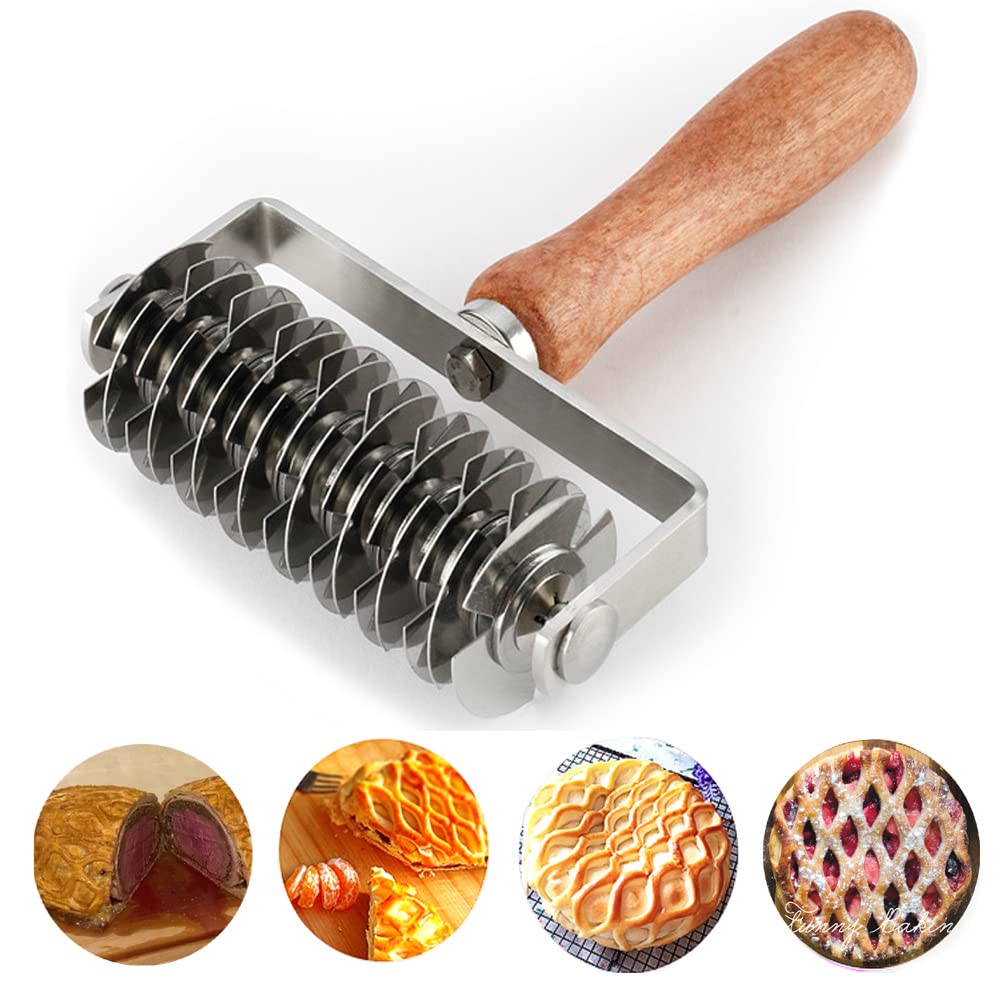
A sturdy stainless lattice roller that cuts cleanly and holds up to frequent use.
Why I picked it: All‑304 stainless blades and solid construction make lattice work quick and durable.
Best for: Frequent bakers who want a reliable metal lattice cutter.
A durable stainless option that feels like an investment.
Pros
- Heavy, well made
- Cuts lattice cleanly
- Comfortable handle
- Easy to clean
Cons
- Can cut through if rolled too hard
- Blades not razor‑sharp
My take
This stainless lattice roller is the most dependable lattice tool I tested. The mirror‑finished 304 blades slice through chilled dough with minimal sticking, and its weight helps it roll evenly.
I did have to be careful not to press so hard that the roller cut all the way through thin crusts, but that’s a technique issue more than a flaw. Cleanup was quick and I appreciated the sturdiness compared with plastic alternatives.
For anyone who regularly makes lattice pies or decorative pastry tops, this is the tool I reach for first.
5. Expandable 5‑Wheel Pastry Cutter – Best for Bakers
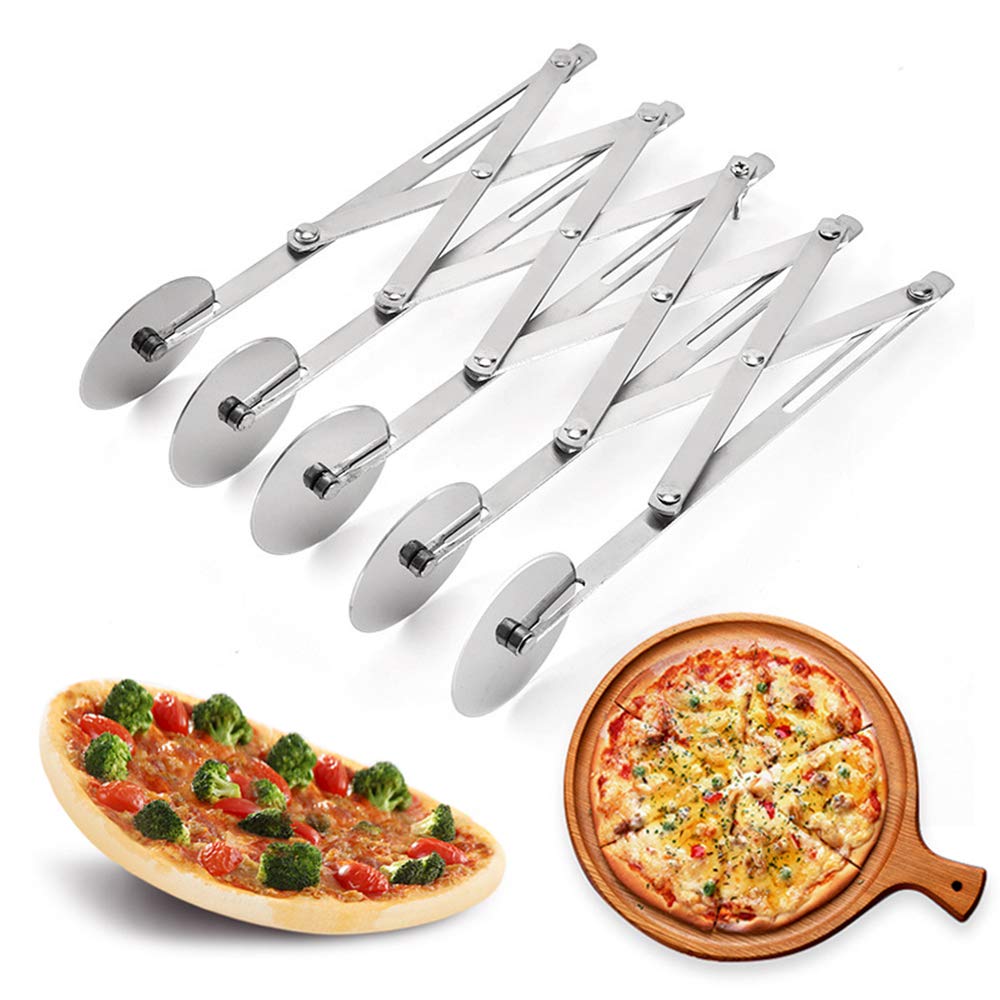
A heavy‑duty adjustable five‑wheel cutter built for production work and repetitive tasks.
Why I picked it: Generous extension and robust feel make multi‑cut jobs fast and efficient.
Best for: Bakers who need consistent spacing for croissants, ravioli, and pastry strips.
A practical choice for semi‑professional bakers.
Pros
- Large extension range
- Good for thick dough
- Stable when adjusted
- Saves prep time
Cons
- Blades can wobble over time
- Spacing inconsistency for precision work
My take
I used this five‑wheel cutter to mark and cut dough for croissants and large batches of pastry. It does a great job saving time — a single pass produces multiple even cuts, which is very handy when production speed matters.
The unit feels solid and the extension range covers most jobs I throw at it, but I noticed the blades can develop a little play after heavier use. For marking or rough cuts it’s excellent; for surgical precision on very thin slices, I found the spacing can vary a bit.
If you bake a lot of similar shapes, this tool will speed your workflow considerably.
6. Zinc Alloy Ravioli & Pasta Cutter Wheel – Best Ravioli Tool
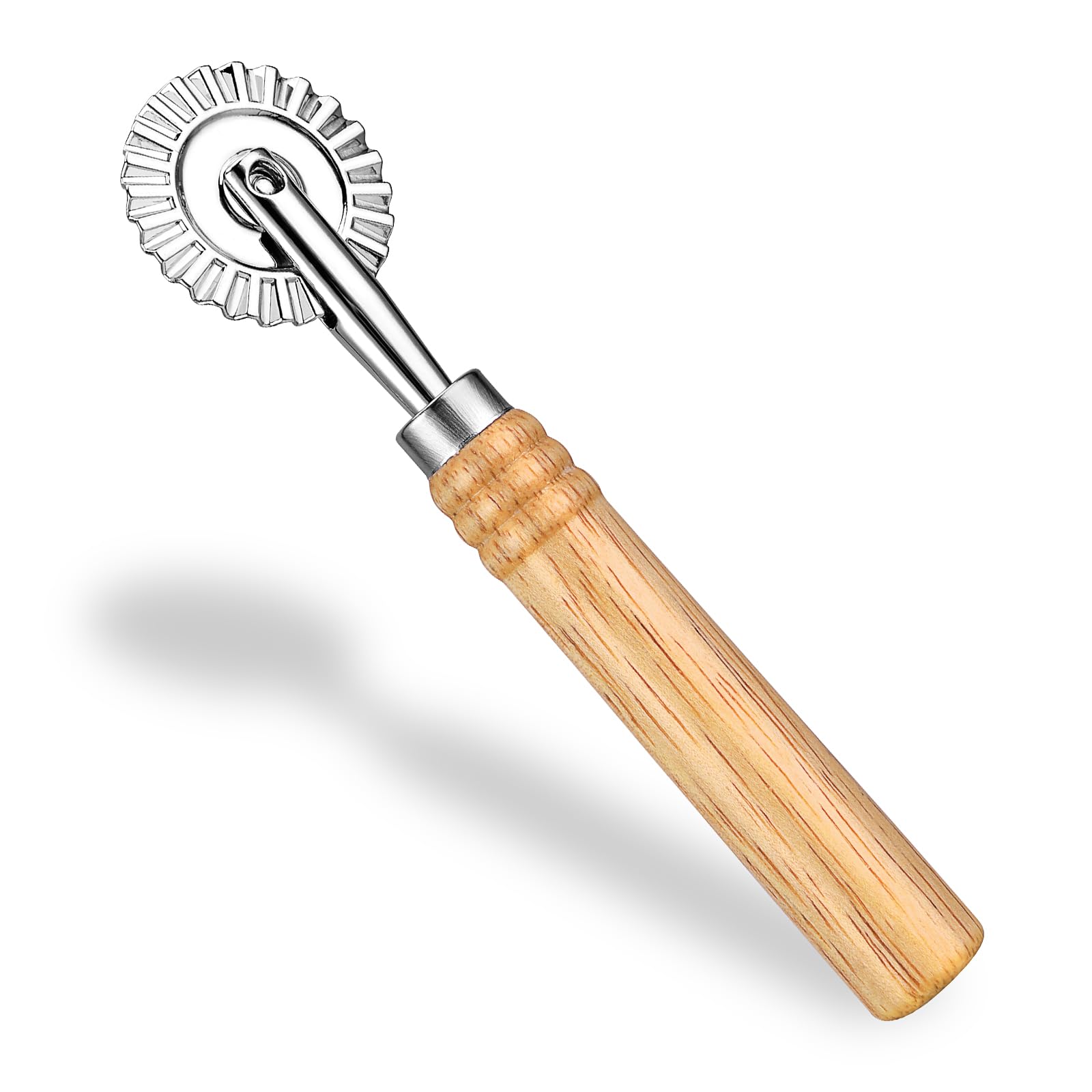
A small fluted wheel with an oak handle that’s great for ravioli edges and decorative pastry trimming.
Why I picked it: Fluted edge makes neat crimped borders and the oak handle gives a comfortable grip.
Best for: Ravioli, decorative edges, and small pasta tasks.
A budget‑minded, well‑built handheld cutter.
Pros
- Fluted edge for decorative cuts
- Solid oak handle grip
- Versatile for pasta and pastry
- Compact and easy to store
Cons
- Edge not razor‑sharp
- May need extra pressure for clean cuts
My take
This little zinc alloy wheel is a go‑to when I make ravioli or need a neat crimped edge on pies. The oak handle fits my hand well and the wheel turns smoothly without wobble.
The fluted edge isn’t the absolute sharpest, so I sometimes go over a line twice on thicker dough, but it still produces a clean, attractive finish. It’s also handy for trimming lattice pieces or cutting lasagna sheets.
For the price and size, it’s a durable, useful tool that earns a regular spot in my utensil drawer.
How I Choose a Pizza Roller Cutter
Types of cutters and when I use them
I separate cutters into single pizza wheels, multi‑wheel dividers, and lattice rollers. Each type has strengths depending on the job.
Single pizza wheels are my default for slicing finished pies. Multi‑wheel cutters are best for producing even strips or portions quickly. Lattice rollers are for decorative pastry tops and need chilled dough for best results.
- Single pizza wheel — precise, good for thick or thin crusts.
- Multi‑wheel — fastest for uniform strips and batch work.
- Lattice roller — decorative; use on cold, floured dough to avoid sticking.
Build and blade considerations
I look for stainless or zinc alloy blades that don’t wobble; thin, well‑machined wheels cut with less pressure. Wood handles feel warm in the hand but need drying after washing.
If I need longevity and frequent use, I favor all‑metal construction. Plastic rollers are fine for occasional use or for delicate presentations where you don’t want an aggressive cut.
- Blade stability — no wobble for clean cuts.
- Material — stainless for durability, zinc alloy for lightweight utility.
- Handle — ergonomic and easy to dry.
Practical tips for using each cutter
I chill pastry when using lattice rollers and dust with flour to prevent sticking. For multi‑wheel cutters, I tighten the center nut and press firmly in the middle so all wheels cut through.
For pizza wheels, a sharp thin blade and steady single pass produce the best slices; avoid sawing motions that drag toppings.
- Flour and chill dough for lattice rollers.
- Tighten locking nuts on adjustable multi‑wheels.
- Hand dry wooden handles and avoid soaking.
Frequently Asked Questions
Can I put these cutters in the dishwasher?
I generally hand wash cutters with wooden handles and stainless tools I want to keep sharp. Most stainless wheels tolerate the dishwasher, but I hand dry metal to prevent water spots and treat wooden handles after washing.
Which cutter should I use for ravioli?
I reach for a small fluted wheel (like the zinc alloy ravioli cutter) for clean, decorative edges. It gives better control on small shapes than large pizza wheels or multi‑wheel dividers.
Are lattice rollers hard to use?
They’re straightforward once you get the technique: keep dough cold, dust lightly with flour, roll gently, and lift carefully. Plastic rollers require a gentler touch than stainless models.
Final Take
After testing several types of rollers and wheel cutters, I found each has a clear purpose: single wheels for controlled pizza slicing, multi‑wheels for batch cutting, and lattice rollers for presentation work.
If I had to keep only one, the Boska stainless cutter is my everyday pick for consistent, effortless pizza slicing. For pastry production I depend on an expandable five‑wheel, and for show‑stopping pie tops I alternate between the stainless lattice roller and the two‑pack plastic set depending on how often I’ll use it.
Choose the tool that matches your main task and care preferences, and you’ll save time while getting cleaner, more consistent results.
