
I tested multiple plastic cutting boards and picked the sets and single boards that stood out for durability, non-slip performance, juice control, and everyday usefulness.
I rely on plastic cutting boards for most of my everyday meal prep because they're easy to clean, lightweight, and simple to maintain. Over several weeks I used each board in this roundup for tasks from precise vegetable prep to heavy-duty meat and dough work.
In this guide I focus on what actually matters in the kitchen: stability under the knife, juice control, material density, and whether the boards survive repeated washes. Below I highlight the strengths and trade-offs of each option and how I used them.
I prioritized non-slip features, juice grooves, material density, and dishwasher durability when comparing these boards so you can match a board to how you cook.
1. PHILWIN 4-Piece Plastic Cutting Board Set – Best for Everyday Use
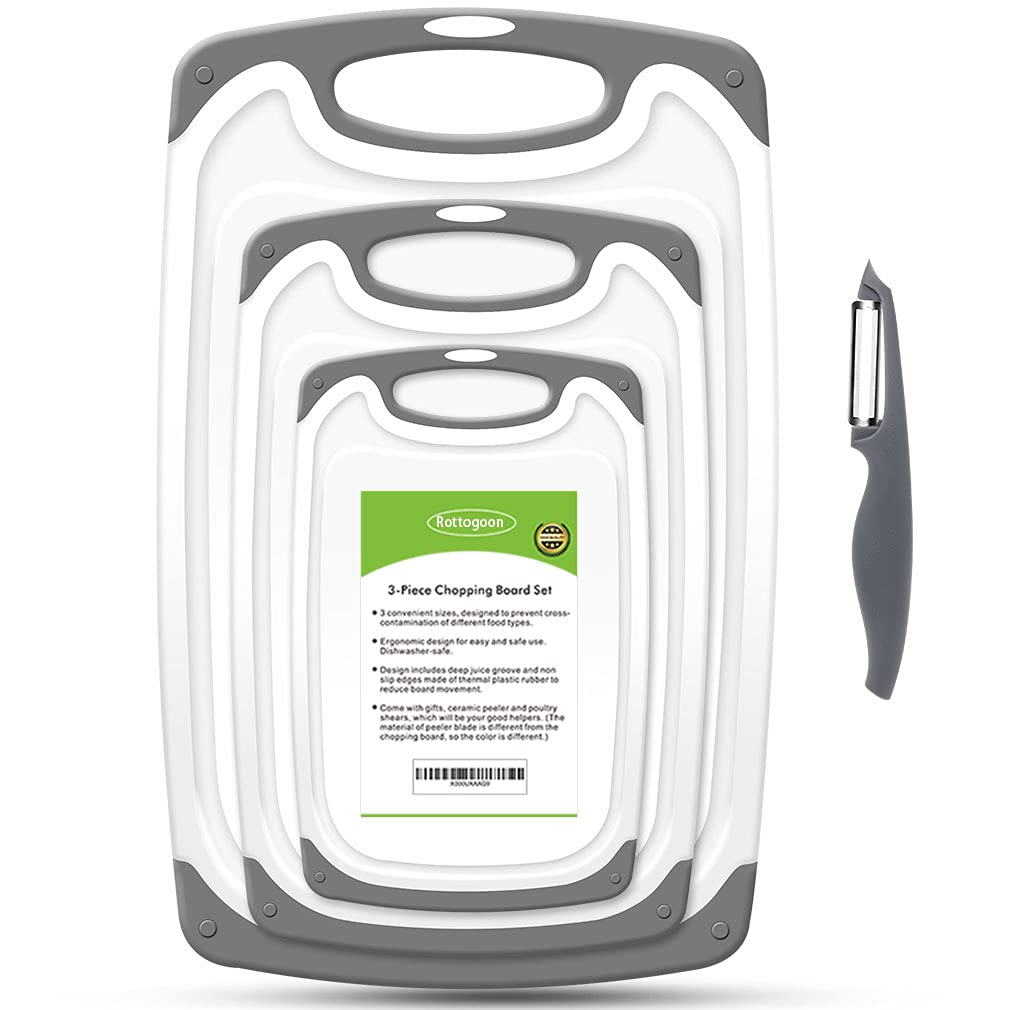
A sturdy multi-size set with non-slip feet and deep juice grooves that I used for daily prep.
Why I picked it: I chose this set for the combination of thick boards, deep juice grooves, and non-slip feet.
Best for: Everyday meal prep and separating tasks for meat, produce, and bread.
Good value multi-piece set
Pros
- Comes in multiple useful sizes
- Deep juice groove prevents spills
- Non-slip rubber feet
- Dishwasher safe
Cons
- Somewhat heavier than thin boards
- Grip border may show wear over time
My take
This 4-piece PHILWIN set became my default for weeknight cooking. The boards feel thick under the knife, and I didn't notice splintering or cracking after many washes.
The rubber feet keep the boards steady on my counter, which made faster chopping feel safer. The deep juice groove caught runoff cleanly during fatty cuts and tomato prep, cutting cleanup time.
I appreciate the included heavy-duty peeler for finishing tasks; it’s a handy extra. Everything went through the dishwasher without special maintenance, and I didn't need to oil or treat the plastic.
If you want a reliable set for daily use that separates proteins and produce, this is the option I reach for first.
2. 4-Piece Plastic Cutting Board Set (Color Options) – Best Budget Pick
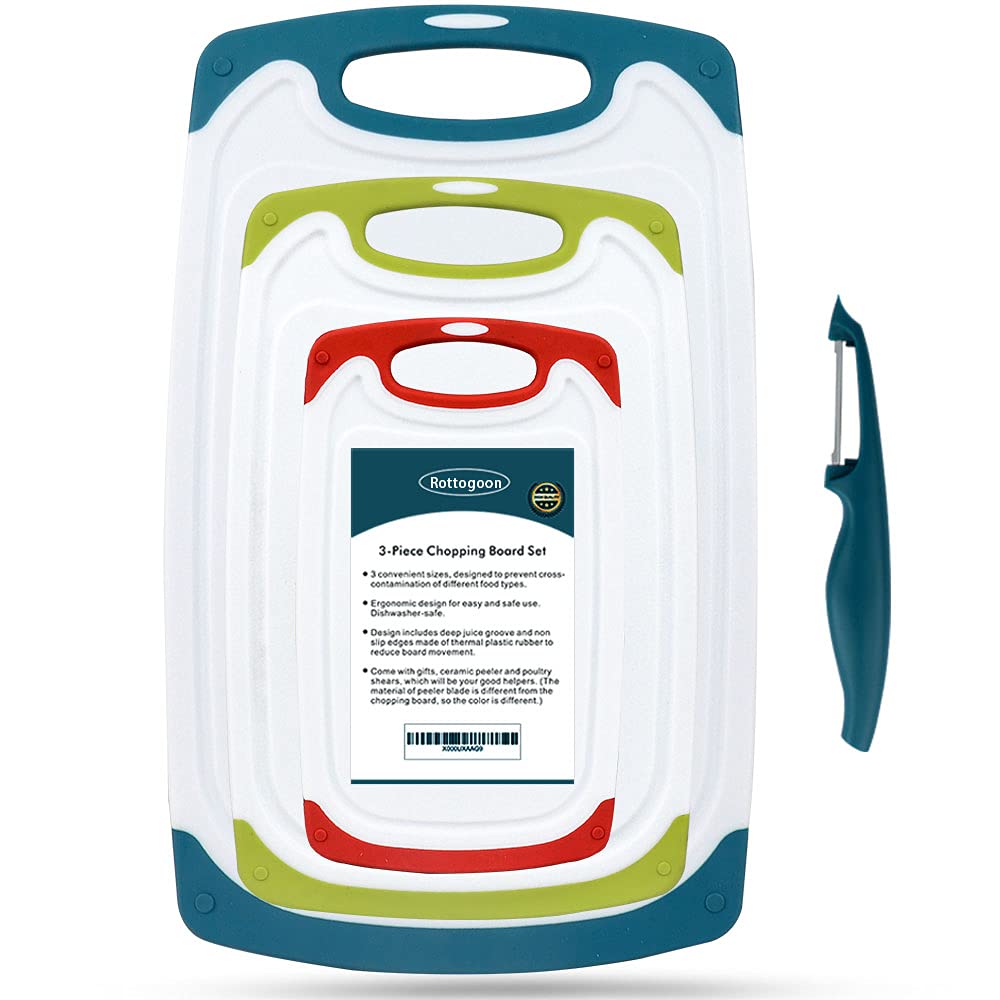
A budget-friendly set that delivers the same basic features—non-slip feet, juice grooves, and dishwasher safety.
Why I picked it: I chose this because it gives the core features at a lower cost and offers color-coded options for prep separation.
Best for: Budget-conscious kitchens and color-coded food prep.
Very affordable option
Pros
- Good size variety
- Dishwasher safe
- Non-slip feet included
- Color options aid food separation
Cons
- Peeler quality can be inconsistent
- Juice groove could be deeper
My take
This set performed well for basic prep tasks. The boards are sturdy enough for vegetables and light meat work, and the rubber feet kept them from wandering on my countertop.
I like having multiple colors to dedicate boards to different tasks. Everything handled the dishwasher without special care.
A note on the bonus peeler: mine wasn't as robust as the boards, so I use it for lighter jobs only. Also, the juice groove collects liquids but is a touch shallower than other models, so I used a towel underneath for very wet jobs.
Overall this is the pick I grab when I want a cost-effective set that still covers the essentials.
3. Kikcoin Extra-Large Cutting Board Set (3-piece) – Best for Large Prep
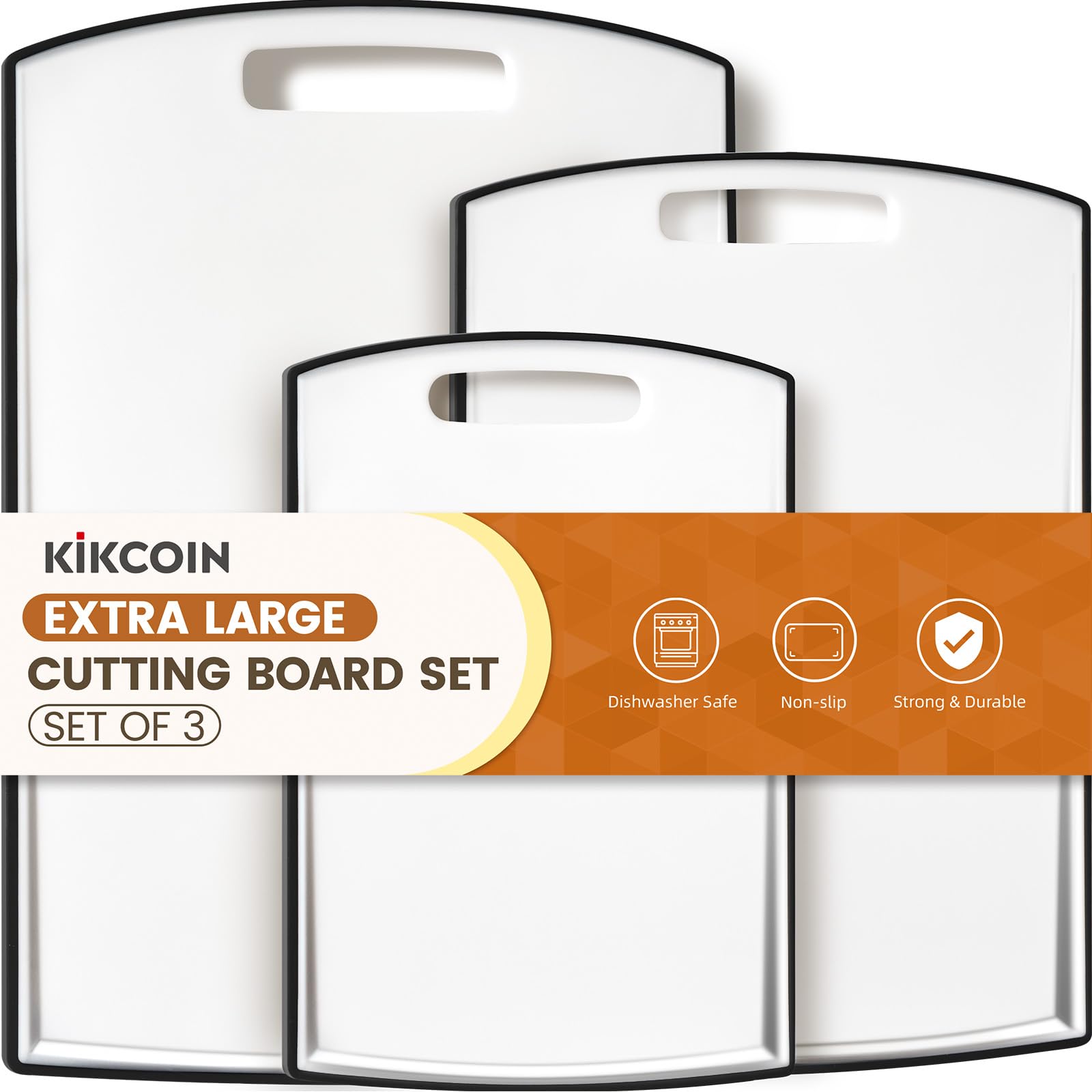
Extra-large, high-density boards with upgraded silicone feet that stayed put during heavy prep.
Why I picked it: I chose these for the extra-large surfaces and upgraded non-slip feet that handle bigger tasks.
Best for: Large cuts, carving, and family-size meal prep.
Midrange price for larger boards
Pros
- Extra-large surface area
- Upgraded silicone non-slip feet
- High-density material resists deep cuts
- Comfortable handles
Cons
- Juice grooves are narrower than expected
- A bit thinner than some heavy boards
My take
These Kikcoin boards are my go-to when I need workspace for a roast or batch chopping. The silicone feet really improve stability compared with plain plastic edges, and the boards sit flat without warping.
High-density construction gives a firmer cutting feel and seems kinder to knives than thin polypropylene. The handles make it easy to carry the large boards to the sink or dishwasher.
I did notice the juice groove is narrower and shallower than I prefer, so for very juicy cuts I still put a towel under the board to catch overflow. Despite that, the set handled repeated use and dishwasher cycles well.
If you want larger cutting real estate and a secure surface, this set balances size and stability effectively.
4. Winco Heavy-Duty Polyethylene Cutting Board – Best Heavy-Duty
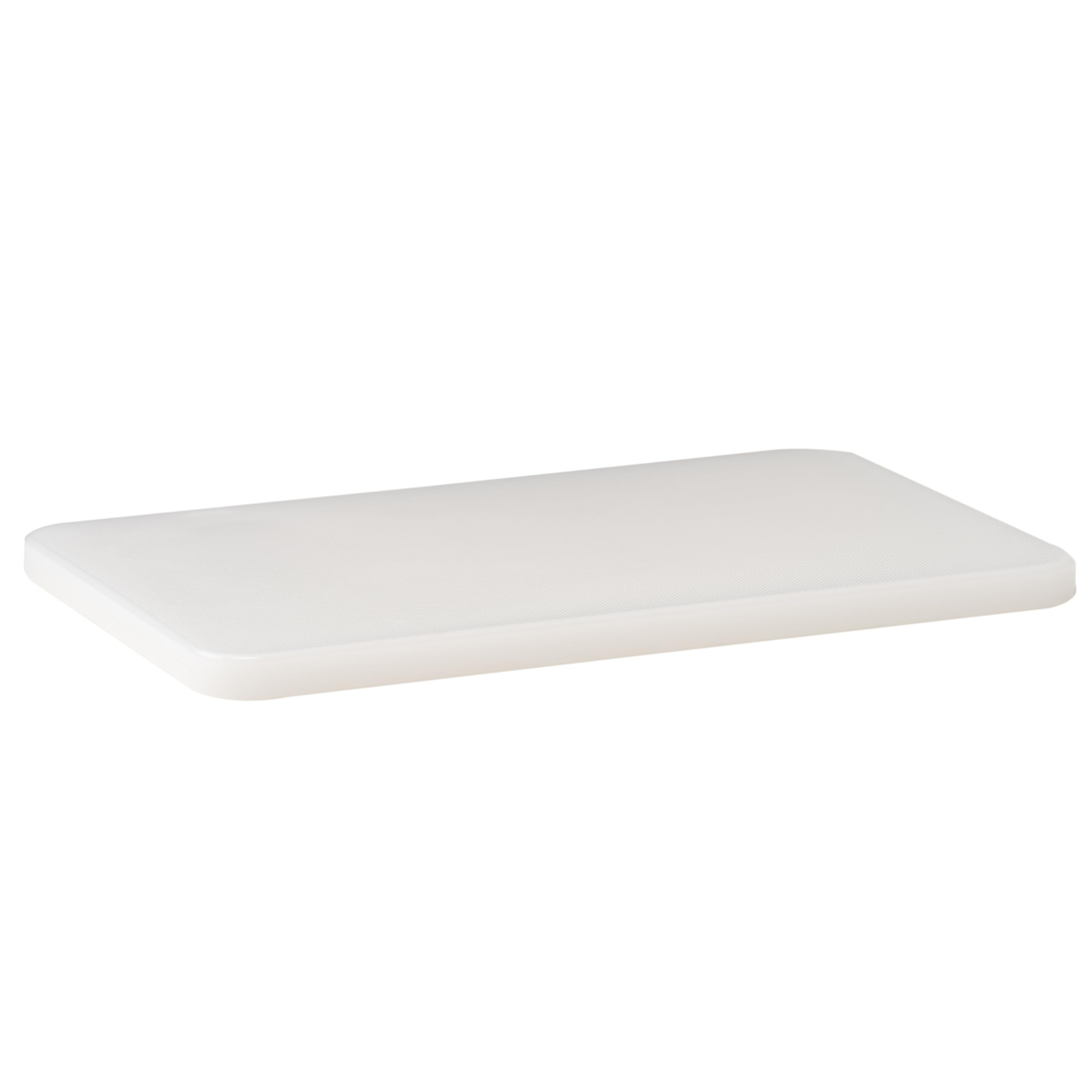
A dense, NSF-listed polyethylene board built for heavy use and versatile tasks.
Why I picked it: I chose this board for its heavy-duty build, NSF listing, and non-porous material that resists stains and odors.
Best for: Commercial tasks, dough work, and heavy-duty kitchen jobs.
Cost-effective single heavy board
Pros
- NSF certified
- Non-porous and stain resistant
- Very durable and versatile
- Handles hot temperature range
Cons
- No built-in juice groove
- Can slide without anti-slip mat
My take
This Winco board felt like the toughest item in my lineup. The polyethylene surface is non-porous and cleaned up easily after sticky or oily prep, so I used it for dough work and cutting multiple vegetables at once.
The listing notes a temperature range from 176 to 196, which makes it useful near hot prep areas. I found it easy on my knives and very forgiving during heavy-duty tasks.
Because it doesn't have a juice groove, I use it for dry work or pair it with a tray for wet jobs. It also benefits from a damp towel or small feet to prevent sliding on slick countertops.
For a reliable single heavy board that can stand up to tough kitchen use, this is the one I reach for when I need durability.
How I Choose Plastic Cutting Boards
Key things I look for
I focus on stability, material density, juice control, and ease of cleaning. Those factors determine whether a board performs consistently in daily cooking.
Non-slip feet or silicone edges reduce slipping and protect both my knives and my prep speed. Deep grooves are useful for messy meats and fruits, while flat reversible surfaces work better for fine tasks.
- Material: High-density polyethylene resists deep cuts and staining.
- Thickness: Thicker boards warp less and last longer under heavy use.
- Non-slip features: Feet or rubberized edges improve safety.
- Juice grooves: Deep grooves help contain liquids during messy jobs.
- Maintenance: Dishwasher-safe boards are simpler to clean; NSF certification indicates commercial-grade sanitation standards.
Tips from my testing
I color-code when possible—one board for raw meat, another for produce—to avoid cross-contamination. Plastic makes this simple and low-maintenance.
If you frequently handle large roasts or batches, prioritize extra-large boards with stable feet. For pastry and dough, a flat, thick board with no groove is often better.
- If your counter is slick, add a damp towel or rubber mat under the board.
- Replace boards once deep gouges develop—those cuts trap residue.
- Check any included accessories (like peelers) for build quality; they’re handy but not always as durable as the boards.
Frequently Asked Questions
How often should I replace a plastic cutting board?
I replace plastic boards when they develop deep, persistent cuts that trap food or when they start to warp. Small surface scratches are normal, but deep gouges are where bacteria can hide even on non-porous plastic.
Are plastic boards safe in the dishwasher?
Yes—I ran all of the dishwasher-safe boards in this roundup through multiple cycles. They cleaned well and required no special oiling or maintenance. I avoid very high heat cycles for thinner boards to prevent warping.
Do plastic boards dull knives faster than wood?
In my experience high-density polyethylene is gentler on edges than thin, cheap plastics. Wood can be kinder overall, but a dense plastic board provides a good balance of knife safety and easy sanitation.
Final Take
I found a clear winner for each use case: PHILWIN for everyday families, the budget multi-pack for cost-conscious kitchens, Kikcoin when I need extra workspace, and Winco when I need a heavy-duty single board.
Match the board to how you cook—size and stability matter most—and you'll have a setup that speeds prep and simplifies cleanup.
