
I tested seven popular mixing bowl sets so you can pick the right combo of material, stability, lids and storage for your kitchen.
I spent time using each of these mixing bowl sets for prep, mixing, storing leftovers and serving. I focused on how they stack, whether lids seal, how well they stay put while whisking, and how comfortable they are for pouring. The collection ranges from glass sets with locking lids to compact, all‑in‑one nesting kits, so I highlight which kit worked best for different kitchen routines.
I compared each set on material (plastic, glass, stainless), nesting efficiency, non‑slip bases, presence and fit of lids, pour spouts/handles, and versatility for storage vs. prep. Where a brand included extras—like measuring cups, sieves, or colanders—I weighed that against footprint and usefulness for everyday cooking.
1. Libbey Baker’s Basics Glass Mixing Bowl Set – Best Glass Option
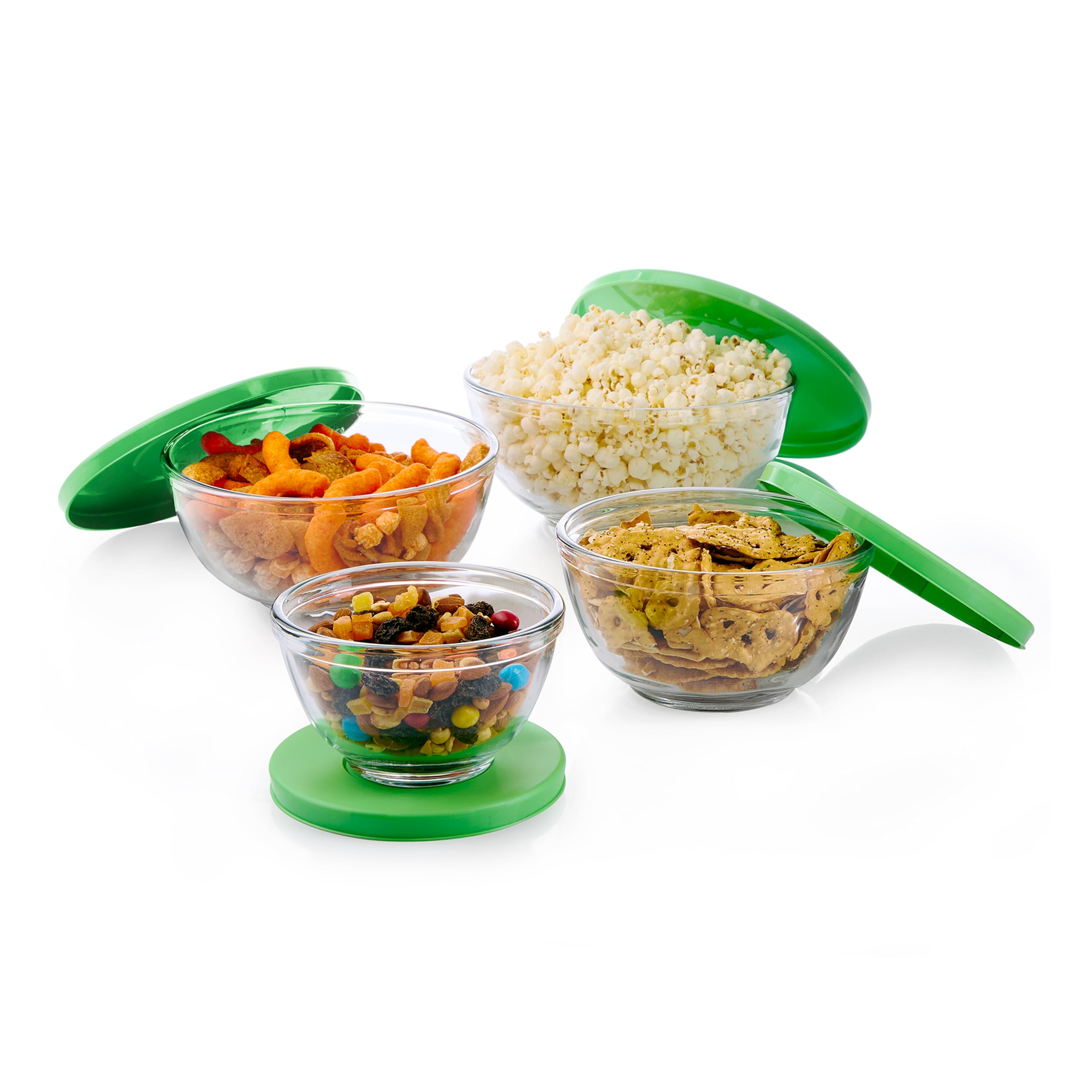
I picked this set when I wanted glass bowls that transition from prep to fridge storage with secure plastic lids.
Why I picked it: Elegant glass plus fitted lids make it great for prepping, serving and storing.
Best for: People who want glass bowls that double as storage containers.
A more premium, non‑plastic choice for those who prefer glass.
Pros
- Clear glass shows contents at a glance
- Fitted lids for fridge/freezer storage
- Dishwasher safe glass
- Elegant enough for serving
Cons
- Heavier than plastic
- Glass can chip if dropped
- Lids are plastic, not oven safe
My take
I like these Libbey bowls because the glass feels substantial and looks good on the table. The set includes multiple sizes so I can mix, serve and then snap on a lid for the fridge without transferring food.
The lids fit tightly enough to stack in the freezer and I’ve used the smaller bowls for single‑serve sauces and herbs. Cleaning is straightforward—the glass goes through the dishwasher without holding odors.
If you want lightweight, indestructible prepware this isn’t it, but for those who prioritize a glass surface for mixing and storage, this set gives me elegant versatility.
2. Glad Nesting Plastic Mixing Bowls – Best Budget Plastic Set
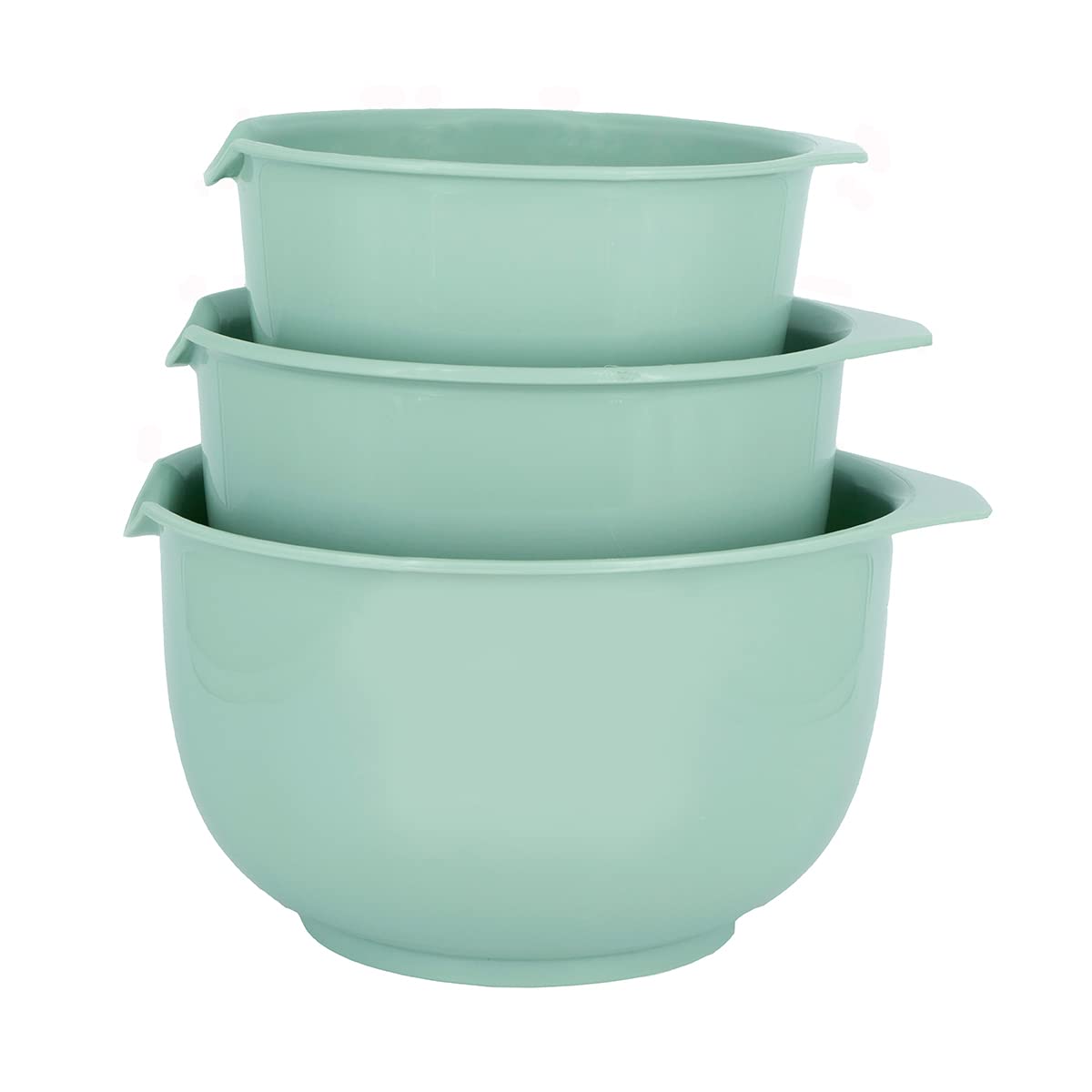
I relied on this compact plastic trio for everyday whisking and quick pours, especially when space was tight.
Why I picked it: Affordable, non‑slip bases and built‑in pour spouts make these workhorses in a small footprint.
Best for: Everyday cooks who want dependable, space‑saving bowls.
An affordable, no‑frills plastic set for daily use.
Pros
- Non‑slip silicone base
- Pour spouts on every bowl
- Nests tightly for small kitchens
- Dishwasher and freezer safe
Cons
- No very large bowl included
- Material can scratch over time
My take
When I needed inexpensive, dependable bowls for mixing and pouring, Glad’s set delivered. The non‑slip bottoms kept the bowls steady during vigorous stirring, and the pour spouts cut down on drips.
They nest exceptionally well, so they freed up cabinet space in my smaller kitchen. Sizes trend toward small‑to‑medium, so I kept a separate large bowl on hand for big batches.
For the price and daily reliability, I used these the most for batters, salad dressings and quick prep.
3. COOK WITH COLOR Prep Bowls with Lids – Best for Meal Prep
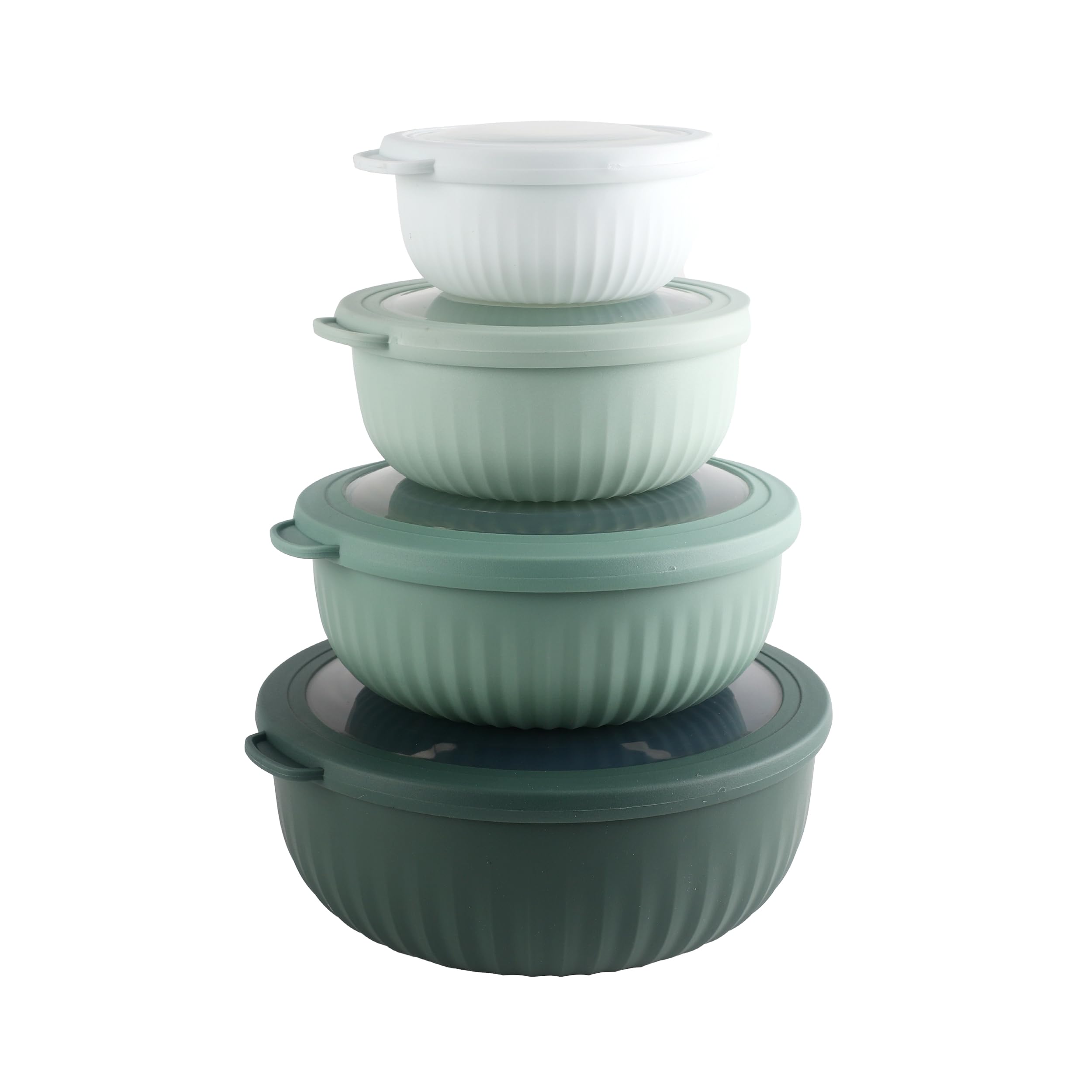
I reached for this colorful 8‑piece set when I needed a lot of lidded containers for prep, leftovers and serving.
Why I picked it: Multiple lidded sizes and sturdy lids make meal prep and fridge stacking easy.
Best for: Meal preppers and anyone who wants coordinated serving pieces.
A midrange, multi‑piece plastic set that covers many storage needs.
Pros
- Wide range of sizes
- Sturdy snap‑on lids
- Attractive colors for serving
- Dishwasher and freezer safe
Cons
- Lids can be slightly cloudy
- Largest bowl smaller than some expect
My take
I used this Cook With Color set for weekly prep and found the lids strong enough for stacking in the fridge. The ombré colors also made the bowls suitable for serving when I had guests.
The nesting design saved cabinet space and the lids snapped on securely so I could transport containers without leaks. One lid showed a slightly cloudy patch in my set, but overall they were well finished and easy to clean.
If you want a pretty, practical set that doubles as storage and servingware, this set covered everything I needed.
4. Joseph Joseph Nest 9 Plus Compact Prep Set – Best All‑In‑One
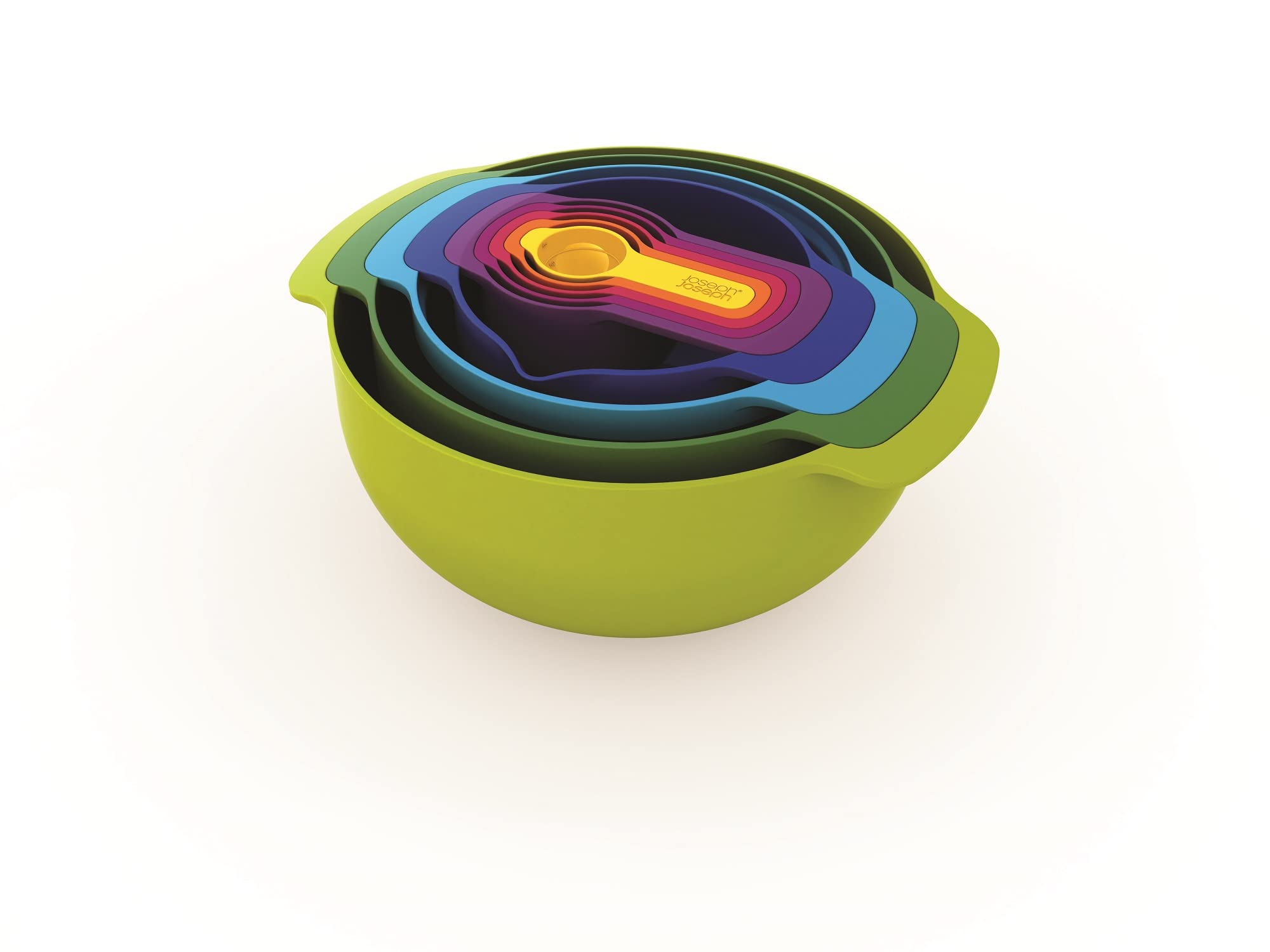
I picked this when I wanted a full prep kit that stacks down to a tiny footprint for an RV or small kitchen.
Why I picked it: Includes bowls, colander, sieve and measuring cups in one neat nested stack.
Best for: Small kitchens, RV cooking, and anyone who values a compact, complete kit.
A compact, multifunctional investment for limited storage spaces.
Pros
- Very compact nesting design
- Includes sieve and colander
- Wide non‑slip bases
- Handy internal measurements
Cons
- Sieve needs hand washing
- Only one measuring spoon included
My take
I appreciate how the Joseph Joseph set brings essential prep tools into one stack that takes up the space of a single bowl. The large non‑slip base kept the bowls steady while I whisked and the small bowl has internal measurements that I used constantly.
The stainless‑mesh sieve and colander expand functionality without adding storage headaches, which made this set ideal when I outfitted an RV kitchen. Note that the sieve requires hand washing while everything else is dishwasher safe.
For anyone needing a compact, thoughtfully designed kit, this set saved me cupboard space and replaced several single‑use items I’d had cluttering drawers.
5. OXO Good Grips Plastic Mixing Bowl Set – Best Ergonomics
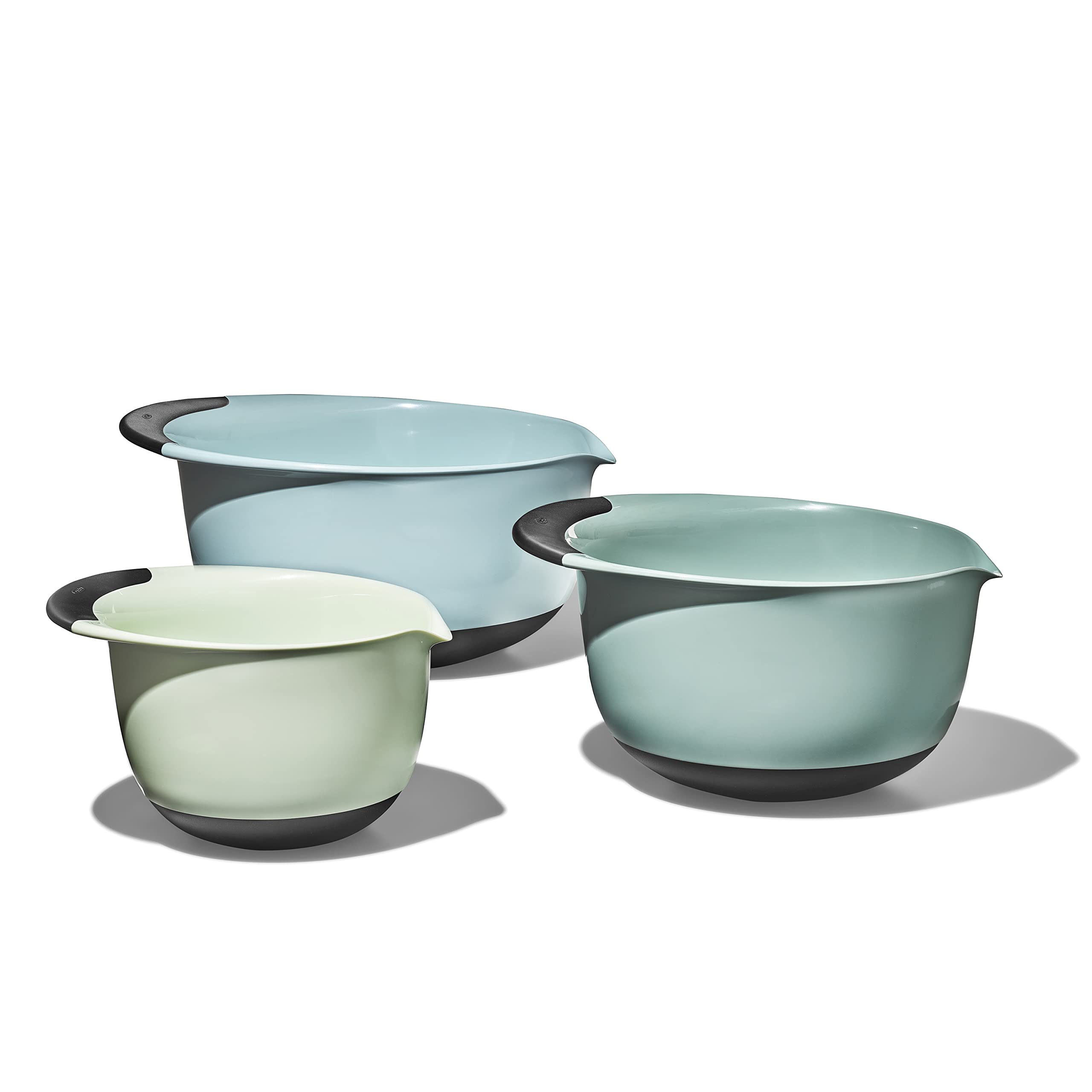
I chose OXO when I wanted bowls with comfortable handles, reliable non‑slip bases and easy pouring.
Why I picked it: Soft handles and non‑slip bottoms make mixing and pouring less fussy.
Best for: Home cooks who mix frequently and want better grip and control.
A durable midrange set with an emphasis on handling and stability.
Pros
- Soft non‑slip handles
- Non‑skid bottoms
- Wide spouts for pouring
- Nests neatly
Cons
- Not the cheapest option
- Colors may show wear over time
My take
I used the OXO set for everything from whisking eggs to mixing batter and found the grips make a real difference during longer prep sessions. The non‑skid bottoms held firm even when I tilted a bowl to reach the sides.
Wide lips and spouts helped me transfer batters without slopping, and the bowls nest neatly in a cabinet. They feel built to last and I kept returning to them for tasks that require control.
6. KitchenAid Universal Nesting Mixing Bowls – Best Classic Choice
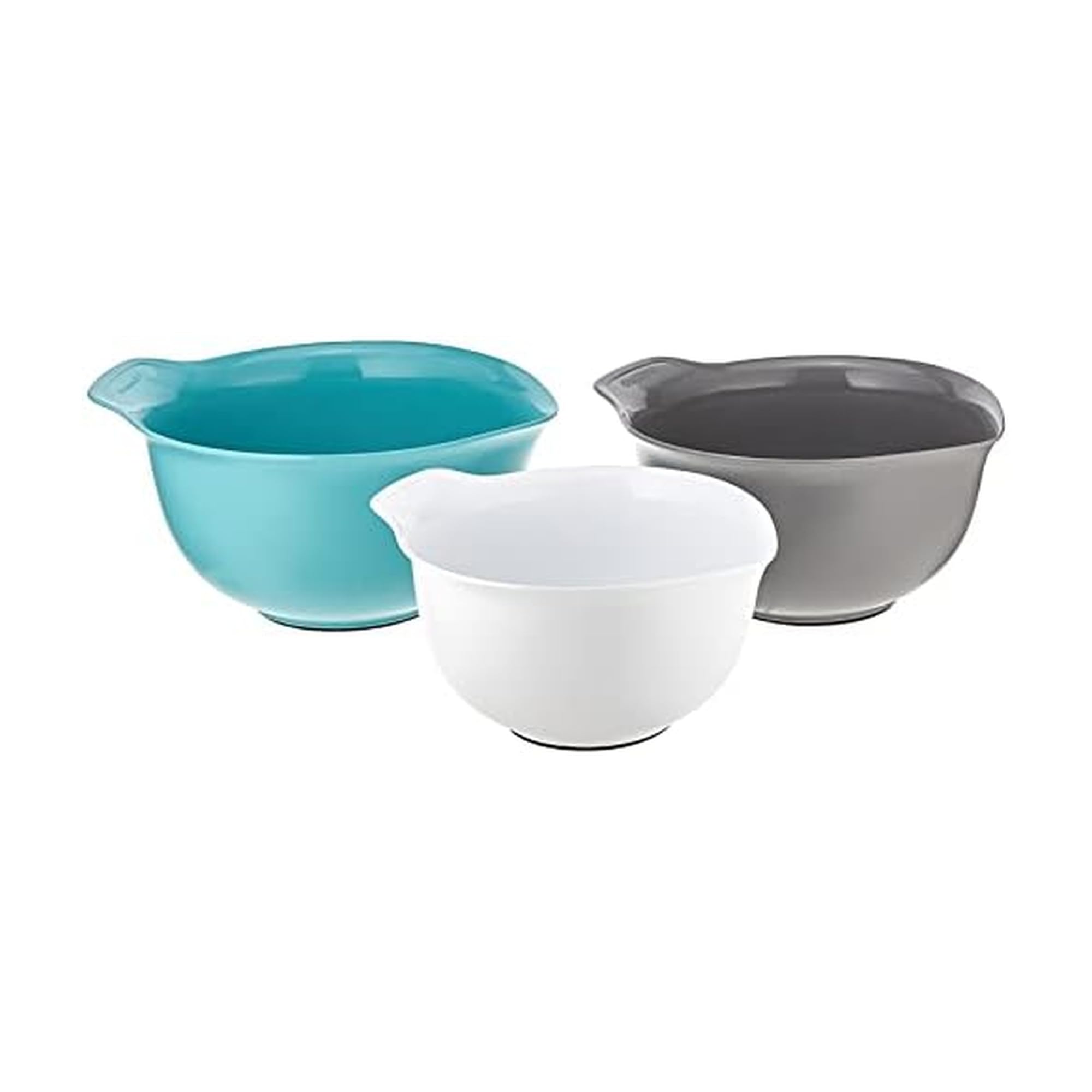
I used these KitchenAid bowls when I wanted a reliable, classic set with a lifetime limited warranty and good stability.
Why I picked it: Trusted brand styling, non‑slip bases and pour spouts for tidy transfers.
Best for: People who want a dependable, warranty‑backed set for regular kitchen use.
A solid, classic set with brand backing and reliable features.
Pros
- Non‑slip bases
- Pour spouts on every bowl
- Nests for compact storage
- Lifetime limited warranty
Cons
- Smallest bowl is fairly large
- Plastic can stain with strong pigments
My take
I kept the KitchenAid bowls in rotation for everyday tasks because they’re sturdy, nest well and the non‑slip base really works when I mix vigorously. The built‑in pour spouts reduced drips when transferring sauces or batters.
Their sizes covered everything from small prep to larger doughs, and I appreciated the lifetime limited warranty as a confidence boost. For a classic, no‑surprises set that performs, these were my go‑to.
7. OXO Good Grips Stainless‑Steel Mixing Bowls – Best for Chilling & Marinating
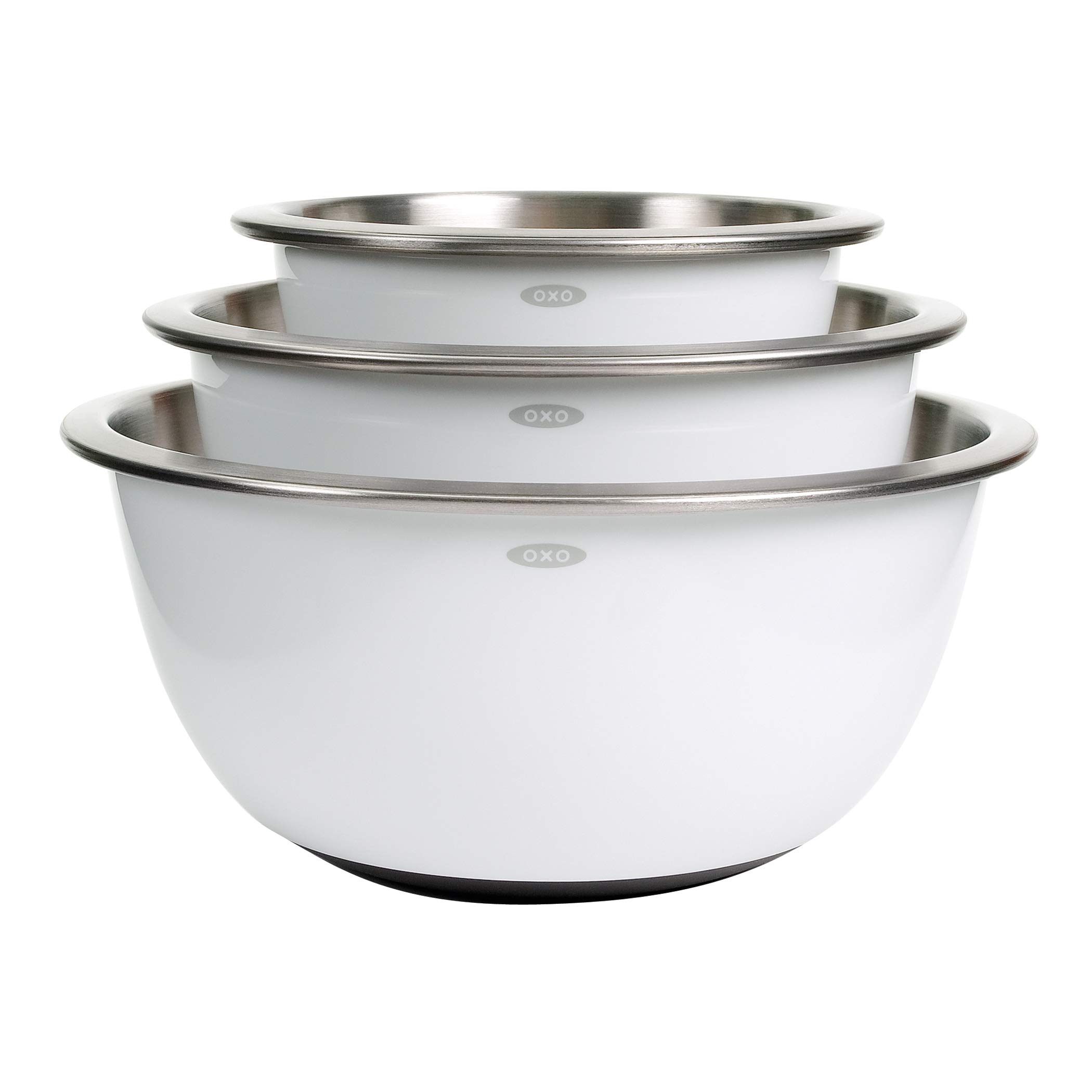
I reached for these stainless bowls when I needed a durable option that chills quickly for doughs and marinades.
Why I picked it: Stainless interior retains temperature and cleans easily; excellent for chilling and marinating.
Best for: Tasks that benefit from a metal surface—marinating, chilling and heavy‑duty mixing.
A higher‑end, long‑lasting option compared with basic plastic sets.
Pros
- Stainless interior resists stains
- Insulating double‑wall exterior
- Non‑skid bottoms
- Durable and dishwasher safe
Cons
- Can dent if dropped
- Interior scratches with metal utensils
My take
When I want to keep ingredients cold—like when making pastry dough or marinating proteins—these stainless bowls are my preference. The metal interior chills quickly and won’t hold odors.
They combine the non‑slip benefit with a tough stainless interior that stands up to heavy use. I treated these as the workhorses for tasks where plastic wasn’t ideal.
How I Choose Mixing Bowls
Material: plastic vs. glass vs. stainless
I pick the material based on the task: plastic for lightweight prep and lidded storage, glass when I want a nonreactive surface that goes from oven (if rated) to table, and stainless for chilling and heavy‑duty mixing.
If you value aesthetics and storage in one piece, glass with fitted lids is a great option. If you need something indestructible for camping or kids, choose sturdy plastic or stainless.
- Plastic: lightweight, affordable, often dishwasher/freezer safe
- Glass: nonporous, elegant, heavier and breakable
- Stainless: durable, chills quickly, ideal for dough and marinades
Size and nesting
I favor sets that include at least one large bowl and nest down to save cabinet space. Think about your typical batch sizes and whether you need a dedicated large mixing bowl for dough.
Nesting efficiency matters when kitchen storage is limited—compact kits like Joseph Joseph give a lot of function in a small footprint.
- Look for a 4–5 quart option if you bake bread or make big batches
- Small bowls (1–2 quarts) are great for dressings and mise en place
- Ensure lids stack or nest cleanly if storage is a priority
Stability and handling
A non‑slip base and comfortable handles change the mixing experience. I always test whether a bowl stays put under vigorous whisking or when tilted to pour.
Wide lips and spouts are invaluable if you transfer batters often.
- Non‑slip base prevents sliding during whisking
- Handles make heavy bowls easier to control
- Spouts reduce spills when pouring
Lids and storage
I prioritize secure, well‑fitting lids if I plan to store food in the same bowl I use for prep. Clear lids or transparent tops help me identify contents quickly.
Check whether lids are stackable and whether they survive freezer cycling if you freeze meals or sauces.
- Snap‑on lids are best for fridge stacking
- Seal quality matters more than lid material
- Freezer‑safe lids expand usage to long‑term storage
Extras and warranty
I like sets that add useful extras—colanders, sieves, measuring cups—if those tools match my cooking style. They can replace several single‑use items and minimize clutter.
A warranty or brand reputation is a helpful signal for long‑term use; I pay more for a set I expect to use daily.
- Consider whether included tools actually get used
- Warranty can justify choosing a pricier set
Frequently Asked Questions
Are these mixing bowls microwave safe?
It depends on the set. Some plastic bowls are labeled microwave safe while others are not; Joseph Joseph’s plastic pieces are not intended for microwave use. I always check the product specifics and any included warnings before heating food.
Can I put these bowls in the dishwasher?
Most of the bowls in this roundup are dishwasher safe; manufacturers often note which pieces belong on the top rack or require hand washing (for example, metal sieves usually need hand care). I run plastic and stainless bowls through my dishwasher per the care instructions.
Do the lids form an airtight seal for freezer storage?
Several sets here have lids that seal well enough for fridge and freezer stacking—Libbey, Cook With Color and the Glad set held up in my freezer use. I avoid long‑term vacuum storage with basic snap lids, but they work great for weeks‑long leftover storage.
Which material is best for dough and marinating?
I prefer stainless steel when chilling is important for dough or marinating because metal holds temperature and won’t retain odors. Plastic and glass both work, but stainless is my go‑to when temperature control matters.
Final Take
I found no single perfect bowl for everyone—your best choice depends on whether you prioritize storage, lightweight handling, or temperature control.
For lidded storage and presentation I reached for Libbey or the Cook With Color set; for compact, all‑in‑one functionality Joseph Joseph was unbeatable; and for heavy‑duty chilling and mixing stainless steel from OXO was my top pick.
Use the buying guide above to match material, size and extras to your kitchen routine, and you’ll end up with a set I’ll keep recommending for that specific use case.
