
I tested a range of algaecides for rescue treatments and weekly maintenance. These five options delivered fast kill, ongoing prevention, or stain-safe protection depending on my pool’s needs.
I spend a lot of time caring for multiple pools, so I’ve tried algaecides for everything from emergency green-outs to weekly prevention. In this roundup I explain which products I reach for based on what’s growing in the water and how I like to maintain my filtration and chemistry.
My picks include fast-acting treatments, copper-based formulas for yellow/mustard algae, non-metallic preventatives, and a product I use when chloramines and odor are the main problems. I focused on real-world performance: how quickly algae clears, whether the formula foams or stains, and how easy the product is to use during regular maintenance.
I chose these five because each fills a different role in my pool kit — fast rescue, mustard algae control, broad-spectrum kill, pH-tolerant non-metallic prevention, and chloramine control — so I can grab the right bottle for the problem I’m facing.
1. Clorox Pool&Spa Algaecide – Best Overall
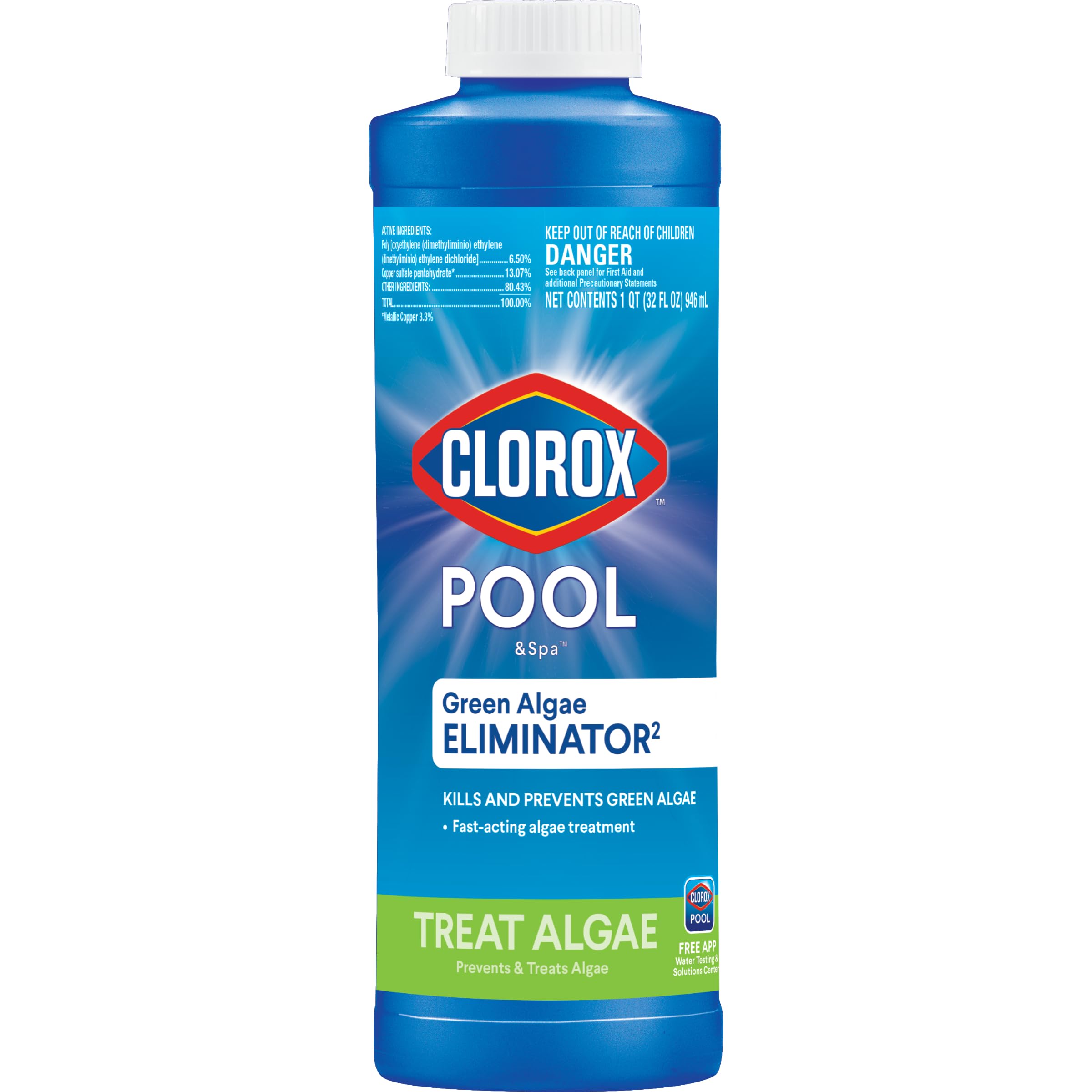
I rely on this non-foaming, fast-acting formula for both emergency cleanups and weekly prevention.
Why I picked it: It clears green algae quickly and works in salt pools without foaming.
Best for: Quickly killing green algae and routine maintenance on all pool types.
A solid value for both rescue and maintenance use.
Pros
- I get fast algae clearance, often within a day
- I don’t see foaming on the water
- I use it in salt and chlorine pools
Cons
- I still run filtration and brush after treatment
- I rely on testing app guidance for dosing
My take
When my pool went cloudy with green algae I turned to this Clorox algaecide and saw dramatic improvement within 24 hours. I find the non-foaming formula helpful because it won’t leave a film on the surface, so I can treat and let filtration do the rest.
I use it as both an emergency treatment and a weekly preventative when temperatures rise. The bottle’s compatibility with salt systems makes it one of the most versatile products in my cupboard. I also use the Clorox Pool app for quick dosing recommendations when I’m not sure how much to add.
2. In The Swim Super Algaecide (Chelated Copper) – Best for Mustard Algae
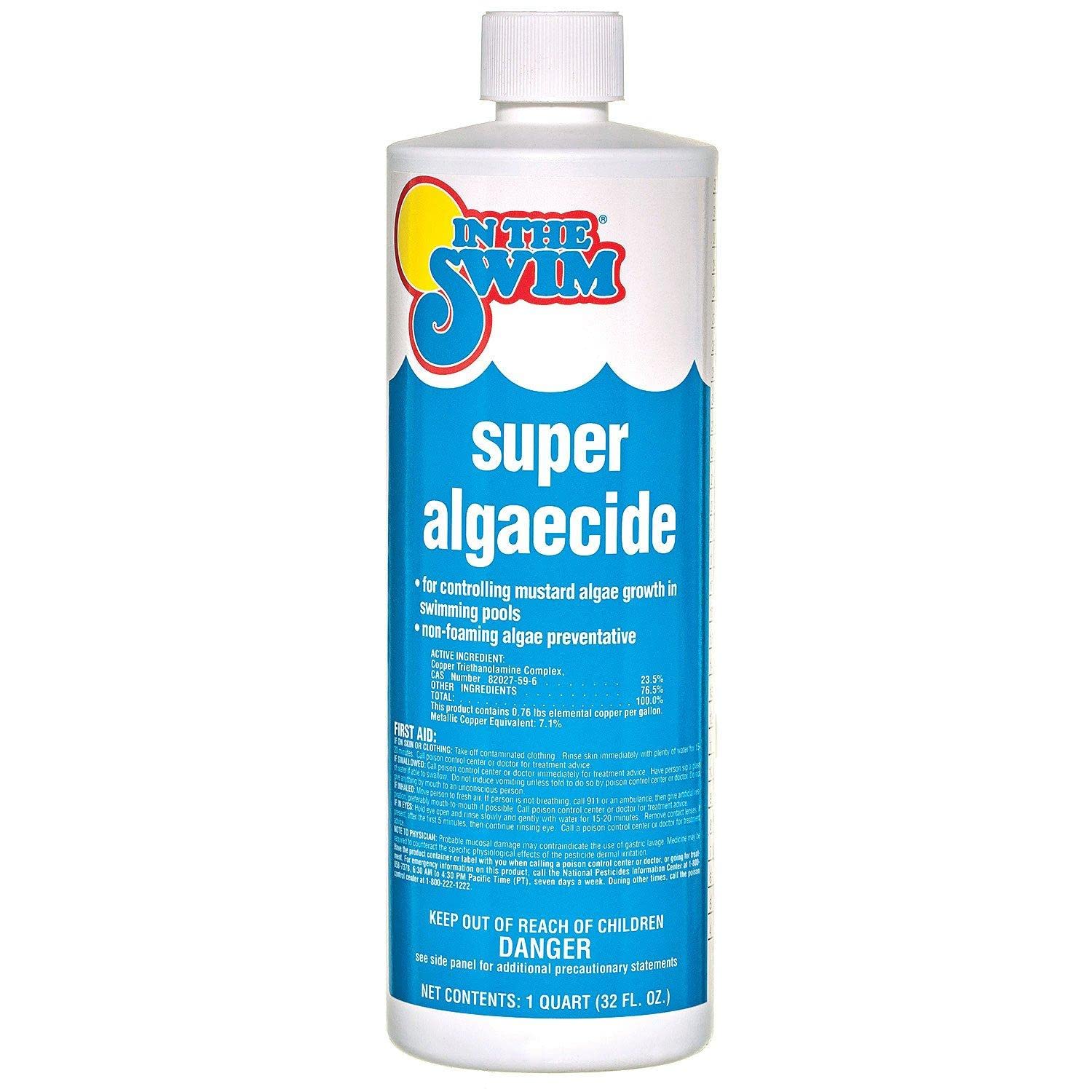
I pick this copper-based formula when yellow or mustard algae shows up and I want long-lasting control.
Why I picked it: The chelated copper targets mustard algae and keeps working for weeks.
Best for: Eliminating yellow/mustard algae and seasonal maintenance in busy pools.
A concentrated, higher-strength option worth it for stubborn mustard algae.
Pros
- I see strong control of mustard and yellow algae
- I don’t notice strong chemical odor after dosing
- I can add it and swim immediately
Cons
- I avoid it on vulnerable pool finishes to be safe
- I measure doses carefully to prevent staining risk
My take
For persistent mustard algae I reach for this In The Swim formula. The chelated copper content gives me a concentrated treatment, so small doses go a long way and the results stick around.
It’s low-odor and non-foaming, which makes application simple during family swim weeks. Because it’s copper-based, I take precautions around certain surfaces, but when used as directed I get reliable, long-lasting results.
3. Clorox XtraBlue Plus Algaecide – Best for Tough Algae
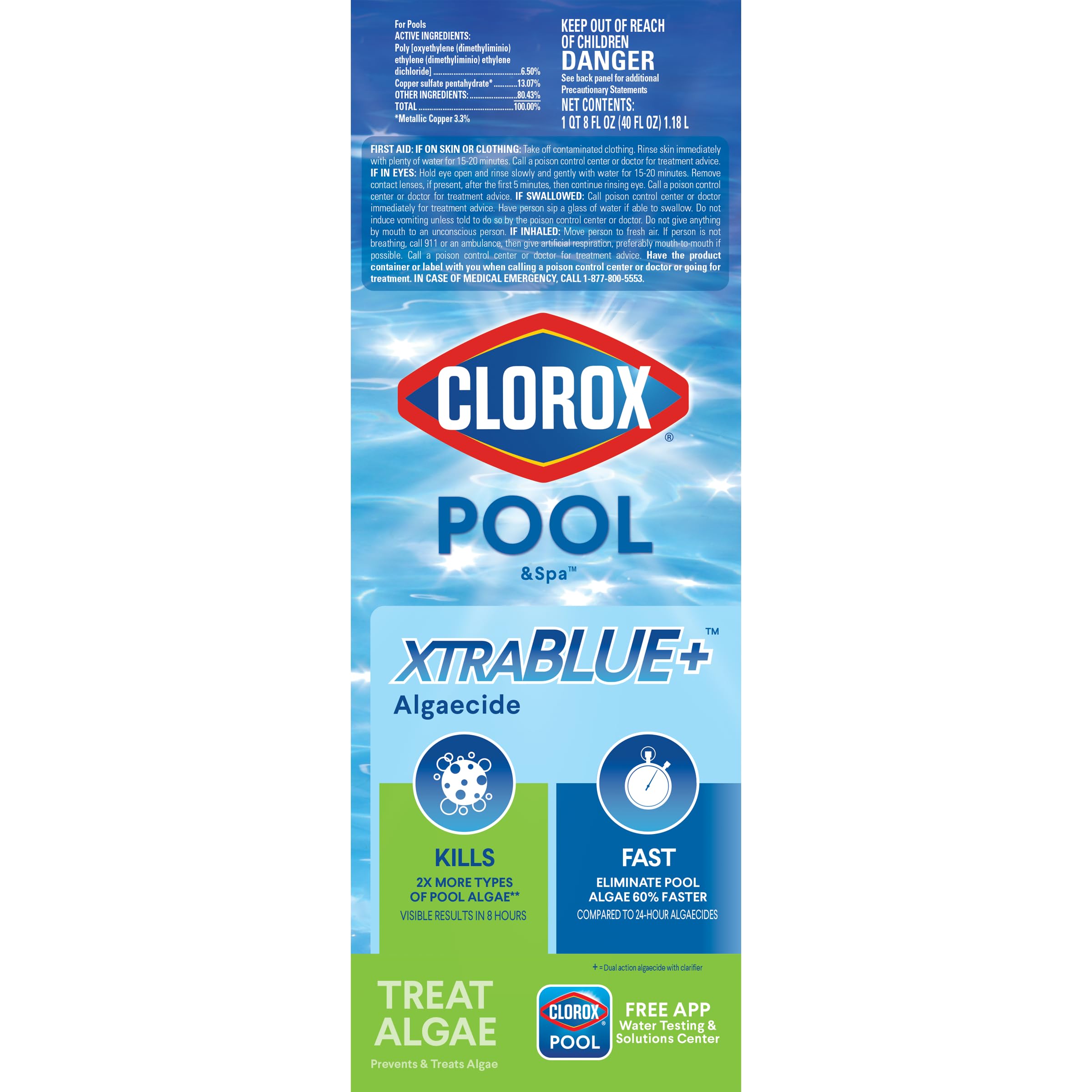
I reach for this all-in-one formula when I need something that claims to kill green, mustard, and black algae quickly.
Why I picked it: It’s formulated to tackle all major algae types with a non-staining, fast-acting blend.
Best for: Clearing tough outbreaks and weekly preventative dosing in prone pools.
A comprehensive all-in-one choice for owners wanting broad protection.
Pros
- I get broad-spectrum control of green, mustard, and black algae
- I don’t worry about staining on typical pool surfaces
- I can use it in salt systems
Cons
- I still shock and brush for heavy black algae
- I prefer pairing with filtration for fastest results
My take
When I needed something to clear a stubborn algae problem fast, I used XtraBlue and saw the pool clear up quickly. The formula’s claim to work within 24 hours matched my experience on moderate outbreaks.
I like that it’s non-staining and salt-pool compatible, so I can use it across different pools without worrying about discoloration. For severe black algae I pair it with focused brushing and higher circulation to get the job done.
4. In The Swim Algaecide 60 Plus – Best Non-Metallic Preventative
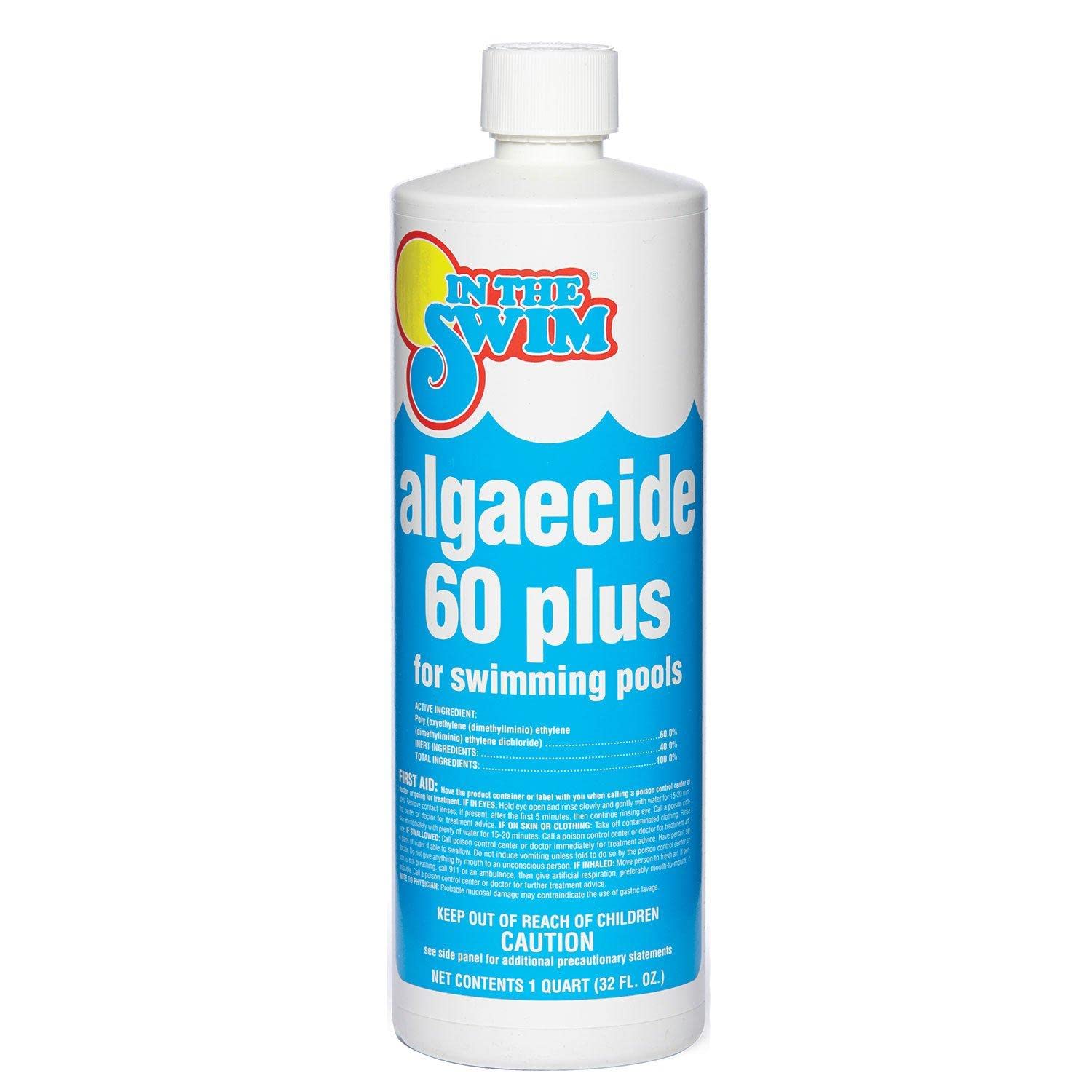
I use this pH-tolerant, non-metallic option for weekly prevention and pools with attached features.
Why I picked it: It’s pH tolerant, low-odor, and compatible with most sanitizers for routine use.
Best for: Regular maintenance and pools with waterfalls, spas, or well water.
A long-lasting preventative I use across the season.
Pros
- I find it effective across pH swings
- I use less brushing when I dose weekly
- I appreciate the low odor and non-metallic formula
Cons
- I still increase dose for visible outbreaks
- I monitor usage to stretch a single bottle across the season
My take
This In The Swim product is my go-to for ongoing prevention. Because it’s non-metallic and pH tolerant I can add it without rebalancing water first, which saves time during routine maintenance.
I follow the manufacturer’s guidance for initial and maintenance doses, and a small amount every week or two keeps walls and steps algae-free in my hotter months. For outbreaks I increase the dose and run the filter longer.
5. No Mor Problems Preventative Algaecide – Best for Chloramine & Maintenance Help
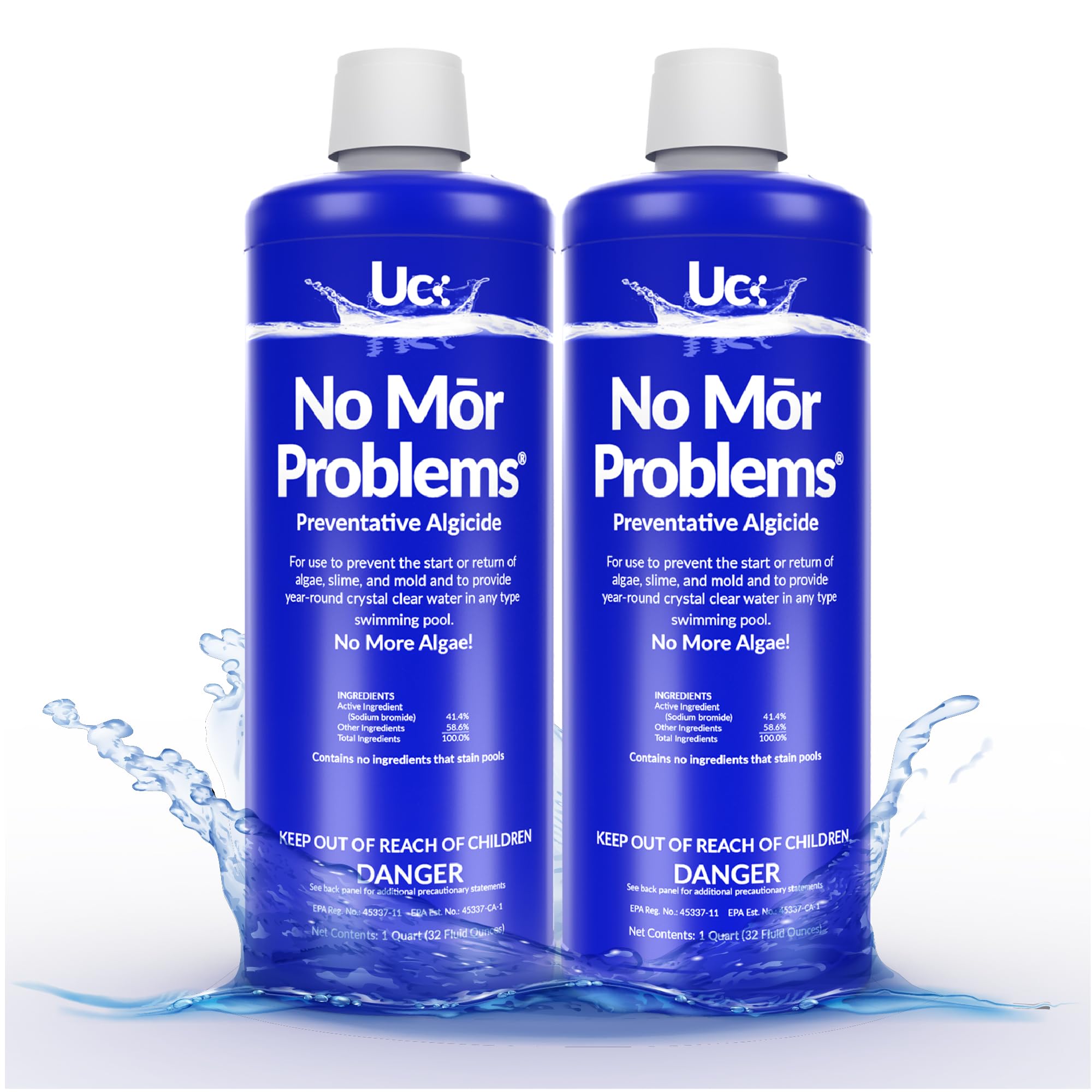
I use this when I want an algaecide that also helps break up chloramines and reduce chlorine odor.
Why I picked it: It accelerates sanitizer effectiveness and helps reduce chloramine build-up.
Best for: Pools with persistent chloramine odor or owners who want to cut chlorine use.
A preventative that can reduce overall sanitizer needs when used regularly.
Pros
- I notice reduced chlorine odor after regular use
- I get preventative algae control with small weekly doses
- I don’t see staining from the formula
Cons
- I’ve received bottles that leaked in shipping
- I pair it with shock for stubborn algae
My take
When I wanted to reduce chloramine smell and the amount of shock I used, No Mor Problems became a weekly addition. I add a modest weekly dose and it helps keep the water more pleasant and the filter cleaner.
For algae-prone seasons I combine it with a targeted algaecide or an initial copper treatment, then maintain with No Mor Problems every one to two weeks. That approach has kept my pools clear without constant shocking.
How I Choose a Pool Algaecide
Key factors I consider
I look at what type of algae I’m facing first—green, mustard (yellow), or black—because that determines the chemistry I’ll use.
Compatibility with my pool system (salt, chlorine, bromine, biguanide) matters. I favor pH-tolerant formulas so I don’t have to rebalance water before every dose.
I pay attention to foam and staining risks. Non-foaming, non-staining formulas are easier to use around finishes and waterfalls.
- Algae type dictates active ingredient choice
- Non-foaming formulas reduce surface residue
- Copper products are powerful against mustard algae
- Non-metallic options work well for regular maintenance
- Consider swim-ready labeling if you need immediate use
Practical dosing and application tips I use
I always test and balance chlorine and pH before adding any algaecide when possible, although some products are pH tolerant.
For serious outbreaks I combine manual brushing, shock (if appropriate), and an algaecide; for prevention I add small doses weekly.
I run my filter longer after treatment to accelerate clearance and remove dead algae.
- Brush surfaces before or after dosing for stubborn algae
- Run filtration continuously for 24–48 hours after treatment
- Use manufacturer dosing directions and scale by pool volume
- Store tightly capped to avoid leaks and evaporation
Frequently Asked Questions
Can I swim immediately after adding algaecide?
I follow the product label: many algaecides are swim-ready and safe immediately, but I always check the bottle. When swimming isn’t recommended I wait the specified time and ensure sanitizer levels are safe.
Will copper algaecides stain my pool?
I treat copper formulas with respect—when I dose correctly and avoid overuse, staining is uncommon. I avoid copper on vulnerable finishes and use chelated copper products to reduce staining risk.
How often should I use a preventative algaecide?
I typically dose a preventative every one to two weeks during warm months. For higher-risk conditions I increase frequency and monitor walls for early growth.
Do algaecides replace regular chlorine maintenance?
I use algaecides as a supplement, not a replacement. I keep sanitizer levels in range and use algaecide to prevent or eliminate algal growth alongside proper chlorine or salt maintenance.
Final Take
I keep at least two algaecides on hand: a fast-acting rescue formula and a preventative I can dose weekly. That combo has saved me time and reduced heavy shocking.
Match the product to the problem—copper for mustard, non-metallic for routine maintenance, and broad-spectrum options for unknown or mixed outbreaks—and you’ll spend less time brushing and more time enjoying the pool.
