
I tested a range of pool brushes, drill attachments, poles, and a robotic cleaner so you can pick the right tool for your pool surface, budget, and workload.
Keeping a pool inviting all season comes down to the right tools. I spent hands-on time with scrub brushes, drill attachments, heavy-duty heads, a pro-grade pole, and a robotic cleaner to see which items actually make pool maintenance faster and easier.
In this roundup I focus on how each brush performs on common surfaces (vinyl, plaster, pebbletec, gunite), how much area it covers, how it attaches, and any quirks I ran into while using them. My goal was to find tools that either save time, protect surfaces, or handle stubborn algae and grime without fuss.
I compared these tools by surface compatibility, ease of use, build quality, and how much effort each one saves during a normal pool maintenance session.
1. Drillbrush 5-Piece Drill Brush Kit – Best Drill Attachments
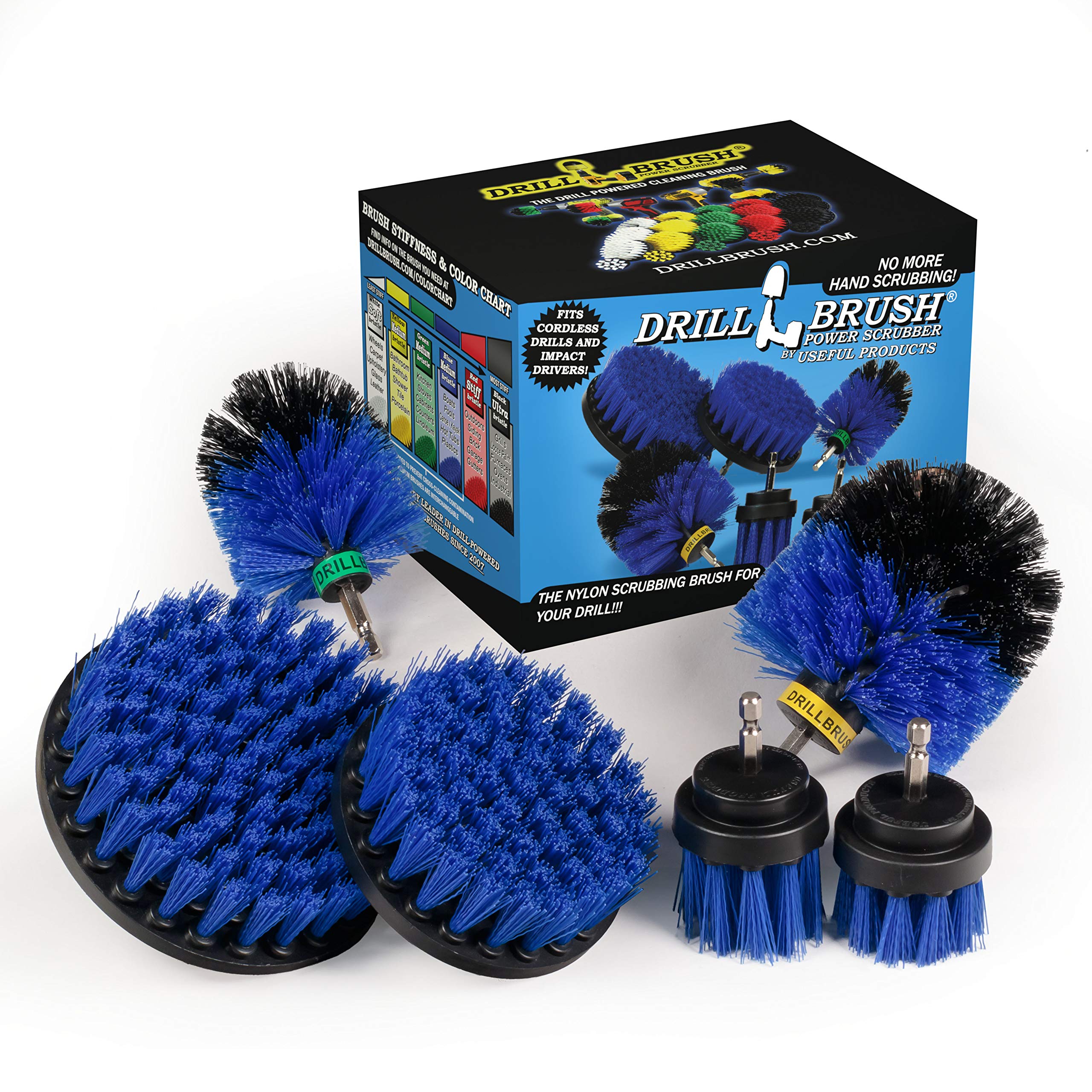
A versatile set of drill-mounted scrub heads that turn any cordless drill into a heavy-duty power scrubber for grout, deck, hulls, and tight corners.
Why I picked it: I picked this kit because it converts a drill into a fast, high-torque scrubber for grout, tile, and pool hardware.
Best for: Power-scrubbing grout, tile, pool hardware, tight corners, and spot cleaning.
An affordable way to add powered scrubbing without buying specialized equipment.
Pros
- Turns any drill into a scrubber
- Multiple brush sizes for tight spots
- Good on grout and stubborn grime
- Compact heads for tanks and filters
Cons
- Requires a drill (not included)
- Brush firmness varies by color
My take
I keep this 5-piece Drillbrush kit in my cleaning bag for jobs where a hand brush would take forever. The 4- and 5-inch heads flatten out large swaths of grime quickly, while the 2-inch and bullet-shaped bits let me get into grout lines, filter housings, and corners that a full-size brush can't reach.
Using a cordless drill at low to medium speed, I can remove soap scum, algae rings, and deck grime far faster than with manual brushing. The shape variety is what sold me—the bullet head in particular breaks up stuck-on deposits in drains and skimmer baskets with minimal effort.
A couple of caveats: you'll need a drill (the kit doesn’t include one), and I did notice some inconsistency in bristle stiffness across colors, so pick the right head for the job. Overall, this kit turned several tedious spot-cleaning sessions into quick work.
2. Sepetrel 17.5″ Aluminum Pool Brush Head – Best for Wall Cleaning
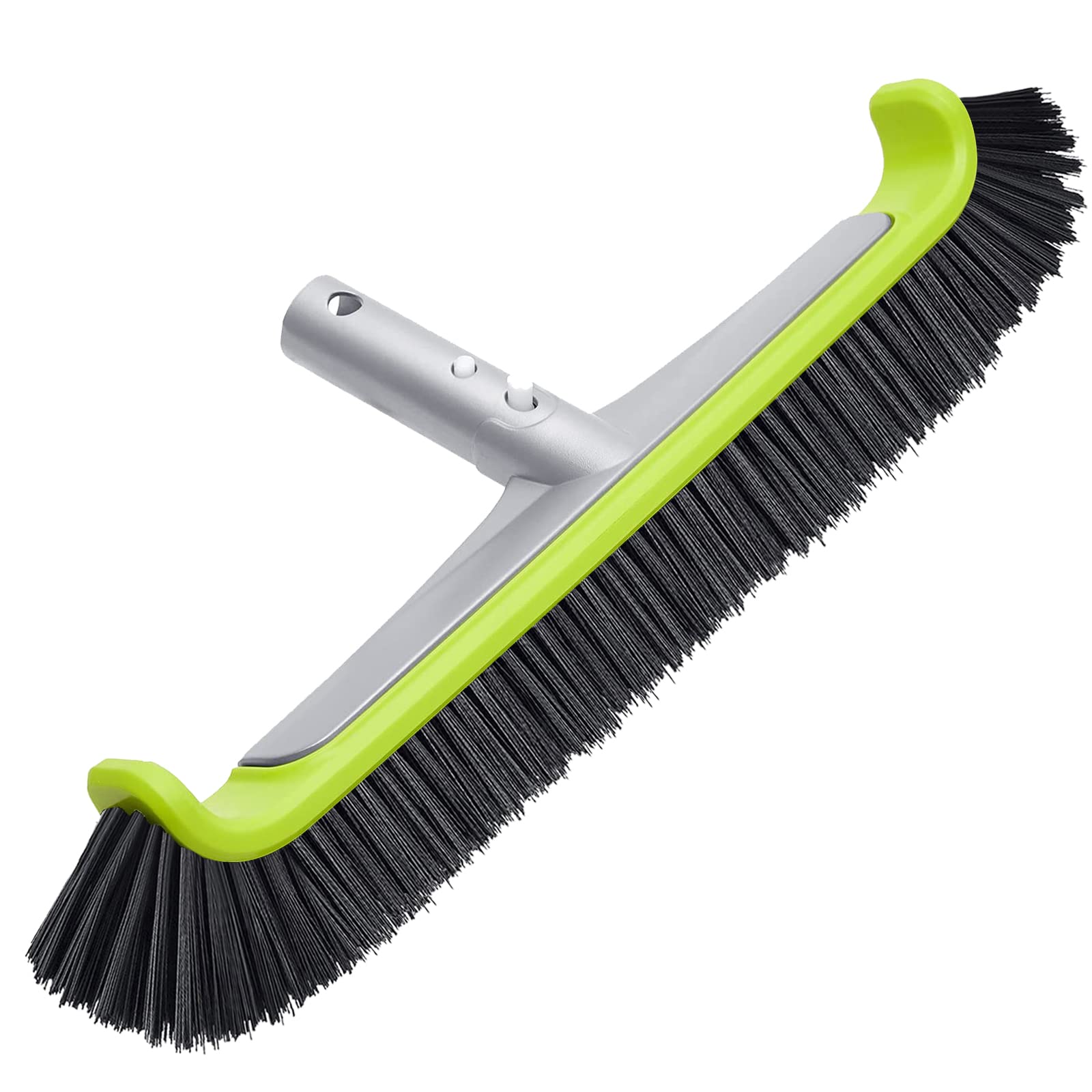
A reinforced aluminum brush head with a curved edge and wide 17.5-inch coverage that scrubs pool walls effectively while being gentle on vinyl liners.
Why I picked it: I picked it for its solid aluminum construction, curved edge that protects liners, and wide cleaning surface.
Best for: Brushing walls, steps, and corners on inground and above-ground pools, including vinyl liners.
A strong mid-range option that feels sturdier than plastic heads.
Pros
- Reinforced aluminum backing
- Curved edge safe for liners
- Wide 17.5-inch coverage
- Clip with finger protection
Cons
- Bristles not extremely stiff
- Heavier than plastic heads
My take
This Sepetrel head became my go-to when I want good wall coverage without risking my vinyl liner. The curved edge gives me confidence brushing close to corners and steps without nicking surfaces.
The aluminum back feels durable and there’s a reassuring heft when I press into stubborn algae. Coverage at 17.5 inches saves passes compared with a small brush, yet it still fits standard 1.25-inch poles for quick attachment.
If you need rock-hard bristles for industrial scraping, this isn’t the stiffest head I’ve used—there’s a trade-off for being liner-safe. For routine wall and corner work, though, it’s a reliable, well-built tool.
3. ProTuff 16ft Telescopic Pool Pole – Best Pool Pole
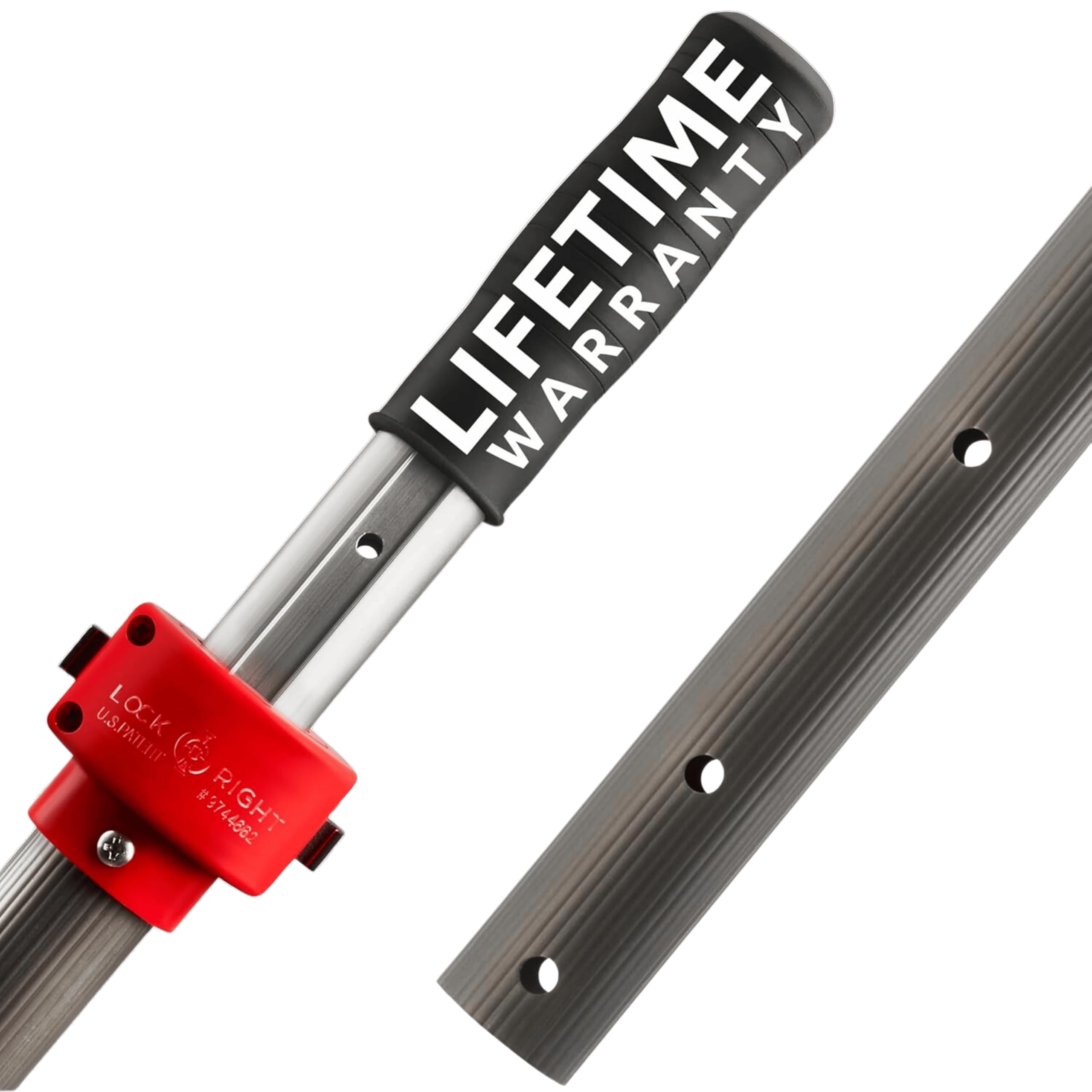
A heavy-duty telescoping pole that reaches 16 feet, locks securely, fits standard attachments, and comes with a lifetime replacement promise.
Why I picked it: I picked this pole for its rock-solid locking, long reach, and universal fit with nets, skimmers, and brushes.
Best for: Reaching deep ends, high walls, and connecting to any standard pool attachment.
A premium, longer-term investment for pros and committed owners.
Pros
- Extends to 16 feet
- Secure locking mechanism
- Universal attachment fit
- Non-slip ergonomic grip
Cons
- Heavier than cheap poles
- Higher upfront cost
My take
When I needed reach and rigidity, this ProTuff pole made the difference. Extending to 16 feet, it lets me reach deep-bottom areas and high walls without flexing, and the locking collars hold tight during scrubbing.
The universal ends snap on skimmers, brushes, and nets without wobble. It’s heavier than the bargain poles I used to buy, but that weight comes with durability—this feels like something that will last multiple seasons.
The pole is a premium purchase, but for me the time saved and the confidence that it won’t bend under load justify the investment.
4. Poolmaster 5″ Aluminum-Back Algae Brush – Best for Algae Spots
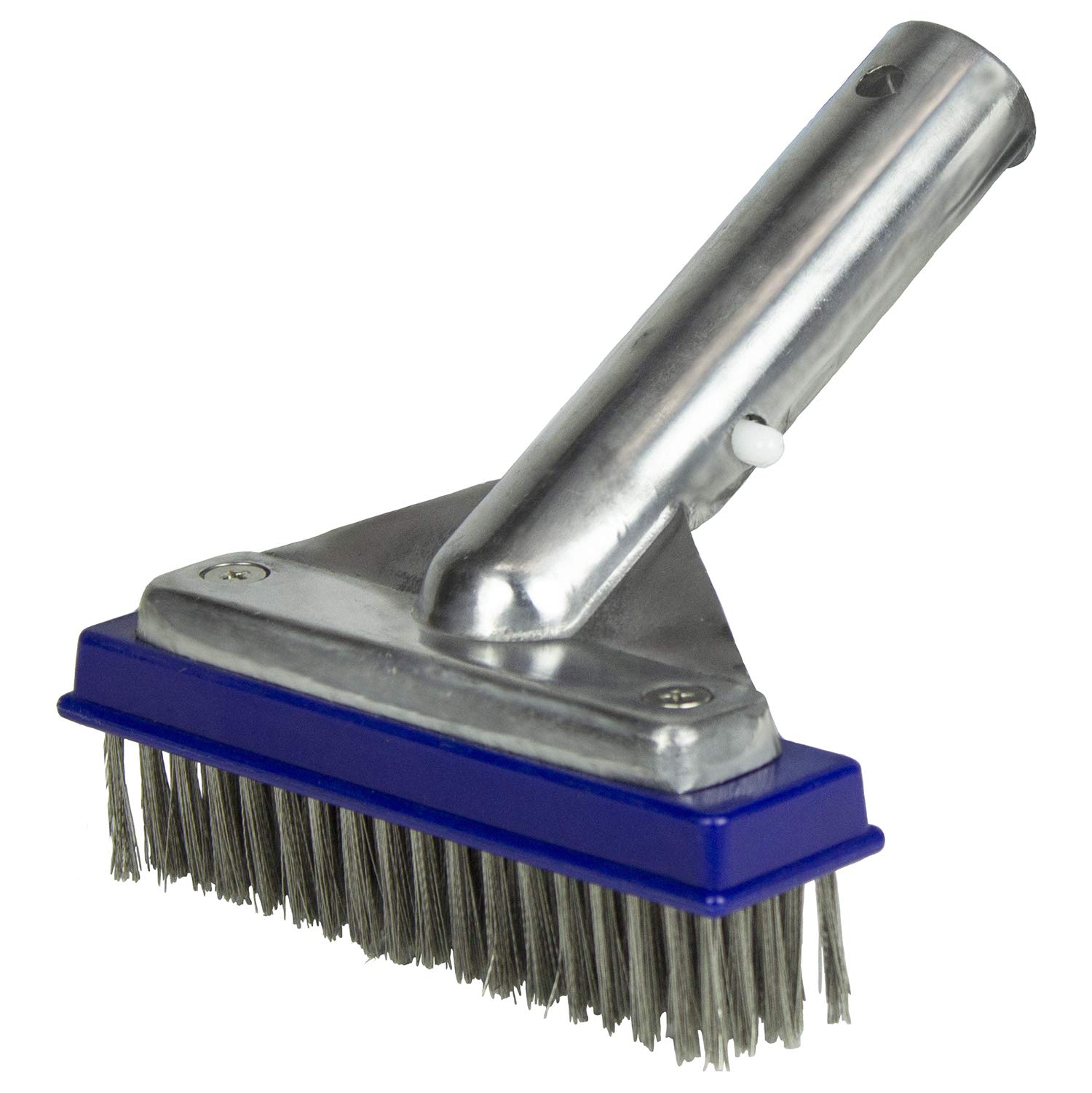
A compact aluminum-backed brush with stainless-steel bristles designed for aggressive spot treatment of black algae on gunite or concrete pools.
Why I picked it: I picked it for targeted removal of black algae and stubborn spots on hard pool surfaces.
Best for: Scrubbing algae and stubborn spots on gunite or concrete pools and tight areas.
An inexpensive specialty brush for targeted algae work.
Pros
- Stainless-steel bristles cut through algae
- Die-cast aluminum back
- Small head for tight spots
- Fits standard poles
Cons
- Not safe for vinyl or fiberglass
- Occasional bristle loss reported
My take
For getting after black algae and isolated stains on a concrete or gunite finish, this little Poolmaster brush is extremely effective. The stainless-steel bristles let me apply pressure to break up the spot so chlorine can finish the job.
Its compact 5-inch head is perfect for steps, corners, and stubborn patches that a wide broom can’t reach. I also use it for grill cleaning and other heavy-duty scrubbing chores around the yard.
Be mindful: I only use this on hard surfaces—it’s absolutely not for vinyl or delicate finishes—and I check the bristles periodically to make sure none are coming loose.
5. 17.5″ Round-End Nylon Pool Brush Head – Best Vinyl-Safe Brush
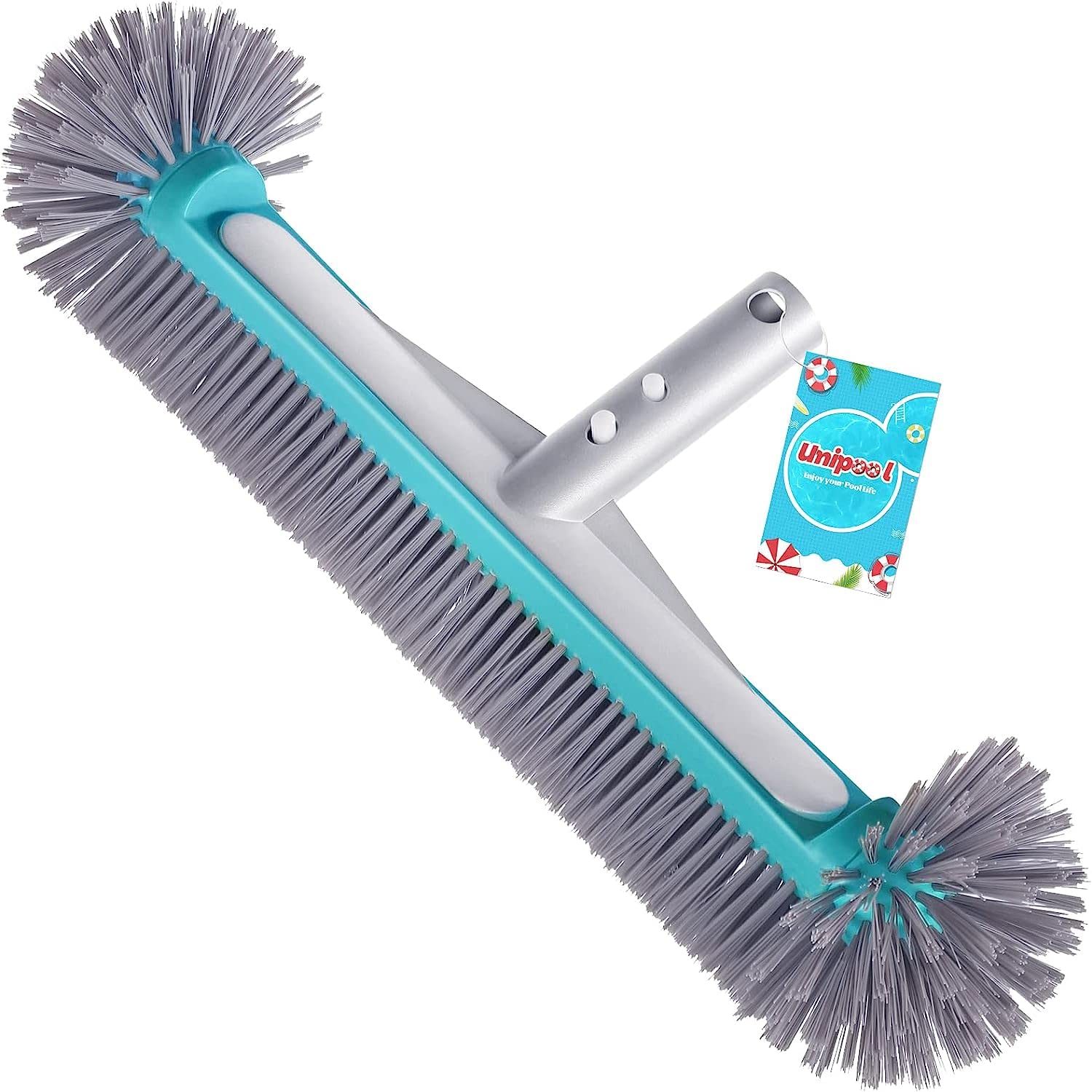
A 17.5-inch aluminum-backed brush with rounded ends and seven rows of nylon bristles designed to be gentle on liners while providing good coverage.
Why I picked it: I picked this brush because the rounded edges and nylon bristles clean effectively without risking liner scratches.
Best for: Vinyl liners, painted floors, pebbletec, and general wall and tile cleaning.
Good value for a liner-safe, versatile brush head.
Pros
- Rounded ends protect liners
- Seven-row nylon bristles
- Aluminum back resists bending
- EZ clips for quick attachment
Cons
- Smaller for very large pools
- Assembly requires small screws
My take
This rounded-end nylon head is the brush I reach for when I’m cleaning a vinyl-lined pool or a delicate painted surface. The hemispherical ends glide into corners without catching or scraping.
Seven dense rows of bristles give surprisingly good agitation for algae and dirt while remaining gentle. It fit my existing pole seamlessly and the clip system made swapping tools quick—though I recommend a proper screwdriver for the tiny assembly screws.
If you manage a very large commercial pool, you might prefer a wider head, but for most backyard pools this strikes a great balance between safety and cleaning power.
6. ProTuff 22″ Extra-Wide Pool Brush Head – Best Wide Brush
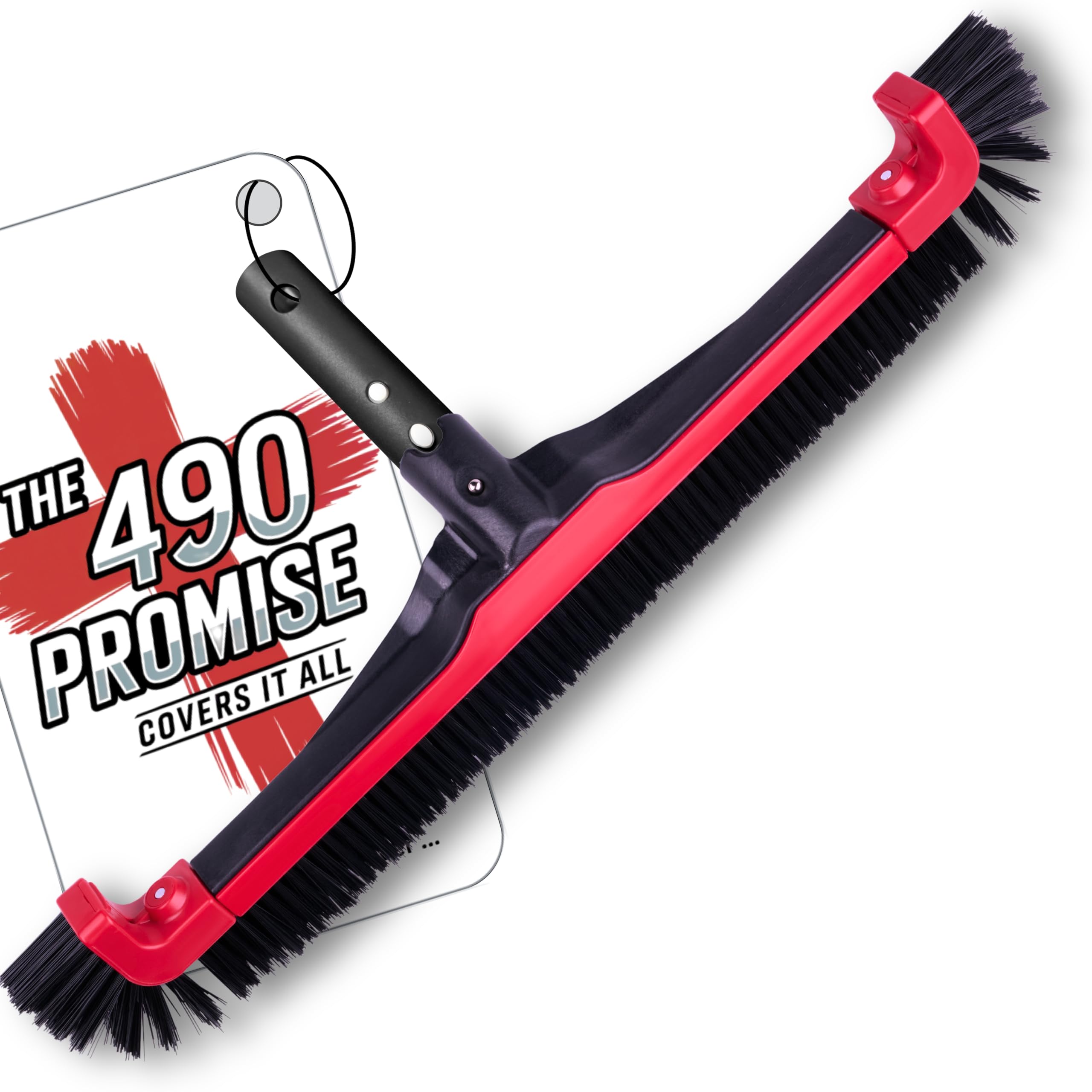
A rugged 22-inch brush head built for speed and heavy-duty scrubbing that covers a lot of surface in fewer passes and is backed by a lifetime warranty.
Why I picked it: I picked it for maximum coverage and brute durability when I need to tackle large areas fast.
Best for: Large pools, heavy algae, frequent maintenance where coverage matters.
A higher-priced, durable option built to last many seasons.
Pros
- Extra-wide 22-inch coverage
- Sturdy bristles handle algae
- Resists bending and warping
- Lifetime warranty included
Cons
- Heavier and harder to push
- Higher upfront cost
My take
When I need to brush the whole pool quickly, the 22-inch ProTuff head shaves off serious time. One pass covers what smaller brushes need two or three strokes to accomplish.
The bristles are stiff enough to tackle persistent algae and built to withstand frequent chemical exposure. It does require more arm work to move through the water—expect to use it with a solid pole and be ready for the extra resistance.
Given the lifetime warranty and construction, I view this as a long-term tool rather than a seasonal throwaway.
7. Dolphin Nautilus CC Supreme Robotic Pool Cleaner – Best Robotic Cleaner
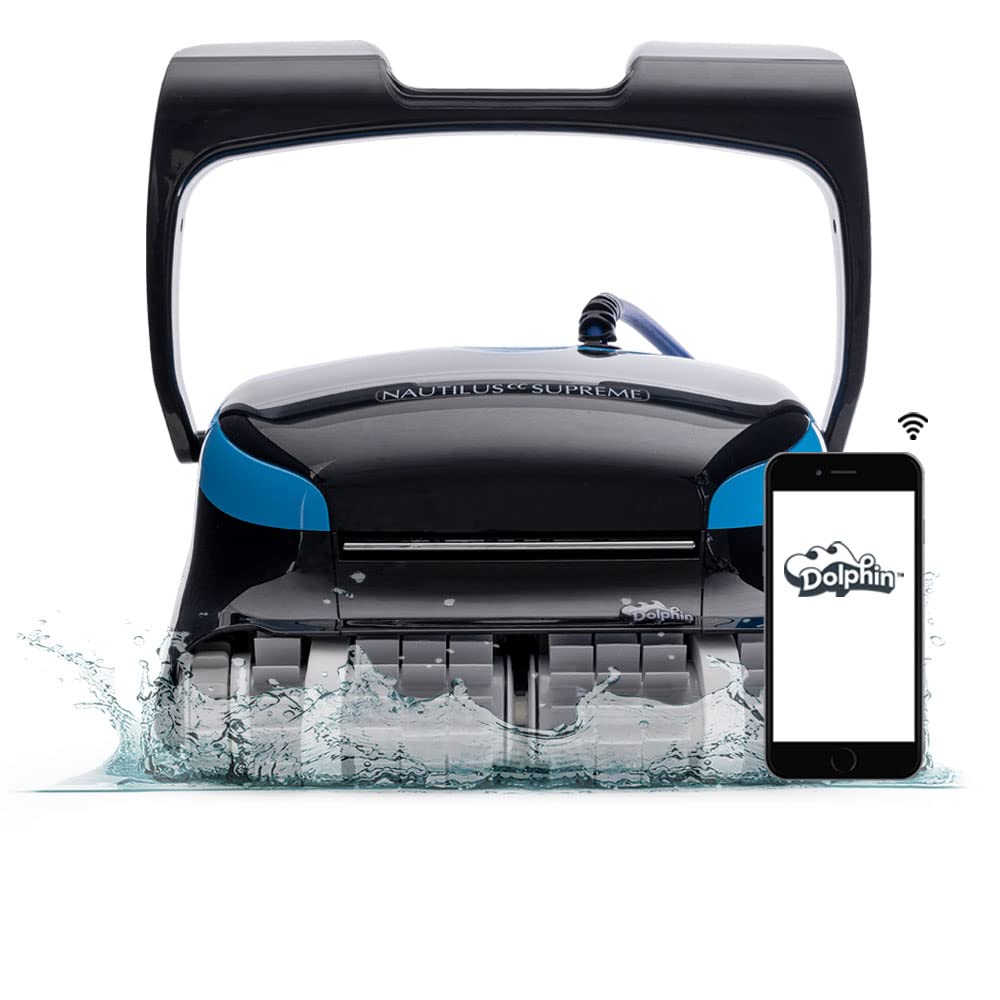
A Wi‑Fi connected robotic cleaner with active scrubbing, waterline cleaning, and agile navigation that automates most of the manual brushing work.
Why I picked it: I picked this robot because it automates scrubbing and waterline work, saving me hours of manual brush time.
Best for: Owners who want a set-and-forget solution for in-ground pools up to 50 feet.
A premium automated option that replaces regular manual scrubbing work.
Pros
- Automates scrubbing and vacuuming
- Waterline and wall scrubbing
- Wi‑Fi scheduling and app control
- Top-load filter is easy to clean
Cons
- High upfront cost
- Occasional Wi‑Fi or app quirks
My take
When I swapped lengthy brushing sessions for the Dolphin Nautilus CC Supreme, I immediately reclaimed hours each week. I drop it in, schedule a run from the app, and it handles walls, floor, and the waterline far better than a passive suction cleaner.
The active scrubber bristles are gentle on most surfaces but aggressive enough to lift trapped grime. The app gives me scheduling flexibility and status updates, although I did experience a few connectivity hiccups depending on my home Wi‑Fi setup.
This isn't a cheap gadget, but for the time it saves and the consistency of cleaning, it earned its place in my maintenance routine—especially on pools where I want near-daily upkeep without manual labor.
How I Choose Pool Brushes and Cleaning Tools
Brush types and when I use them
I separate brushes into five practical types: drill attachments for spot power-scrubbing, small wire/algae brushes for hard surfaces, nylon brushes for liners and painted finishes, extra-wide heads for coverage, and robotic cleaners for automation.
Match the brush to the surface: stainless-steel or stiff bristles for gunite/concrete, nylon for vinyl and pebble finishes, and powered attachments for grout or heavily soiled hardware.
- Drill attachments — Great for grout, drains, and tough spots.
- Wire/algae brushes — Use only on hard, unlined pools.
- Nylon brushes — Best choice for vinyl and delicate finishes.
- Extra-wide heads — Save time on large surface areas.
- Robots — Ideal if you want automated daily or weekly maintenance.
Surface compatibility I always check
Before I scrub, I confirm the brush material is safe for the pool finish. Wire and stainless bristles will damage vinyl and fiberglass, so I reserve those for concrete or gunite.
If a brush claims to be liner-safe, I still test an inconspicuous area to make sure it doesn’t snag or leave marks on painted surfaces.
- Gunite/concrete: stainless-steel or stiff nylon works well.
- Vinyl/fiberglass/paint: use soft nylon or rubber-bristled heads.
- Pebbletec/quartz: medium-stiff nylon avoids etching.
Attachment and pole considerations
I confirm the brush head fits my pole before buying. Most standard heads fit 1.25-inch poles, but heavy-duty poles offer better leverage and durability.
If you own a deep pool, invest in a telescopic pole with secure locking. A good pole reduces fatigue and prevents wobble during scrubbing.
- Check pole diameter and clip style.
- Prefer aluminum poles for strength and rust resistance.
- Look for ergonomic non-slip grips for long sessions.
When to buy a robotic cleaner
I consider a robot when I want consistent, hands-off cleaning multiple times per week. Robots handle daily debris and scum buildup, especially in larger pools where manual brushing is time-consuming.
Expect occasional maintenance—clearing filters, managing power cables, or troubleshooting app connectivity—but the time savings are substantial.
- Best for busy homeowners and large pools.
- Look for waterline scrubbing and easy-to-clean filters.
- Check Wi‑Fi compatibility with your home network.
Maintenance tips I follow
Rinse and store brushes out of sunlight to extend bristle life. Check and secure screws or clips before each use.
Rotate brush types seasonally: aggressive brushes for shock treatments and gentler nylon heads for weekly upkeep.
- Rinse brushes after use and let dry.
- Inspect bristles for wear before each season.
- Keep a small wire brush and a nylon head on hand.
Frequently Asked Questions
Can I use a wire or stainless-steel brush on a vinyl pool liner?
No. I avoid wire or stainless-steel brushes on vinyl or fiberglass because they can scratch or tear the liner. For liners I use soft to medium nylon-bristle heads or brushes specifically labeled as liner-safe.
How often should I brush my pool?
I recommend brushing at least once a week for routine maintenance, and more often—two to three times per week—if algae are a recurring problem or after heavy bathers and storms.
Will drill brush attachments damage pool surfaces?
Used with care, drill attachments are excellent for grout, hardware, and tight spots. I avoid using aggressive drill bits on delicate painted or vinyl surfaces and choose softer brush heads when needed.
Do robotic cleaners replace manual brushing entirely?
Robots handle most floor and wall scrubbing, including the waterline, but I still perform occasional manual brushing for corners, steps, and areas the robot can’t reliably reach.
Final Take
Choosing the right brush is about matching tool and surface. I keep a lineup: a powered drill kit for spots, a nylon head for liners, a stiff algae brush for concrete, a wide head for rapid coverage, and a solid pole to tie them all together.
If I had to start with one item, I’d add a good pole and a liner-safe nylon brush—those two choices cover most maintenance tasks efficiently. For anyone who wants to minimize manual work, the Dolphin robotic cleaner is the game-changer despite the higher cost.
With the right tools in hand and a consistent brushing routine, I’ve found pool maintenance becomes quicker, less unpleasant, and more effective.
