
I tested common pool hoses across durability, fit, and ease of installation. These are the hoses I reach for when I need a reliable replacement, a heavy-duty backwash line, or modular vacuum hose sections.
I've spent seasons replacing, cutting, and running every kind of pool hose you can imagine. From short Intex accessory hoses to 100-foot heavy-duty backwash lines and modular vacuum sections, I focused on fit, longevity, and how easy each product makes pool maintenance.
In the list below I explain where each hose shines, the quirks I ran into, and which hoses I keep on hand as spares.
I compared each option by compatibility with common pump sizes, ease of installation, UV and chemical resistance, and how they held up under real use—draining, backwashing, and vacuuming. My priority was hoses that fit without fuss and lasted through sun and chemicals.
1. Intex 1.5″ Accessory Hose — 59″ (2-Pack) – Best Overall
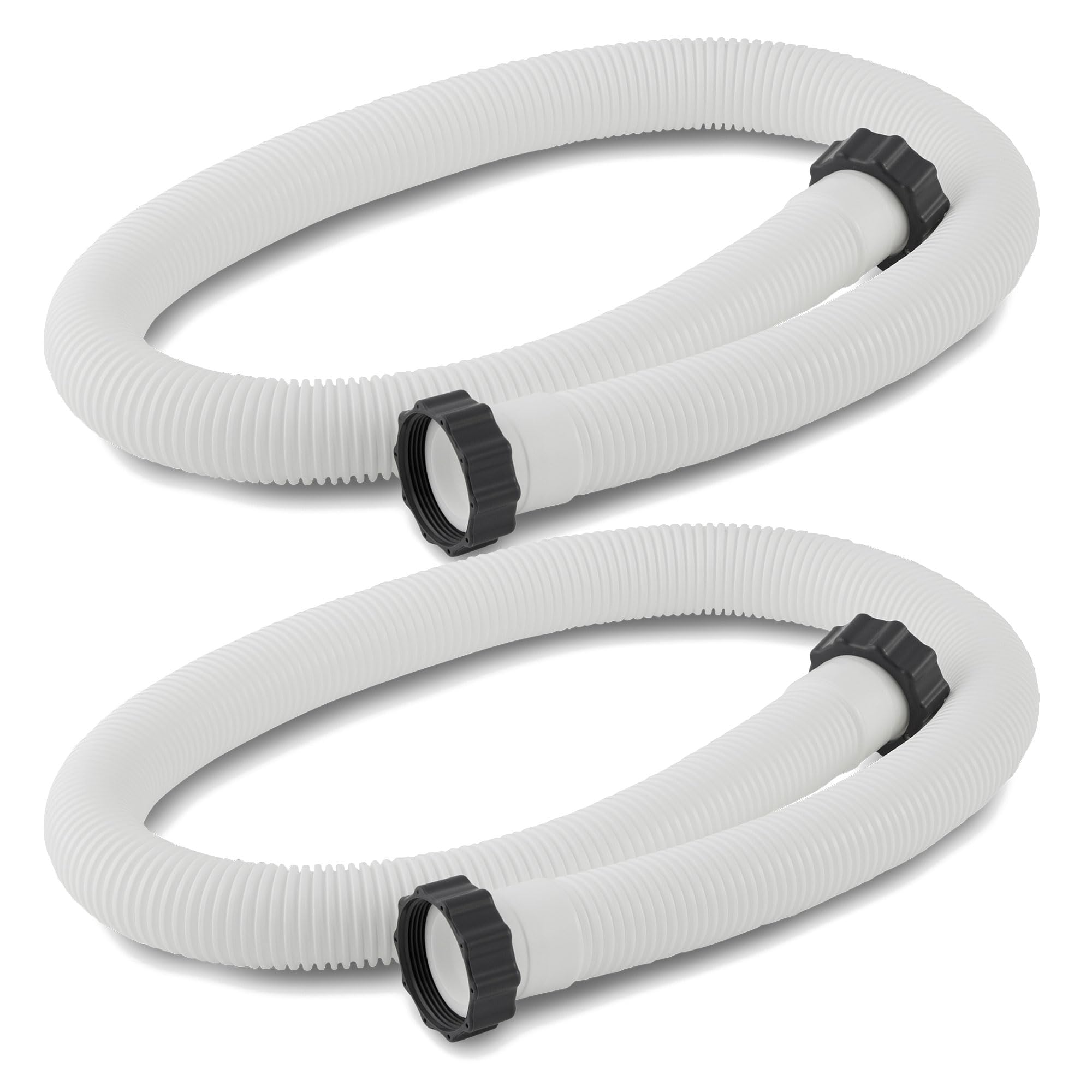
Two 59-inch Intex-compatible hoses with screw-on nuts at both ends; built for 1500 GPH and higher pumps and saltwater systems.
Why I picked it: Straight swap for Intex setups with a spare included.
Best for: Replacing discharge or inlet hoses on Intex and compatible filter pumps.
Affordable two-pack that keeps a spare on hand.
Pros
- Screw-on nuts on both ends
- Correct fit for many Intex pumps
- Spare included in the pack
- Holds up to sun exposure
Cons
- Relatively inflexible
- Fixed 59" length
My take
These two-pack hoses are the ones I reach for when I want a guaranteed Intex fit. The screw-on nuts make installation fast and I rarely need extra tape or sealant.
I installed one on a discharge port for backwashing and the connection stayed dry without re-taping threads. The tubing handled prolonged UV exposure with no visible weakening where I live.
They’re a little stiff compared with thinner aftermarket hoses, which helps keep them from kinking but limits routing options. Having a spare in the pack has saved me when an inlet hose failed mid-season.
2. Intex 1.5″ Accessory Hose — 59″ (1-Pack) – Best Single Replacement
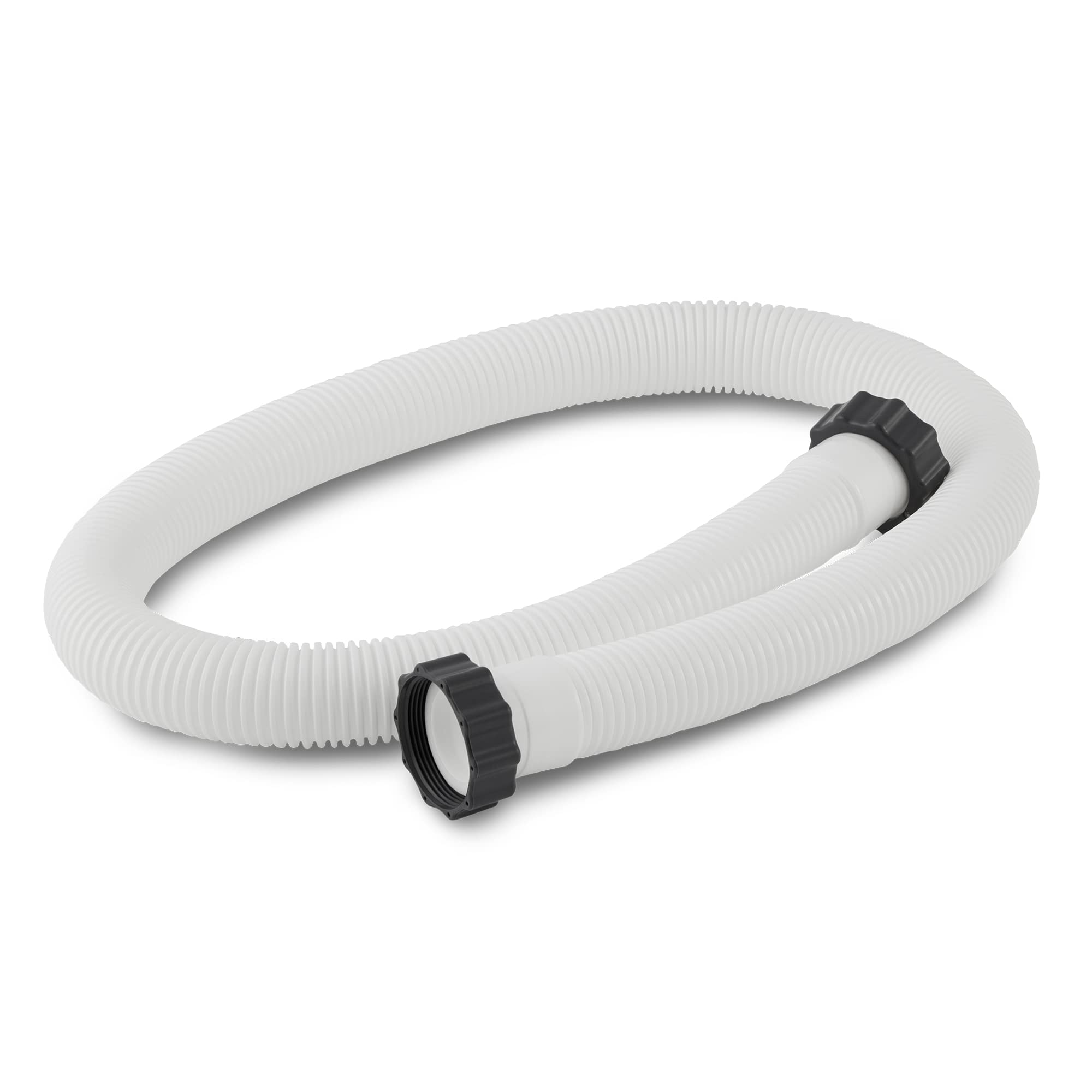
Single 59-inch Intex hose with nuts at both ends; suitable for 1500 GPH and higher pumps and salt systems.
Why I picked it: Good single replacement for extending or repairing original hoses.
Best for: Adding a short extension or replacing one failed hose.
Cost-effective single replacement when you only need one part.
Pros
- Easy screw-on installation
- Works with Bestway pumps too
- Better flexibility than older originals
Cons
- Only one hose in the pack
- Plastic construction can feel pricy
My take
I used this one to extend a pump where the original hose fell short; it threaded on cleanly and held under pressure.
Compared with some older OEM hoses, this felt slightly more flexible and better made. That extra flex reduced stress at a tight connection point and stopped a slow split I had been fighting.
If you find yourself replacing hoses repeatedly, I’ll say this: a single replacement is convenient, but consider whether a pump upgrade that uses larger, sturdier hoses makes more sense long-term.
3. Black Rhino 2″ Backwash Hose — 100 ft – Best Heavy-Duty Backwash
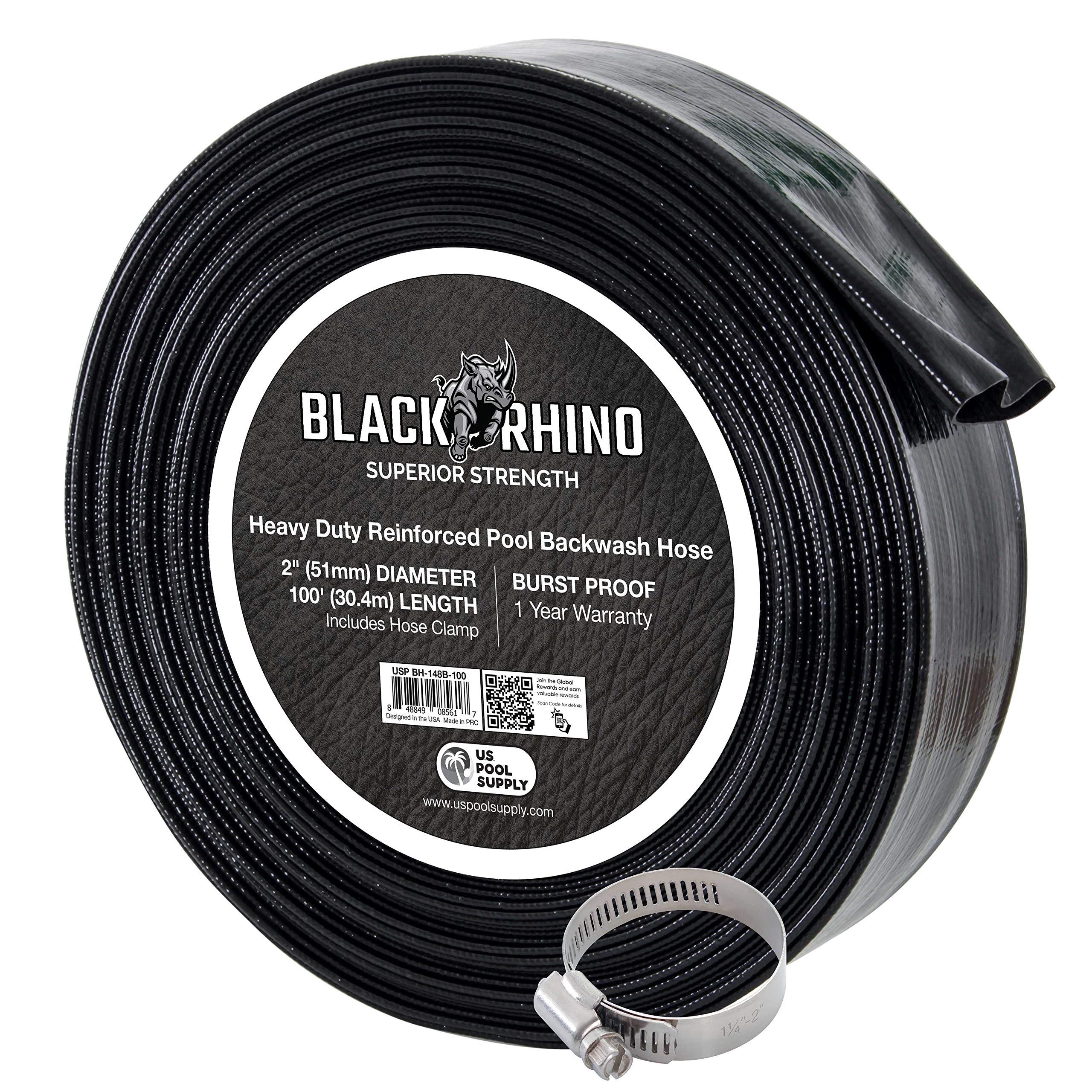
1.2mm wall, fiber-reinforced 2" hose built for high-pressure backwashing and long runs; comes with a metal clamp.
Why I picked it: Unmatched strength and long length for draining and backwash runs.
Best for: Draining pools far from the house and heavy backwash duty.
A more expensive, heavy-duty choice worth the durability.
Pros
- Very burst resistant
- Chemical and weather resistant
- Includes a metal clamp
- Long 100' reach
Cons
- Stiff end needs heating to stretch
- Standard clamp may be tight
My take
When I need to move a lot of water, this is the hose I use. The braided construction takes full-throttle pump use without blowing apart.
Fitting the end over tight adapters can be stubborn; I warm the tip briefly with a heat gun and stretch it on. It didn’t melt or tear and has stayed sealed with my own clamp when necessary.
It’s beefy and not meant for precision routing, but for long-distance discharge and backwash duty it’s been rock-solid.
4. Intex Accessory Hose 1.5″ x 59″ – Best for Intex Systems
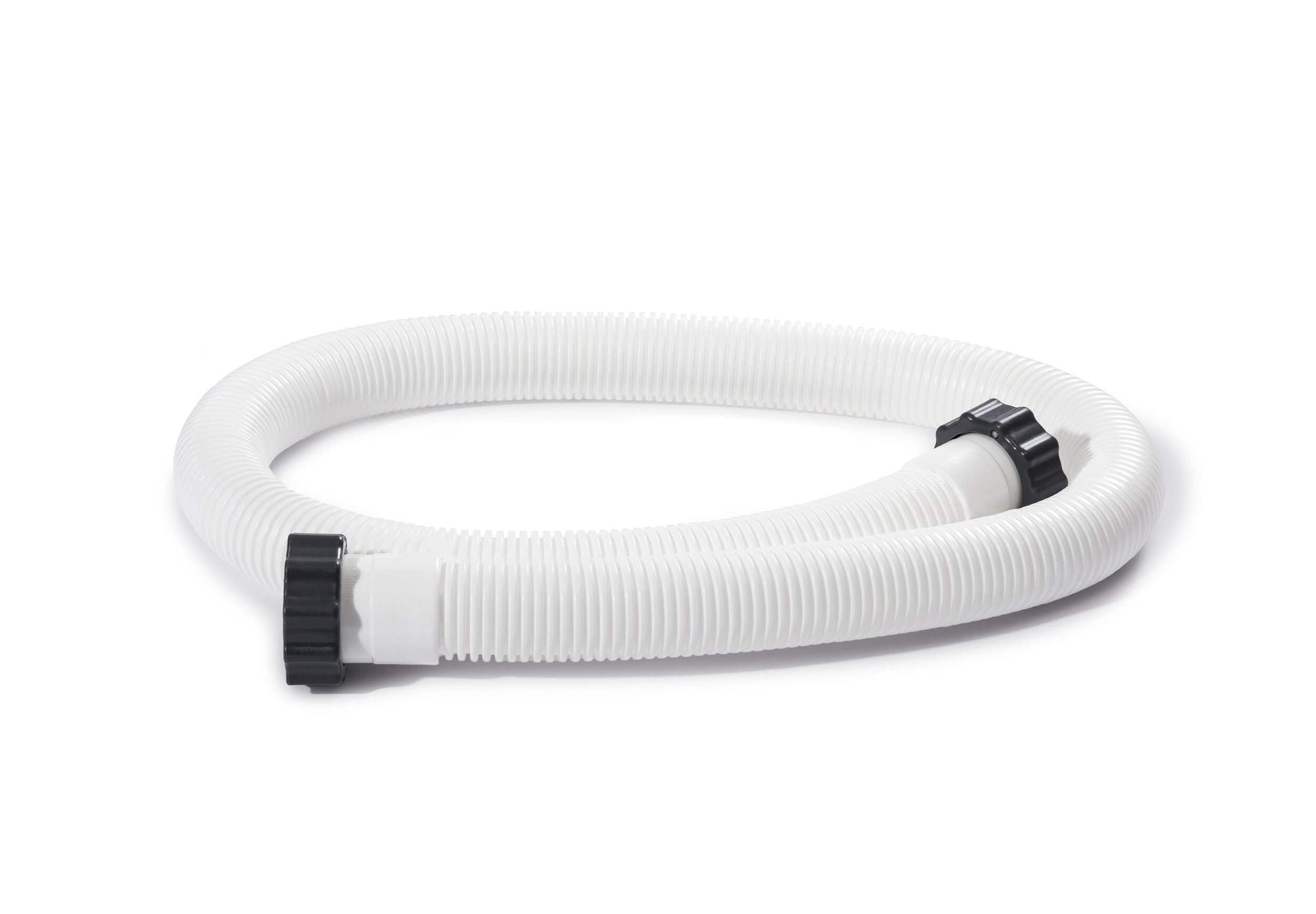
59-inch accessory hose made to replace worn Out Intex filter and equipment hoses; compatible with 1200–4000 GPH pumps and includes couplers.
Why I picked it: Designed to replace OEM lengths and couplers for a clean swap.
Best for: Owners of Intex and soft-sided pools who want a reliable direct replacement.
Affordable and easy to keep as a spare on-hand.
Pros
- Direct replacement for OEM hoses
- Includes couplers
- Durable in regular use
Cons
- Hand-tightening recommended to avoid leaks
- No specialized ends
My take
This hose fixed a short OEM hose on my waterfall kit and let me move the feature further from the pump. The couplers made it a straight swap.
I learned not to over-tighten the nut — slight hand tightening sealed perfectly and prevented leaks that over-torquing caused on other hoses.
After a year in service it still performs well. I keep one or two of these in my parts bin for quick replacements.
5. Poolvio 1.5″ Vacuum Hose Sections — 8-Pack – Best for Modular Vacuum Lines
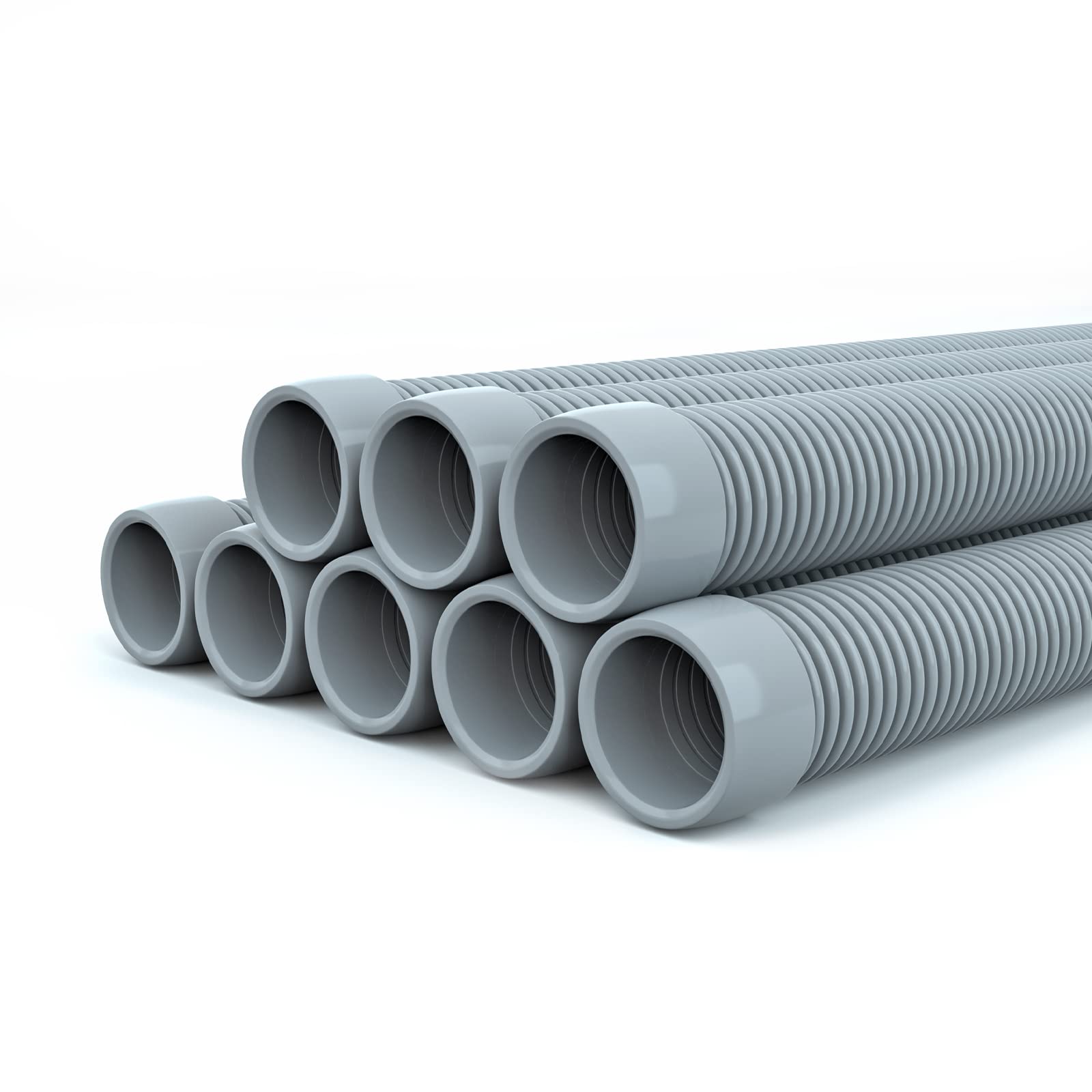
Eight 40" spiral-wound vacuum hose sections (combine up to about 26 feet); male/female ends work with most automatic cleaners.
Why I picked it: Modular sections let me build exactly the length I need for a vacuum.
Best for: Automatic cleaners and manual vacuum setups that need flexible lengths.
Good midrange modular option for customizing hose length.
Pros
- Connects to make custom lengths
- Compatible with many cleaners
- Robust and UV resistant
Cons
- Sections slightly shorter than some originals
- Must purge air for proper suction
My take
I like that these sections snap together to reach the exact length my vacuum requires. When filled with water they stay submerged and work reliably.
Living in a sunny climate, I’ve watched other hoses fade; these held color and showed little UV breakdown after months of constant use.
Small caveat: if a section contains air it will float and kill suction. I make a point of filling each section while connecting and twisting them wet to get a good seal.
6. Poolvio 1.5″ Vacuum Hose Sections — 8-Pack – Best Multi-Pack Spare
Same eight-piece modular set that adapts to both automatic and manual vacuum setups; sturdy spiral-wound construction.
Why I picked it: Great spare set I keep for flexibility across different cleaners.
Best for: Building alternate hose lengths or replacing damaged sections quickly.
Good value when you want multiple interchangeable sections.
Pros
- Makes long runs without kinking
- Strong under higher pump pressure
- Good visual appearance
Cons
- Some pieces a few inches shorter
- Requires correct connection technique
My take
I use these as my go-to spare sections. They’re rigid enough to handle increased pump pressure and flexible enough to route around obstacles.
In one setup I combined sections for a 40' run in the deep end and a shorter run for the shallow end — the connections held and the cleaner maintained suction.
A quick twisting action while wet makes the joints seal. A few pieces were slightly shorter than the originals they replaced, so measure first if exact length matters.
7. Sealproof 1.25″ Filter Connection Hose — 20 ft – Best Cut-to-Length Hose
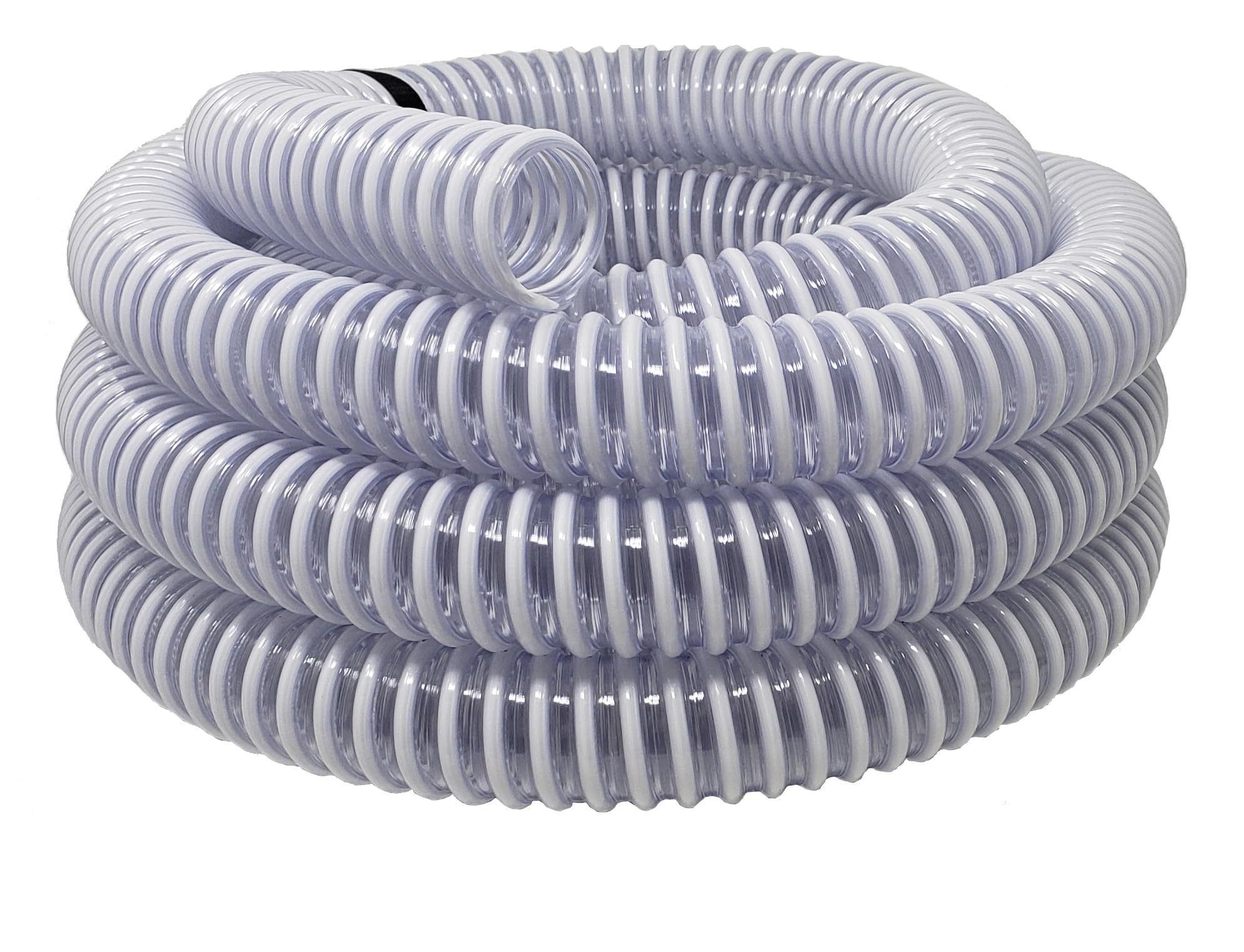
Corrugated, crystal-clear 1.25" hose I can cut to length; BPA-free virgin PVC, made in the USA, includes four worm-gear clamps.
Why I picked it: I value the ability to cut exact lengths and the sturdier material compared with thin OEM hoses.
Best for: Replacing thin OEM 1.25" lines and making custom-length connections.
Premium, American-made hose for a higher quality replacement.
Pros
- Cut-to-length convenience
- Clear tubing for flow monitoring
- Thicker, flexible material
- Includes four clamps
Cons
- Leaves slight oily film sometimes
- Requires a sharp cutter to size
My take
This hose solved my recurring split problems from the thin plastic OEM lines. I cut it to match the original lengths and sealed with the included clamps.
It’s malleable enough to bend without kinking and rigid enough to stay put at connection points, which made installation painless.
The clear material is handy — I can watch the flow and spot air or debris. I did notice a slight oily film initially, so I flushed the hose before final use.
8. TonGass 1.5″ Threaded Hose Cuff — 2-Pack – Best for Repairs
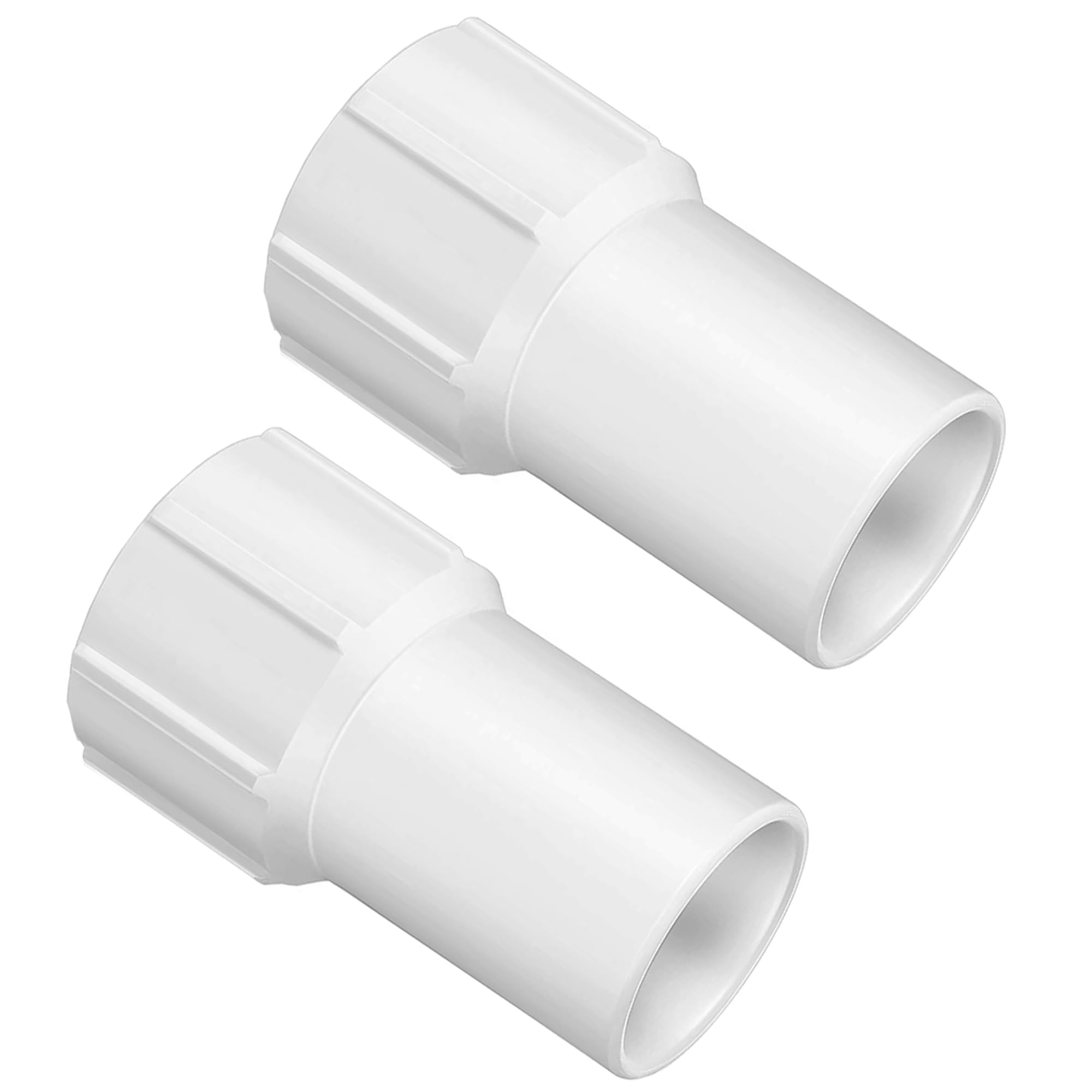
Two threaded ABS hose cuffs that replace cracked ends on spiral-wound vacuum hoses; female internal thread and smooth vacuum-port end.
Why I picked it: Quick, cheap repair that saves buying an entire new hose.
Best for: Restoring suction on vacuum hoses with broken ends.
Low-cost fix that keeps existing hose in service.
Pros
- Screws onto cut hose ends
- Durable ABS construction
- Restores airtight connection
Cons
- Reverse thread can confuse users
- May need lubrication to install
My take
When a hose end split I cut off the damaged section and screwed on one of these cuffs; the repair took ten minutes and restored full suction.
They screw on in the opposite direction of normal threads, so I use a bit of dish soap as a lubricant while twisting to get a smooth, airtight fit.
These cuffs have let me keep hoses that were otherwise perfectly serviceable, which is the kind of inexpensive repair I prefer.
How I Choose and Install Pool Hoses
Sizing and Compatibility
I always match hose diameter to the pump or vacuum inlet — 1.5" and 2" are the most common. If the hose is slightly tight, heating the end makes fitting easier.
When a product lists compatibility with common cleaner models or pump GPH, I confirm the physical diameter and the connector type before ordering.
- Measure inner diameter at the connection point before buying
- Confirm whether your pump expects threaded nuts, smooth cuffs, or spiral-wound fittings
- Check whether the hose length is fixed or modular (sections you can combine)
Material and Durability
For backwash and long runs I choose fiber-reinforced or thicker-walled hoses — they resist burst and chemical exposure far better than thin OEM tubing.
For vacuum lines I favor spiral-wound sections that stay flexible and don’t kink under suction.
- Thicker walls and braided reinforcement = higher burst resistance
- UV- and chemical-resistant materials last longer in pool environments
- Clear hoses let you spot blockages or air in the line
Installation Tips I Use
Warm a tight hose end briefly with a heat gun (no open flame) to slide it over adapters. Don’t overheat — you just want enough pliability to fit.
When joining modular vacuum sections, fill each piece with water and twist while wet to purge air and form a reliable seal.
- Hand-tighten threaded nuts; overtightening can cause leaks
- Use worm-gear clamps on cut-to-length hoses for a leak-free seal
- If a hose end is cracked, replacing the cuff is faster and cheaper than a full hose replacement
When to Upgrade Instead of Replace
If you’re replacing hoses every season because they split at flex points, I recommend considering a pump that uses larger, more robust hoses. Upgrading can save time and frustration.
Keep a couple of spare sections or cuffs on hand — I can usually fix most common hose failures in the garage in under 15 minutes.
- Frequent splits at same point = consider a heavier-duty hose or larger pump
- Keep spare cuffs and modular sections for quick field repairs
Frequently Asked Questions
How do I determine the correct hose diameter for my pump?
I measure the inner diameter of the existing hose or the pump outlet. Common sizes are 1.25", 1.5", and 2". If the fit is tight, warming the hose end makes it easier to slip over the adapter.
Can I cut hoses to the length I need?
Yes — corrugated and cut-to-length hoses are designed for that. I use a razor or fine-tooth saw, then clamp the end with a worm-gear clamp to create a secure seal.
Why does my automatic vacuum lose suction after I connect a new hose?
Most often there’s air trapped in the hose sections. I fill each section with water and twist connections while wet; that usually removes air and restores suction.
Final Take
I keep a small selection of these hoses and fittings in my toolbox: a two-pack Intex hose for quick swaps, a roll of cut-to-length PVC for custom runs, a heavy-duty backwash hose for draining, and modular vacuum sections for cleaning. Between those options I can handle almost any common hose failure or maintenance task quickly and with confidence.
If you want a simple swap for an Intex pump, the accessory hoses are the quickest route. For heavy-duty draining or longer runs, choose the reinforced backwash line. And if a hose end breaks, a threaded cuff is the fastest fix.
