
I tested a range of pool and hot tub maintenance kits — from hose-powered vacuums and replacement cleaner parts to chemical starter kits and winterizing packs — and I’m sharing the ones I reach for when I want clean, sw‑
I’ve worked through a season of pool and hot tub upkeep with everything from simple skimmers to full winterizing kits. In this roundup I focus on practical kits and replacement parts that actually make routine maintenance faster and less frustrating.
I tested each product in real conditions on small above‑ground pools, inflatables, a hot tub, and my yard’s in‑ground system so I could judge usefulness, durability, and how they fit into a maintenance routine.
I compared these kits by hands‑on usefulness, whether they solved a specific maintenance chore (skimming, vacuuming, testing, chemical balancing, winterizing), and how easy they were to use and store. I favored items that are simple to set up and that deliver repeatable, practical results.
1. Intex Basic Pool Maintenance Kit – Best for Small Above‑Ground Pools
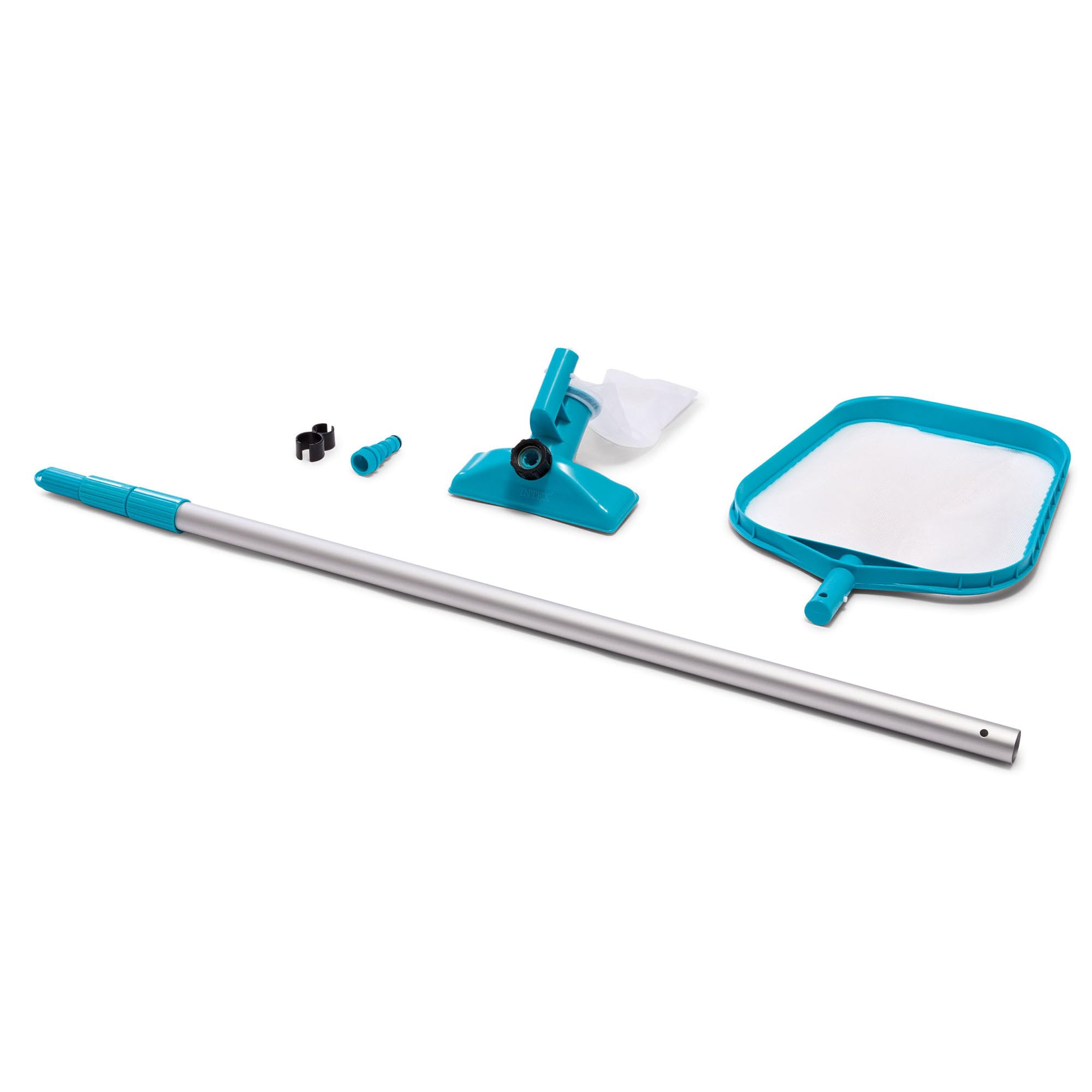
A simple hose‑powered vacuum, surface skimmer, and 94‑inch telescoping pole that made cleaning my small above‑ground pools fast and straightforward.
Why I picked it: Included a vacuum and skimmer that actually remove debris, plus a pole sized for small pools.
Best for: Small above‑ground pools and inflatable pools up to about 16 feet.
Affordable, good value for basic pool care.
Pros
- Hose‑powered vacuum removes settled debris
- Reusable debris bag included
- Surface skimmer with durable mesh
- Telescoping 94‑inch pole
Cons
- Hose refills pool while vacuuming
- Pole not cross‑compatible with some brands
My take
I used the vacuum head on a 10‑ft inflatable and it pulled up sand and grass I didn’t want to dump. Setup was straightforward: snap on the vacuum head, clip the mesh bag, and connect a garden hose. The suction method is clever for small pools because it avoids a pump hookup.
The skimmer’s mesh is fine enough to scoop pine needles and leaves, and the telescoping aluminum pole reached my pool without feeling flimsy. The kit is clearly aimed at 16‑foot and smaller pools, and it works exactly as advertised for that size.
My only real workflow annoyance was the hose running while I vacuumed — the pool level crept up and I had to bail or let kids splash some out. Also, the pole doesn’t always interchange with other tool brands, so I kept the kit’s pieces together.
2. ATIE Wing & Pod Shoe Combo for Hayward Navigator – Best Replacement Parts
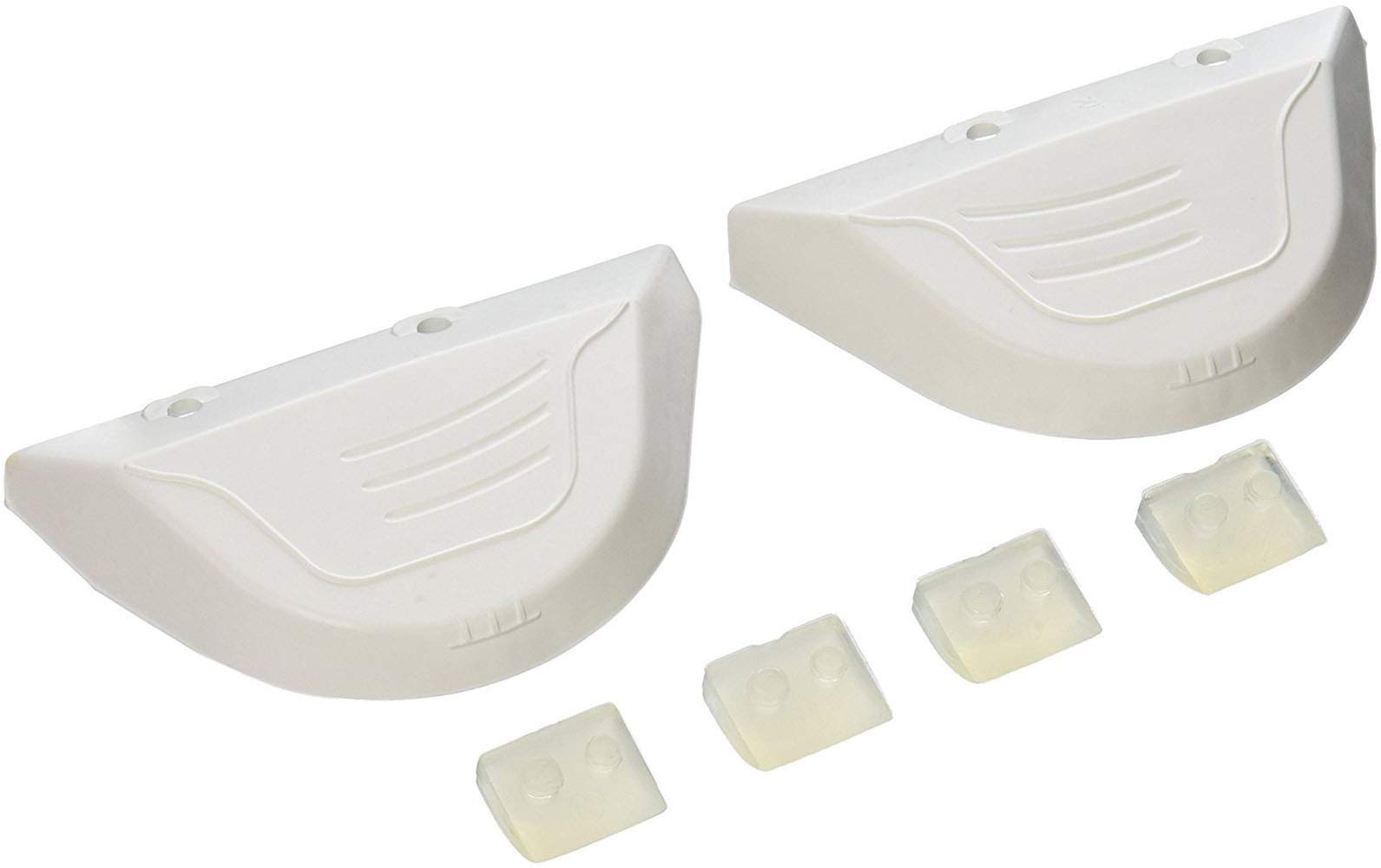
Aftermarket wing kit and pod shoes that restore performance on Hayward Navigator‑series vacuums without a big investment.
Why I picked it: Direct fit replacements that revived my Navigator’s movement and suction.
Best for: Owners of Hayward Navigator, Pool Vac, Pool Vac Plus, and Pool Vac Ultra units.
Cost‑effective alternative to OEM parts for routine maintenance.
Pros
- Direct fit for Navigator series
- Includes left/right wings and 4 pod shoes
- Restores suction and mobility
Cons
- Expendable parts with limited lifetime
- Feet lack OEM wear‑indicator texture
My take
I swapped the wings and pod shoes on a Hayward Navigator that had started to skip and slowed down. The parts clipped in cleanly and matched hole alignment, and the cleaner immediately tracked and gripped better.
These are the spare parts that wear first, so having replacements on hand is part of regular upkeep. The aftermarket quality looked and performed like the originals in my experience, though the pod shoes don’t include an obvious textured wear indicator.
If you keep your vacuum running smoothly without paying OEM prices, this combo is a practical, no‑nonsense fix that gets the job done.
3. Hot Tub Things Chlorine Starter Kit – Best Chemical Starter Kit
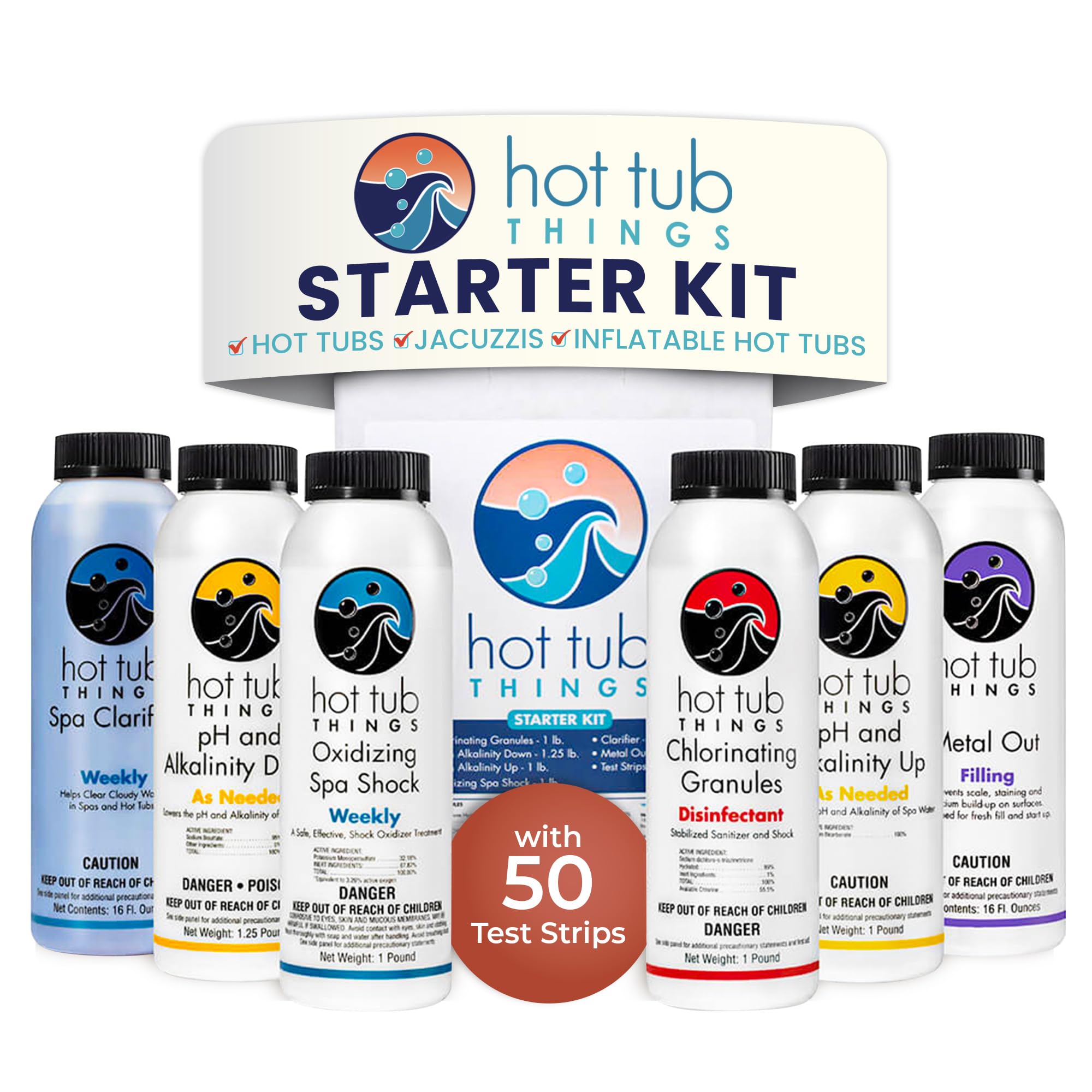
A complete starter set of spa chemicals and a laminated instruction sheet that helped me balance a new hot tub quickly.
Why I picked it: Everything I needed to get water balanced and clear, with clear instructions for ongoing maintenance.
Best for: New hot tub and portable spa owners who want a single starter bundle.
Starter‑sized quantities ideal for setup and short‑term maintenance.
Pros
- Complete set for initial balancing
- Laminated instruction sheet included
- Covers pH, alkalinity, and shock
Cons
- Starter quantities may not last long
- Comes with test strips rather than drop kit
My take
I’m not a water‑chemistry expert, but this kit walked me through startup and weekly maintenance with clear directions on each bottle and a laminated quick‑reference card I could use at the spa-side.
The kit bundles chlorinating granules, pH/alkalinity up and down, oxidizing shock, clarifier, and metal/stain prevention — the set covered every step I needed for the first few weeks. Water clarity improved quickly after treatment.
If you prefer titration (drop) testing over strips, plan to add a drop‑style kit later. Also, the package quantities are geared to startups and occasional maintenance rather than heavy, long‑term use on large systems.
4. AnotherGifts Spa Maintenance Kit – Best Hot Tub Tool Set
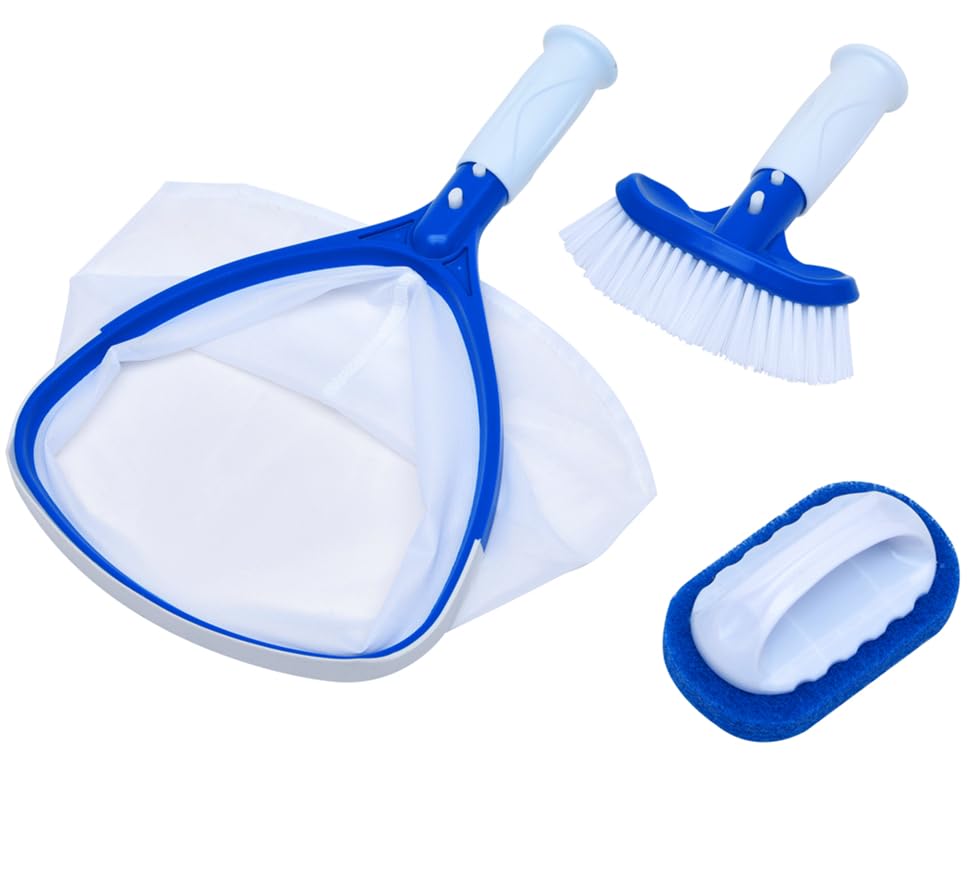
A compact toolset — skimmer, curved brush, scrubber pad, gloves — that sped up regular hot tub and small‑pool cleaning tasks.
Why I picked it: Lightweight, practical tools that fit standard poles and made quick work of scum and debris.
Best for: Hot tubs, inflatable pools, and small above‑ground pools.
Budget‑friendly option for routine cleaning tasks.
Pros
- Fine mesh skimmer with rubber lip
- Curved brush for inner walls
- Scrubber pad for stubborn grime
- Includes rubber gloves
Cons
- Not heavy‑duty for large commercial jobs
- Tool quality is lightweight
My take
I kept this set in my hot tub shed and reached for it most weekends — the net scooped out pine needles and the curved brush made quick work of ring buildup on the walls.
I liked the removable silicone sleeve on the handles because I could hang things to dry and the tools match most standard poles. The scrubber pad is the right shape for scrubbing the lip and the included gloves made handling chemicals less messy.
For regular home maintenance the set is durable enough and very easy to use; if you’re tackling heavy scaling or a large pool, you’ll want a tougher brush, but this kit nails the common jobs.
5. AAwipes 7‑in‑1 Pool Test Strips – Best Test Strips
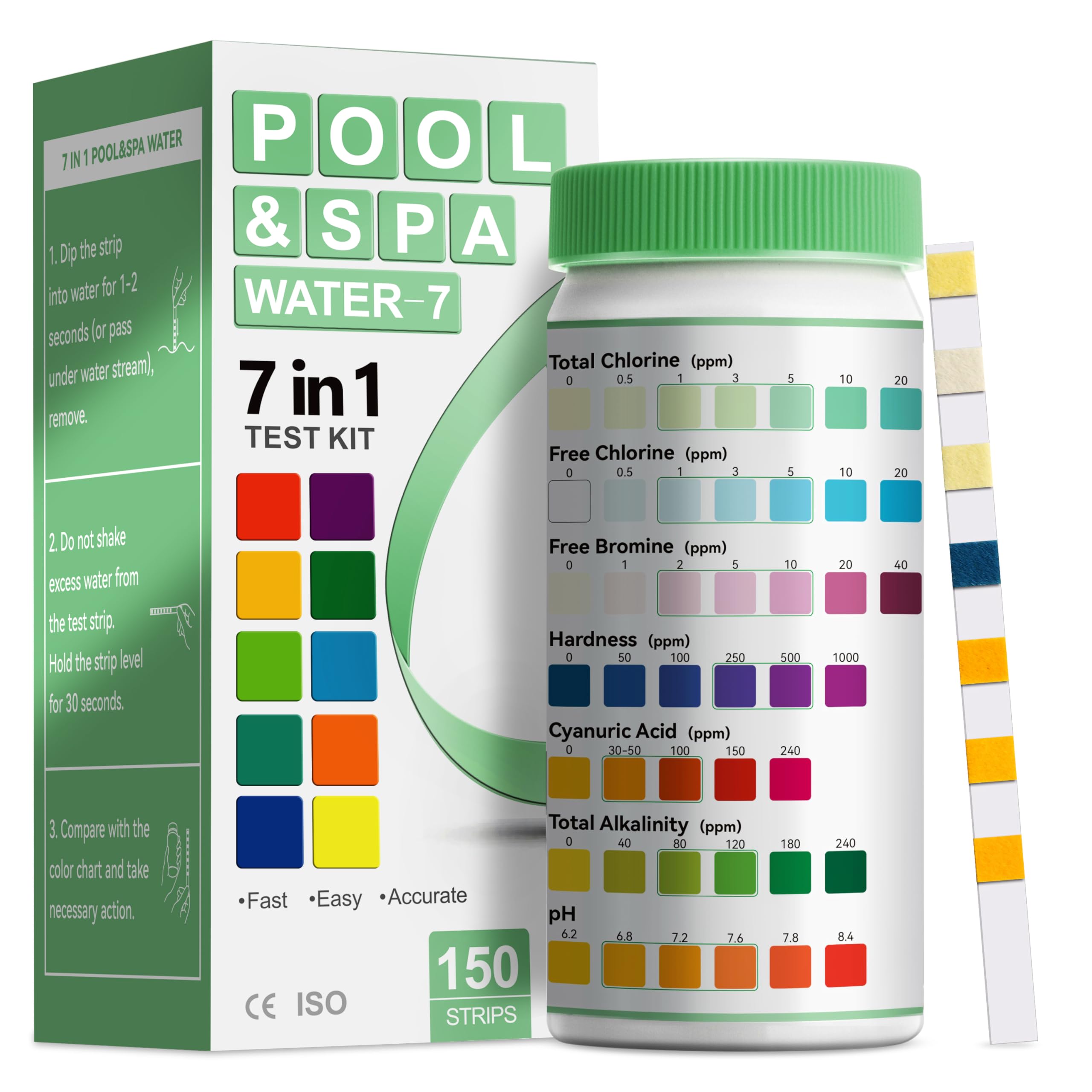
Easy 2‑second dip strips that check pH, chlorine, alkalinity, hardness, CYA and bromine — useful for routine monitoring I do twice a week.
Why I picked it: Fast, comprehensive water checks that help me keep chemistry stable without complicated gear.
Best for: Regular checks for pools, inground systems, spas, and hot tubs.
Generous strip count for consistent testing.
Pros
- Seven parameters in one strip
- Quick two‑second test
- Clear color chart on bottle
Cons
- Must store correctly after opening
- Color matching can be subjective
My take
I dip a strip for two seconds, wait 30 seconds, and I have all the values I need to decide whether to add shock, adjust pH, or leave things alone. That routine saved me a lot of guesswork.
The CYA and hardness checks are a nice bonus compared with basic pH/chlorine strips. I store the bottle away from humidity and keep it tightly sealed to preserve accuracy.
For my use the strips were reliable and quick. If you prefer the absolute precision of lab‑style titration tests, keep a drop kit on hand, but for regular maintenance these strips are a great timesaver.
6. Pool Elevate Winter Closing Kit – Best for Winterizing
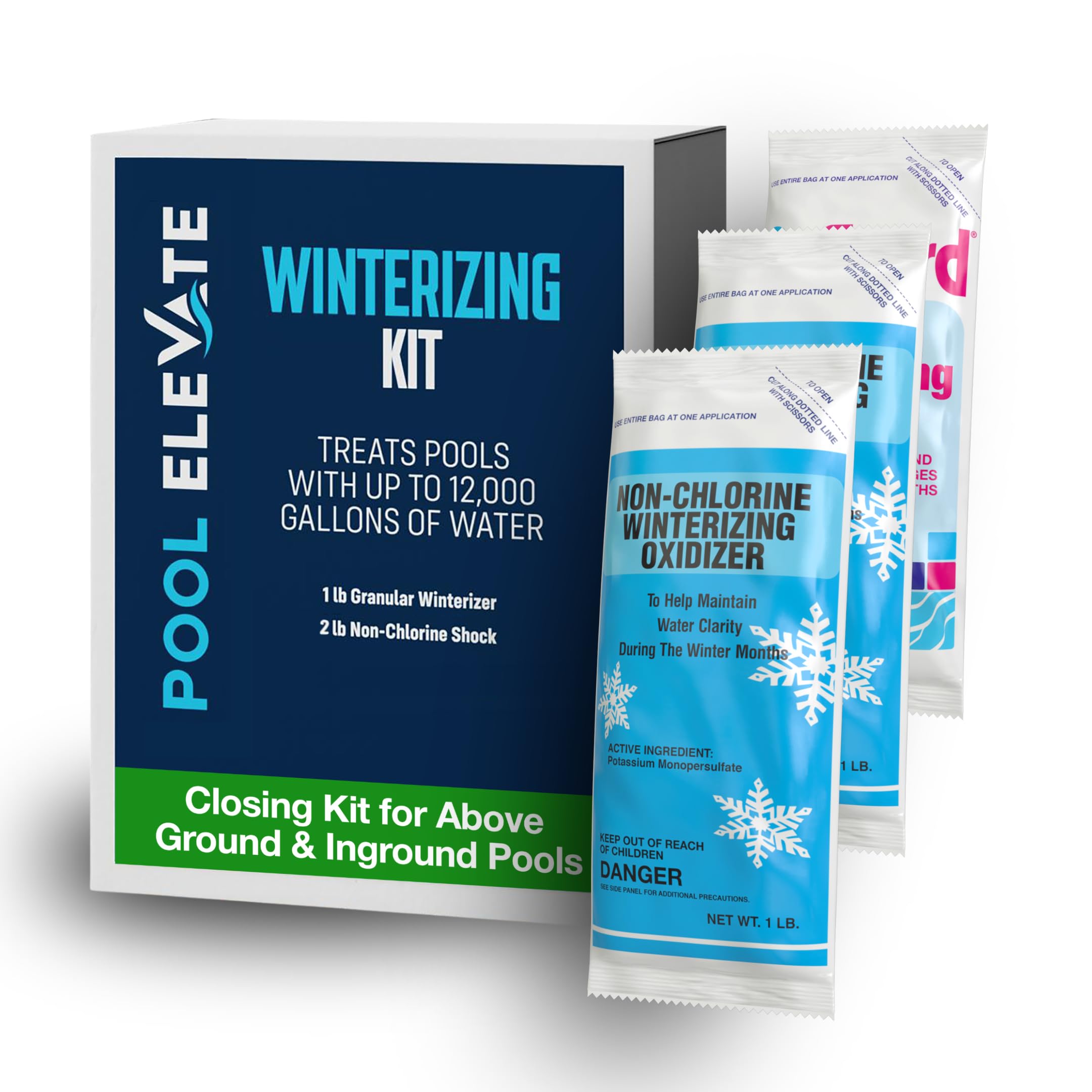
A winterizing bundle designed for pools up to 12,000 gallons that includes shock and granular winterizer and straightforward directions I used twice successfully.
Why I picked it: Everything I needed to close an average‑sized pool and preserve water quality over winter.
Best for: Above‑ground and in‑ground pools up to 12,000 gallons (kit treats accordingly).
Good value versus local shop service and supplies.
Pros
- Formulated winterizing chemicals
- Covers up to 12,000 gallons per kit
- Clear, easy instructions
Cons
- May need multiple kits for very large pools
- Follow‑up check needed in spring
My take
I used the winterizing kit at season’s end and found the instructions easy to follow; the non‑chlorine shock and granular winterizer settled the water and helped keep debris from turning the pool green over winter.
Having two kits available meant I could treat a larger system without improvising. When I reopened the pool after winter, the water was easier to clear than when I’d used other approaches in the past.
For the value compared with paying shop service, this kit was efficient and reliable. I still recommend inspecting the cover and doing a spring check, but the chemicals made the heavy lifting much simpler.
How I Choose and Use Pool Maintenance Kits
Decide whether you need tools, chemicals, or both
I separate maintenance needs into physical cleaning (nets, brushes, vacuums, replacement parts) and water chemistry (test strips, pH/alkalinity adjustments, shock). Pick kits that match the specific chores you actually do.
If you only skim debris once a week, a toolset and test strips will cover most of your work. If you open/close seasonally or run a large pool, prioritize chemical and winterizing kits.
- Tools: skimmer, brush, vacuum head, pole — choose based on pool size.
- Chemicals: starter kits for novices, concentrated supplies for long‑term upkeep.
- Replacement parts: keep expendables (pod shoes, wings) on hand for mechanical cleaners.
Match kit size to your pool
I always check the gallons the kit treats before buying. A starter kit is great for hot tubs and small inflatables; larger pools need larger treatment quantities or multiple kits.
For replacement parts, confirm model fit — aftermarket parts can save money but must match your cleaner model.
- Small pools/hot tubs: starter chemical kits and compact toolsets.
- Large in‑ground pools: buy kits rated for your pool’s gallon capacity.
- Cleaner parts: verify compatibility with your vacuum model.
Testing and timing
I test water chemistry at least twice a week in swim season and before adding shock. Quick test strips are fine for routine checks; use a drop kit when you need precision.
When winterizing, follow the kit directions and wait the recommended time between treatments and cover installation.
- Test pH and chlorine twice weekly during heavy use.
- Shock after heavy bather loads or algae signs.
- Winterize once water and temperature meet kit recommendations.
Storage and safety
I keep chemicals in a cool, dry place out of direct sunlight and in their original containers. Test strips must stay sealed to remain accurate.
Wear gloves when handling concentrated chemicals and follow label instructions for dosing and mixing.
- Seal test strip bottles after each use.
- Store chemicals away from kids and pets.
- Dispose of empty chemical containers per label guidance.
Frequently Asked Questions
How often should I test my pool or hot tub water?
I test pools twice a week during peak season and hot tubs at least twice weekly; more often if the tub sees heavy use or after storms.
Can a hose‑powered vacuum really clean the bottom?
Yes — for small above‑ground and inflatable pools the hose‑powered suction removes settled debris effectively, though it does add some water while running.
When’s the right time to use a winterizing kit?
I close my pool once daytime temperatures consistently fall and the kit instructions say to treat and cover; treating too early can be wasted, too late invites algae growth.
Final Take
I picked these kits because each solved a real maintenance pain — from inexpensive replacement parts that restore cleaner performance to starter chemical packs that simplify water balance.
For routine upkeep, I keep a skimmer, a good test strip kit, and a basic chemical starter set on hand. When the season ends, a winterizing kit like the one here prevents headaches come spring.
If you pick based on the specific chores you do and the size of your pool or spa, these kits will make seasonal maintenance far more manageable.
