
I tested six popular pool sweepers to find dependable suction-side cleaners and a portable handheld for spot jobs. Here’s how each performed and which one I reach for depending on the job.
I spend summers keeping pools swim-ready, so I’ve tested these sweepers over weeks in different pools. My goal was practical: reduce manual vacuuming, handle leaves and grit, and avoid constant tinkering.
Across these models I found clear trade-offs: true automatic suction cleaners that cover the floor and walls, and a handheld spot vacuum that replaces a hose and pole for quick touch-ups. I explain where each excels and what I had to tweak to get reliable results.
In my experience the major differences come down to pump requirements, how well a cleaner climbs walls, and how much fussing the unit needs (weights, regulator, diaphragm). If you want an overnight automatic cleaner, pick a suction-side model with the right pump flow; if you only need quick cleanups or steps, the cordless handheld is the fastest solution.
1. XtremepowerUS Premium Automatic Suction Vacuum + Hose Set – Best Value Suction-Side
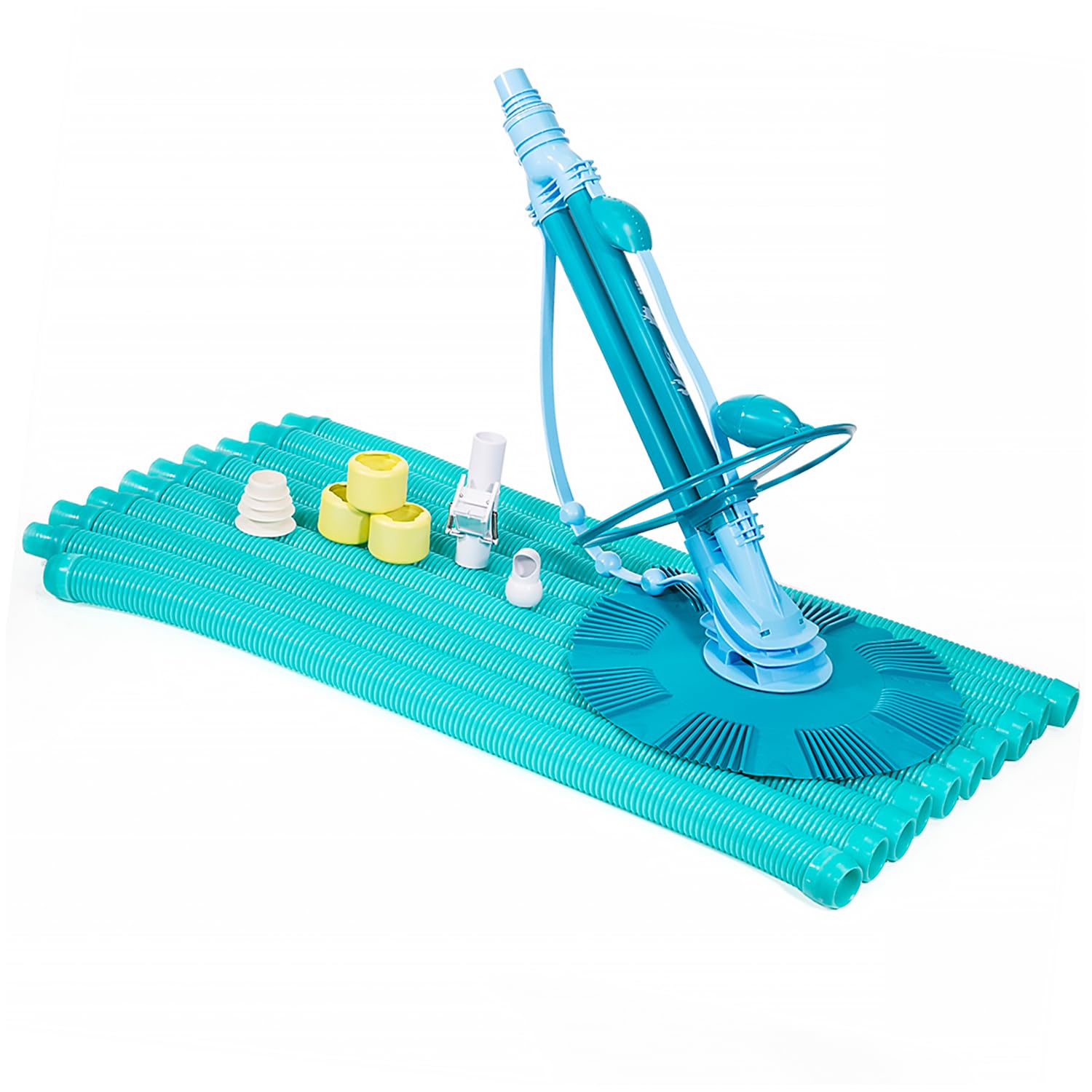
A no-frills suction-side cleaner that gave me strong performance on pool floors and walls when dialed in correctly.
Why I picked it: Great balance of included hoses, wall-climbing ability, and affordability.
Best for: Owners who want a capable automatic cleaner without pool-store pricing.
Very affordable for an automatic suction cleaner.
Pros
- Includes ten hoses for long pools
- Climbs walls and cleans the floor
- Tool-free installation
- No external power needed
Cons
- Doesn't clean stairs
- Needs at least a 1 HP pump
- Can require weight/regulator adjustment
- Occasional suction tuning required
My take
I used this cleaner on a 30-foot setup and appreciated that the kit included enough hose to reach the entire pool without hunting for extras. Once I confirmed my pump met the minimum flow, the cleaner tracked across the floor and up the walls at the expected pace.
Installation was painless — it connects to the filtration line and needs no electricity. Expect to spend a little time adjusting the weights and the regulator so it doesn’t stall or climb too high. When dialed in, it follows varied paths and picks up sand, leaves, and typical debris.
This model won’t handle stairs and it depends on solid pump flow to perform. I found it an excellent value when it was working, but be prepared to tweak plumbing valves and clear your skimmer basket if suction drops.
2. POOL BLASTER Aqua Broom Sweep XL Cordless Rechargeable Vacuum – Best Handheld Spot Cleaner
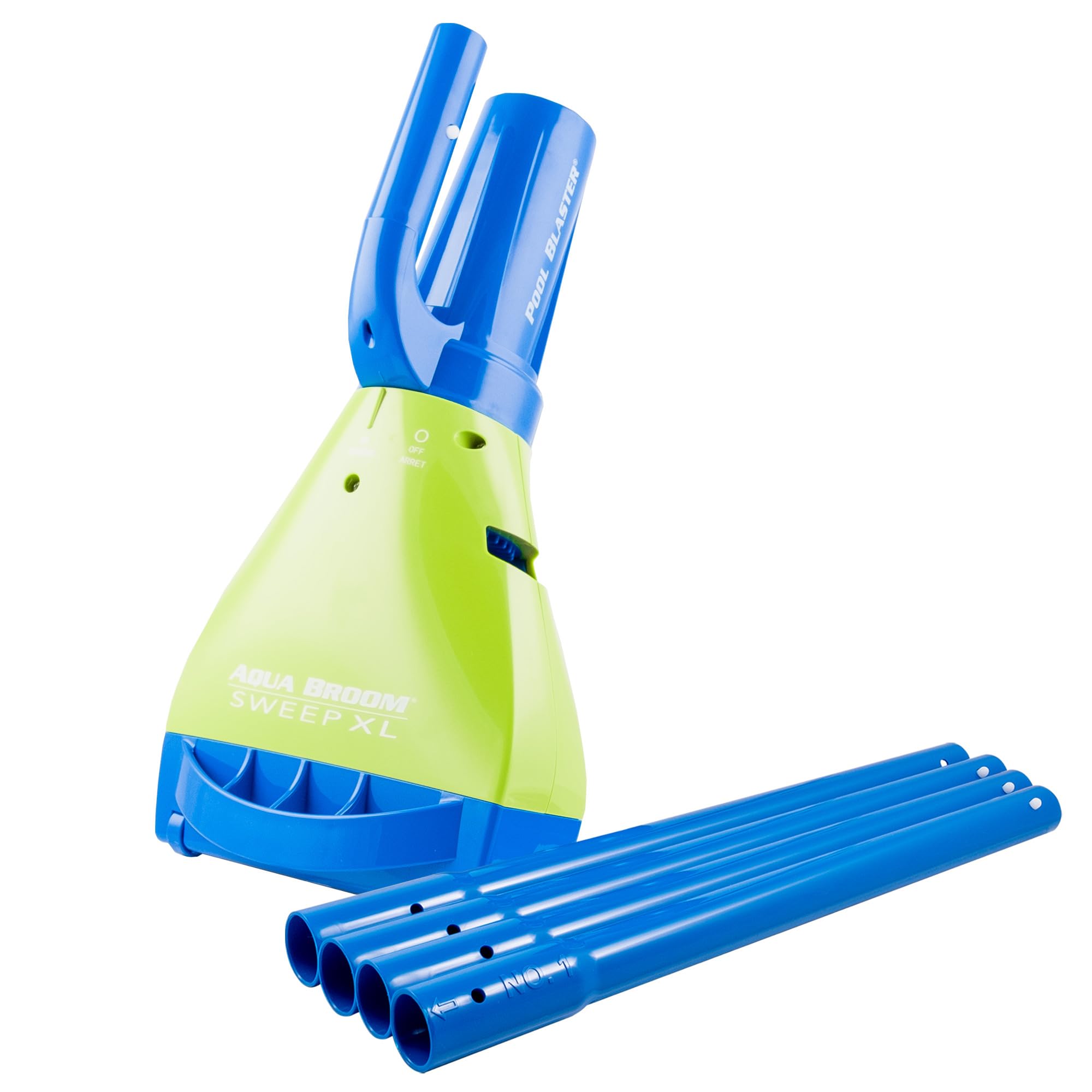
A cordless handheld that’s perfect for quick spot cleaning, steps, and touch-ups without hoses or a pump.
Why I picked it: Cordless convenience with an oversized head and real suction power.
Best for: Fast cleanups, steps, spas, and spots your automatic cleaner misses.
Affordable handheld solution compared with full pool systems.
Pros
- Cordless and portable
- Large vacuum head
- Includes pole and filter bag
- Runs about 40 minutes
Cons
- Not a full-pool replacement
- Build quality is basic
- Limited run time for extended jobs
My take
I kept this in the shed as my go-to between deep cleanings. It slides over steps and corners better than a full-robot because I can direct it precisely where debris gathers.
The XL head and increased capture area mean I picked up fine sand and hair that a traditional suction hose sometimes recirculates. Charging and one-handed operation made it the fastest way to tidy the pool before guests arrived.
It’s not a heavy-duty workhorse — expect plastic parts and routine battery charging — but for spot jobs and small pools it saved me from dragging out hoses and a manual vacuum.
3. VINGLI Pool Vacuum Cleaner Automatic Sweeper with 33FT Hoses – Best Quiet Automatic
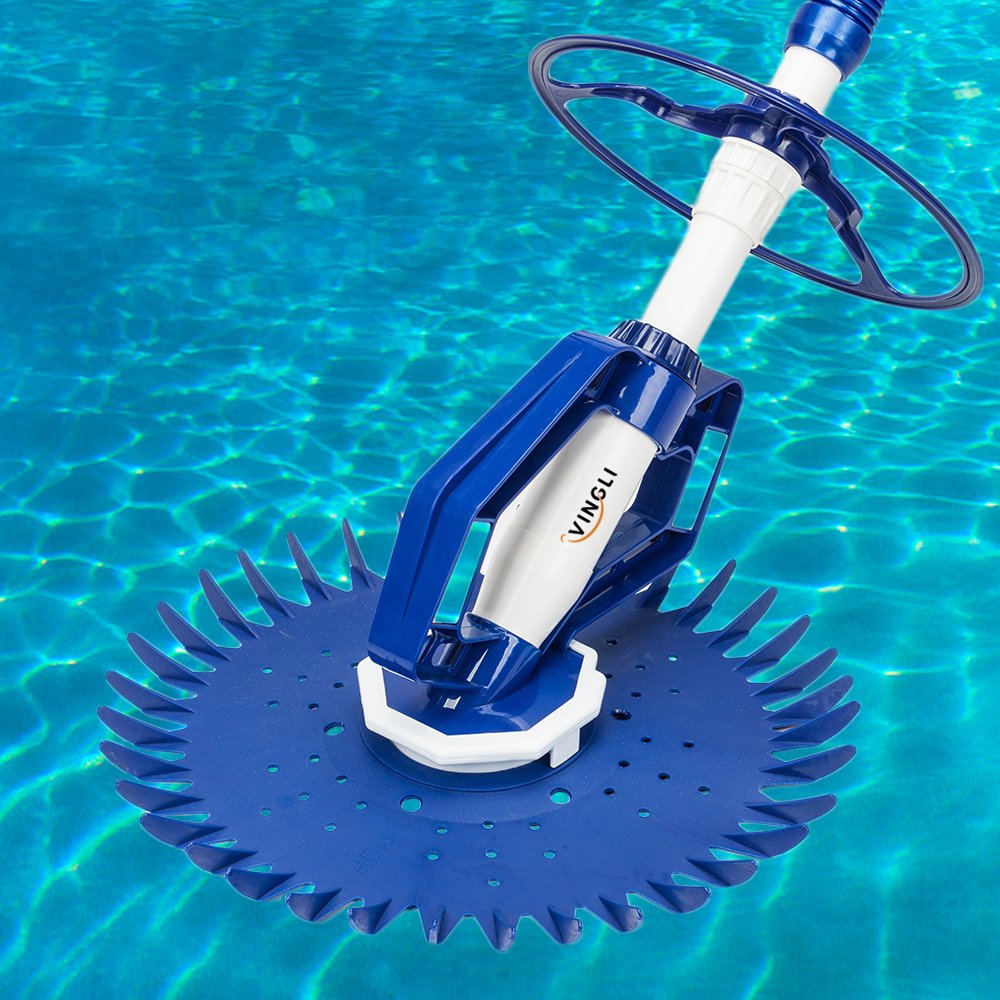
A quiet suction-side cleaner that impressed me with wall-climbing and steady suction when matched with the right pump.
Why I picked it: Quiet operation and steady cleaning path with included hoses.
Best for: Owners who want a low-noise automatic that climbs walls.
Good midrange option for quiet daily cleaning.
Pros
- Very quiet during operation
- Climbs walls effectively
- Includes replacement hoses
- Easy setup
Cons
- Diaphragm parts may need replacement
- Some longevity concerns
- Needs correct pump flow
My take
The first thing I noticed was how quietly this unit runs; it’s much less intrusive than older flapper-style cleaners. That quiet operation made it easy to run overnight without noise complaints.
Performance hinges on pump compatibility — once I confirmed the pump met the minimum flow, the cleaner moved smoothly, negotiating corners with the wheel deflector and keeping the pool floor clear.
I did replace diaphragms over time and treated the hoses carefully, but for the price I found the VINGLI to be an efficient daily cleaner that required less babysitting than expected.
4. VINGLI Pool Vacuum Above Ground/Indoor Outdoor Automatic Cleaner with 33FT Hoses – Best for Above-Ground & In-Ground
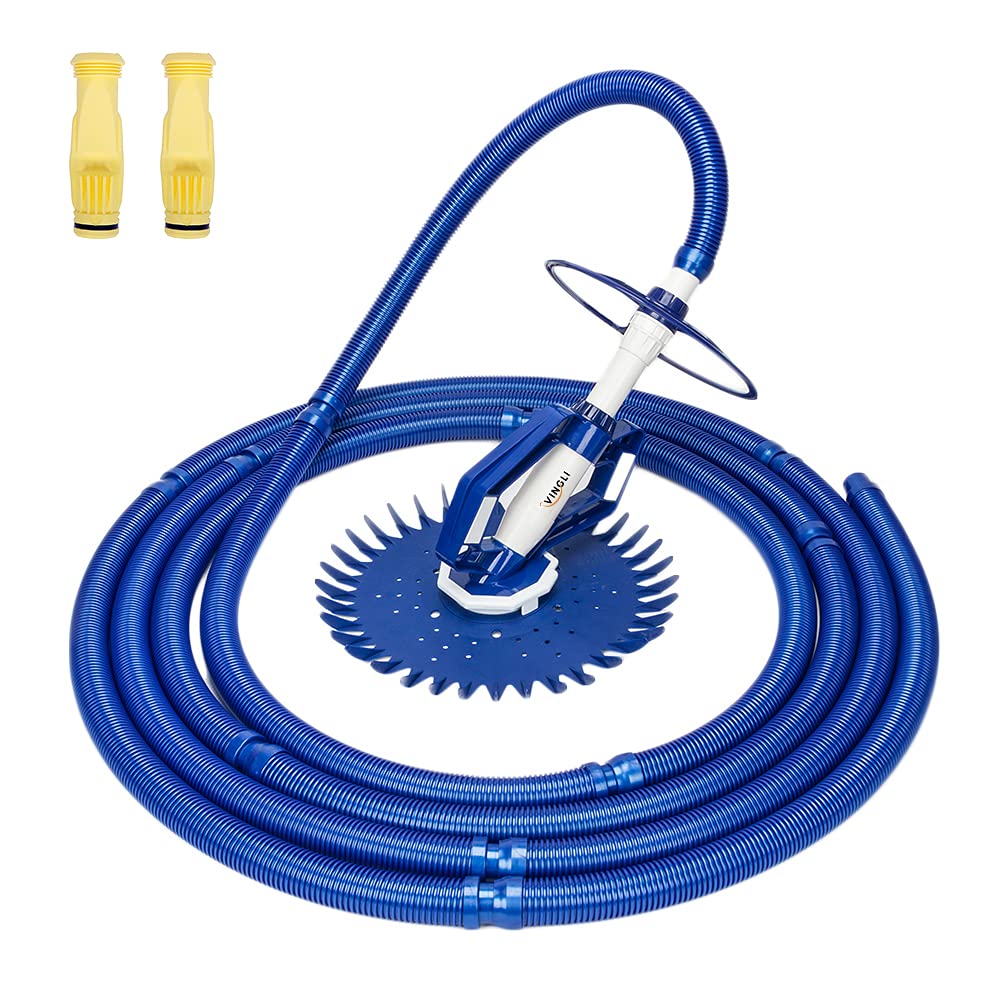
A versatile suction-side unit that works for above-ground and in-ground pools when you tune regulator and weights.
Why I picked it: Solid versatility and quiet performance across pool types.
Best for: Mixed-use pools and owners who need adjustable performance.
Competitively priced for flexible pool compatibility.
Pros
- Works on above-ground and in-ground pools
- Comes with ten replacement hoses
- Quiet, low-noise operation
- Adjustable weights and regulator
Cons
- Some plastic parts feel fragile
- May need skimmer adapter tweaks
- Occasional replacement parts required
My take
I liked how quickly this unit assembled and how adaptable it is to different pool setups. Adjusting the weights and the regulator made a real difference in pathing and how often it lost prime.
A few installation quirks showed up for me — certain skimmer connections are short and needed a small plumbing tweak — but those were fixable with basic hardware parts. The cleaner handled walls and corners well after that.
Durability varies; I swapped in a new diaphragm and noticed improved performance. The company’s replacement parts and warranty made it a practical choice for pools that need a flexible cleaner.
5. U.S. Pool Supply Octopus Suction Pool Cleaner with Hose – Best for Heavy Debris
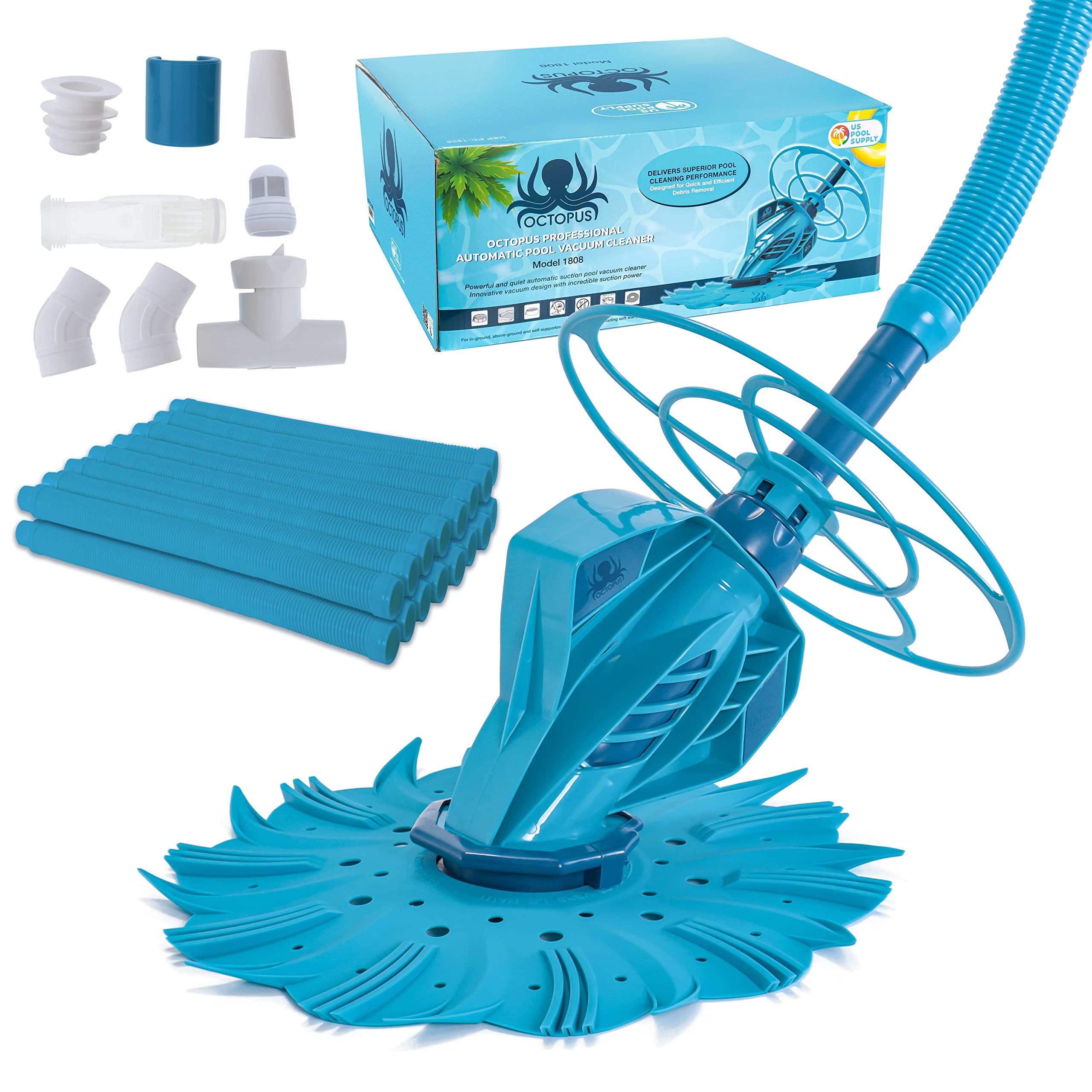
A more professional-feeling suction cleaner with strong suction, a deflector wheel that avoids getting stuck, and a thicker hose bundle.
Why I picked it: Powerful suction and a deflector that keeps it moving around obstacles.
Best for: Pools with heavy debris, leaves, and frequent windblown dirt.
A slightly higher-end suction cleaner for heavier workloads.
Pros
- Strong suction power
- Quiet diaphragm design
- Deflector wheel reduces snags
- 33 feet of premium hose
Cons
- Some reports of parts failing
- Skimmer adapter may need modification
- Not immune to wear
My take
I brought this cleaner in when my pool was taking on a lot of wind-blown debris. It clears heavy leaf loads and algae clumps faster than the lighter-duty suction cleaners I tried.
The diaphragm approach eliminates hammer noise and the deflector wheel genuinely reduced hang-ups on ladders and steps. Hose quality felt thicker and more robust during use.
Installation was straightforward, though I did tweak the skimmer adapter for a snugger fit. Over time the unit needs routine checks, but it handled heavy-duty cleaning better than the lower-cost options.
6. VINGLI Automatic In-Ground Suction-Side Climb Wall Pool Sweeper – Best for Easy Setup
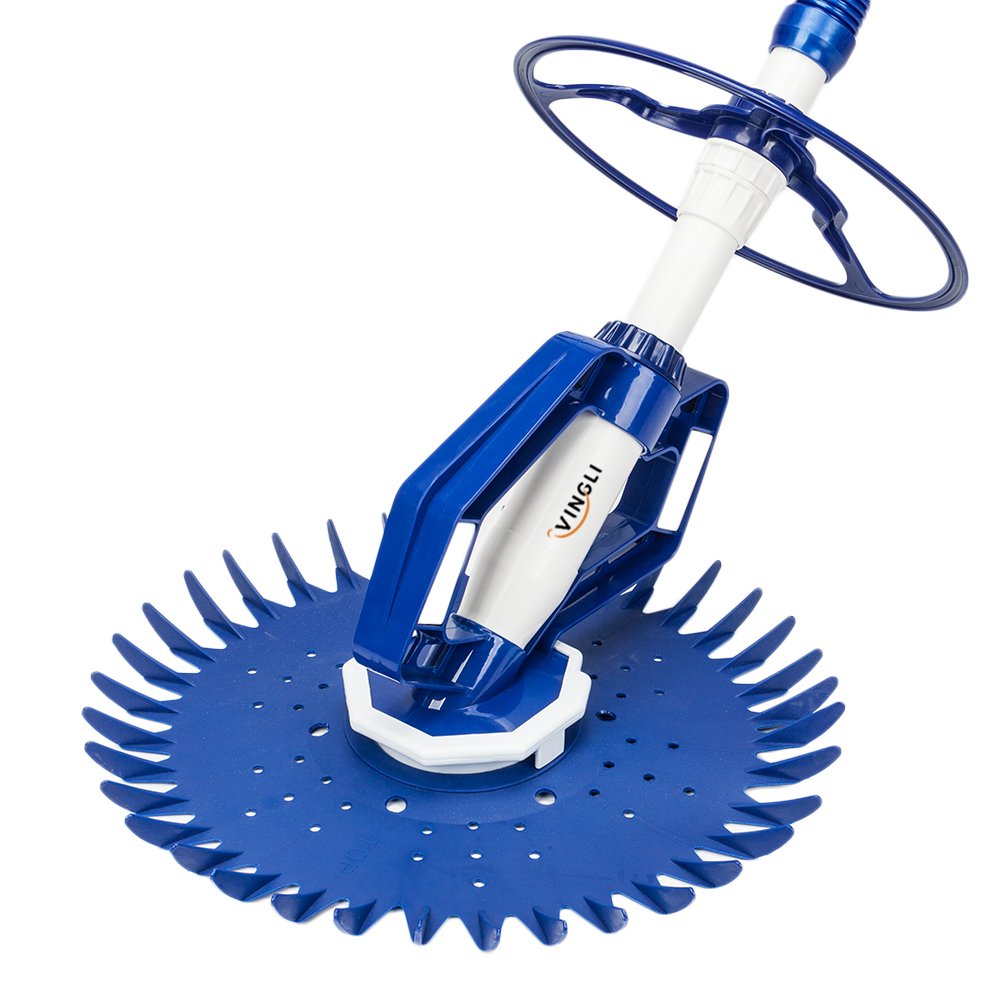
A straightforward suction-side cleaner that set up quickly and worked well on lower pump speeds when valves were adjusted.
Why I picked it: Fast setup and good low-flow performance.
Best for: Owners who want an out-of-the-box working suction cleaner.
Reasonably priced with easy installation.
Pros
- Simple, fast setup
- Quiet operation
- Runs on lower pump speeds
- Ten replacement hoses included
Cons
- Diaphragm longevity is limited
- Hose length may not reach all pools
- Plastic connectors can be weak
My take
I had this unit running within minutes and appreciated that it cleans well without needing a high-powered pump. It climbed walls and handled typical debris once I isolated the vacuum line and closed other returns.
My main tuning work was valve balancing and making sure all air was purged from the hoses. After that it maintained a reliable cleaning pattern and saved me routine manual vacuuming.
Expect to replace diaphragms after extended use and verify your hose length matches your pool layout, but for ease of setup this VINGLI stood out among the suction-siders I tested.
How I Choose a Pool Sweeper
Type of cleaner
I start by deciding whether I need a full automatic cleaner or a portable handheld. Automatic suction cleaners handle whole-pool jobs; handhelds are perfect for steps and quick spot-cleaning.
If you want overnight cleaning with minimal intervention, go suction-side. If you’re after speed and convenience, choose a cordless handheld.
- Automatic suction: best for floors and walls
- Handheld cordless: best for steps, corners, and quick touch-ups
- Robots (not covered here): best for independent filtration and advanced navigation
Pump flow and compatibility
I always check the pump minimum flow listed for a suction cleaner. Underpowered pumps mean poor movement and incomplete cleaning.
If your pump is marginal, choose a cleaner that lists a lower minimum flow or use a booster pump.
- Confirm minimum HP or GPH before buying
- Close other return lines to maximize vacuum flow
- Adjust regulator/weights to stabilize movement
Installation and tuning
I budget time for initial setup: connecting hoses, purging air, and tuning weights and the flow regulator.
A small amount of fiddling up front prevents lost prime and keeps the cleaner running on an efficient pattern.
- Dip hose ends in water to seat connections
- Purge air from the line to avoid losing prime
- Move weights incrementally for desired wall climb
Durability and replacement parts
I expect diaphragms, skirts, and plastic connectors to be wear items. I keep spares on hand for low-cost cleaners.
Buy from brands or sellers that provide replacement diaphragms and hoses — it stretches the usable life of an economical unit.
- Check warranty and spare-part availability
- Look for thicker hoses and reinforced adapters
- Budget for periodic diaphragm or skirt replacement
Frequently Asked Questions
Will a suction-side cleaner work with my pump?
I always check the cleaner’s minimum pump requirement against my pump’s specs. If the cleaner requires a specific HP or GPH, match that before purchasing. If your pump is weaker, consider a unit with a lower flow requirement or plan to close other returns to concentrate flow.
Can these cleaners climb pool walls and clean stairs?
Most of the suction-side units I tested climb walls fine, but very few of them reliably clean stairs. If stairs matter, use the handheld for spot-cleaning or choose a unit specifically advertised for steps and confirm in my set-up notes.
How much maintenance do these sweepers need?
From my experience, expect occasional diaphragm or skirt replacement and routine skimmer basket clearing. Hoses and adapters may also need replacement after years in sun and chemicals.
Is a cordless handheld worth it?
Yes—when I use the Pool Blaster handheld, it saves me the time and hassle of setting up hoses for small jobs. It’s not for whole-pool cleaning but it’s invaluable for steps, corners, and quick pre-guest touch-ups.
Final Take
I found dependable options across budgets: a handheld for spot jobs, midrange suction cleaners for quiet daily maintenance, and a more robust unit when heavy debris is regular.
Match the cleaner to your pump and your pool’s trouble spots. If you want my short recommendation: go cordless for steps and small jobs, choose a quiet suction-side for low-noise daily cleaning, and pick the more powerful Octopus-style cleaner when you face heavy leaves or sand.
Whatever you pick, keep spare diaphragms and a small toolkit nearby — a little maintenance keeps these units performing season after season.
