
I tested mechanical, digital, and smart pool timers to find dependable options for lights, pumps, and heaters. Here are the ones I put into regular use and why each stands out.
I spent time installing and using a range of pool timers—mechanical plug‑in units, heavy‑duty digital boxes, Wi‑Fi controllers, and a replacement motor—so I could recommend practical options for real installations.
My approach was hands‑on: I wired box timers, mounted weatherproof enclosures, set daily and weekly schedules, and ran pumps and lights on the programmed cycles to verify performance and ease of use.
Below I explain what worked best for specific tasks (holiday lights, small pumps, high‑current pool motors, and smart automation) so you can pick the right timer for your setup.
If you want simple outdoor scheduling for lights, mechanical timers give reliable, low‑cost control. For true pool equipment I prefer 40A digital boxes (or Wi‑Fi boxes if remote control matters). Heavy‑duty metal enclosures are my pick when weatherproofing and tamper resistance matter most.
1. BN-LINK 24-Hour Mechanical Outdoor Timer – Best Budget for Lights
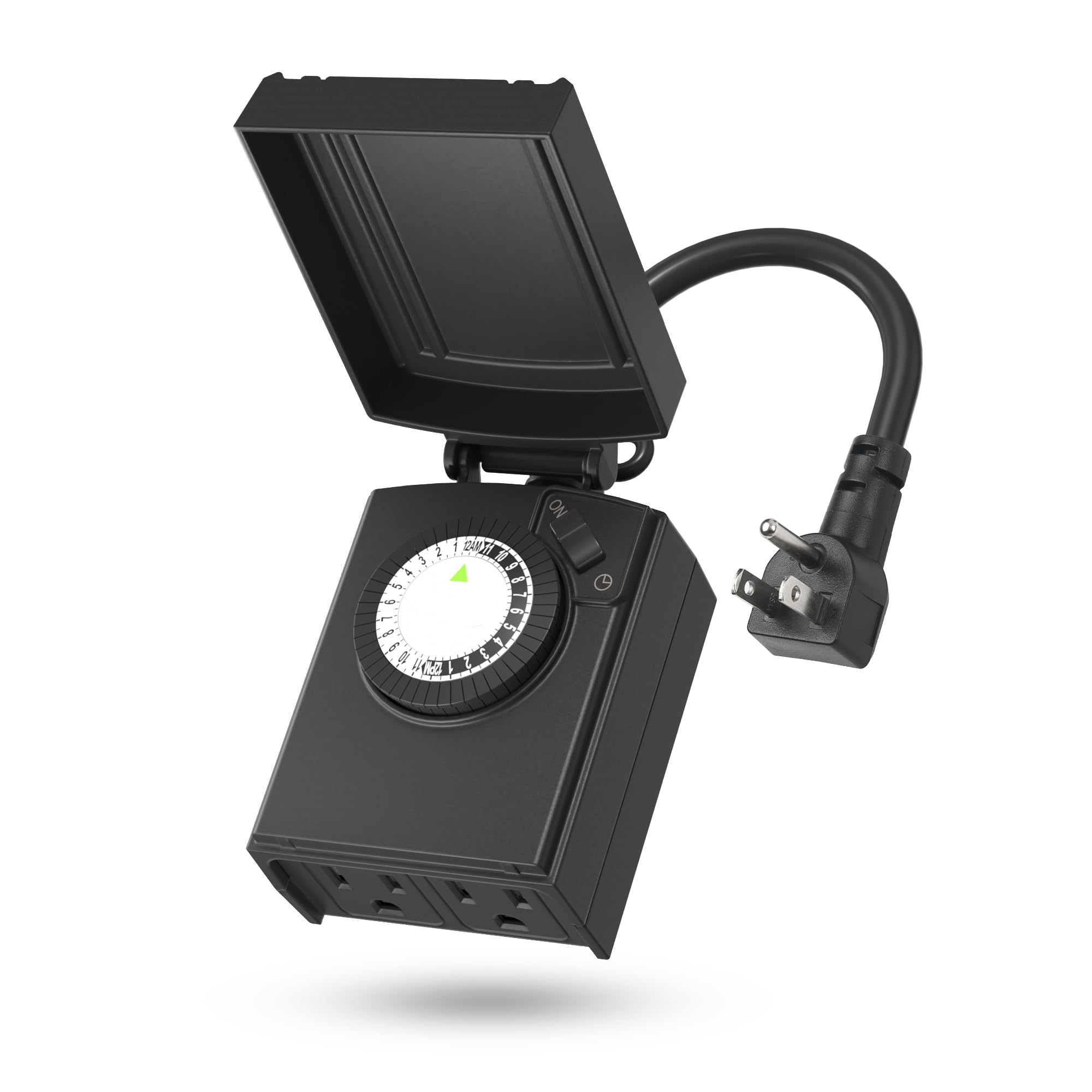
A simple, affordable mechanical timer with 30‑minute increments, a weather cover, and two grounded outlets—great for lights and decorations but not for pool pumps.
Why I picked it: Easy to set, weatherproof cover, great value for outdoor lighting.
Best for: Porch and holiday lights, fountains, yard decorations.
Very affordable budget option.
Pros
- 30‑minute scheduling increments
- Weatherproof protective cover
- Two grounded 3‑prong outlets
- Solid build for basic outdoor use
Cons
- Not rated for pool pumps
- Outlets sit close together
- Short power cord
My take
I used this model to automate my Christmas lights and then moved it to my front porch for year‑round string lighting. The dial setup is straightforward—push the pins for the half‑hour blocks you want on—and the schedule repeats every day without fuss.
The plastic housing and flip cover handled rain and mist during the winter months without water intrusion. The unit is ETL listed and felt solid for its class, though the two outlets are close enough that bulky plugs can block the neighboring socket.
If your goal is to control exterior lighting or decorative features and you want a no‑frills, inexpensive timer, this BN‑LINK delivers dependable performance. I would not use it for a pool pump because it’s not rated for that application.
2. Fosmon 24-Hour Mechanical Outdoor Timer – Best Straight-Plug Mechanical
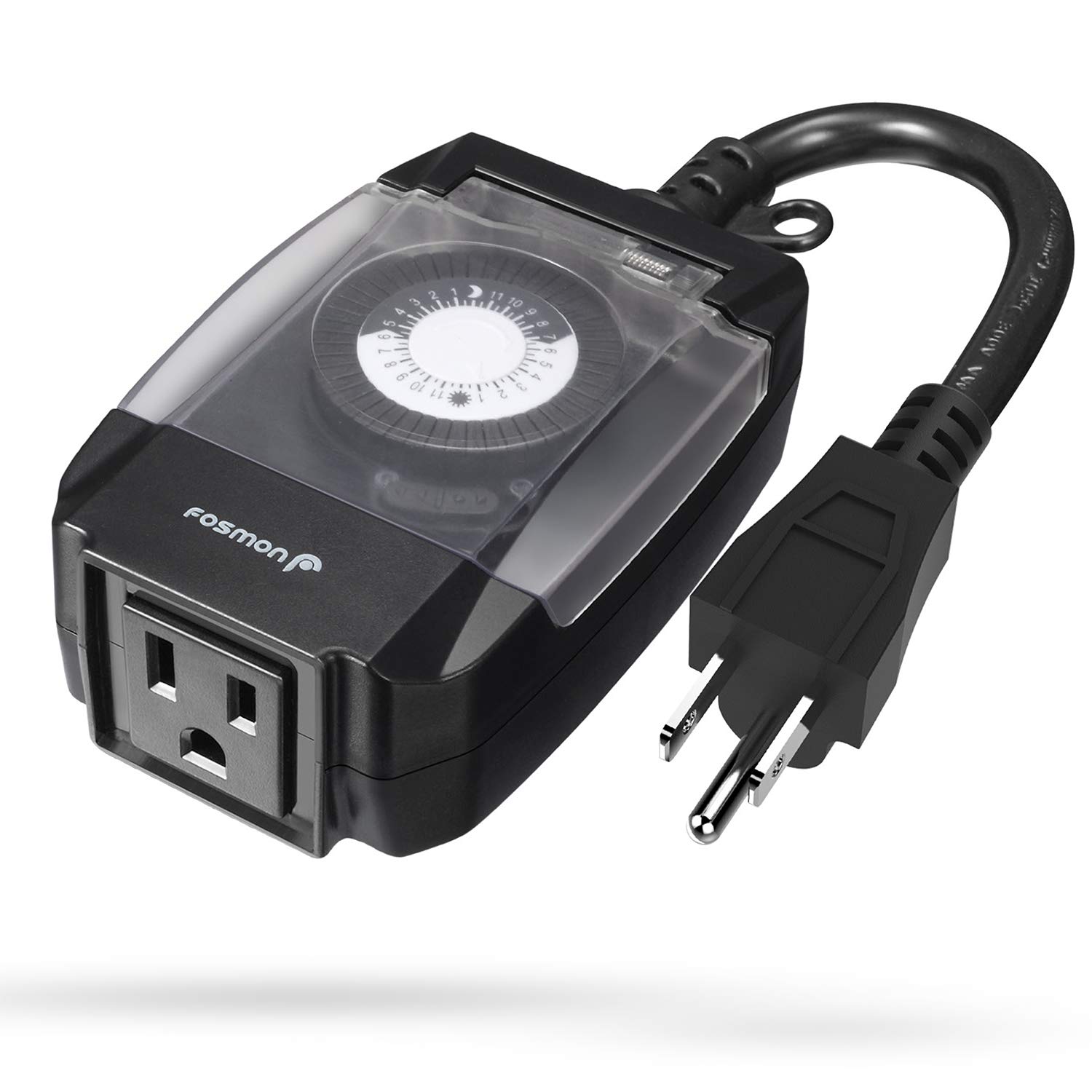
Mechanical dial timer with 30‑minute segments, rainproof lid, and a straight plug that fits outdoor outlets without blocking adjacent sockets. Rated for heavier loads than typical plug timers.
Why I picked it: Straight plug fits more outlet styles; higher motor capacity than basic plug timers.
Best for: Small pool pumps, fountains, aerators, and outdoor lights.
Affordable and practical.
Pros
- Straight plug fits standard outlets
- 30‑minute segment control
- Rainproof lid and casing
- Supports heavier motor loads
Cons
- Cord could be longer
- Basic programming interface
- Not ideal for very large pumps
My take
I liked the straight plug design because it fits into outdoor receptacles where side‑plug timers won't. Setup is a matter of aligning the current time and pushing down the appropriate 30‑minute trippers.
The unit’s ratings include a 3/4 HP capacity, so I felt comfortable using it with a small pump and with outdoor lighting loads. The rainproof lid gave me confidence to leave it mounted outside above the outlet.
If you need a simple mechanical solution that accepts heavier motor loads than the smallest timers, this Fosmon model delivered reliable timing with minimal fuss.
3. TiFFCOFiO 24-Hour Mechanical Outdoor Timer – Best No‑Frills Mechanical
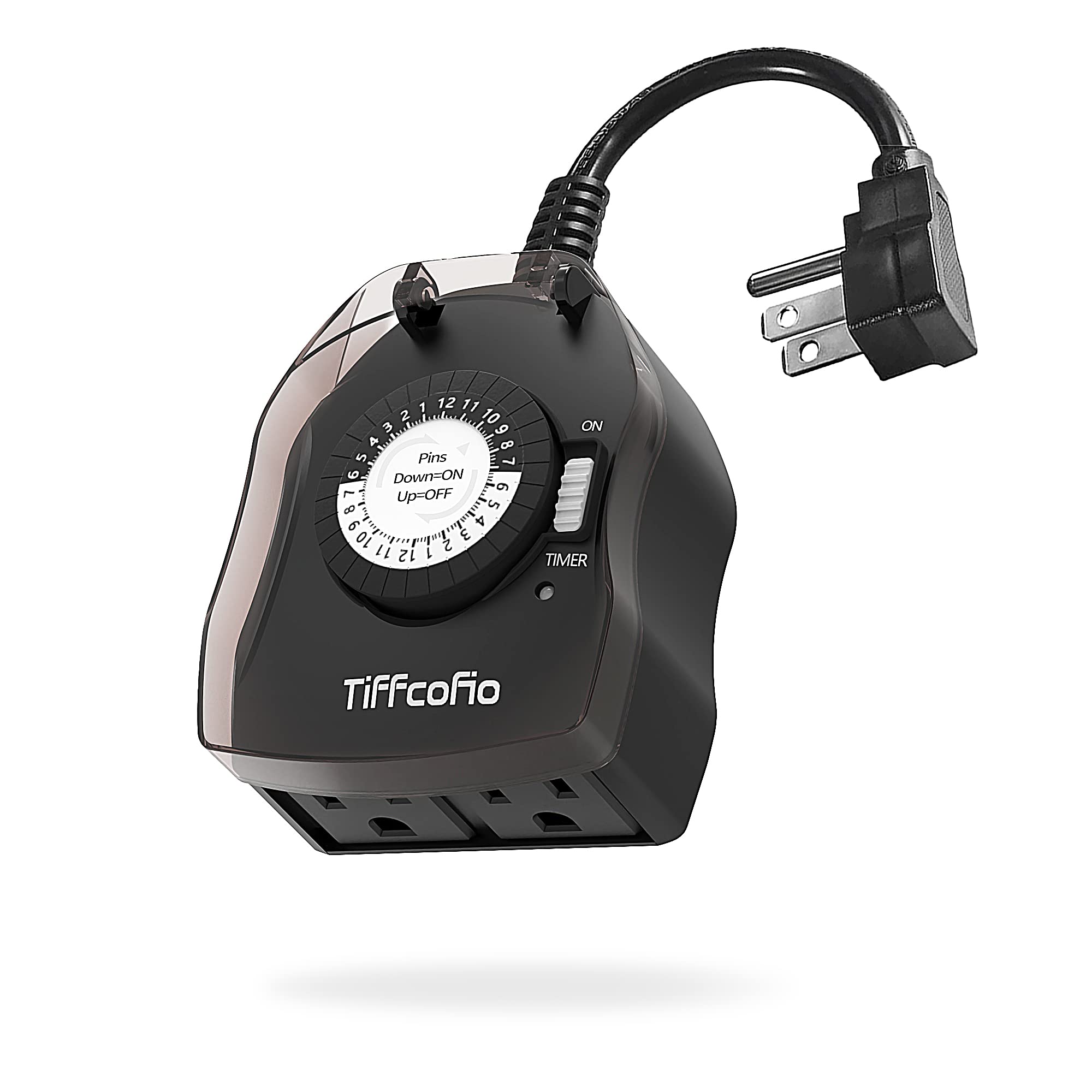
A straightforward, CSA‑listed mechanical timer with 30‑minute pins, two grounded outlets, and solid weather resistance—ideal when you want mechanical simplicity and reliability.
Why I picked it: Simple pin scheduling, CSA listing, and dependable outdoor performance.
Best for: String lights, yard lighting, and basic outdoor devices.
Low cost, straightforward option.
Pros
- 48 half‑hour on/off options
- CSA listed for safety
- Two grounded outlets
- Weatherproof construction
Cons
- On/off tabs are small
- Short cord for some placements
- No quick‑start override feature
My take
I appreciate when a timer keeps things simple, and this unit does exactly that: set the pins, align the time, and it repeats every day. I used it for patio string lights and holiday displays with no network or app needed.
Build quality felt robust for an economical timer, and the housing resisted rain as long as I mounted it vertically and kept it off the ground. The CSA listing gave extra confidence for outdoor use.
My only practical gripe is the tiny manual on/off tabs that require a small screwdriver or glasses to manipulate comfortably. Otherwise, it’s a durable, no‑nonsense option I returned to whenever I needed plug‑in scheduling.
4. GE 7-Day Digital Box Timer – Best Heavy‑Duty Weekly Timer
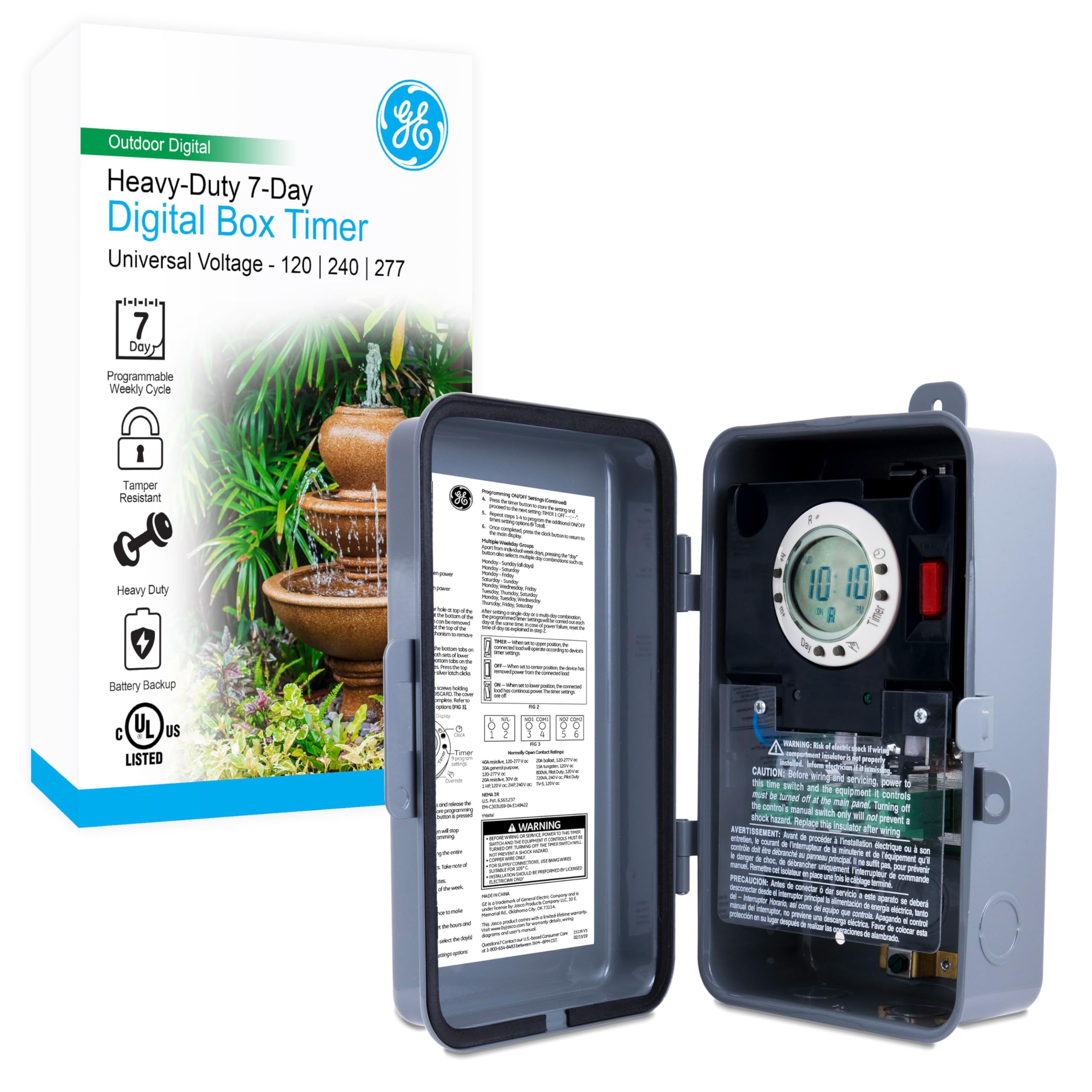
A rugged, lockable metal enclosure with universal voltage and up to nine ON/OFF events per day—built for high‑current equipment like heaters and pumps.
Why I picked it: Metal NEMA‑3R box, universal voltage, and multiple daily programs for complex schedules.
Best for: Pool pumps, water heaters, HVAC, and high‑current outdoor equipment.
More expensive—but built for heavy use.
Pros
- Lockable metal, weatherproof enclosure
- Universal 120–277VAC auto‑sense
- Up to nine programs per day
- Battery backup preserves time
Cons
- Display readability at angles is limited
- Not as user‑friendly for beginners
- Larger, requires fixed wiring
My take
I installed this GE unit to control a water heater and a well pump schedule. The metal, lockable box is a real advantage when the timer will sit outdoors or in a utility area where tampering and weather protection matter.
The universal voltage sensing was handy during my installs—the timer handled both 120 and 240V circuits without extra configuration. Programming daily and weekly schedules was flexible enough for staggered run times.
The numeric display is best read head‑on, and I missed a backlit screen for quick checks at night. Still, for anyone wanting a properly rugged, programmable weekly timer for serious electrical loads, this GE box is one of the few units I trust for long‑term outdoor duty.
5. SURAIELEC WiFi Pool Timer – Best Smart/Wi‑Fi Timer
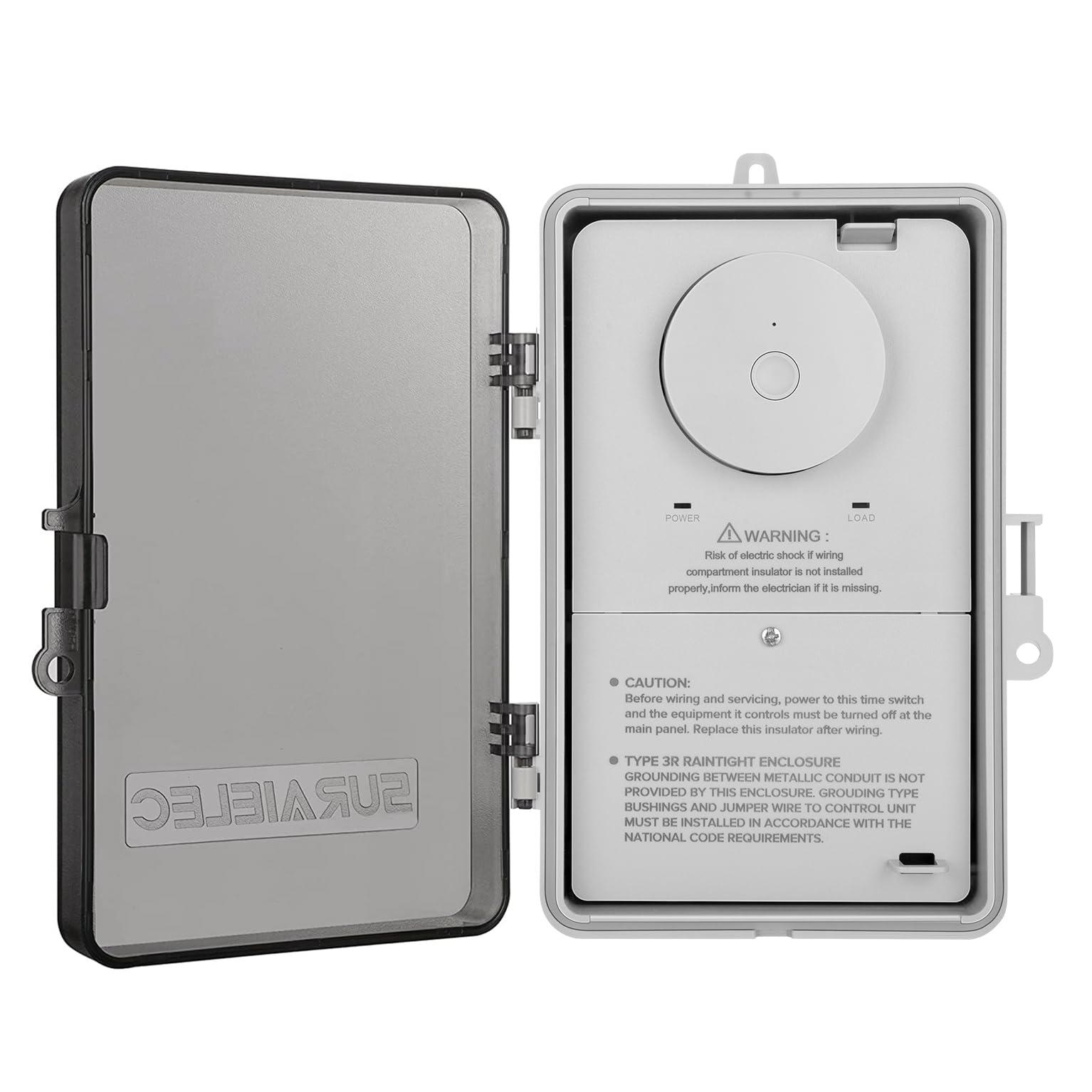
A 40A Wi‑Fi‑enabled timer that works with Tuya/Smart Life and voice assistants—great for remote control of pumps, heaters, and other heavy appliances.
Why I picked it: Wi‑Fi control and app integrations make remote operation effortless.
Best for: Remote control of pool pumps, heaters, and hard‑to‑reach equipment.
Mid‑range for a smart, heavy‑duty option.
Pros
- 40A heavy‑duty switching
- Tuya/Smart Life app support
- Alexa and Google compatibility
- Weatherproof enclosure
Cons
- Requires 2.4GHz Wi‑Fi
- Setup docs are sparse
- Long‑term Wi‑Fi reliability varied
My take
I upgraded a pump setup with this Wi‑Fi timer and appreciated how quickly it paired with the app. Once connected, scheduling remote on/off cycles and toggling the pump from my phone was a real convenience—especially in bad weather.
The enclosure and terminal layout were easy to wire if you know basic electrical terminology. The app allows multiple program types and countdown modes, which I used to create different run patterns for weekdays and weekends.
One caveat from long‑term testing: a unit I ran for many months eventually required me to be very close to the device for the app to toggle it reliably. That didn’t happen immediately, but it’s something I monitored. For many people the smart features are worth the convenience—just plan for occasional connectivity troubleshooting.
6. DEWENWILS 7-Day Digital Pool Timer – Best Programmable Digital
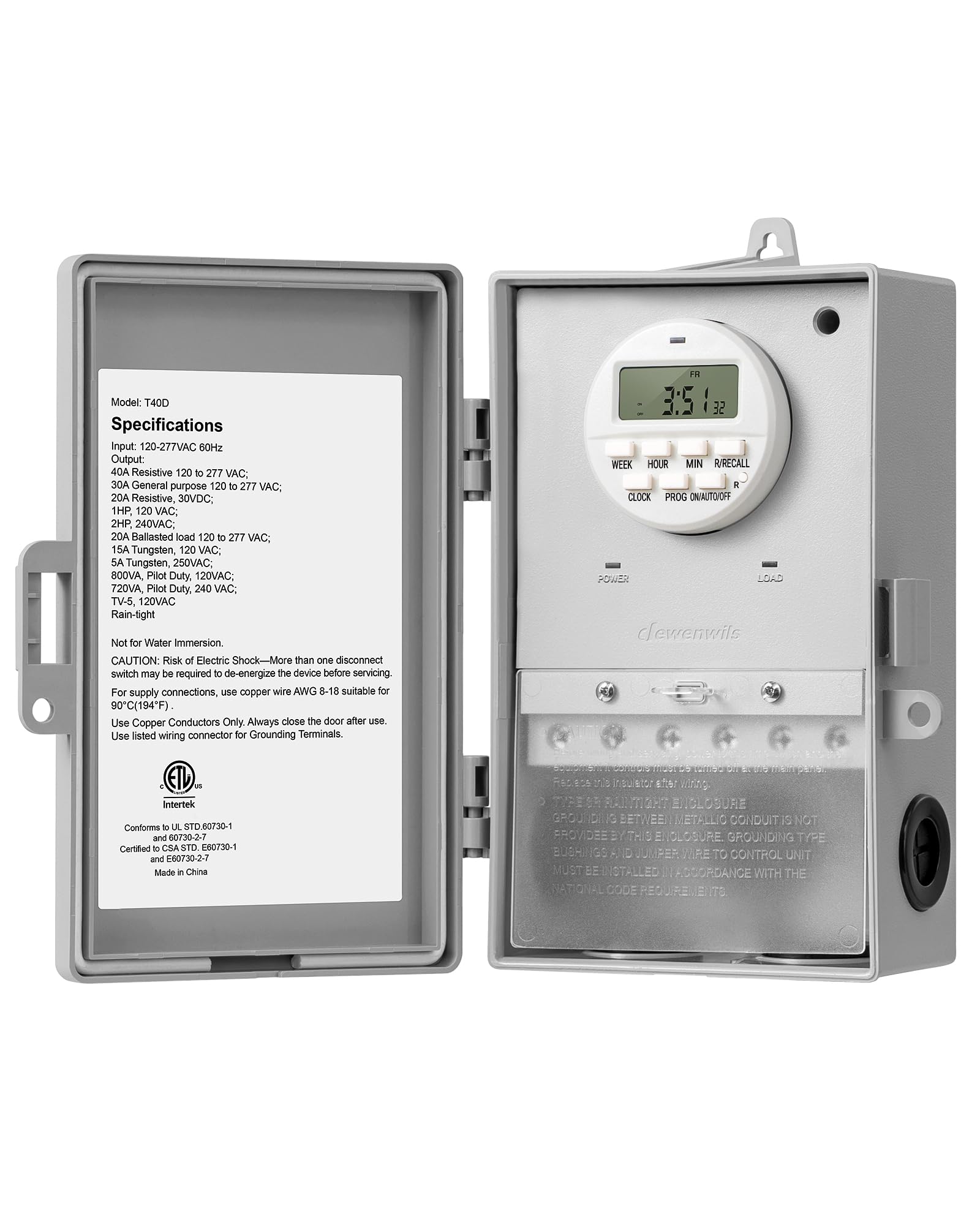
A versatile 7‑day digital timer with up to 20 ON/OFF events, multiple modes, and a built‑in battery for months of settings retention—solid for routine pool management.
Why I picked it: High program count, multi‑mode options, and three‑month backup battery.
Best for: Detailed weekly schedules for pumps, heaters, and recirculation systems.
Good value for a feature‑rich digital timer.
Pros
- Up to 20 daily ON/OFF events
- Built‑in backup battery
- Works across 120–277VAC
- Weather‑resistant housing
Cons
- Display visibility requires straight‑on viewing
- Programming takes a learning curve
- Requires permanent wiring
My take
I installed the DEWENWILS unit to replace a mechanical timer and appreciated the additional scheduling flexibility—20 events let me create shorter cycles on weekdays and longer weekend runs.
The enclosure felt durable and the wiring terminals are accessible once you remove the module for installation. The backup battery saved me from losing settings during brief power interruptions on a couple of occasions.
This is not a plug‑in product; you should be comfortable with wiring or have an electrician do the install. Once set up, it has been rock solid for routine pool equipment scheduling.
7. SURAIELEC 7-Day Programmable Timer – Best Compact Digital
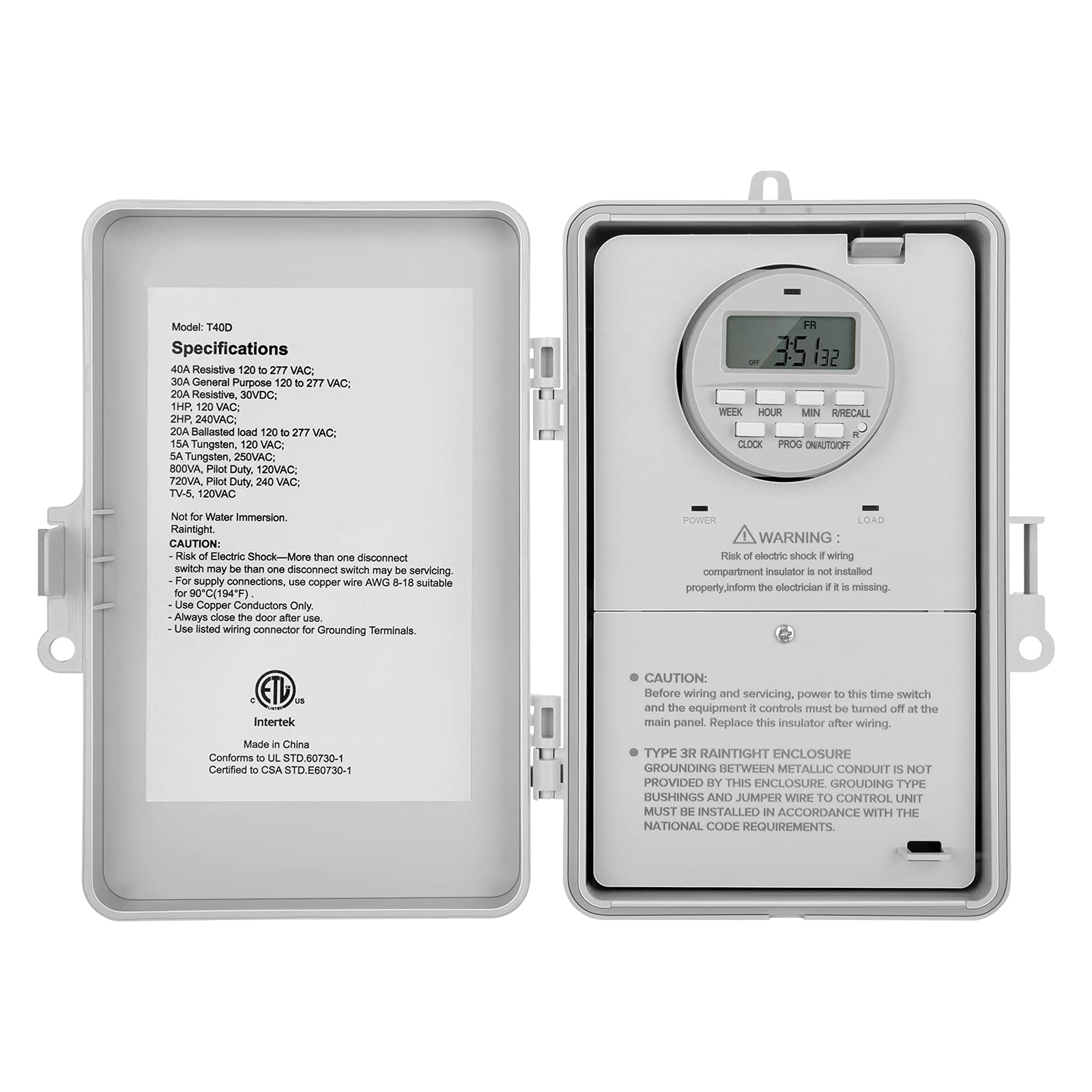
A compact 7‑day digital controller with up to 20 programs, battery backup, and a lockable weatherproof box—good when space is limited but full digital control is required.
Why I picked it: Smaller footprint with robust scheduling and battery retention.
Best for: Tight mounting spaces for pool pumps and water heaters.
Mid‑range, compact design.
Pros
- Compact enclosure saves space
- Up to 20 program settings
- Rechargeable battery backup
- Raintight, rust‑proof materials
Cons
- Small display can be hard to read
- Wiring not totally intuitive
- Programming takes study
My take
I’ve installed these compact SURAIELEC timers where a full‑size box wouldn’t fit. They keep schedules reliably and the battery backup retained programs during power outages on my tests.
Programming isn’t as intuitive as a mechanical dial, but once I walked through the instructions it offered plenty of flexibility—single‑day overrides, DST adjustments, and multiple on/off events.
If you need digital control in a tight space, this smaller controller packed the features I needed without taking up the room a larger enclosure would.
8. Intermatic Timer Motor T104M – Best Replacement Motor
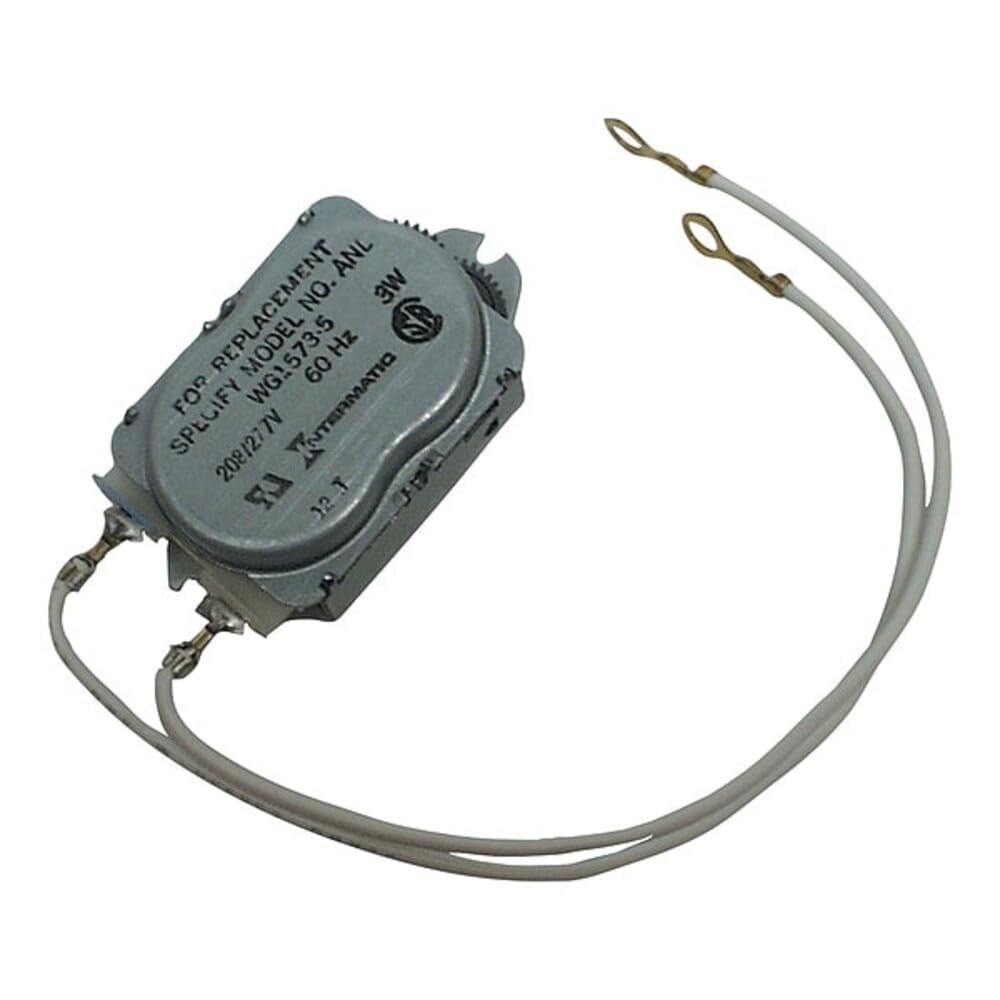
A direct replacement time‑clock motor for older Intermatic timers—simple to swap and a cost‑effective alternative to replacing the whole timer assembly.
Why I picked it: Direct, inexpensive motor replacement that I could install quickly.
Best for: Repairing worn Intermatic time clock assemblies.
Affordable replacement part.
Pros
- Easy to install
- Compatible with multiple Intermatic models
- Saves cost versus full unit replacement
Cons
- Must confirm model compatibility
- Requires safe power‑off wiring
- Limited to timer motor failures
My take
I replaced the worn motor in an older Intermatic timer and the swap was straightforward: cut power, note existing wiring positions, remove the old motor, and attach the new unit. Matching the wires to the same terminals made the process quick.
This was far cheaper and faster than replacing the entire time clock assembly. If your timer motor is the only failure, a direct motor replacement like this is the practical choice.
As always with internal timer repairs, I turned the breaker off and double‑checked the wiring before reapplying power. That precaution kept the installation simple and safe.
How I Choose a Pool Timer
Match the amp/HP rating to your equipment
I always check the timer’s amp and horsepower ratings against the pump or heater nameplate before buying. Small plug‑in timers are fine for lights and small motors; heavy‑duty pool pumps need 40A/2HP class controllers or an appropriate mechanical timer that lists motor capacity.
- For pumps and heaters look for 40A or explicit HP ratings.
- Plug‑in mechanical timers are for lighting and small motors only.
- Digital and box timers are required for permanent hardwired installs.
Weatherproofing and mounting
I prefer NEMA‑rated metal boxes or raintight polymer enclosures for outdoor installs. Mount vertically and at least a couple of feet above ground to keep splash and debris away from seals.
- Choose lockable enclosures where tampering is a concern.
- Check gasket condition and terminal access before final mounting.
- Follow manufacturer guidance on vertical mounting for plug timers.
Mechanical vs digital vs smart
Mechanical timers are low cost and simple. Digital timers give weekly programmability and timers with battery backup keep settings through outages. Smart Wi‑Fi timers add remote control and voice integration but require reliable 2.4GHz Wi‑Fi.
- I use mechanical units for lights and decorations.
- Digital boxes are my go‑to for pumps and heaters.
- I choose smart timers when remote control is a high priority.
Installation tips
If a product requires wiring, I either do the work myself (with breaker off and photos of original wiring) or hire a licensed electrician. I always label wires and verify grounding and neutral connections.
- Turn off the breaker before any wiring work.
- Take a photo of the existing wiring before removal.
- Use appropriate conduit and strain relief for outdoor runs.
Frequently Asked Questions
Can I use a plug‑in mechanical timer for my pool pump?
I don’t recommend plug‑in mechanical timers for most pool pumps—many are not rated for the motor load. I use plug‑in units only for lights and small motors; for pool pumps I choose a 40A digital box or a timer explicitly rated for the pump’s horsepower.
Do Wi‑Fi pool timers require a special network?
I make sure the controller supports 2.4GHz Wi‑Fi before buying. In my experience, the timer must be on the same 2.4GHz network and within range of the router, and performance can degrade if signal strength is weak.
What should I do if a digital timer loses its settings after a power outage?
I select timers with a built‑in backup battery or capacitor; those retain time and programs for months. If a unit loses settings, check the battery backup and replace or select a model with dedicated memory retention.
Final Take
I favor mechanical timers for simple outdoor lighting tasks and digital or Wi‑Fi boxed controllers when managing pumps, heaters, and more complex weekly schedules.
Match the timer’s electrical ratings and enclosure type to your equipment and mounting location, and don’t hesitate to consult an electrician for hardwired installs.
Pick the model in this roundup that fits your control needs—whether low‑cost simplicity, heavy‑duty reliability, or smart remote access—and you’ll get consistent, automated operation from your pool equipment.
