
I tested a range of porch swings, hangers, springs, and stands to find durable, comfortable options for different budgets and setups. Here are the ones I keep coming back to.
I spent time installing and living with several porch swings and the hardware that supports them so I could tell you which ones actually deliver comfort, durability, and easy installation.
In this roundup I focus on what I found meaningful in everyday use: sitting comfort, build quality, weather resistance, and how straightforward each setup was to hang or assemble.
If you want a long-lasting wooden swing, a low-maintenance composite bench, or a simple upgrade kit to make your current swing feel better, I’ve outlined the options that performed best for me.
I compared swings on comfort, materials, mounting hardware, and how much maintenance they need; wood is classic and comfortable, composite is nearly care-free, and metal options win for quick assembly and value.
1. Amish Casual 5‑Foot Roll Back Wooden Porch Swing – Best Overall
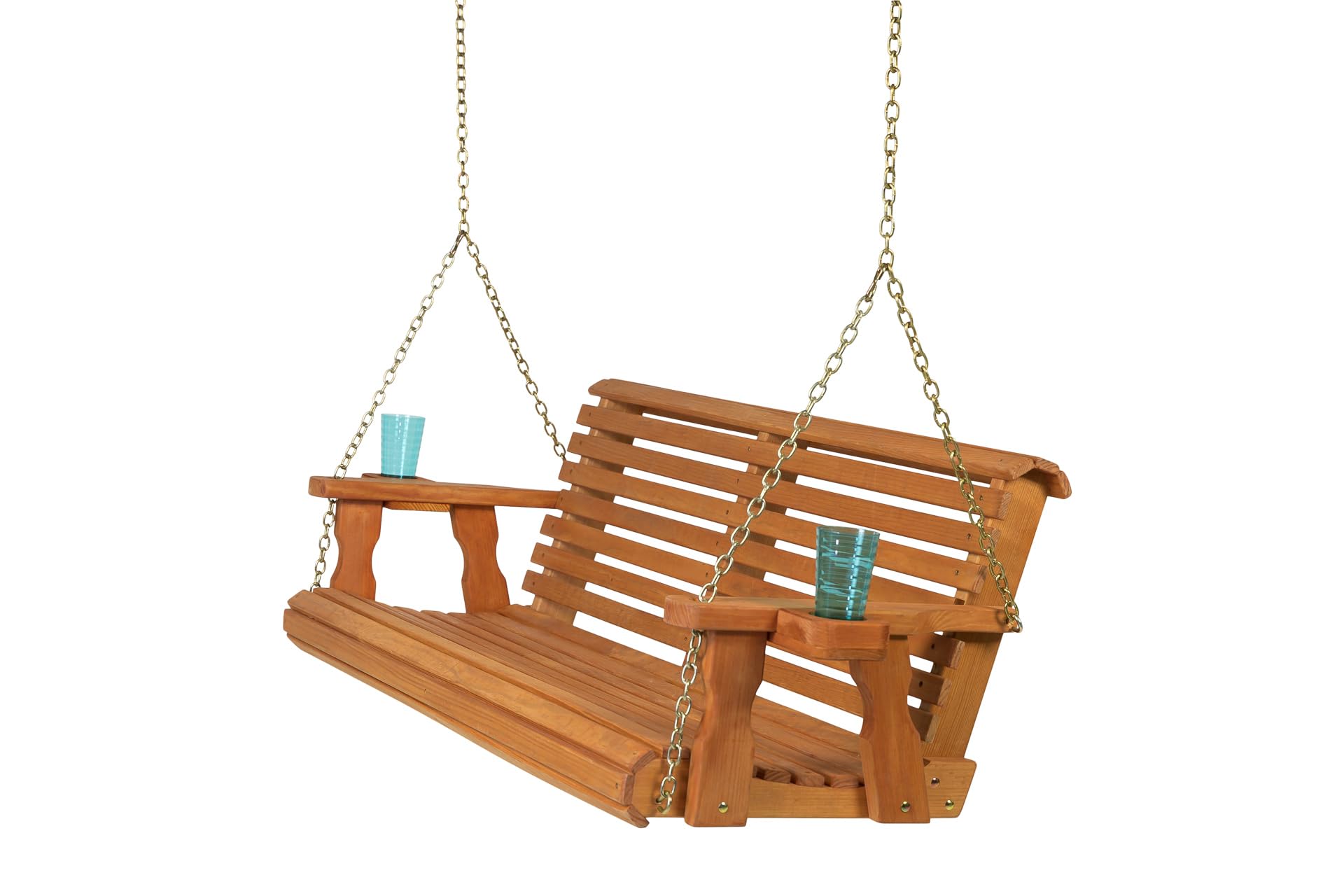
A handcrafted rollback bench with contoured lumbar support, built-in cup holders, and heavy-duty hardware that I found highly comfortable and durable.
Why I picked it: Because the rollback design and solid Amish construction gave the best mix of comfort and longevity in my testing.
Best for: People who want a classic, comfortable wooden swing built to last.
More expensive but built for longevity and comfort.
Pros
- Very comfortable rollback seat
- Solid, handmade construction
- Contoured lumbar support
- Included chains and hardware
- Built-in cup holders
Cons
- Heavy to move or reposition
- Needs occasional sealer outdoors
- Minor assembly required
My take
I installed the Amish Casual 5-foot rollback swing on my covered porch and the difference in comfort was immediate. The seat and back have that smooth roll that sits behind my knees and supports my lower back—perfect for long afternoons reading.
The build quality felt premium; all the slats are solid and screwed together, and the yellow zinc-plated hardware gave me confidence about outdoor corrosion resistance. The included two-point hanging chains made the mounting straightforward for a standard ceiling height.
It’s heavier than the lightweight options, which I like for stability but means I resealed the finish before long-term outdoor exposure. The cup holders are small but handy for morning coffee.
Overall I kept this swing because it combined the kind of comfort you want for daily use with the robust construction I expect to last years.
2. VINGLI Curved Metal Porch Swing – Best Value
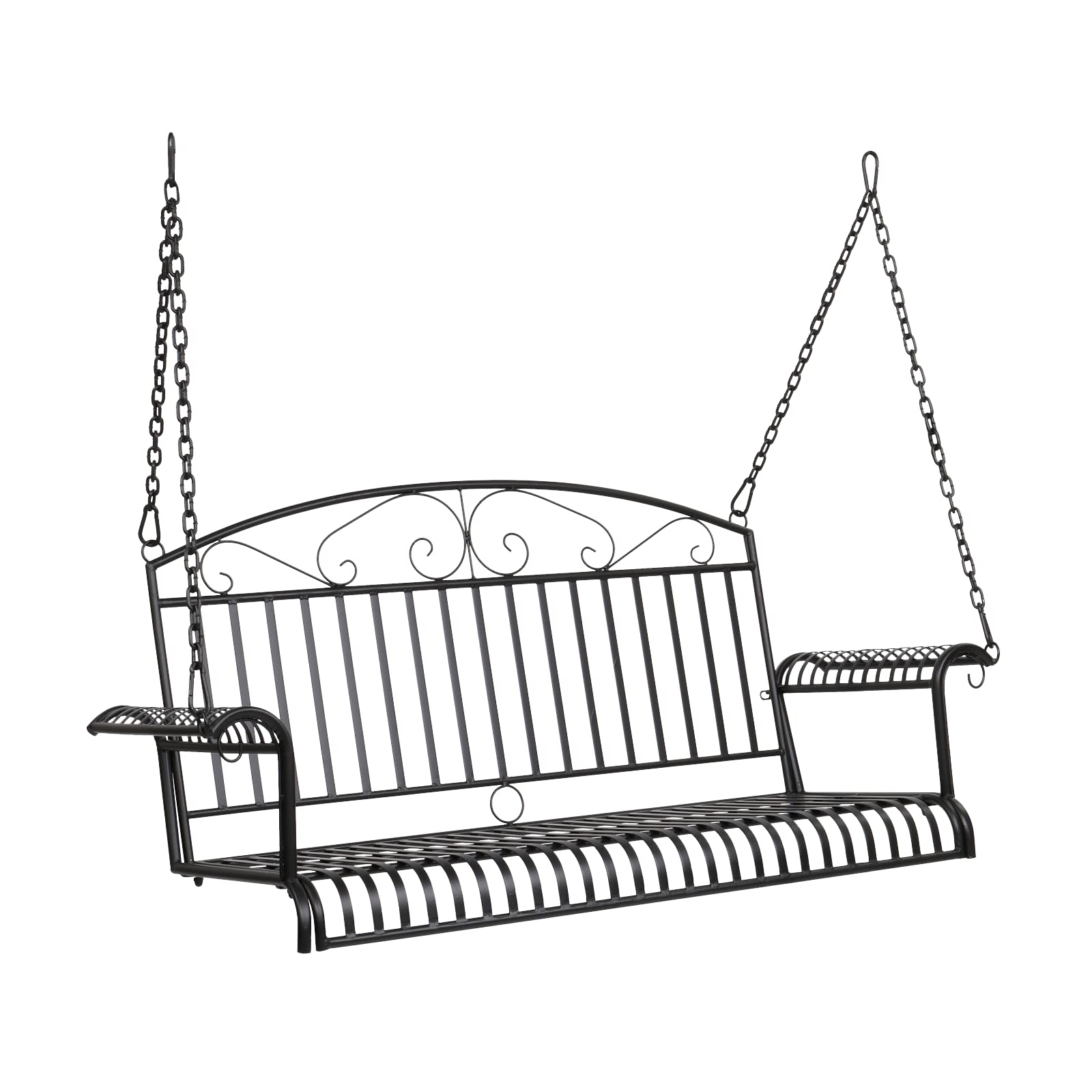
A budget-friendly steel bench with an ergonomic curve, upgraded chain ends, and very fast assembly that surprised me for the price.
Why I picked it: Because it balances quick assembly, attractive looks, and a surprisingly comfortable ergonomic curve at a value price.
Best for: Anyone who wants an affordable, easy-to-install metal swing that still feels comfortable.
Affordable option with high value for the features.
Pros
- Extremely quick to assemble
- Ergonomic knee curve
- Adjustable, loop-locked chains
- Lightweight but sturdy
Cons
- Metal could be beefier
- Chains may be short for tall frames
My take
I put this VINGLI swing on an existing frame and finished assembly in under 10 minutes. The back and seat come largely preassembled so attaching the arms and chains is simple.
The curved seat makes a real difference: my feet don’t touch the ground while sitting and the knee area is more comfortable than a flat metal bench. The loop-locked chain ends felt secure and let me tweak the angle easily.
It’s not the thickest metal I’ve used, so I wouldn’t encourage rough play, but for everyday relaxation it held up well and wipes clean quickly.
For a budget swing that still performs, I kept several of these around for quick porch or garden installs.
3. SwingMate Hanging Kit 2.0 (Springs & Hangers) – Best for Smooth Motion
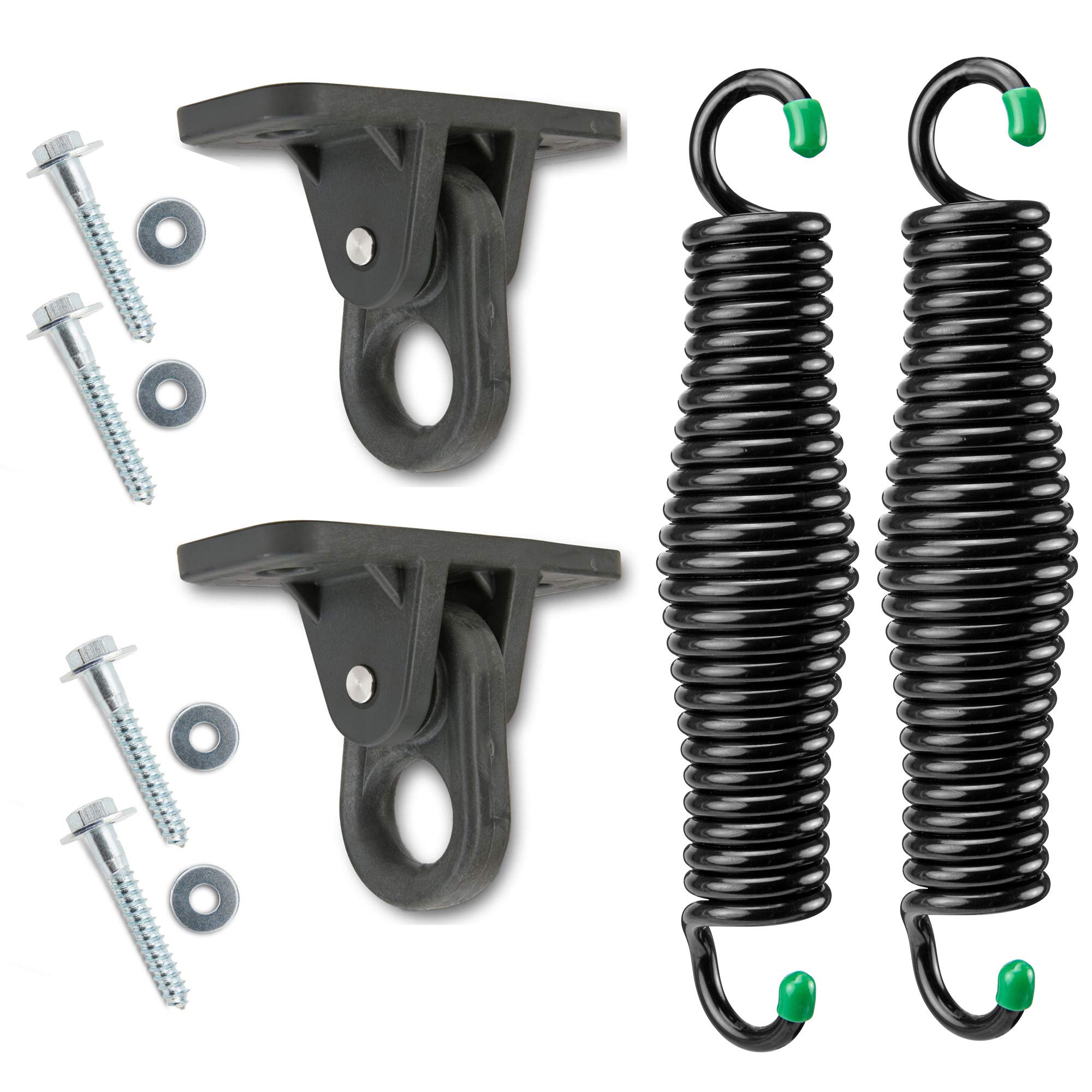
A heavy-duty hanging kit with patented springs and shock absorption that made my bench swing quieter and much softer to sit on.
Why I picked it: Because its spring design significantly reduced jolts and kept swinging smooth and quiet in my long-term use.
Best for: Anyone upgrading mounting hardware to improve swing comfort and safety.
Mid-range accessory; worth it for smoother motion and longevity.
Pros
- Patented springs for smooth motion
- Excellent shock absorption
- Rust-resistant, durable components
- Made in the USA
Cons
- Hardware for masonry not included
- A bit pricier than basic hangers
My take
I replaced my old eye-screws with the SwingMate 2.0 kit and noticed reduced shock every time I sat down. The springs distribute weight evenly, so the initial plunge is softened and the swing moves silently.
Installation was straightforward for a wood ceiling or beam; the parts felt solid and the nylon housings are rugged yet quiet. I used them on both an indoor porch and a covered outdoor swing and the motion was consistently smoother.
After years of heavy household use the kit still looked almost new in my indoor setup, and the extra peace of mind from the robust hardware made me prefer these over cheaper options.
4. VINGLI Metal Porch Swing Stand – Most Stable Stand
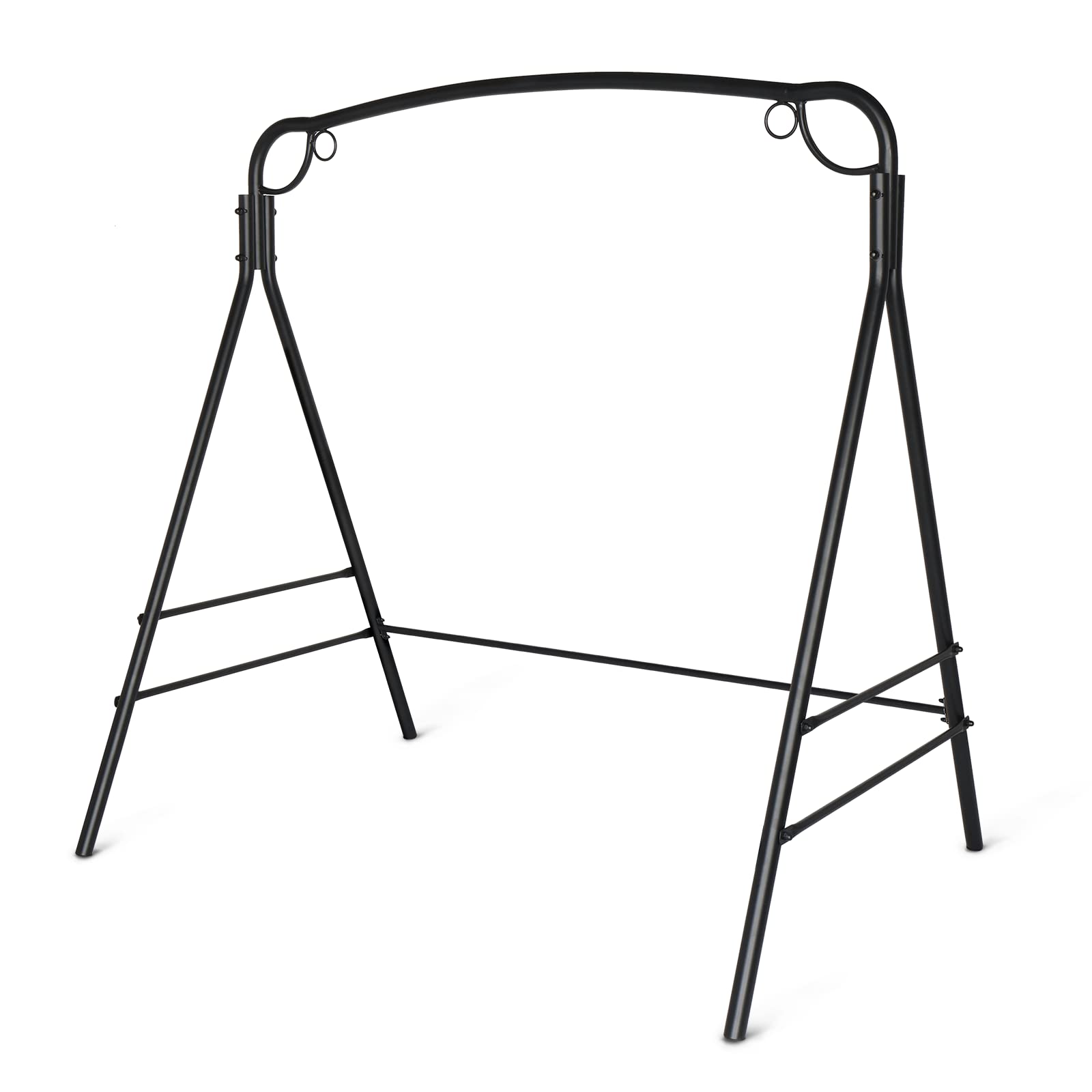
A powder-coated steel stand with dual side bars per leg for extra stability and an antique bronze finish that held up well in my assembly tests.
Why I picked it: Because the double-side-bar design noticeably reduced wobble compared with single-bar stands I’ve used.
Best for: People who need a portable, stable frame for swings up to around 59 inches wide.
Solid mid-range stand with good stability features.
Pros
- Two bars per side for stability
- Powder-coated antique bronze finish
- Supports a wide range of benches
- Relatively quick assembly
Cons
- One side may bow slightly
- Top installation needs two people
My take
I assembled this VINGLI stand with one other person and appreciated how the two-bar side design feels sturdier than single-bar stands. It took about thirty minutes to have it ready for a swing bench.
The finish looks elegant and I didn’t notice immediate corrosion; still, I avoided scratching the coating during setup to preserve longevity. The frame held our wooden bench without any noticeable flex.
A minor cosmetic bow on one side bothered my OCD but didn’t affect performance. For a portable option that gives stability for most 39–59 inch swings, this stand did the job reliably for my porch.
5. SwingMate Porch Swing Springs (Set of 2) – Best Accessory
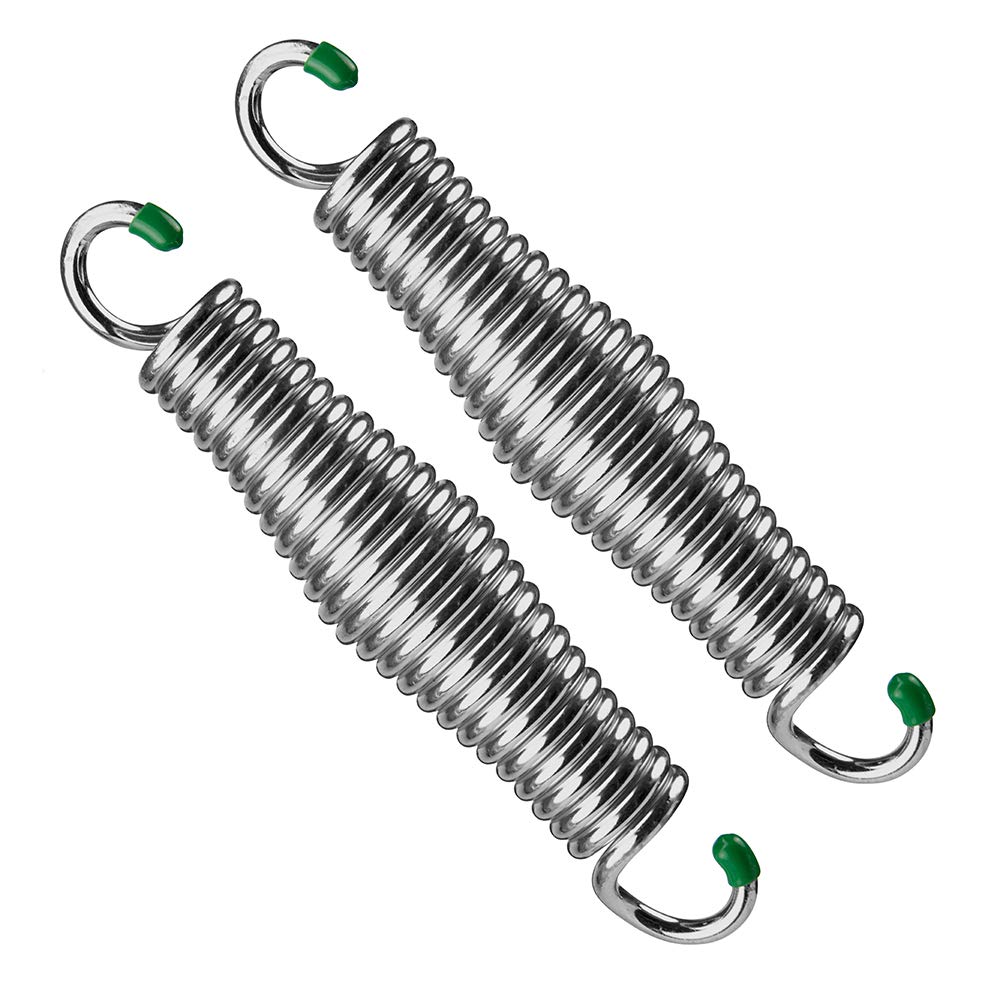
Simple, heavy-duty springs that I used to add bounce and cushion to older benches; they smoothed landing shocks and felt very durable.
Why I picked it: Because adding springs transformed the feel of several benches I already owned without a full hardware replacement.
Best for: Anyone who wants an inexpensive upgrade to soften sit-down shocks on an existing swing.
Affordable add-on that delivers noticeable comfort gains.
Pros
- Adds cushion to the swing
- Heavy-duty construction
- Simple, fast installation
- Resists rust well outdoors
Cons
- Only adds limited extra length
- Not a full hanging kit
My take
I installed the SwingMate springs between my chains and hangers and the initial jolt when sitting down disappeared—sitting feels cushioned now.
They’re straightforward to hang and proved durable in my outdoor tests; even with multiple adults the coils showed minimal slack after long use.
For the price and simplicity, these springs are my go-to when I want to improve the ride of an existing porch bench without swapping the whole mounting system.
6. Backyard Discovery Cedar Farmhouse Porch Swing – Best Cedar Swing
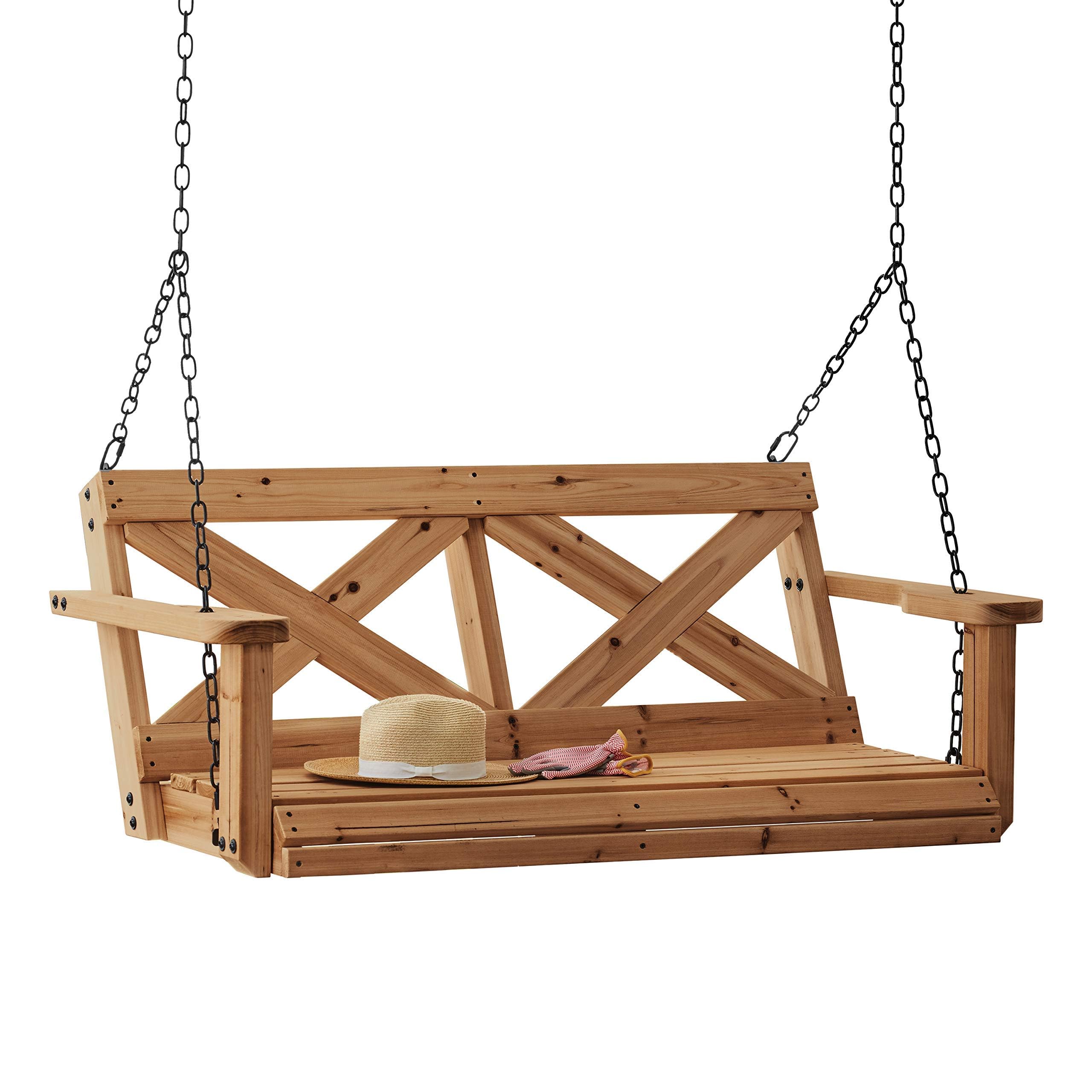
A modern farmhouse cedar bench with contoured seating, a long warranty, and pre-cut components that made assembly straightforward for me.
Why I picked it: Because the cedar construction and five-year warranty offer a low-maintenance wooden option with pleasant aesthetics.
Best for: Buyers who want a classic cedar look with easier assembly and a solid warranty.
Mid-range wood swing with a strong warranty.
Pros
- 100% cedar resists decay naturally
- Contoured seat and armrests
- Five-year warranty included
- Pre-cut and pre-drilled pieces
Cons
- Requires finish care for long life
- May need two people to assemble
My take
I appreciated the cedar’s natural resistance to rot and the warm tone it adds to a porch. The pieces arrived pre-cut and pre-drilled, and I used the BILT app instructions to guide assembly.
Contoured seating and armrests made the swing comfortable for two adults, and the 600 lb capacity felt reasonable for regular use. I still applied a protective sealer where the swing sits uncovered to extend the finish life.
If you want the classic wooden look without chasing down individual parts, this swing is a practical, attractive choice that I relied on for several afternoons of testing.
7. Amish Casual 4‑Foot Roll Back Wooden Porch Swing – Best for Small Porches
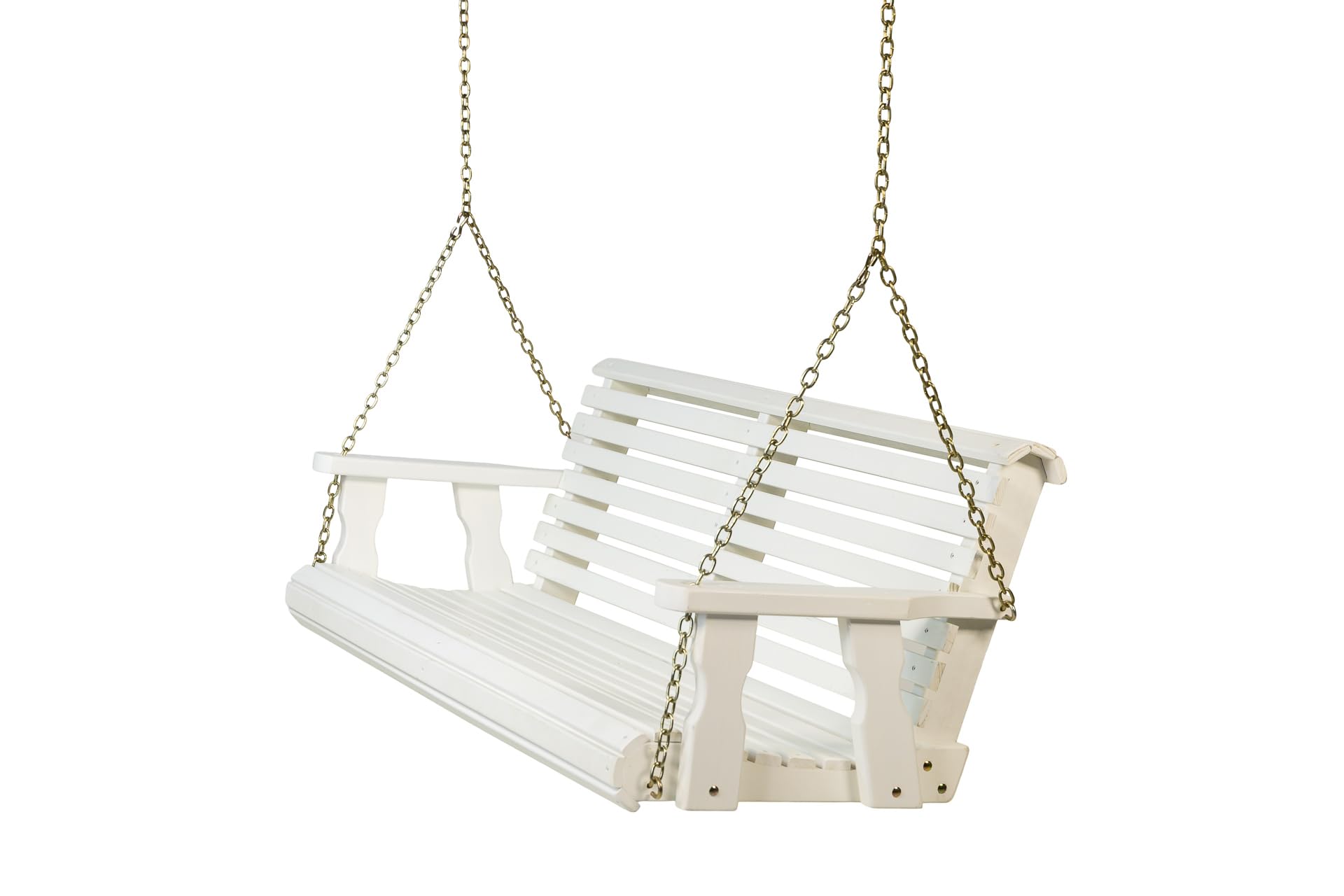
A compact rollback bench that keeps the same Amish craftsmanship and comfort as the 5-foot model but fits tighter porch spaces.
Why I picked it: Because it gives me the rollback comfort and quality of the larger Amish model in a smaller footprint.
Best for: Small porches, patios, or spaces where a full-size swing is too wide.
Compact, premium-built option for smaller spaces.
Pros
- Comfortable rollback contour
- Handcrafted Amish build
- Pre-sanded, smooth pieces
- Included zinc-plated hardware
Cons
- Smaller seating area
- Unfinished versions need sealing
My take
I installed the 4-foot Amish Casual swing on a narrower front porch and found the comfort nearly identical to the 5-foot model. The seat contour and lumbar support are surprisingly roomy for two people.
Pieces are pre-sanded and fit together cleanly; I took the advice to seal or finish it before long-term exposure and it’s held up well under weather when covered.
If your porch width is limited but you don’t want to sacrifice comfort or quality, this compact Amish bench is the one I reached for.
8. POLYWOOD Vineyard 5‑Foot Porch Swing – Best Low Maintenance
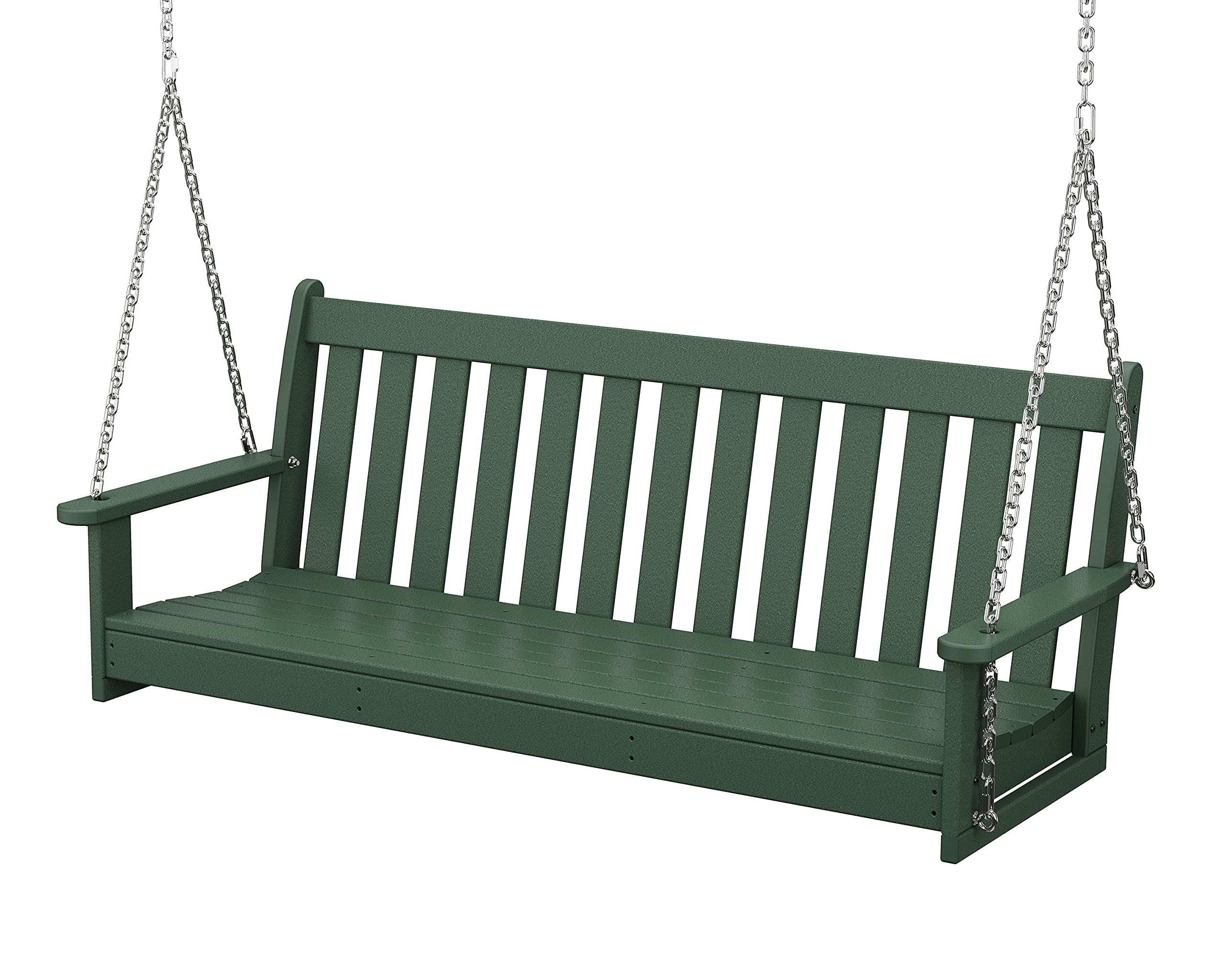
A composite porch swing made from POLYWOOD lumber that looks like wood but resists weather, stains, and fading—ideal when I wanted zero sanding or staining.
Why I picked it: Because it offers near-zero maintenance and long-term durability while still being comfortable and well engineered.
Best for: People who want a lifetime-style swing that won’t need staining or yearly upkeep.
Higher initial investment but minimal ongoing maintenance.
Pros
- Weatherproof, low-maintenance material
- Feels like wood without staining
- Marine-grade hardware included
- Backed for long residential use
Cons
- Heavier to handle during assembly
- Ceiling attachments not included
My take
I swapped a wooden bench for the POLYWOOD Vineyard swing to stop annual staining work. It looks like painted wood but has the advantage of color throughout the material, so chips and weathering aren’t a concern.
Assembly with two people took about twenty minutes and the swing felt rigid and comfortable; cleaning is simply soap and water. I did need to source ceiling anchors separately since only chains are included.
For a long-term, low-effort porch fixture this composite swing is the spot I return to for a maintenance-free seat.
How I Pick Porch Swings
Key factors I considered
I focus on materials, mounting hardware, comfort, and maintenance when choosing swings. Each of those aspects affects how the swing performs day-to-day.
Wood gives classic comfort and warmth but needs sealing or staining. Composite (like POLYWOOD) trades finish work for longevity. Metal is lightweight and often the easiest to install.
- Comfort: look for contoured seats or rollback backs for longer sitting comfort.
- Durability: cedar and treated pine resist rot; composite resists weather altogether.
- Hardware: opt for zinc-plated or stainless parts and consider springs to soften the ride.
- Capacity: confirm the swing and hardware capacity match your household use.
- Maintenance: think about whether you want to stain yearly or prefer no-fuss composite.
Installation tips I use
I always check ceiling or beam framing before hanging a swing. When in doubt, reinforce the header or use a freestanding frame.
For smooth motion and reduced jolt, I recommend adding springs or a dedicated hanger kit rather than relying on basic eye screws.
- Pre-drill for lag screws and use the correct length for secure anchoring.
- Keep chains adjusted so the bench is level and the feet don’t drag.
- If you're using a stand, assemble the top portion with two people for safety.
Long-term care I follow
I seal or recoat wood where it will be exposed, and I cover or store cushions in winter.
For metal and composite swings, I still inspect hardware yearly and touch up any scratched finishes to prevent corrosion.
- Reapply sealer to wood every 1–3 years depending on exposure.
- Lubricate or check springs and links for wear annually.
- Cover swings during heavy storms or winter for maximum lifespan.
Frequently Asked Questions
Do I need special hardware to hang a porch swing safely?
I always recommend using rated hangers or lag screws into a structural beam. Basic eye screws sometimes fail over time; a proper hanger kit or reinforcement gives me extra peace of mind.
Can I use a swing stand instead of mounting to the ceiling?
Yes — I used a steel stand for several swings. A good stand removes the need to modify your porch structure and is portable, but make sure its rated width matches your bench.
Are springs worth adding to a porch swing?
In my experience springs transform the feel: they soften sit-down jolts and smooth the motion. They’re an inexpensive upgrade that I often install on heavier benches.
Final Take
After trying multiple benches, hardware kits, stands, and springs, I kept coming back to a few core truths: pick the material that fits how much work you want to put in, match hardware capacity to your use, and add springs or quality hangers for the most comfortable motion.
If I had to pick one universal takeaway: invest in the best mounting hardware you can afford and choose the swing material that fits your tolerance for maintenance. That approach has kept every swing I installed safe and enjoyable.
