
I tested a range of portable home backup options — from heavy-duty gas/tri-fuel generators to a fast-charging LiFePO4 power station — and assembled the models I’d trust to keep a house running during an outage.
I’ve run these generators and a battery station through set-up, start-up, and real-world backup scenarios so I can tell you which one fits different needs. In this roundup I focus on practical details that matter during an outage: real output, fuel flexibility, run time, portability, and features that make everyday ownership easier.
If you want whole-house capability, I lean toward the higher-output Westinghouse units. If you want quiet, zero-emissions backup for a few critical loads, the EcoFlow Delta 3 is the product I’d grab. The Generac kit is what I use to keep a standby generator maintained without sourcing parts separately.
I compared engine size, fuel options, runtime, transfer-switch readiness, and portability. The Westinghouse units trade weight for true whole-house capability and fuel flexibility; the EcoFlow gives silent, fast-recharging backup for essential electronics without fossil fuels.
1. Westinghouse 12500 Watt Dual Fuel Home Backup Portable Generator – Best Value Dual-Fuel
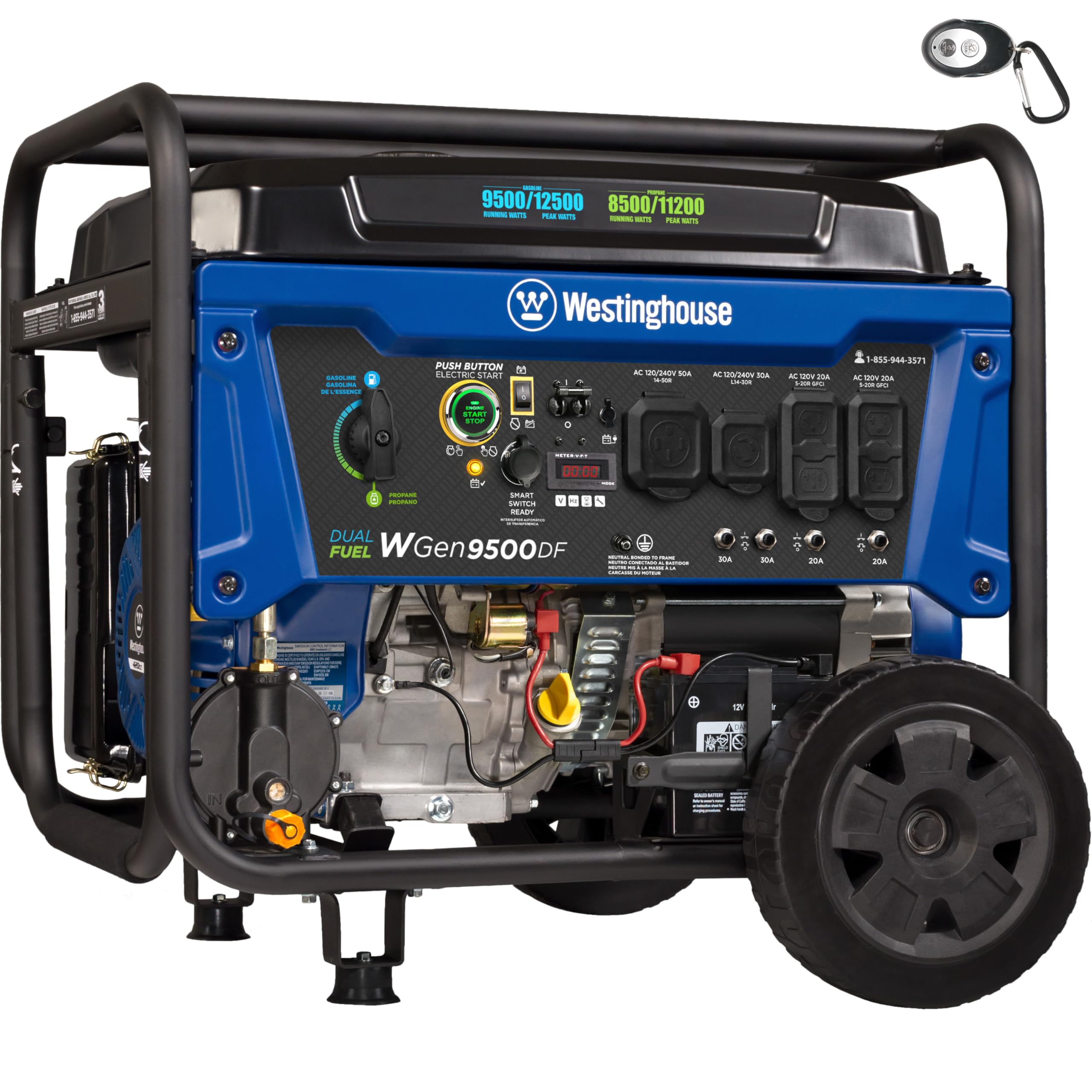
I relied on this dual-fuel Westinghouse when I needed high starting watts and long run time; it delivers robust gasoline power plus propane convenience and remote electric start.
Why I picked it: High peak/start watts, dual-fuel flexibility, remote electric start.
Best for: Whole-house backup where propane is needed as a backup fuel.
Solid value for the power and included accessories.
Pros
- Large peak and running output
- Remote electric start with key fob
- Long run time on 6.6 gal tank
- Transfer-switch ready 50A outlet
- Never-flat wheels for easy moving
Cons
- Heavy to lift
- Not as quiet as inverter stations
My take
I set this unit up in my yard and had it running within minutes — the battery arrived charged, oil included, and the start button fired instantly. The 457cc engine gives me the surge capacity to start my AC and fridge together, and the 14-50R outlet made hooking to my interlock straightforward.
Switching between gasoline and propane was simple, and I liked having the remote key fob; starting the generator from inside the house saved me several trips in bad weather. The VFT display kept track of voltage, frequency, and hours, which made scheduling service easier on my end.
It’s a heavy machine, but the build felt durable and the wheels roll smoothly. I did need a high-altitude kit for my location, but installation was straightforward. For homeowners who want dependable, high-output backup without paying for a whole-house standby, this is a practical choice.
2. Westinghouse 12500 Peak Watt Tri-Fuel Home Backup Portable Generator – Best Tri-Fuel Flexibility
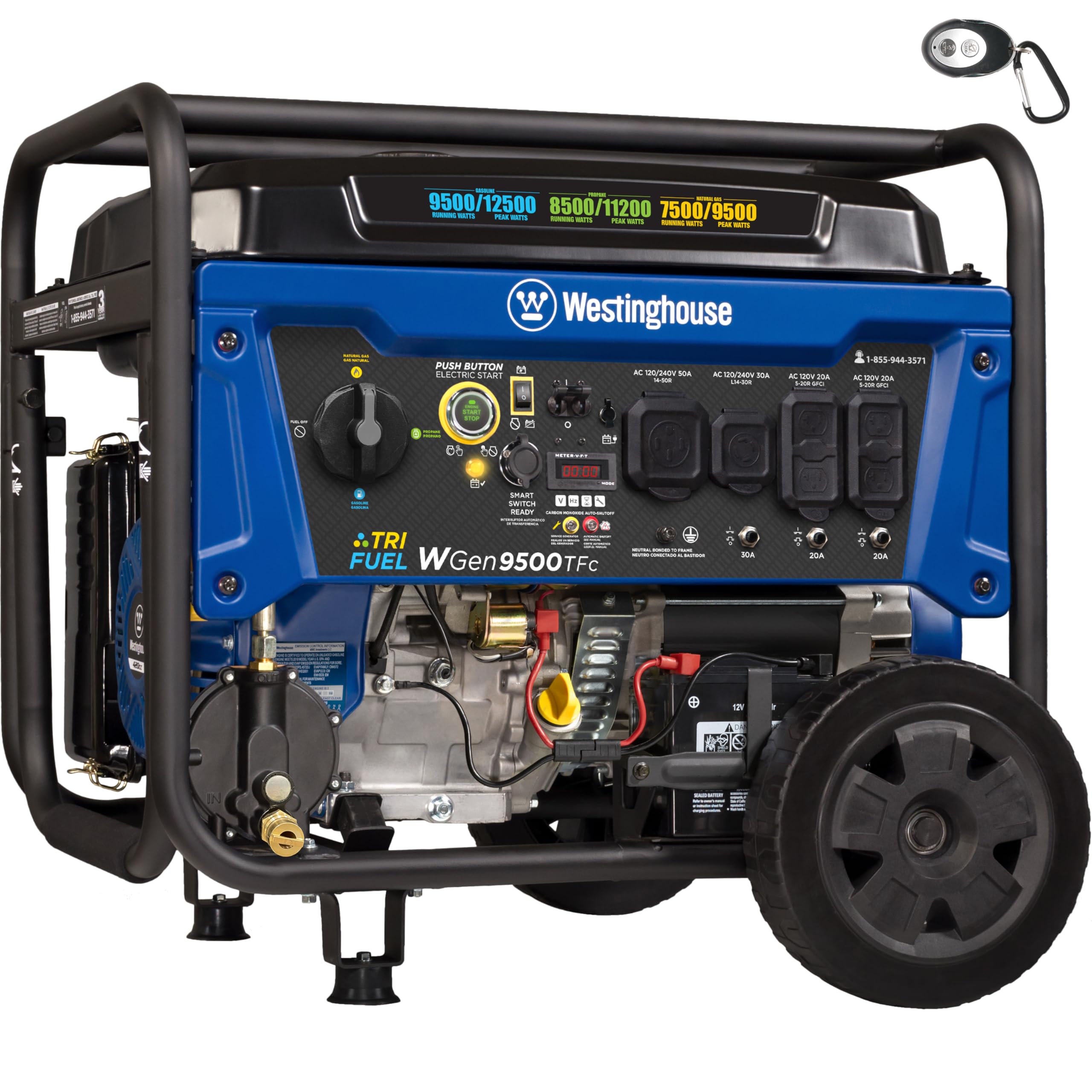
I chose this tri-fuel model when I wanted the freedom to run on gasoline, propane, or natural gas and still keep large loads online with a simple transfer-switch hookup.
Why I picked it: Tri-fuel capability plus CO shutdown and remote start.
Best for: Homes with natural gas available or users who want multiple fuel options.
A flexible, higher-end option for fuel redundancy.
Pros
- Tri-fuel capability out of the box
- Remote electric start key fob
- Transfer-switch ready outlets
- Factory-tested with included accessories
Cons
- Very heavy to move
- Delivery logistics can be tricky
My take
I had this unit delivered to my property and got it running quickly — assembly was minimal and the remote start paired right away. Natural gas hookup requires planning, but having the lines included saved me time compared with sourcing conversion kits.
During testing I ran the house essentials off gasoline and then switched to propane; the generator handled the transition smoothly and never dipped under load. The 457cc engine felt stout and the digital hour meter kept my maintenance schedule visible.
If you live in an area with variable fuel availability, I appreciate the security this tri-fuel setup offers. It carries the heft of a serious backup generator, but the capability to pick the most accessible fuel during an outage is worth the weight.
3. Westinghouse 14500 Peak Watt Tri-Fuel Home Backup Portable Generator – Best for Larger Homes
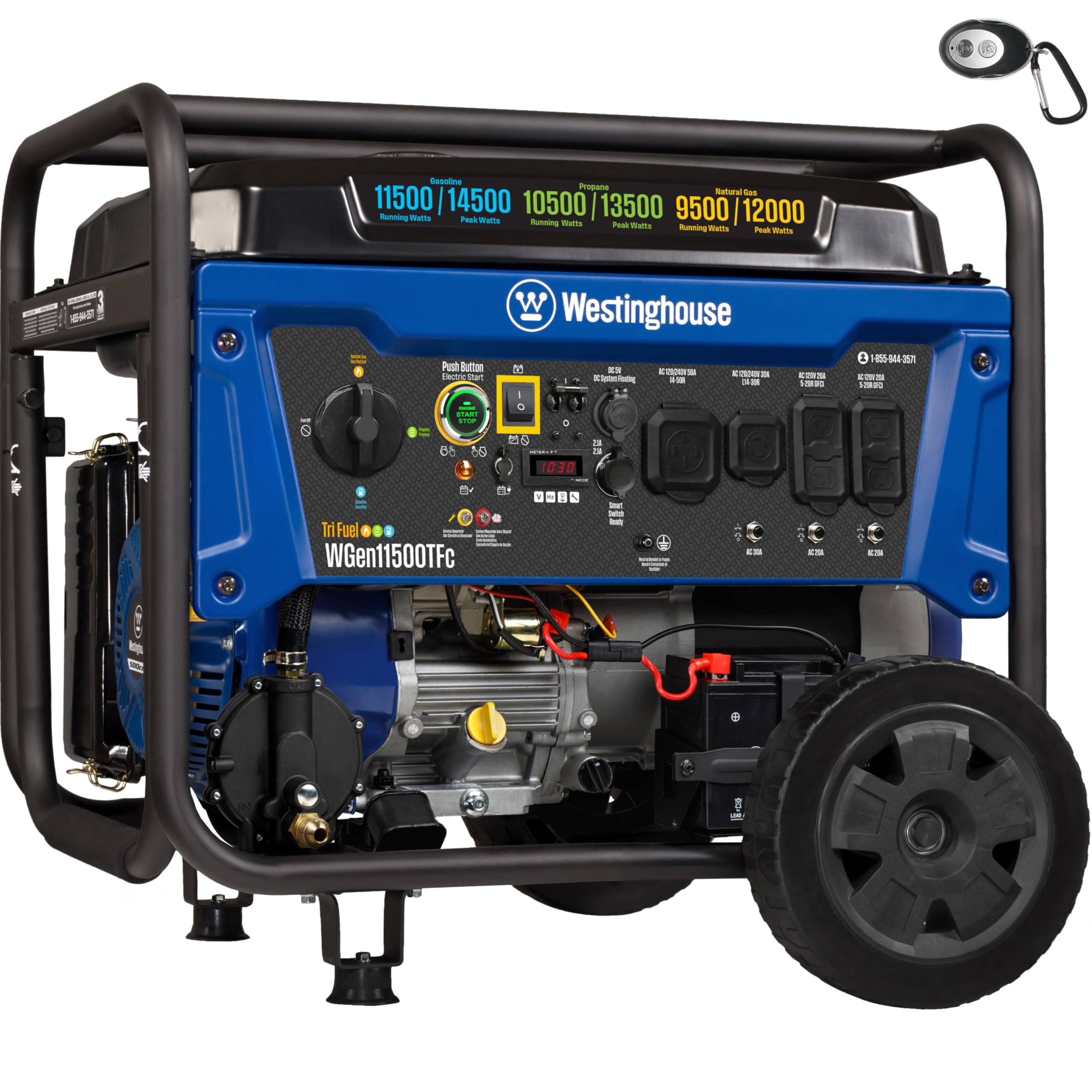
When I needed the highest output in this group, this Westinghouse delivered. Bigger engine, longer tank life, and low THD for sensitive electronics made it my pick for large homes.
Why I picked it: Highest running watts and low THD for sensitive electronics.
Best for: Large homes needing sustained whole-house power.
Premium capability for bigger electrical loads.
Pros
- Very high peak and running output
- Low THD for electronics
- Long 9.5 gal tank runtime
- Copper windings for durability
Cons
- Quite loud under load
- Too heavy for one person
My take
I set this unit up specifically to test whole-house loads; the 550cc engine starts fast and the unit sustained a pool pump, refrigerator, microwave, and several lights without issue. The low THD was immediately noticeable — my sensitive electronics ran cleanly.
Assembly was easy and the tool kit and accessories meant I had everything I needed out of the box. The remote start worked reliably and the fold-away handle makes moving it manageable, even if it’s still a two-person lift.
This is the generator I reach for when I want the confidence of long runtime and the ability to run an AC if necessary. It’s an investment in capacity and durability rather than portability.
4. Generac 6485 Scheduled Maintenance Kit for 20kW and 22kW Standby Generators – Best Maintenance Kit
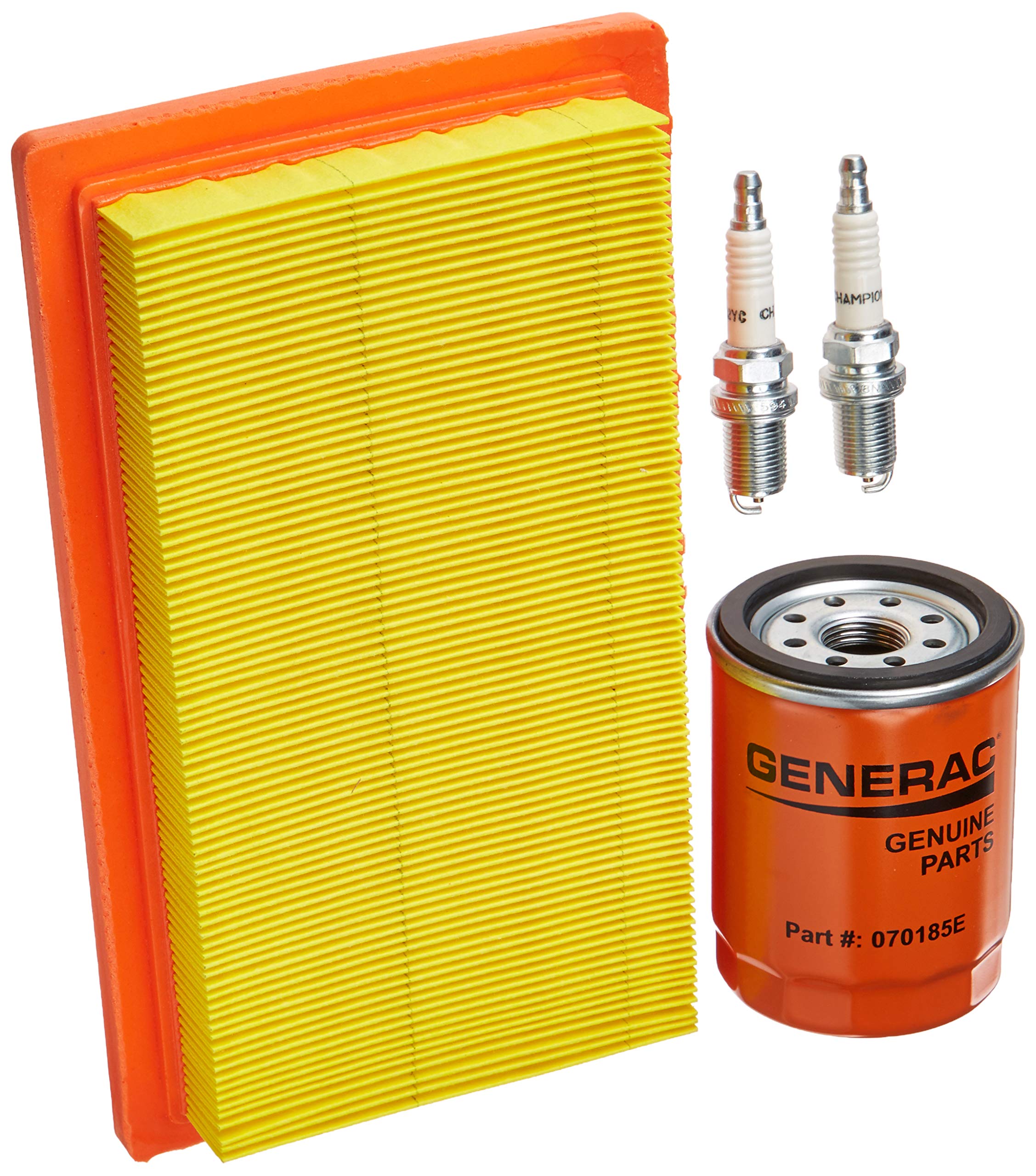
I keep this kit on hand to service standby home generators — it bundles the filters, spark plugs, and tools I need to complete a scheduled maintenance session in under an hour.
Why I picked it: Complete, OEM-compatible parts for scheduled maintenance.
Best for: Owners of Generac standby units needing an all-in-one service kit.
Economical way to source the correct service parts.
Pros
- All-in-one maintenance components
- Saves time sourcing parts separately
- Includes funnel and reminder sticker
Cons
- Oil must be purchased separately
- Air filter not branded visibly
My take
I used this kit to do a 200-hour scheduled service and finished faster than expected. The spark plugs and oil filter fit correctly and the included funnel and cloth made the job tidier.
If your generator model matches the listed part numbers, this kit removes the guesswork and reduces trips to multiple suppliers. I still bought oil separately to match my preferred spec, but the kit covered the core wearable parts.
For anyone comfortable doing basic maintenance, this kit lets you keep a standby generator in top shape without hunting parts individually.
5. Westinghouse 13500 Peak Watt Tri-Fuel Home Backup Portable Generator – Best Long-Run Tri-Fuel
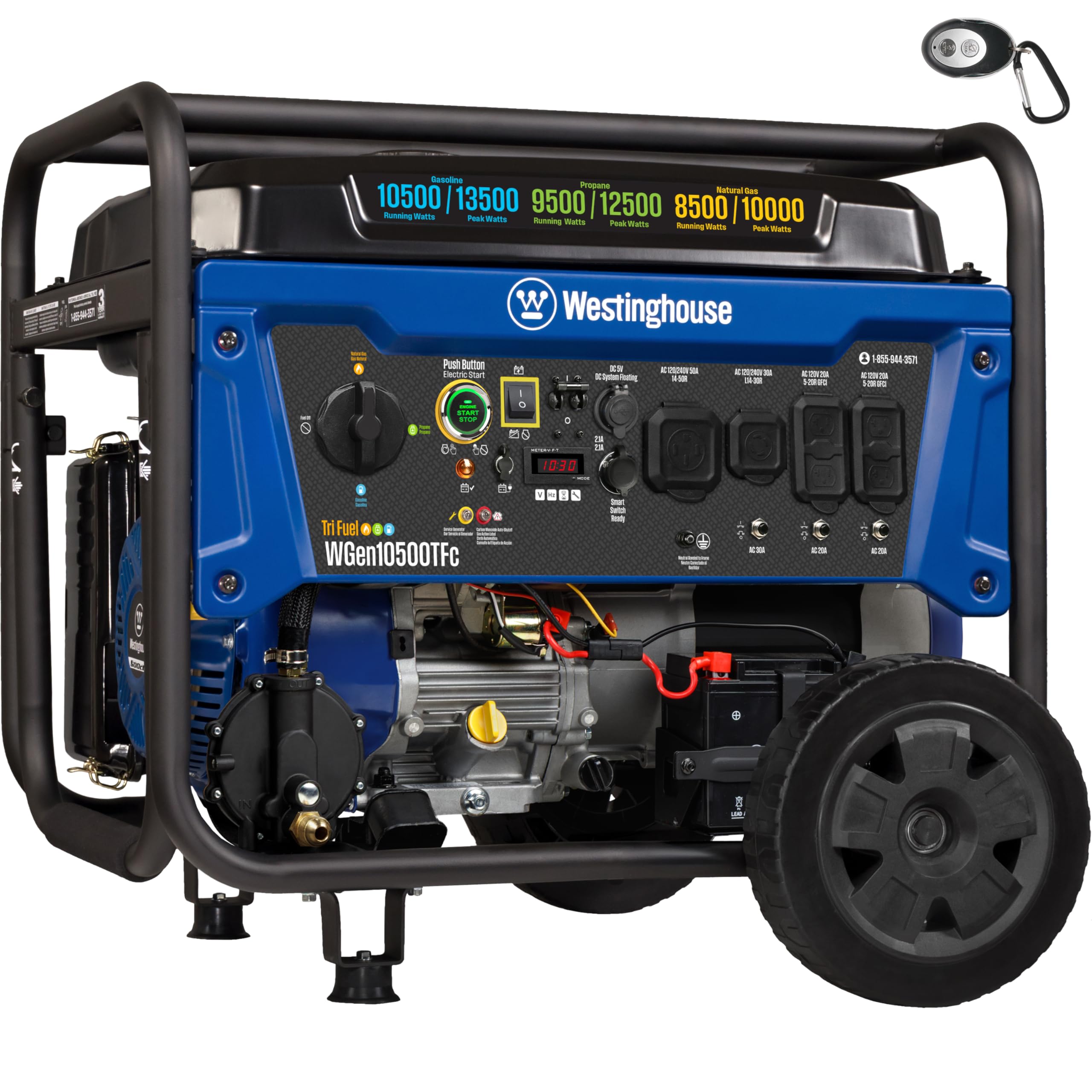
I picked this as the balance between high output and extended runtime—longer tank, tri-fuel options, and a compact control layout that made hooking into my interlock straightforward.
Why I picked it: Long 9.5 gal runtime with tri-fuel convenience.
Best for: Users who want long runtimes plus tri-fuel flexibility.
Mid-to-high range for runtime and features.
Pros
- Long runtime on a large tank
- Tri-fuel versatility
- Easy to move with heavy-duty wheels
- Remote start and clear controls
Cons
- Boxing and delivery can show wear
- Still heavy despite wheels
My take
I tested this Westinghouse during an extended outage simulation and was impressed by the steady power output and simple control panel. Assembly was straightforward and the included hoses and accessories helped me hook up both propane and natural gas quickly.
In practice I appreciated the long 9.5 gallon tank — it reduced my refueling stops compared with smaller units and handled multiple household loads without strain. The unit’s build felt rugged and thoughtfully packed.
This model strikes a solid balance between runtime and flexibility. If you want a generator that will run through a stormy weekend with minimal intervention, this is the unit I’d choose.
6. EF ECOFLOW DELTA 3 Portable Power Station, 1024Wh LiFePO4 Battery – Best Portable Battery Backup
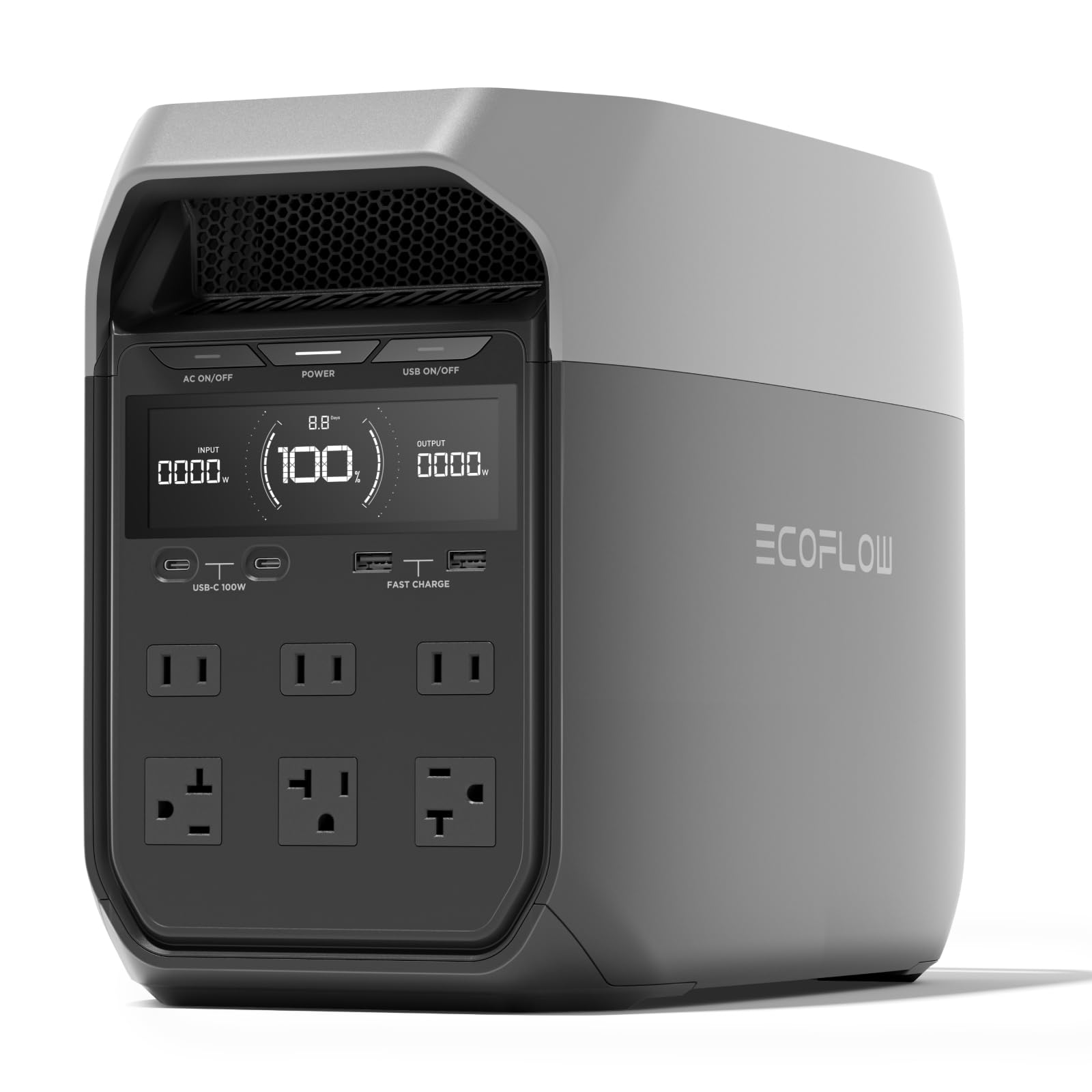
When I needed silent, emissions-free backup for essential loads and fast recharge, the EcoFlow Delta 3 was the obvious pick — it charges rapidly and powers multiple devices with LiFePO4 longevity.
Why I picked it: Fast charge, LiFePO4 longevity, quiet operation.
Best for: Quiet emergency power for electronics, camping, and RV use.
Higher upfront cost for quiet, maintenance-free backup.
Pros
- Full charge in under an hour
- LiFePO4 cells with long cycle life
- Powers many devices simultaneously
- Quiet and portable
Cons
- Not suited for large AC units
- Higher cost per usable watt-hour
My take
I used the Delta 3 to run laptops, a small fridge, lights, and charge phones during a storm drill — it handled thirteen devices at once and remained whisper-quiet. The ability to expand capacity with extra batteries gives me a path to more runtime if I need it.
Charging speed is the feature that impressed me most; a near-full battery in under an hour changed how I planned for short outages. The EcoFlow app also made monitoring and remote shutoff convenient from my phone.
For situations where silence, zero-emissions operation, and instant availability matter more than raw horsepower, I reach for the Delta 3. It’s my go-to for overnight power needs and for places where running a gas generator isn’t practical.
How I Choose a Home Backup Generator
Determine the load you need to run
I start by listing the appliances I want to run during an outage — well pump, refrigerator, AC, lights, and charging devices — and then calculate starting and running watts. Whole-house setups usually require the higher-output Westinghouse units; essentials-only setups can often use a battery station.
- Add starting watts for motors (AC, pumps) to running watts
- Plan for simultaneous loads when sizing generator
Choose fuel type based on availability
I prefer tri-fuel or dual-fuel generators if fuel access is uncertain. Natural gas removes the need to refuel, propane stores longer than gasoline, and gasoline gives maximum peak power.
- Natural gas: continuous supply if hooked to your line
- Propane: long storage life and easy swapping
- Gasoline: highest peak power but requires safe storage
Think about run time and tank size
Longer tanks reduce refueling frequency. I picked models with larger tanks for multi-day outages, and a battery option when I wanted quiet overnight power without refueling.
- Larger tanks = fewer refuels
- Battery stations require recharging but no fuel
Transfer switch and safety features
I always plan for a proper transfer switch or interlock to avoid backfeeding. Features like CO and low-oil shutdown add important peace of mind during extended use.
- Transfer-switch ready outlets simplify hookup
- Look for CO shutdown and automatic low-oil protection
Portability and ease of use
Wheels, folding handles, remote start, and included accessories make ownership easier. I value units that include hoses, tools, and funnels so I’m ready out of the box.
- Never-flat wheels and fold-away handles for movement
- Remote start saves trips in bad weather
Frequently Asked Questions
Can I run my whole house on a portable generator?
I have run whole-house loads on the larger Westinghouse models when they were sized appropriately and wired through a transfer switch or interlock. You need to match the generator’s running and starting watts to your home’s loads and coordinate installation with an electrician.
What are the advantages of tri-fuel over dual-fuel?
In my experience, tri-fuel adds natural gas as a hands-off option so you’re not dependent on stored propane or gasoline. That flexibility can be a major advantage during multi-day outages or in areas with fuel delivery issues.
Is a battery station like the EcoFlow a replacement for gasoline generators?
I treat battery stations as complementary. The Delta 3 is excellent for quiet, emissions-free power for electronics and small appliances, but it won’t replace a high-output gas generator when you need to run ACs or large motors for extended periods.
How often should I perform maintenance?
I follow the manufacturer's recommended schedule: routine checks after hours of operation and annual servicing for standby setups. Kits like the Generac 6485 make the regular maintenance tasks quick and reliable.
Final Take
I picked these models because they cover the spectrum of real-world backup needs: from large, tri-fuel machines that can run a whole house to quiet, fast-charging battery stations for essentials. Match the unit to the loads you actually need to run and plan installation with a transfer switch or interlock for safe operation.
If I had to summarize my choices: go with the larger Westinghouse models for whole-house resilience, keep a maintenance kit on hand for standby units, and use the EcoFlow Delta 3 when you need silent, emissions-free backup for electronics and short-duration outages.
