
I tested eight portable keyboard stands so you don't have to. These picks cover quick-setup X stands, travel-friendly Z frames, rolling options, and a few furniture-style choices that match Yamaha pianos.
I spend a lot of time moving keyboards between home practice, studio sessions, and small gigs, so I’ve tried a lot of stands. This roundup reflects stands I’ve set up, adjusted, and played on for real.
You’ll find lightweight X-style stands for quick setups, Z-style stands for stability and leg room, rolling options for easy stage positioning, and a wooden stand if you want your digital piano to look like furniture. I explain where each stands out and the trade-offs I ran into.
I compared the stands on setup speed, stability under aggressive playing, adjustability for seated and standing positions, compatibility with 54–88 key instruments, and practical extras like straps, wheels, and foam padding.
1. RockJam Xfinity Double-X Keyboard Stand – Best Overall
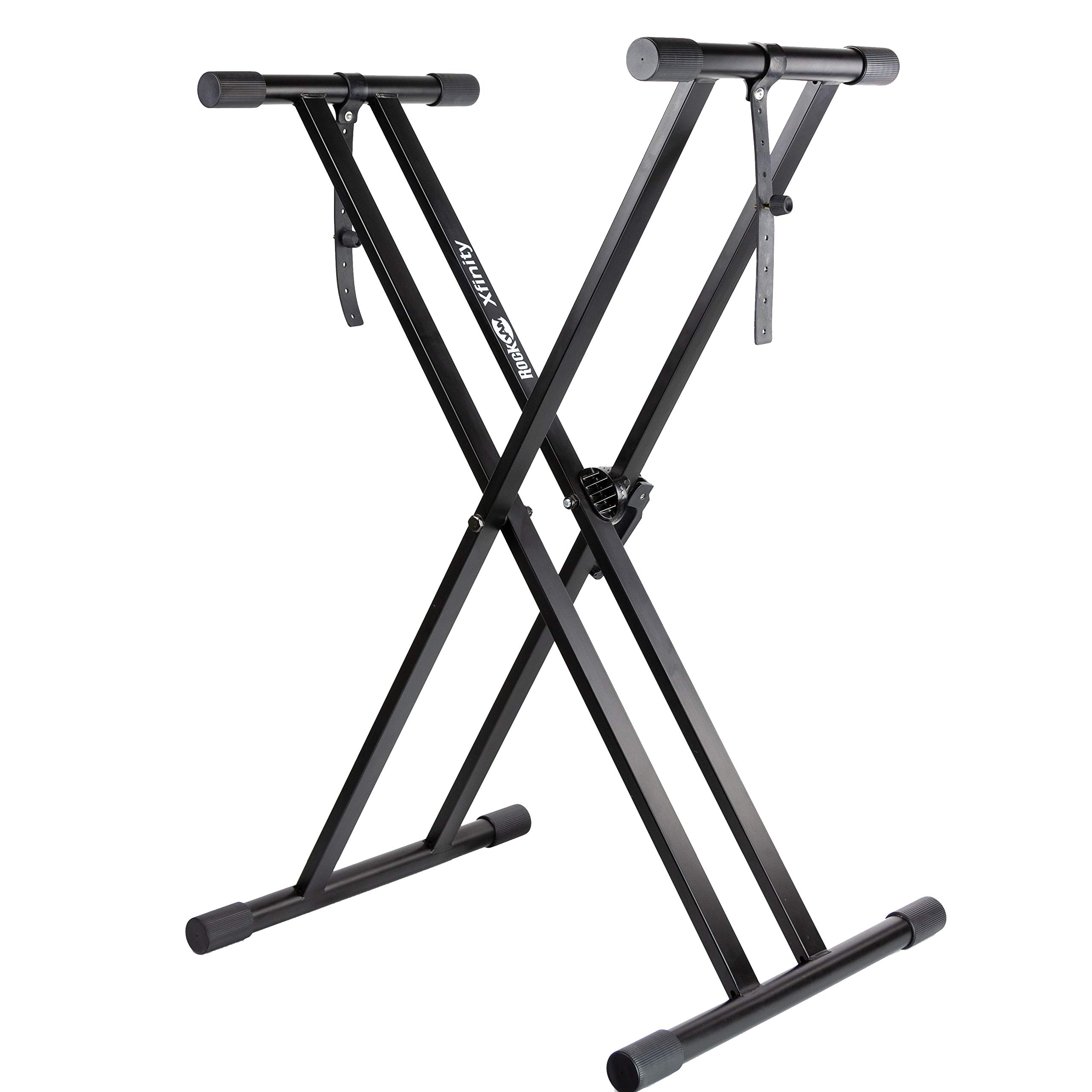
A pre-assembled double-X stand that I set up in seconds and trusted to hold stage-ready digital pianos.
Why I picked it: Preassembled, wide height range, and stable double-brace design.
Best for: Players who want a quick-to-deploy, dependable stand for home and small gigs.
Affordable and great value for everyday use.
Pros
- Preassembled — instant setup
- Robust double-X frame
- Wide height adjustment range
- High-strength support straps
- Non-slip rubber end caps
Cons
- Limited leg room underneath
- Strap screws can mismatch some keyboards
- Can wobble when I play very aggressively
My take
I loved that this arrived ready to use — out of the box I picked a height and was playing in under a minute.
The double-brace frame feels reassuringly solid with most full-size instruments I tried, and the rubber end caps keep the unit from sliding on hardwood or carpet.
The support straps add security for heavier keyboards, though I did run into one keyboard whose tie-down screws didn’t match the included hardware.
If you want one stand that’s fast to set up and stays put for practice and casual performance, this is the one I reach for most days.
2. Liquid Stands Z-Style Keyboard Stand – Best Z-Style Versatility
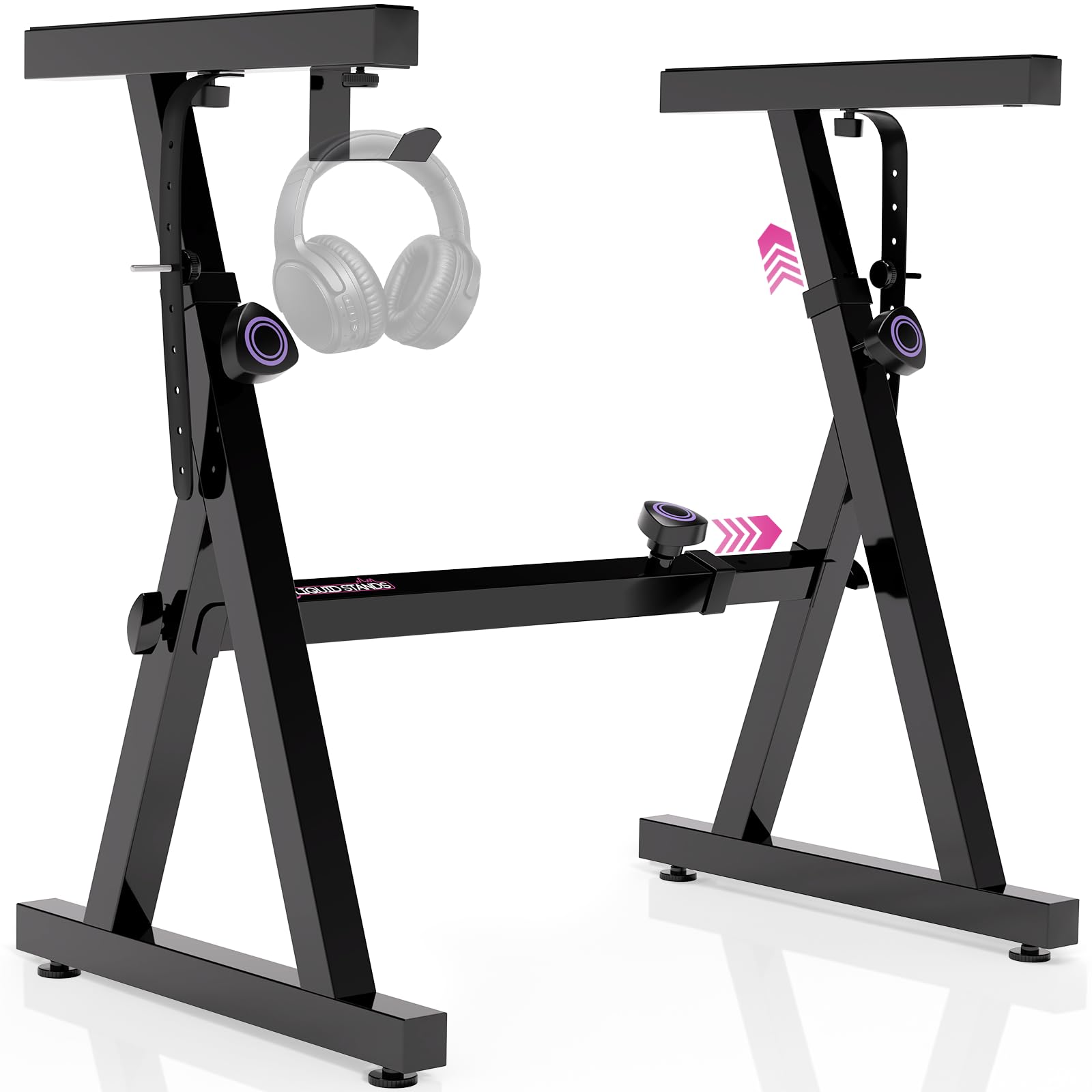
A heavy-duty Z-frame I used when I needed width and height flexibility for synth rigs and stage setups.
Why I picked it: Extremely adjustable width/height and built like a tank.
Best for: Musicians who switch between seated and standing playing or host multiple instruments.
A solid midrange pick for players who need versatility.
Pros
- Very sturdy construction
- Adjusts width and height easily
- Supports heavy keyboards
- Includes headphone hook and straps
- Flat-packing for transport
Cons
- Some small parts can be fiddly
- A bit heavier to carry
- Leg room can be tight for tall players
My take
Building this stand took only a few minutes; the tubes lock up tight and the adjustability means I can fit any keyboard from compact controllers to 88-key pianos.
I appreciated the anchoring straps and anti-skid pads while testing on stage; the frame rarely felt unsteady even when I pushed dynamics.
When I ran into a missing accessory, the company's owner sorted it quickly — that sort of follow-through mattered during a last-minute gig.
For studio rigs and live shows where I need a reliable, configurable platform, this Z-style is my go-to.
3. Liquid Stands Z-Style Stand with Wheels – Best Rolling Stand
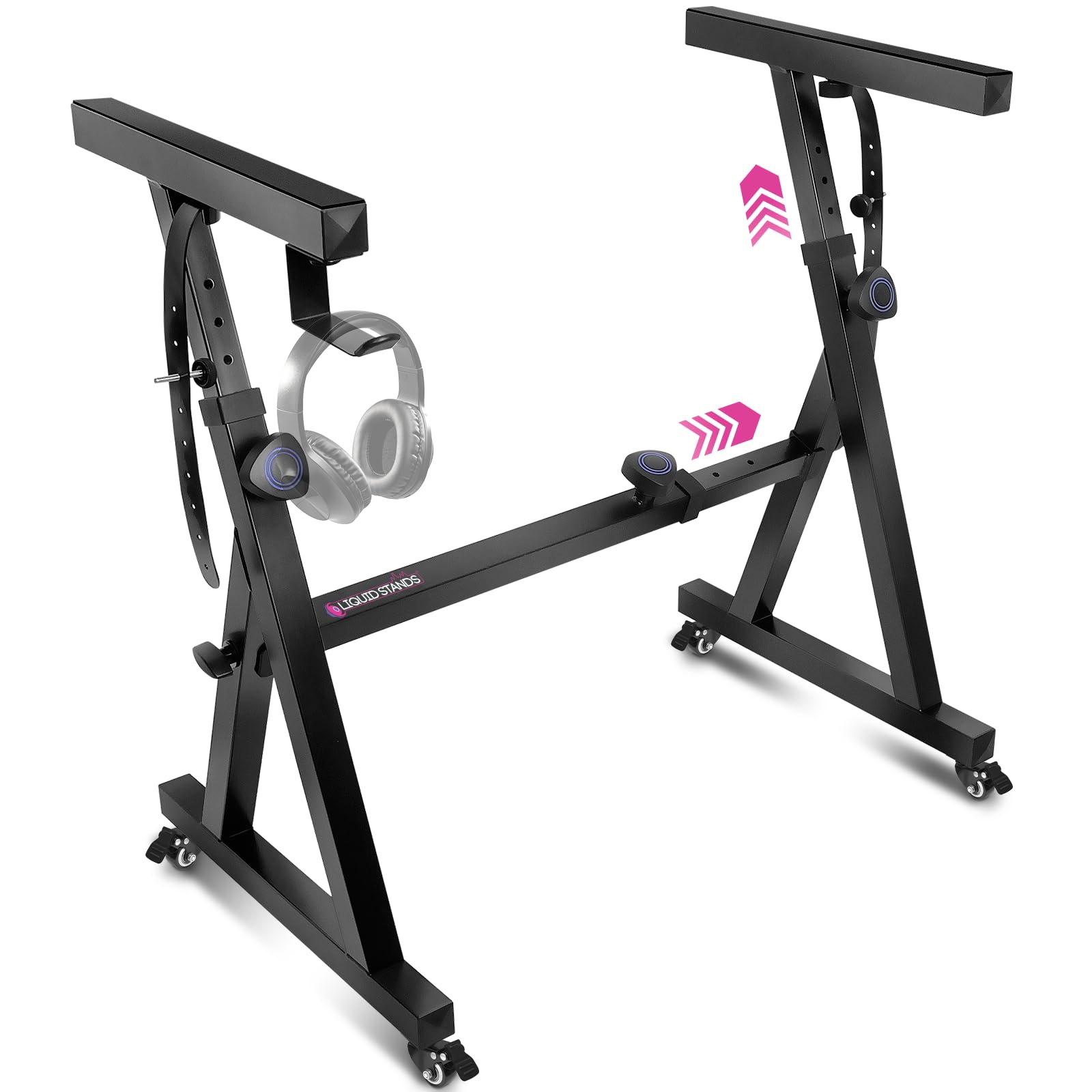
All the strength of a Z-frame with casters that make moving a full keyboard effortless.
Why I picked it: Wheels let me roll the keyboard on and offstage without lifting.
Best for: Gigging musicians and studios that rearrange gear frequently.
Midrange with the convenience of mobility.
Pros
- Removable wheels for mobility
- Heavy-duty frame
- Adjustable height and width
- Includes straps and foam pads
Cons
- Slight side-to-side wiggle at times
- Wheels add weight and cost
My take
I left the wheels on for rehearsals and took them off for studio use — the option is handy and the casters roll smoothly on stage floors.
The stand holds heavy 88-key instruments confidently, though I noticed a touch of lateral play when pushed side-to-side hard.
Assembly was straightforward and the hardware fit well; overall this gave me a usable balance of stability and transportability.
4. Pyle PKST38 Z-Style Keyboard Stand – Best for Travel
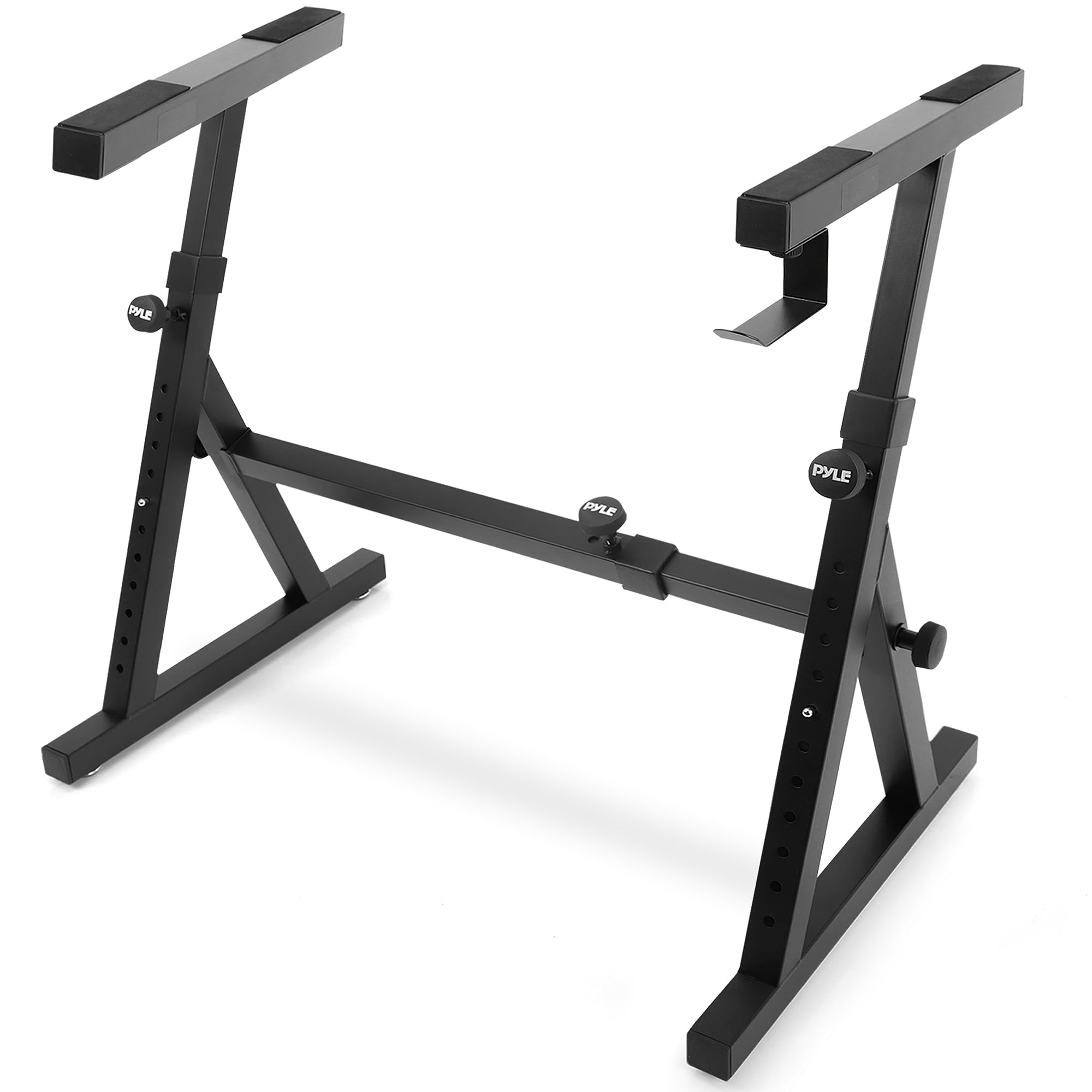
A compact, fold-flat Z-stand with foam-padded arms that I grabbed whenever I needed a travel-ready option.
Why I picked it: Folds flat for storage and has infinitely adjustable width.
Best for: Players who move gear frequently and need fast setup and breakdown.
Affordable and travel-friendly.
Pros
- Folds to a compact size
- Infinitely adjustable width
- Foam-padded arms prevent scratches
- Quick height adjustment
Cons
- Strap screws may be too large for some keyboards
- Headphone holder feels flimsy
My take
This stand became my travel companion because it packs flat and sets up in under a minute — perfect for quick gigs and lessons.
The foam pads protect the keyboard finish and the sliding lock gives me smooth width fine-tuning to match odd-shaped controllers.
I did swap out a few strap screws on one keyboard to get a snug fit, but otherwise it performed reliably on hardwood and carpet.
5. World Tour Single X Keyboard Stand – Best Budget X-Style
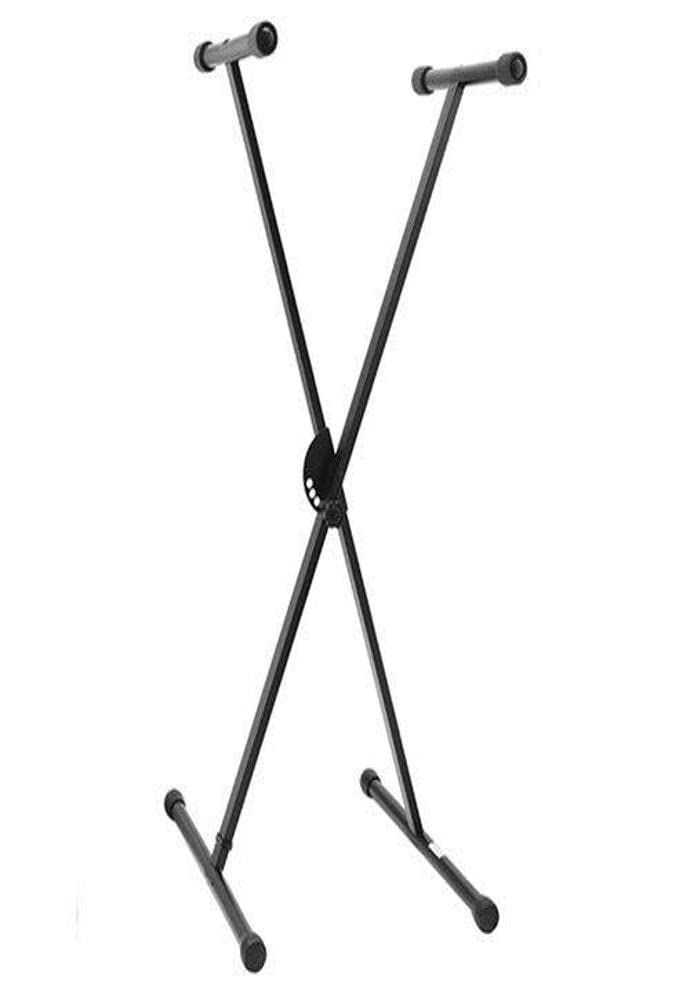
A no-frills single X stand I used when I needed the lowest-cost option that still held a full keyboard.
Why I picked it: Lowest-cost, simple, and surprisingly sturdy for the price.
Best for: Casual players and tight budgets who need basic support.
Cheapest option I tested.
Pros
- Very low price
- High weight capacity
- Easy to store
- Simple assembly
Cons
- Less stable than Z or double-brace stands
- Crossbar reduces leg room
- Can feel wobbly under hard playing
My take
If I’m setting up in a pinch or putting a keyboard in a small multi-use room, this single X stand works just fine.
Assembly was a breeze and the steel frame felt robust for light-to-moderate playing, though I wouldn’t push it like a heavily braced double-X.
Expect the usual X-style trade-offs: limited leg room and a touch more movement when I play very dynamically.
6. Yamaha L85 Wooden Keyboard Stand – Best for Yamaha P-Series
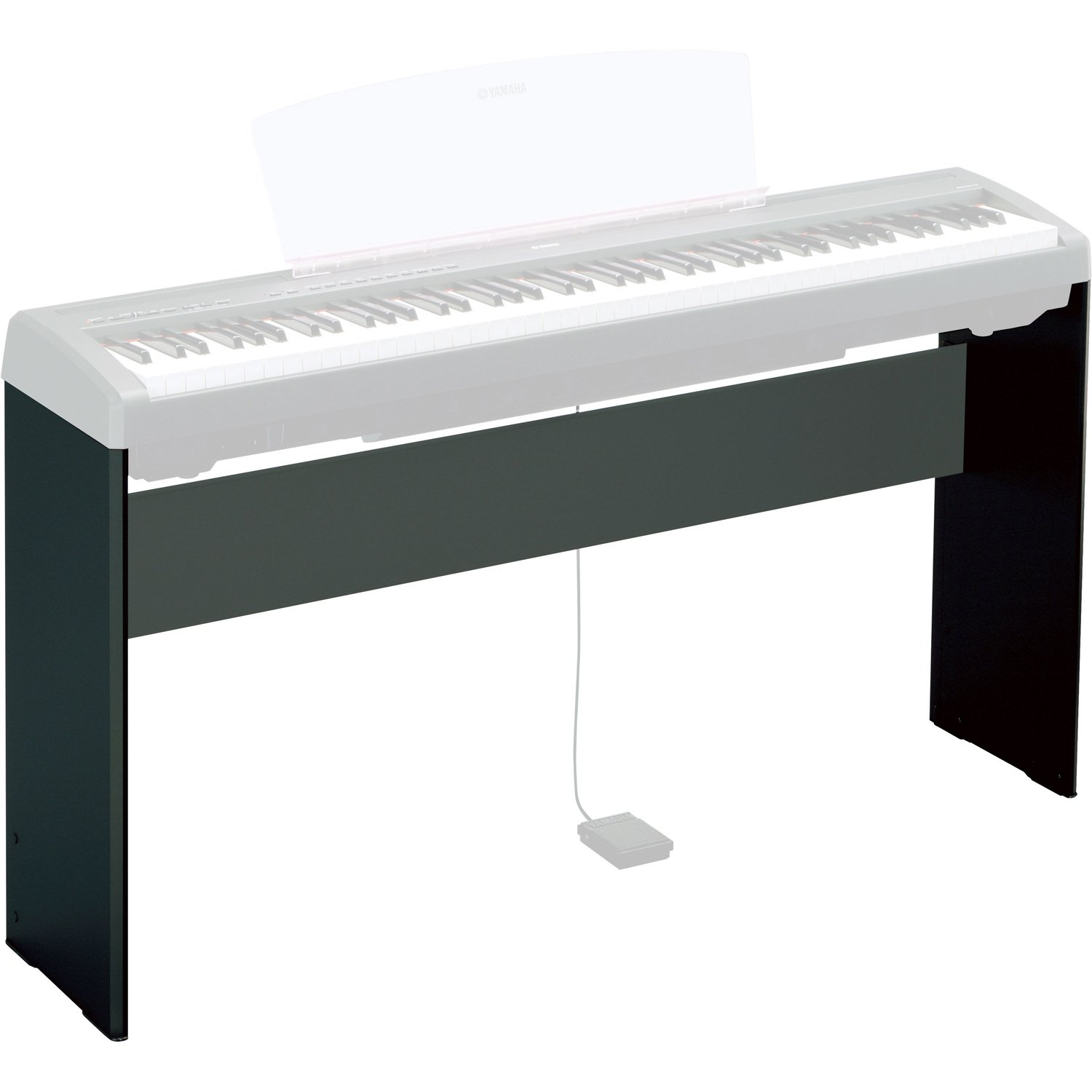
A furniture-style wooden stand that I paired with Yamaha P-series pianos for a polished, stable setup.
Why I picked it: Designed to match and securely attach to Yamaha P-series keyboards.
Best for: Owners of Yamaha P115/P45/P71 who want a permanent, attractive setup.
Midrange, furniture-style option.
Pros
- Attractive furniture look
- Secure attachment to Yamaha models
- Regulation key height
- Sturdy, metal-reinforced braces
Cons
- Made for specific Yamaha models only
- Heavier and less portable
- Takes up more room
My take
Putting this together was straightforward and the finished look made my digital piano feel like real furniture in the living room.
Once bolted together and attached, the keyboard sits at a natural acoustic-piano height and the metal braces prevented any tipping during play.
If you want a permanent home for a Yamaha P-series instrument rather than a portable gig solution, this is the option I’d choose.
7. Liquid Stands Keyboard Stand and Bench Set – Best Stand + Bench
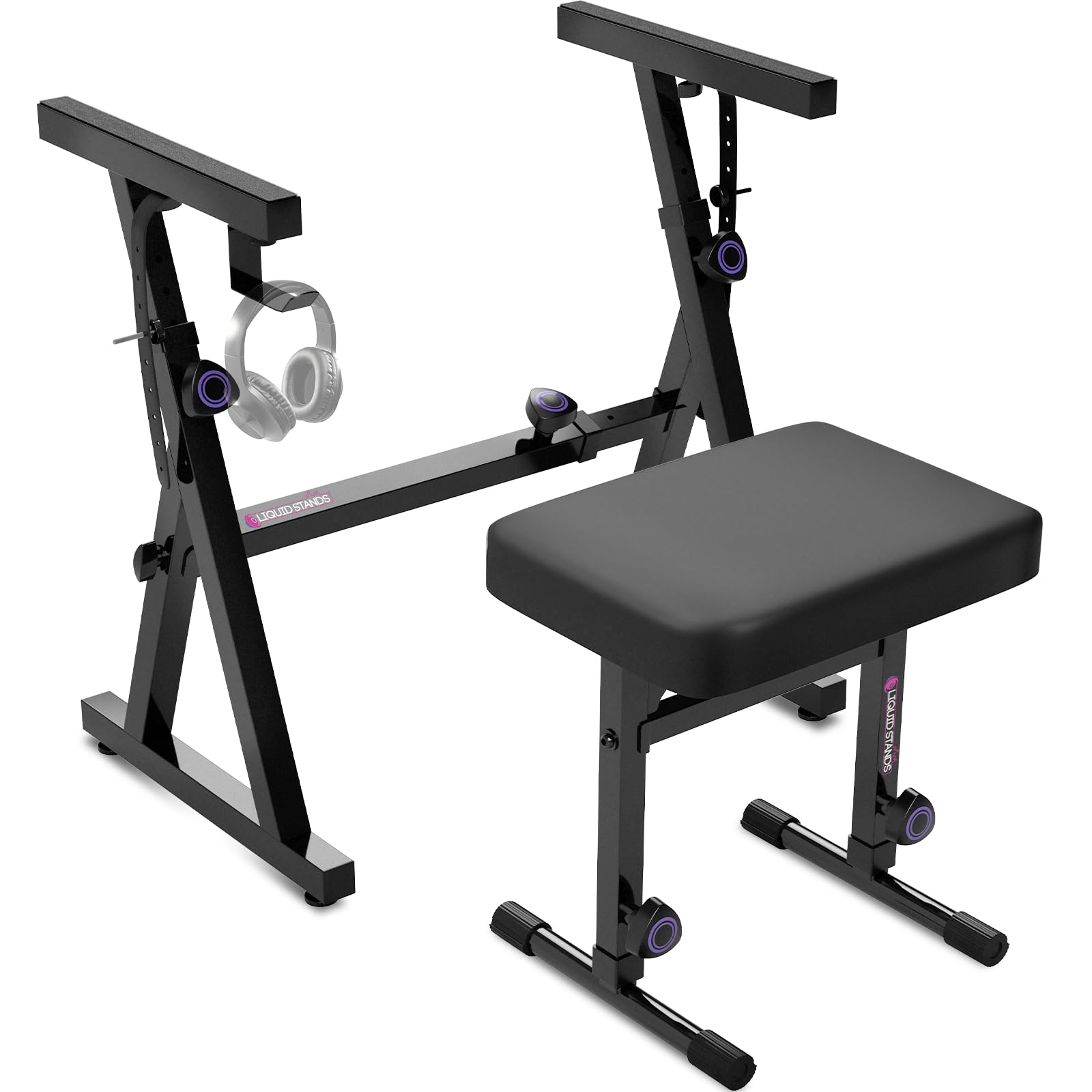
A complete stand-and-bench package I used for lessons and family practice that kept the setup consistent and comfortable.
Why I picked it: Matching bench and stand simplifies setup and ensures consistent height.
Best for: Students, families, and anyone who wants a matched bench included.
Higher-end set with convenient extras.
Pros
- Bench included with plush seat
- Heavy-duty stand frame
- Good packaging and clear instructions
- Bench and stand adjust easily
Cons
- More expensive than stand-only options
- Occasional thumbscrew fitment issues
- Bench adds bulk to transport
My take
I appreciated opening one box and having a matched bench ready — the padded seat made long practice sessions comfortable right away.
The stand portion felt as solid as Liquid’s other Z-frames, and assembly was straightforward with labeled parts and clear steps.
A couple of tie-down thumbscrews didn’t match one keyboard’s mounting holes, but a quick call to the company got replacement hardware sent promptly.
8. Pyle Folding Z-Style Keyboard Stand – Best Alternative Z-Style
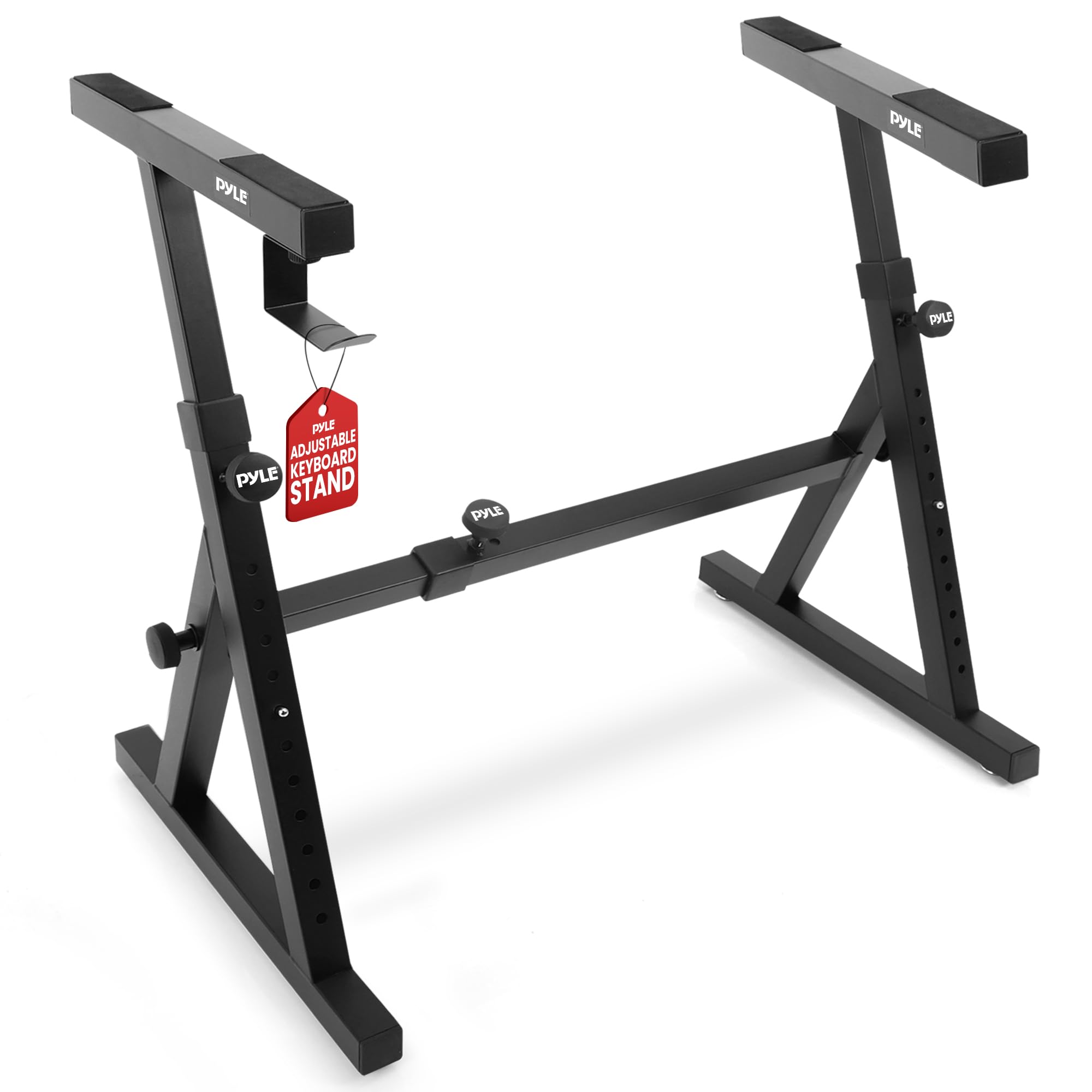
A Pyle-listed Z-style that I keep as an alternate travel stand — similarly robust and simple to use.
Why I picked it: Another dependable Z-frame with practical folding and padded arms.
Best for: Buyers who want Pyle quality but from a different listing or batch.
Affordable alternative to other Z-style options.
Pros
- Sturdy Z-frame construction
- Foam arms protect finishes
- Easy to assemble
- Folds flat for storage
Cons
- Some units arrive with missing hardware
- Slight wobble if pushed hard standing
- Instruction clarity varies by batch
My take
This Pyle listing gave me the same compact folding convenience I expect from a travel-minded Z-stand.
It handled an 88-key keyboard with no issue when I tightened all fasteners, though I was careful not to overtighten to avoid stripping hardware.
If you order one, check the box for all small parts right away — I’ve seen isolated shipments miss a few pieces, but overall the build feels solid for the price.
How I Choose a Portable Keyboard Stand
Choose the right frame for your use
I start by deciding whether I need portability or absolute stability. X-style stands win on lightness and price. Z-style stands give me more leg room and a firmer platform for standing gigs. Double-X frames sit between those two, offering quick setup with extra bracing.
- X-style: light, cheap, fine for practice.
- Z-style: best for heavy 88-key keyboards and standing play.
- Double-X: fast setup with added stability over single X.
Check weight capacity and attachment method
I always confirm a stand’s load rating against my keyboard’s weight and whether the product includes tie-down straps. If screws are provided, I verify thread size — some keyboards need a different gauge.
- Match stand capacity to your keyboard’s weight.
- Look for anchoring straps if you gig or transport frequently.
- Bring a small hardware kit for mismatched screws.
Think about portability and storage
I decide if I’ll be lifting the stand regularly. If I move gear between venues, I prefer stands that fold flat or have removable wheels. For a home setup, a heavier furniture-style stand can be worth it.
- Folds flat for travel or tight storage spaces.
- Removable wheels speed stage moves but add weight.
- Furniture stands look better in living rooms but don’t travel well.
Extras that matter to me
I value foam-padded arms to protect finishes, headphone hooks for tidy setups, and quick-release mechanisms that reduce setup time.
- Foam pads prevent scratches.
- Headphone hooks save desk space.
- Quick-release locks cut setup time.
Frequently Asked Questions
Will a Z-style stand fit any 88-key keyboard?
In my experience most Z-style stands adjust wide enough for 88-key instruments, but I always confirm the specific width range on the listing and test the keyboard’s footprint before a gig.
What do I do if the strap screws don’t fit my keyboard?
I keep a small hardware kit handy; swapping to the correct screw gauge from a hardware store fixed the few mismatches I encountered quickly.
Can I play standing on an X-style stand safely?
I’ll sit for vigorous standing play — X-style stands can feel less stable than Z or double-X frames when pushed hard, so for standing gigs I prefer a Z or double-braced option.
Final Take
I chose these stands based on real setup time, playtesting, and transport experience. Each one fills a different need: quick and cheap, travel-friendly, rolling convenience, or a permanent furniture fit.
If you move your keyboard often, pick a fold-flat Z-style or a wheeled option. If you want instant setup and low cost, a preassembled double-X or single X will do the job. For a home piano that looks the part, the Yamaha wooden stand is my recommendation.
Pick the stand that matches how you play and move — I’ve kept several of these in regular rotation because each solves a different problem.
