
I tested six portable radios so you can pick the right mix of power, reception, and features for emergencies, camping, or daily listening.
I spend a lot of time testing compact radios because I want gear that works when the power goes out and sounds good when I'm relaxing outdoors.
In this roundup I evaluated battery and charging options, reception across AM/FM/NOAA (and shortwave where available), speaker quality, and practical features like flashlights, hand cranks, and Bluetooth.
Below are the radios that stood out to me in different roles — from full-on emergency powerhouses to retro Bluetooth units for backyard listening.
I compared these radios head-to-head for power options, signal reception, and real-world usefulness during outages and outdoor use, so you'll see why each one earned its slot.
1. Emergency Crank Weather Radio, 14800mWh Solar Hand Crank Portable AM/FM/NOAA Weather Radio with 1W 3 Mode Flashlight & Reading Lamp, Cell Phone Charger, SOS for Home and Emergency 090P-Green – Best Overall Emergency Radio
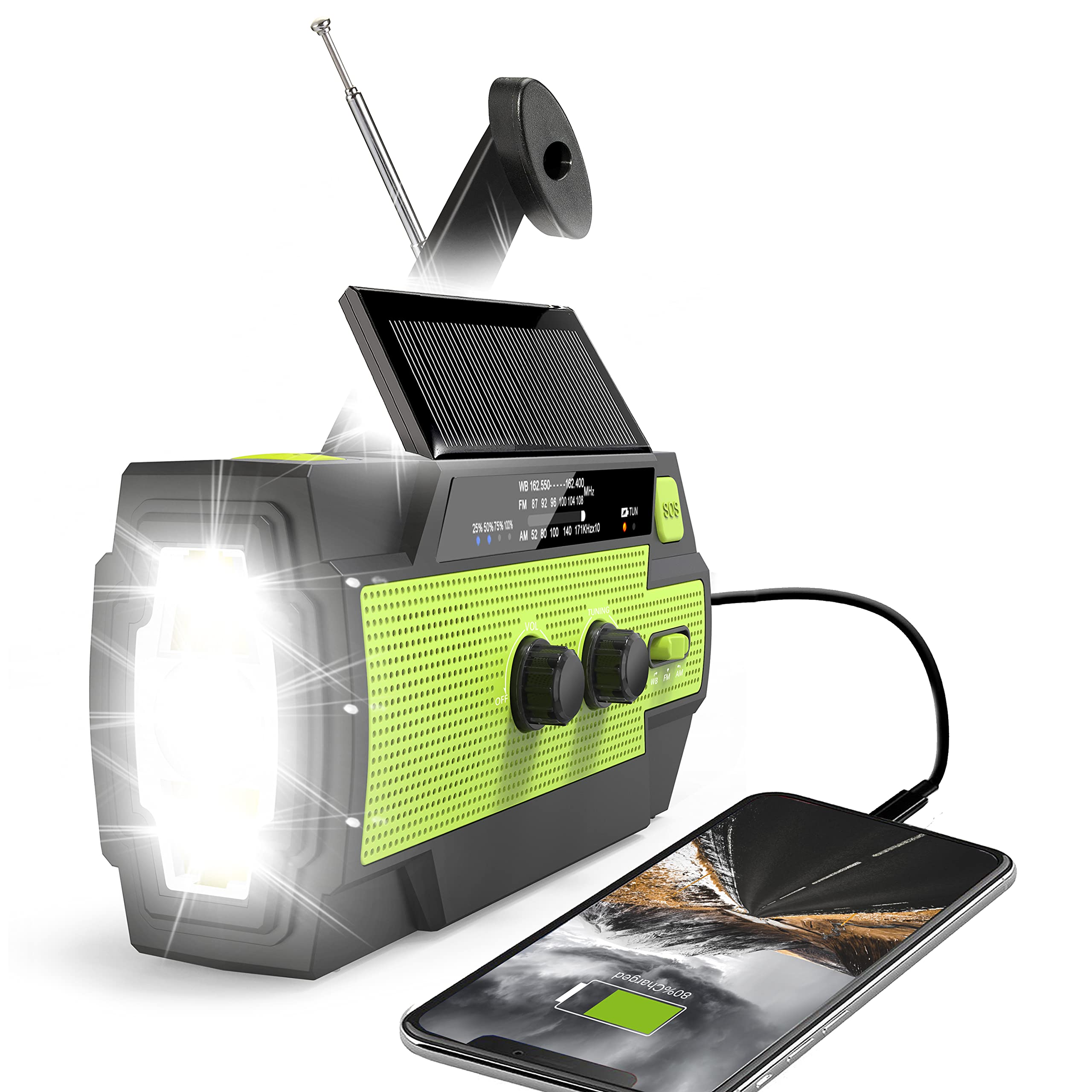
I picked this as my go-to emergency radio for its large internal battery, multiple charge methods, and powerful lighting.
Why I picked it: Big battery and every charging mode I need during outages.
Best for: Home emergency kits and extended outages.
Great value for an all-in-one emergency unit.
Pros
- Massive 14800mWh (4000mAh) battery
- Multiple charging modes (USB/solar/crank)
- Very bright 3-mode flashlight
- NOAA weather band included
- Phone charging capability
Cons
- Hand crank needs steady effort
- Bulky compared with pocket units
My take
This radio is the one I reach for when I need backup power and reliable weather info. The 14800mWh (4000mAh) battery lets me charge phones more than once and keeps the radio and lights running through extended outages.
I appreciated the three-mode flashlight and a motion-sensor reading lamp — the light throws a long beam and the lamp helps me move around at night without blasting the whole room.
Tuning NOAA and local stations was straightforward and sound was clear enough for spoken alerts and news. The external antenna and solid speaker make it more usable than many tiny emergency radios.
The crank does charge the unit, but it takes patience; I prefer topping up with USB or solar when I can. Overall, this is my best all-purpose emergency pick when I want power, light, and dependable weather alerts.
2. Esky Emergency Hand Crank Radio 7400mWh with 3 LED Flashlight, AM/FM/NOAA Portable Weather Radio with Rechargeable 2000mAh Battery, Solar Powered Radio for Indoor Outdoor Survival Camping, SOS Alarm – Best Budget Emergency Radio
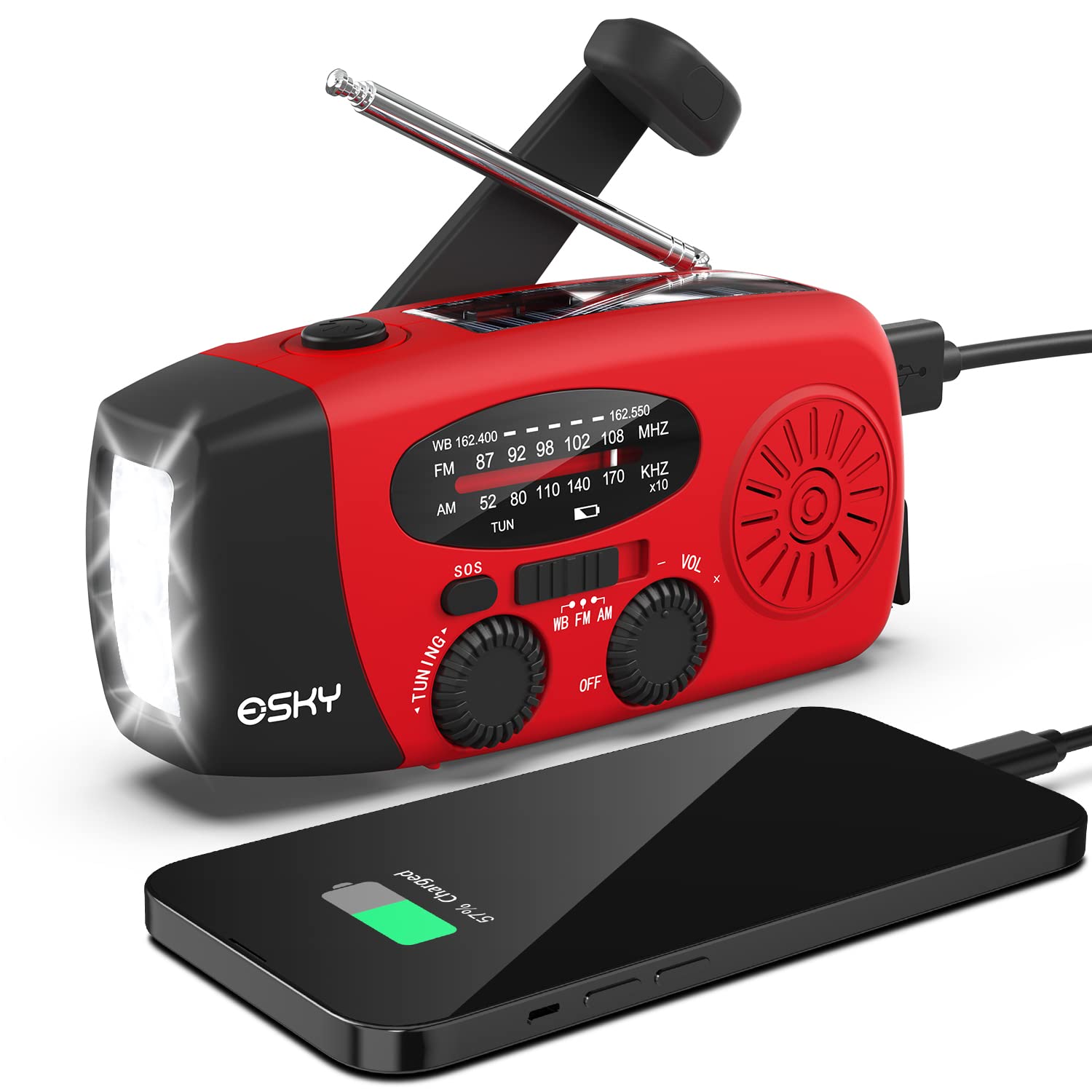
I recommend this when you want essential emergency features without spending much — solid lights, hand-crank, and NOAA reception.
Why I picked it: Compact, lightweight, and covers the essentials affordably.
Best for: Backpacks, glove compartments, and basic emergency kits.
Budget-friendly and practical for basic preparedness.
Pros
- Three charging modes
- Compact and lightweight
- 140-lumen LED flashlight
- NOAA band for alerts
- Includes SOS alarm
Cons
- Limited phone-charge capacity
- Smaller speaker than larger units
My take
I kept this radio in my car and camping bag for months because it’s small and dependable. The 2000mAh power bank gives me enough emergency phone juice to make calls or send texts.
The 3-LED flashlight is surprisingly bright and lasted far longer on a charge than I expected. That brightness alone makes it useful around the house during outages.
Reception for AM/FM/NOAA was reliable on my tests, and the hand crank and solar panel mean it won’t leave me completely powerless. For a low-cost, no-frills emergency radio, this one hits the most important marks.
3. Retekess TR604 AM FM Radio,Portable Radio Plug in Wall,D Battery Operated,Large Dial,High/Low Tone Mode,Big Speaker,Earphone Jack,for Home,Picnic,Senior Black classic – Best for Seniors & Simple Use
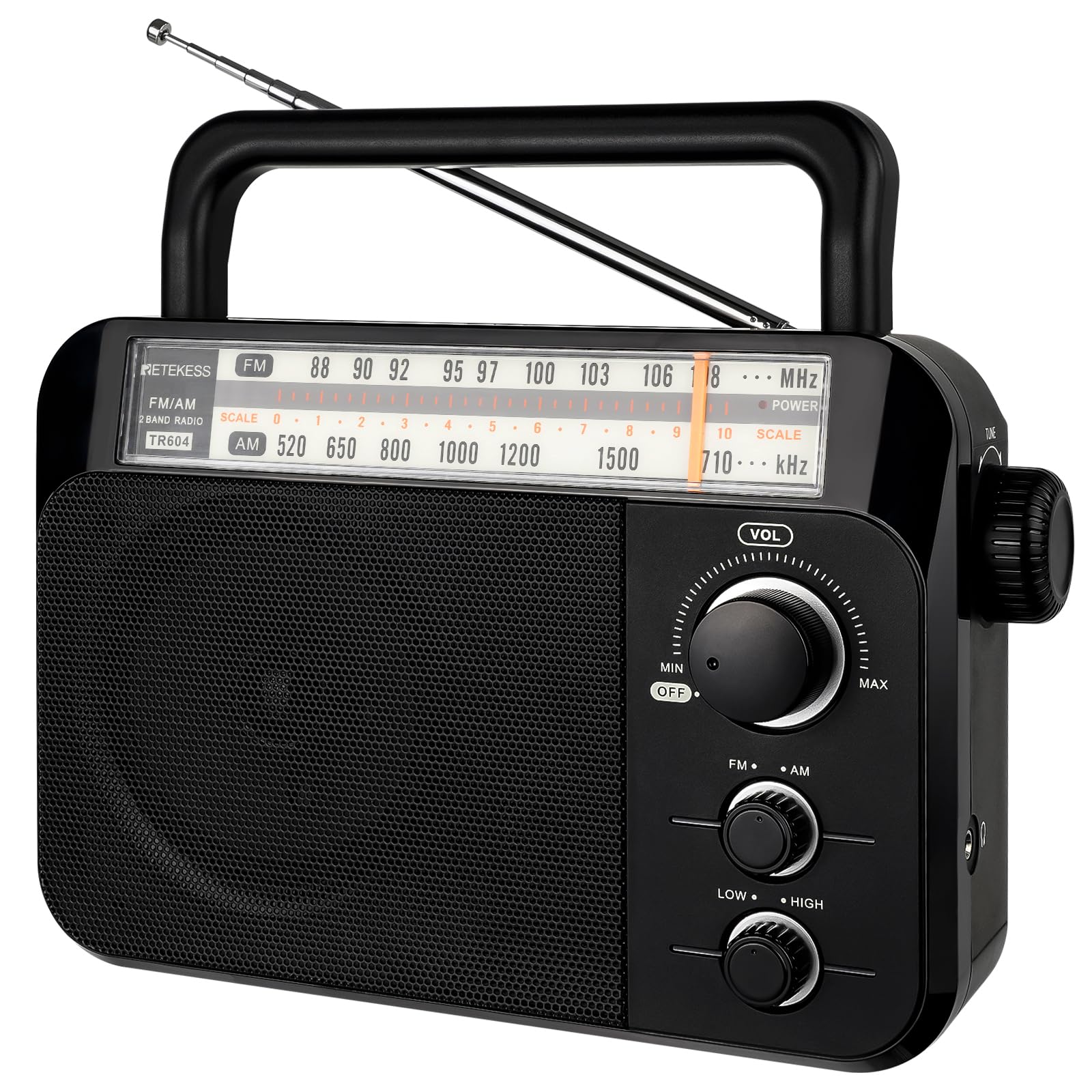
I recommend this for anyone who values big knobs, simple tuning, and a full-bodied speaker over emergency charging bells and whistles.
Why I picked it: Large controls and strong speaker make it easy to use.
Best for: Seniors, bedside listening, and straightforward home use.
Affordable classic-style radio with straightforward controls.
Pros
- Large tuning knob and analog dial
- Powerful 2W speaker
- Runs on D batteries or AC
- Long telescopic antenna
- Simple, durable design
Cons
- No built-in rechargeable battery
- Not designed for extreme portability
My take
I use this Retekess when I want a no-fuss radio with a speaker that fills a room. The large dial and volume knob are a relief if you dislike tiny buttons.
AM and FM reception held up well in my house; the long antenna and sensitive tuner pulled in weaker stations cleanly. The sound is surprisingly full for a compact transistor radio.
Because it accepts D cells and also plugs into AC, this is a reliable bedside or garage radio. I’d choose it over tiny emergency units when sound quality and simplicity matter most.
4. AM FM Portable Radio Battery Operated by 4X D Cell Batteries Or AC Power Transistor Radio with and Big Speaker, Standard Earphone Jack, High/Low Tone Mode, Large Knob – Best Classic Transistor Radio
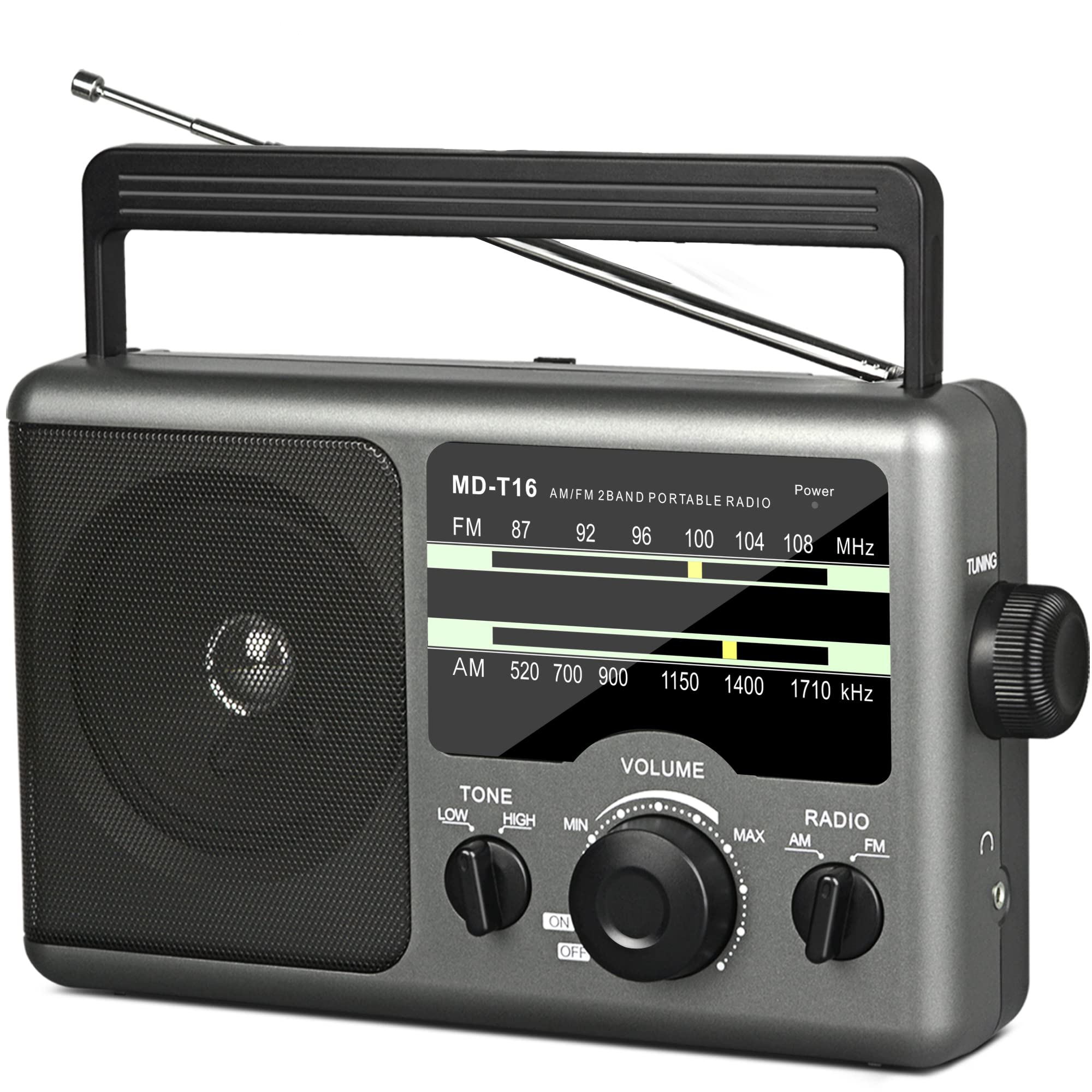
I like this if you want old-school analog tuning, tone controls, and flexible power options for home or outdoor use.
Why I picked it: Tone modes and dual power sources give flexible listening.
Best for: Garage work, camping near power, and casual music or talk.
Reasonably priced for a sturdy analog radio.
Pros
- High/low tone modes
- AC or 4×D battery power
- Big speaker for louder sound
- Earphone jack included
- Sturdy, classic look
Cons
- Monophonic sound
- Bass can be weak for music lovers
My take
I kept this radio in my workshop because it tolerates knocks and still delivers clear talk radio and live broadcasts. The two tone settings are handy — high tone cuts through noisy environments, low tone is easier on the ears at night.
It picks up FM and AM stations well, and the option to run on D cells or AC gives me flexibility when I’m away from outlets. The sound won’t replace a stereo, but it’s loud and clear for news and sports.
If you want a dependable, analog-style portable with physical knobs and good reception, this model is an easy, sensible pick.
5. FM/AM/NOAA Weather Radio Hand Crank Self Powered Solar Portable Mini Emergency Survival Radios with 3 LED Super Bright Flashlight 2000mah Battery Operated Power Smart Phone Charger,SOS – Best Pocket Emergency Radio
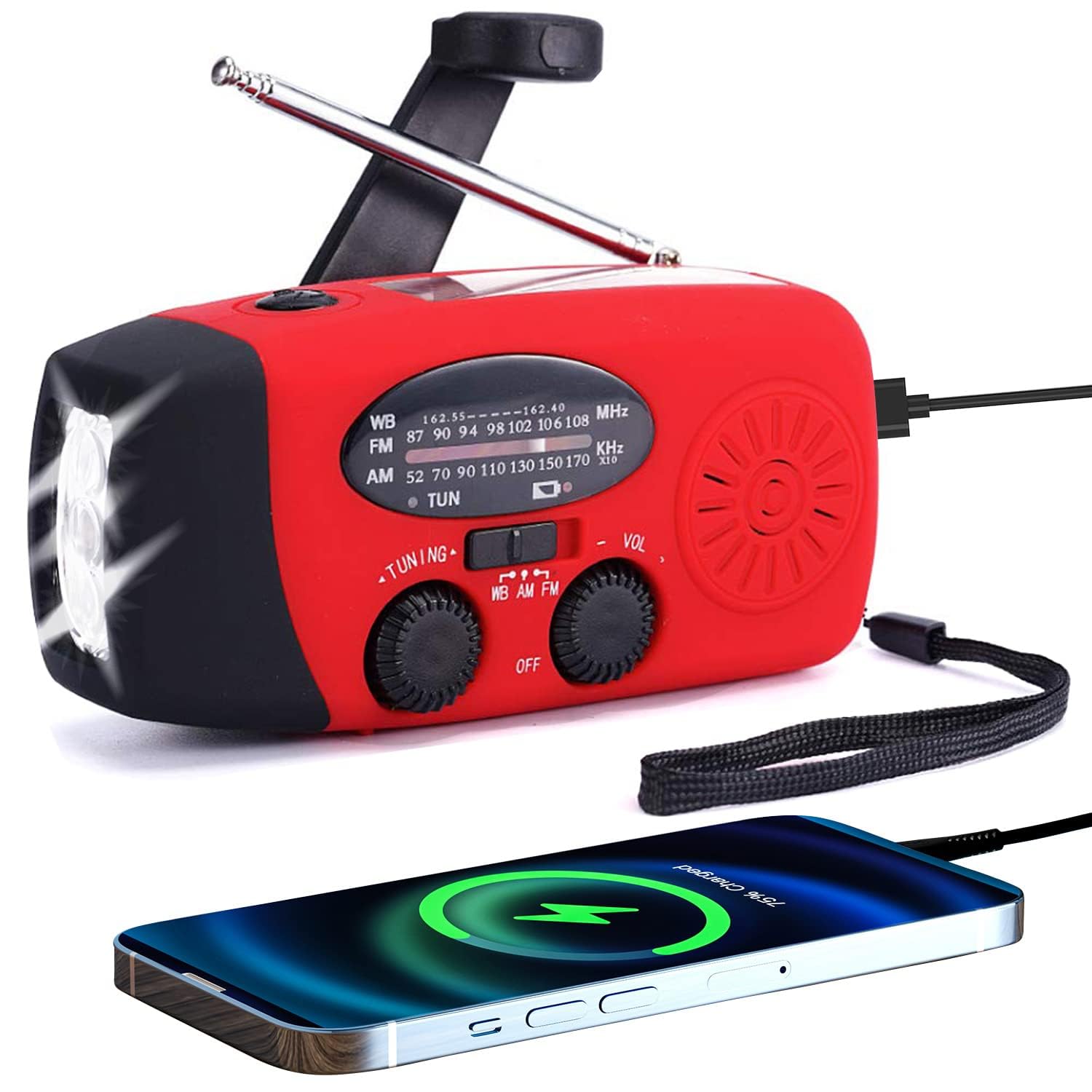
I carry this one when I want a tiny, pocketable radio that still gives NOAA alerts, a bright flashlight, and an SOS siren.
Why I picked it: Small size with surprisingly loud output and NOAA coverage.
Best for: Go-bags, pockets, and quick grab-and-go use.
Very affordable pocketable option.
Pros
- Pocket-sized and lightweight
- NOAA band and AM/FM
- Built-in SOS siren
- 3×1W bright flashlight
- Hand crank and solar charging
Cons
- Smaller battery capacity
- Limited speaker depth
My take
This mini emergency radio surprised me with how loud it can be for its size. I slipped it into my bug-out bag and tested NOAA alerts and the AM/FM bands — both came in clearly.
The SOS siren is loud enough to attract attention, and the flashlight is genuinely useful on trails or in tents. Cranking and solar top-up worked as expected for short-term use.
For pocket portability and essential emergency readiness, I keep one of these stashed in several places around the house and car.
6. PRUNUS J-150 Portable Radio AM FM SW Bluetooth Speaker, Gifts for Dad and Mom, Retro Radios Vintage Transistor with Best Sound, Solar/D Battery Operated/USB Charging, TWS, Support TF Card/USB Playing – Best Retro Bluetooth Radio
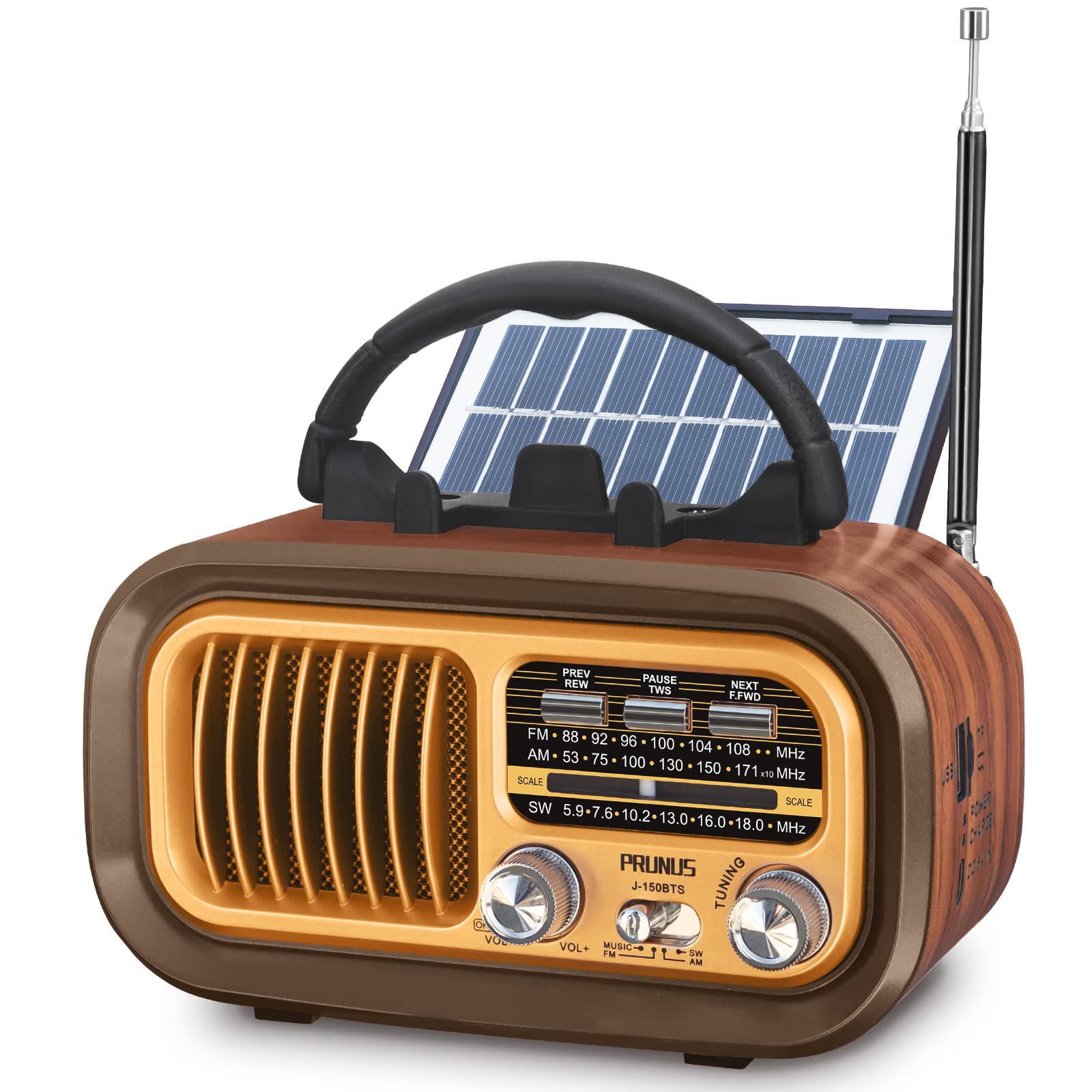
I chose this when I wanted a radio that blends vintage looks with Bluetooth, shortwave, and multiple power options.
Why I picked it: Retro styling with modern connectivity and SW support.
Best for: Backyard listening, gifts, and trips where streaming is useful.
Moderately priced for a feature-rich retro radio.
Pros
- Bluetooth 5.0 for streaming
- Shortwave coverage included
- USB/solar/D battery power options
- TWS for stereo pairing
- Attractive faux wood finish
Cons
- Speaker gets tinny at high volume
- Not as powerful as full-size speakers
My take
I love this PRUNUS for backyard afternoons and as a gift — it looks great and pairs easily with my phone. Bluetooth streaming and TF/USB playback let me use it as a modern speaker as well as a radio.
Shortwave reception and the telescopic antenna picked up distant stations on my tests, and the built-in solar panel is handy when I leave it near a window or take it outside.
Sound is best at moderate volumes; push it too hard and it gets a bit tinny. For portability, style, and connectivity though, it’s one of my favorite multipurpose radios.
How I Choose Portable Radios
Power and Charging
I start by checking how the radio stays powered. For emergency use I prefer models with multiple charging options — USB, solar, and a hand crank — so I’m not single-sourced during outages.
If I need long-term phone charging, I look for larger internal batteries (several thousand mAh). For pocketability, smaller rechargeable batteries or D-cell compatibility win out.
- Multiple charging modes increase resilience
- Higher mAh means more phone charges
- D-cell or replaceable batteries are great for long-term storage
Reception and Bands
I always verify NOAA/weather-band coverage if preparedness matters to me. AM/FM is standard, and shortwave is a plus if I want distant station access.
Tuner type matters: analog knobs are fast and tactile, digital tuners can lock onto weaker signals more precisely.
- Pick NOAA for emergency alerts
- Choose long antennas for better FM reception
- Shortwave is useful for long-distance listening
Sound and Usability
Speaker size determines how pleasant music and talk will sound. For bedside or workshop radios I pick bigger speakers; for backpacks I accept a smaller speaker for portability.
Look for clear controls, an earphone jack if privacy matters, and physical knobs if dexterity or low-light operation is common for you.
- Bigger speaker = fuller sound
- Tone modes can help in noisy settings
- Physical knobs are easier to use in the dark
Extra Features I Value
Flashlights, motion-sensor lamps, SOS alarms, and phone-charging ports can make a radio genuinely useful beyond audio.
Consider build quality and warranty if the radio will live in a vehicle or survive rough use.
- Flashlight brightness is practical in outages
- SOS siren useful in rescue scenarios
- Warranty gives confidence for long-term use
Frequently Asked Questions
Do I need a NOAA weather band on my portable radio?
I always recommend NOAA if you live in a storm-prone area — it delivers official weather alerts and hazard information that you won't get from standard AM/FM alone.
How useful is a hand crank versus solar charging?
I view both as backups: solar is convenient when sunlight is available, while a hand crank gives me on-demand power indoors. I prefer radios that offer both.
Can these radios charge my phone?
Some of the models I tested do provide emergency phone charging. Larger internal batteries will give more charges; smaller units usually supply only enough power for a short call.
Final Take
I chose these six radios to cover the range of needs I encounter: full-featured emergency units, simple analog models, pocket-sized options, and retro Bluetooth choices.
If you need an all-in-one emergency workhorse, I’d grab the larger crank/solar radio. If portability and a low price are more important, one of the compact emergency units will do the job.
Whichever route you take, prioritize power options and NOAA coverage for preparedness, and pick the sound and controls that suit how you'll use the radio most.
