
I tested a range of portable water tanks for storage, camping, and overlanding. Here are the ones I kept using—stackable emergency tanks for long-term storage, compact jugs for the trail, and rugged overlanding options.
I evaluated several portable water tanks to find options that balance capacity, durability, and ease of use. My focus was on units that are safe for drinking water, easy to dispense, and practical to carry or store.
In the sections below I explain which tanks worked best for long-term storage, vehicle and backcountry use, and overlanding—along with the tradeoffs I found while living with each unit.
I compared each tank for material safety (food-grade/BPA-free), dispensing design, portability, and any extras in the kit like spigots or cleaning tools so you can pick the right style for storage, camping, or gear-hauling.
1. Emergency Water Storage 10-Gallon Stackable Tanks – Best Overall
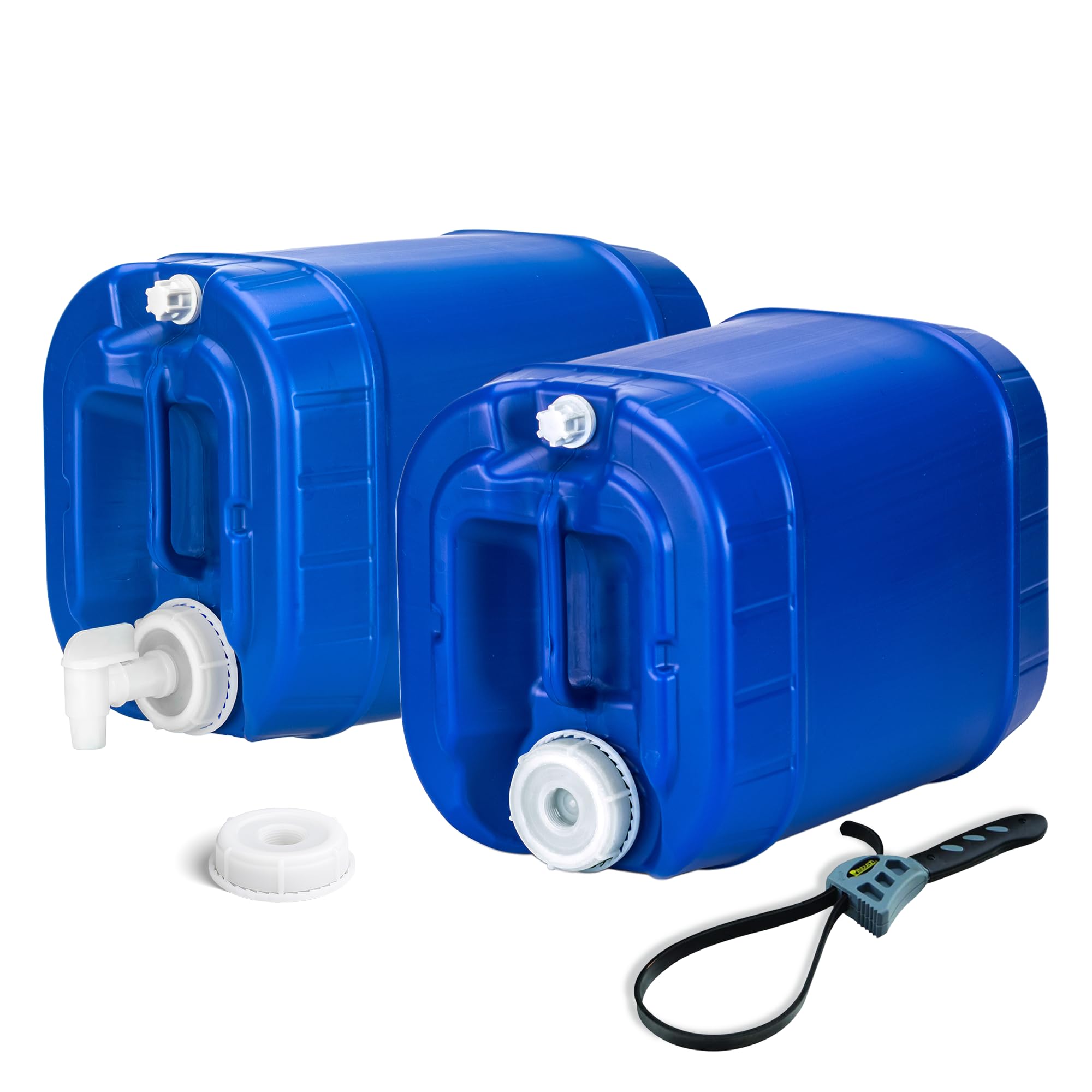
Sturdy, stackable dual 5-gallon tanks built for long-term storage and neat garage or pantry stacking.
Why I picked it: I picked this set for rugged construction, stackability, and its full kit of caps, spigot, and strap wrench.
Best for: Long-term emergency storage, garages, pantries, and storm-shelter supply.
Good value for a complete emergency water kit.
Pros
- Stackable design saves space
- Dark exterior blocks light
- Large 2¼" fill opening
- Includes spigot and vent cap
- Built-in carrying handle
Cons
- Heavy when full—stationary use preferred
- Vent may need modification for some setups
My take
I kept these tanks in my garage for emergency storage and appreciated how the ribs lock when stacked—two tanks fit neatly on a shelf and feel stable under weight.
The dark blue exterior does a good job of limiting light exposure, which I prefer for longer storage. The large 2¼-inch opening makes filling and cleaning straightforward, and the included strap wrench made tightening the lids easy.
The kit arrived complete with sealed caps, a spigot, and small accessories packed together, so I could put everything into service right away. When full, each 5-gallon container is heavy—these are best for stationary storage rather than frequent transport.
One practical note from my use: if you want to use the drain vent in combination with the spigot you may need to modify the vent (a small hole through the vent under the lid) to achieve air intake for smooth pouring. Overall, the tanks inspired confidence for long-term water storage.
2. Portable 3.2/5 Gallon Water Jug – Best for Camping
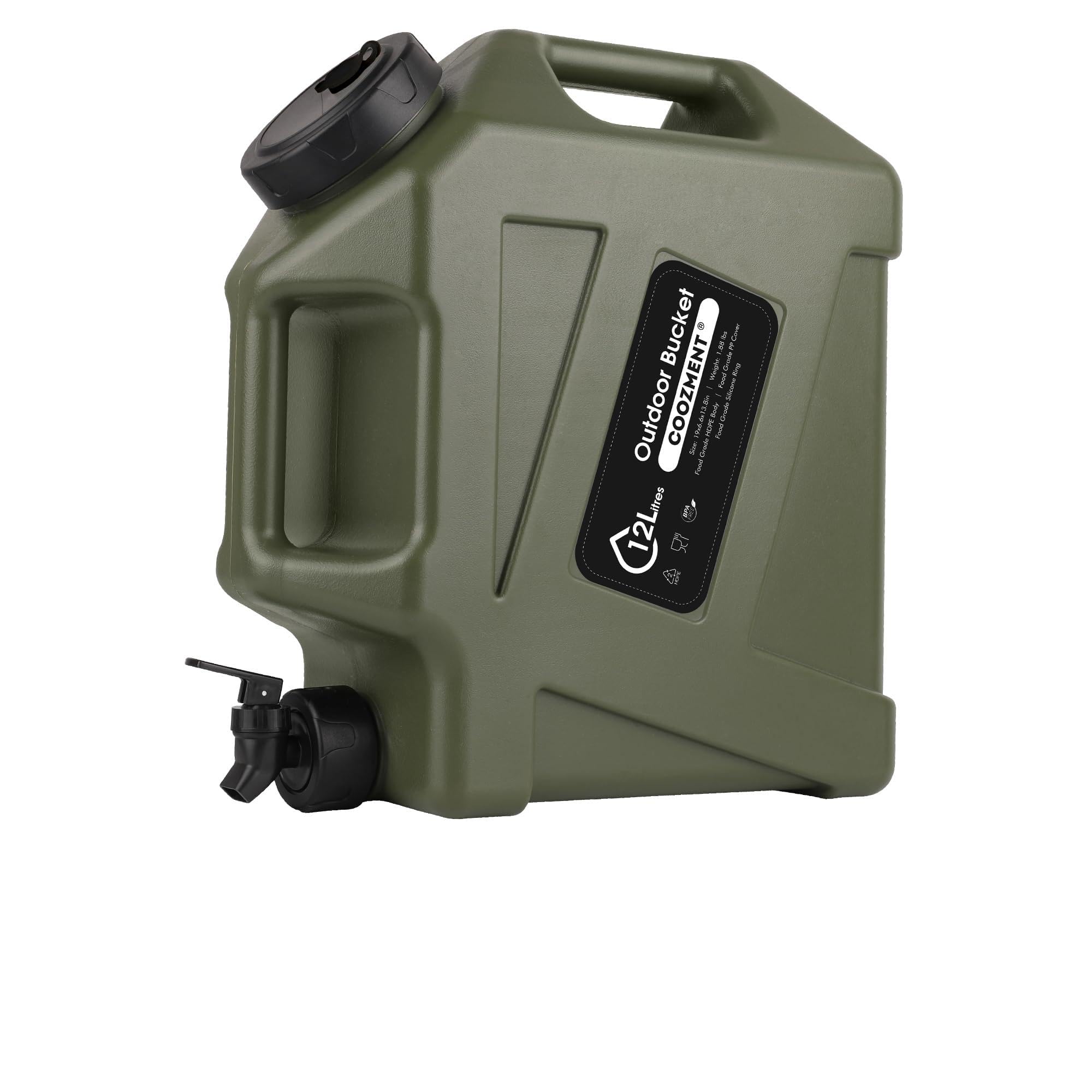
Lightweight, multipurpose jug with a built-in spigot and a wide opening for easy cleaning and filling.
Why I picked it: I chose this for its wide fill opening, smooth spigot, and two-handle carrying ease.
Best for: Day trips, camping, backcountry vehicle stashes, and tailgate water use.
Affordable and practical for frequent transport.
Pros
- BPA-free food-grade plastic
- 4" wide opening for cleaning
- Smooth, built-in spigot
- Includes cleaning brush
- Two handles for carrying
Cons
- Smaller capacity than large tanks
- Needs multiple units for family use
My take
I used both the 3.2- and 5-gallon sizes on camping trips and liked that neither gave off a plastic smell—material felt thick enough for rugged use.
The wide 4-inch opening made cleaning and filling simple; the included brush actually fits inside and helps me keep the interior fresh between trips.
The spigot delivers a controlled flow without being stiff, and the rubber cover plus vent design make dispensing easier in a vehicle or on uneven ground. I found the two-handle layout handy for passing the jug around a campsite or positioning it for pouring.
3. Portable Water Container — Multiple Size Options – Best Versatile Sizes
Same functional design available in several sizes so you can choose portability or capacity.
Why I picked it: I like the option to pick a size that fits my trip—compact for backcountry, larger for basecamp.
Best for: Overlanders, families who want a mix of capacity, and vehicle storage.
Economical across size choices.
Pros
- Available in multiple capacities
- Durable handles and construction
- No leaks in my use
- Good vehicle fit
Cons
- You may need several for extended stays
- Tall 5-gallon can be top-heavy
My take
I keep a pair of these in the back of my vehicle for road trips and one for the campsite. The build quality held up on rough roads and the unit didn’t leak or tip over easily.
The tap gives smooth control when pouring, so I can fill bottles or wash up without awkward lifting. I also carried three of these on a backcountry haul; the 3.2-gallon size hit a sweet spot between capacity and manageability.
Overall, the design is thoughtful—venting and caps are useful, and the included cleaning sponge made maintenance easy after dusty outdoor use.
4. UPWOIGH 5 Gallon Water Jug – Best for Overlanding
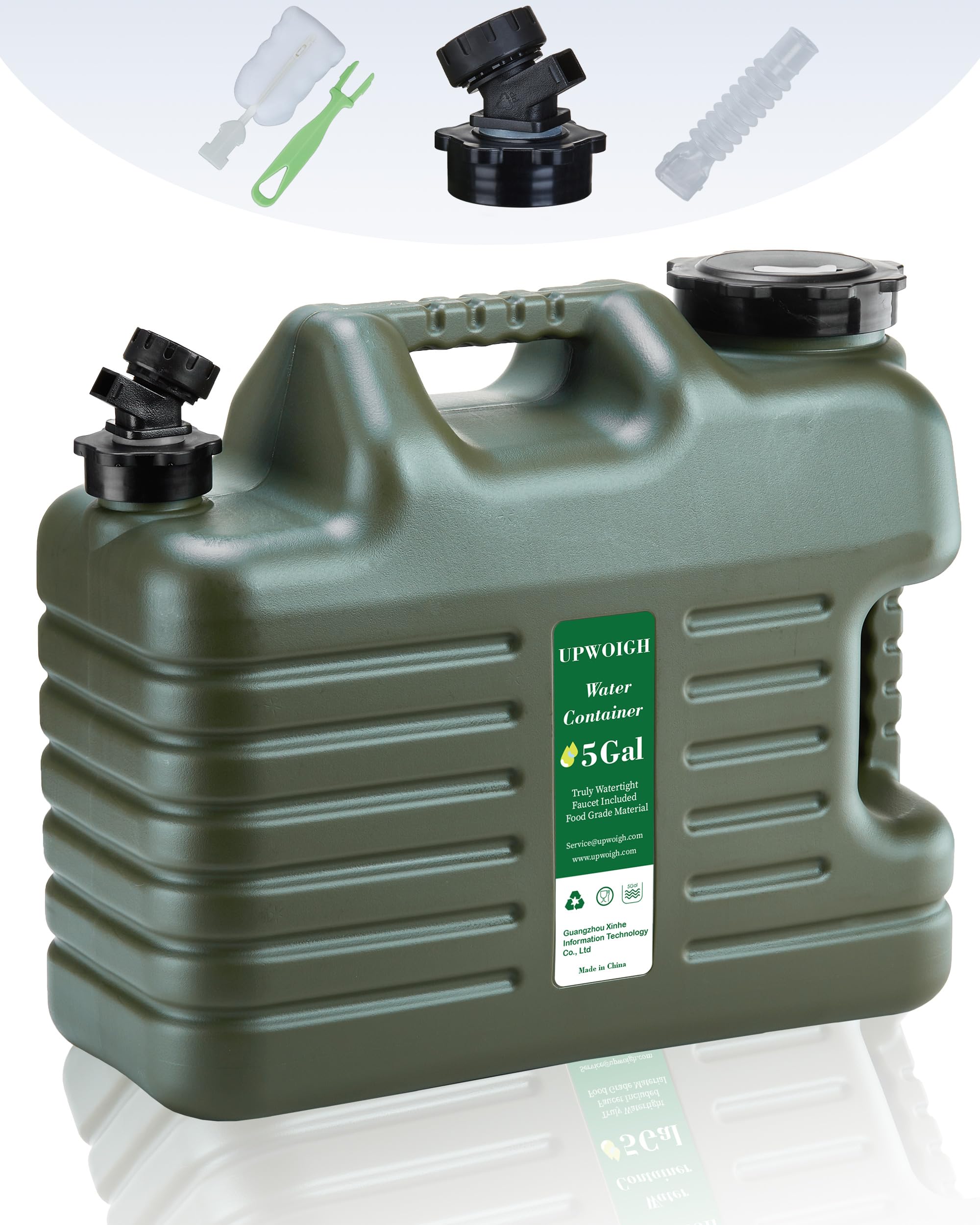
Leak-proof 5-gallon jug built for off-road and overlanding use with a secure screw lid and reliable spigot.
Why I picked it: I picked this for its leak-proof claims, dual-handle orientations, and rugged, impact-resistant feel.
Best for: Overlanding, car emergency stash, and weekend family trips.
Moderately priced for a rugged outdoor jug.
Pros
- Designed to be leak-proof
- Durable screw-on lid
- Smooth built-in spigot
- BPA-free construction
- Two handle orientations
Cons
- Plastic walls feel thinner than some rivals
- Recommend cleaning before first fill
My take
I used this jug to store RODI water for an aquarium and for car emergency stashes; it performed without leaks and dispensed cleanly in two different orientations.
The handle placement makes it easy to carry even when full, and the spigot gives a steady, controlled flow that doesn’t drip when I’m filling bottles or washing hands.
The plastic feels sturdy in daily use but is a bit thinner than some heavier-duty tanks—still, I found it sufficient for outdoor trips as long as I keep it out of direct UV for long periods and wash it thoroughly before first use.
How I Choose a Portable Water Tank
Capacity vs. Portability
I balance the tank size with where I'll use it. Five-gallon bottles are manageable for transport and personal use; anything larger I tend to reserve for stationary storage.
If I expect to move water frequently, I pick smaller jugs. For garage or pantry storage, stackable 5-gallon tanks make sense.
- For solo trips: 2–5 gallons is comfortable to carry.
- For family camping: multiple 5-gallon jugs or one larger tank.
- For emergency storage: prioritize stackability and secure lids.
Dispensing Design
I look for a reliable spigot that gives controlled flow and a wide fill opening for cleaning.
Vent caps or secondary air inlets make pouring smoother; if a vent requires modification, factor that into setup time.
- Spigot quality matters—test flow and seal before a trip.
- A large fill mouth simplifies cleaning and adding treatment tablets.
Material and Safety
I insist on food-grade, BPA-free plastics for any potable-water storage I keep in my home or vehicle.
Even with BPA-free plastics, I rinse containers thoroughly before the first use and periodically during long-term storage.
- Check for food-grade labeling (PE, PP).
- Avoid containers that retain strong plastic odors.
Storage and Maintenance
I store tanks in cool, shaded spots when possible—dark-colored tanks help block light and reduce algae risk.
I rotate stored water every 6–12 months when practical and keep lids tight with a strap wrench or equivalent tool.
- Keep tanks off direct sunlight to prolong freshness.
- Label fill dates and replace or treat water on a schedule.
Frequently Asked Questions
How long can I store water in these tanks?
I generally rotate stored water every 6–12 months for peace of mind. Using dark or light-blocking containers and keeping them sealed helps me keep water tasting fresh longer.
Do I need to prepare the vent or spigot before use?
From my experience, spigots usually work out of the box, but some kits require minor vent modification to allow smooth pouring—especially if you want to use the drain vent with the spigot. I recommend testing each unit at home and making any small adjustments before you rely on it in the field.
Are these containers safe for drinking water?
I only use containers labeled food-grade and BPA-free for potable water. I always wash and sanitize new tanks before filling them and avoid prolonged sun exposure to prevent taste and algae issues.
Final Take
If I need stationary emergency capacity, the stackable 2 × 5-gallon kit gave me the most confidence for long-term storage.
For frequent transport, camping, or vehicle stashes I prefer the smaller jugs with wide openings and good spigots.
For overlanding, I reach for the leak-proof jug with dual-handle designs that make dispensing simple without constant lifting.
