
I tested several 10‑gallon fabric grow bags so you can pick the right one for potatoes, tomatoes, and other root crops. I focused on durability, drainage, access windows, and handles.
I garden in a small urban yard and have been relying on fabric grow bags for potatoes and other vegetables for seasons. They save bed space, improve root health, and make harvesting easier when chosen right.
In this roundup I tested four 10‑gallon options across durability, airflow, handle strength, and harvest access. I explain where each bag shines and when I’d switch from one to another.
I compared breathability, material weight, access windows, and handle construction so you can match a bag to your planting style.
1. T4U 10‑Gallon Fabric Grow Bags (10‑Pack) – Best Overall
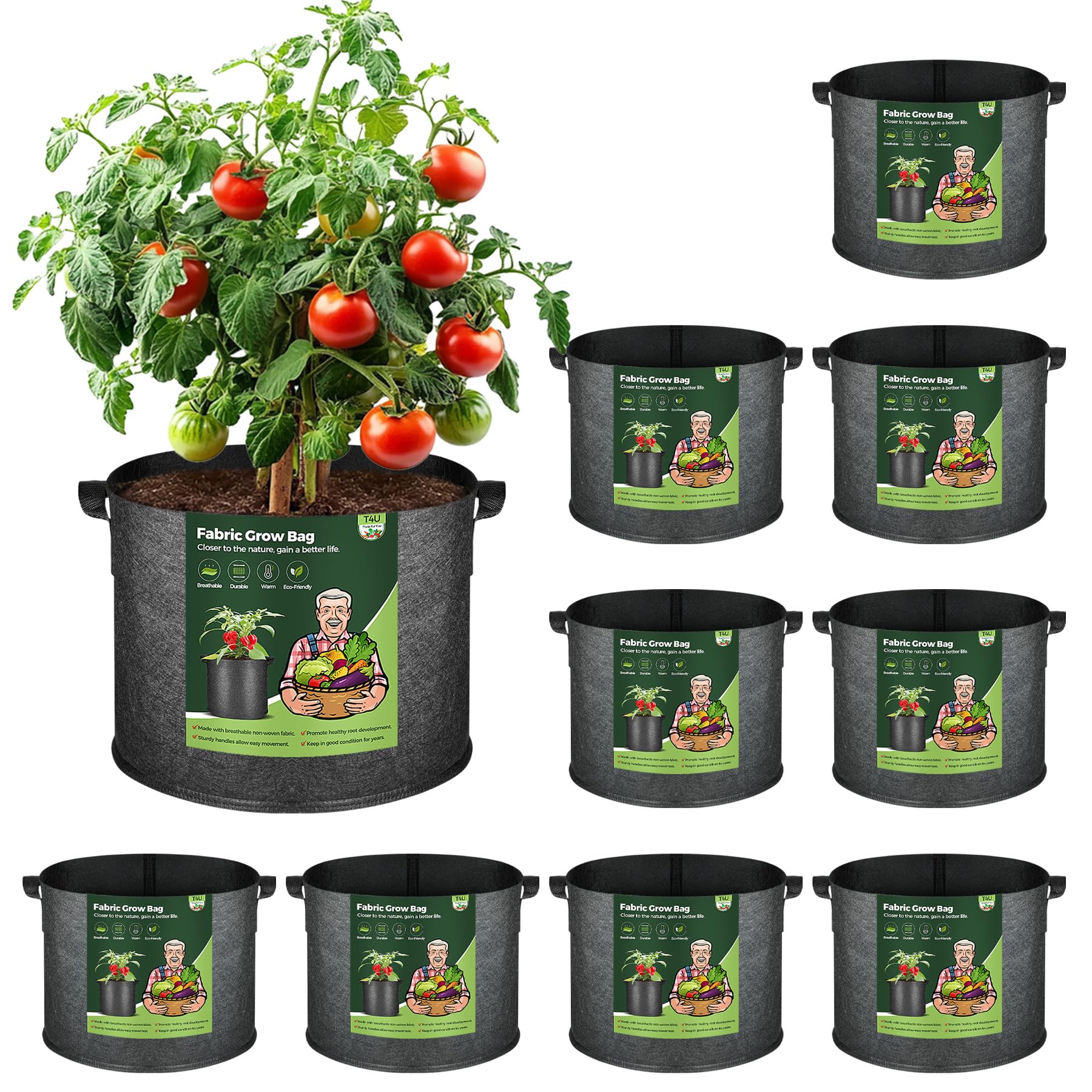
I picked these when I needed a high‑count, durable set that balances airflow with strong handles for frequent repositioning.
Why I picked it: I liked the reinforced handles and thick nonwoven fabric for repeat use.
Best for: Gardeners who want a large pack for containers and easy mobility.
High value for a 10‑pack; economical for scaling up.
Pros
- Sturdy, tear‑resistant fabric
- Handles rated for heavy lifting
- Promotes air‑pruned roots
- Reusable across seasons
Cons
- Needs daily watering in hot weather
- Some stitching inconsistencies on seams
My take
I reached for these T4U bags when I wanted ten reliable planters to populate my patio quickly. The fabric feels tough and BPA‑free, and after filling several with potting mix they held their shape without sagging.
What sets them apart for me are the reinforced handles with internal support pads. I routinely moved full bags around to chase sun and they withstood the weight—no surprise given the listed lift capacity.
The breathable nonwoven material helped prevent the root‑rot worries I had with solid plastic containers. In my summer trials I did water more frequently, especially during heat waves, but the tradesoff were healthier, air‑pruned roots and less circling.
I did notice a few loose threads where seams joined on a couple of bags, so I recommend checking each bag on arrival and reinforcing any weak stitches if you plan heavy reuse. Overall, these are the go‑to when I need quantity, decent durability, and handles I can trust.
2. Delxo 10‑Gallon Grow Bags (5‑Pack) with Flap – Best for Access
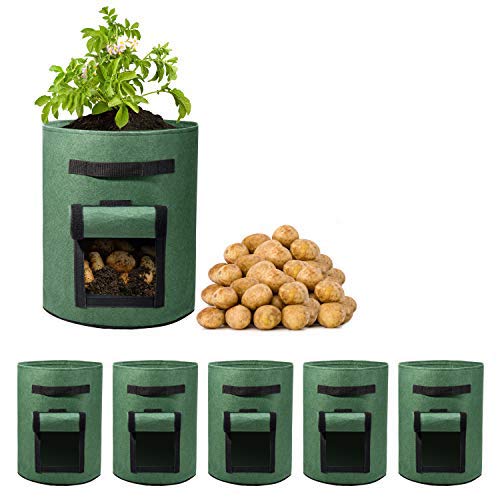
I relied on the Delxo bags when I wanted to monitor tuber development and peek without disturbing the plant.
Why I picked it: The side window/flap gives fast visibility into tubers without unpotting.
Best for: Growers who want to check progress and gently harvest through a flap.
Good value for a mid‑size multi‑pack.
Pros
- Side window for easy inspection
- 300g thickened nonwoven fabric
- Solid drainage and airflow
- Sturdy handles for moving
Cons
- Flap can invite ants if untreated
- Window not ideal for heavy harvesting
My take
I used the Delxo bags when I wanted to watch my potatoes grow without digging. The velcroed flap makes it simple to open a pocket and see tubers developing, which saved me from unnecessary disturbance.
The 300g fabric felt robust and breathable; soil drained well and plants looked vigorous. Moving filled bags was straightforward thanks to the reinforced handles.
A practical note from my runs: the flap does provide a small entry point for insects in some environments. I solved that by bedding a mesh barrier behind the flap and keeping the area tidy.
If you like to visually monitor growth and perform small harvests through an access window, these hit the right balance for me. For full harvests you might still tip the bag and sort on a tarp.
3. Cavisoo 10‑Gallon Grow Bags (5‑Pack) – Best for Versatility
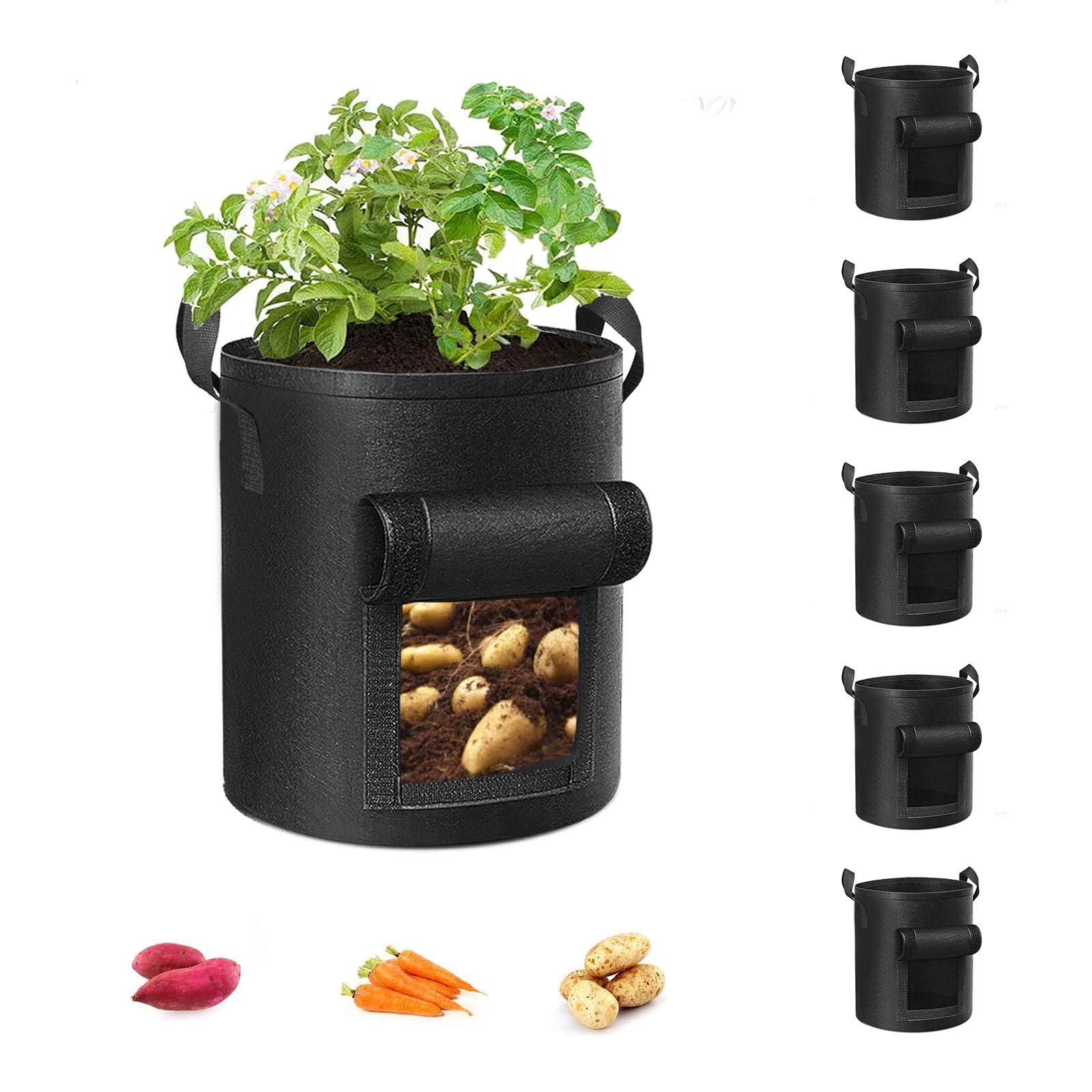
I choose these when I want a reliable middle ground: thick fabric, a harvest flap, and reinforced handles that stand up to heavy soil.
Why I picked it: Thick 300g material and a visualization flap made these versatile for different crops.
Best for: Gardeners growing potatoes, squash, or even small melons in containers.
Solid mid‑range option for mixed crops.
Pros
- Thick, reusable 300g fabric
- Visualization window for timing harvests
- Strong X‑stitched handles
- Good for many crops
Cons
- Flap can make full harvest messy
- Best harvested by dumping onto tarp
My take
I used these Cavisoo bags for a mix of potatoes and larger plants like butternut squash. The material felt noticeably thick and durable; after a season they showed minimal wear.
The velcro visualization window is handy for checking maturity without dumping the bag. For me, it was great for timing harvests, although I still prefer to roll the bag and empty onto a tarp for a full harvest to avoid damaging tubers.
Handles are robust with X‑shaped stitching that gave me confidence when I repositioned heavy bags. Drainage and root pruning were consistent with other breathable bags I use—roots were healthier than in rigid pots.
Overall I consider these a dependable, versatile choice when I need a sturdy bag that handles a range of vegetables.
4. SCENGCLOS 10‑Gallon Grow Bags (6‑Pack) – Most Heavy‑Duty
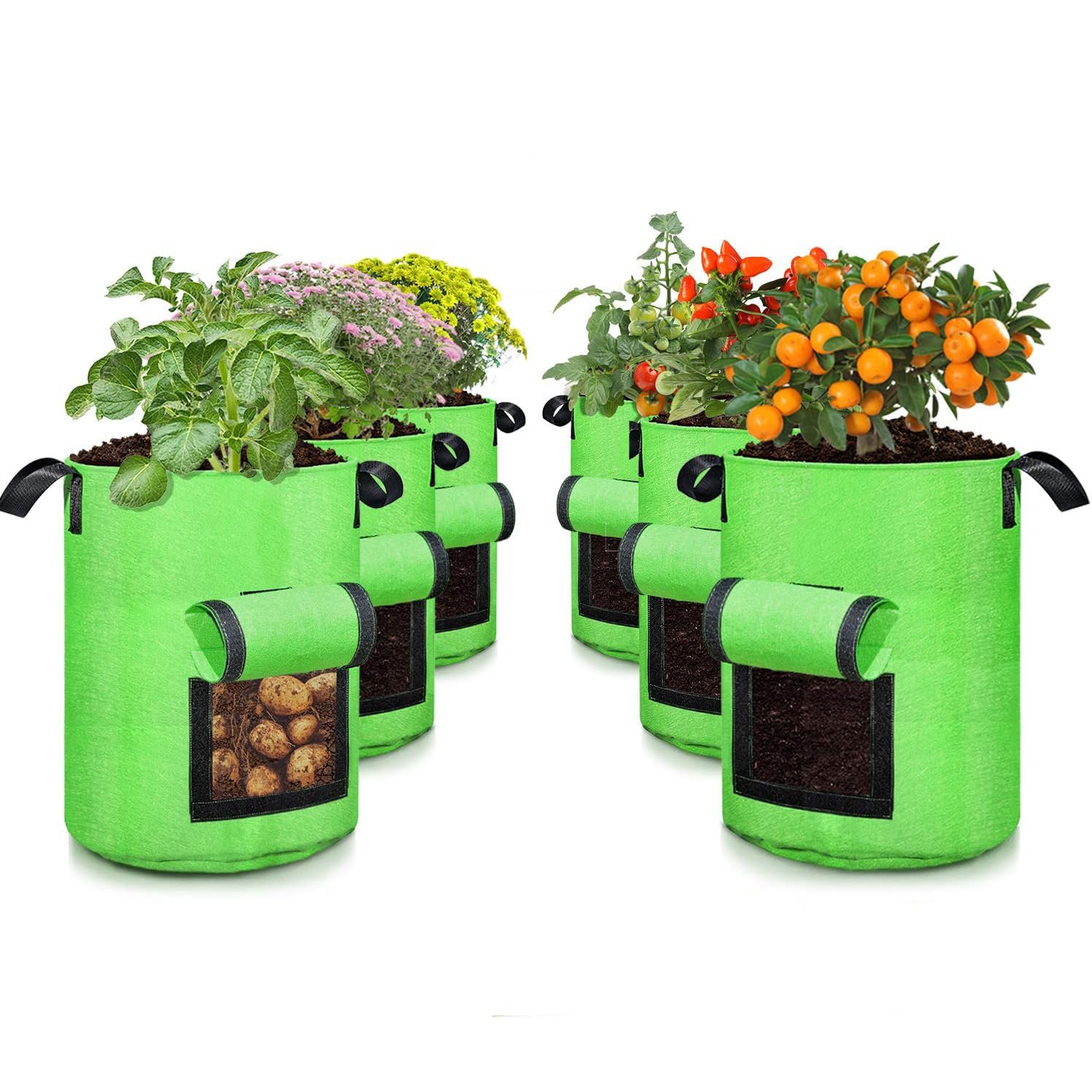
I picked the SCENGCLOS set when durability mattered most; the heavier 360g fabric stood up to repeated seasons and rough handling.
Why I picked it: 360g fabric and sealed harvest window promised longevity and easy inspection.
Best for: Growers who reuse bags across multiple seasons and want easy inspection.
A more durable, longer‑lasting investment.
Pros
- Thicker 360g fabric
- Sealed clear harvest window
- Designed to last multiple seasons
- Excellent for patios and balconies
Cons
- Heavier when filled
- Window view limited to the surface area
My take
I reserve SCENGCLOS bags for projects where I expect heavy use. The 360g material feels noticeably denser than other bags I own and has handled being moved, stored, and refilled without tearing.
The sealed harvest window is practical when I want to observe tubers without disturbing the whole bag. It’s simpler for quick checks and targeted harvesting, though you only see the area directly behind the flap.
Because these are heavier once filled, I usually place them where I want them to stay for the season rather than moving them constantly. That tradeoff is worth it if you want something that will last multiple seasons and handle larger root systems.
How I Choose Potato Grow Bags
Material Weight and Durability
I look at the fabric gram weight first. Heavier fabric (around 360g) feels tougher and holds up better over multiple seasons, while 300g is a good balance of durability and breathability.
If I plan to move filled bags often, I prioritize reinforced stitching at seams and handles.
- 300g: Good balance of breathability and durability.
- 360g+: Best for repeated reuse and heavy soils.
- Check handle construction and stitch patterns.
Drainage, Breathability, and Root Health
I prefer nonwoven, breathable fabric because it promotes air pruning—roots stay healthy rather than circling. That also reduces risk of root rot compared with solid pots.
Good drainage means I water more often in hot weather, but I get sturdier plants and better tuber development.
- Breathable fabric prevents waterlogging.
- Expect to water more frequently in heat.
- Use a well‑draining potting mix for best results.
Access Windows and Harvesting
Access flaps or windows are useful for checking tubers mid‑season without unpotting. I use these to time harvests and to remove a few potatoes without disturbing the rest.
For a full harvest I usually roll or tip the bag out on a tarp to avoid scraping tuber skins against the flap.
- Flap: Great for inspection and small harvests.
- Full harvest often easier by emptying the bag.
- Consider pest entry near flaps and use mesh if needed.
Handle Strength and Mobility
I always test how handles are attached. Internal support pads or X‑stitched webbing makes a difference when lifting full bags.
If I plan to reposition containers often, reinforced handles are non‑negotiable for me.
- Look for reinforced or padded handles.
- Test seams and do a dry lift before filling with soil.
- Place heavier bags in permanent spots if moving is difficult.
Frequently Asked Questions
Can I reuse these grow bags for multiple seasons?
Yes—I reuse thicker nonwoven bags for several seasons. I store them dry and shaded over winter and inspect seams before each reuse; heavier weights (360g) last longest.
How many seed potatoes should I plant per 10‑gallon bag?
I plant two to three small seed potatoes per 10‑gallon bag for a good balance of yield and spacing. For larger varieties I stick to two to avoid overcrowding.
Do window or flap bags attract pests?
They can in some setups. I’ve had ants exploit loosely sealed flaps, so I add a fine mesh behind the flap or keep the bag base elevated to reduce access.
How often should I water 10‑gallon grow bags?
I water more frequently than I do in beds—often daily during hot spells. A slow, deep soak near the center works better than a fast flood that runs out the fabric.
Final Take
I use different bags for different needs: a 10‑pack for scaling up, flapped bags for monitoring, and heavier fabric when I want real longevity.
Pick the bag that matches how often you move containers, whether you want to peek at tubers, and how many seasons you expect to reuse them. With the right choice, I find fabric grow bags make potato gardening simple and productive.
