
I tested a range of handheld, backpack, and battery pump sprayers to find the models that make weed control, fertilizing, pest work, and personal misting actually easier. Here are the sprayers I relied on and why each is
I spent time using handheld units, a backpack sprayer, and a battery-powered model across garden beds, driveways, and landscaping edges to see which designs actually save time and frustration.
For me the differences come down to three things: how fast the unit pressurizes, how well it resists clogging, and whether carrying or pumping becomes a nuisance on longer jobs.
Below you'll find the sprayers that stood out in real chores — from quick spot treatments to multi-acre work and even personal cooling.
I compared capacity, power source (manual vs. battery), nozzle versatility, anti‑clog features, and ease of refilling so you can prioritize what matters for your projects.
1. Chapin 1-Gallon SureSpray Pump Sprayer – Best Overall
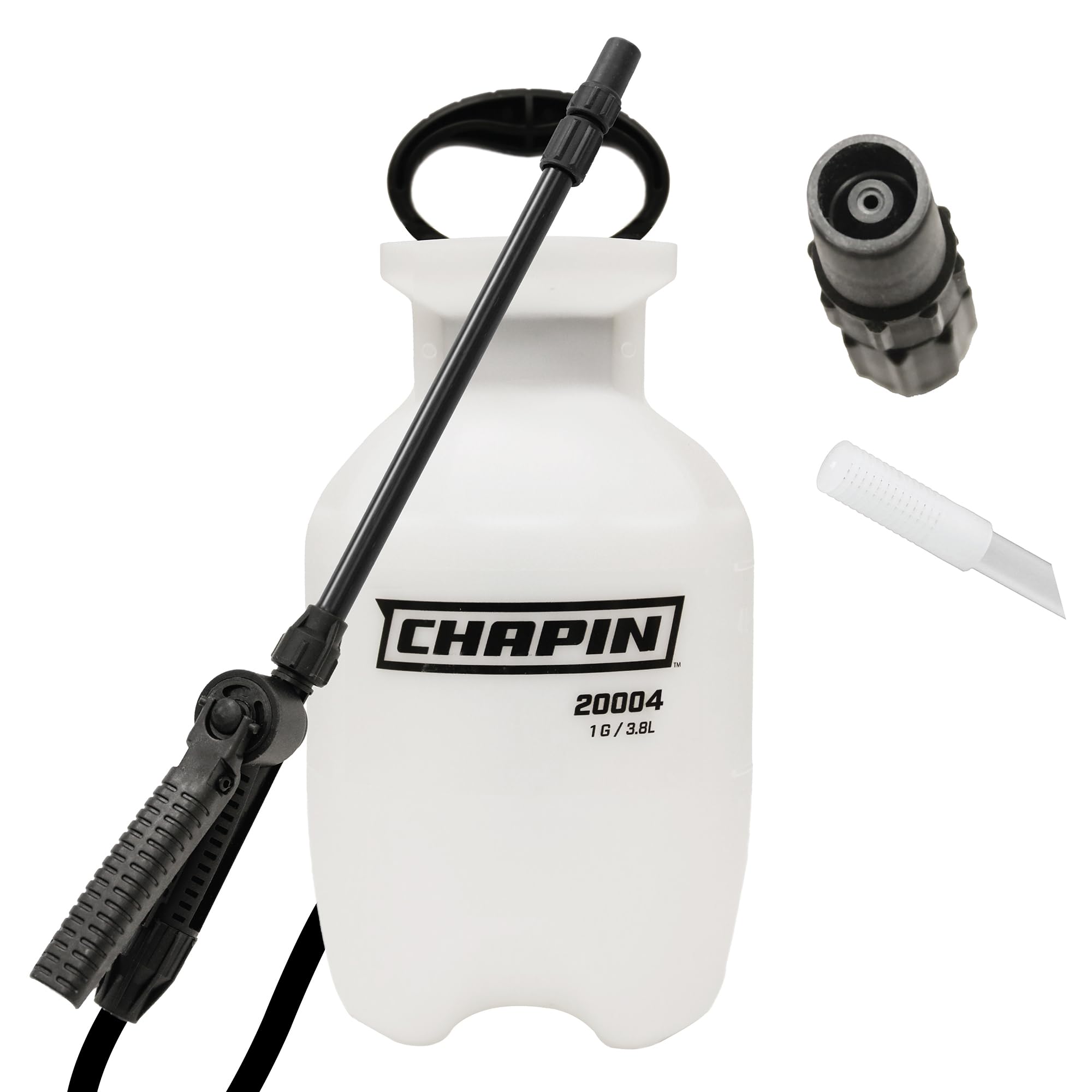
I found this lightweight 1‑gallon sprayer to be the easiest all‑around handheld for homeowners — a no-fuss filler, reliable pressure, and an adjustable nozzle for spot or broad coverage.
Why I picked it: Simple, reliable homeowner sprayer with easy filling and steady spray.
Best for: Small yards, potted plants, and occasional pesticide or fertilizer spot treatments.
Budget-friendly and dependable for everyday use.
Pros
- Convenient funnel-top fill
- Translucent tank for level checks
- Adjustable cone nozzle
- Lightweight and easy to carry
Cons
- Limited to one-gallon capacity
- Not ideal for large properties
My take
This Chapin is the unit I reach for when I need something that simply works. The built-in funnel top makes pouring concentrates mess‑free, and the translucent tank lets me see my level at a glance so I don’t guess how much is left.
Pumping is straightforward and the sprayer holds pressure well. I liked how the adjustable cone nozzle moves from a fine mist to a steady stream — useful when switching between fertilizers and targeted weed control.
For basic lawn and garden jobs it strikes the right balance of build quality and ease of use. If I need more capacity I move up to a bigger sprayer, but for day-to-day treatments this is my go-to.
2. Spear & Jackson 5-Litre Pump Sprayer – Best for Bigger Handheld Capacity
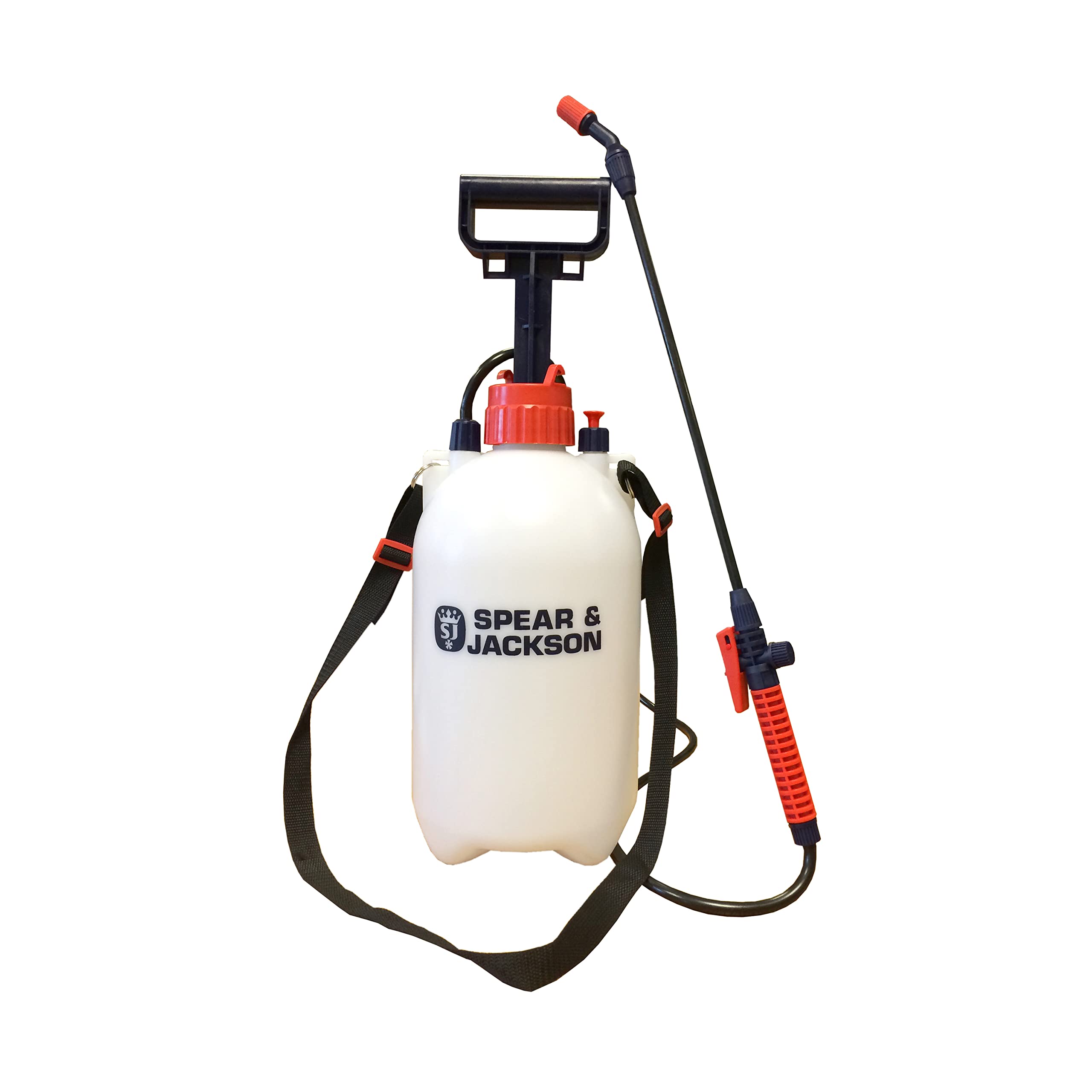
I appreciated the 5‑liter capacity and long wand on this model when I wanted fewer refills and better reach around shrubs and patio furniture.
Why I picked it: Larger handheld tank with long hose and wand for fewer refills.
Best for: Medium gardens, patios, and awkward, hard-to-reach spots.
Mid-priced option suited to those who want more capacity.
Pros
- Generous 5 L capacity
- Graduated fill markings
- Long 1.3 m hose
- Lockable trigger
Cons
- Heavier when full
- Shipping can add to total cost
My take
I used this sprayer for longer sessions where a one‑gallon keeps interrupting work. The graduated markings made mixing easier and the shoulder strap eased transport across the yard.
The adjustable nozzle goes from mist to spray, and the pressure release valve on the shoulder is a thoughtful safety touch. The wand length and hose helped me reach under hanging branches without constantly bending.
If you want a handheld that reduces refill stops but still remains fairly compact, this one hit that balance for me — just be ready for the extra weight when full.
3. Field King 4-Gallon Backpack Sprayer – Best for Large Jobs
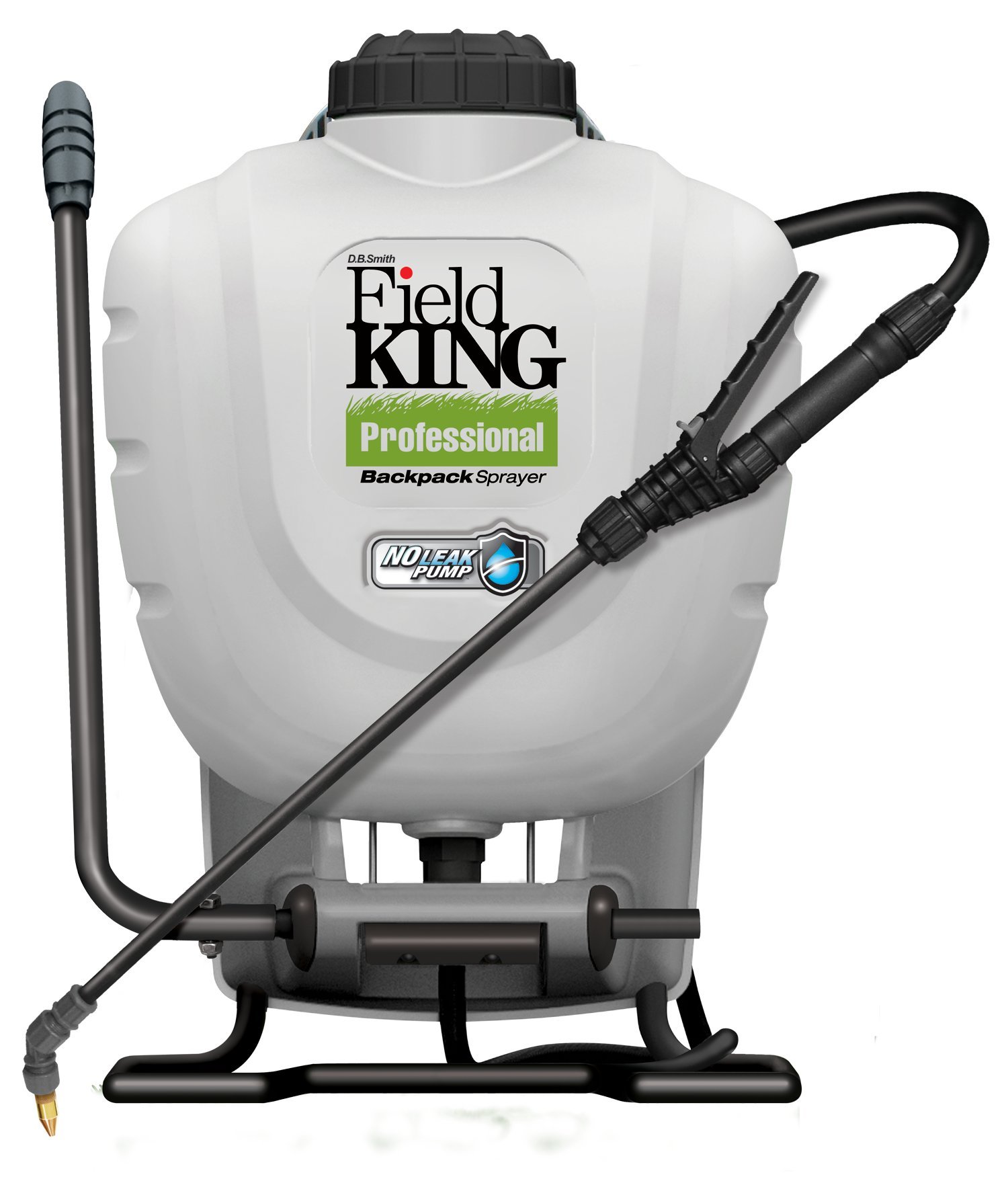
I relied on this backpack model for larger acreage and edge work — it keeps liquids off my back, delivers high pressure, and includes multiple nozzles for different tasks.
Why I picked it: High-pressure, no-leak backpack that handles big areas efficiently.
Best for: Farms, acreage, and long spraying sessions where capacity and pressure matter.
More of an investment suited to heavy-duty use.
Pros
- Internal no-leak pump
- Up to 150 PSI performance
- Six nozzle options included
- Easy seal maintenance
Cons
- Heavy when fully loaded
- Can be awkward to strap on alone
My take
When I needed to cover long drives and pasture edges, this Field King made a noticeable difference. The internal no‑leak pump kept my clothing dry, which was a major relief compared with older designs that dripped.
It pumps quickly and holds steady pressure; changing spray patterns is simple thanks to the six included nozzles. I also liked that Viton seals are replaceable in minutes without tools — handy when you work with harsh chemistries.
My caution is weight: a full tank is heavy. I usually fill it partway or use a bench to help slide it on. For anyone doing regular, large tasks, though, this unit sped my work and stayed reliable.
4. Chapin 1-Gallon Foaming Pump Sprayer (2-Pack) – Best Value Pack
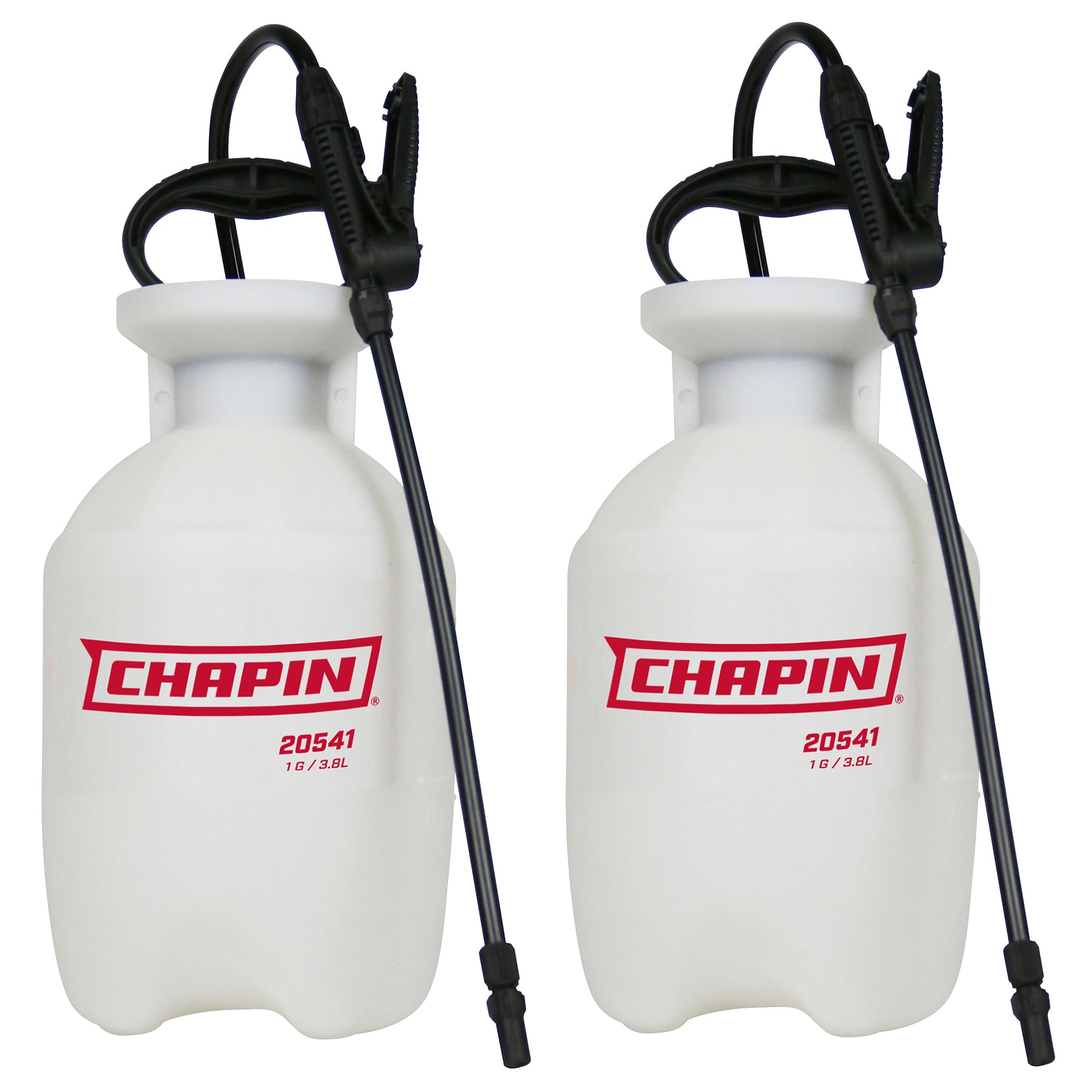
I like having two identical sprayers on hand: the foaming nozzle helps mark treated areas and the in-tank anti‑clog filter keeps the spray steady.
Why I picked it: Foaming nozzle and anti-clog filter in a two-pack saves time and materials.
Best for: Households that want a backup or need marking for precise application.
Good value for two dependable units.
Pros
- Foaming nozzle for marking
- In-tank anti-clog filter
- Ergonomic pump handle
- Translucent tank
Cons
- Foam nozzle not ideal for all liquids
- Two units may be redundant for some
My take
I kept one of these on the tool bench and another in the shed. The foaming tip makes it easy to see where I’ve sprayed, which saved product and avoided overlap when treating fence lines.
The anti‑clog filter reduced nozzle fussing, and the pumps are light and comfortable to use. Over time the design has proven durable; one of my units has worked steadily for years with minimal maintenance.
For anyone who likes a backup or wants to mark applications precisely, the value pack is practical and built for repeat use.
5. Scotts 2-Gallon Battery-Powered Sprayer – Best No-Pump Option
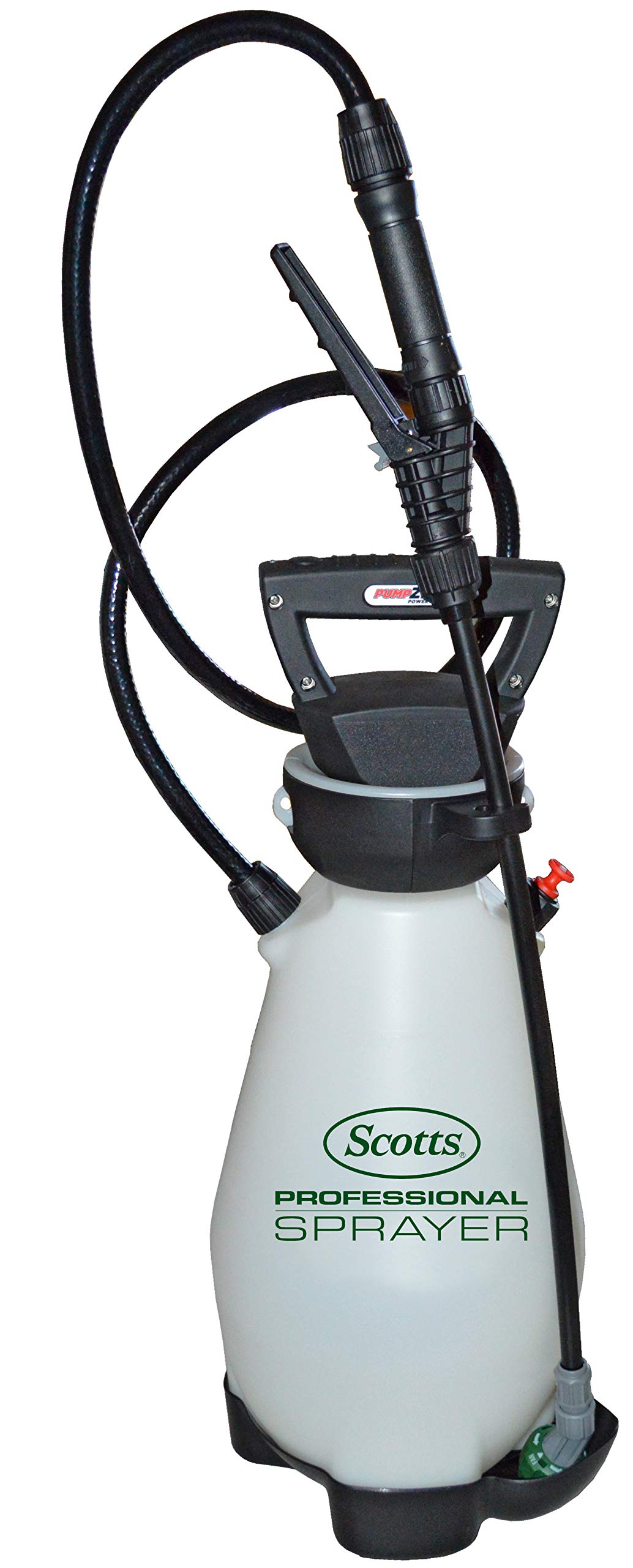
I enjoyed the no‑pump convenience: push a button and the sprayer holds steady pressure so I didn’t stop to re‑pump every few feet.
Why I picked it: Battery power removes manual pumping and keeps pressure consistent.
Best for: Anyone who wants steady spray without physical pumping effort.
Higher-cost, feature-rich option for convenience seekers.
Pros
- No manual pumping required
- Rechargeable lithium-ion battery
- Consistent pressure output
- Comfortable commercial-grade shutoff
Cons
- Battery needs periodic attention
- Replacement parts can be limited
My take
This Scotts unit changed how I approach multi-tank chores. I could spray for longer stretches with steady output, which reduced fatigue and made coverage more uniform compared with stop‑and‑pump outfits.
The teardrop tank felt stable and the Viton-sealed wand components stood up to harsher liquids. My only real caveat is to pay attention to battery care — over the long term the battery or charging system may need service, and replacing core components isn't always straightforward.
If you want to skip pumping and value a steadier spray, this sprayer delivers that convenience, but plan for the occasional battery maintenance.
6. Petratools 1-Gallon Pump Sprayer – Best Support & Build Quality
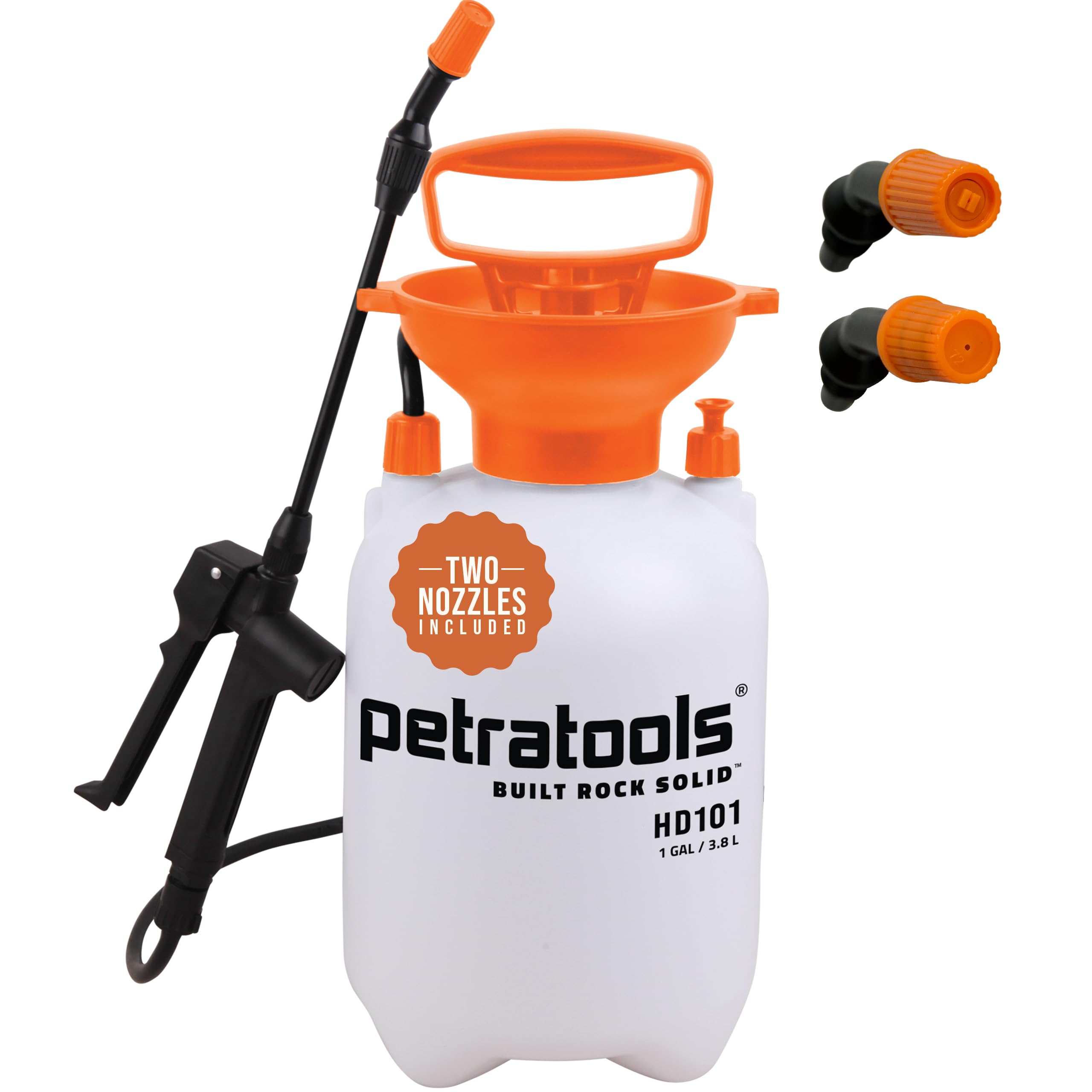
I found this one to be a well-built, lightweight option with long hose reach and quick, responsive support from the maker when I had a part issue.
Why I picked it: Solid construction plus fast, helpful manufacturer support.
Best for: DIYers who want an affordable, well-supported sprayer.
Affordable with above-average build and support.
Pros
- Durable, lightweight construction
- Long 52" hose for reach
- Built-in pressure release valve
- Responsive company support
Cons
- Wand is shorter than some prefer
- Shoulder strap could be padded
My take
I liked the wide mouth funnel for spill-free filling and the long hose that let me work without crouching to reach low plants. The built-in filter helped keep the nozzle from clogging during routine use.
When the tip cracked on my unit, the company's support replied quickly and arranged a fix — that level of service gave me confidence this sprayer would be supported over time.
Functionally, it handled fertilizers, sealants, and pesticides reliably. My only small gripe is the relatively short wand length; I wished it extended farther so I could avoid bending on some jobs.
7. CoreGear 1.5L Personal Water Mister – Best Personal Mister
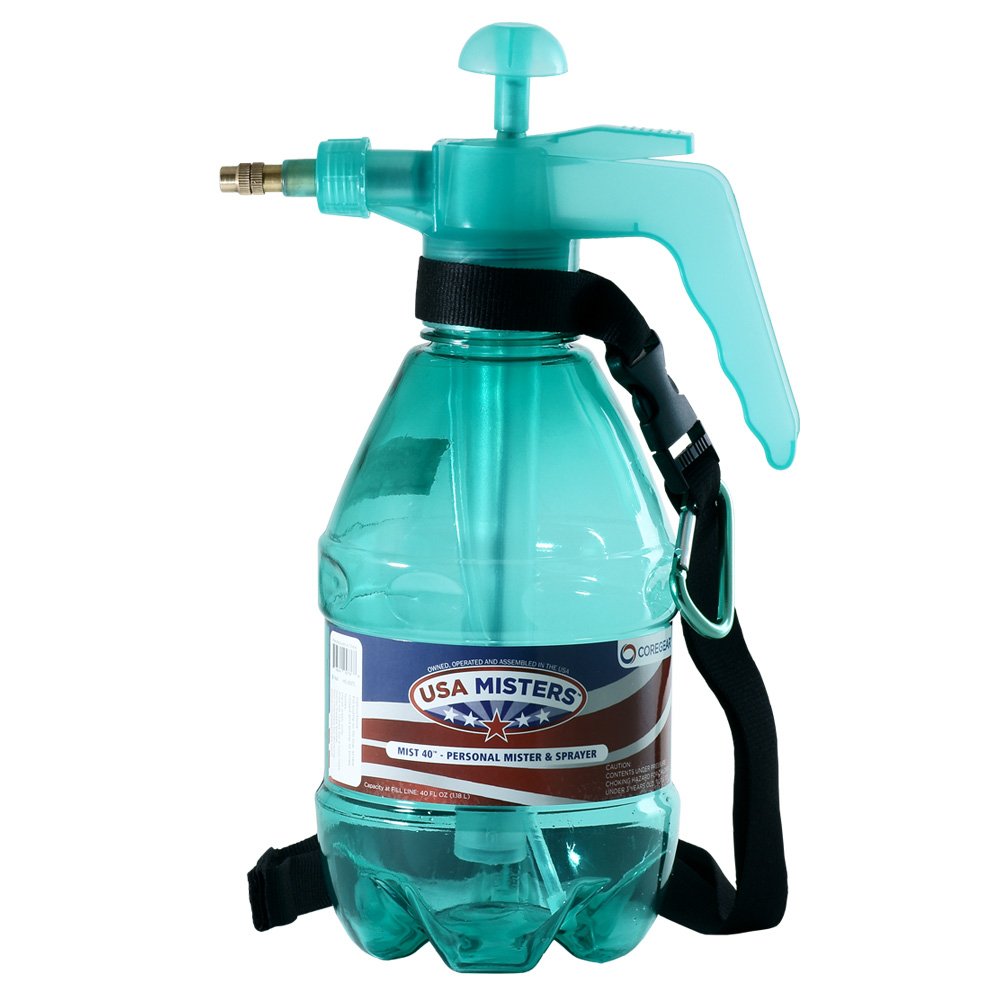
When I needed portable cooling at hot outdoor events, this pump mister worked great: it holds ice, produces a fine continuous mist, and is very easy to tote around.
Why I picked it: Portable, heavy-duty personal mister that actually cools effectively.
Best for: Personal cooling, outdoor events, and light plant misting.
Low-cost, portable cooling solution.
Pros
- Holds ice for colder mist
- Brass adjustable nozzle
- Continuous mist after a few pumps
- Comes with a carrying strap
Cons
- Requires pumping to pressurize
- Limited reservoir for long events
My take
I took this to a long outdoor event and found it really effective — a few pumps and the continuous mist kept me feeling much cooler. The wide mouth accepts crushed ice, which intensifies the cooling.
The brass nozzle is durable and lets me switch from a fine mist to a directed stream for watering plants. The unit is light, easy to carry, and the strap is handy when I’m on the move.
For personal cooling and small tasks it’s a clever, no-frills tool that I keep in my summer kit.
How I Choose a Pump Sprayer
Capacity and Task Size
I always match tank size to the task: 1‑gallon units for spot work and potted plants, 2–5 gallons or backpacks for larger yards and acreage.
Think about how often you want to refill and whether the weight when full will be manageable.
- 1 gallon — best for quick household jobs
- 2–3 gallons — better for medium lawns
- 4+ gallons or backpack — for long sessions and acreage
Power Source and Effort
Manual pumps keep things simple and inexpensive, while battery models remove the pumping burden and keep pressure steady.
I weigh the convenience of battery power against potential long-term battery care or replacement needs.
- Manual — reliable, low maintenance
- Battery — effortless spray, requires charging/care
Nozzles, Filters, and Anti‑Clog Features
I favor units with adjustable nozzles and proper in-line or in-tank filters to reduce clogs, especially for particulate repellents and sealants.
Foaming tips are useful when I want to mark where I’ve sprayed and avoid double application.
- Adjustable nozzle for mist to stream
- Anti-clog filters if using particulate products
- Foam tips for marked applications
Materials, Seals, and Serviceability
Viton or chemical-resistant seals extend life when you use herbicides or harsh chemicals. I also look for designs that let me change seals quickly.
Good manufacturer support matters — a company that supplies replacement parts and answers questions saves time.
- Chemical-resistant seals (Viton) for longevity
- Replaceable seals and easy maintenance
- Accessible customer support and warranty
Comfort and Ergonomics
Ergonomic pump handles, padded straps, and balanced tanks make longer jobs far more comfortable.
If a backpack feels heavy, I fill it partway or use a bench to slip it on safely.
- Look for padded straps and waist belts on backpacks
- Ergonomic handles reduce hand fatigue
- Translucent tanks help monitor fluid levels
Frequently Asked Questions
Can I use these sprayers with common garden chemicals?
Yes — I use the models listed with common water‑soluble herbicides, pesticides, fertilizers, and cleaners. I always rinse thoroughly after use and check manufacturer guidance for compatibility with aggressive solvents.
How do I avoid clogging when using particulate repellents or sealants?
I run the liquid through the sprayer’s filter before it reaches the nozzle, use an in-line or in-tank filter, and clean the nozzle and wand between applications. If a nozzle clogs, I remove it and clear it under running water or with a soft brush.
Is a battery-powered sprayer worth it?
For frequent, tiring jobs I value the battery models because they eliminate pumping and keep pressure steady. I recommend paying attention to battery care and planning for possible long-term replacement or servicing.
Final Take
Across different projects I used handheld, backpack, and battery sprayers — each fills a role depending on how much area I need to cover and how much effort I want to expend.
For simple spot work the Chapin one‑gallon and Petratools units are practical and easy to use; for bigger jobs the Field King backpack saved me time despite its weight when full; and the Scotts battery sprayer removed the pumping burden when I wanted steady pressure.
Pick the sprayer that matches your task size, chemical compatibility, and willingness to manage battery upkeep — that approach has made my yard work faster and less fiddly.
