
I tested seven popular scissor options for quilting and sewing, focusing on sharpness, comfort, and how well they handle fabric layers. These are the pairs I reach for depending on the task—detail snips, heavy-duty shea,
I live in my sewing room and depend on good scissors for every quilting task, from trimming seams to cutting multiple layers of batting. Over weeks of cutting fabric, cardboard templates, and adhesive-backed materials, I evaluated how each pair felt in my hand, how cleanly they cut, and how well they held an edge.
Below I share the scissors I kept coming back to, why each one earns a spot in my toolbox, and which pair I grab for specific quilting jobs.
I compared these scissors by testing with quilting cotton, multiple fabric layers, fusible interfacing, and paper patterns. I prioritized blade sharpness, tension/adjustability, handle comfort for long sessions, and coatings that resist glue and adhesive build-up.
1. iBayam 8in Heavy-Duty Scissors (3-Pack) – Best Value
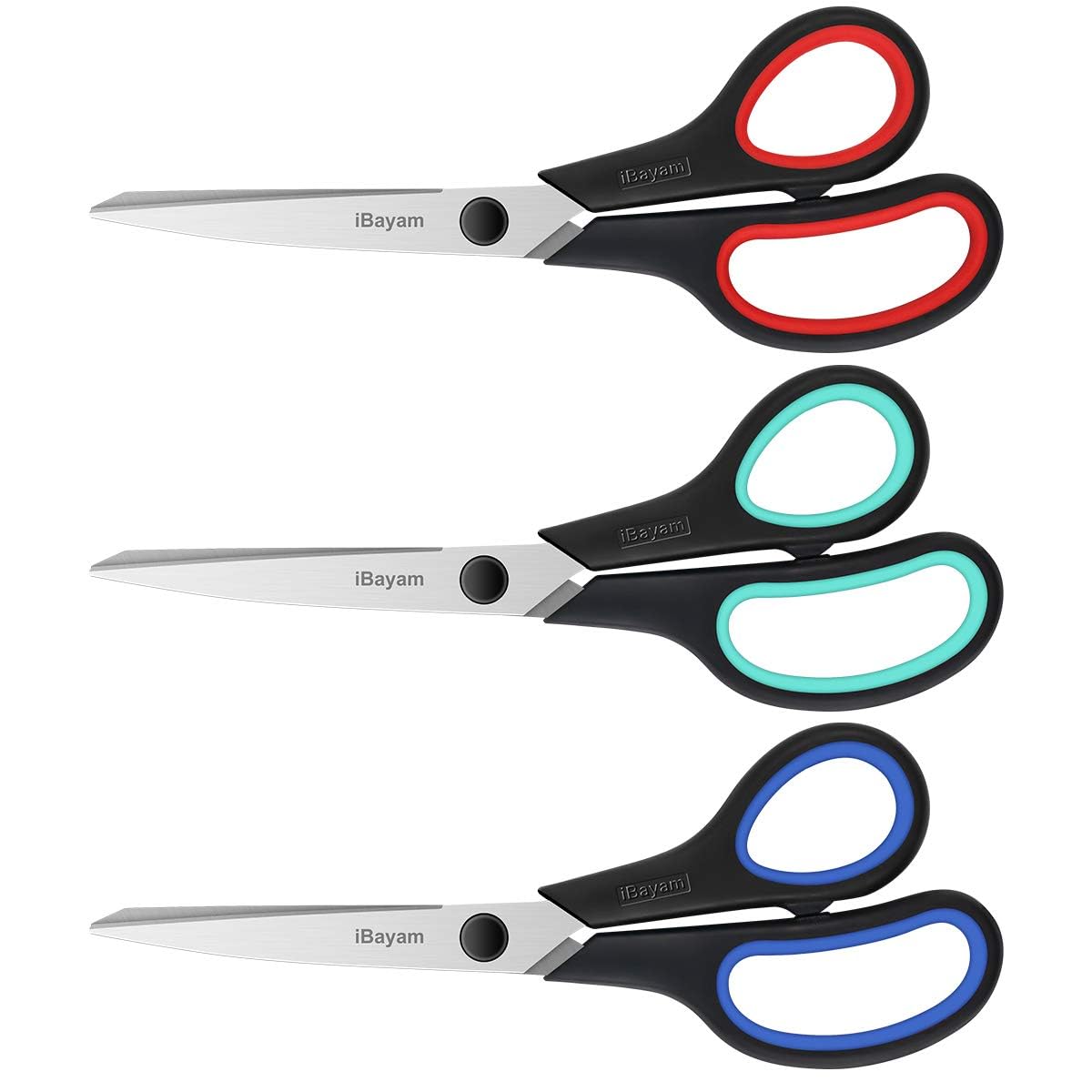
I keep a pair in every sewing basket: three sharp 8in scissors with thick blades and comfortable rubber grips.
Why I picked it: Three usable pairs with 2.5mm blades and comfort grips for multi-room access.
Best for: Quilters who want spare pairs for cutting fabric, paper patterns, and general shop tasks.
Very budget-friendly multipack.
Pros
- Three pairs in one set
- 2.5mm thick blades for control
- Comfort-grip handles
- Color-coded for easy organization
Cons
- Not forged like professional shears
- Slightly heavier blade feel
My take
I bought the three-pack so I could keep a pair in the sewing room, the cutting table, and my craft tote. The blades are marketed at 2.5mm thickness and on fabric they give a reassuring amount of resistance that helps me make precise snips without the scissors slipping off the line.
The stainless-steel blades stay fairly sharp for routine trimming and the rubberized, ambidextrous handles made long sessions comfortable. For quilting I used them on cotton, fusible interfacing, and paper patterns—each pair handled those tasks without snagging.
If I need truly heavy-duty shears for dozens of batting layers I switch to a forged pair, but for everyday quilting trimming and general household cutting these are the ones I reach for when I want a reliable, inexpensive set.
2. Amazon Basics Multipurpose Scissors (3-Pack) – Best for Everyday Multipurpose
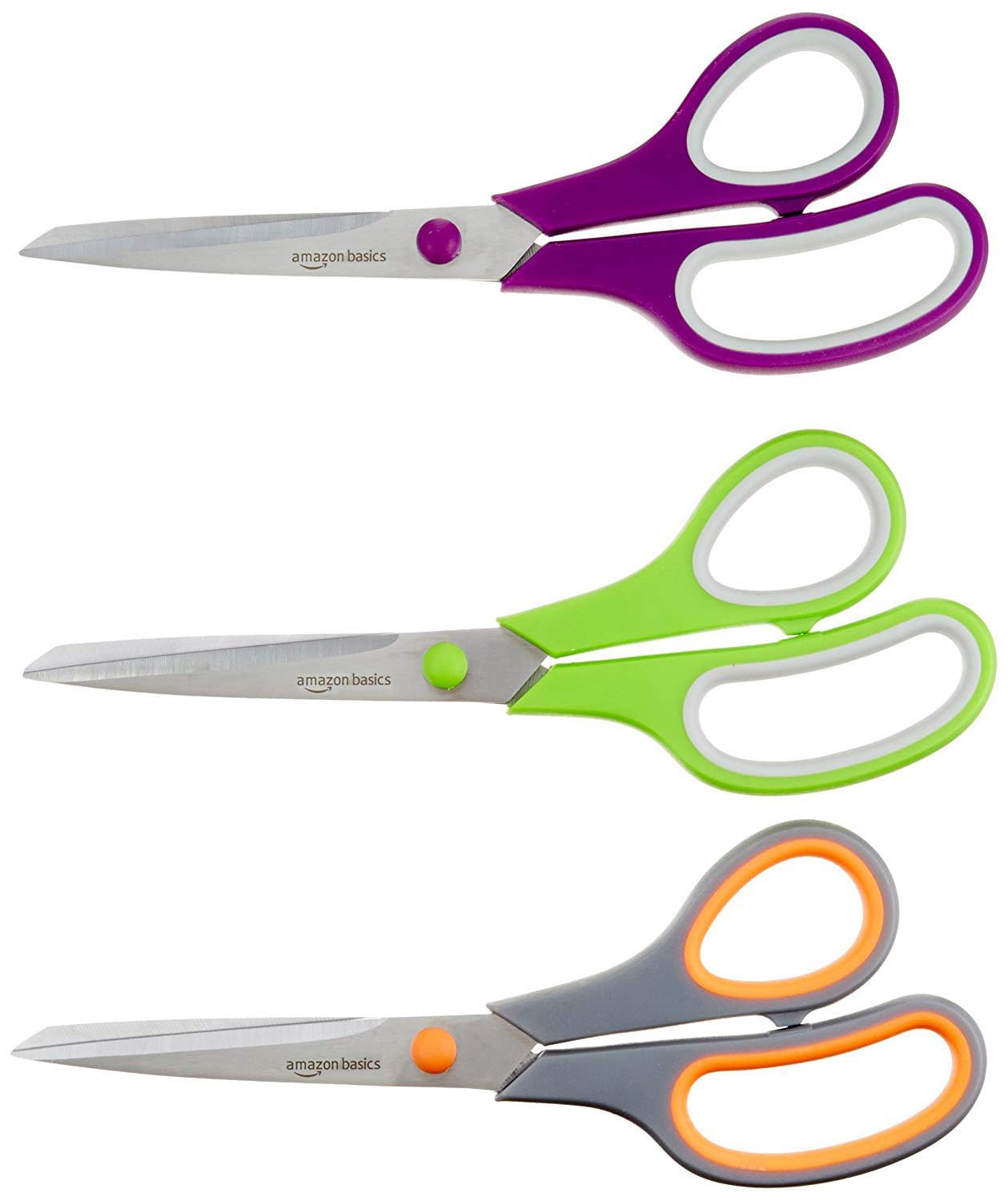
I rely on these as dependable, PVD-coated multipurpose scissors that stay sharp and feel comfortable for long sessions.
Why I picked it: PVD-coated blades for lasting edge and soft grips for extended cutting.
Best for: Crafters who need all-around scissors for paper, fabric, and light packaging.
Affordable, great value for a three-pack.
Pros
- PVD-coated blades resist dulling
- Soft comfort-grip handles
- Works left or right handed
- Three useful colors
Cons
- Not specialized for heavy fabric stacks
- Basic pivot tension adjustment
My take
These scissors became my go-to for mixed tasks—cutting paper templates, trimming quilt blocks, and opening supply packaging. The PVD coating gives a noticeably smooth cut and seems to help the edge last longer than plain stainless in my experience.
The soft-grip handles reduce fatigue when I trim dozens of seams, and the ambidextrous design means I can hand a pair off to a helper without fuss. I appreciate the three-pack because I can dedicate one to fabric-only use and keep adhesive-prone materials away from it.
For precise, heavy tailoring or cutting many layers at once I use a dedicated tailor’s shear, but for everyday shop tasks these Amazon Basics scissors are a reliable, cost-effective option.
3. LIVINGO 9.5in Premium Tailor Scissors – Best Heavy-Duty
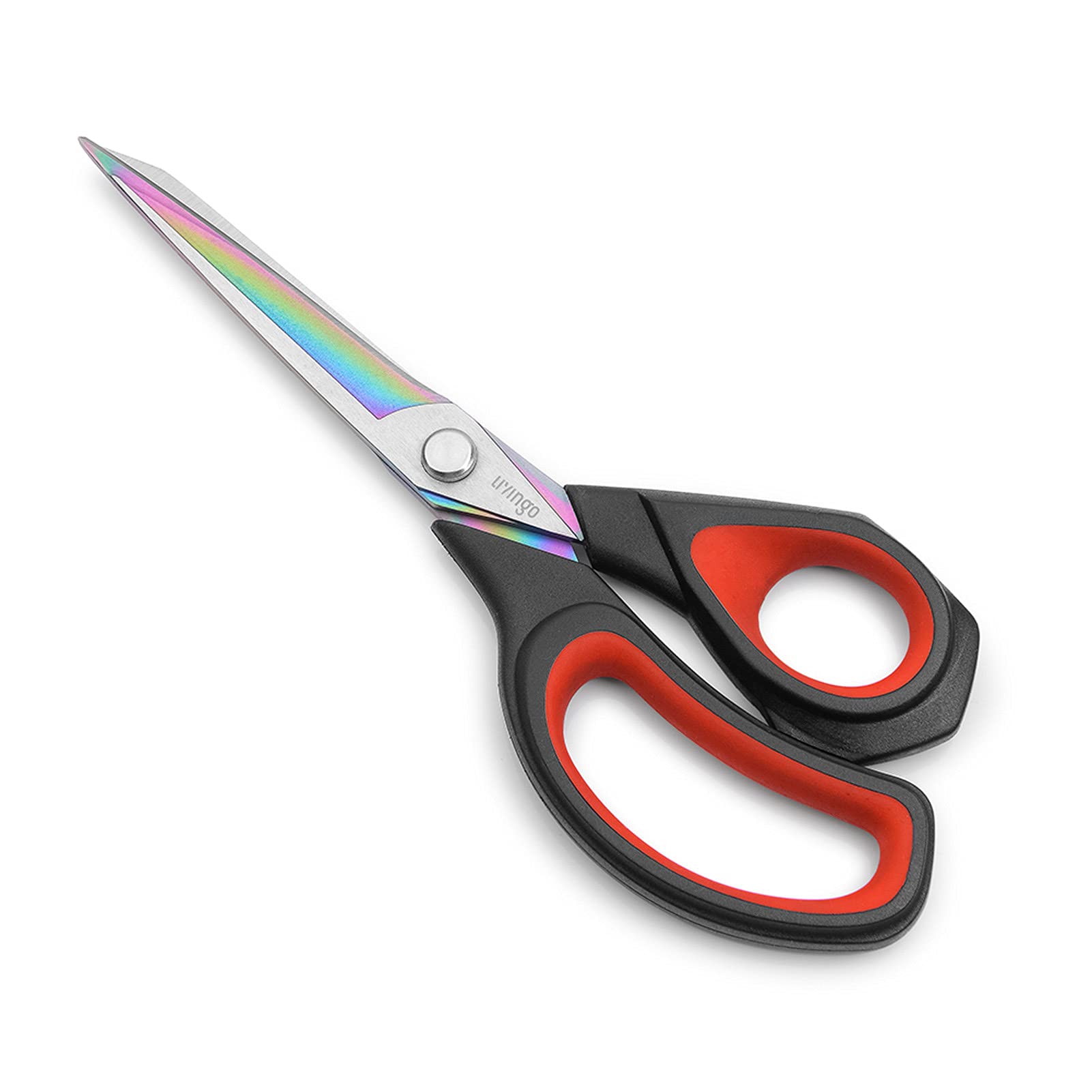
I reach for these when I need to cut several layers—for quilting they slice through multiple fabrics cleanly thanks to forged blades and a titanium finish.
Why I picked it: Forged, high-density steel and titanium coating for long-life sharpness.
Best for: Cutting many fabric layers, upholstery projects, and heavy materials.
Reasonably priced for a heavy-duty tailor shear.
Pros
- Forged, hard stainless steel
- Titanium-coated blades resist rust
- Cuts many fabric layers
- Ergonomic comfort grip
Cons
- Heavier than lightweight scissors
- Large size for very small tasks
My take
When my project required cutting through stacked quilt layers and felt, these LIVINGO shears made short work of it—I trimmed more than a dozen layers without the blades binding. The forged manufacturing process produces a dense steel that I could feel in the cut.
The titanium coating resists adhesive and tape buildup, which is handy when I work with fusible products. The ergonomic handles give me good leverage and control even on long cuts.
These aren’t my grab-for-everyday pair because they’re substantial, but for heavy cutting and pattern work they’re one of the most capable, budget-friendly tailor scissors I use.
4. Westcott 8in Titanium Bonded Scissors (2-Pack) – Best Adjustable Glide
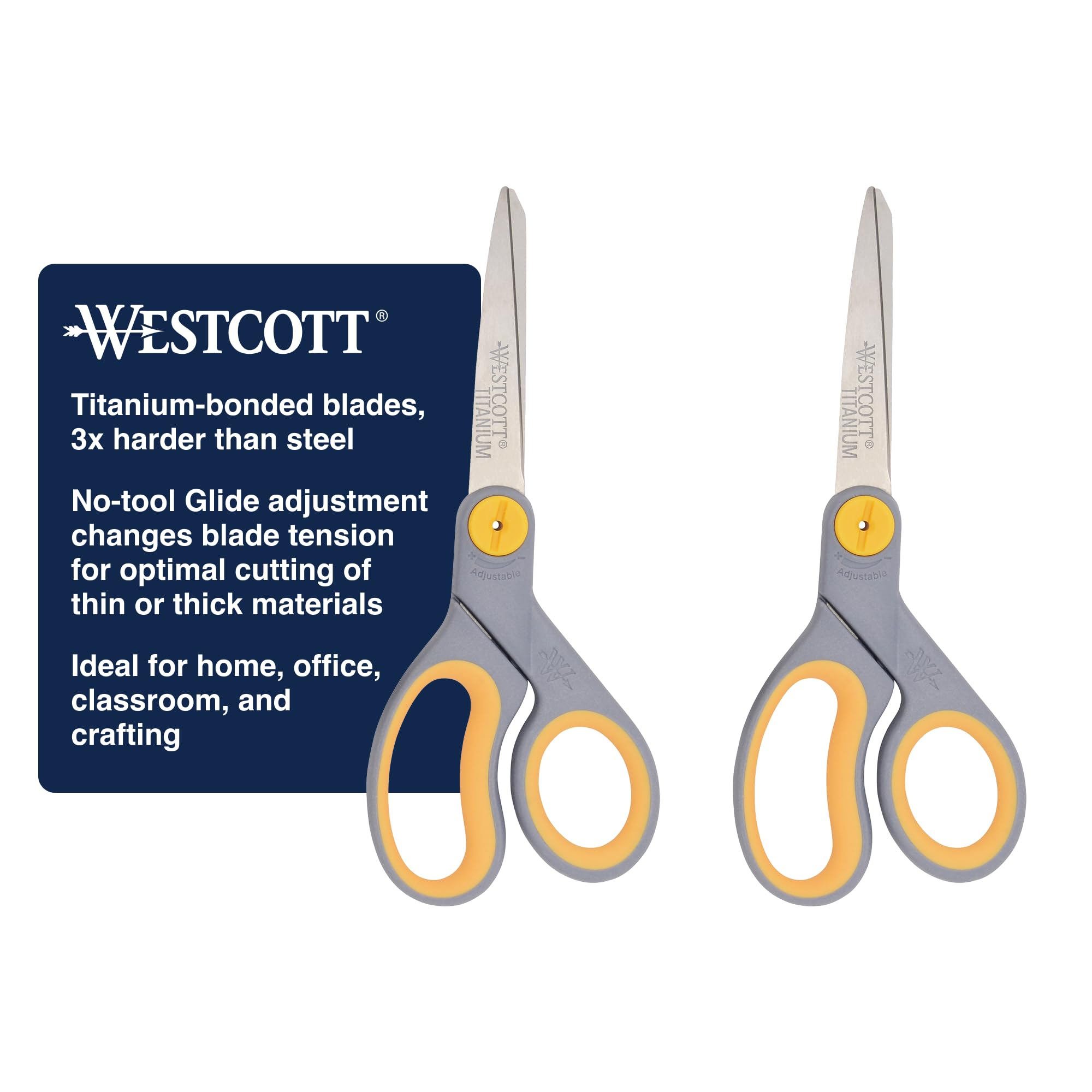
I appreciate the adjustable glide and titanium-bonded blades for tasks that vary from thin paper to thicker cardboard and craft board.
Why I picked it: Adjustable tension plus titanium-bonded blades for consistent cutting performance.
Best for: Versatile cutting from paper to thicker craft materials.
Good mid-range option with two pairs.
Pros
- Adjustable glide tension
- Titanium-bonded blades last longer
- Soft, ergonomic handles
- Two pairs for convenience
Cons
- Plastic pivot parts may wear over time
- Not meant for extreme heavy-duty use
My take
I used the Westcott pair for everything from trimming pattern paper to cutting cardboard templates for bag-making. The no-tool adjustable glide is genuinely useful—I lower the tension for paper and tighten it for thicker card stock, and the scissors perform smoothly in both settings.
The titanium-bonded blades keep a crisp edge and resist corrosion, which matters when I move between fabric and adhesive-backed materials. The soft handles are comfortable when I’m trimming binding for long stretches.
Because this is a two-pack I keep one pair dedicated to fabric and the other for paper and packaging, which helps prevent glue transfer and keeps edges cleaner.
5. Fiskars 8in Original Orange-Handled Scissors – Best Classic
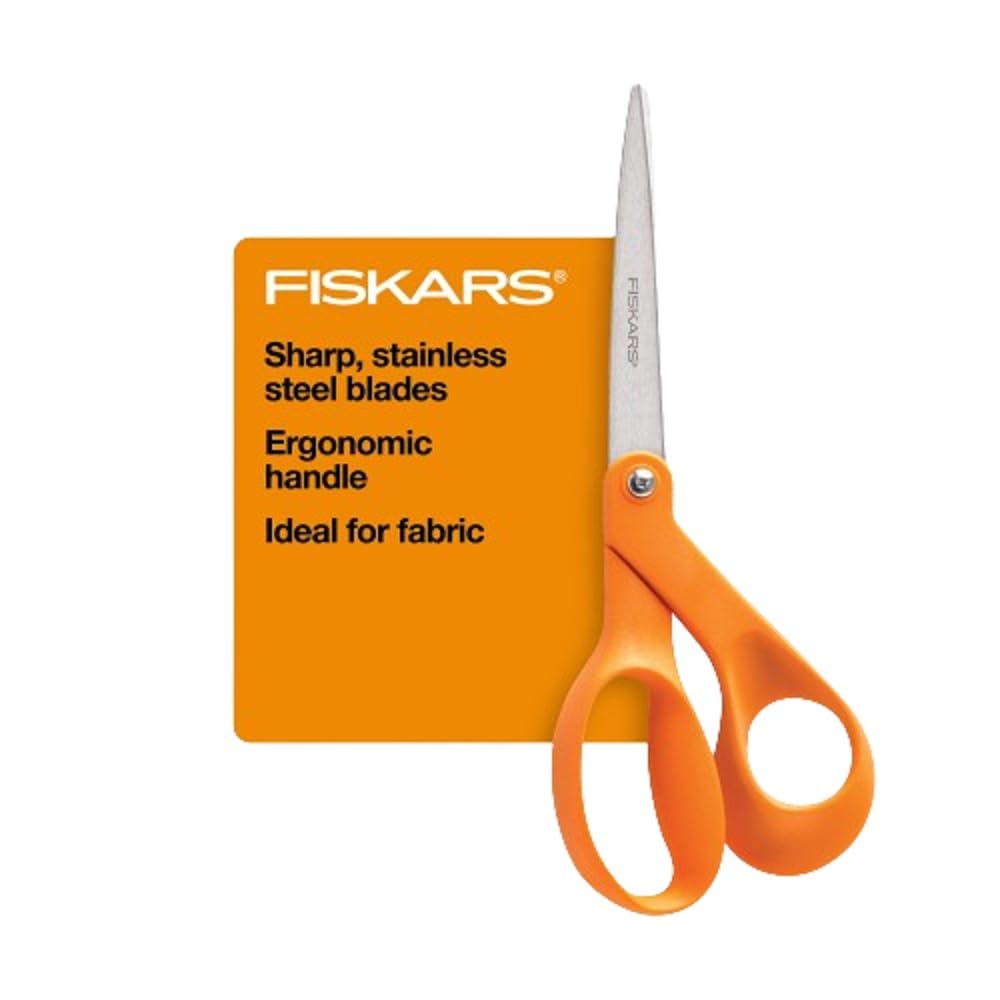
These are the classic, ergonomic scissors I trust for precise tabletop cutting and long sessions of quilt trimming.
Why I picked it: Precision-ground blades and a bent handle design keep cuts flat and accurate.
Best for: Precision fabric cutting, tabletop trimming, and long sewing sessions.
A bit higher cost but excellent long-term tool.
Pros
- Precision-ground blades to the tip
- Ergonomic contoured handle
- Bent handle keeps material flat
- Lifetime warranty
Cons
- Single pair, no multipack
- Not specialized for heavy-cutting stacks
My take
I upgraded to these Fiskars after using cheaper scissors and immediately noticed cleaner cuts right to the tip—essential when I clip points and trim seams. The bent handle design keeps fabric flat against the table, which improves accuracy on long cuts.
They feel light but solid in the hand and the ergonomics reduce fatigue when I’m trimming multiple quilt pieces. The precision-ground edge stays sharp for a long time in my experience.
For dedicated seam trimming and precise tabletop work these are one of the first pairs I recommend to other quilters in my sewing circle.
6. LIVINGO 8in Titanium Non-Stick Scissors (2-Pack) – Best Nonstick
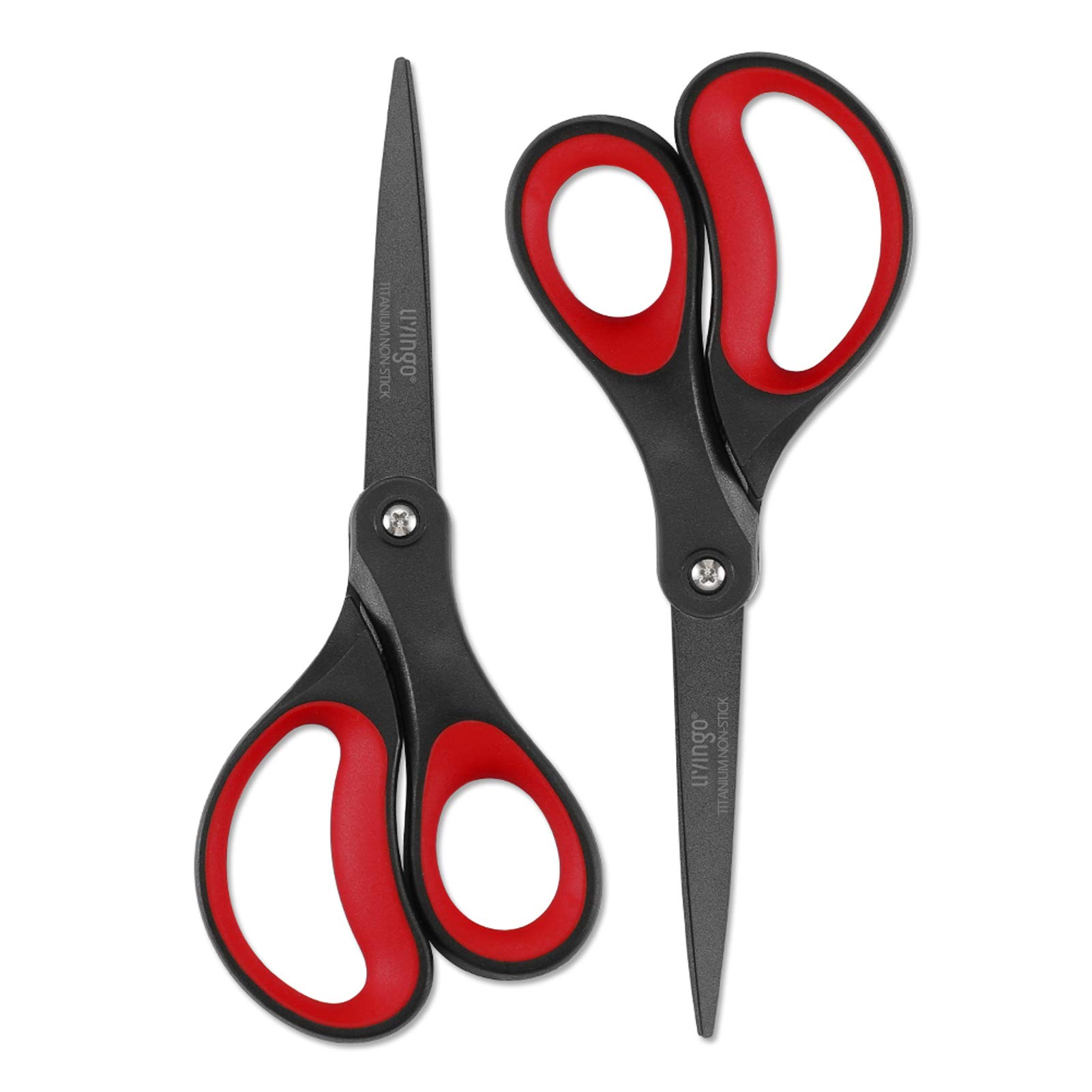
These non-stick, Teflon-coated blades are my go-to when working with adhesive-backed fabrics or tape-heavy projects.
Why I picked it: Teflon non-stick coating resists glue and adhesive buildup.
Best for: Fusible appliqué, adhesive-backed materials, and projects with tape.
Solid mid-range choice with two scissors included.
Pros
- Teflon non-stick blade coating
- Resists glue and adhesive build-up
- Comfortable ergonomic handles
- Two pairs included
Cons
- Coating may wear with heavy use
- Not a dedicated tailor’s shear
My take
Working with fusible web and adhesive-backed fabrics used to gum up my regular scissors; these LIVINGO non-stick blades keep sliding through the material without dragging. I tested them on trimmed applique pieces and tape-laden seams and found the coating genuinely helpful.
The stainless-steel core is solid, and the comfortable handles make repeated snips easy. Having two pairs means I can dedicate one to adhesive jobs and preserve the other for clean fabric cutting.
They’re not as heavy-duty as forged tailor shears, but for dealing with sticky materials they save me time and frustration.
7. SINGER 4.5in ProSeries Detail Scissors – Best for Detail Work
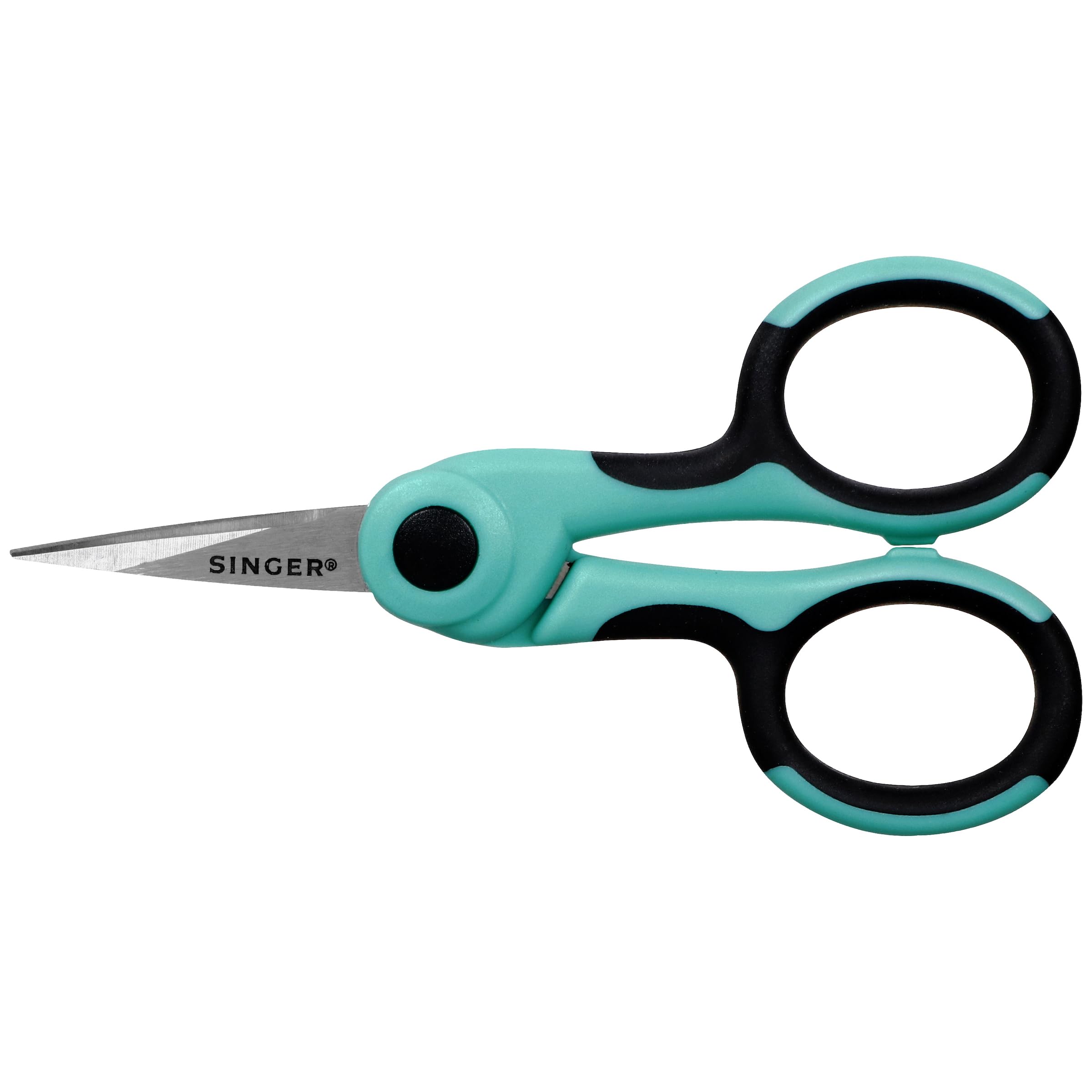
I always keep a small pair of these for applique snips and thread trimming—nano tip and tight tension make them ideal for precision.
Why I picked it: Nano tip and compact size for intricate applique and embroidery.
Best for: Applique, embroidery, and any task requiring tight, precise snips.
Very affordable specialty tool.
Pros
- Ultra-sharp nano tip
- Compact for tight spaces
- Comfortable TPR handles
- Tempered blades hold edge
Cons
- Too small for large cuts
- Not for heavy fabric stacks
My take
When I need to snip a thread close to the fabric or trim small applique shapes, these Singer detail scissors are the ones I reach for. The nano tip lets me get into cramped corners without nicking surrounding stitches.
They’re lightweight and the TPR handles are comfortable for repeated use. I keep a pair on my workstation and another in my travel kit because they’re so handy.
They won’t replace my long shears for big cuts, but for finishing work and precision trimming these are indispensable in my kit.
How I Choose Quilting Scissors
What I look for in scissors for quilting
I pick scissors based on three priorities: blade performance, handle comfort, and durability. For quilting I favor a sharp edge that retains its shape, ergonomic handles for repetitive cuts, and a build that resists adhesive.
A dedicated pair for fabric and another for packaging or adhesive materials keeps edges clean longer. I also prefer adjustable tension or forged construction when I plan to cut many layers.
- Blade type: Forged stainless steel or PVD/titanium coatings for longevity
- Handle comfort: Ergonomic or soft-grip to prevent hand fatigue
- Purpose: Small snips, daily multipurpose, or heavy-duty tailoring
- Coatings: Non-stick or titanium helps when working with adhesives
- Multipack vs single pair: Multipacks are convenient for organizing tasks
Frequently Asked Questions
Do I need different scissors for quilting and paper patterns?
Yes. I keep one pair for fabric-only use and another for paper or packaging. That prevents adhesive and paper dust from contaminating the fabric pair and keeps edges sharper longer.
How often should I sharpen my quilting scissors?
It depends on use. I sharpen heavy-use shears more frequently—after several months of regular cutting through multiple layers—and sharpen detail or fabric-only pairs less often. Coated blades may need less frequent sharpening but watch for any drag.
Are non-stick or titanium coatings worth it?
I find non-stick coatings very helpful when using fusibles, tape, or adhesive-backed materials. Titanium or PVD finishes also help resist corrosion and maintain a smoother cut over time.
Final Take
I keep multiple scissors within arm’s reach because each has a role: a large forged shear for heavy cutting, a classic ergonomic pair for precise tabletop work, a non-stick pair for adhesive jobs, and a tiny nano-tip for finishing.
If you buy one pair, make it a comfortable, precision-ground option. If you can, build a small set around the tasks you do most often—those combinations are what I rely on in my quilting workflow.
