
I tested six raised bed systems—galvanized metal, modular kits, and a vertical planter—to find options that are sturdy, easy to assemble, and suited to specific garden needs.
I built, filled, and planted in every raised bed on this list so I could judge real-world sturdiness, assembly, and how each design performs for vegetables, herbs, and flowers.
These picks cover everything from compact tool-free boxes to tall, heavy-duty kits and a vertical planter for tiny spaces. I focused on material thickness, drainage design, and how much effort it takes to get growing.
Below I explain which beds worked best for which situations and what I learned during setup and the first growing cycles.
If you want low-effort assembly, look to the Plant & Plot tool-free design; for long-term durability and deeper root space, the Vego 17" system is my go-to. Galvanized open-bottom beds balance drainage and simplicity, while the vertical Outland Living unit is the best compact option for patios and balconies.
1. Raised Garden Bed GRS Certified Galvanized Planter Box Outdoor — Silver 5 ft – Best Overall
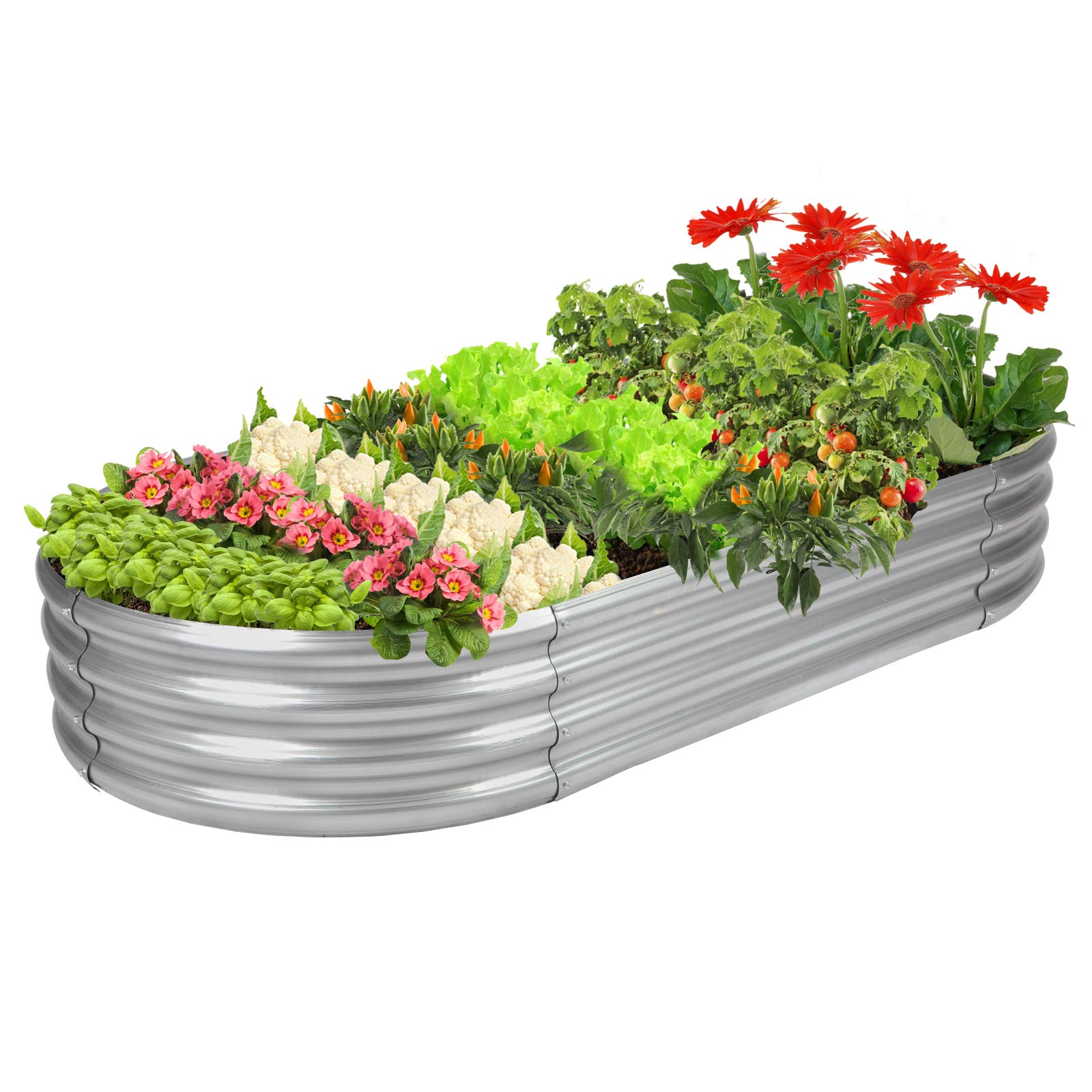
A heavy-gauge, oval galvanized planter that felt noticeably sturdy and finished once I assembled it. The open bottom aids drainage and root access.
Why I picked it: Thicker 0.8mm galvanized panels, open-bottom drainage, simple fasteners.
Best for: People wanting a durable, low-profile metal bed for veggies and herbs.
A standout value for metal durability versus thinner competitors.
Pros
- Thicker 0.8mm galvanized metal
- Open-bottom drainage
- Easy wing-nut assembly
- Oval profile looks tidy
Cons
- Requires a lot of soil to fill
- Some sharp panel joins
My take
I found the metal felt beefier than other budget beds I’ve handled. The 0.8mm panels and double-layer galvanizing gave the planter a reassuring rigidity when I bolted the panels together with the included wing nuts.
Assembly was straightforward and quick; everything fit without unusual force. The open base is simple but effective—water drains freely and roots can find the native soil if you place it directly on the ground.
Two practical notes from my time with it: it does take a lot of soil to fill (the product calls for a large volume), and some joins had sharper edges than the rest of the finish. I temporarily covered those edges for safety and haven’t had structural issues in the short term.
Overall, I like this as an all-purpose metal raised bed when you want durability and good drainage without a complicated setup.
2. Plant & Plot Galvanized Raised Garden Bed // 4×2×1 ft // Patented Tool-Free Design – Best for Easy Assembly
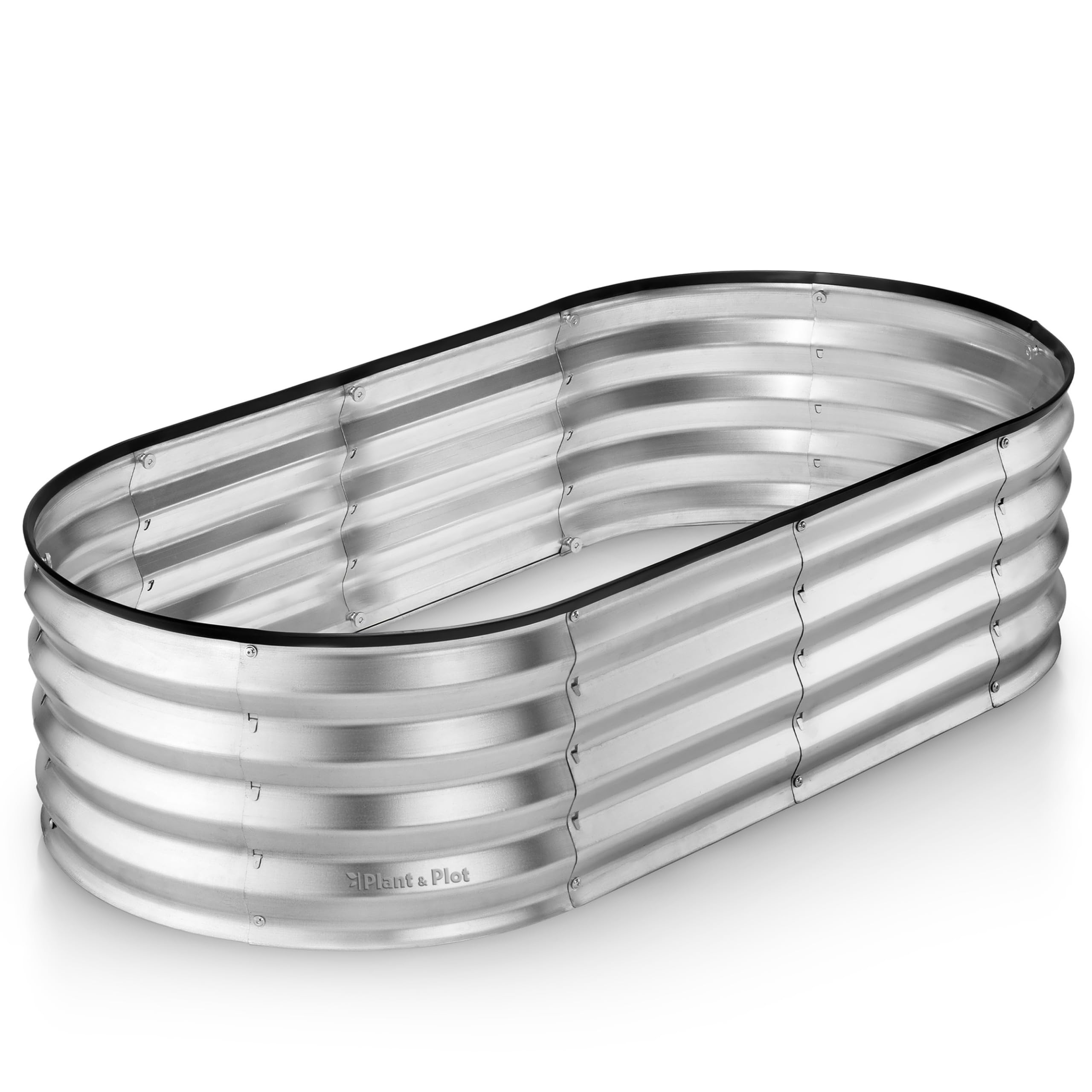
A compact, tool-free galvanized bed that I assembled in minutes. The rubber top gasket and center support make it user-friendly and stable.
Why I picked it: True tool-free assembly, rubber top guard, center stabilizer.
Best for: New gardeners or anyone who dislikes fiddly hardware and wants quick setup.
A budget-friendly pick that prioritizes hassle-free assembly.
Pros
- Tool-free, fast assembly
- Rubber top edge for safety
- Center bar adds stability
- Durable 0.6mm metal
Cons
- Smaller footprint than large beds
- Not as deep for long-root crops
My take
I was impressed by how little time and effort it took to put this together—the patented tool-free design really delivers on 'no fuss' assembly. The instructions were clear and the pieces lined up as expected.
The rubber gasket at the top is a small detail that made a big difference; I wasn’t worried about slicing my forearms when leaning over the bed. The center support bar stiffened the unit nicely once filled.
If you want a no-drama bed that gets you planting fast, this one is excellent. Just remember the dimensions are compact—plan accordingly if you need extra root depth or row space.
3. Vego Garden Raised Bed Kits — 17″ Tall, 9-in-1 Modular 8×2 ft Planter (Olive Green) – Best for Deep Roots & Longevity
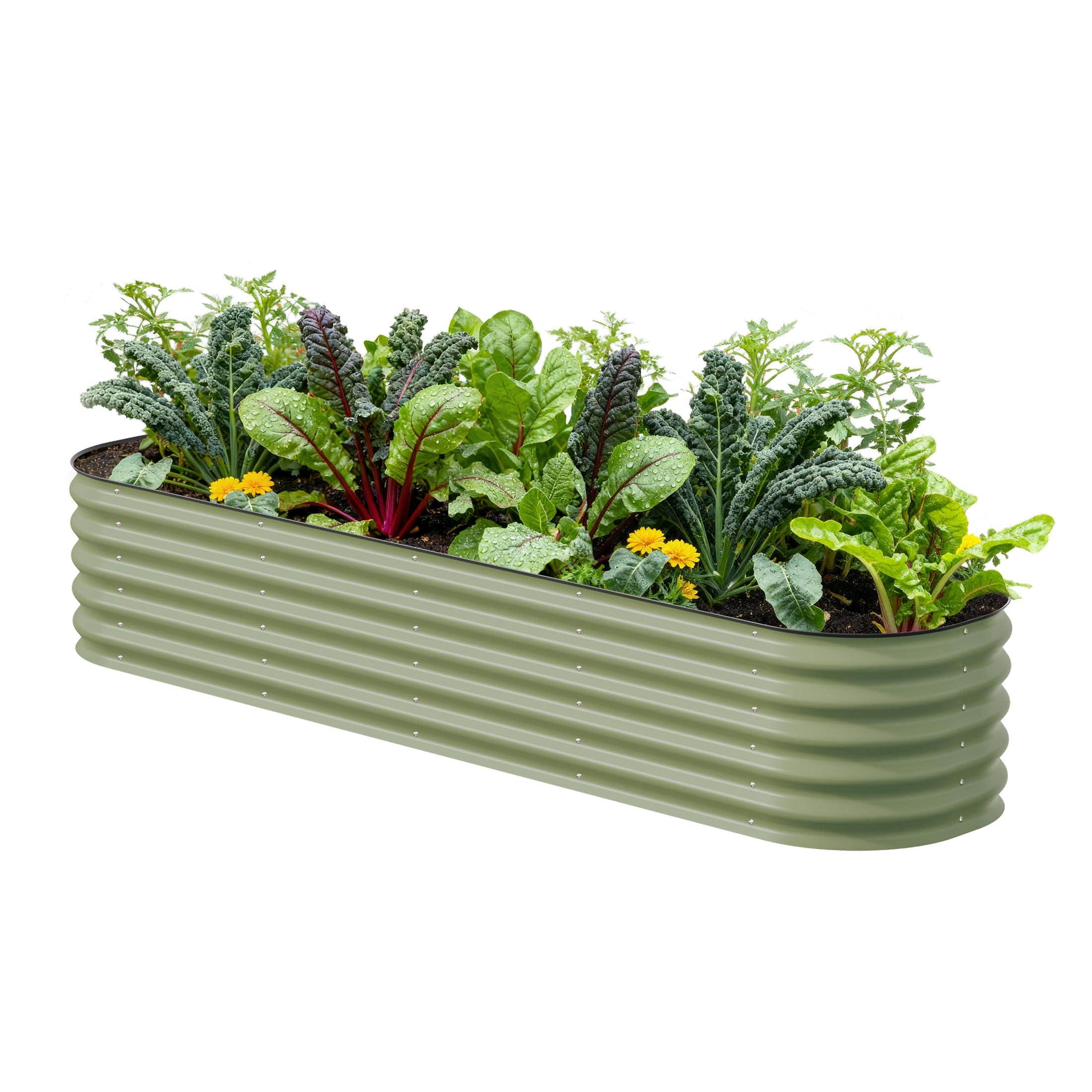
A modular system built from a proprietary VZ 2.0 coated steel with a taller 17" depth that I found ideal for deeper-rooted vegetables and extended seasons.
Why I picked it: 17" depth, modular 9-in-1 layouts, premium VZ 2.0 metal.
Best for: Serious vegetable gardeners and those who want a long-lasting metal system.
Premium materials and flexibility justify this as a longer-term investment.
Pros
- 17" depth for strong root growth
- Modular 9-in-1 configurations
- Thick, coated VZ 2.0 metal
- Rounded corners and rubber edging
Cons
- Heavier kit to move
- Assembly is more time-consuming
My take
The taller 17-inch profile is immediately useful if you grow root vegetables or want healthier root systems overall. I appreciated not having to cram roots into a shallow box.
Construction quality stood out: panels were rigid, holes were predrilled, and each piece had a protective film to prevent shipping scratches. Assembly takes longer than a simple box—plan an hour or more the first time—but the finished bed feels very stable.
I’ve continued to add these to my garden because they maintain shape, resist corrosion, and give me layout flexibility. The modular possibilities make it easy to adapt beds to whatever plot I’m working with.
For me, this is the pick when I want something that will last multiple seasons and provide real depth for productive vegetable beds.
4. 6-Ft Vertical Garden — Freestanding Elevated Planter with 4 Container Boxes (Espresso Brown) – Best for Small Spaces
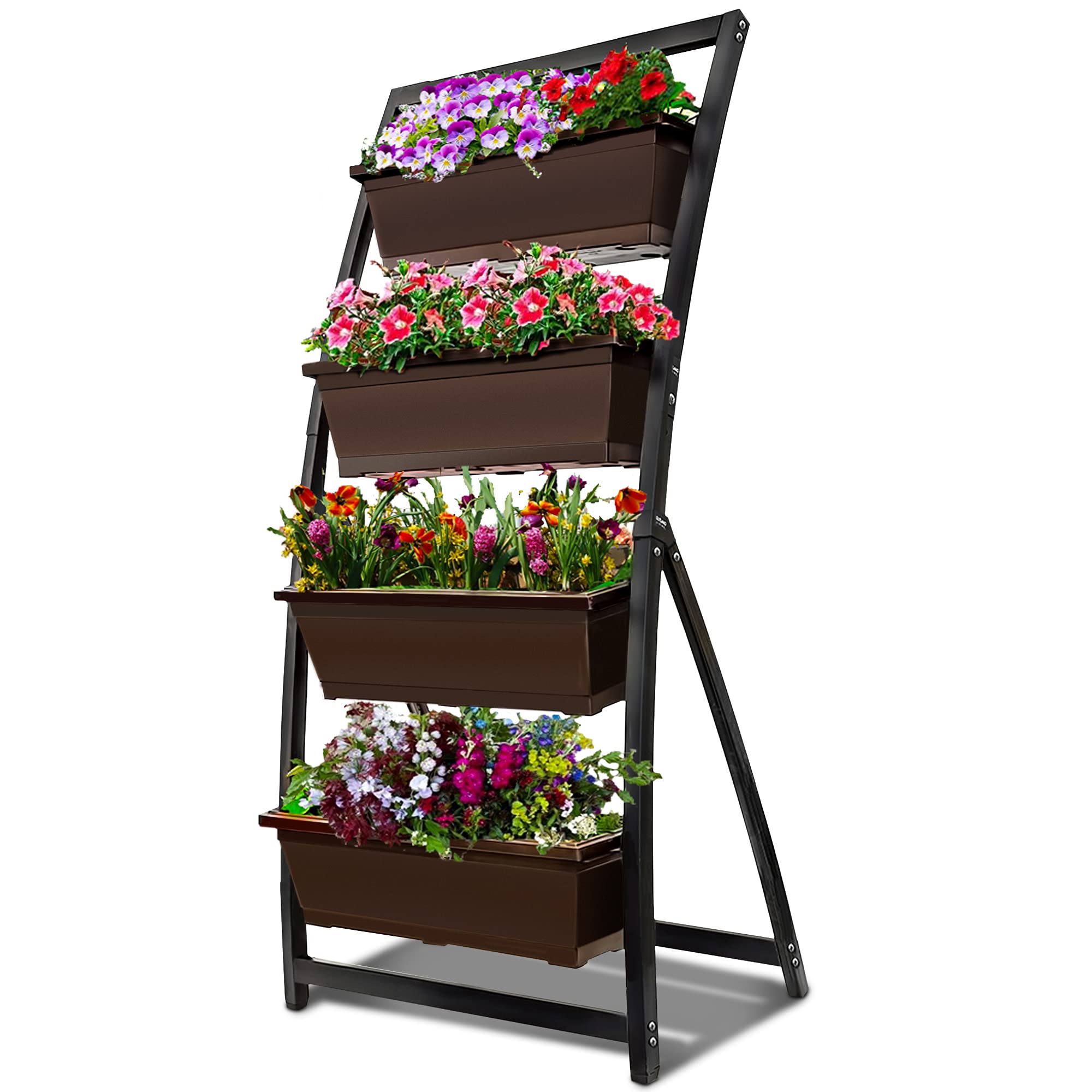
A freestanding vertical planter that packs multiple containers into a narrow footprint—perfect for balconies or patios where ground space is limited.
Why I picked it: Tall, freestanding 4-bin design saves horizontal space.
Best for: Apartment gardeners, balconies, and anyone with limited ground area.
A smart compact option that trades width for vertical planting space.
Pros
- Maximizes plants in a small footprint
- Food-grade polypropylene containers
- Ergonomic height for less bending
- Quick assembly
Cons
- No pre-drilled drainage holes
- Top bins can be hard to reach
My take
I put this together in under 30 minutes following very clear illustrated instructions. The unit is impressively sturdy once assembled and gives me the equivalent of several feet of garden space without taking up a lot of ground.
The plastic boxes are food-grade polypropylene, which reassured me for growing herbs and salad greens. I did drill drainage holes in each box—an easy step that solved potential water-logging.
Note that the top tier sits high; I found the ergonomic height great for back relief, but plan how you'll access the top tray if you're shorter. For tight spaces, this vertical system made a big visual and productive impact in my small patio garden.
5. ONCEMORE Galvanized Raised Garden Bed Kit — 8×4×1 ft with Tomato Cages and Accessories (Black) – Best Kit with Extras
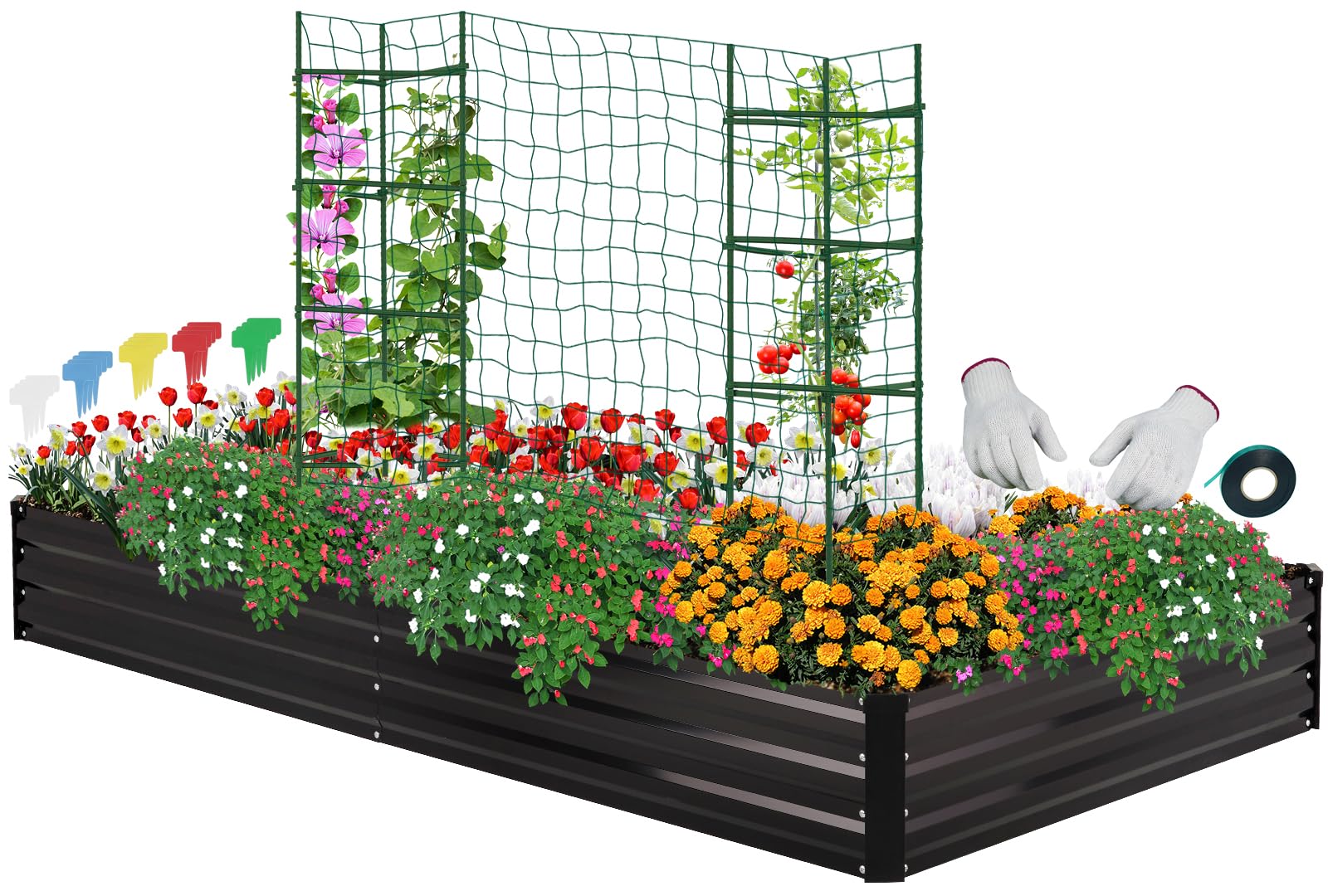
A full kit that arrived with plant stakes, tomato cages, gloves, and ties—handy if you want a mostly turnkey metal bed setup.
Why I picked it: Includes accessories and simple assembly for a complete starter kit.
Best for: Gardeners who want a ready-to-use bed with helpful extras.
Good value for an accessory-packed metal bed kit.
Pros
- Comes with tomato cages and garden accessories
- Easy assembly with included tools
- Good size for multiple rows
- Protective film on panels
Cons
- Panels feel a bit thinner
- Wear gloves during assembly
My take
This kit impressed me because it includes more than the bed panels—tomato cages, ties, labels, and gloves arrived in the box so I could set up and plant without hunting for extras.
Putting it together was straightforward and I was able to move the assembled bed into place by myself. The panels come with a protective plastic film which helps prevent scratches during handling.
Compared to heavier-gauge beds, these panels felt a touch thinner, so I took extra care when tightening fasteners and recommended wearing the included gloves. Functionally, the kit gives a lot of utility for the price and made launching a small vegetable patch quick and simple.
6. Plant & Plot Galvanized Raised Garden Beds // 4×2×1 ft // Yellow (Set of 2) – Best Color & Two-Pack Option
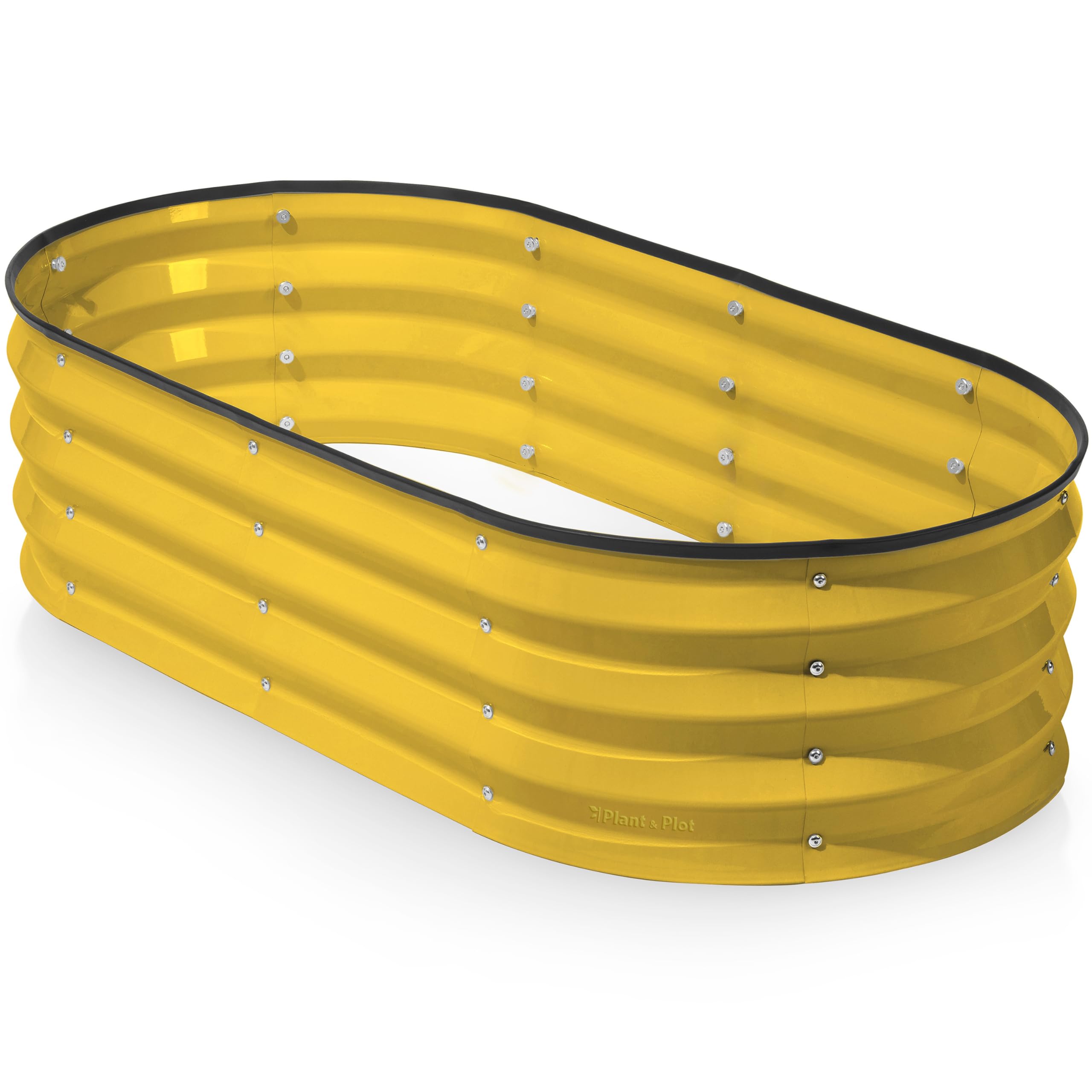
Same easy-assembly design as the other Plant & Plot entry, but in a bright color and sold as a convenient two-pack for balanced landscaping.
Why I picked it: Tool-free assembly, vibrant color, sold as a pair for symmetry.
Best for: Gardeners wanting matching beds or a pop of color near gates and walkways.
Two-bed value for coordinated placement and symmetry.
Pros
- Set of two for balanced layouts
- Clear instructions and good support
- Stabilizing center bar included
- Gorgeous color options
Cons
- Color may show dirt quickly
- Not as deep for large root crops
My take
I appreciated receiving two identical beds—I placed them on either side of my garden gate and they created immediate visual balance. The instructions were well written and assembly was largely tool-free.
The stabilizing bar that ships with these beds makes a real difference in stiffness once soil is added. The manufacturer’s support channels are straightforward to reach if you need help.
If you care about aesthetics, the color is great; just expect it will collect some soil marks over the season. These are ideal when you want matched beds that are quick to assemble and install.
How I Choose a Raised Bed
Material and Durability
I prioritize thicker metal or food-safe plastics depending on how long I want the bed to last and what I plan to grow.
Galvanized steel with a robust coating resists rust better than thin panels, while premium coated systems (like VZ 2.0) aim for multi-year life.
- Look for panel thickness (0.6mm and up for metal beds).
- Check for protective coatings or rounded top edges.
- For vegetables, prioritize non-toxic, food-grade materials.
Depth and Size
Root depth matters. I choose 12–17" beds for most vegetables and taller profiles for carrots and potatoes.
Match the bed footprint to the available space: vertical units give more planting area per square foot of ground.
- Shallow beds are fine for herbs and lettuces.
- 17" beds are better for root crops and large-rooting plants.
- Measure your path access and lifting ability before choosing a large box.
Assembly and Setup
If I want to get growing fast, a tool-free design saves time and frustration. Heavy modular kits take longer but deliver a sturdier result.
Consider whether you’ll assemble solo or with help—the heavier kits often need two people to move once filled.
- Tool-free systems: fastest to assemble.
- Modular/heavy kits: more work, greater long-term rigidity.
- Keep protective films on panels until assembly is complete.
Drainage and Placement
Open-bottom beds give natural drainage and let roots access native soil; closed or plastic bins need drain holes to avoid water logging.
Place metal beds on level ground, and add cardboard or fabric barrier if you want to prevent weed intrusion under open-bottom beds.
- Drill drain holes in plastic trays if not pre-drilled.
- Use raised bed fabric or cardboard under open bottoms to suppress weeds.
- Plan irrigation so lower beds aren’t constantly saturated.
Extras and Accessories
I often choose kits that include trellises, cages, or ties because they shorten the time between setup and planting.
Small details—rubber top guards, center support bars, and customer support availability—make regular use more pleasant.
- Tomato cages, ties, and labels speed early-season setup.
- Rubber edge guards prevent scrapes.
- Warranty and easy support matter for long-term peace of mind.
Frequently Asked Questions
Do galvanized beds need a liner?
I typically don’t line galvanized open-bottom beds placed directly on soil; the metal and open base allow drainage. If you want to keep soil contained or protect the metal from constant wetness, I use a breathable landscape fabric or cardboard layer.
How much soil will I need?
I calculate soil by multiplying the bed’s area by depth. The 5-ft oval bed on this list requires a notably large volume—expect to buy multiple bags for deeper beds.
Can I put raised beds on a patio or deck?
Yes—use a tray or weight-distribution method to protect decking and ensure drainage. For plastic or closed-bottom beds, drill drainage holes and place a catch tray if necessary.
Final Take
I find there’s no single best raised bed for every gardener. If you want fast setup and simplicity, the Plant & Plot tool-free design is my pick. For deep-rooted vegetables and a long-term metal solution, I prefer the Vego 17" modular system.
For tight spaces, the Outland vertical planter packs the most planting area into a small footprint, and the ONCEMORE kit is great when you want accessories included. The 5-ft galvanized oval strikes a strong balance of durability and simple drainage.
Whichever you choose, focus on material quality, drainage, and the footprint that fits your space—those factors made the biggest difference in my testing and planting seasons.
