
I tested a range of rakes and leaf tools across beds, lawns, and heavy debris. This roundup highlights the tools I reached for most often and why each one earned a spot.
I spent time putting different rakes and leaf tools through real yard work so I could judge them on build, comfort, and how quickly they cleared debris.
My testing focused on head design, tine stiffness, handle comfort, and how well each tool handled the common tasks I deal with: leaves, pine needles, mulch, and light thatch.
Below I walk through where each tool shines and the compromises I ran into so you can pick the right one for your yard.
When I compared tools I concentrated on purpose: tight flower-bed tools versus wide lawn rakes, plastic adjustable heads versus metal tines, and hand scoops for fast pickup. I also weighed combisystem compatibility and replaceable parts since those affect long-term value.
1. Gardena combisystem Flower Rake – Best for Flower Beds
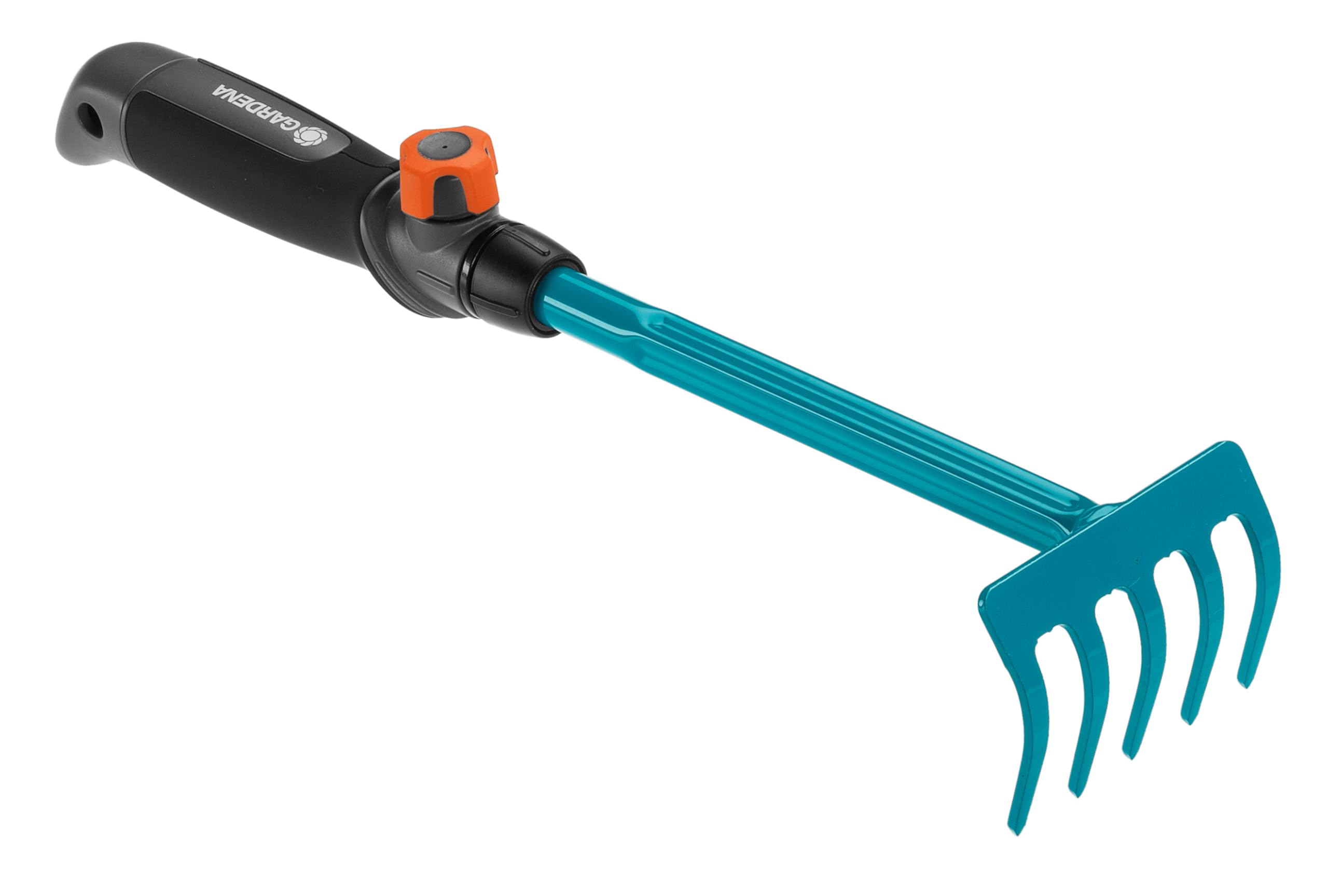
A compact, ergonomic hand rake that excels at cleaning, loosening, and smoothing soil in tight beds and containers.
Why I picked it: Small working width and a comfortable, angled handle make it excellent for precise soil work.
Best for: Flower beds, borders, containers, and tight spaces where control matters.
A solid-value hand tool with long-term warranty backing.
Pros
- Ergonomic handle with soft grip
- Corrosion-resistant Duroplast coating
- Fits combisystem handles
- Excellent for precision soil work
Cons
- Very narrow working width
- Handle sold separately for long-reach work
My take
I reach for this small Gardena rake when I need to tidy beds and work between plants. The five tines are narrow enough to get into tight spots without disturbing roots.
The ergonomically shaped handle feels good in hand and the angled end keeps it from slipping during repetitive work. I appreciate that the head can attach to any combisystem handle — that lets me avoid bending when I want it to.
Build quality impressed me: the steel head with protective coating resists rust and stands up to scraping in compacted soil. For precision tasks and light weeding around flowers, this is the tool I use most.
2. GARDEASE Leaf Scoops – Best for Quick Pickup
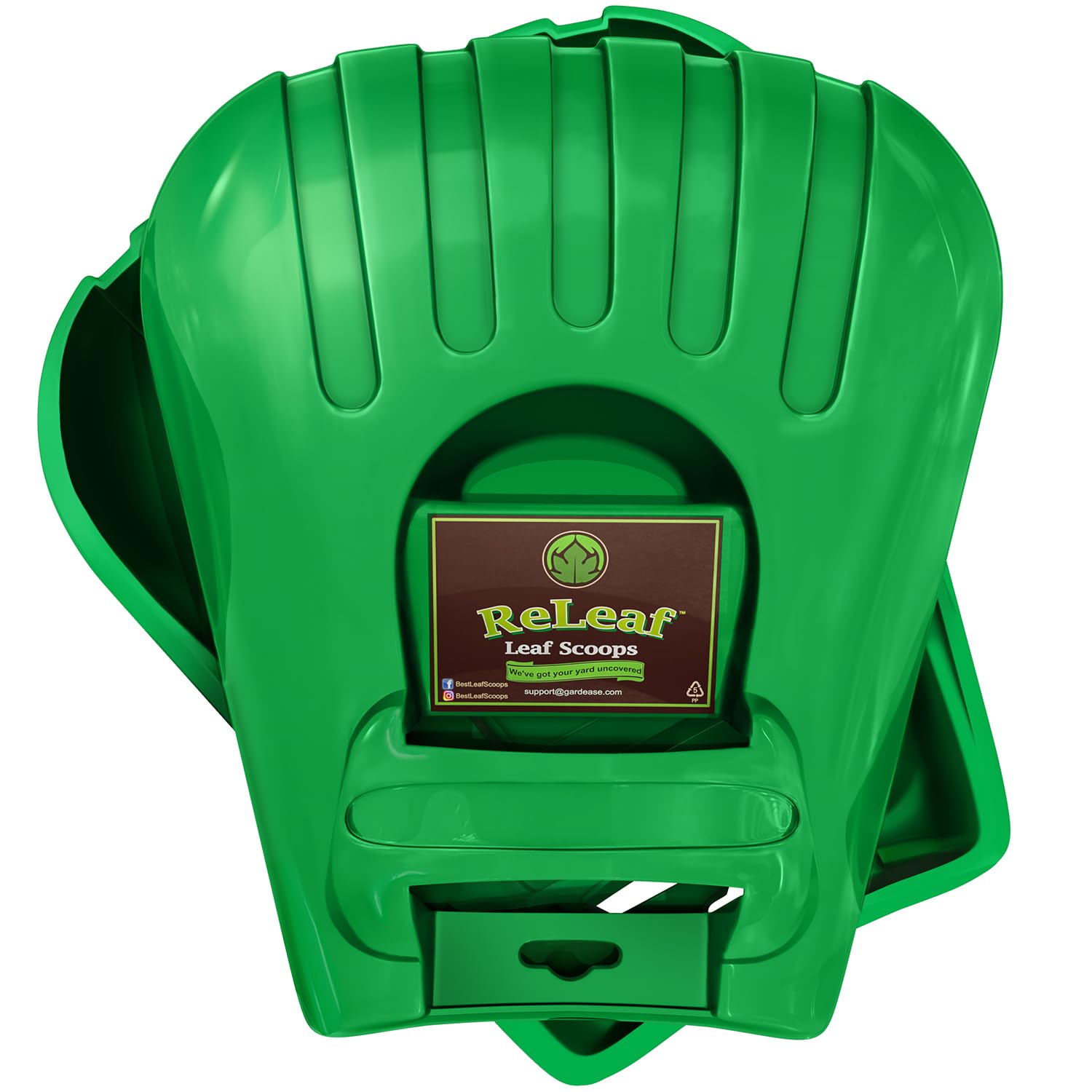
Oversized hand claws that let me gather large handfuls of leaves and debris with minimal bending.
Why I picked it: The closed, claw-like design speeds up pickup and reduces back strain during scooping.
Best for: Rapid collection of leaves, fruit, pet messes, and scattered yard debris.
An inexpensive way to cut bagging and bending time.
Pros
- Huge clamping surface for fast scooping
- Works wet or dry
- Ergonomic shape reduces hand fatigue
- Easy to store together
Cons
- Hand opening could feel awkward for some
- Not a replacement for raking fine debris
My take
When I need to move piles of leaves into a bag quickly, these scoops are my go-to. They let me grab far more material per motion than my hands alone, which saves time and strain.
They work surprisingly well on wet leaves and even for picking up small fruit or pinecones. The plastic is easy to clean and the fit-together storage keeps them handy in the shed.
I did wish the wrist/hand opening had a different shape for long sessions, but for quick bursts of scooping they make the job much easier.
3. Gardena combisystem 14-Tine Rake – Best All-Purpose
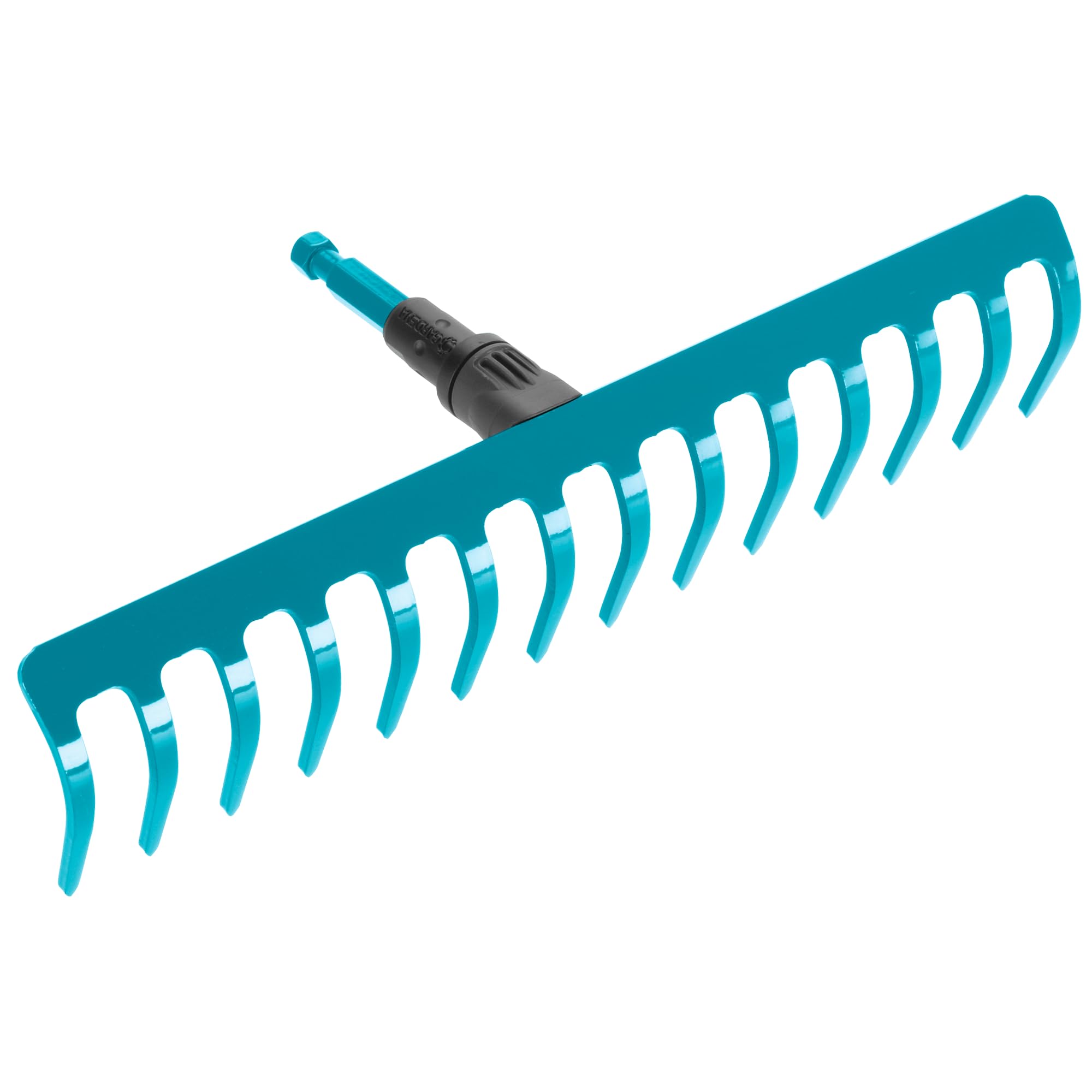
A versatile 14-tine head that balances width and control for general garden raking and soil levelling.
Why I picked it: 14 tines and combisystem fitting make it useful across many garden tasks while remaining sturdy.
Best for: Levelling soil, gathering debris, and general garden maintenance across medium areas.
A mid-range head that earns value when paired with a combisystem handle.
Pros
- 14 tines for even raking
- Fits all Gardena cs handles
- Duroplast coating resists corrosion
- Good balance of width and control
Cons
- Handle not included
- A bit pricier than basic rakes
My take
This 36 cm Gardena head became my workhorse for beds and paths. With 14 tines it gathers debris evenly without skipping, and it doubles as a leveller for light soil work.
Swapping it onto a long combisystem handle saved my back during extended sessions — the cs fitting is stable and wobble-free when properly secured.
The coated steel holds up to tougher chores like scraping clay and cutting through small roots. For anyone who wants one reliable head that handles most chores, this is the one I keep coming back to.
4. The GroundsKeeper II Rake – Best for Tough Debris
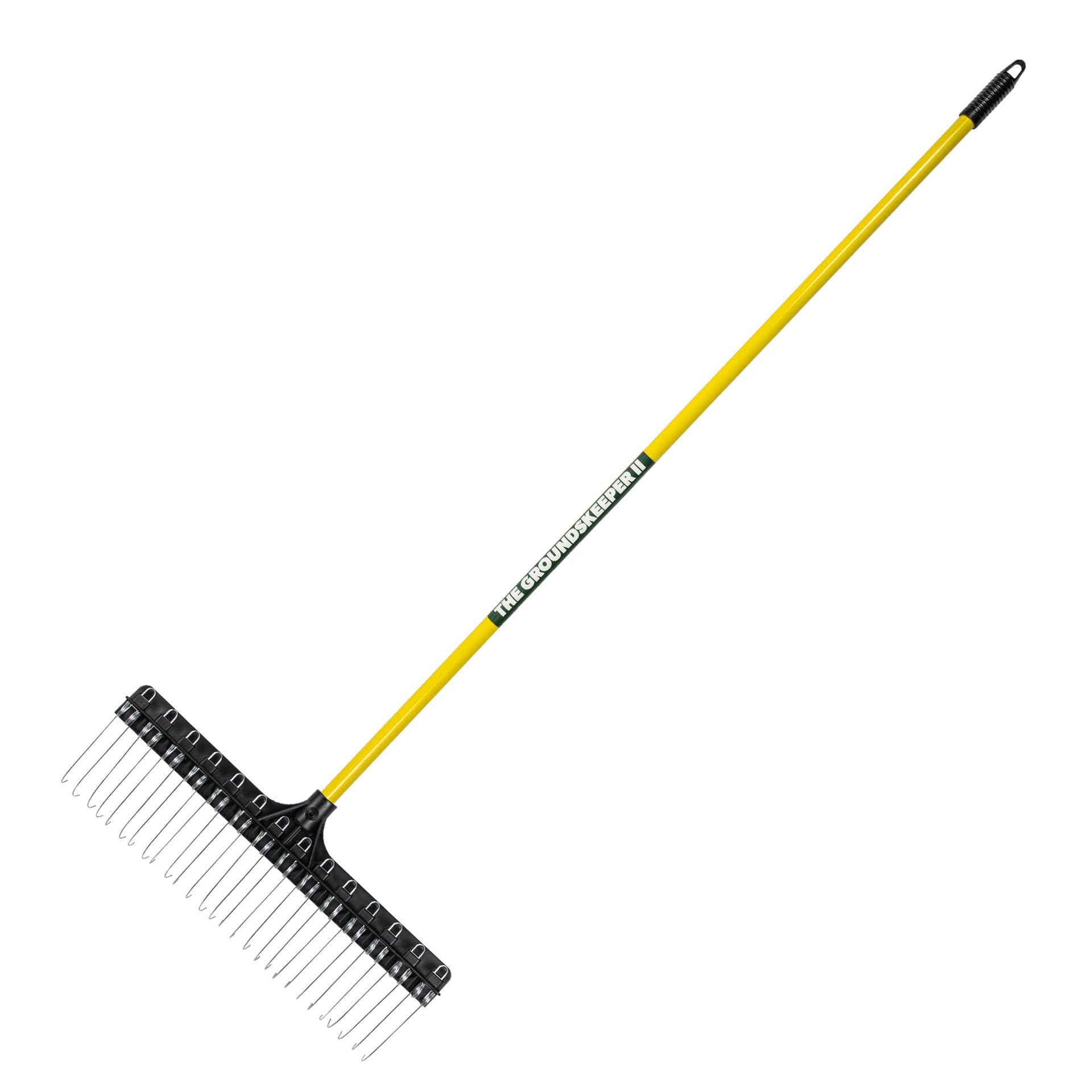
A lightweight yet heavy-duty rake with spring-loaded hardened steel tines that dig and pull without heavy downward pressure.
Why I picked it: The spring-loaded steel tines dig in and self-clean, which speeds de-thatching and clears pine needles and sticks efficiently.
Best for: De-thatching, pine needles, sticks, gravel beds, and heavy debris where other rakes clog.
A more durable, pro-oriented option built for frequent heavy use.
Pros
- Spring-loaded hardened steel tines
- Self-cleans when flipped
- Very lightweight for its strength
- Replaceable parts available
Cons
- Can dig into turf if misused
- Handle-pin attachment can wear over time
My take
If I need to clear pine needles, thatch, or embedded sticks, this is the tool I pick. The hardened, spring-loaded tines dig in without me pressing down, so I can rake standing up and use less effort.
Flipping the head and pulling it back loosens and sheds debris — the self-cleaning action saved me time on long runs of decorative rock and needle-covered areas.
It’s impressively light but built tough. My only caveat is to be mindful of how aggressively you use the head on soft turf — it can dig in. Also, I paid attention to the handle attachment area and reinforced it on one unit after heavy seasonal use.
5. Gardena Fan Rake (Combi System) – Best Adjustable Fan Rake
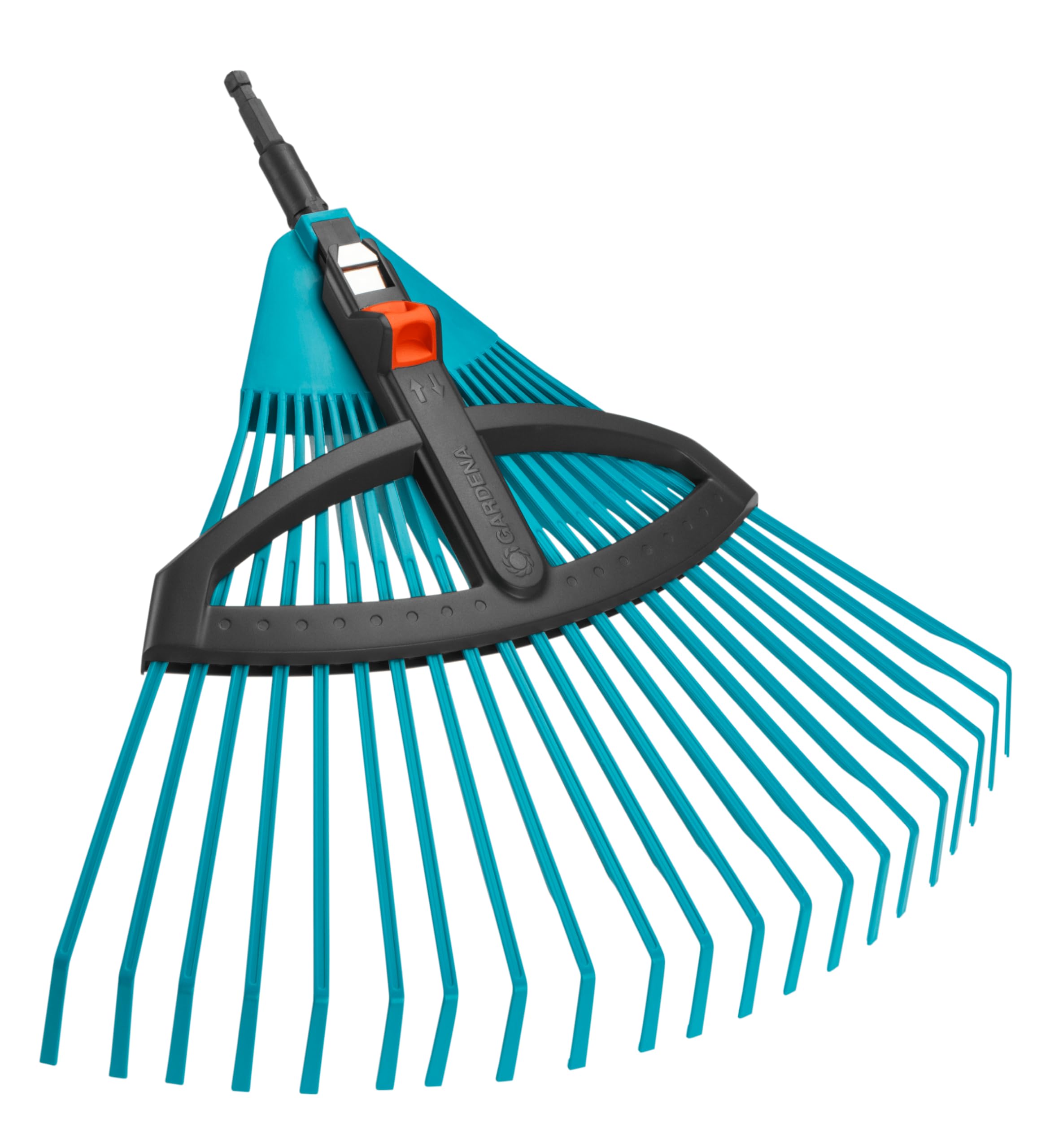
An adjustable plastic fan rake head that gives flexible tine spacing and works well in spots where a full-size rake is awkward.
Why I picked it: Adjustable spacing and combisystem compatibility let me tailor the head for leaves or finer debris.
Best for: Under bushes, tight corners, and situations where adjustable tine spread helps.
A practical adjustable head; consider adding a combisystem handle for long-reach work.
Pros
- Adjustable tine spacing
- Lightweight and easy to handle
- Good quality plastic construction
- Combisystem-compatible
Cons
- Slider adjustment can feel loose
- Less robust than metal heads
My take
I like this adjustable Gardena head for places a full-width metal rake can’t reach. The slider gives several spacing options so I can use it for dense leaves or looser debris.
The plastic feels surprisingly durable for yard work and the adjustable setting makes it versatile for different tasks. I did find the slider doesn’t lock as firmly as I’d prefer, so I double-check it before longer sessions.
Overall, it’s handy for targeted jobs and when I want a lighter tool that still covers a decent swath.
How I Choose a Rake
Key factors I evaluate
I focus on head type, tine material and stiffness, handle comfort and length, and whether the head is replaceable or part of a combisystem.
Different yards demand different tools: wide fan rakes for lawns, spring-loaded steel tines for thatch and sticks, and hand scoops for fast collection.
- Head width — wider heads clear more ground per pass; narrow heads give precision.
- Tine material — plastic for light leaves; steel for debris, thatch, and de-thatching.
- Handle length and grip — long handles save the back; ergonomic grips reduce fatigue.
- Combisystem compatibility — choose if you want one handle to drive multiple heads.
- Storage and replaceability — replaceable tines or heads extend a tool’s life.
Which tool I recommend for common needs
If you want to minimize bending and bagging time, add a pair of leaf scoops to your kit.
For mixed jobs across beds and lawns, I favor a 14-tine or adjustable combisystem head paired with a long handle.
If you routinely clear pine needles, heavy sticks, or thatch, invest in a spring-loaded steel-tined rake for efficiency.
- Small beds: choose a hand rake with an ergonomic grip.
- Large lawns: pick a wide fan rake or multi-tine head.
- Heavy debris: use hardened steel tines with replaceable parts.
Frequently Asked Questions
Do I need a combisystem handle?
I like combisystem handles because they let me swap heads quickly and avoid buying multiple long-handled tools. If you value storage space and versatility, a combisystem handle is worth it.
When should I use leaf scoops instead of a rake?
I use leaf scoops when I want to move piles into bags fast or pick up fruit and large debris. Rakes are better for gathering and sorting debris across a lawn first.
How do I maintain rakes for long life?
I keep metal heads clean and dry, touch up any protective coating if needed, check the handle attachment regularly, and replace worn tines or pins promptly to avoid further damage.
Final Take
Choosing the right rake comes down to matching tool design to the debris and the task. I keep a compact Gardena hand rake for beds, a combisystem 14-tine head for general work, and a GroundsKeeper II when I need extra bite on heavy debris.
If you want the fastest cleanup for bagging, add a pair of leaf scoops. And if long-term versatility matters to you, a combisystem handle expands what one purchase can do.
Whichever tool you pick, think about the main job you’ll use it for and choose the head and handle that fit that work — that’s what saved me the most time during testing.
