
I tested a range of manual reel mowers so you can find the right balance of cut quality, width, and effort for your yard. These are the models I kept reaching for.
I switched to reel mowers to get a quieter, greener way to maintain my lawn. Over several seasons I put these machines through real-world use on different grasses and yard sizes.
In this roundup I compare maneuverability, cutting width, blade design, and how much effort each mower requires. I focused on tools that deliver a true scissor-like cut and low long-term upkeep.
I tested these mowers on maintained lawns of varying sizes and terrains. If your grass is regularly mowed, reel mowers give the best results; if it’s overgrown or full of debris, expect extra prep time.
1. American Lawn Mower Company 1204-14 14-Inch 4-Blade Push Reel Lawn Mower – Best for Tiny Yards
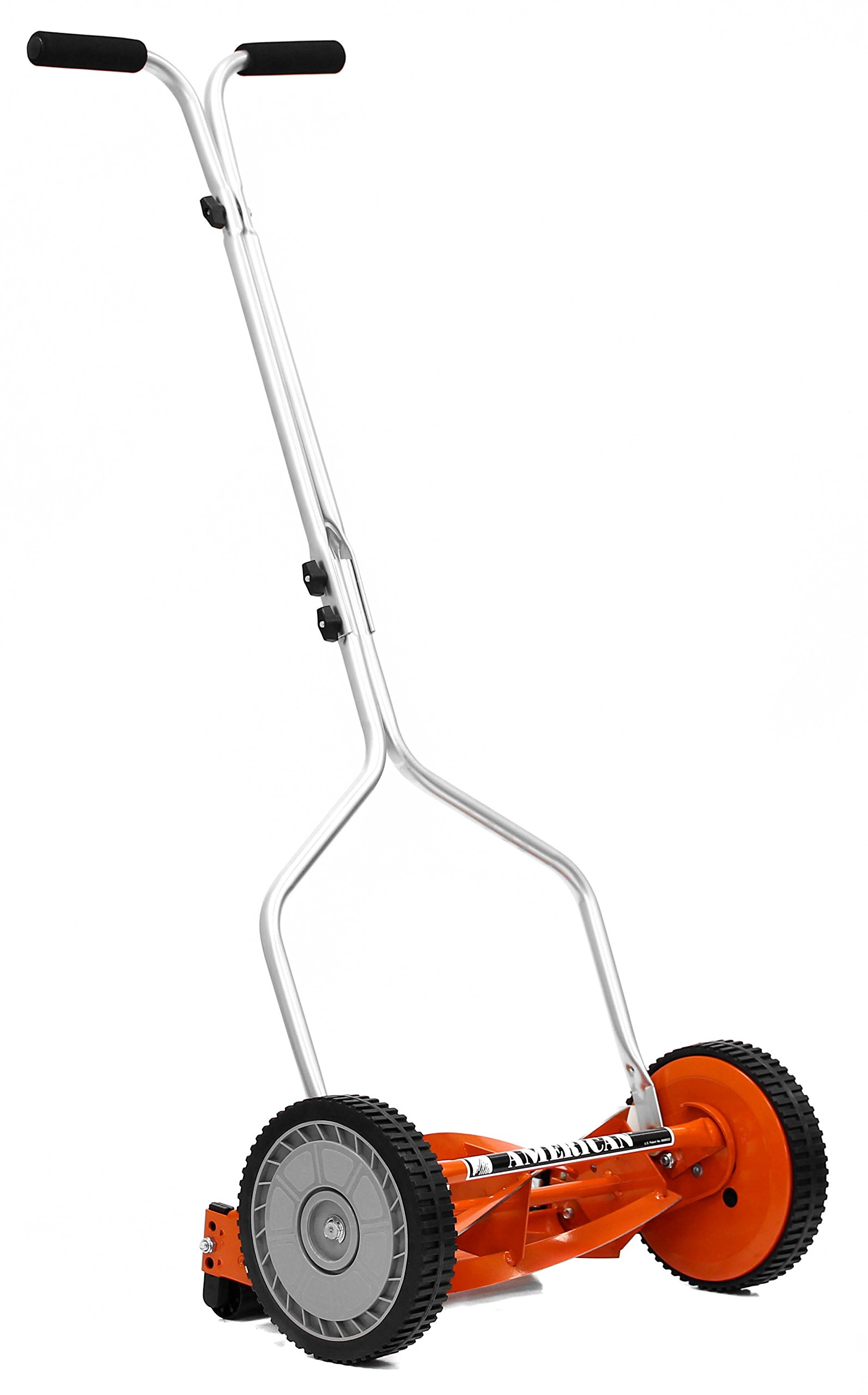
A featherweight 14-inch reel that’s easy to push and excels in tight spaces.
Why I picked it: Light, precise scissor cut and very easy to maneuver in compact yards.
Best for: Small lawns, narrow strips, and anyone who wants a quick, tidy trim.
An affordable entry to manual mowing.
Pros
- Very lightweight at about 19 pounds
- Scissor-like precision cut
- Low maintenance
Cons
- 14" width means more passes
- Struggles with very tall grass
- No large grass catcher
My take
This 14-inch American Lawn Mower is the one I reach for when I need to trim around flower beds and tight corners. Its low weight and 8.5-inch polymer wheels make it easy to steer where a wider mower would bind.
The four-blade reel gives a clean, scissor-like finish that noticeably improves lawn appearance compared with rotary mowers. I sharpened the blades only once after several seasons of light use — the manufacturer suggestion of multi-year sharpening matched my experience.
Do remember this mower performs best on lawns you keep regularly mowed. I don’t use it on wet or overgrown turf; when grass climbs above about 4 inches I either do multiple passes or cut it down with another tool first.
2. Fiskars StaySharp Max Reel Push Lawn Mower, 18-Inch – Best for Tough Grass
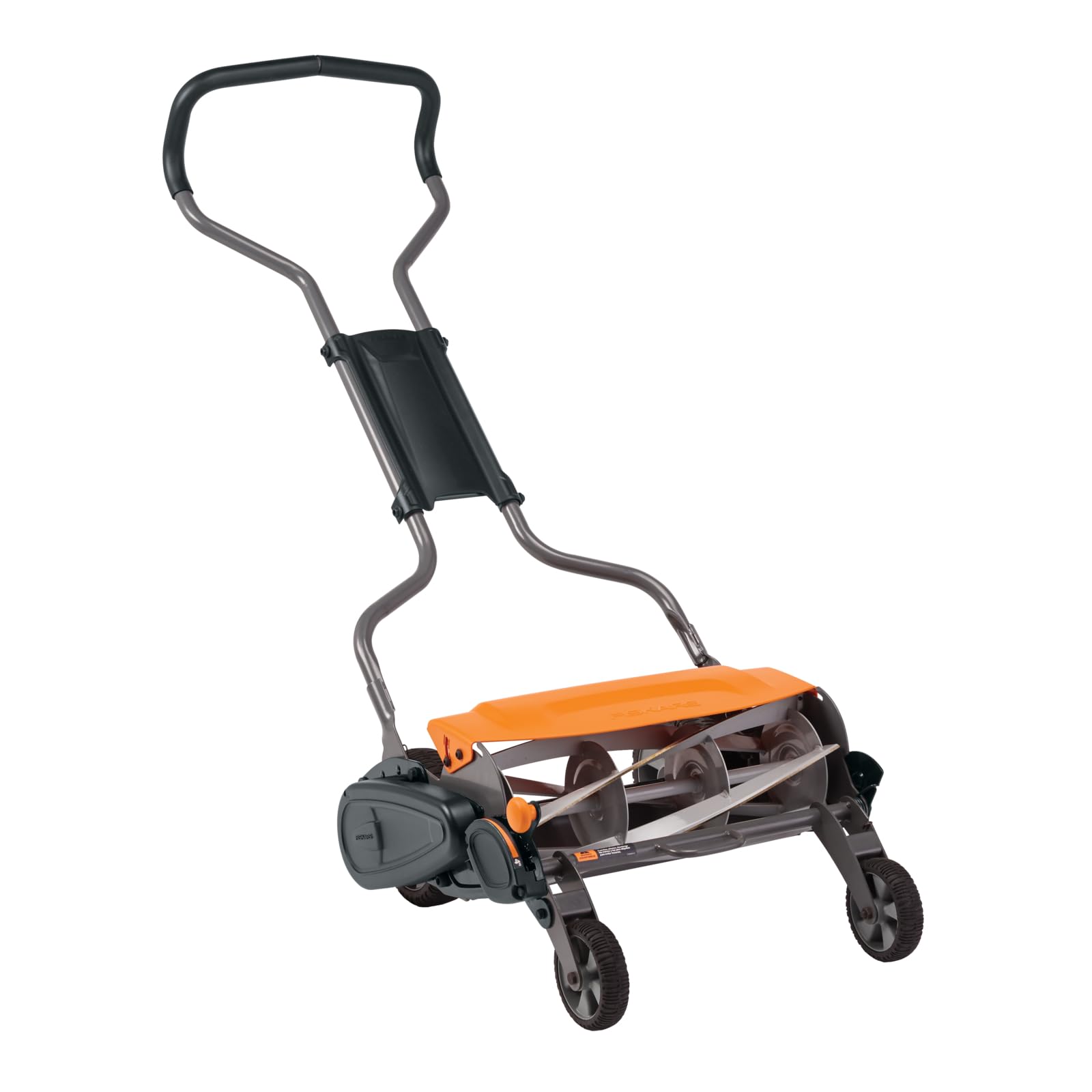
An 18-inch reel with proprietary systems that make cutting powerful and low-maintenance.
Why I picked it: High torque and a blade system that minimizes sharpening and push effort.
Best for: Lawns with tougher southern grasses and larger tended yards.
A more expensive option but engineered for lasting performance.
Pros
- InertiaDrive for more cutting power
- StaySharp system reduces sharpening needs
- One-touch height adjustment
Cons
- Heavier than small 14" mowers
- Not ideal over rocky or debris-filled turf
- Rear wheel plastics feel lighter
My take
The Fiskars StaySharp Max is the model I choose when I want low effort and a wide cut. The InertiaDrive gearing gives noticeably more cutting momentum — I push less hard and still get a clean slice through dense blades.
StaySharp eliminates the need for frequent blade hone work. After seasons of use I haven’t needed the regular sharpening I used to worry about, which is a real time-saver if you’d rather spend your weekend elsewhere.
Assembly was straightforward and the reversible chute keeps clippings away from my shoes. I do take care to avoid rocky or heavily mulched areas since any debris can jam the system; on smooth lawns it’s smooth and efficient.
3. Scotts Outdoor Power Tools 2000-20S 20-Inch 5-Blade Classic Push Reel Lawn Mower – Best for Speed
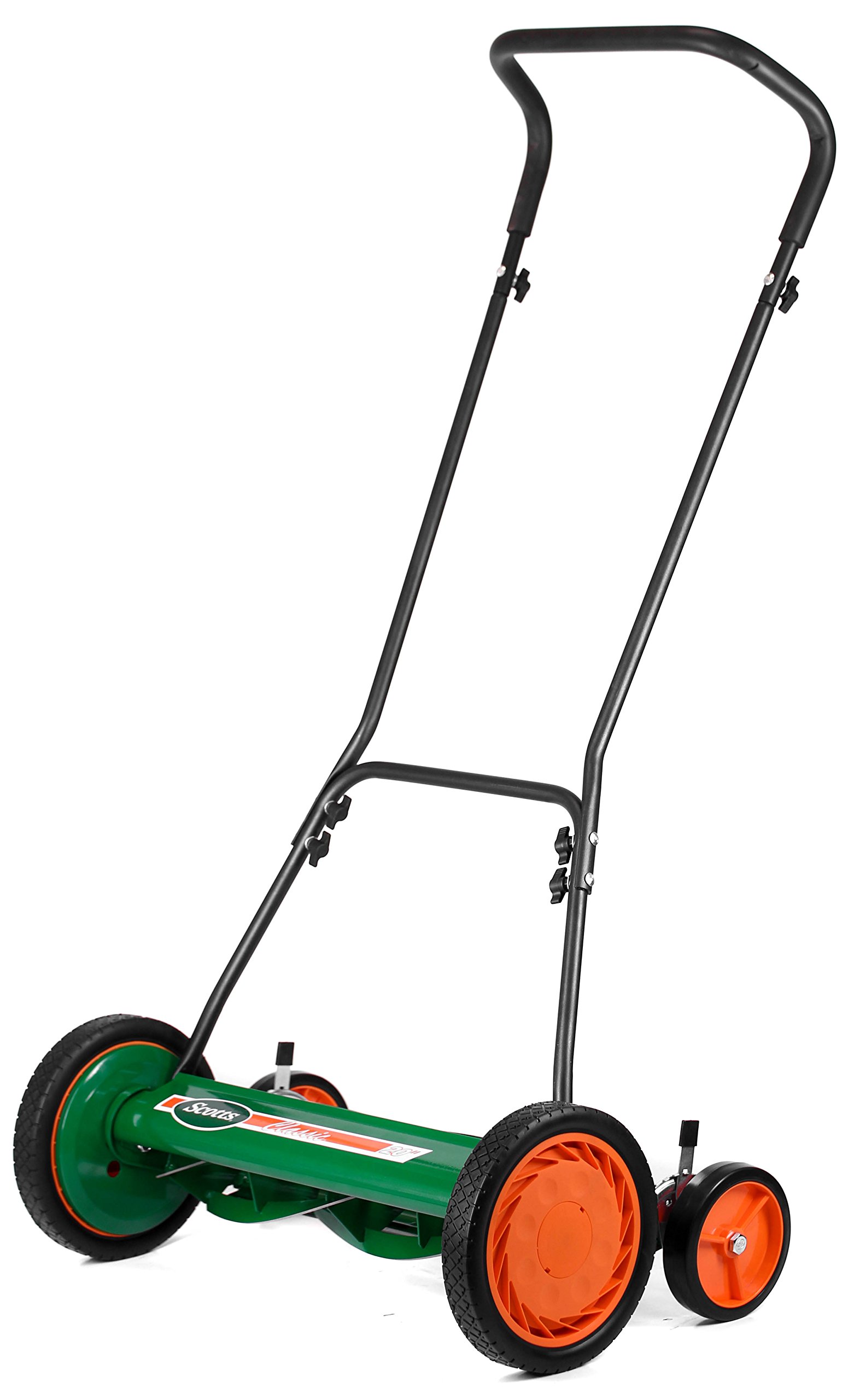
A wide 20-inch path and five-blade reel that cuts more lawn per pass.
Why I picked it: Wider cut reduces time while keeping a precision finish.
Best for: Medium lawns where efficiency and a neat finish matter.
A solid mid-range choice for faster coverage.
Pros
- 20" cutting width saves time
- Five heat-treated blades for fine cuts
- Quick-snap height adjusters
Cons
- Heavier than compact mowers
- Uphill requires more effort
- No grass catcher included
My take
I relied on the Scotts 20-inch whenever I wanted to cut the lawn in fewer laps. That wider cutting path makes a real difference for lawns where overlapping is unavoidable.
The five-blade reel spins smoothly on ball bearings and leaves a fine mulch that improves lawn look. Quick-snap height adjustment lets me change settings in seconds, and the foam handle keeps longer sessions comfortable.
Like all reel mowers, it performs best when the grass is maintained. If I let turf get long I either do a preliminary trim or make extra passes; on everyday lawns this model delivers fast, consistent results.
4. American Lawn Mower Company 1815-18 18-Inch 5-Blade Push Reel Lawn Mower – Best Value 18-Inch
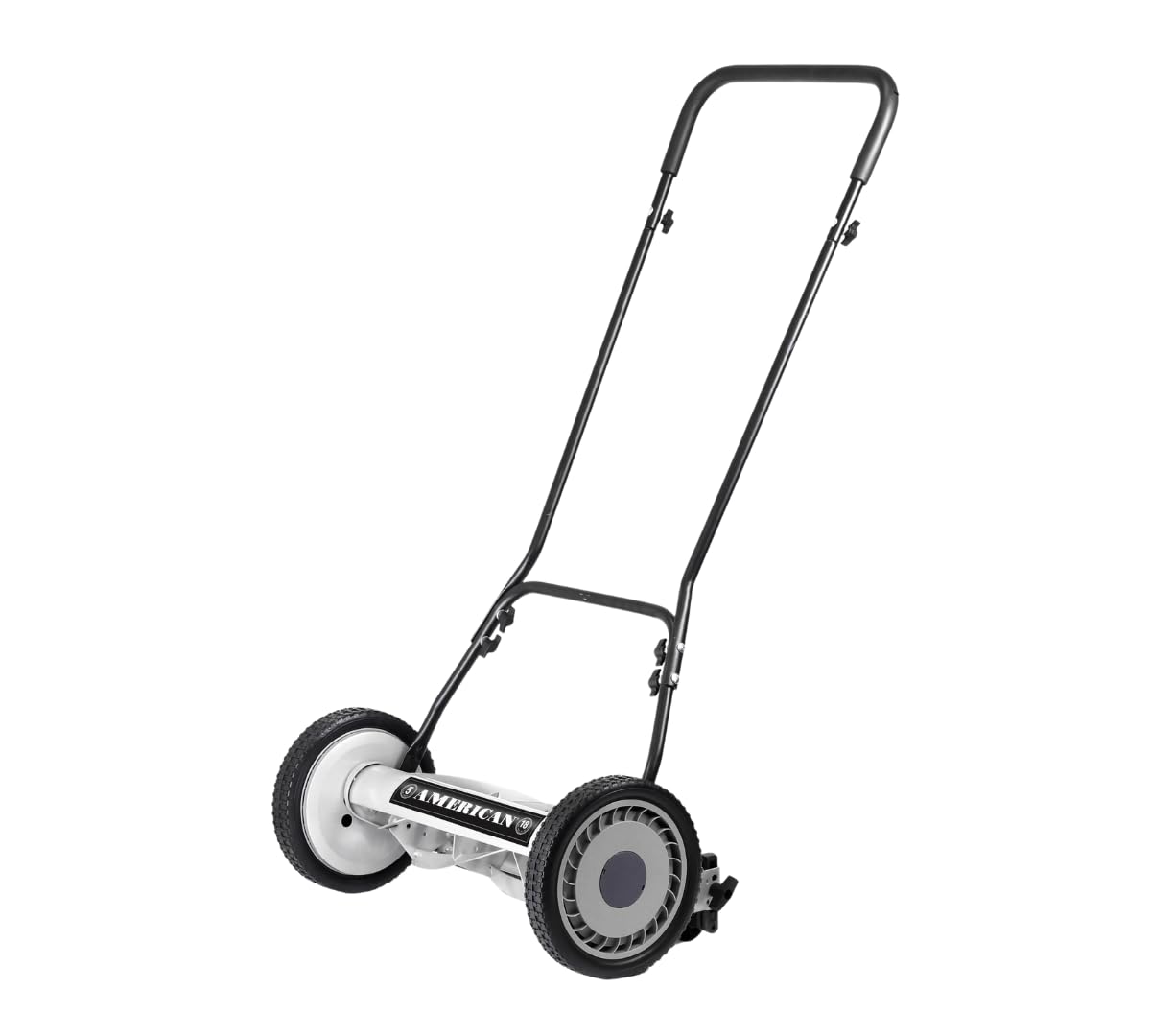
An 18-inch classic with comfortable grips and solid blade construction.
Why I picked it: Great balance of cutting width, comfort, and durable alloy blades.
Best for: Homeowners who want an 18-inch reel without complexity.
A good-value choice for a larger manual mower.
Pros
- Two large 10" wheels for maneuverability
- Durable heat-treated alloy blades
- Comfortable full-length foam grip
Cons
- Requires momentum on inclines
- Can be heavier to lift
- Small catcher only
My take
This 18-inch American model felt like an upgrade in stability. The larger wheels and cast-iron roller brackets give it a steady roll across slightly uneven turf.
I appreciated the tempered alloy reel — it stayed sharp and gave a consistent scissor cut. The foam loop handle reduces hand fatigue on longer runs, and the multi-position height range covers most homeowner preferences.
It isn’t a power tool — uphill sections need a brisk walk to keep the reel spinning. For level or gently sloped yards it’s one of the most practical larger manual mowers I’ve used.
5. Scotts Outdoor Power Tools 304-14S 14-Inch 5-Blade Push Reel Lawn Mower – Best Economy 14-Inch
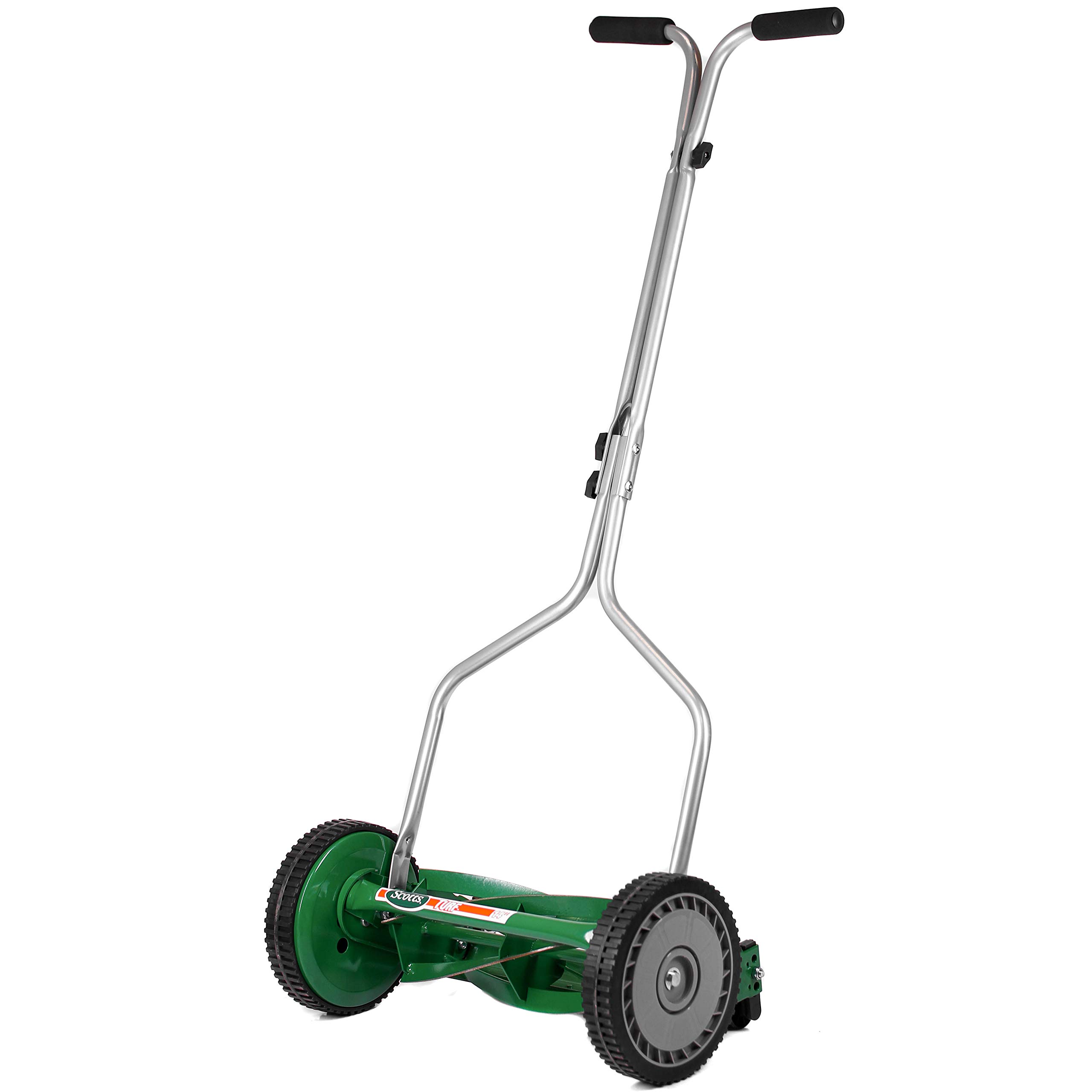
A straightforward 14-inch T-handle mower that’s quiet and effective for small plots.
Why I picked it: Simple, light, and quiet — excellent for small yards and townhomes.
Best for: Compact yards where low noise and easy storage matter.
An economical, no-frills 14-inch option.
Pros
- Quiet operation
- Easy assembly and storage
- 5-blade precision on maintained turf
Cons
- Can jam on sticks and debris
- Less effective on overgrown lawns
- No grass catcher supplied
My take
I bought this Scotts 14-inch when I wanted something simple and quiet. It assembled in about ten minutes and has been my go-to for small patches.
The five-blade reel gives a tidy finish, and the T-style handle is compact for storage. I do clear sticks and larger debris first — the mower will jam if it encounters twigs or long stems.
If you keep a regular mowing rhythm this one makes the job peaceful and fast; it’s also light enough to carry into a closet or basement.
6. Great States 204-14 Hand Reel 14-Inch Push Lawn Mower – Best for Simplicity
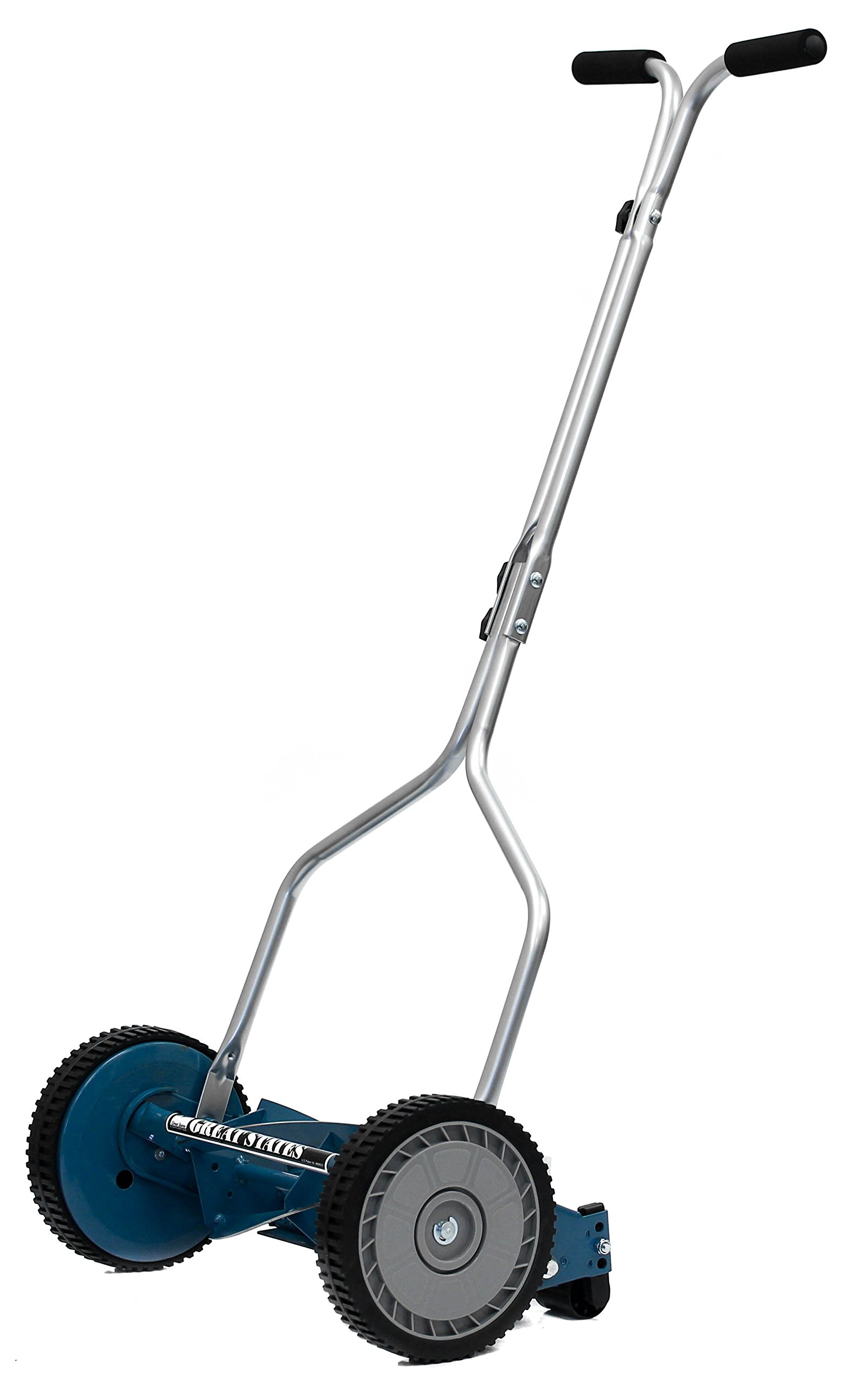
A no-nonsense 14-inch reel that delivers dependable cuts with minimal fuss.
Why I picked it: Reliable, easy to use, and built like classic reel mowers.
Best for: Those who want a straightforward manual mower with low upkeep.
A budget-friendly, dependable pickup.
Pros
- Easy assembly
- Quiet and planet-friendly
- Keeps blades sharp long
Cons
- Needs multiple passes on thick spots
- Can be a workout
- Handle clips could be sturdier
My take
This Great States 14-inch mower is about as simple as they come, and that’s exactly why I keep it around. Setup was easy and it started cutting immediately.
I find it gives a consistently even finish on regularly maintained lawns. Thicker or taller patches require extra passes, which turns mowing into a small workout — something I don’t mind, but worth noting.
If you want a quiet, low-maintenance tool that won’t break the bank, this unit checks those boxes and has stayed dependable under outdoor storage conditions.
How I Choose a Reel Mower
Key features I look for
Cut width — A wider reel cuts more lawn per pass but weighs more. I prefer 18–20 inches for medium yards and 14 inches for tight spaces.
Blade count and material — More blades usually mean a finer cut. Heat-treated alloy blades hold an edge longer, which means less frequent sharpening.
Wheel size and tread — Bigger wheels help over bumps and uneven lawns. Polymer or composite wheels keep things light and resistant to rust.
- Cut width: 14" for small yards, 18–20" for medium yards
- Blade count: 4–5 blades balance effort and finish
- Height adjustment: easy, tool-free systems save time
- Build: heat-treated alloy blades and ball bearings extend life
Maintenance and use tips I rely on
Sharpening — I sharpen blades every few years or when cutting performance drops. Some models minimize sharpening needs with special systems.
Mowing frequency — Reel mowers work best when I never remove more than a third of the blade at once. Frequent mowing makes the job effortless.
Debris and wet grass — I always clear sticks and let dew dry. Wet or debris-filled lawns slow reels and can cause jams.
- Sharpen every few years depending on use
- Mow regularly; avoid cutting more than 1/3 of blade
- Keep lawn free of sticks, stones, and heavy mulch
Which model fits your yard
Small, landscaped yards — choose a lightweight 14-inch model for tight maneuvering.
Medium yards with varied grasses — an 18–20 inch five-blade mower balances speed and finish.
Thick or southern grasses — look for higher cutting power and adjustable heights designed for tougher turf.
- Tight spaces: 14" lightweight reels
- Efficiency: 20" five-blade reels
- Tough grass: models with higher torque and wider height range
Frequently Asked Questions
Do reel mowers give a better cut than rotary mowers?
In my experience reel mowers give a cleaner, scissor-like cut that reduces fraying and improves lawn health when used regularly.
How often do I need to sharpen reel mower blades?
I typically sharpen about every few years for normal use. Models with proprietary cutting systems can extend that interval.
Can reel mowers handle tall or unkempt grass?
Not well. I either do a quick trim with a rotary tool first or make multiple passes; reel mowers excel when lawns are maintained.
Final Take
I prefer reel mowers for the quiet, precise finish and the low long-term upkeep. My top pick depends on yard size: the Fiskars is my choice for tougher lawns, the Scotts 20" when I want speed, and the compact 14" models when maneuverability matters most.
If you keep a regular mowing schedule and clear debris before you start, any of these machines will give a healthier-looking lawn with less noise and no fuel hassles.
