
I tested seven popular reptile enclosures — from wooden tortoise houses to tempered glass terrariums and compact acrylic starter kits — and I share which ones worked best for different species, setups, and budgets.
I keep a variety of reptiles and small critters, so I’ve spent time assembling, modifying, and living with many enclosure styles. In this roundup I focus on durability, ease of setup, heating and lighting options, and daily maintenance.
Below I compare seven enclosures I’ve used enough to judge practical strengths and trade-offs, and I highlight which setup I reach for depending on species and space.
My picks balance real-world usability — waterproof bottoms, lamp mounting, ventilation, and access — rather than just aesthetics. I note when an enclosure is better for terrestrial tortoises, arboreal spiders, or aquatic-start turtles so you can match the habitat to the animal.
1. Aivituvin Wooden Tortoise House – Best Overall
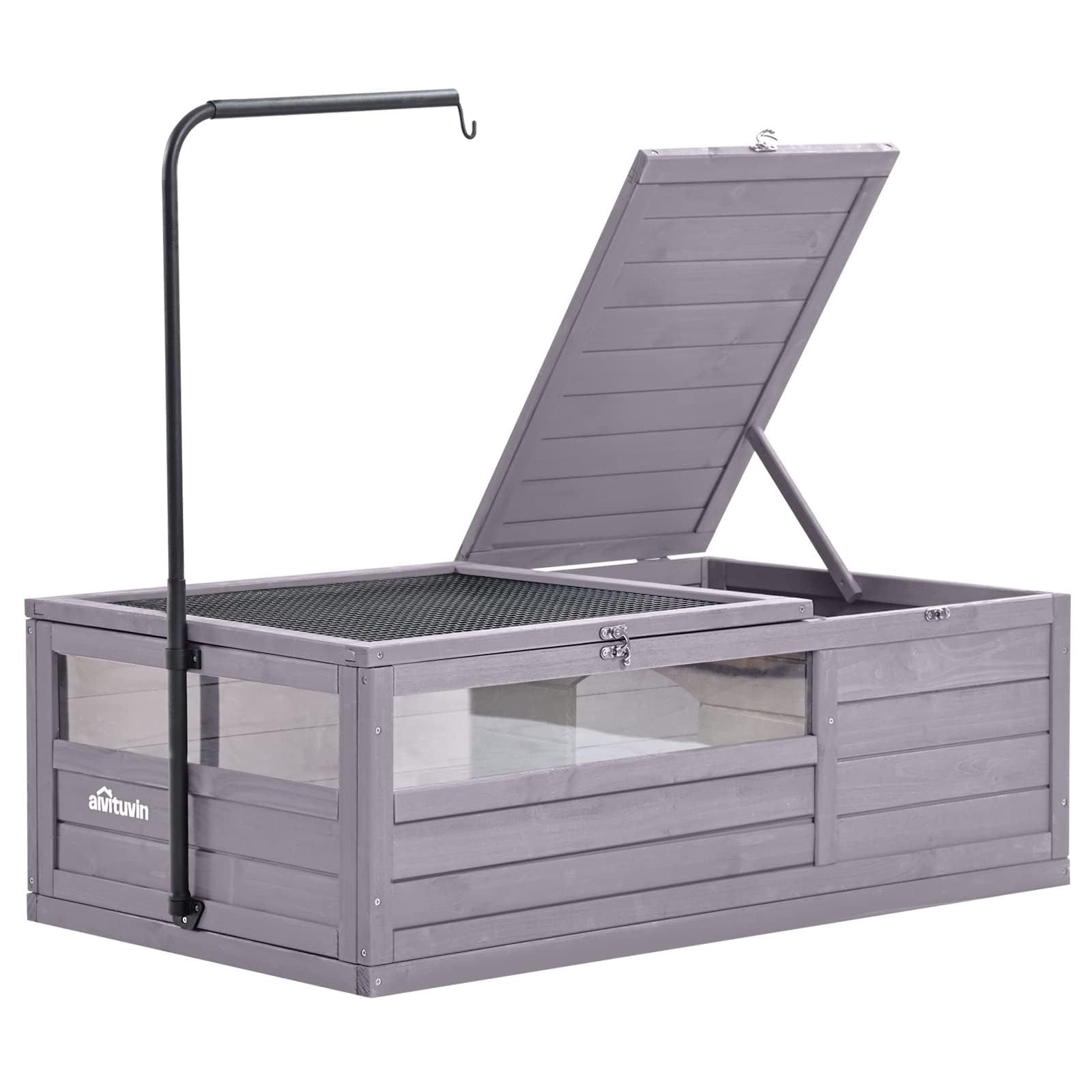
A solid-wood two-room tortoise house with a waterproof plastic bottom, acrylic side windows, and an adjustable lamp holder.
Why I picked it: Solid-wood build with an upgraded waterproof bottom and easy lamp placement for proper basking.
Best for: Indoor or covered outdoor tortoises and small ground-dwelling reptiles that need a sheltered hide and a basking area.
Good value for a wood enclosure with weatherproofed bottom and viewing panels.
Pros
- Solid wood construction
- Waterproof, easy-clean plastic bottom
- Acrylic viewing panels on two sides
- Adjustable lamp holder
- Two-room public and private layout
Cons
- Strong initial wood odor
- Wood finish can feel inexpensive
- Top wire lid may need reinforcement
My take
I use this one when I want a natural-looking habitat that still gives me easy access to lamps and viewing. The solid wood feels sturdier than thin plywood and the waterproof plastic bottom makes cleaning a simple wipe-and-lift job.
Assembly was straightforward and I appreciate the two-room layout: a weatherproof sleeping area and a public basking area where I can safely mount a heat or UV lamp. The adjustable lamp holder made dialing in distance for my bulb easy, which cut down on overheating worries.
Expect a cedar-like smell at first; it faded after airing the cage out. The acrylic windows give great visibility, though I reinforced the wire top in one corner for peace of mind—small animals can be surprisingly clever.
Overall I reach for this enclosure when I want a roomy, low-maintenance wooden setup that’s simple to move between indoor and protected outdoor use.
2. REPTI ZOO Tempered Glass Terrarium – Best for Large Reptiles
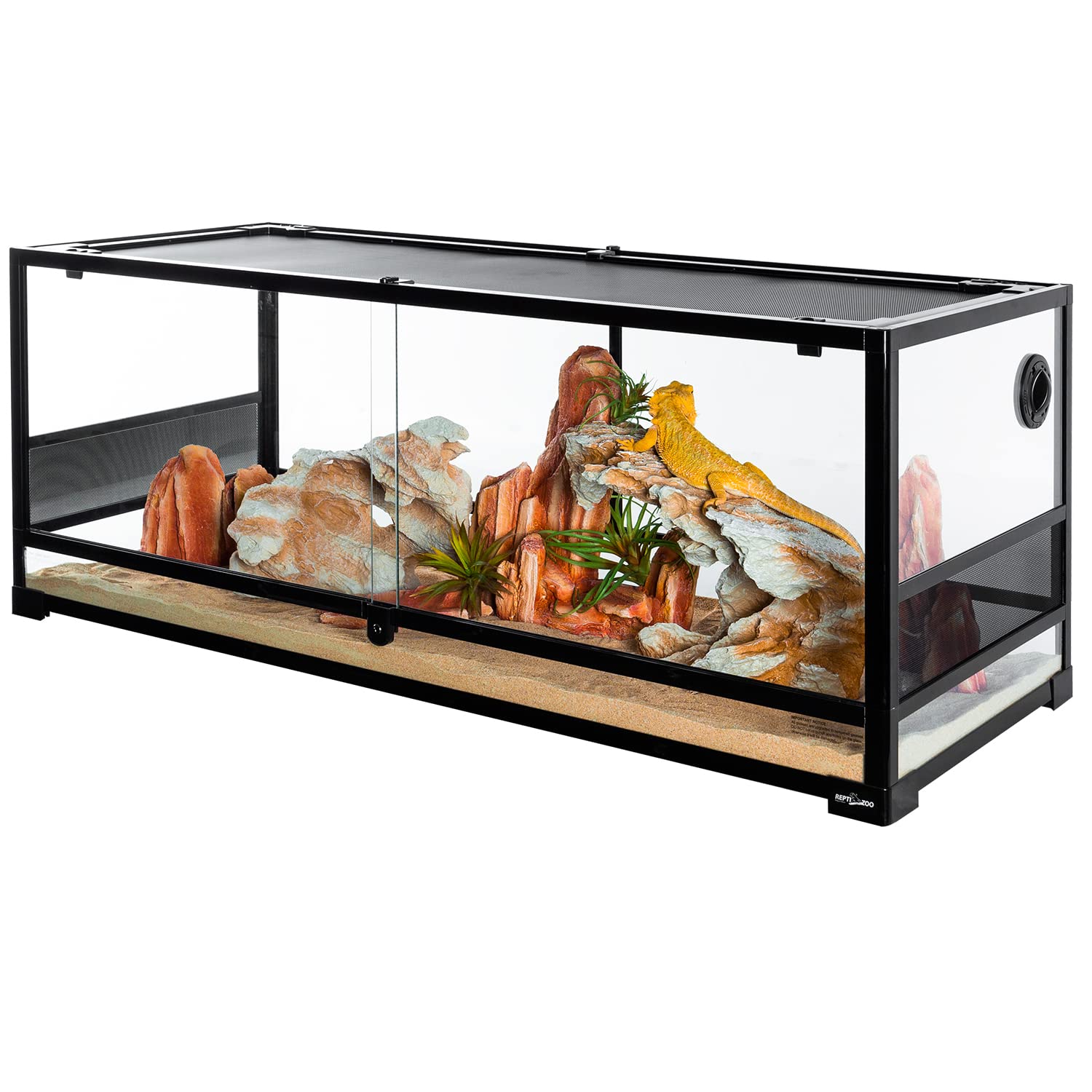
A large, tempered-glass terrarium with front sliding doors, side ventilation panels, and multiple cable pass-throughs for lights and heaters.
Why I picked it: Tempered glass safety, large footprint, and front-access doors that make feeding and maintenance effortless.
Best for: Bearded dragons, corn snakes, larger lizards, or anyone needing a wide, heavy-duty glass display enclosure.
A more expensive option by size, but strong value for the glass quality and door access.
Pros
- Tempered glass panels
- Front sliding doors for easy access
- Multiple cable pass-throughs
- Solid packaging for shipping
- Good ventilation balance
Cons
- Heavy to move once set up
- Top latch can be finicky
- One side glass occasionally feels a bit loose
My take
When I needed a larger, escape-proof habitat for a bearded dragon, this tempered-glass terrarium was my top choice. The glass feels substantial and the packaging kept every panel intact during shipping.
The front sliding doors changed my cleaning routine: I can reach in without lifting anything heavy and feeding is much less awkward than with top-access tanks. The side ventilation and dedicated wire channels make it simple to set up lights and a thermostat cleanly.
It’s on the heavier side, so plan placement before you fully outfit it. I noticed one latch needed a little adjustment but otherwise the build held up to an active animal that repeatedly tested enclosure boundaries.
I recommend this when you want a sleek, long-lasting glass display and you have the floor or stand space to support it.
3. Acrylic Jumping Spider Habitat – Best for Jumping Spiders
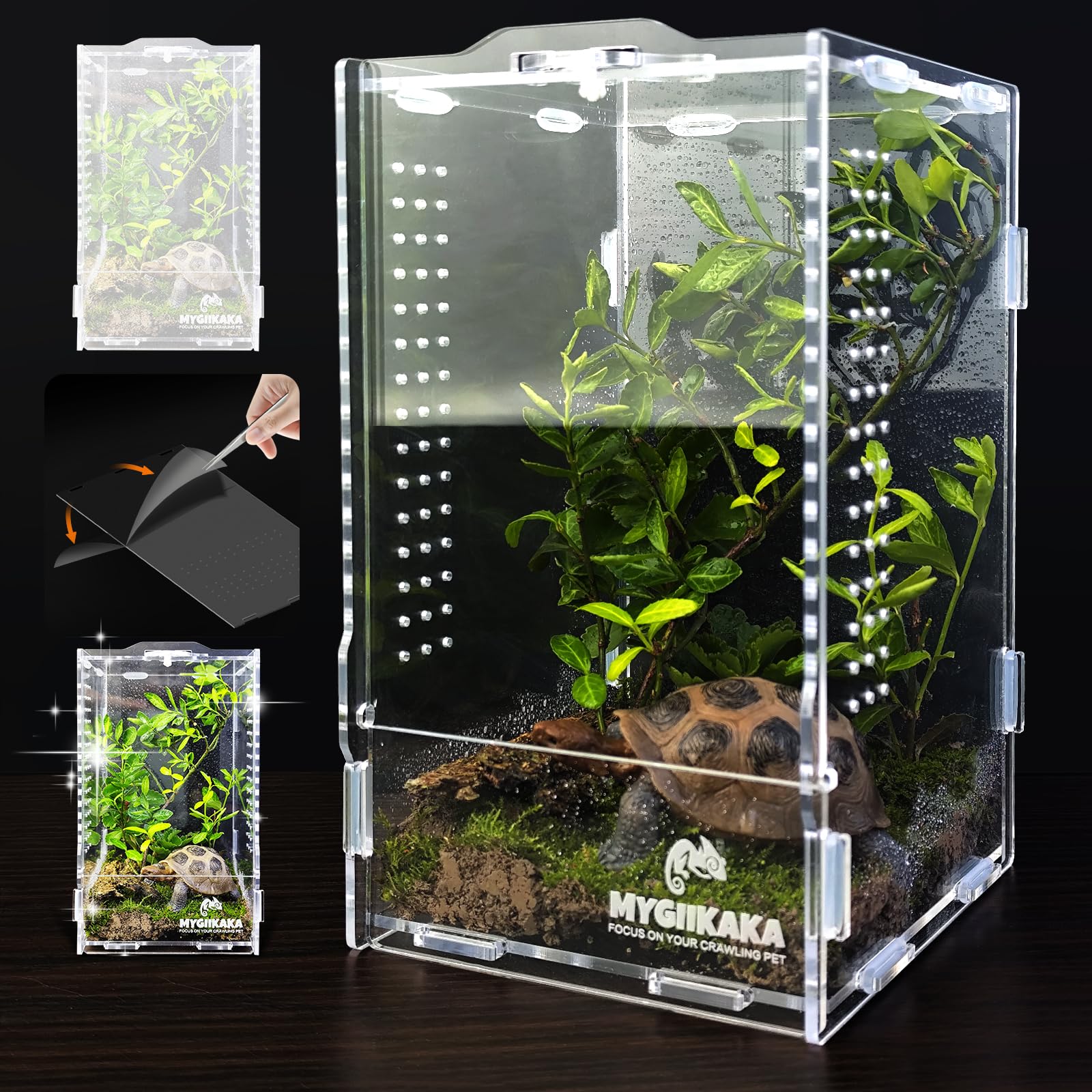
A compact acrylic enclosure with full transparency, clam-shell top access, side ventilation, and a small footprint for spider slings and tiny invertebrates.
Why I picked it: Crystal-clear walls and simple, tool-free assembly make it ideal for observing and maintaining small arboreal species.
Best for: Jumping spiders, small mantises, tiny frogs, and insect collection/quarantine.
Very budget-friendly for a clear, functional acrylic habitat.
Pros
- 360-degree visibility
- Lightweight, durable acrylic
- Easy, tool-free assembly
- Clam-shell top for access
- Good for display and observation
Cons
- Limited airflow for high-humidity needs
- Too small for larger tarantulas
My take
I keep a few adult jumpers in enclosures like this because the clarity and size are spot on; I can watch behaviors from any angle without disturbing them.
Assembly is simple and quick—peel the protective film and slot the panels together. The rubber bands hold things tightly, and the top opening makes feeding and substrate changes painless.
A caution: the ventilation is modest, so if you need steady airflow you’ll want to mist carefully or add extra ventilation. For dry-habitat jumpers this box is nearly perfect and exceptionally easy to clean.
4. GUTINNEEN Tortoise House – Best Elevated or Tabletop
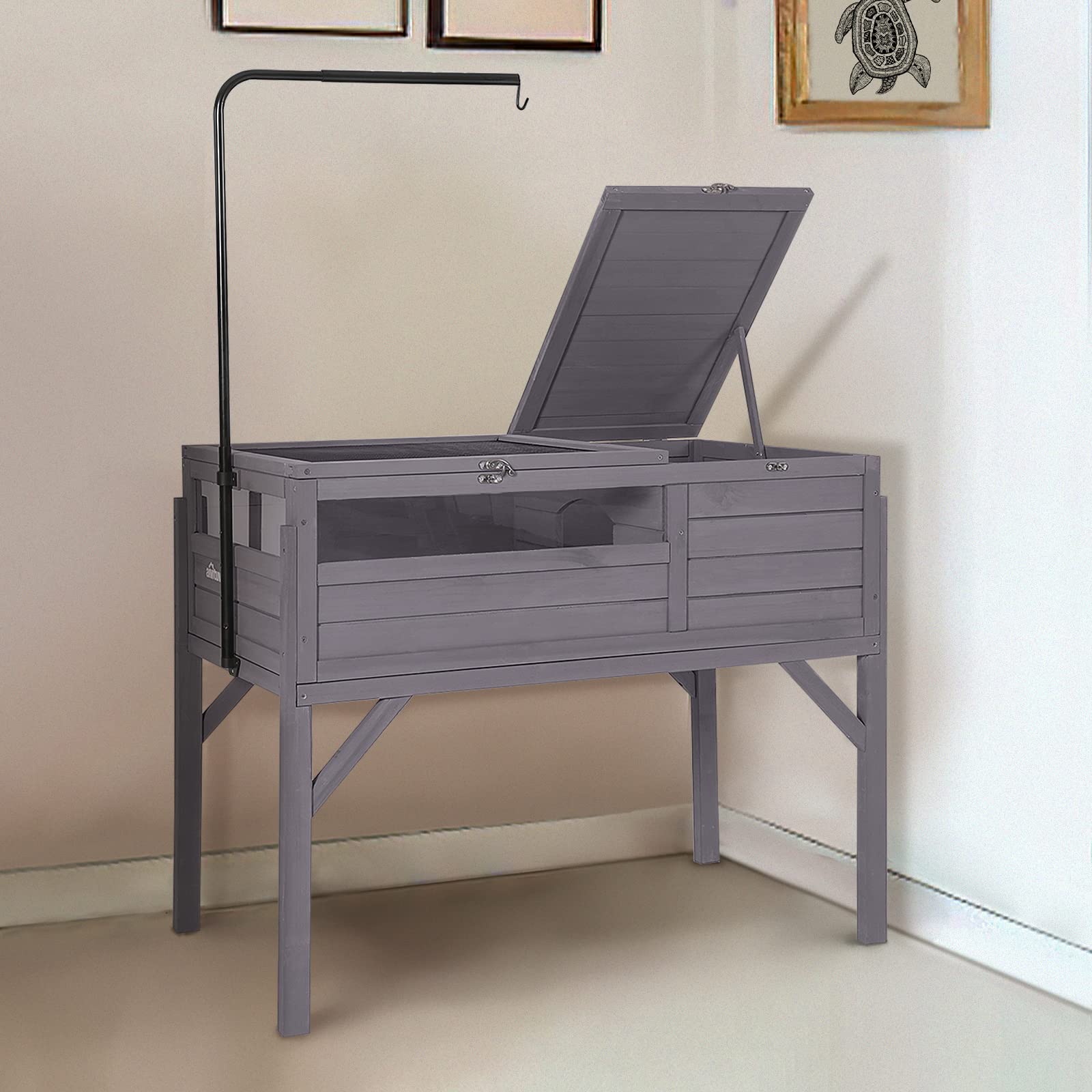
A versatile wooden tortoise box with detachable legs, an adjustable lamp stand, removable plastic tray, and a two-room layout.
Why I picked it: I like the option to use it on a table or as a raised habitat and the lamp’s wide adjustment range.
Best for: Classroom displays, tabletop setups, and keepers wanting a raised or floor-level option for small tortoises.
Mid-range wood enclosure that emphasizes versatility.
Pros
- Detachable raised legs
- Adjustable lamp stand
- Removable plastic tray
- Two-room layout for comfort
- Roofs prop open for cleaning
Cons
- Strong initial chemical or stain smell
- Wood can split during assembly
- Hardware feels budget-grade
My take
I bought two of these to run a matched indoor/outdoor setup and appreciated the identical floor plan for consistency; the raised version sits perfectly at countertop height for quick checks and feedings.
The lamp holder range—from low to quite high—lets me place a heat or UVB lamp at the exact distance my animal needs. The removable tray speeds up cleaning and helps prevent rot on the wooden floor.
There are trade-offs: the wood arrived with a noticeable smell for the first days and some panels felt soft when I tightened screws. I recommend a gentle hand with pilot holes or a power drill set to low torque.
For classroom use or a keeper who wants a raised option, this enclosure’s flexibility is its big win.
5. Aivituvin Tortoise Enclosure (Upgrade) – Best Expandable
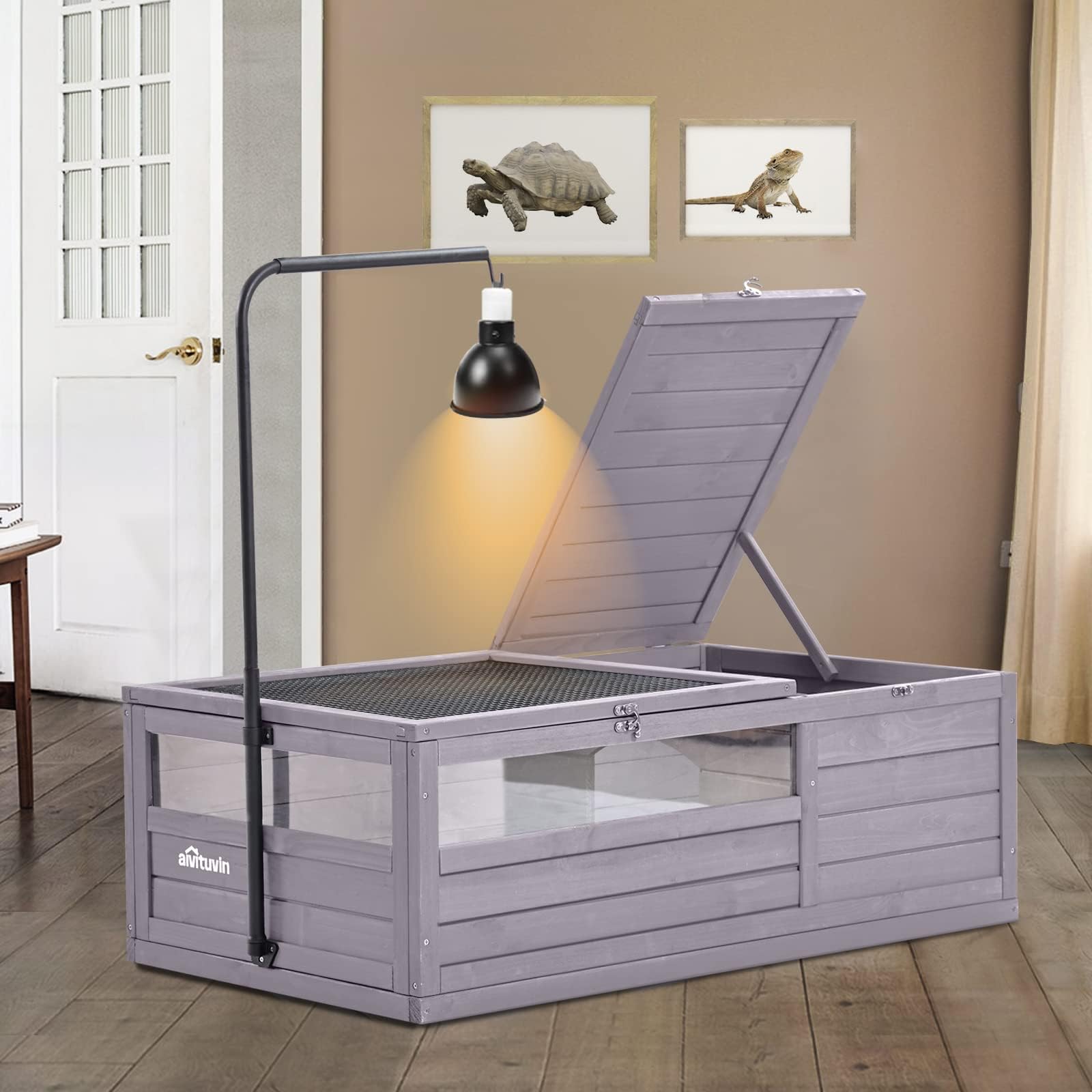
An upgraded two-room wooden tortoise apartment with a waterproof bottom, lamp frame, and the ability to link multiple units for a larger run.
Why I picked it: Expandable design that lets me connect units to create a larger habitat without complex mods.
Best for: Keepers who may want to extend floor space later or combine enclosures for groups or rotating setups.
Budget-friendly for a modular wooden setup.
Pros
- Easily extendable by linking units
- Waterproof plastic tray
- Spacious two-room layout
- Simple lamp frame support
Cons
- Pungent initial odor for some units
- Bottom can shift if not secured
- Requires assembly
My take
I like having the option to buy two and join them together when I need more floor area; the pre-drilled holes make the process straightforward.
The waterproof bottom is the feature I appreciate most—moisture stays off the wood and cleanup is much quicker. The lamp mount is basic but effective for standard basking bulbs.
Some units had a strong finish smell at first; sealing or airing the box out solved that for me. The enclosure is practical and roomy, especially if you plan to expand later.
6. Turtle Tank Acrylic Habitat Kit – Best Starter Kit
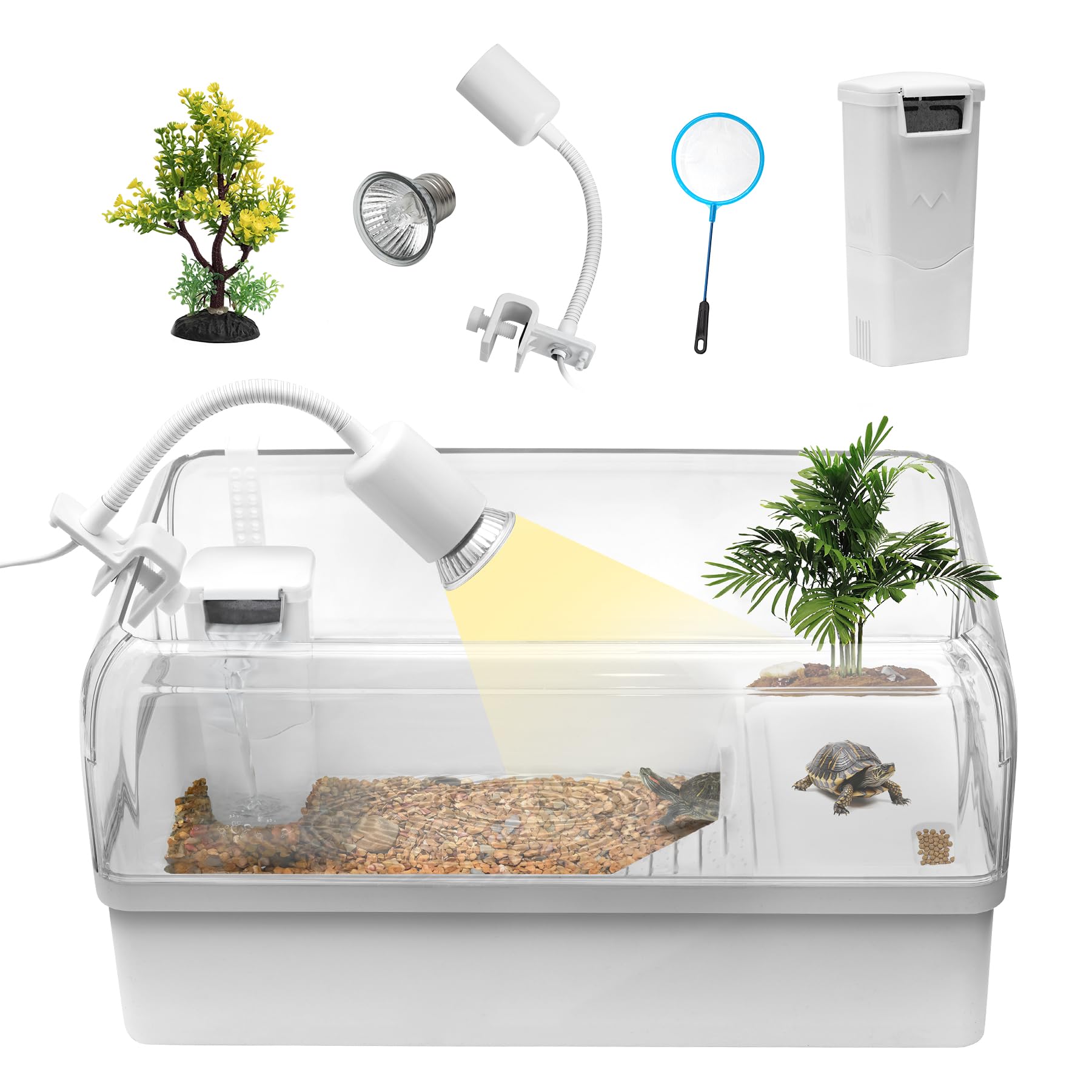
A compact acrylic aquatic-terrestrial kit that includes a silent filter, UVB light, bottom drain, raised basking platform, and starter accessories.
Why I picked it: I appreciate the included filter and bottom drain that noticeably cut routine maintenance time for young turtles.
Best for: Baby turtles, small aquatic tortoises, or anyone wanting a compact, all-in-one desktop habitat.
All-in-one kit that saves on buying parts separately.
Pros
- Complete starter kit included
- Three-layer filter and bottom drain
- Built-in basking and hide areas
- High-clarity, durable acrylic
- Anti-escape raised fence
Cons
- Small for long-term adult housing
- Some ladder steps can trap tiny hatchlings
My take
For a temporary or starter aquatic setup this kit is one of the easiest ways to begin; the pump and UVB arrived ready to install and made my first setup painless.
The bottom drain is a real time-saver—water changes take far less effort—and the three-layer filter keeps the water looking clearer between cleanings.
I swapped in extra rocks and a second hide for enrichment, but the footprint is best for hatchlings or very small turtles. Watch the ladder spacing with very tiny specimens; I had to tweak it so a hatchling couldn’t slip under a step.
If you want a compact, low-maintenance starter system, this saves you shopping for filters, lights, and accessories separately.
7. Pre-Assembled Jumping Spider Enclosure – Best Pre-Assembled Mini
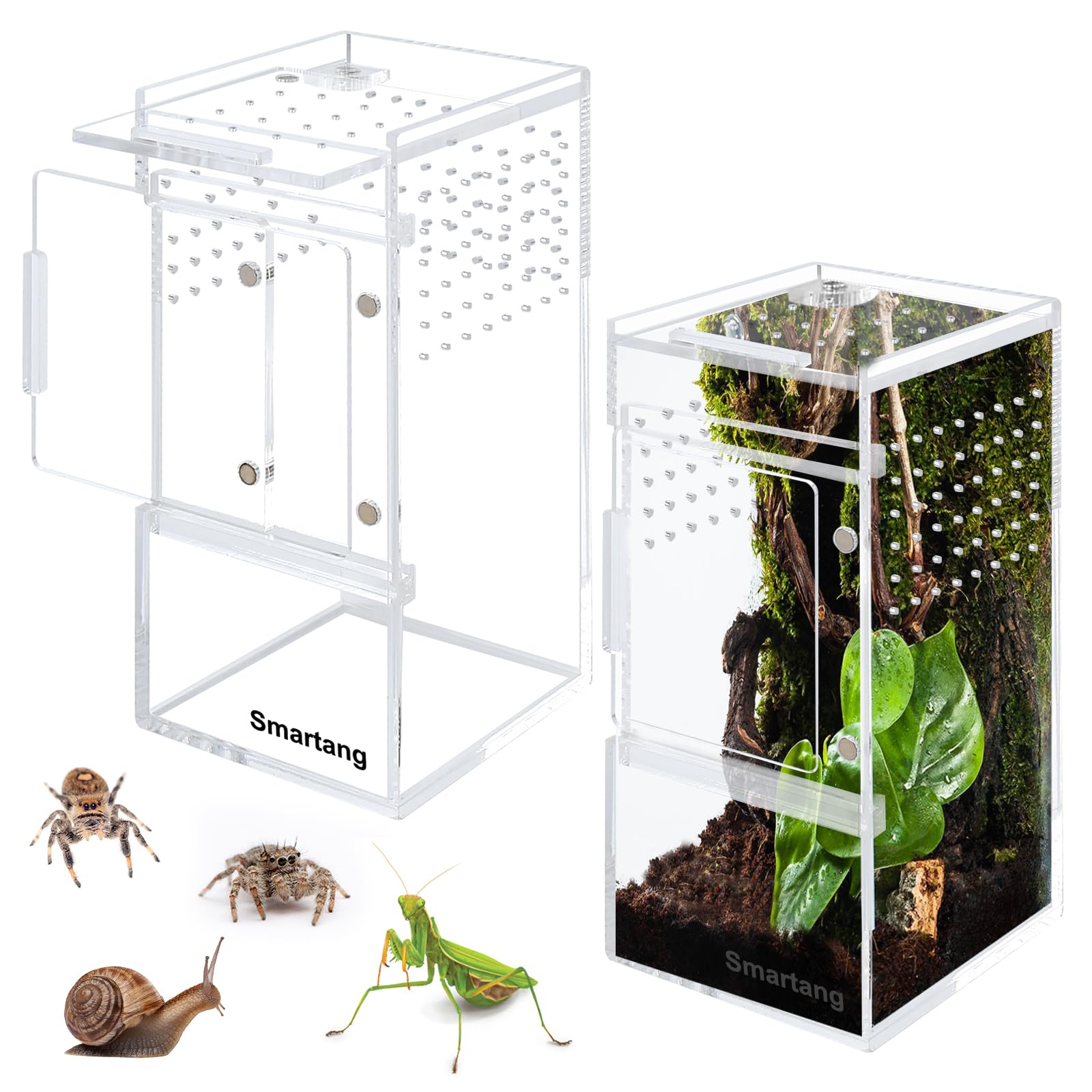
A ready-to-use acrylic mini enclosure with front and top doors, waterproof base, and tight tolerances that eliminate the need for rubber bands or assembly.
Why I picked it: I value the pre-assembled convenience and front-opening access for species that build webbing near the top.
Best for: Jumping spider slings, small arboreal tarantulas, praying mantises, and short-term cultures.
Extremely budget-friendly for a pre-built acrylic enclosure.
Pros
- Ships pre-assembled
- Front and top doors
- Watertight base
- 95% transparency
- Sturdy, clear acrylic
Cons
- Too small for many adult spiders
- Not modular for expansion
My take
I kept a few slings in this pre-assembled unit and appreciated not having to wrestle with rubber bands and panels; it was ready to use straight from the box.
The front opening lets me feed and work with the animal without destroying web structures at the top, and the fit felt tight with no obvious gaps that would let tiny prey escape.
Packaging arrived intact and the magnetic top/locks felt solid. If you need vertical space for an arboreal sling this does the job, but plan on upgrading to a larger enclosure as animals grow.
How I Choose a Reptile Enclosure
Match enclosure type to the animal
I always pick an enclosure based on species needs: terrestrial tortoises do better in shallow, wide wooden or acrylic boxes with a solid hide, while arboreal species need tall, ventilated enclosures with vertical climbing space.
- Tortoises: wide floor area, waterproof bottom, hiding area.
- Bearded dragons and larger lizards: tempered glass with strong lid and front access.
- Jumping spiders and arboreal tarantulas: tall acrylic with front/top access and modest ventilation.
- Aquatic turtles: kits with filtration and a secure basking platform.
Material and durability
I weigh wood, glass, and acrylic on durability, ease of cleaning, and humidity control. Wood feels natural but needs a sealed bottom; glass is heavy but great for heat retention and visibility; acrylic is lightweight and clear but can scratch.
- Wood: good insulation but seal the bottom.
- Glass: best for larger display tanks.
- Acrylic: light and portable for travel or desks.
Heating, lighting, and wiring
I look for lamp mounts or cable pass-throughs so I can position basking bulbs and UVB correctly without draping cords over the top screen.
- Adjustable lamp holders are a major convenience.
- Cable passthroughs keep setups tidy and safer.
- Front doors simplify bulb changes and maintenance.
Cleaning and maintenance
A removable waterproof tray or bottom drain saves me hours over a season; I prioritize enclosures that make substrate swaps and water changes easy.
- Removable trays vs. sealed bottoms: choose based on humidity needs.
- Bottom drains are invaluable for aquatic setups.
- Access doors reduce stress to animals during cleaning.
Assembly and shipping
I prefer units that arrive well-packed and either pre-assembled or with clear instructions; if you plan to move the enclosure often, lighter acrylic or modular wooden units are my go-tos.
- Pre-assembled saves time but limits modification.
- Check for taped protective film on acrylic panels before assembly.
- Inspect wood for strong odors and air out if needed.
Frequently Asked Questions
Which enclosure material keeps humidity best?
From my experience, sealed wooden enclosures with a waterproof tray retain humidity well for species that need it. Acrylic also holds humidity but has limited airflow unless you add ventilation; glass tanks can trap humidity but need paired vents to avoid stale air.
Can I use a wooden tortoise house outdoors?
I use wooden tortoise houses in covered outdoor spaces; the waterproof bottom helps, but I avoid exposing the wood to direct rain or prolonged dampness unless it’s well-sealed and elevated.
Are starter kits worth it for turtles?
Yes — I’ve had an easier time starting with a kit that includes a filter and UVB. The integrated bottom drain especially cut my maintenance time and lowered stress for the animals during water changes.
Final Take
I choose an enclosure based on the animal’s behavior and my maintenance tolerance: wide, waterproof wooden boxes for tortoises; tempered glass for large display reptiles; and compact acrylic kits or pre-assembled units for small or arboreal species.
If I had to recommend one all-purpose pick, the solid-wood tortoise house gives a great balance of durability, visibility, and practical features. For large display or heavy-duty heat setups I prefer tempered glass.
Use the buying guide points above to match your species and space, and remember that proper lamp placement and access for cleaning make a bigger daily difference than the enclosure’s finish.
