
I tested lifts and battery-powered mowers to find tools that make maintenance safer and mowing faster for typical residential properties.
I looked for tools and machines that make owning a zero-turn or riding mower less of a hassle. That meant safe, stable lifts for doing blade and belt work at home and battery-powered mowers that actually cover a typical suburban lot without constant stops.
In this roundup I focused on build quality, safety features, usable lift height, wheel span compatibility, and realistic battery performance. I used all of these in garages and on lawns to form the recommendations below.
If I need to do routine maintenance safely in my garage, I pick a dedicated lift or jack. For mowing, I choose battery tractors for quiet, low-maintenance operation and select capacity based on how many acres I mow in a single session.
1. MoJack EZ MAX 45001 Residential Riding Lawn Mower Lift – Best Overall Lift
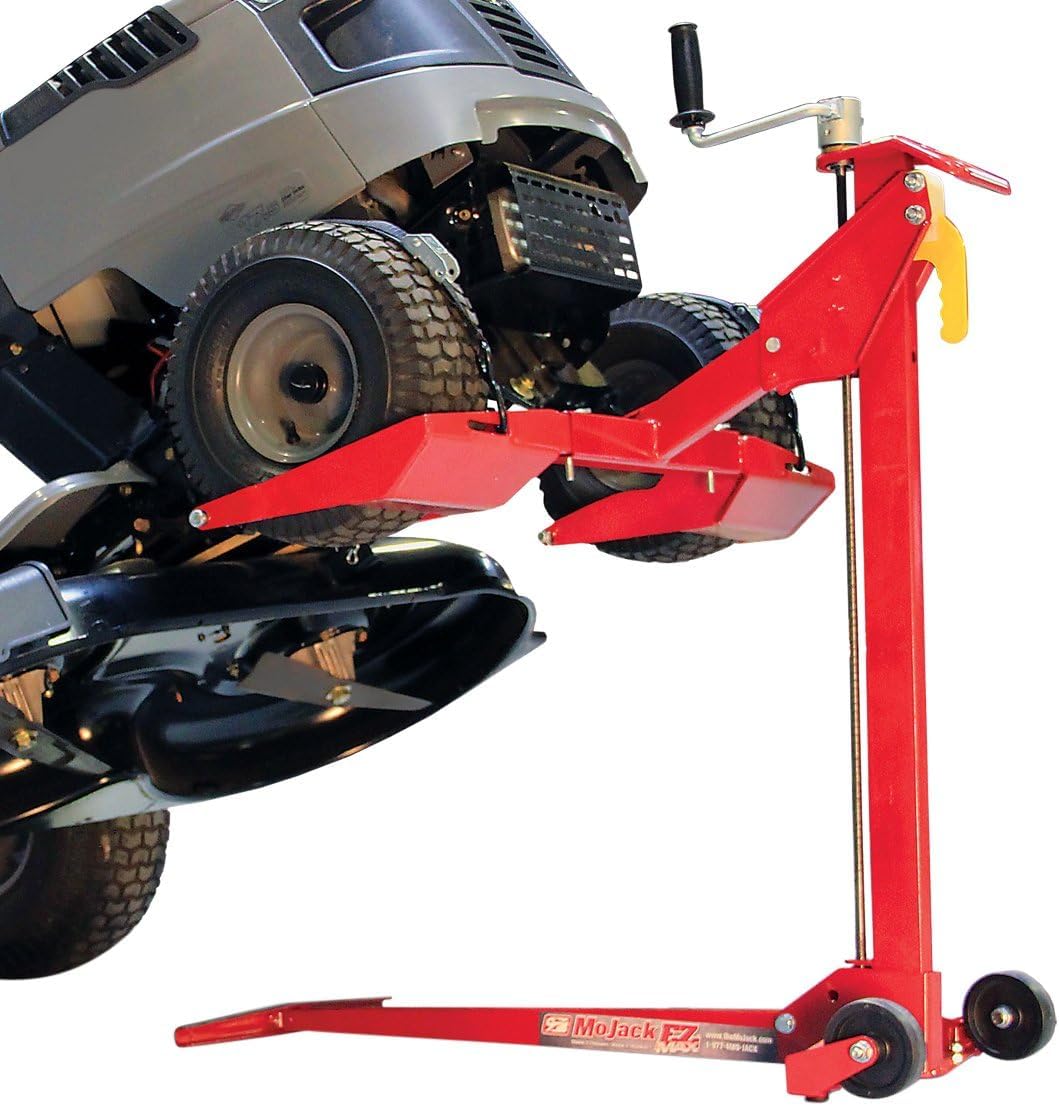
A heavy-duty residential lift that raises the front end up to 24 inches and supports typical ZTR front ends with a 450 lb capacity.
Why I picked it: I chose it for its wide fit range and controlled, drill-assisted lift option.
Best for: Homeowners who want to do blade and belt service in a garage.
Higher-cost but built to last and reduce dealer service trips.
Pros
- 450 lb front lift capacity
- Drill-assisted or manual operation
- 24-inch lift for clear deck access
- Folds flat for compact storage
- Fits many residential ZTRs
Cons
- Takes time to assemble
- Higher upfront cost
- Lifts the front end only
My take
I used this lift to raise a John Deere E120 so I could swap blades without removing the deck. The lift raises smoothly, feels stable once secured, and gives me easy access to the underside for sharpening and belt checks.
The option to run the winch with a power drill makes repeated lifts faster and less physical. It took me a bit of time to assemble, but the instructions and online videos got me through without headaches.
Storage is simple — I fold it flat and slide it against the wall. For the years I expect to own my tractor, I prefer the safety and convenience of this over tipping the mower or wrestling with ramps.
2. Pro-Lift Lawn Mower Lift Jack – 350 Lbs Capacity – Best Budget Lift Jack
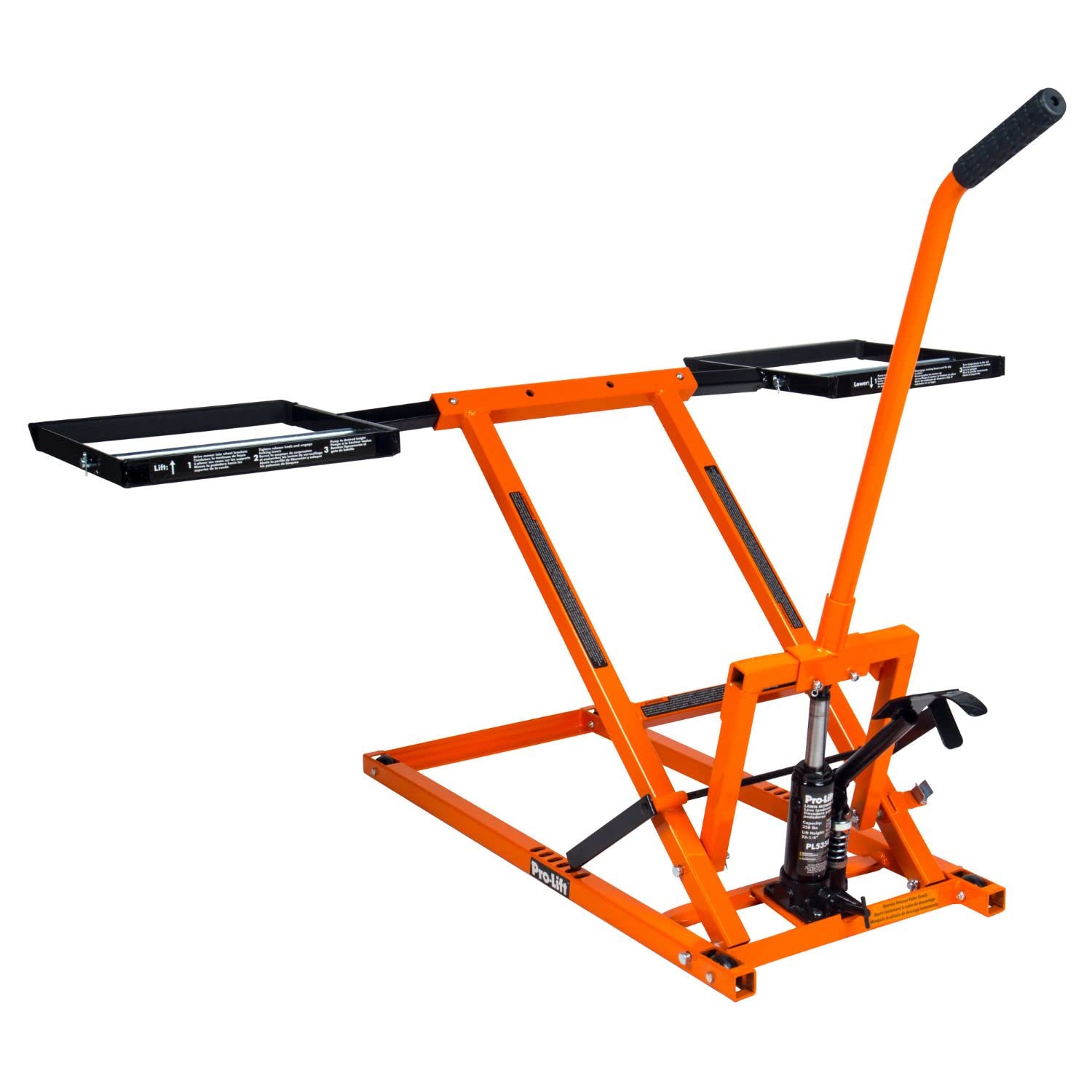
A compact pedal-operated jack with a 350 lb capacity, rubber padded platform, and safety lock for basic tractor and ZTR maintenance.
Why I picked it: I picked it for its pedal operation and solid-steel, low-profile design that fits smaller budgets.
Best for: DIYers who want a mobile, no-fuss jack for occasional blade work.
Affordable option with solid basic features.
Pros
- Welded steel frame
- Rubber padded platform
- Non-slip foot pedal
- Safety lock included
- Relatively quick assembly
Cons
- Wheels lack locking brake
- Requires flat, stable surface
- Small carriage pins to watch
My take
I assembled this in about half an hour and appreciated how easy it is to drive the mower onto the wheel baskets and pump it up with the pedal. The rubber pad protected my wheels while I worked.
Because the unit rides on small wheels, I make sure the surface is flat and chock the mower’s rear wheels before backing it off. I also wedge something under the hydraulic handle when unloading to keep it from moving.
For straightforward lifting jobs on a budget, this jack does the job. I treat it with care and add a plywood shim on uneven garage floors for the best stability.
3. MoJack 45501 HDL500 Hydraulic Cylinder Lift Jack – Best Hydraulic Lift
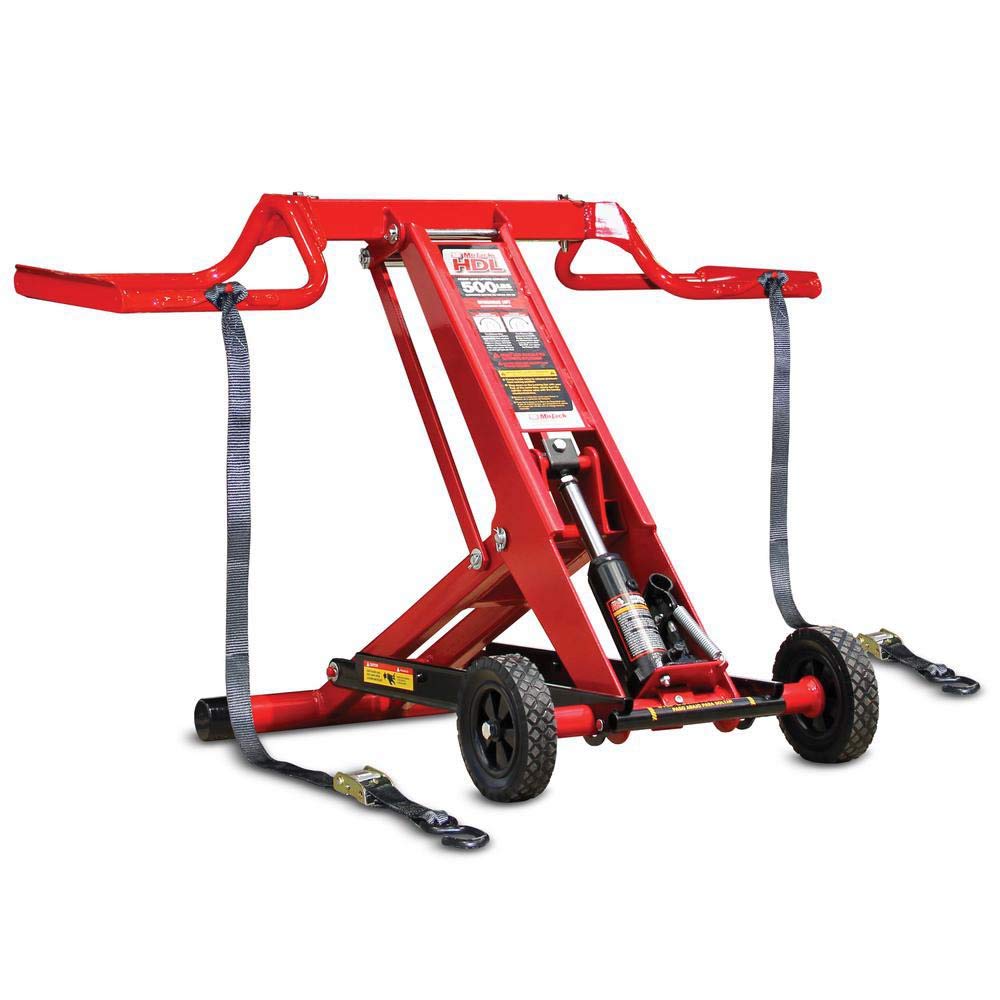
A professional-style hydraulic jack with a 500 lb lifting capacity, three safety stop positions, and strap stabilization for secure maintenance.
Why I picked it: I relied on it for smoother hydraulic lifting and multiple safety stops during heavier jobs.
Best for: Users who want a professional-feeling, no-assembly hydraulic option for frequent servicing.
More premium; a good investment for repeated professional or heavy home use.
Pros
- 500 lb hydraulic capacity
- Three built-in safety stops
- Smooth manual hydraulic lifting
- Adjustable wheel span
- No assembly required
Cons
- Heavy to move
- Higher initial cost
My take
After using this hydraulic lift a dozen times, I can tell you it makes blade removal and torqueing nuts much safer. I’ve pulled stubborn blade nuts while the jack held the mower completely steady.
The three locking heights and included safety strap give me confidence when I’m reaching under the deck. I hang mine on wall hooks to save floor space when it’s not in use.
If you want something that handles frequent, heavier-duty maintenance with minimal setup, this hydraulic option is the one I reach for.
4. Greenworks 80V 42″ CROSSOVERZ Zero Turn Lawn Mower – Best for Large Yards
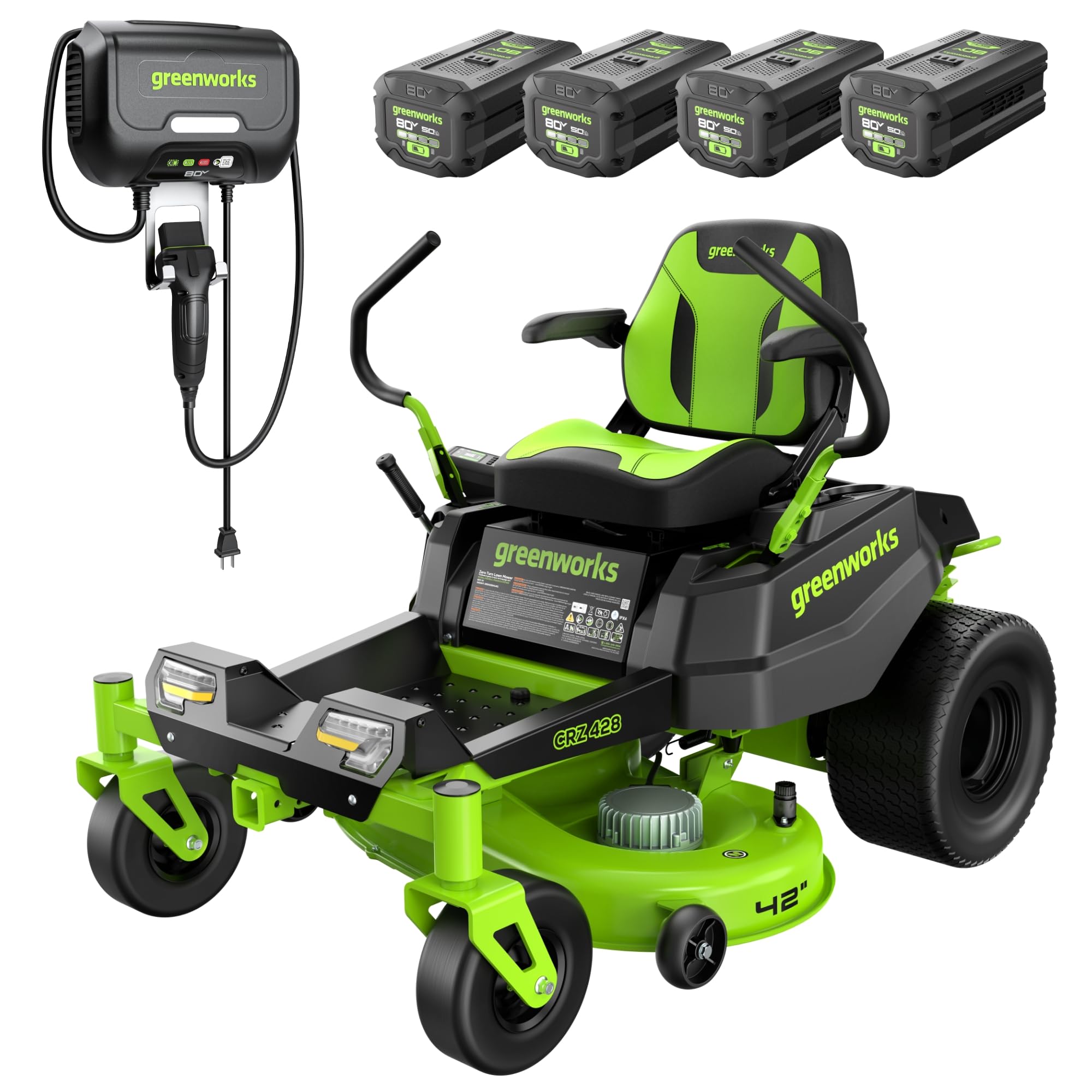
A battery-powered 42" zero-turn that ships with four 5.0Ah batteries and a 600W charger, designed to mow up to about two acres on a charge under typical conditions.
Why I picked it: I picked it for its high power equivalent and included battery set that actually covers larger residential lots.
Best for: Owners with larger yards who want gas-like performance without fumes or noise.
Premium electric tractor with higher upfront cost but low ongoing fuel maintenance.
Pros
- Includes four 5.0Ah batteries
- Brushless hub motors
- Gas-equivalent power output
- Large 42" cutting deck
- Rear dump bed with hydraulic assist
Cons
- Expensive purchase
- Manuals and instructions could be clearer
- Range depends on conditions
My take
This Greenworks unit felt like a gas tractor in power but ran quietly. On my larger lot it handled long runs without the noise and smell of gas engines and the included batteries gave me real working time.
I liked the big deck and the clever battery integration — you can feel how the system moves power to where it’s needed to maintain blade tip speed. The rear dump bed is a handy extra for hauling clippings or tools.
Expect top-tier build and capability at a top-tier price. For anyone who wants a gas-beating experience without the maintenance headaches, this is the model I recommend.
5. Greenworks 60V 42” Cordless Electric CrossoverT Riding Mower – Best for Continuous Mowing
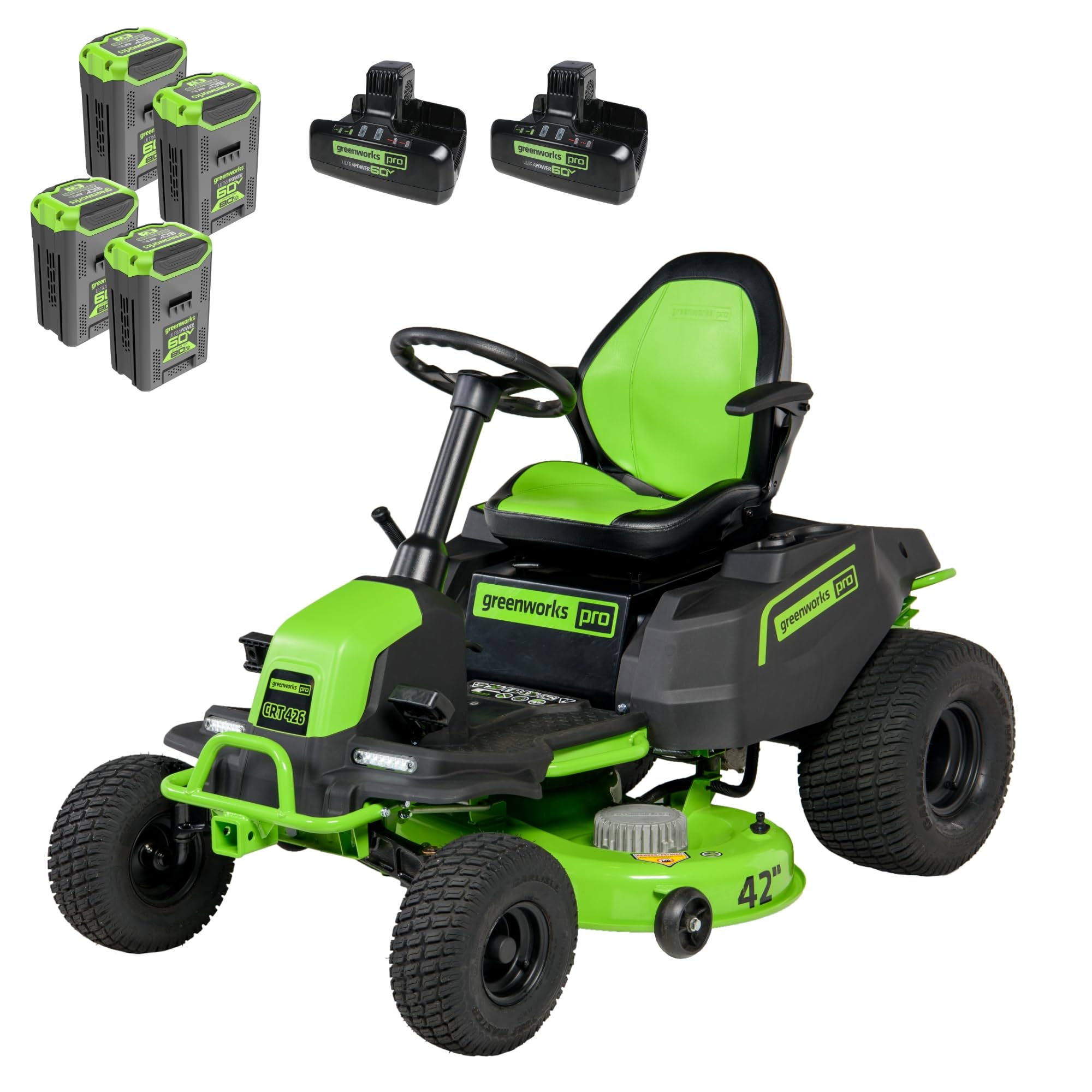
A 42" cordless riding mower designed for swap-and-go battery workflows; supports continuous mowing by rotating batteries and delivers a 24 HP equivalent performance.
Why I picked it: I picked it for the ‘mow, swap, and go’ workflow and high cutting speed.
Best for: Gardeners who want long runtime flexibility and fast cutting speed.
High-end, designed for uninterrupted work with replaceable battery strategy.
Pros
- Mow-swap-go battery workflow
- 42" deck with brushless motor
- 8 MPH cutting speed
- Quieter than gas mowers
- LED headlights for early/late mowing
Cons
- Replacement chute fit can be finicky
- Premium price point
My take
I used the CrossoverT on just over an acre and found the battery swap system very practical — I’d swap batteries mid-job for continuous mowing on larger properties.
It’s impressively quiet and responsive, and the cutting quality rivals gas units thanks to consistent blade tip speed. The handling and payload/towing capacity are handy extras for typical yard work.
If you need a mower that keeps running while you charge batteries in a second bay, this Greenworks makes that workflow simple and effective.
6. Makita XML07Z 18V X2 (36V) LXT® Brushless Cordless 21″ Lawn Mower – Best Compact Battery Mower
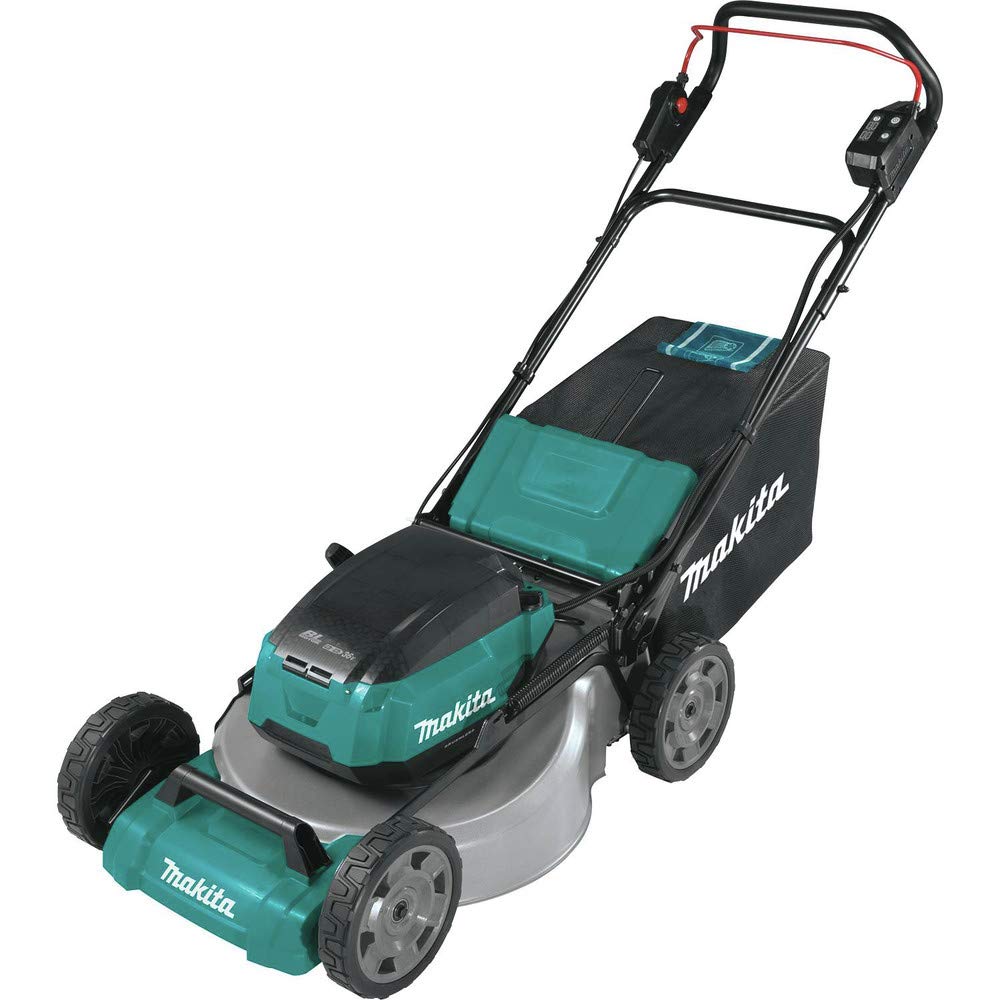
A compact 21" cordless mower that uses two 18V batteries (expandable to four) and a commercial-grade steel deck for emission-free suburban mowing up to half an acre.
Why I picked it: I favored it for smaller lots and the flexible 4-bay battery system.
Best for: Homeowners with up to half-acre lawns who want a compact, quiet mower.
Mid-to-high range for a high-quality cordless walk mower.
Pros
- No gas or oil
- 4-bay battery system for extended run time
- Commercial-grade steel deck
- Quiet operation and Quiet Mode
- Fast height adjustment
Cons
- Side chute struggles on uneven ground
- Replacement blade availability limited
- Not self-propelled
My take
On my smaller lot this Makita was quiet, nimble, and required far less fuss than a gas mower. The four-bay battery setup meant I could stretch my run time without buying a different platform.
I did notice the side discharge chute can fall off on uneven terrain, so I mow carefully where the ground is bumpy. Also, I couldn’t find aftermarket replacement blades easily, so I keep a spare blade on hand.
Overall it’s a great compact electric mower if you value quiet, reliable cuts and can live without self-propel support.
How I Choose Lifts and Battery Mowers
Matching the Lift to Your Mower
I measure the outside front wheel span and compare it to a lift’s wheel-span range before buying. Most residential lifts list an 18.5 to 47.5 inch span — that’s wide enough for many ZTRs and tractors.
Capacity matters: I treat the listed lifting capacity as a front-end rating, not the total mower weight, and I always chock rear wheels and use safety straps or locks.
- Confirm lift height (around 24 inches gives good deck access).
- Check whether the lift operates manually, with a drill, or hydraulically.
- Look for multi-stop locks, safety straps, and a stable base.
Choosing a Battery-Powered Mower
I size battery capacity by acreage and mowing style. Manufacturers often quote acreage with specific battery counts—compare that to how you actually mow (slow precision vs fast wide swaths).
I prioritize brushless motors and consistent blade tip speed because they maintain cut quality under load.
- Deck width: 42" covers big yards quicker, 21" suits small properties.
- Battery workflow: swap-and-go systems beat single-pack solutions for continuous work.
- Consider included batteries and chargers versus additional battery purchases.
Safety and Practical Features I Value
I always look for secure locking systems on lifts and chock points on jacks. Wheels without brakes need extra attention on ramps and uneven floors.
For mowers, I prefer LED lights, comfortable seats, and easy height adjustments because they make the job less tiring.
- Safety strap or locking bar is essential on lifts.
- Check manufacturer guidance for slope handling and towing capacities.
- Prefer units with clear storage solutions — folding or wall-hang options save space.
Frequently Asked Questions
Can a lift raise the entire mower?
In my experience most residential lifts are designed to raise the front end only. I always chock the rear wheels and use the lift’s straps or safety bars to stabilize the machine rather than relying on the lift to hold the full mower weight.
How do I measure compatibility for a lift?
I measure the outside distance between the front wheels and compare it to the lift’s listed wheel-span. Also verify the lift height and capacity match the service tasks you plan to perform.
Do battery-powered riding mowers need less maintenance than gas?
From my time with electric tractors, they remove oil, spark plugs, and carburetor chores — but I still perform deck cleaning, blade sharpening, and periodic electrical checks. Batteries and chargers are an additional maintenance/consumable component to monitor.
Final Take
I picked tools and mowers that either make maintenance safer or make mowing quieter and simpler. For maintenance, I depend on a stable lift with clear safety stops; for mowing, I let battery tractors handle larger yards and compact electrics manage smaller lots.
If you want a single recommendation: choose the lift or mower that matches your routine — frequent servicing pushes me toward a hydraulic or well-built mechanical lift, while acreage and runtime needs determine which battery tractor fits best.
