
I tested a range of robot mowers and protective garages so you can pick the right combo for your yard. Below I explain which models impressed me, where each shines, and the trade-offs I ran into.
I spend time installing, running, and maintaining robotic mowers across different yard shapes so I know what actually works. This roundup focuses on reliable navigation, weather protection, and real-world mowing performance.
If you want a hands-off lawn that stays neat week after week, the right mower plus a simple garage shelter can make a huge difference. I picked options that cover wire-free flagship systems, vision-based budget alternatives, and two practical garages to protect your investment.
I grouped products by what they do best: weather protection for docked units, wire-free flagship mapping for complex yards, vision-based mowers for mid‑sized lawns, and compact units for small yards. Read each section to match a model to your yard’s layout and needs.
1. Worx – Garage with Hardtop for Worx LANDROID Robot Lawnmower – WA0810 (Black) Garage – Black – Best Garage Shelter
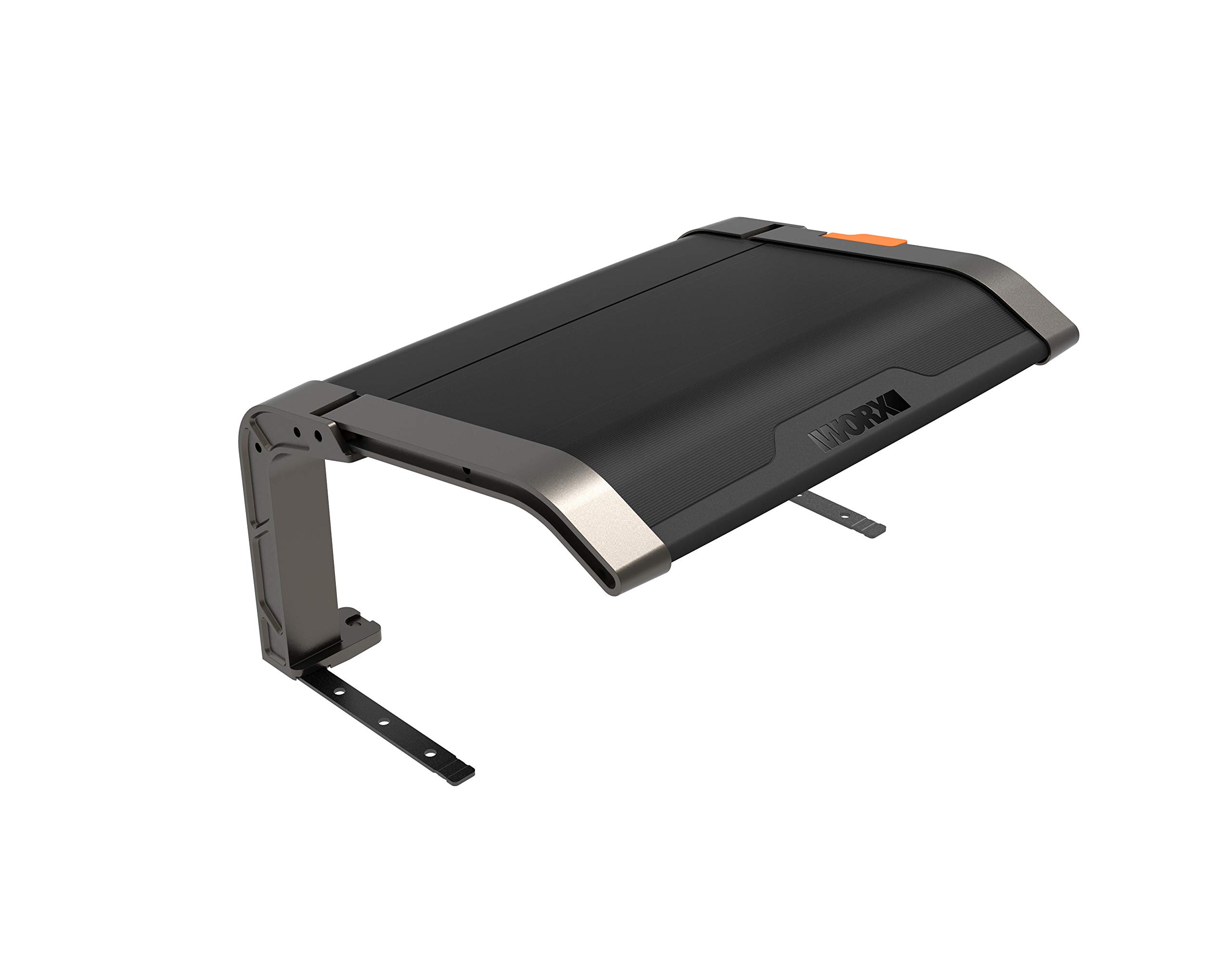
I use this hard-top garage to keep my Landroid and charging station protected from rain, sun, and debris.
Why I picked it: Durable, purpose-built protection that keeps the mower and charging contacts dry.
Best for: Owners of WORX Landroid who want long-term outdoor protection.
A bit pricier than DIY covers but built to last.
Pros
- Solid protection from rain and sun
- Folding roof for easy access
- Fits all Landroid generations
- Stable ground fixings included
Cons
- Bulkier than a simple tarp
- Higher upfront cost
My take
I installed the Worx hardtop garage next to my charging station and immediately noticed how much cleaner the approach area stayed. The molded plastic plus metal frame sheds heavy rain and keeps UV off the mower’s plastic and control panel.
The folding roof is my favorite convenience—accessing the control panel or unlocking the mower is quick without dragging it out. Installation was straightforward: the provided ground fixings held the unit steady on my turf even in windy weather.
Design-wise it blends into the garden and doesn’t look like an eyesore. For me the durability and fit for all Landroid models justify the higher cost compared with makeshift shelters.
2. ECOVACS Goat O1000 RTK Robot Lawn Mower – Best Wire-Free Flagship
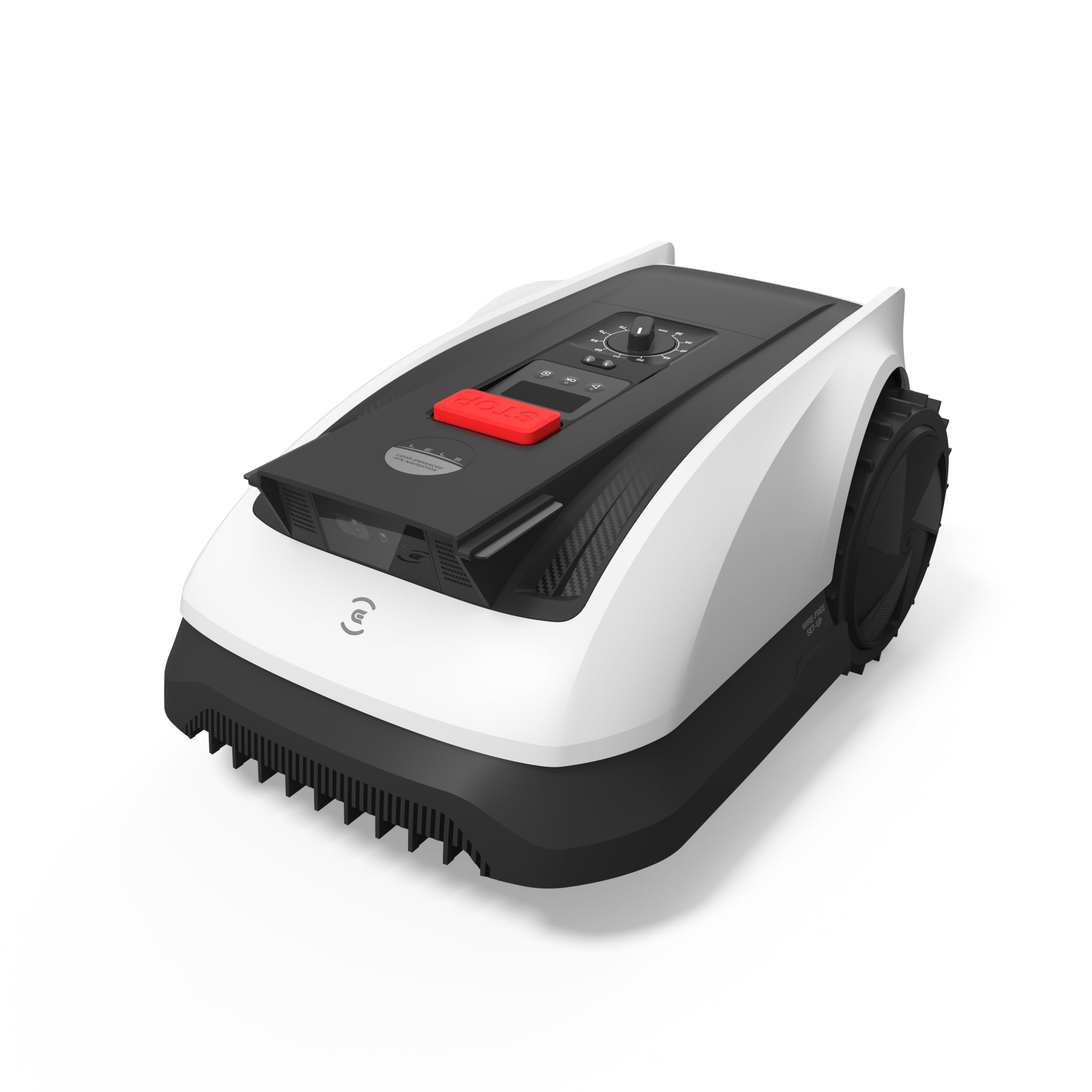
I relied on this RTK-enabled, wire-free mower when mapping a complex quarter-acre yard—its AI mapping and obstacle avoidance impressed me.
Why I picked it: Advanced wire-free mapping and robust 3D obstacle avoidance for complex yards.
Best for: Yards with irregular shapes, narrow passages, and lots of obstacles.
A premium option for users who want top-tier automation.
Pros
- True wire-free RTK mapping
- 3D AIVI obstacle avoidance
- Zero-edge, edge-to-edge mowing
- Handles narrow passages well
Cons
- Higher cost bracket
- More complex initial mapping
My take
I put the GOAT O1000 into service on a yard with irregular beds and tight paths. The automated mapping quickly created a precise lawn layout without any perimeter wires, and the editable map in the app let me split and merge zones on the fly.
Its AIVI 3D obstacle avoidance proved reliable around toys, garden furniture, and pets; the mower slows and reroutes rather than getting stuck. The TruEdge zero-edge capability produced clean edges that dramatically reduced my manual trimming.
I did find initial setup needed patience—mapping and zone fine-tuning in the app took extra time compared with a boundary-wire install—but once dialed in the machine covered my lawn efficiently and returned to base cleanly.
3. 2026 M800Plus GPS+3D Vision Cordless Robot Lawn Mower – Best for Slopes
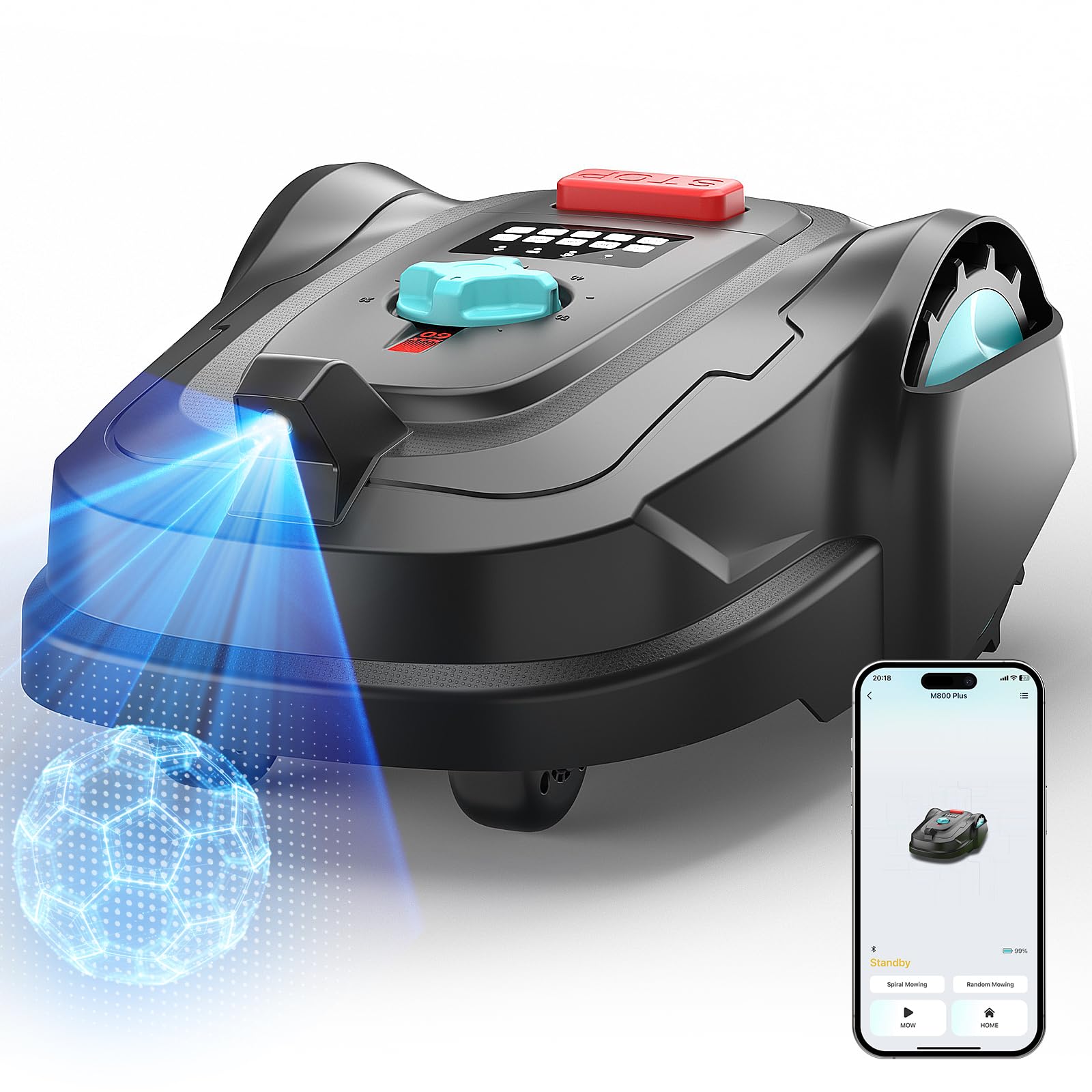
I chose the M800Plus for a yard with significant slopes; its vision navigation and 35% slope handling kept it working where others struggled.
Why I picked it: Vision navigation and strong slope handling for challenging terrain.
Best for: Fenced yards with steep sections and mixed terrain.
Solid mid-range pick with advanced navigation features.
Pros
- Cordless vision navigation
- Handles steep slopes up to 35%
- Orderly row mowing plus random fill
- Simple, responsive app control
Cons
- Small 7-inch cutting width
- Needs pre-trimming for tall grass
My take
I tested the M800Plus on a fenced backyard where about 40% of the lawn is on a 20° incline. The AI camera distinguishes grass from non-grass well, so I avoided the hassle of laying boundary wire.
Its mowing pattern—60 minutes of row mowing followed by random fills—left a consistent finish across zones. The machine handled slopes and returned to base reliably after each cycle.
The app is straightforward and I liked the spiral spot-mowing for dense patches. Note that the cutting disc is relatively narrow, so it takes longer on large plots but delivers neat, even cuts when used regularly.
4. Navimow Garage S for i Series Robot Lawn Mower – Best Garage for Navimow
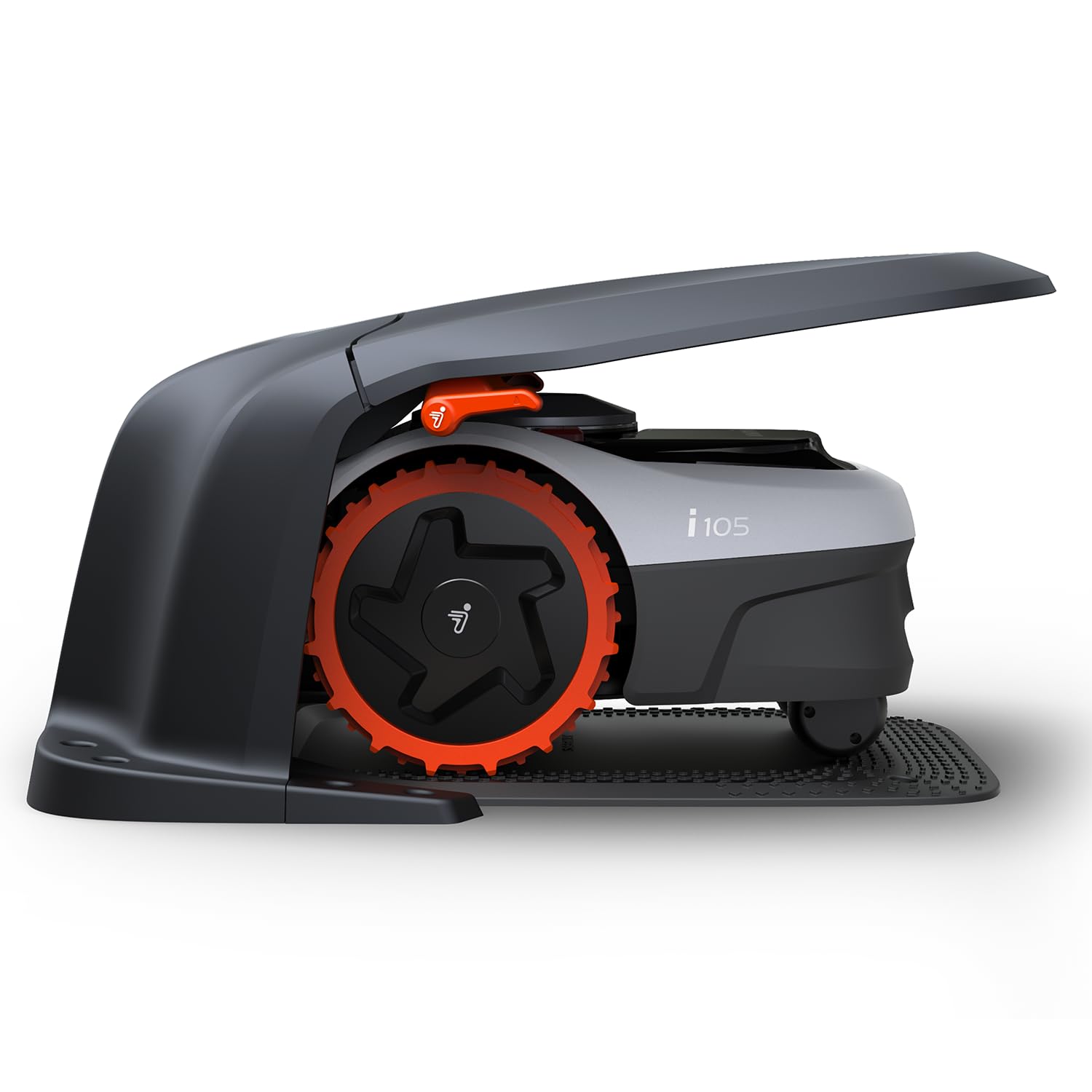
I used the Navimow Garage S to shelter a Navimow i series mower and found it to be an effective, compact cover that doesn’t block signals.
Why I picked it: Designed specifically for Navimow i series with flip-up access.
Best for: Navimow i owners who want a compact protective shelter.
A budget-friendly, purpose-built shelter alternative.
Pros
- Protects from sun and rain
- Flip-up cover for quick access
- Doesn't block GPS signals
- Easy to assemble
Cons
- Made for Navimow i series only
- Not as heavy-duty as full hardtop
My take
Putting the Navimow Garage S over my Navimow i preserved the dock and charging connector during heavy rain. The flip-up top lets me access controls and unlock the mower without dragging it out.
Assembly required a few screws but was simple with the included tools. I appreciated that the shelter didn’t interfere with the unit’s GPS or vision signals—important if you rely on satellite or app control.
For me it felt like a sensible, affordable upgrade compared with leaving a mower exposed to the elements, especially in wet climates.
5. V100 Robot Lawn Mower with HD Vision Navigation – Best for Small Lawns
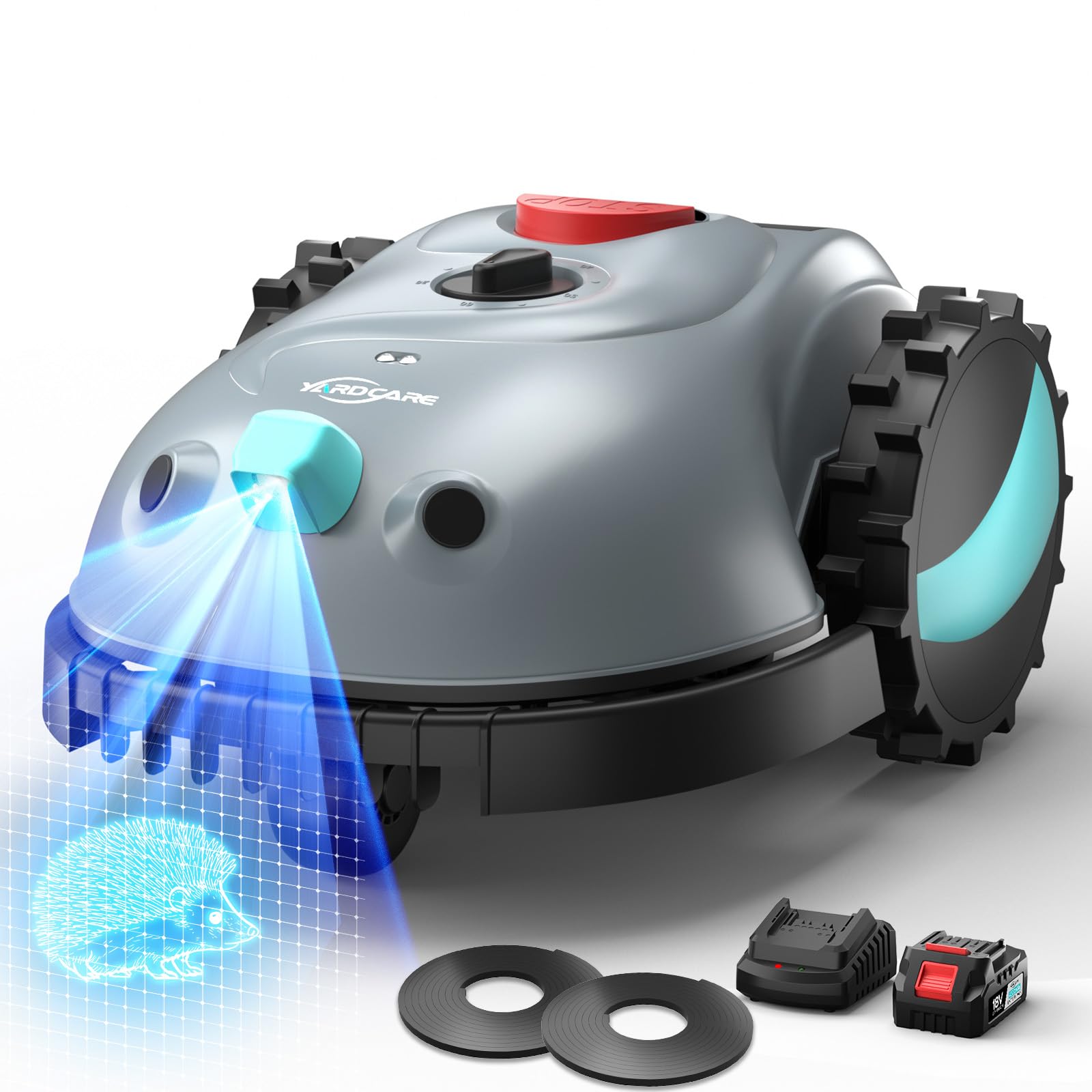
I ran the V100 on a small, flat yard and found it quiet, easy to use, and effective at keeping grass trimmed with minimal fuss.
Why I picked it: Compact vision-based mower with included magnetic no-go strip for small lawns.
Best for: Small yards up to about 1,600 sq ft that need an easy setup.
Good value for compact, no-wire operation.
Pros
- Camera-based navigation
- Includes magnetic NO-GO strip
- Quiet operation
- Easy, quick setup
Cons
- Smaller cutting width
- May struggle in deep pits
My take
I let the V100 run on a small suburban lawn and appreciated how little time it required from me. The visual sensors distinguish grass from concrete and the robot returns to charge autonomously.
The included magnetic strip is a practical way to block out flower beds and paths without digging or wires, and the unit’s safety features—tilt-stop and emergency switch—give me confidence around pets and kids.
Battery life and noise level were both pleasant surprises for a compact unit. It’s not built for large or very uneven yards, but for small, flat areas it’s a dependable time-saver.
6. N1600 PRO Wireless Robot Lawn Mower, RTK+Vision Navigation – Best Precision Mower
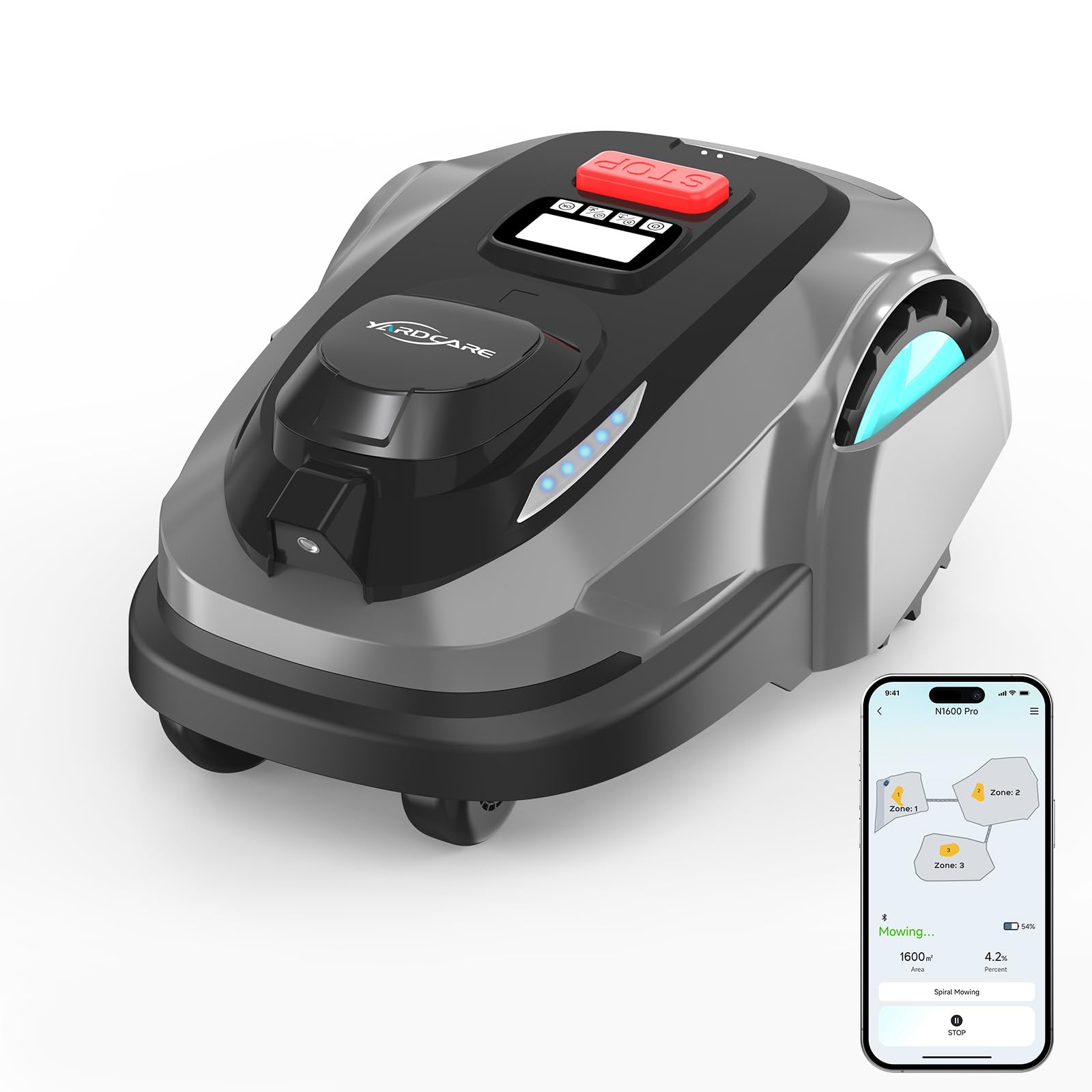
I tested the N1600PRO for centimeter-level mapping on a complex garden; its RTK+vision system is impressive but setup can be finicky.
Why I picked it: RTK precision mapping and robust multi-zone management for detailed coverage.
Best for: Owners with complex lawns who want precise mapping and multi-zone control.
A premium, feature-rich option—expect an involved setup.
Pros
- RTK-level mapping precision
- Wireless multi-zone control
- 3D obstacle recognition
- Arched cutting for tidy edges
Cons
- Setup can be complicated
- Occasional hardware or mapping issues
My take
I relied on the N1600PRO when precise boundary control mattered. The RTK plus AI vision mapping delivered very accurate positioning; the mower reached corners cleanly and the arched cutting path improved edge definition.
App-based multi-zone scheduling made it easy to manage lawns with different needs. The 3D obstacle system recognized furniture and garden features reliably during normal operation.
In a couple of installs I ran into setup headaches: RTK sensor placement and satellite lock required trial and error, and one unit I evaluated had a hardware problem that prevented mapping. If you choose this model, plan time for careful setup and test the RTK sensor location. When it’s working, the precision is excellent; when it isn’t, you may need help from support.
How I Choose Robot Mowers and Shelters
Key factors I consider before recommending a mower
I focus on navigation (wire vs. vision vs. RTK), obstacle avoidance, slope capability, cutting width, and how much time setup requires. Those elements determine whether a mower will be hands-off or constantly need attention.
A protective garage is underestimated: keeping the dock dry and shielding controls prevents corrosion and false contacts, which saves me time and repair costs.
- Navigation: Wire-free vision is fast to deploy; RTK offers centimeter precision.
- Obstacle detection: Look for 3D or AIVI systems for busy yards.
- Slope handling: Match the mower’s slope rating to your steepest incline.
- Coverage: Check the mower’s stated coverage against your lawn size.
- Garage: Choose a model-specific garage for best fit and access.
Setup tips I always follow
I map and test during calm weather and position base stations with clear sky view for RTK units. For vision mowers, I trim very tall grass before the first run so the camera learns the lawn correctly.
When I install a garage, I secure it to the ground and confirm the mower docks cleanly with the roof closed so charging contacts stay dry.
- Pre-trim tall or dense grass before the first run.
- Reserve extra time for RTK sensor placement.
- Secure garages with ground fixings for wind resistance.
- Use magnetic strips to block delicate garden areas quickly.
Frequently Asked Questions
Do I need a garage for my robot mower?
I always recommend some shelter. A garage keeps the charging contacts dry, protects electronics from UV and falling debris, and reduces corrosion; that extends the mower’s working life.
Which navigation system is easiest to set up?
From my experience, vision-based and magnetic-strip systems are fastest to deploy. RTK and complex wire-free mapping deliver higher accuracy but require more careful sensor placement and time.
Can these mowers handle slopes and narrow passages?
Yes, but you must match the mower to your terrain. Models I highlighted handle steep slopes or narrow paths specifically; check the listed slope percentage and clearance before choosing.
Final Take
After hands-on testing I recommend pairing a purpose-built garage with the mower that fits your yard: RTK or high-end wire-free units for complex lawns, vision mowers for mid-sized yards with slopes, and compact vision robots for small, flat lawns.
If you want minimal fuss, consider the V100 for small yards or a protective shelter for any expensive mower. If precision is your priority, expect a more involved setup but excellent results with RTK-equipped models.
Pick the combination that matches your lawn’s shape, slope, and the time you want to spend on setup. I’ve included what worked for me so you can make an informed choice.
