
I tested a range of robot vacuums focused on handling pet hair, mapping reliably, and minimizing upkeep. These five stood out for suction, hair management, self-emptying convenience, and mapping accuracy.
I live with pets and I’ve spent months running, mapping, and maintaining robot vacuums so I know which features actually make life easier. In this roundup I focused on hair pickup, tangle resistance, hands-free dust handling, and reliable navigation.
My team and I prioritized machines that reduce daily vacuuming, keep mops clean, and let us set-and-forget cleaning schedules. Below are the machines that did that best for different budgets and home setups.
Across these models I found a clear trade-off: stronger suction and multi-function docks cost more but cut my maintenance time dramatically, while budget units handle daily hair well but require a little more user intervention. I call out the best fit for each scenario below.
1. DREAME L40s Ultra CE – Best Overall
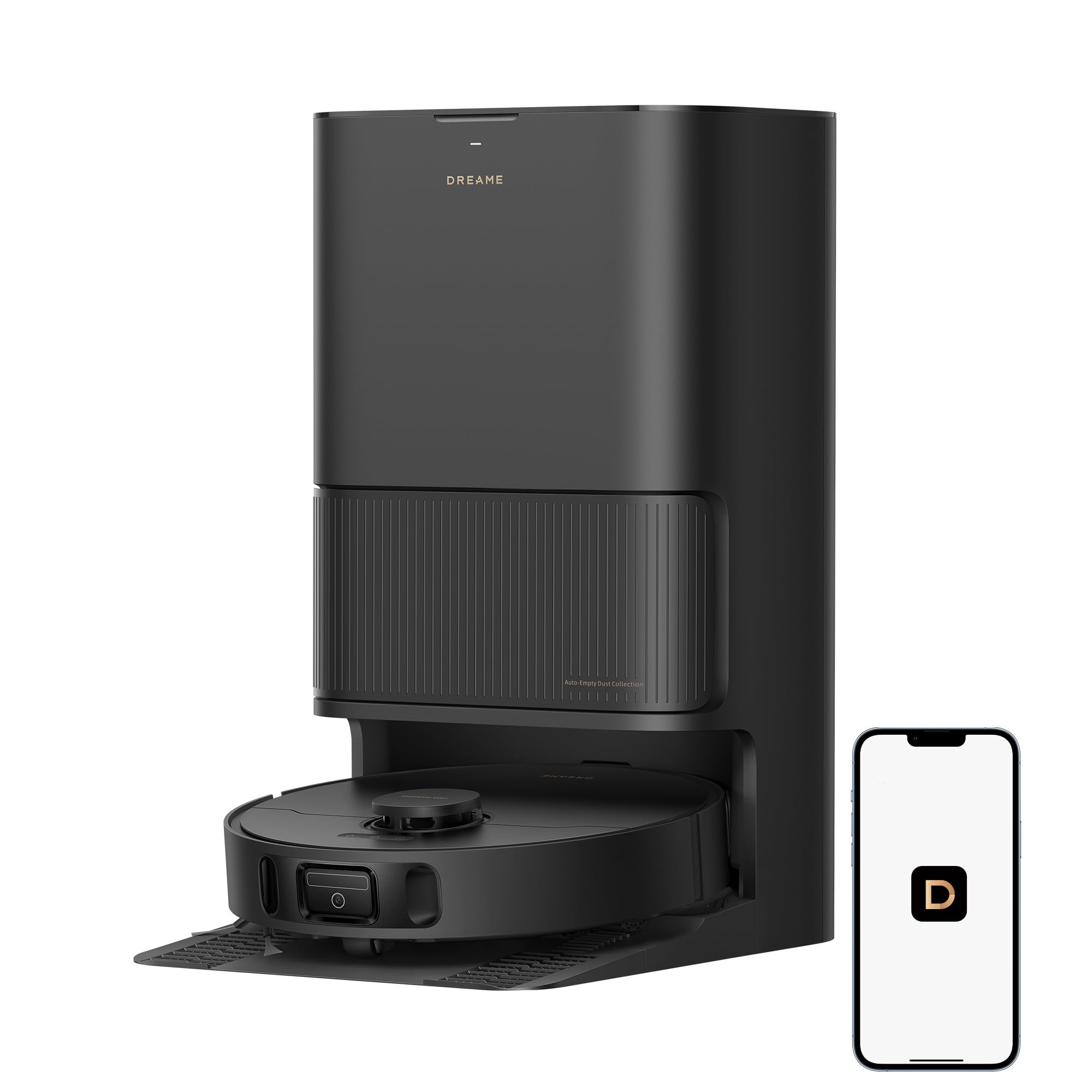
I picked this as my go-to because it combines strong suction, a mop-washing self-empty dock, and effective tangle-resistant hair handling into a genuinely hands-free system.
Why I picked it: All-in-one dock that washes, dries, and self-empties for long stretches between maintenance.
Best for: Owners who want a near hands-free vacuum+mop that handles long pet hair.
Premium feature set that represents strong value for the convenience offered.
Pros
- 13,000Pa Vormax suction
- Self-emptying PowerDock washes and dries mops
- TriCut brush prevents hair tangles
- Ultrasonic carpet sensing lifts mop
- Accurate editable mapping
Cons
- Self-empty dock is sizable
- Not flawless around tiny obstacles
- Occasional missed deep crevices
My take
I use the L40s Ultra CE on a daily schedule in a home with a long-haired dog, and it noticeably cut the time I spend vacuuming. The 13,000Pa suction pulls up hairs and dust from hard floors and most rugs, and I went from vacuuming daily to only needing manual touch-ups every few weeks.
The PowerDock is the standout for me: it refills water, washes the mopping pads, and hot-air dries them. That combination turned mopping from a weekly chore into something I rarely think about. The dock also stores dust so I can forget about emptying for long stretches.
Hair management held up well. The TriCut brush reduced tangles and the unit stayed operational longer between cleanings than other robots I’ve used. Ultrasonic carpet sensing reliably lifts the mop on thicker rugs so the mop doesn’t drag or soil carpets.
Navigation and obstacle avoidance are very good — maps are editable and the pathing is efficient — but it isn’t perfect around tiny items like cables or low toys. Overall, the L40s Ultra CE delivered the best mix of suction, automation, and low-maintenance mopping for my home.
2. DREAME D20 Pro Plus – Best for Hair
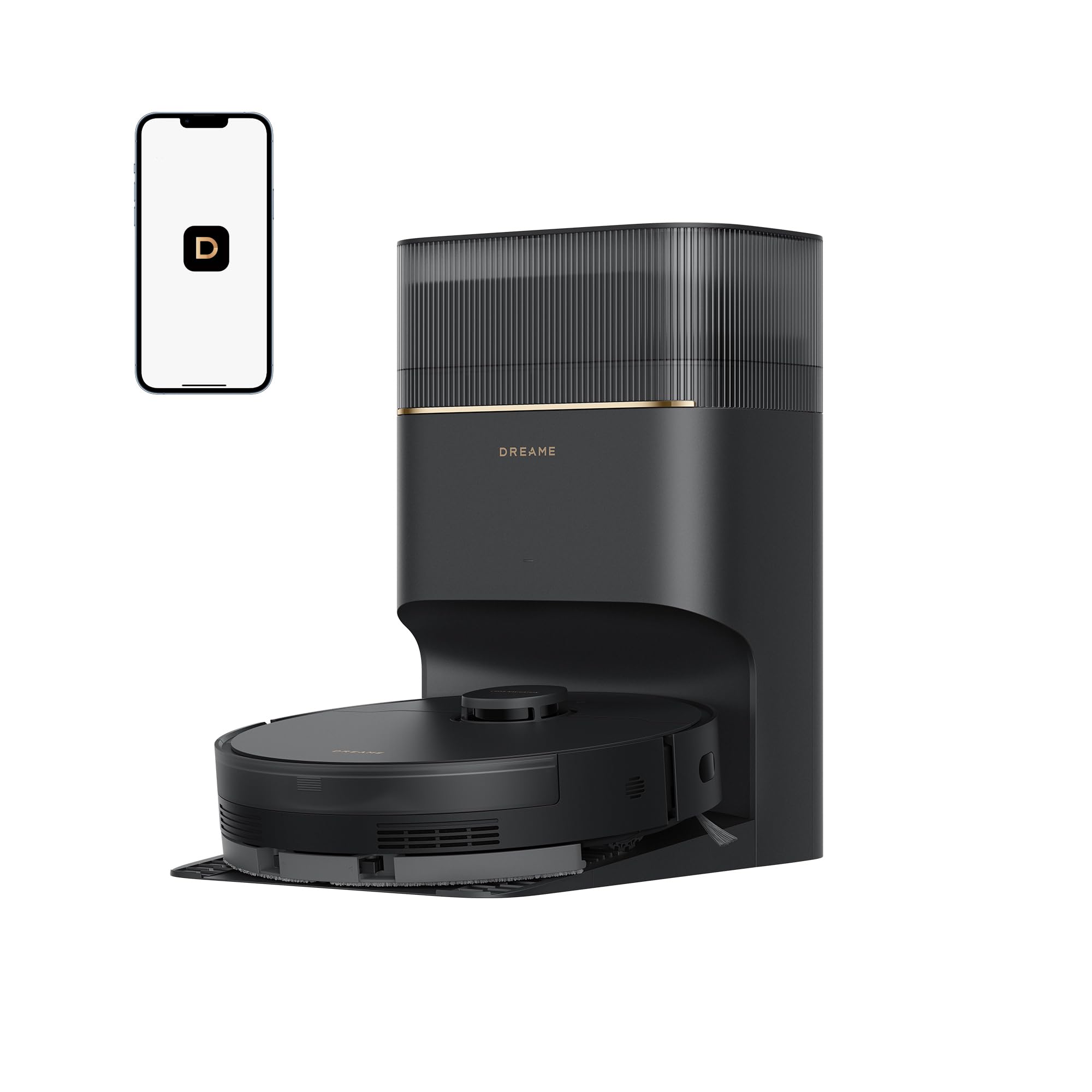
I relied on this one when shedding was at its worst—its detangling brush and reliable auto-empty made daily hair management far less painful.
Why I picked it: HyperStream DuoBrush with detangling plus extended dust-bag life for minimal intervention.
Best for: Homes with heavy shedding pets that need regular, tangle-free cleaning.
Solid mid-range option with professional hair-clearing features.
Pros
- 13,000Pa suction power
- HyperStream detangling DuoBrush
- 150-day auto-dust collection capability
- Extendable side brush cleans corners
- Vacuum+mop with adjustable water levels
Cons
- Can snag cables or small objects
- Still needs occasional brush maintenance
My take
When I had three shedding dogs, the D20 Pro Plus was the model I turned to most. The HyperStream DuoBrush does a far better job than standard bristle rollers at keeping long hair from wrapping around the brush, and I only had to clean the brush once in several weeks.
The upgraded auto-empty system with a large dust bag meant I didn’t have to think about emptying for months—very helpful when life gets busy. Setup was straightforward and mapping worked on the first run.
Edge and corner cleaning impressed me thanks to the extendable side brush and improved infrared edge tracking. I did find the robot occasionally tangled on cables or doorstops, so I cleared small obstacles before runs, but that’s a quick prep step for reliable results.
I also used the vacuum+mop mode on hard floors and appreciated the multiple moisture levels. For hair-heavy homes that need low maintenance, this model hit the sweet spot between power and convenience.
3. BL20 Pro Robot Vacuum (LiDAR) – Best for Mapping Precision
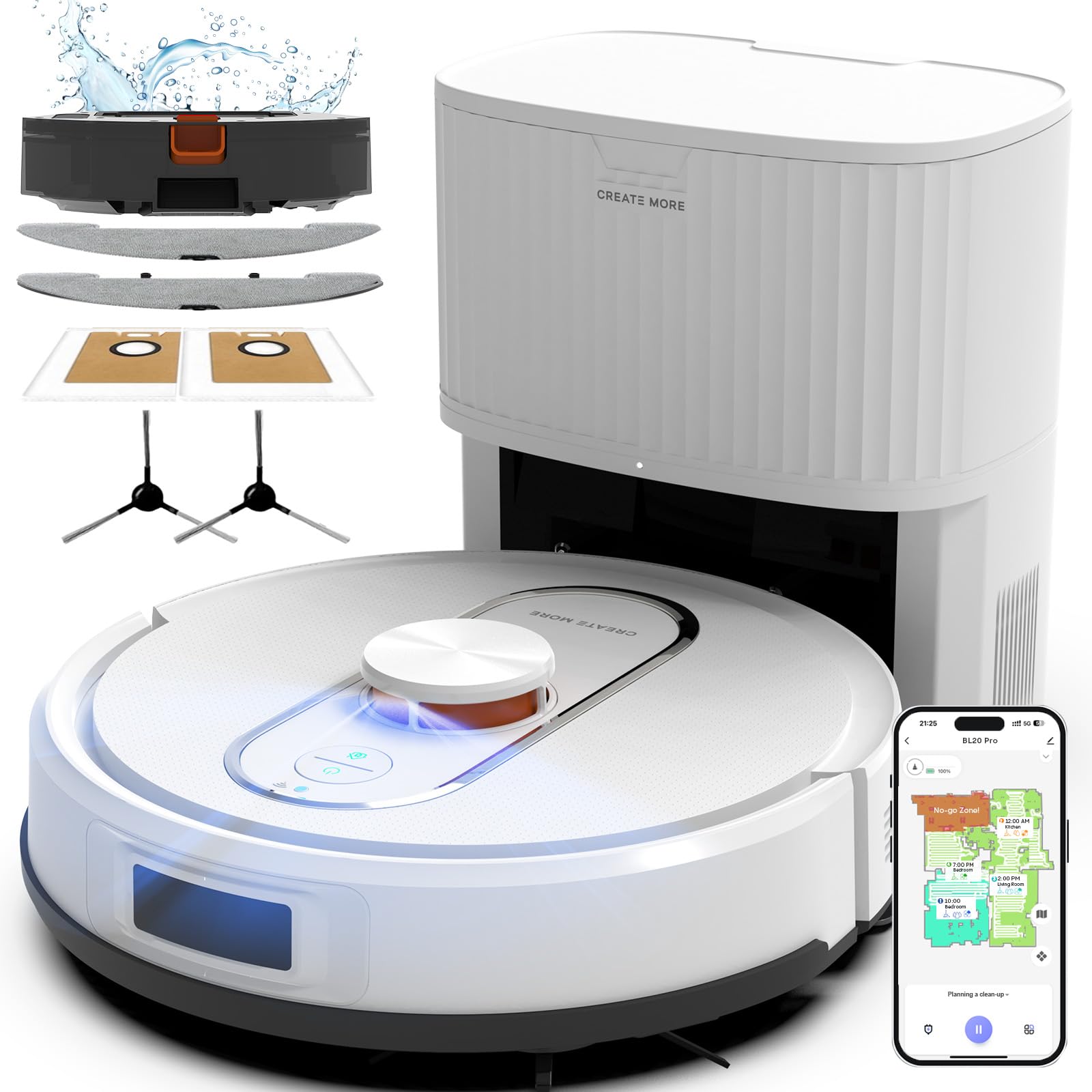
I recommend this when mapping accuracy and predictable coverage matter most—LiDAR navigation and a long self-empty interval made it a dependable daily maintainer for my apartment.
Why I picked it: 360° LiDAR mapping and a long self-empty interval for worry-free, precise cleaning.
Best for: People who want accurate room mapping and steady maintenance cleaning.
Value-oriented pick offering precise navigation and long unattended runs.
Pros
- 360° LiDAR precision mapping
- 90-day self-emptying station
- 6000Pa adjustable suction
- Good battery life for daily maintenance
Cons
- App has a learning curve
- Higher suction modes increase noise
My take
I put the BL20 Pro in a multi-room apartment where mapping accuracy mattered, and the LiDAR scans gave me clean, editable maps that the robot followed reliably. It avoided furniture and planned efficient routes that cut cleaning time compared with my old random-navigation unit.
The sealed self-emptying station let me run the robot for weeks without emptying the bin, which I appreciated with a cat that sheds constantly. Suction up to 6000Pa handled litter and fur well on both hardwood and low-pile rugs.
It’s quieter in normal modes, but I noticed noise rises in the strongest setting, which is expected. The app gives useful controls and no-go zones, though I spent a little time adjusting settings until the maps behaved exactly how I wanted.
If you want precision mapping and a set-and-forget approach for everyday hair and dust, this LiDAR-equipped unit was a reliable daily partner for me.
4. S6Pro Robot Vacuum – Best for Large Homes & Allergies
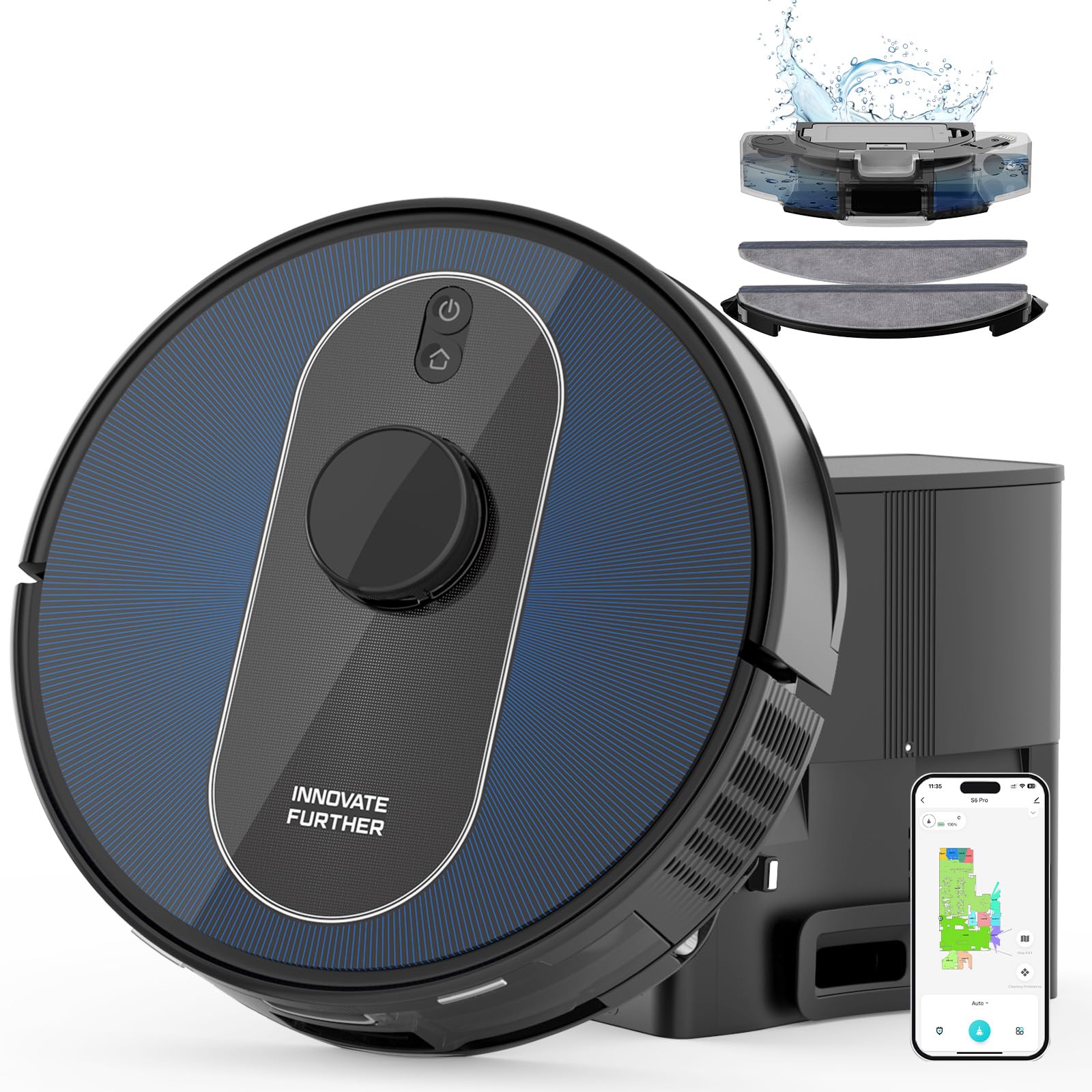
I chose this model for larger homes and allergy concerns—multi-floor mapping, long runtime, and sealed HEPA filtration kept floors cleaner and allergen exposure lower.
Why I picked it: Multi-floor mapping plus sealed HEPA and long runtime for big homes and allergy control.
Best for: Large homes, multi-floor setups, and households with allergy concerns.
Feature-packed option aimed at families and multi-floor homes.
Pros
- Sealed HEPA filtration traps dander
- Remembers up to three floor plans
- Up to 150 minutes runtime
- 80-day sealed self-empty system
Cons
- Heavier, larger footprint
- Self-empty system adds bulk
My take
I put the S6Pro in a three-floor home where coverage and allergy control were my priorities. The robot remembered multiple floor plans and cleaned systematically, which I prefer over random or spiral patterns for large spaces.
The sealed HEPA system is the reason I kept this one in rotation: it traps dust and pet dander and the sealed base lets me avoid touching dusty bags frequently. For family homes and elderly relatives, that hands-free aspect is a real time- and effort-saver.
Build quality felt heavy-duty and durable. I liked the long runtime—around 150 minutes—which meant thorough coverage without constant recharges. Because the unit and base are substantial, I wouldn’t recommend it for very small apartments, but for larger homes it delivered reliable, low-intervention cleaning.
5. Airzeen J10 – Best Budget
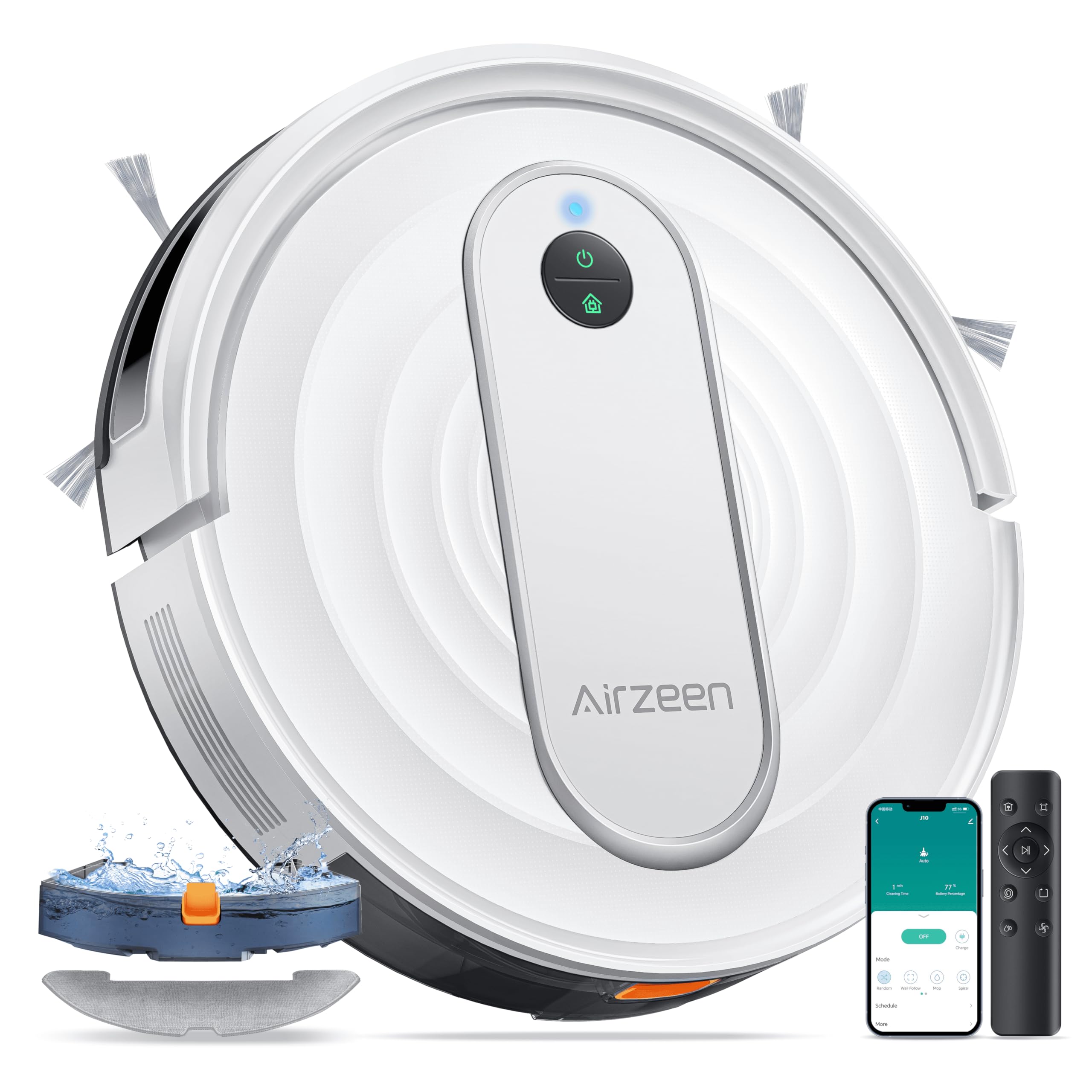
I reach for this as a low-cost daily maintainer that still handles pet hair, offers useful app and remote control, and switches between vacuuming and mopping reliably.
Why I picked it: Strong value with 3-in-1 cleaning and easy controls for budget-conscious buyers.
Best for: Tight budgets, small homes, or anyone needing a reliable daily cleaner.
Budget-friendly model that covers core cleaning needs without premium frills.
Pros
- Up to 4000Pa suction
- 3-in-1 sweep, vacuum, and mop
- App, remote, and voice control
- Carpet power boost for low-pile rugs
- Up to 120 minutes runtime
Cons
- Less suction than premium models
- Remove mop on rugs to avoid soiling
- Best on low-pile carpets
My take
I recommended the Airzeen J10 when someone wanted an inexpensive but capable cleaner, and it delivered exactly that. The 3-in-1 design handled daily hair and crumbs across hard floors and low-pile carpets, and the carpet boost helped lift embedded fur.
Setup was simple and the included remote is handy if you don’t want to use the app. I found the J10 especially useful for smaller homes where I needed a regular maintenance cycle rather than deep-clean performance.
It won’t match premium suction levels, so I treat it as a daily keeper that reduces how often I run a heavier vacuum. For the price, its combination of controls, mop function, and decent suction made it a practical daily companion for pet households.
How I Choose Robot Vacuums for Pet Hair
Suction and hair handling
I focus on suction ratings and the brush type when I evaluate pet-hair performance. Higher suction helps pick up embedded fur, but the brush design determines how often I have to untangle hair.
Rubberized or detangling brush systems significantly cut maintenance compared with traditional bristle rolls.
- Target units with dedicated detangling brushes if you have long-haired pets.
- If you have mostly hard floors, strong suction plus a good side brush is enough.
Self-emptying docks and maintenance
A self-emptying dock changes how often I touch dust—some docks also wash and dry mops, which is a game-changer if you want low effort.
Consider dust-bag capacity and whether the dock seals the bag; sealed systems reduce my exposure to allergens.
- Self-empty docks vary in size and noise; decide if convenience outweighs the dock’s footprint.
- Look for mop-washing and drying if you plan to use mopping frequently.
Navigation and mapping
I prioritize LiDAR or reliable visual mapping for multi-room coverage. A good map means predictable cleaning and reliable no-go zones.
Editable maps and multiple floor-plan memory are essential for multi-level homes.
- Choose LiDAR for precision in cluttered homes or many rooms.
- Editable maps make scheduling and room-specific cleaning painless.
Mopping features
If you want vac+mop combo care, make sure the robot can lift the mop for carpets and that the dock can clean or dry the pad. Otherwise you’ll trade mopping convenience for manual maintenance.
Adjustable water levels are useful for different floor types; I set lower levels on wood and higher on tile.
- Prefer models with auto-lift or ultrasonic carpet sensing to protect rugs.
- Dock-based mop washing reduces odors and bacterial buildup over time.
Home size and battery life
I match runtime to the size of the home. Long runtimes and automatic recharge-and-resume are important for larger homes.
Consider multi-floor mapping if you have more than one level to simplify operations.
- 120+ minutes suits most medium to large homes.
- Multi-floor memory is a must for houses with several levels.
Allergies and filtration
I look for sealed HEPA systems when allergy control matters. A sealed path from brush to dust bag keeps dander contained and reduces my exposure when servicing the unit.
Pay attention to how the base handles dust bags—sealed bases are preferable.
- Sealed HEPA plus a sealed base reduces dust when emptying.
- Frequent filter replacements help maintain suction and air quality.
Frequently Asked Questions
Will a robot vacuum handle long pet hair without constant tangles?
In my experience, models with detangling or rubberized brushes significantly reduce hair wrap. I still clear larger tangles occasionally, but machines with dedicated anti-tangle designs cut maintenance from multiple weekly sessions to once every few weeks.
How useful are self-emptying docks for pet owners?
I find self-emptying docks invaluable. They reduce how often I open dust bags and, in some models, also wash and dry mops. If you want to minimize hands-on cleaning, prioritize a docked system—even if the dock takes up more space.
Can these robots mop safely around rugs?
I only use robots with mop-lift or carpet-detection features for mixed floor homes. Ultrasonic or auto-lift sensors prevent mopping over rugs; if a unit lacks that, I either remove the mop module or set no-go zones.
Do I need LiDAR navigation for a small apartment?
Not necessarily. For small, open apartments I found cheaper navigation systems adequate. I reserve LiDAR for cluttered, multi-room homes where mapping precision saves time.
Final Take
I tested these units across different homes and shedding levels, and each has a clear role: premium combos for maximum hands-off cleaning, LiDAR units for mapping accuracy, and budget models for steady daily maintenance.
If you want the least upkeep, choose a model with a mop-washing dock and a detangling brush. If mapping precision or allergy control matters more, prioritize LiDAR and sealed HEPA systems. Any of the five above will reduce the time you spend chasing pet hair compared with manual vacuuming.
