
I tested compact round pedestal tables for living rooms, bedrooms, and tight corners. These four stood out for style, build, and how easily they fit into real homes.
I spent time setting up and living with a handful of compact round pedestal tables so I could tell you which ones actually perform in everyday rooms.
I focused on footprint, stability, finish, and how straightforward each piece was to assemble and place next to chairs, sofas, and beds.
Below I’ve picked four tables that cover traditional looks, bright color options, budget-friendly buys, and a sturdier metal-pedestal choice.
If you want a classic, compact look go with the MDF pedestal; choose the spindle table for traditional charm; pick the Frenchi for the lowest cost and small footprint; select the HOOBRO when you need a metal base and higher load capacity.
1. Decor Therapy Simplify Round Pedestal Side Table – Best Overall
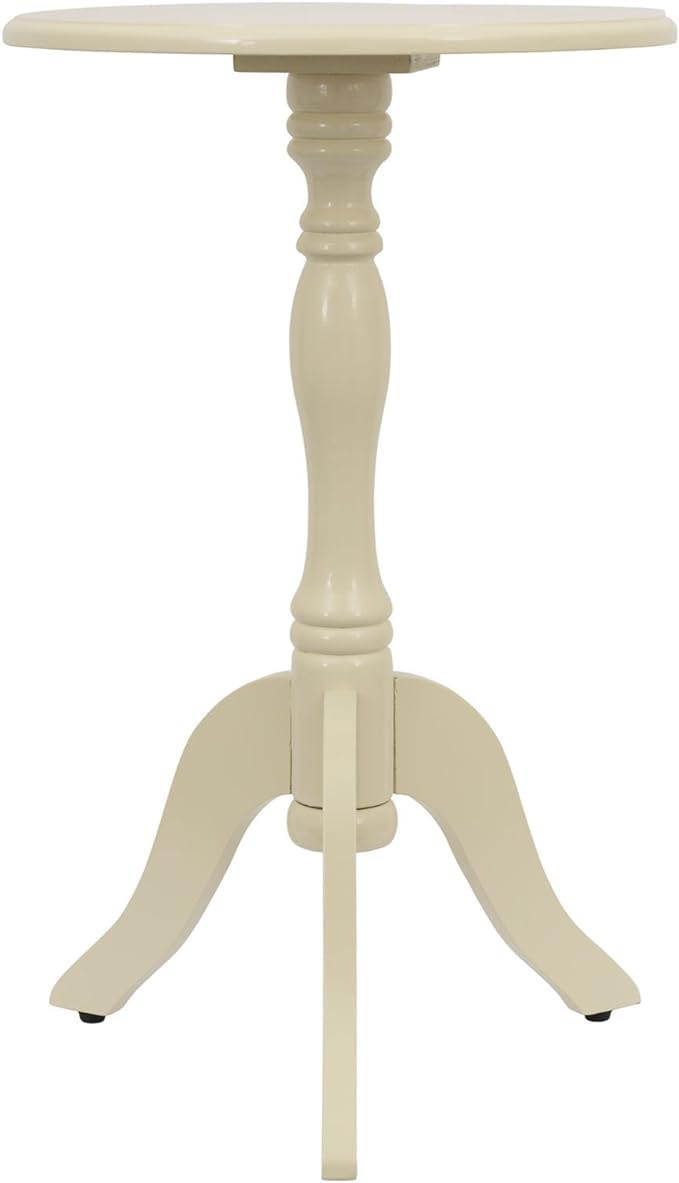
I appreciate this little pedestal for its classic silhouette, compact footprint, and warm buttermilk finish that suits small traditional spaces.
Why I picked it: Classic shape, compact size, and a durable MDF build that fits tight corners.
Best for: Small living rooms, bedside use, or next to an accent chair.
Affordable option for a stylish, small pedestal table.
Pros
- Timeless pedestal silhouette
- Compact 15 x 15 top
- Warm buttermilk finish
- Sturdy MDF construction
Cons
- Limited weight capacity compared to metal bases
- Finish can show scratches over time
My take
This table earned a permanent spot beside my armchair because the slim round top doesn’t crowd the floor yet still holds a lamp and book comfortably. The buttermilk finish reads warm and blends into traditional palettes.
Assembly was quick and painless — the pieces line up and the set includes little levelers on the feet so you can eliminate wobble on uneven floors. The MDF feels solid for everyday use, though it’s not intended to hold very heavy loads.
Because of the compact 15" top I treat this more as an accent or lamp table rather than a primary surface. For small spaces where proportion matters, it’s hard to beat the clean look and easy setup.
2. Convenience Concepts Palm Beach Spindle Table – Best for Traditional Style
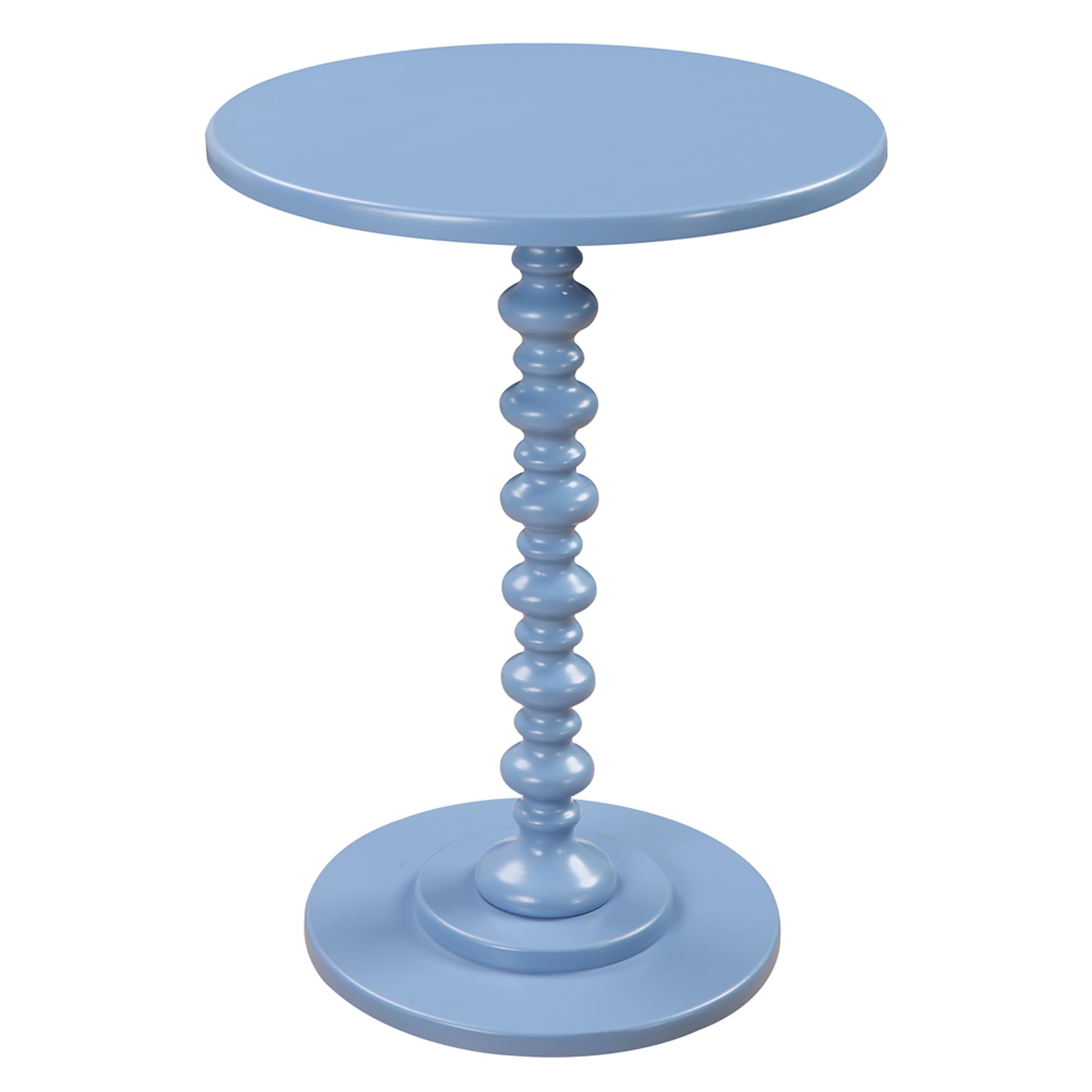
I like this spindle-leg table when I want a small round surface with a turned-wood look and a glossy finish that adds a pop of color.
Why I picked it: Distinct spindle base and glossy finish give classic character without a big footprint.
Best for: Entryways, beside sofas, or as a colorful accent in a traditional room.
A mid-range pick that delivers traditional style affordably.
Pros
- Classic turned spindle base
- Generous 17.8" top
- Glossy, color-forward finish
- Stable solid/engineered wood build
Cons
- Softer wood can scratch
- Color finish may show wear
My take
The Palm Beach spindle table brings the kind of traditional detail I reach for when a room needs a bit of character. The turned base looks intentionally decorative rather than generic.
When I set it up the table arrived ready to use with a perfectly flat top that accommodates a lamp and a stack of books. The 17.8" diameter gives a touch more tabletop than the smaller pedestals, which I liked for a living-room end table.
The finish is glossy and vivid, so I treat this one a little more carefully — the wood is a bit softer than heavier solid-wood tables, so I avoid sliding rough objects across the surface.
3. Frenchi Round End Table – Best Value
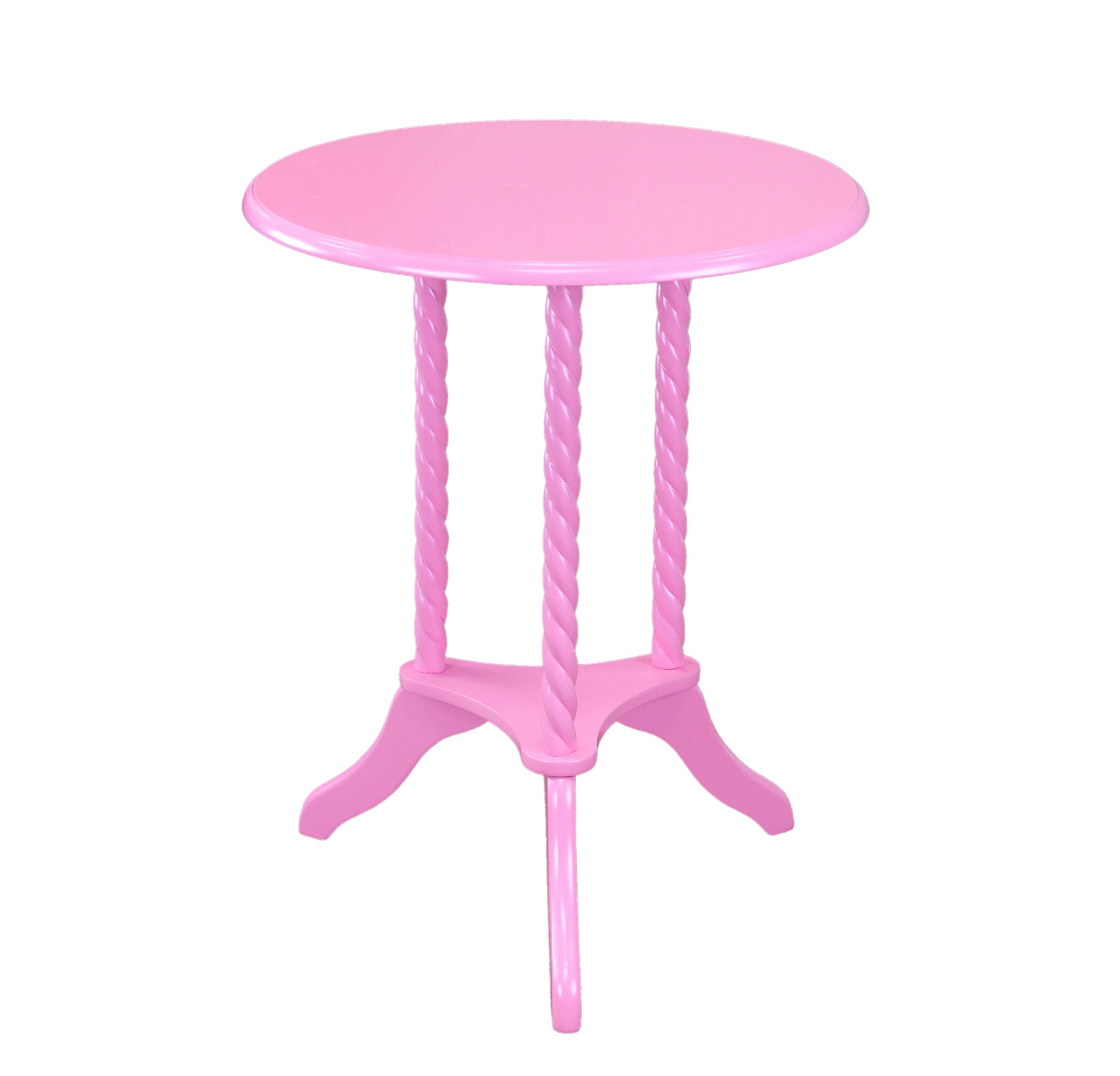
I turn to this lightweight round table when I need the cheapest practical option that still looks clean and assembles fast.
Why I picked it: Great footprint-to-price ratio and simple classic styling for very small budgets.
Best for: Plant stands, guest-room side tables, or temporary setups.
The most budget-friendly option with decent build for light use.
Pros
- Very affordable
- Easy, quick assembly
- Lightweight and portable
- Nice small footprint
Cons
- Not for heavy loads
- Some pieces may be imperfect
My take
I bought this to use as a plant stand and it fits the bill — compact, unobtrusive, and easy to move when I need to change a room layout. The white finish reads clean and pairs with different styles.
Assembly took me about ten minutes and the parts snapped together without fuss. Because it’s made from hardwood plus composite, I don’t rely on it for heavy items, but it handles lamps and small decor fine.
If you want the absolute lowest-cost round pedestal with usable style, this is the one I reach for. Just inspect the leg pegs during setup and rotate any imperfect piece out of direct sight if needed.
4. HOOBRO Round Metal Pedestal Side Table – Best for Durability
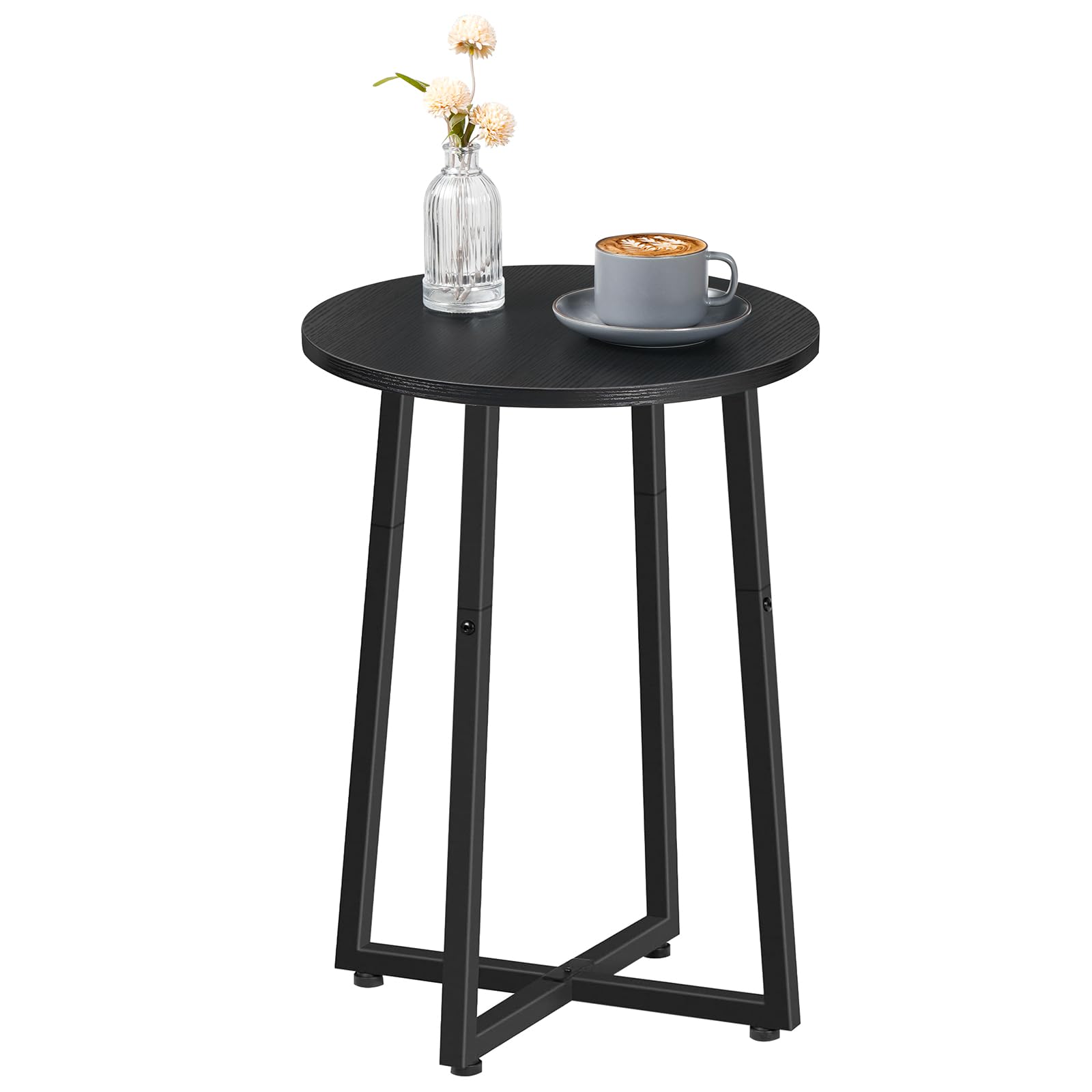
I recommend this metal-pedestal table when I need a compact surface that feels more robust and can carry heavier items.
Why I picked it: Metal pedestal, crossed-leg support, and a solid tabletop that holds heavier weights.
Best for: Balcony plant stand, nightstand, or chairside table needing extra sturdiness.
A sensible choice when you want a sturdier metal base without spending much.
Pros
- Metal pedestal for extra strength
- Compact 15.7" top
- Holds heavier loads
- Adjustable feet for leveling
Cons
- Industrial look may not suit all rooms
- Particleboard top can wear over time
My take
I picked this HOOBRO table for a spot where I needed a tougher surface. The metal pedestal and crossed-leg design make it feel stable in normal use, and the adjustable feet let me dial out any wobble on my textured floors.
The tabletop and frame assembled quickly; I had the whole thing ready in minutes. The compact 15.7" diameter is perfect for a small nightstand or a plant stand on a balcony.
Because the listing notes a decent weight capacity, I felt comfortable placing heavier items on it than I would on the purely MDF or composite options. The finish leans rustic-industrial, which worked well next to my leather chair.
How I Choose a Round Pedestal Table
What I look for first
I start with footprint and purpose — a 15–18 inch top is compact enough for tight corners but still useful for a lamp or drink.
Next I consider build material and finish so the table will handle how I plan to use it (light décor, lamps, or heavier items).
- Match top diameter to the space next to chairs or beds
- Choose MDF/composite for budget and color options
- Pick metal or solid wood if you need more durability
Materials and longevity
I prefer MDF or composite for painted, affordable pieces; they give clean finishes but aren’t meant for heavy loads over time.
When I need something tougher, I opt for metal pedestals or solid wood construction because they resist wobble and take more weight.
- MDF: smooth painted finishes, budget friendly
- Solid wood: better scratch resistance and heft
- Metal bases: best for stability and higher loads
Assembly and leveling
I value tables that arrive mostly assembled or that bolt together quickly with clear instructions.
Adjustable feet are a small detail I always appreciate — they let me eliminate rocking on imperfect floors.
- Look for included levelers or adjustable feet
- Expect simple hardware for most pedestal tables
- Keep a screwdriver handy even if assembly seems minimal
Style tips from my experience
I match pedestal shape to the room: turned spindles read traditional, simple pedestals read classic, and metal bases read modern or industrial.
For color, I use glossy finishes as accents and softer neutrals when I want the table to blend in.
- Spindle legs pair with classic decor
- Buttermilk or cream finishes soften a room
- Metal bases work with contemporary furnishings
Frequently Asked Questions
How big should a round pedestal table be for my sofa?
I recommend matching the table height to your sofa’s arm — most small pedestal tables sit between about 21–24 inches high and that works well beside most seating.
Are these pedestal tables easy to assemble?
In my experience most arrive with very little assembly or bolt together in minutes; the models I used included clear instructions and often adjustable feet to remove wobble.
Which table should I pick for heavier items like a large lamp?
I choose the metal-pedestal option when I plan to set heavier lamps or multiple objects on the top, since it offers a sturdier base and higher load tolerance.
Final Take
After testing all four, I know which table fits different needs: classic small-room style, traditional spindle charm, the cheapest practical option, or a sturdier metal base.
Think about how you’ll use the table — accent and lamps, plants, or heavier items — then pick the shape and material that match that use.
Whichever of these four you choose, you’ll get a compact, practical round table that fits into smaller spaces without fuss.
