
I tested a range of extendable and leaf-equipped tables to find pieces that save space, host guests, and stand up to daily use. These four stood out for build, mechanism, and practicality.
I live with the tension between compact everyday furniture and occasional entertaining. Over several months I used four tables that solve that problem in different ways: hidden leaves, butterfly inserts, and drop-leaf options. I focused on how each table expands, how solid the construction feels, and whether the finish and hardware hold up to normal use.
Below I explain what I liked and where I’d be cautious, so you can match a table’s strengths to your space and routine.
I tested each table for expandability, stability, ease of assembly, and real-world durability. If you need maximum seating, look first at tables with long extension ranges; if space is tight, drop-leaf and self-storing butterfly designs are the most practical.
1. Mobili Fiver First Extendable Table – Best Overall
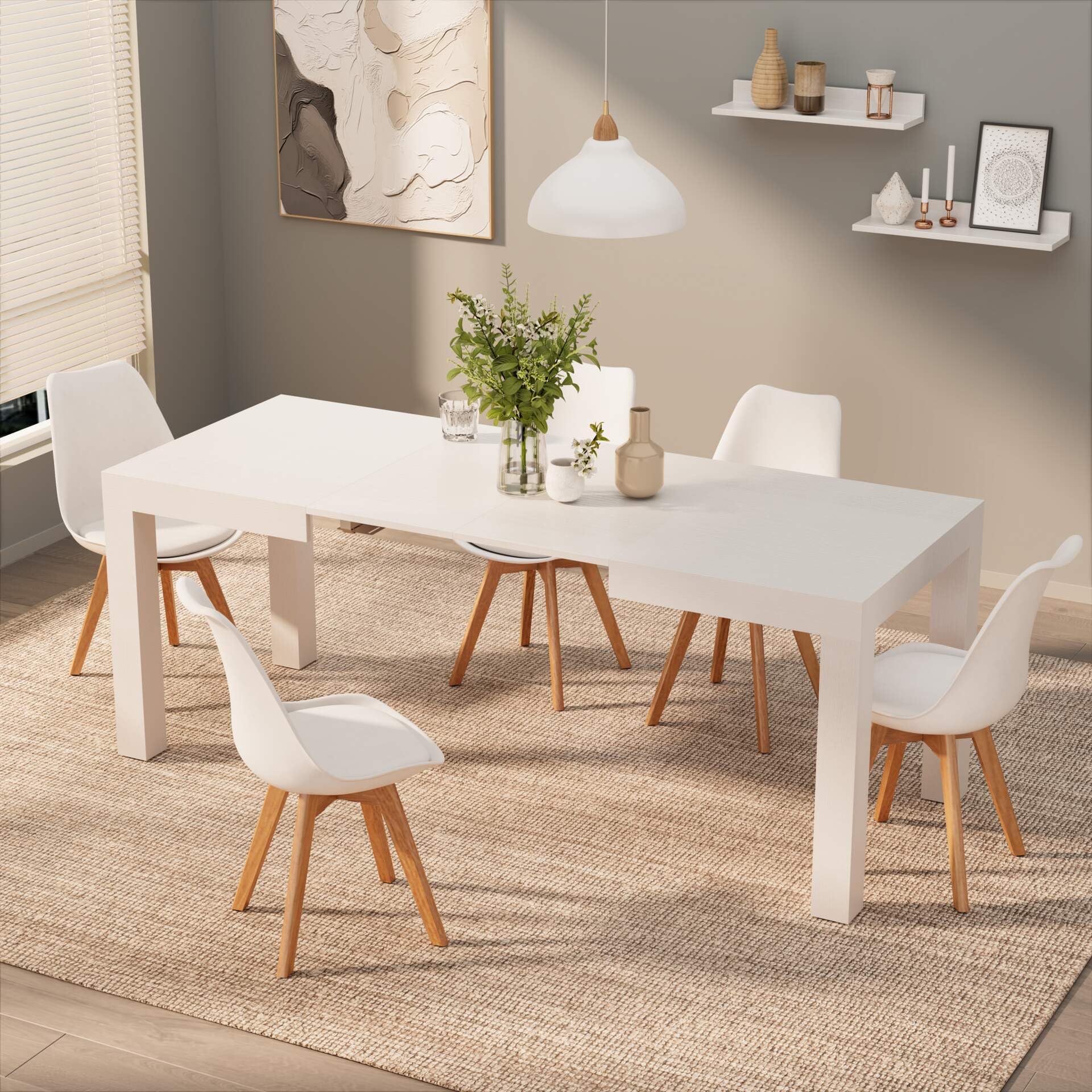
A versatile extendable table that goes from compact to long with hidden leaf storage and a scratch‑resistant melamine surface.
Why I picked it: Most flexible expansion range with tidy internal leaf storage and a durable laminate top.
Best for: People who need a compact daily table that stretches for larger dinners.
A mid‑range option with features you'd expect from a more costly extendable table.
Pros
- Expands from compact to long easily
- Hidden internal storage for leaves
- Scratch- and water-resistant surface
- Smooth extension mechanism
- Italian‑inspired minimalist look
Cons
- Finish can read warmer than photos
- Heavier than it looks to move
My take
I relied on this table most when I needed something that performs both as a daily surface and a party table. The extension slides smoothly and the mechanism lets me lengthen it without wrestling with separate leaves. The fact that the extra panels live inside the table keeps my dining area neat—no separate leaf storage in my closet.
The melamine laminate is kid- and pet-friendly: I wiped up spills and minor scuffs and the surface handled them without staining. It’s sturdier than I expected for the weight, and the overall look reads modern‑Italian in my space.
Assembly was straightforward; the instructions were clear and using an electric drill made the job fast. It’s worth noting the finish can appear more yellow/orange in person than online images, so plan for a potential color shift. Also, the table is pretty heavy once built, so plan how you’ll position it before final tightening.
2. Ashley Valebeck Counter-Height Farmhouse Table – Best Counter Height
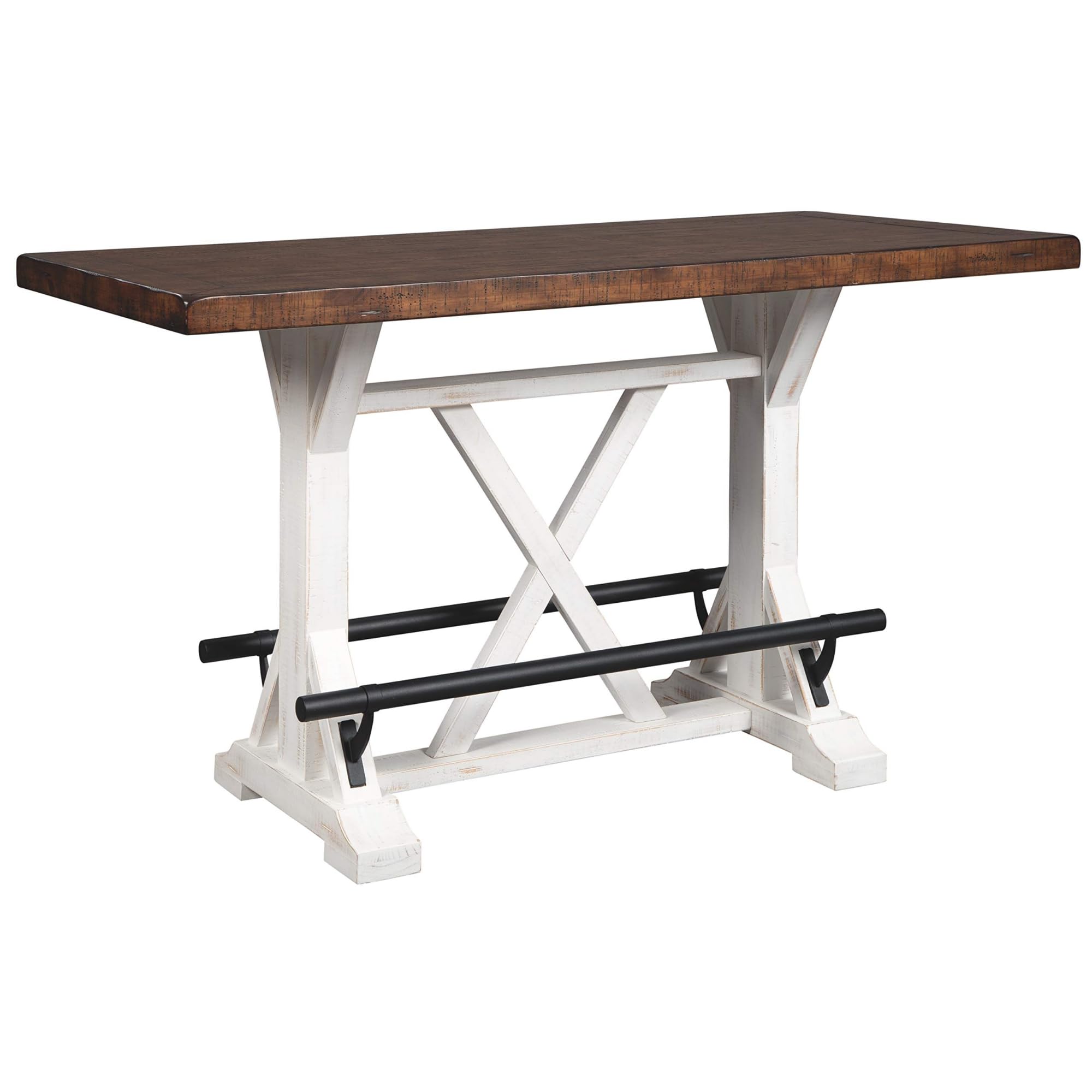
A two-tone counter-height farmhouse table with a wood top, distressed base, and a built-in metal footrest for casual comfort.
Why I picked it: Counter-height comfort with a classic farmhouse look and a practical metal footrest.
Best for: Homes that want a relaxed counter-height table with vintage styling.
An affordable farmhouse-style pick that balances solid materials and design.
Pros
- Warm two-tone farmhouse aesthetic
- Comfortable counter-height design
- Solid wood and veneer construction
- Built-in metal footrest
- Straightforward assembly
Cons
- Occasional screw-alignment issues
- Distressed finish is deliberate
My take
I used this table where I wanted a relaxed, higher dining surface and appreciated how comfortable its counter height felt compared with traditional tables. The two‑tone finish—brown top over a distressed white base—adds cottage charm and disguises everyday scuffs.
Construction felt solid for the class: the pine and engineered wood mix gives a reassuring weight without being impossible to move. The metal footrest is a nice touch; it actually improves comfort during longer meals.
Putting it together was easy and quick. I did encounter a minor alignment issue with one pair of screws on a unit I assembled, but it didn’t affect stability once the fasteners were tightened.
3. International Concepts Small Drop Leaf Table – Best for Small Spaces
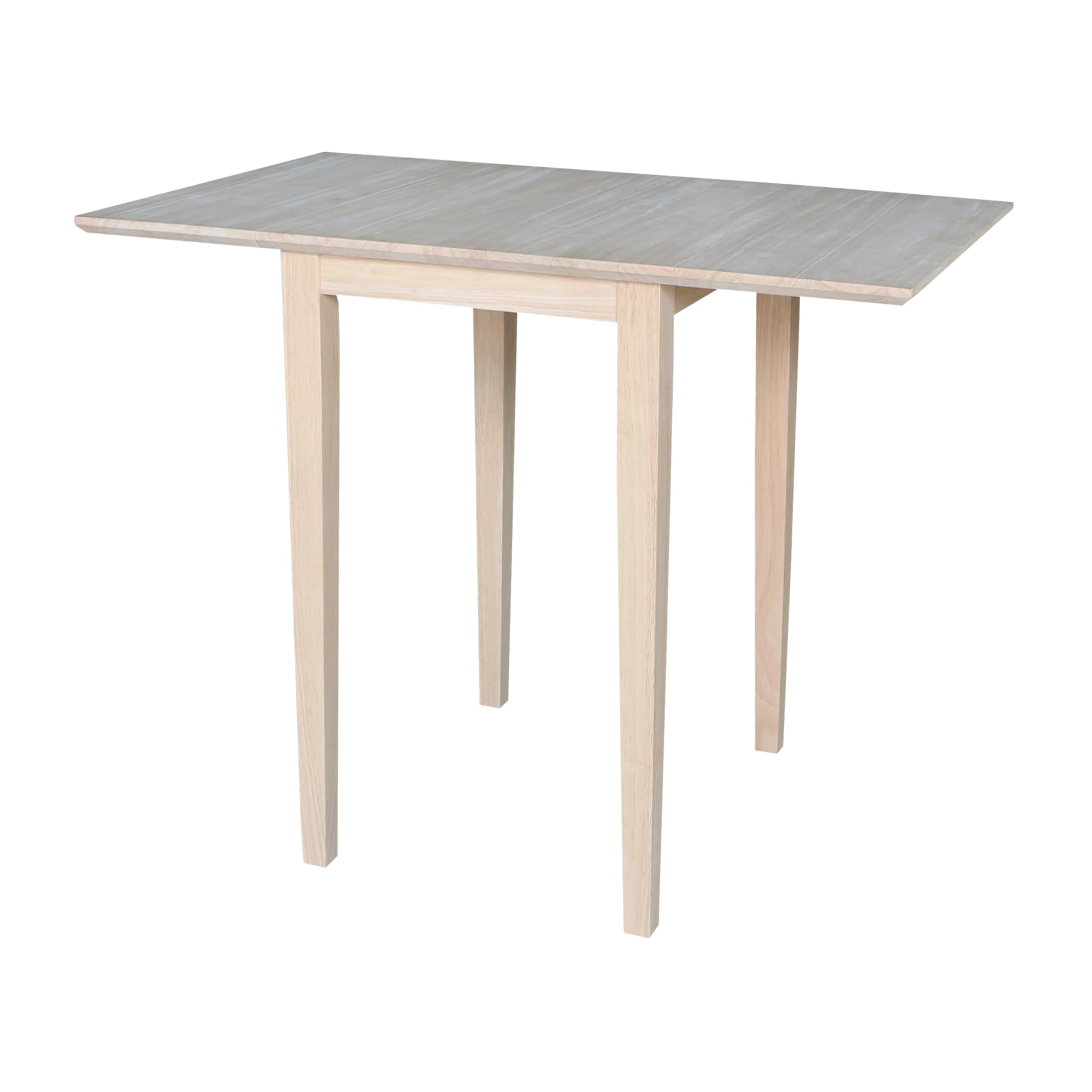
A compact solid Parawood table with two drop leaves, unfinished so you can match the finish to your décor.
Why I picked it: Compact footprint with quick drop-leaf action and solid hardwood construction.
Best for: Tiny apartments, breakfast nooks, or anyone who wants a customizable finish.
A budget-friendly, no-frills solid wood option you can finish yourself.
Pros
- 100% solid Parawood
- Dual 9-inch drop leaves
- Unfinished for custom staining
- Very compact footprint
- Easy assembly
Cons
- Leg spacing tight for some chairs
- Packaging often arrives roughed up
My take
I brought this into a very small apartment and it was perfect. The leaves fold down in seconds, turning a dining surface into a narrow console when I need the space. The table came mostly assembled—only the legs needed attaching—so I had it ready in under an hour.
Because it’s unfinished, I could sand and stain it to match my floors. The solid Parawood gives it a reassuring heft that cheap particle options don't have, and the drop leaves sit straight and tight without sagging.
Do measure your chairs before you buy: the space between the legs is narrower than full-size tables, so seat selection matters. Also, be warned the outer box comes beat up often, but the internal packing usually protects the table itself.
4. East West Norfolk Butterfly-Leaf Oak Table – Best Solid Wood Butterfly Leaf
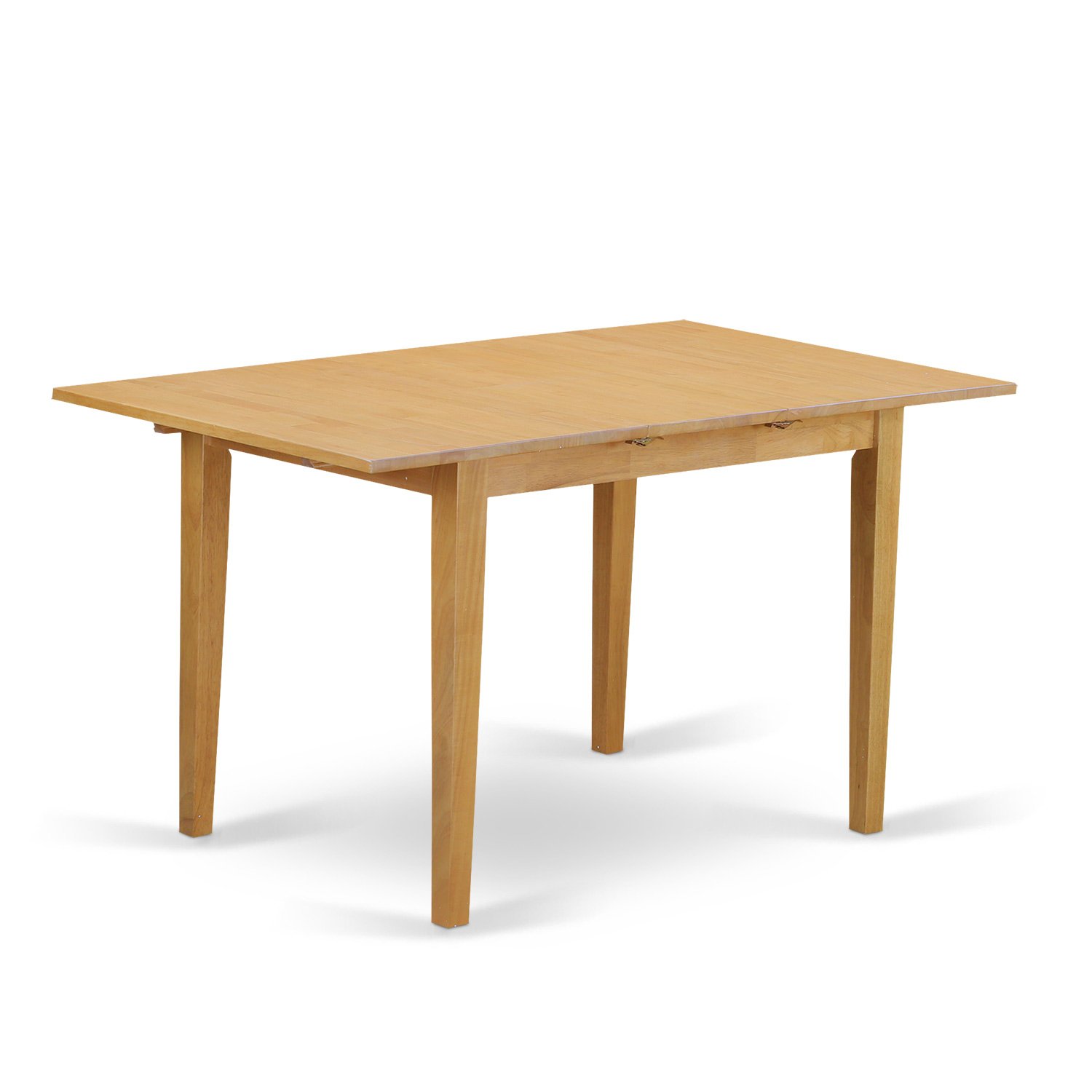
A solid oak (rubberwood) table with a built-in butterfly leaf that tucks away for easy expansion and reliable hardwood construction.
Why I picked it: Classic solid-wood feel with a clever self-storing butterfly leaf and hefty build.
Best for: Anyone who wants a genuine hardwood table with a neat internal leaf solution.
A solid-wood choice that feels like a long-term investment.
Pros
- Solid Asian hardwood construction
- 12-inch butterfly self-storage leaf
- Substantial, heavy-duty build
- Classic oak finish
- Easy one-person leg attachment
Cons
- Heavy to lift or shift
- Possible bolt/thread fit issues
My take
This table reads like real wood the moment you see it: heavy, solid, and finished in a warm oak tone. The butterfly leaf is great—I fold it open and the extra surface is instantly ready without juggling loose panels.
Assembly was simple: attach the legs and tension the bolts. I appreciated the careful packing; mine arrived with no dings. The weight means it feels durable in daily use, but plan for help if you expect to move it between rooms.
On one unit I inspected there was a minor bolt-threading tightness at a leg, which can happen with painted or factory-drilled holes. It’s fixable with a quick re-drill or light cleaning of the thread, and otherwise the table is very stable once assembled.
How I Choose a Table with a Leaf
Measure Twice, Buy Once
I always measure the room with traffic flow and chair clearance in mind. Think about the table in both its compact and fully-extended states so you don’t end up with a tight walkway.
If you host often, allow about 24–30 inches of width per person and keep at least 36 inches of clearance behind chairs for comfortable movement.
- Measure wall-to-wall and include chair pullout space
- Mock up the extended length with tape on the floor
- Account for doorways and how you’ll move the table
Choose the Right Leaf Type
I prefer internal storage or butterfly leaves when I don’t want to stash panels elsewhere. Drop leaves are the best option when your floor area is minimal.
Each leaf type has trade-offs: butterfly and internal leaves are convenient, while separate leaves can sit flatter but need storage.
- Butterfly leaf: quick and self‑contained
- Internal leaf: tidy but can add weight
- Drop leaf: smallest footprint when folded
Material and Finish Matter
I go for real wood or durable laminates depending on how much daily wear the table will see. Laminates resist spills and scratches better, while solid wood ages beautifully if maintained.
If a table arrives unfinished, factor in finishing time and supplies; unfinished pieces are a great way to match existing décor.
- Laminate = low maintenance
- Solid wood = longevity and repairability
- Unfinished = fully customizable
Assembly and Practical Concerns
I check how many people are needed to assemble and move the finished table. Heavy solid wood tables often require two people to set in place.
Look for built-in leaf storage and check whether the extension mechanism runs smoothly before the final installation.
- Confirm if leaves store inside the table
- Bring basic tools: drill, Allen wrench, and a helping hand
- Inspect hardware for alignment during assembly
Frequently Asked Questions
Will a table with a butterfly leaf fit in a small kitchen?
Yes—because the butterfly leaf folds into the table, I find these are excellent for small kitchens where you want occasional extra seating without storing panels elsewhere.
Are laminate tops better for families with kids?
I prefer laminate when I expect heavy daily use: it resists water and scratches better than many natural wood surfaces and is easier to clean after spills.
Can an unfinished table be stained to match other furniture?
Absolutely. I’ve sanded and stained unfinished Parawood pieces to match floors and cabinets; just allow time for sealing and test stains on a scrap piece first.
Final Take
If you want the most flexible solution for both everyday and entertaining, I recommend starting with the Mobili Fiver for its long extension and hidden storage. For compact living, the International Concepts drop-leaf table gave me the best space-saving value. The Ashley Valebeck is my pick when counter-height comfort and farmhouse style matter, and the East West Norfolk table delivers the solid-wood presence and convenient butterfly leaf I reach for when I want a durable, timeless table.
Whichever you choose, double-check extended dimensions, leaf storage style, and whether you prefer a ready-finished surface or an unfinished piece you can personalize. Those details make the difference between a table that simply fits and one that truly works in your home.
