
I tested a range of router bits and kits for edge work, joinery, spoilboard surfacing, and V-groove detailing. Here are the sets and single bits I keep in my shop and why each earns a spot in my toolbox.
I spend a lot of time routing hardwoods, plywood, and composite boards, so I chose these bits to cover the common tasks I face: edge profiling, trim work, tongue-and-groove joinery, spoilboard flattening, and sign-making.
In this roundup I explain which kits I use for general purpose work, which specialty cutters I rely on, and how I match shank sizes and coatings to the projects I run through my routers and CNC.
I grouped these options into multi-purpose sets, precision joinery, and single-purpose cutters. The Bosch sets give me broad profile coverage; the Freud set is the go-to when I need precise tongue-and-groove joints; Whiteside shines for spoilboard surfacing and V-groove detail work. I pick by shank compatibility, carbide quality, and the profile mix I need most for a given job.
1. Bosch Professional 15-Piece 8mm Shank Router Bit Set – Best Overall 8mm Pro Set
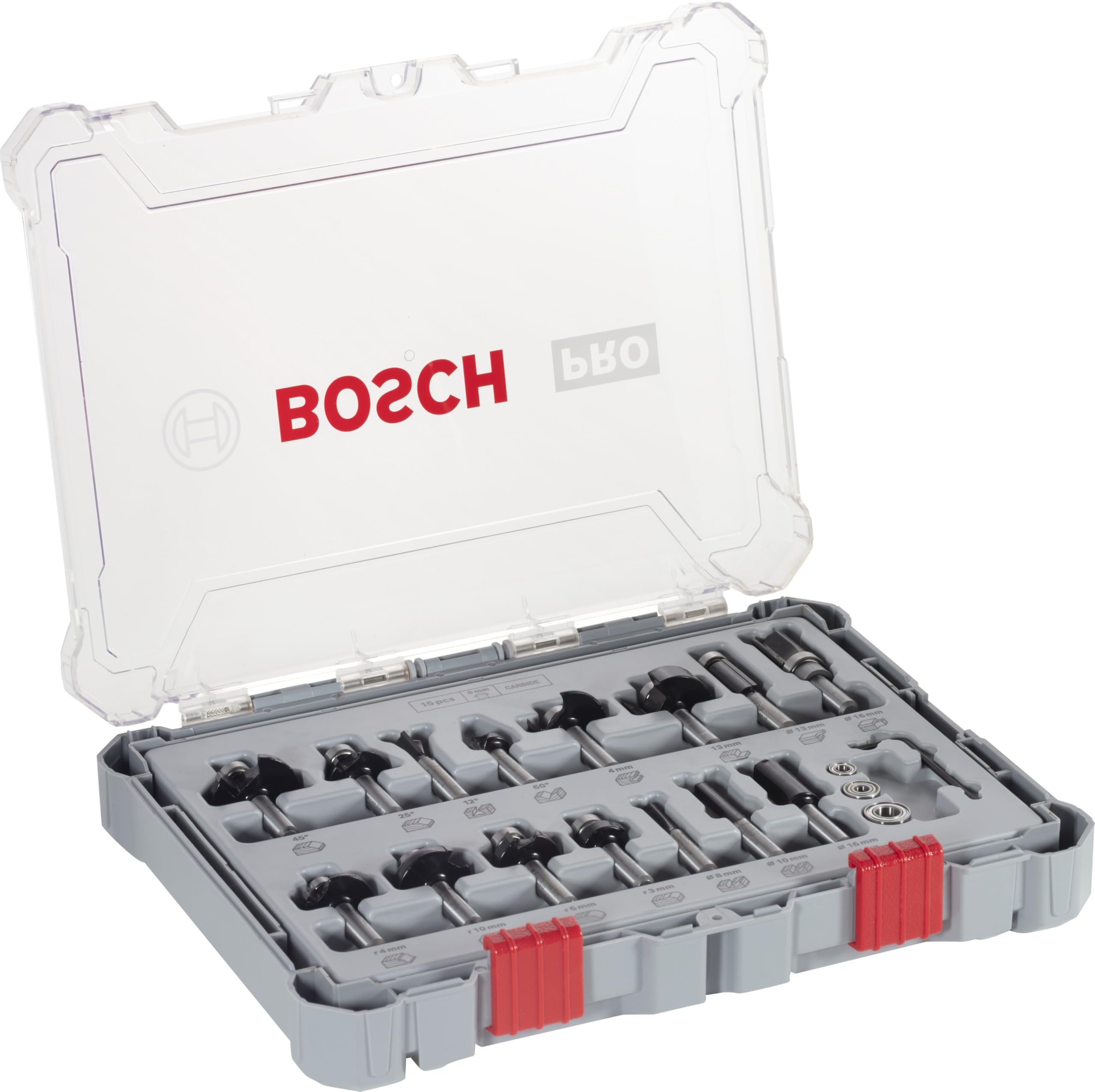
I keep this 15-piece Bosch set on hand when I need a pro-grade assortment for hardwoods, softwoods, and composites—roundovers, chamfers, flush cutters, and profiles are all included.
Why I picked it: Comprehensive 15-piece set with carbide edges and pro-level durability.
Best for: All-around shop work and building furniture where an 8mm shank is required.
Higher-end, professional-grade investment.
Pros
- Wide selection of useful profiles
- Carbide cutting edges for long life
- Clean cuts in hard woods
Cons
- Takes up more case space
- Higher cost than starter kits
My take
I use this Bosch 15-piece set when a project demands a broad range of profiles without swapping single bits constantly. The bits have micro-grain carbide edges that stayed sharp through a handful of hardwood jobs, and the mix includes everything I need for edge work and trim.
In practice the flush cutter and the roundovers delivered clean, low-burn cuts even on dense woods I've pushed through my bench router. The build feels solid and balanced, which matters when I'm running at higher speeds.
If your router accepts an 8mm shank and you want one kit that covers most tasks, this is the set I reach for. It’s the most complete kit I bring to complex projects.
2. Bosch 2607017471 Router Trimmer Bit Set — 15 Pieces (6mm Shank) – Best 6mm All-Purpose Set
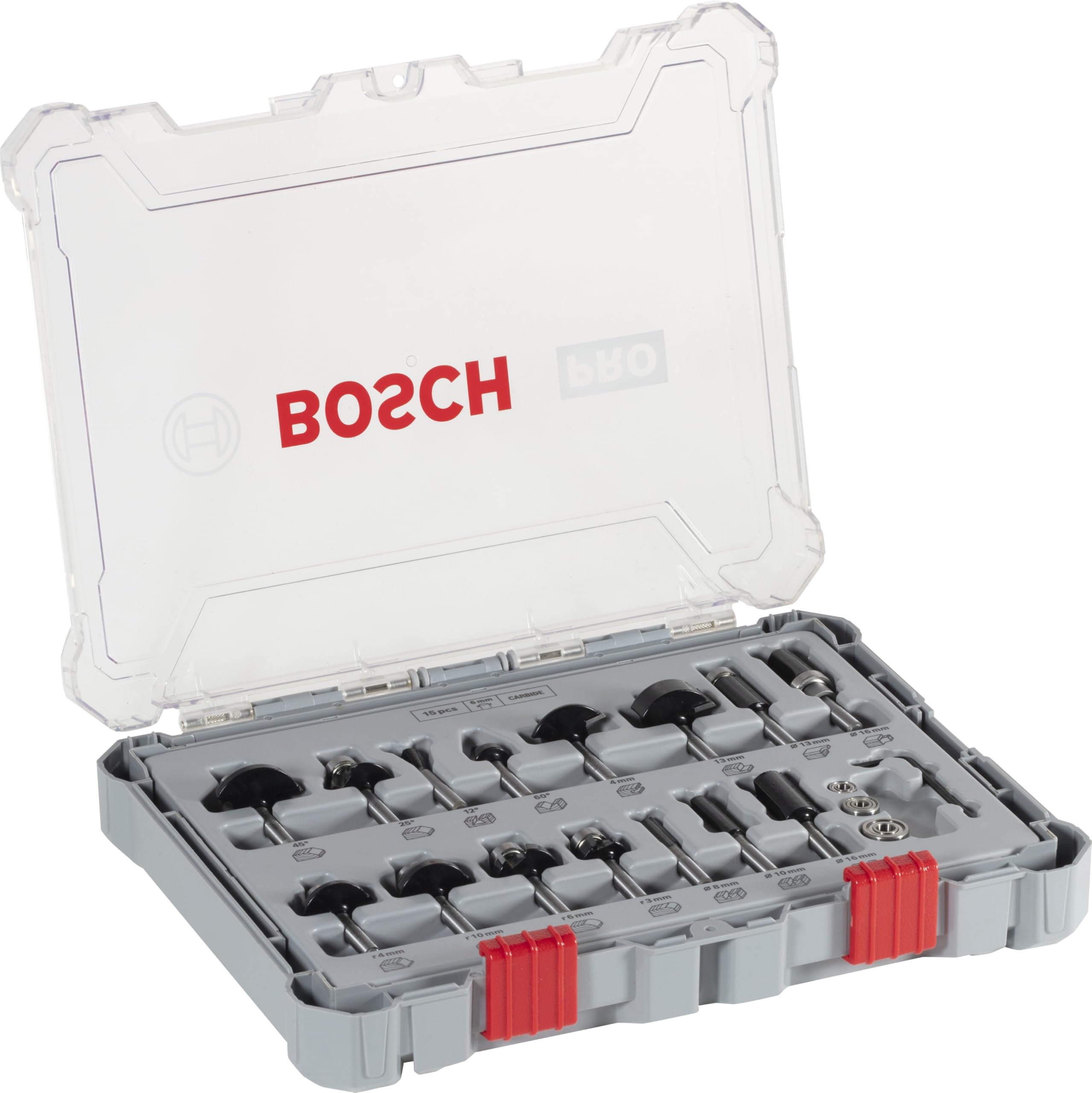
I rely on this Bosch 15-piece trimmer set when I'm working with routers that take a 6mm (0.2 inch) shank; it covers straights, chamfers, V-grooves, and trim profiles.
Why I picked it: Good variety for 6mm-shank routers and accurate cut profiles.
Best for: Trim routers, compact routers, and lightweight shop setups.
Mid-range value for a full profile set.
Pros
- Designed for 6mm collets
- Balanced mix of trim and profile bits
- Good build quality for the price
Cons
- Not as robust as heavy-duty bits
- Some profiles may be small for large work
My take
When I need a compact, 6mm-shank kit for a trimmer or smaller router, this Bosch set fits the bill. The straight and flush trim bits are the ones I use most frequently for pattern work and laminate trimming.
The bits cut cleanly on softwoods and plywood; I noticed good edge quality on test pieces and little burning when I kept feed rates steady. Build quality felt consistent with Bosch’s other tooling.
This set is the one I pack when I’m taking a lighter router to site or doing fine inlay and trim work where a smaller shank is advantageous.
3. Freud 99-036 Adjustable Tongue & Groove Bit Set (1/2″ Shank) – Best for Joinery
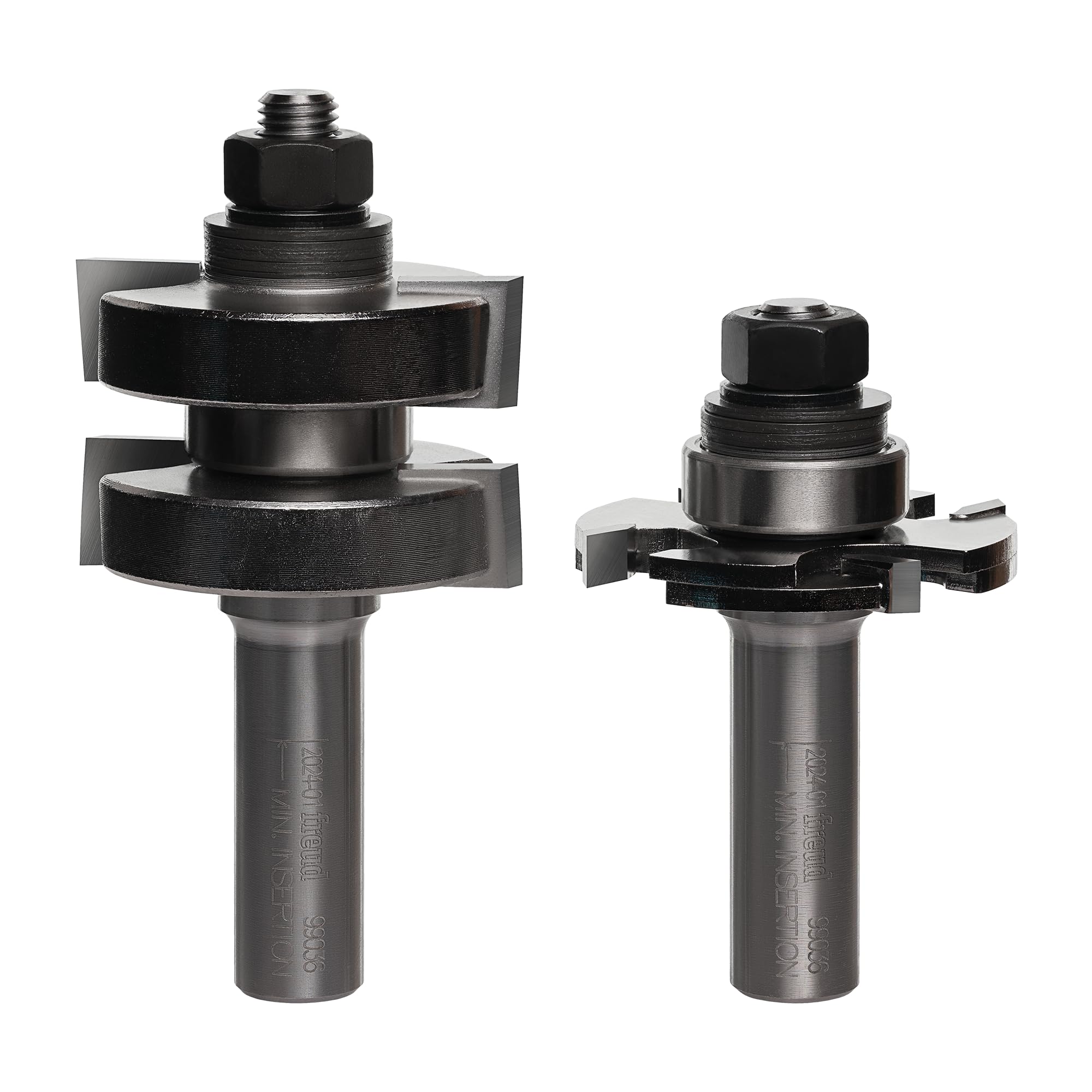
I use the Freud adjustable tongue-and-groove set when I need precision joinery—the spacer system and .002" increments let me dial in a snug fit every time.
Why I picked it: Precise adjustability and shear-cut geometry for tear-out free joints.
Best for: Shaker-style doors, cabinet panels, and tight tongue-and-groove work.
Premium specialty investment for precision joinery.
Pros
- Adjustable in .002" increments
- Opposing shear angles reduce tear-out
- Durable TiCo carbide and Silver I.C.E.
Cons
- Higher specialty cost
- Requires careful setup
My take
For any project that needs tight tongue-and-groove joints I reach for the Freud set. The spacer system lets me tune the joint width to the stock with hairline adjustments, and the opposing shear angles give a clean top and bottom cut with almost no tear-out.
I’ve used these bits on cabinet doors and solid-wood panels; the Silver I.C.E. coating and TiCo carbide keep heat and pitch from building up, so the bits stay sharp longer during repetitive runs.
This set is an investment, but when I need repeatable, perfectly fitting joints it saves me time and sanding downstream.
4. Whiteside 6210 CNC Spoilboard Surfacing Router Bit (1/4″ Shank) – Best for Spoilboard Surfacing
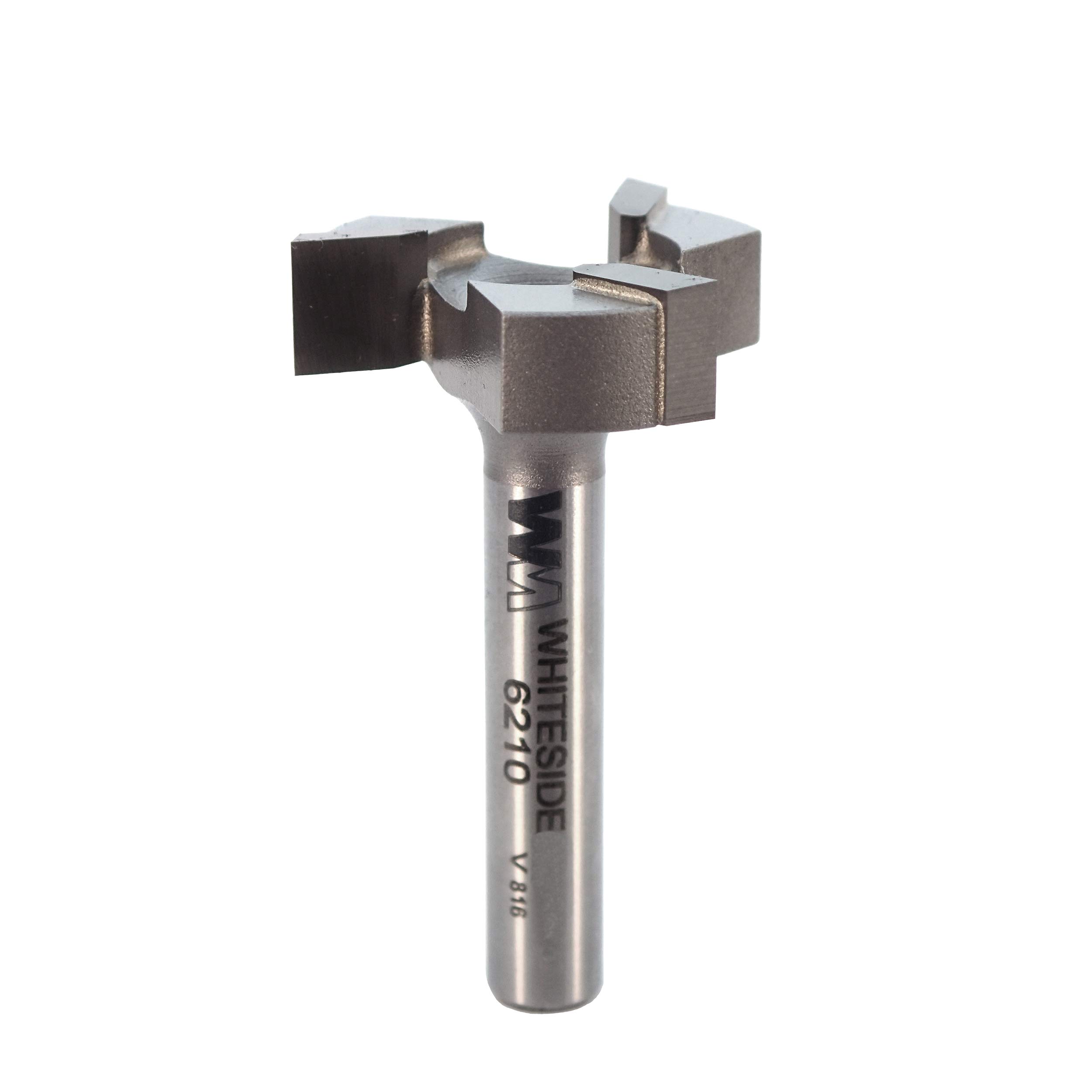
I choose this Whiteside spoilboard bit when I need to flatten wasteboards or surface live-edge slabs before finishing—four wings and a carbide tip make fast, smooth passes.
Why I picked it: Fast, clean surfacing on spoilboards and wide boards.
Best for: CNC wasteboard surfacing and flattening oversized boards.
Economical single-purpose choice.
Pros
- Fast material removal
- Leaves a flat, level surface
- Carbide tipped for durability
Cons
- Single-purpose surfacing bit
- Creates a lot of dust
My take
When I set up a new CNC or need to refinish a wasteboard, this Whiteside spoilboard bit is the one I put in the spindle. The four-wing geometry clears material quickly and leaves a surprisingly smooth surface with fewer passes than two-wing options.
On MDF and hardwood spoilboards I ran multiple shallow passes and achieved a flat reference without burning. I also used it to flatten a live-edge slab that wouldn't fit a planer—worked well but needed time and dust collection.
If you run a CNC and resurface regularly, this is the economical surfacing cutter I keep on hand.
5. BOSCH RBS015MBS 15-Piece Carbide-Tipped Router Bit Assorted Set – Best Value 15-Piece
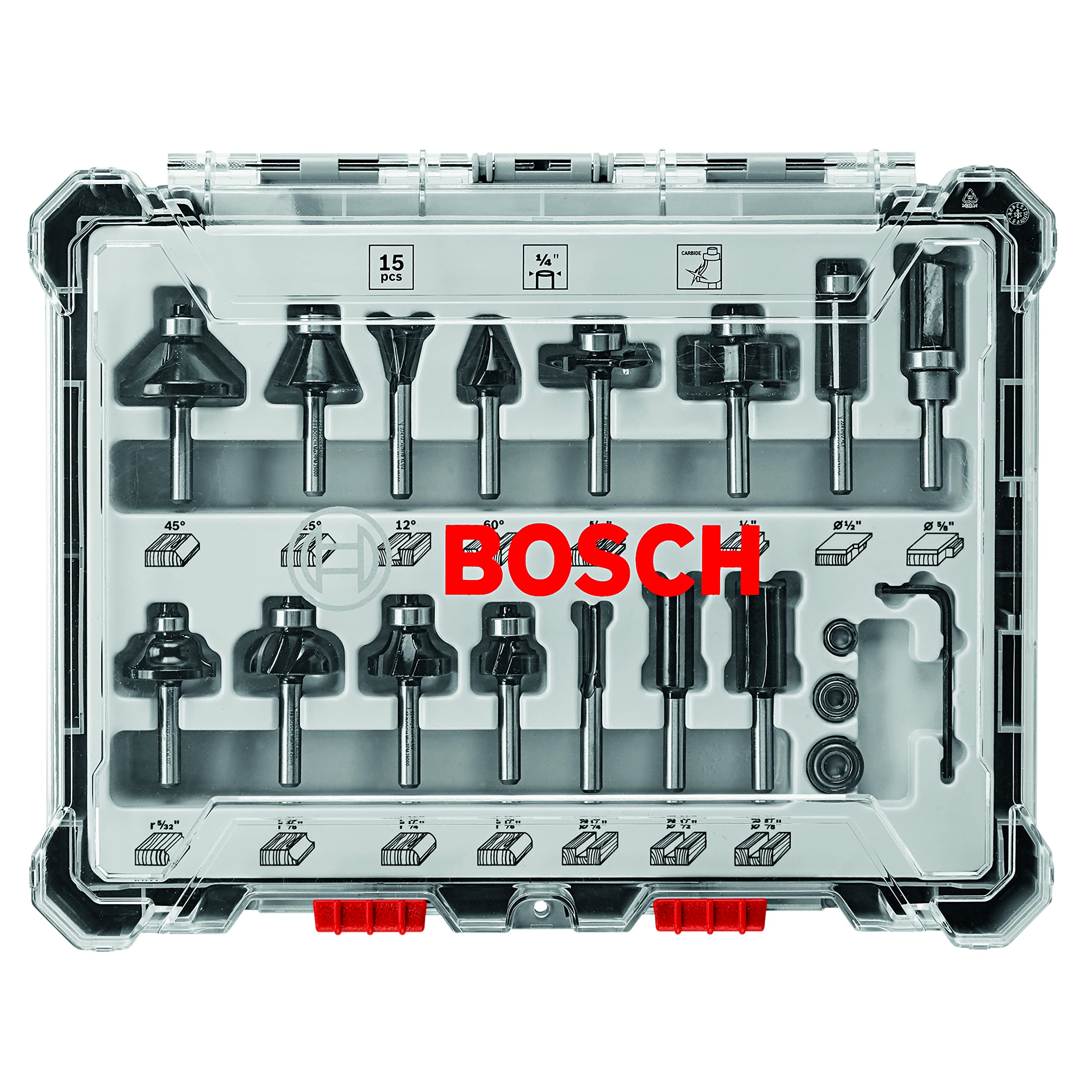
I use this Bosch 15-piece micrograin carbide kit when I want broad capability on a budget—the anti-friction coating and compact storage case make it easy to learn which profiles I actually need.
Why I picked it: Affordable, versatile 15-bit kit with micrograin carbide tips.
Best for: Hobbyists and first-time profile exploration.
Budget-friendly way to own many profiles.
Pros
- Good range of common profiles
- Micrograin carbide tips
- Sturdy plastic case
Cons
- Not industrial-grade for heavy production
- Case sometimes damaged in transit
My take
I reach for this Bosch set when I’m teaching new techniques or figuring which profiles I use most. The micrograin carbide tips cut clean edges on oak, walnut, and pine, and the anti-friction coating helps reduce gummy build-up.
The kit is a great way to cover chamfers, roundovers, flush trim, and ogee profiles without committing to buying individual premium bits right away. For hobby furniture and decorative work it’s a smart, economical choice.
If you plan to upgrade later, this set helps you identify the handful of bits you’ll actually use frequently.
6. Whiteside 1550 V-Groove 60° Router Bit (1/4″ Shank) – Best Single V-Groove Bit
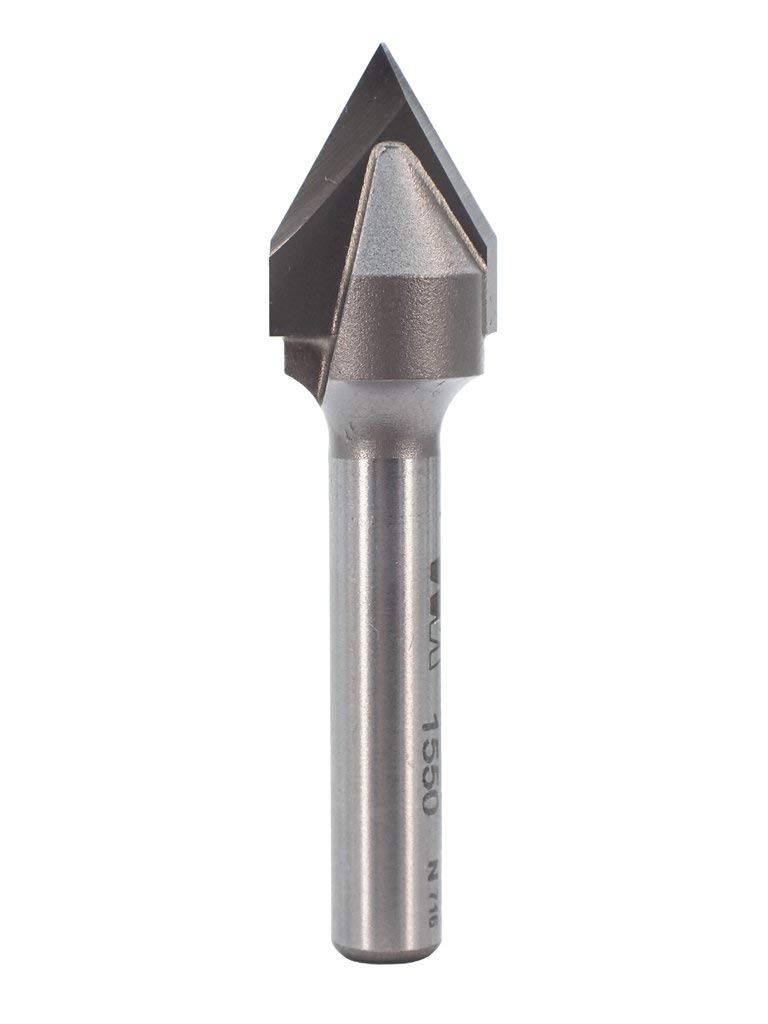
I use this Whiteside V-groove bit for sign making, engraved lettering, and decorative V accents—the solid carbide tip holds an edge and stays sharp through repetitive sign work.
Why I picked it: Durable carbide tip and precise V profile for signage and detailing.
Best for: Sign-making, V-channel accents, and engraved lettering on flat panels.
Moderately priced specialty carbide bit.
Pros
- Sharp, precise 60° V profile
- Good life on hardwoods
- Works well on CNC and hand routers
Cons
- Specialty use only
- Will need sharpening after heavy use
My take
I’ve used the Whiteside 1550 for dozens of sign projects and small engraved details. The 60° V profile cuts crisp, clean channels and the carbide tip has held up well across hardwoods and composite boards.
On my CNC the bit produced fine lettering with minimal cleanup; on hand-held routers I managed controlled passes for accent grooves. It will eventually need sharpening after heavy sign runs, but the longevity impressed me compared to bargain alternatives.
If you do a lot of V-groove work, this is the single cutter I keep stocked.
How I Choose Router Bits
How I pick the right shank size
I always match the bit shank to my router’s collet — 1/4", 1/2", 6mm, or 8mm. Running a bit in the wrong collet increases vibration and shortens cutter life.
When I’m doing heavy production or wide profiles I prefer 1/2" or 8mm for better rigidity; for trim routers and compact work I use 1/4" or 6mm.
- Use larger shanks for heavy cuts and long bearings of unsupported cutters.
- Keep a collet adapter only as a last resort to avoid runout.
How I evaluate carbide and coatings
I prioritize micrograin or TiCo carbide for long life and edge retention. Coatings like Silver I.C.E. or anti-friction finishes help with heat and pitch build-up during long runs.
For surfacing and spoilboard bits I look for solid carbide or carbide-tipped designs that resist wear when clearing MDF and resinous woods.
- Choose carbide-tipped for cost-effectiveness on larger cutters.
- Select solid carbide for small-diameter CNC and detail bits.
How I match profiles to projects
I select profile sets when I need a range of shapes; single-profile premium bits earn their place when I use that profile daily.
For joinery, I go with adjustable or precision bits (like Freud tongue-and-groove) to avoid sanding and fitting later.
- Buy a comprehensive set to identify your most-used profiles.
- Invest in specialty bits for repetitive, high-value tasks.
How I maintain router bits
I keep bits clean of resin and pitch after each use and store them in their cases to avoid chipping. I also inspect for runout and balance before critical cuts.
If a bit dulls, I either have it sharpened professionally or replace it depending on the cutter geometry and cost.
- Wipe cutters with solvent to remove pitch.
- Store in foam or molded cases to protect edges.
- Check collets for debris to avoid runout.
How I test a new bit
I always make a few test cuts on scrap stock at the intended feed rate and RPM. That helps me find the sweet spot that minimizes burning and tear-out.
For profiles with bearings, I verify alignment and make shallow passes to tune fit and finish.
- Start shallow and increase depth in multiple passes.
- Adjust router speed to match bit diameter and material.
Frequently Asked Questions
Which shank size should I choose for my router?
I choose the shank that matches my router’s collet. For heavy-duty work and wide profiles I prefer 1/2" or 8mm; for trim routers and detail work I use 1/4" or 6mm.
How do I avoid burning and tear-out?
I avoid burning by using appropriate RPM for the bit diameter, feeding at a steady pace, and taking multiple shallow passes. For tear-out I use bits with opposing shear angles or make a scoring pass.
When should I buy a set versus individual bits?
I buy a set when I want to explore profiles or need a general-purpose toolkit. I buy individual premium bits when a specific profile is part of my daily workflow and justifies the investment.
Can I sharpen carbide-tipped router bits?
I have carbide-tipped bits resurfaced by a professional grinding service. For solid carbide small-diameter bits I sometimes replace them, since precision regrinding can be costly.
Final Take
I keep both multi-piece kits and specialty cutters in my shop because each has a role: sets give me flexibility, while premium single bits deliver repeatable precision.
Start with the shank size your router accepts, pick carbide quality that matches your workload, and prioritize the profiles you’ll use most. That’s how I build a router-bit collection that actually gets used.