
I tested a range of rubber and hybrid garden hoses so you can pick the one that fits your yard, reel, or maintenance needs. From stainless-steel-shelled long runs to short leader hoses and utility drain lines, here’s how
I tried every hose in this roundup across lawns, beds, hose reels, and service tasks. My goal was to find hoses that actually survive rough use—sun, cold, pets and dragging over edges—while still being easy enough to handle for regular watering.
Throughout testing I focused on build quality (materials and fittings), flexibility and kink behavior, practical use cases (reels, dehumidifiers, hot-water drains), and how easy each hose is to store. Below are the hoses that held up and the exact situations where I’d reach for each one.
If you need a tough, long hose that won’t kink, go stainless-steel; if you want proven all-rubber durability choose a premium rubber model; short leader and utility hoses are best as accessories for reels or dehumidifiers.
1. SPECILITE Stainless Steel Garden Hose – Best for Durability
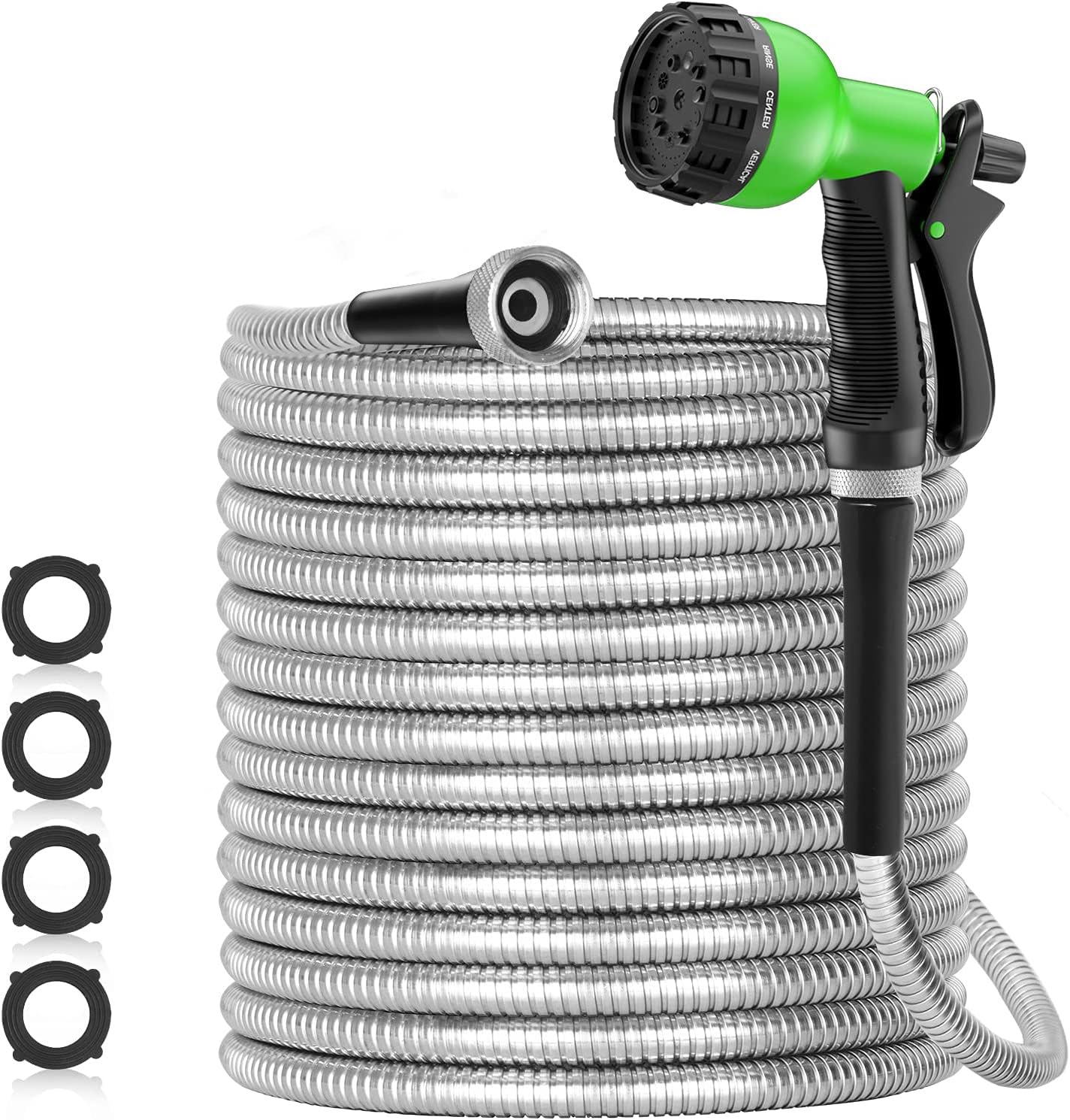
304 stainless-steel exterior with a flexible multi-layer inner tube; 150 feet and a rubber-wrapped, multi-pattern nozzle.
Why I picked it: I picked it because the stainless shell resists abrasion, pet bites, and rough patios better than rubber or PVC.
Best for: Long runs across rough ground, yards with pets, and anyone sick of kinks mid-task.
A more durable, longer-lasting option than basic vinyl hoses.
Pros
- Virtually no kinks or tangles
- Abrasion- and puncture-resistant
- Lightweight for its length
- Includes rubber-wrapped adjustable nozzle
- Sealed ends with rubber gaskets
Cons
- Powder-coated finish can mask metal fittings
- Must be drained before long storage
My take
I put the 150-foot SPECILITE through daily yard work and it never kinked once; coiling it after use is effortless compared with conventional rubber hoses.
Dragging it over edges and against patio furniture left no punctures or heavy wear—its stainless shell really stands up to rough treatment.
The included nozzle is comfortable and the rubber-wrapped grip lets me thumb the flow easily during delicate plant watering.
One thing to watch: the description lists stainless fittings but mine looked like aluminum under the coating; they sealed well with the supplied gaskets, though, and I recommend draining the hose before long storage to avoid trapped water.
2. Briggs & Stratton Premium Rubber Hose – Best for Heavy-Duty Use
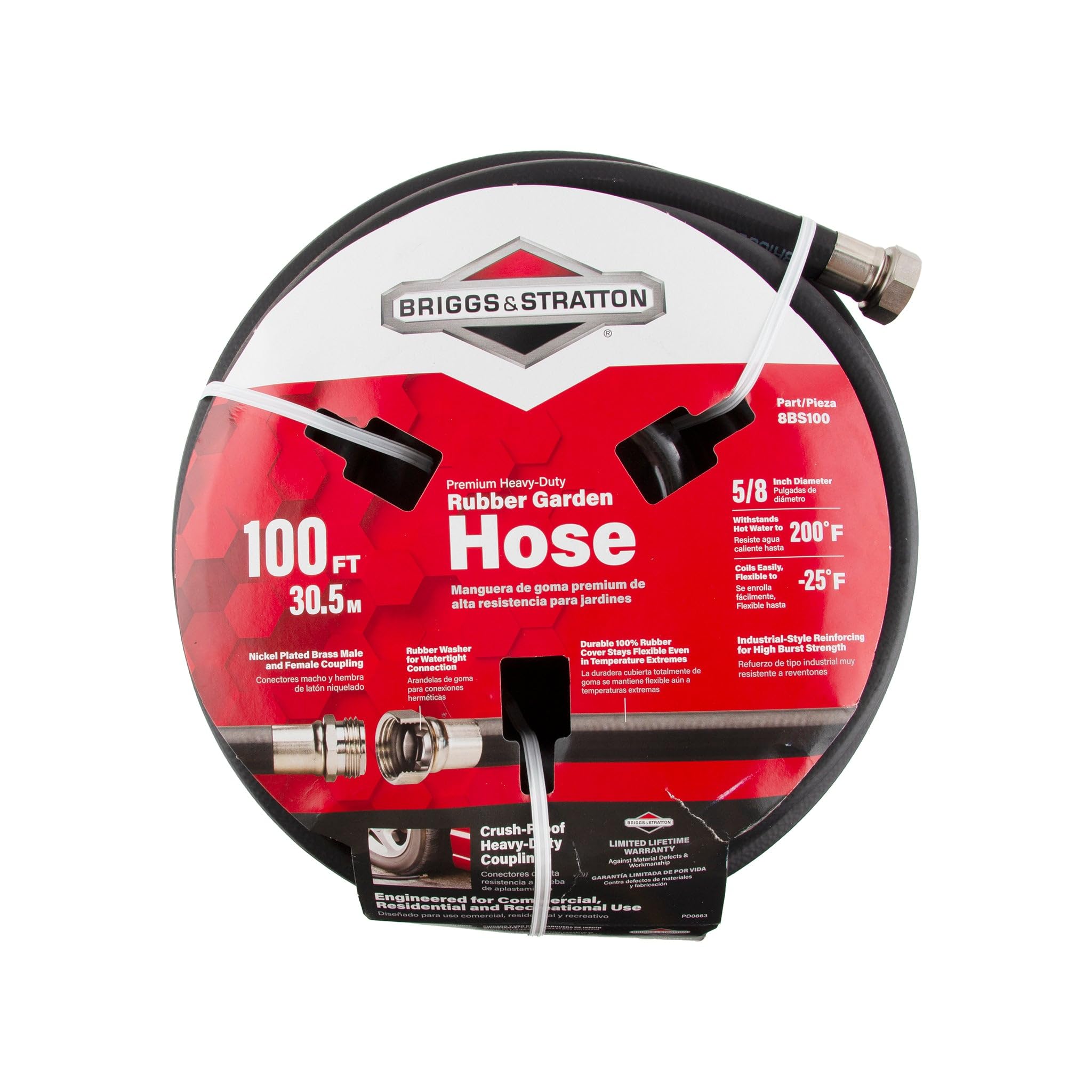
100% rubber construction with industrial reinforcement, nickel-plated brass couplings, stays flexible in extreme cold and handles hot water.
Why I picked it: I chose it for commercial-grade rubber that withstands temperature extremes and rough handling.
Best for: Commercial tasks, shop use, hot-water jobs, and anyone who wants a hose built to last.
A premium-priced, professional-grade choice with durability benefits over budget hoses.
Pros
- True all-rubber durability
- Crush-proof heavy-duty couplings
- Flexible in cold temps
- Nickel-plated brass fittings
Cons
- Noticeably heavier than vinyl hoses
- May shed some black residue initially
My take
This is the kind of hose I reach for when I need something that will last for years: it feels beefy and built like the rubber hoses I've relied on for decades.
It stays surprisingly flexible in cold weather and tolerates hot water, which made it my go-to for winter maintenance and equipment washing.
Because it’s heavier, I handle coiling more comfortably when the hose is warm; a swivel joint reduces kinks at the faucet and makes maneuvering easier.
Expect a short break-in where some dark residue might rub off on your hands, but that stopped after a few uses and the fittings stayed leak-free.
3. Atlantic Short Leader Hose – Best for Hose Reels & Connections
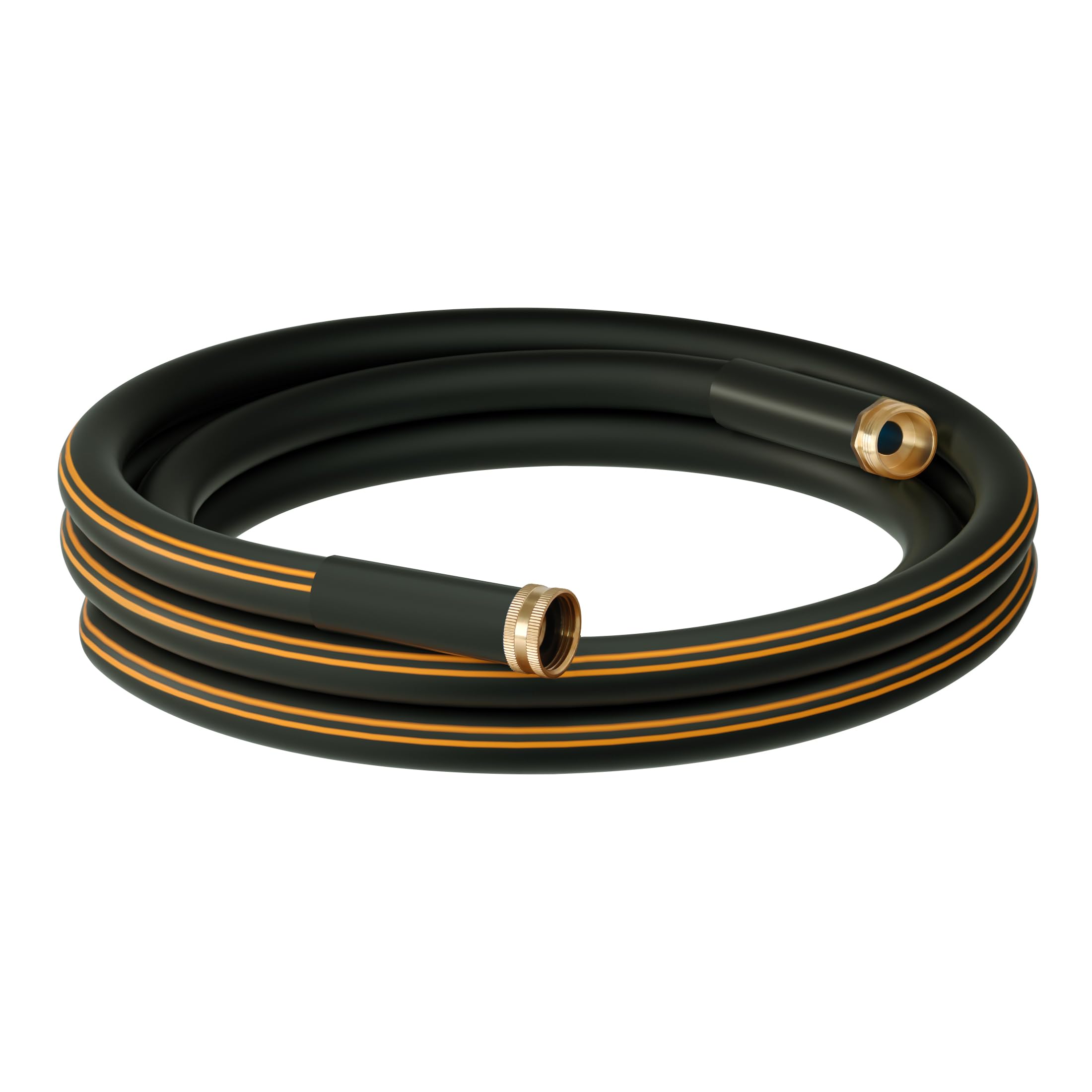
An 8-foot leader hose with three-layer construction and solid brass connectors—ideal for reel or bib connections.
Why I picked it: I kept one on my reel because solid brass connectors and a short, flexible length solved stubborn hookup problems.
Best for: Connecting hose reels to spigots or making a durable short link between fixtures.
A budget-friendly accessory that upgrades your faucet-to-reel connection.
Pros
- Solid brass connectors
- Soft and flexible
- Perfect length for reels
- Reliable leak-free connection
Cons
- Too short for general watering
- Quality feels basic compared with premium hoses
My take
I swapped this into my hose reel setup and it fixed kinking and poor connections immediately—the brass fittings stayed tight and never corroded through several months outside.
Its three-layer build feels robust for a short leader and it coils neatly on the reel without adding bulk.
If you need a simple, dependable connector hose for a reel, this one does the job without fuss.
4. LDR Rubber Dehumidifier Drain Hose – Best for Dehumidifiers & Drains
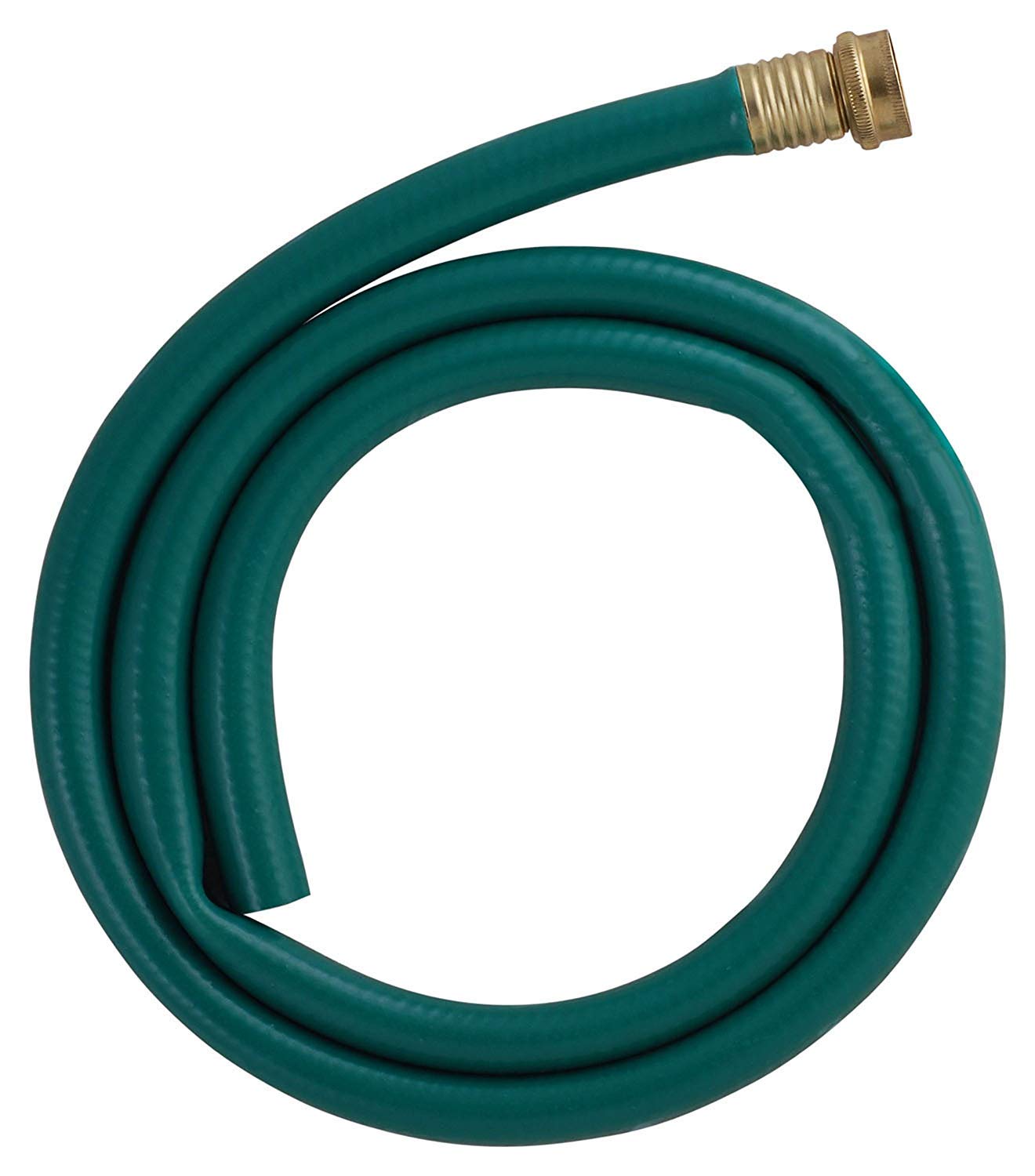
A compact 5-foot rubber drain hose with a 3/4-inch female thread, built for short drainage runs and tight spaces.
Why I picked it: I grabbed this when I needed a short, durable hose to route dehumidifier discharge to a floor drain.
Best for: Basement dehumidifiers, short drain runs, and connecting hard-to-reach spigots.
An inexpensive, practical utility hose for drainage tasks.
Pros
- Right length for dehumidifiers
- Fits standard 3/4-inch threads
- Compact and easy to store
- Durable rubber construction
Cons
- Some units may arrive without a gasket
- A bit stiff compared with garden hoses
My take
I used this as my dehumidifier drain hose and it reached the basement floor drain with no leaks once I added or used the gasket.
The hose is stiffer than garden hoses, which gives confidence it won’t collapse, and after months of rain-season use it stayed leak-free.
Heads-up: a few of these I’ve handled shipped without the typical gasket, so I keep a spare washer in my toolbox just in case.
5. Dramm ColorStorm Rubber Hose – Best for Gardeners Who Want Color
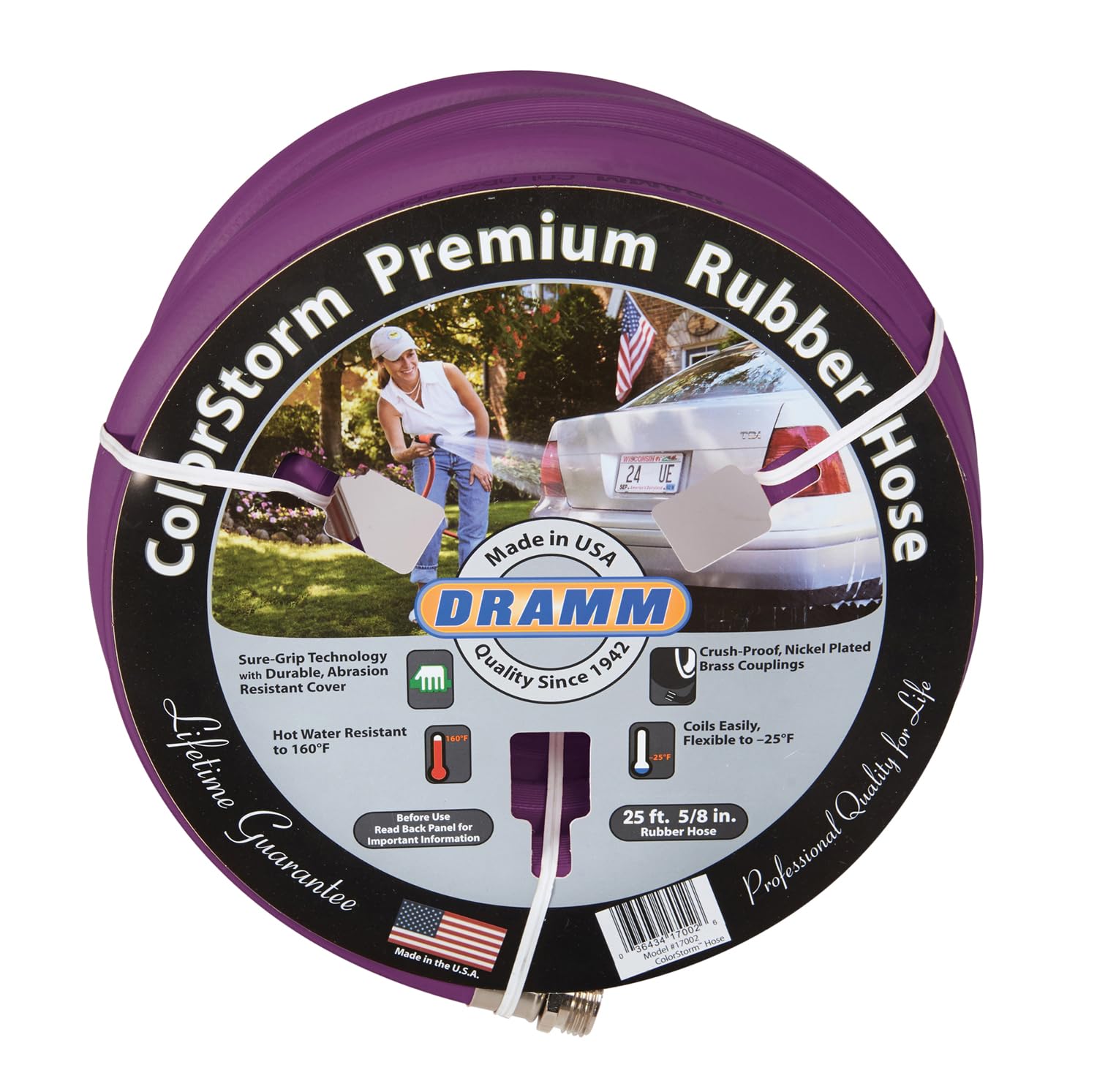
Premium EPDM rubber hose in bright colors, 50 feet long, kink-resistant, coils in cold weather, and features crush-proof nickel-plated couplings.
Why I picked it: I grabbed it for professional-grade rubber performance plus the bright color that’s actually useful to spot among beds.
Best for: Gardeners and greenhouse users who want a durable, professional hose in a visible color.
A premium option that pays off in longevity and finish quality.
Pros
- Professional-grade EPDM rubber
- Coils well in cold
- Hot-water tolerant
- Crush-proof, plated couplings
Cons
- Heavy—not easy for light-handed users
- Can be unruly around delicate plants
My take
This is the best hose I’ve used when I want longevity and a showy color—the yellow I tested brightens the yard and is easy to spot among hoses and tools.
It resists kinking and delivers strong pressure, but it’s noticeably heavy; the 50-foot length is a sweet spot because a 100-foot would be a workout to handle.
If you have delicate borders, watch the hose path—its weight can bruise plants if it flips or drags across them, but for heavy-duty garden use it’s solid.
6. AG-LITE 3/4″ Rubber Utility Hose – Best for Hot Water & Maintenance
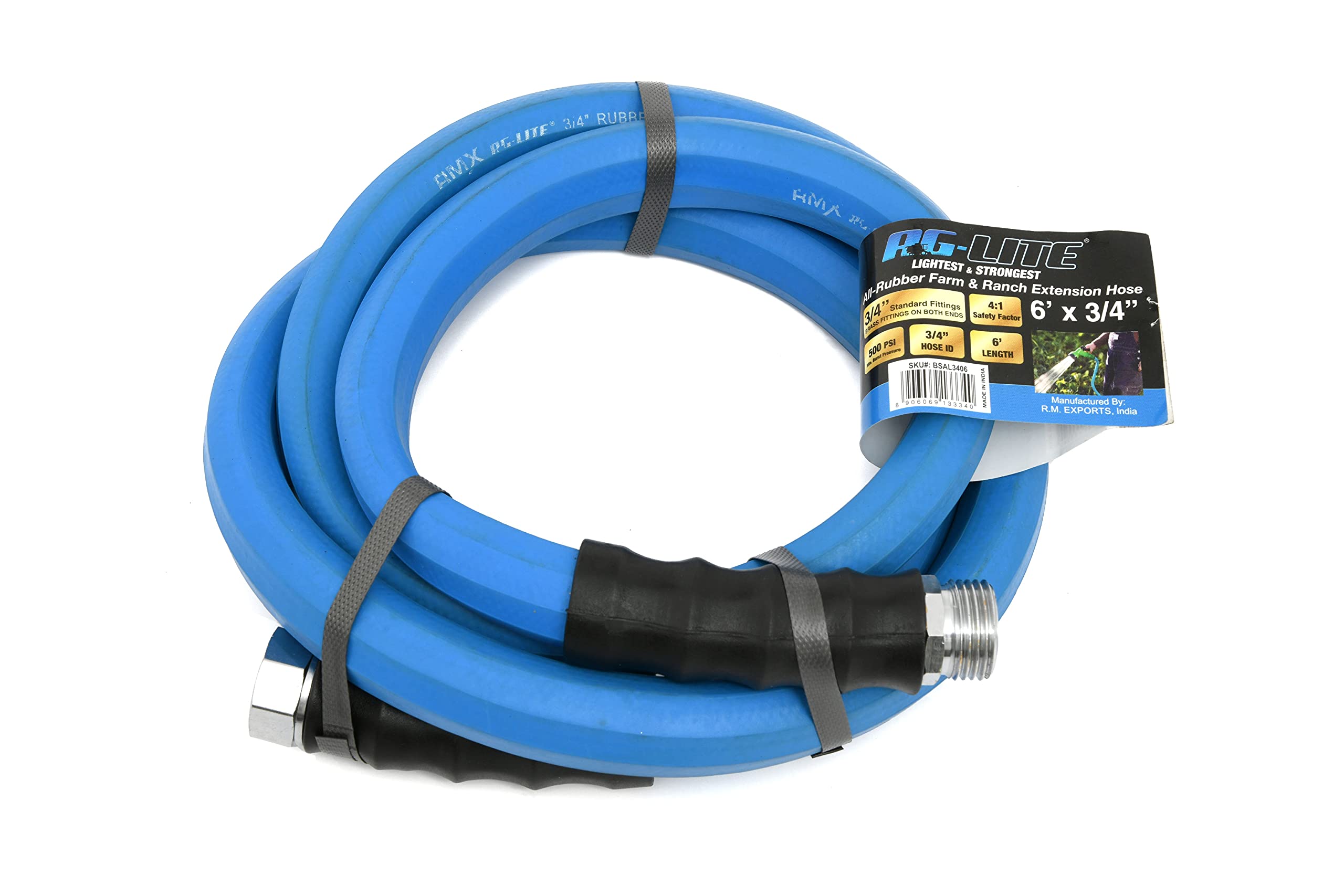
A short rubber utility hose built for hot- and cold-water service: lightweight for rubber, rated to high PSI, and flexible to extreme cold.
Why I picked it: I relied on it for draining a hot water tank and heavier shop tasks where heat resistance and high pressure matter.
Best for: Draining hot-water tanks, shop use, and maintenance where durability and heat resistance are required.
A cost-effective professional-grade utility hose.
Pros
- Handles hot water up to 200°F
- High pressure rating
- Very cold-flexible
- Light for a rubber hose
Cons
- Shows kink memory if left bent
- Short length limits garden use
My take
I used this hose to flush and drain my hot water tank and it performed flawlessly—no leaks at the brass fittings and no concern about heat tolerance.
The hose feels rugged yet is lighter than traditional rubber, which made moving it around the basement easy.
It does develop a kink memory if left folded for long periods, but for maintenance tasks where strength and heat resistance matter, it’s one of my first picks.
7. YOTOO Hybrid Heavy-Duty Hose (Blue) – Best for Balanced Performance
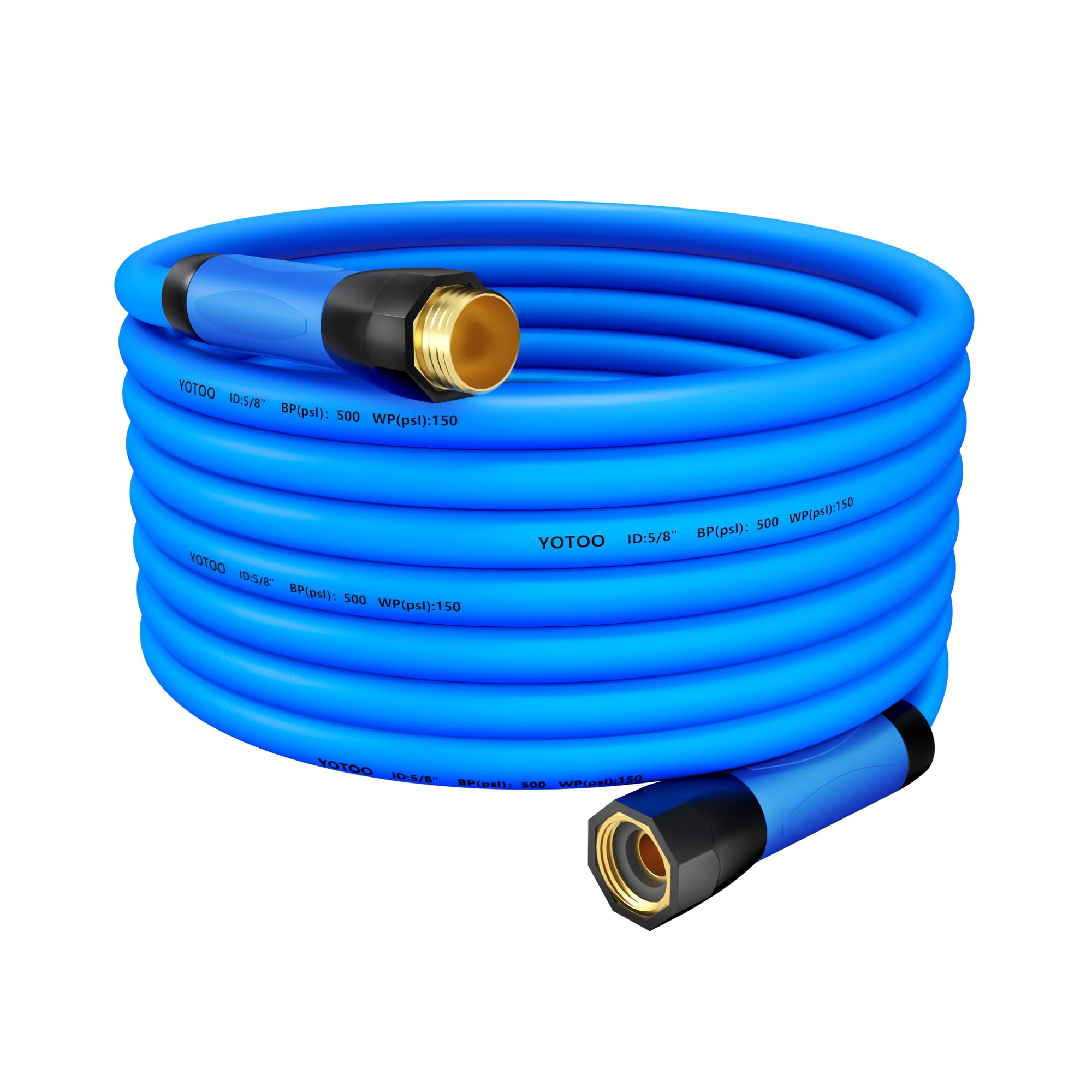
A blended rubber/PVC hybrid, 5/8-inch by 50 feet, designed for flexibility and abrasion resistance with solid brass fittings.
Why I picked it: I picked it when I wanted the balance of durability and lighter handling compared with full rubber.
Best for: Everyday yard work, car washing, and homeowners who want a durable midweight hose.
A mid-priced value that outperforms cheap PVC while staying manageable.
Pros
- Good flexibility
- Solid brass fittings
- Abrasion resistant
- Nice length for yards
Cons
- Can be stiff to coil
- Occasional kinks under stress
My take
This YOTOO hybrid hose hit the sweet spot for everyday use: it’s tougher than bargain hoses yet not as heavy as a full-rubber model.
The swivel grip makes threading fittings easy and the brass ends stayed leak-free through regular watering and car washing.
I did notice it kinks if left under tension or tightly coiled, but overall it’s far more user-friendly than basic vinyl options.
8. YOTOO Hybrid Heavy-Duty Hose (Gray) – Best Value for Repeat Use
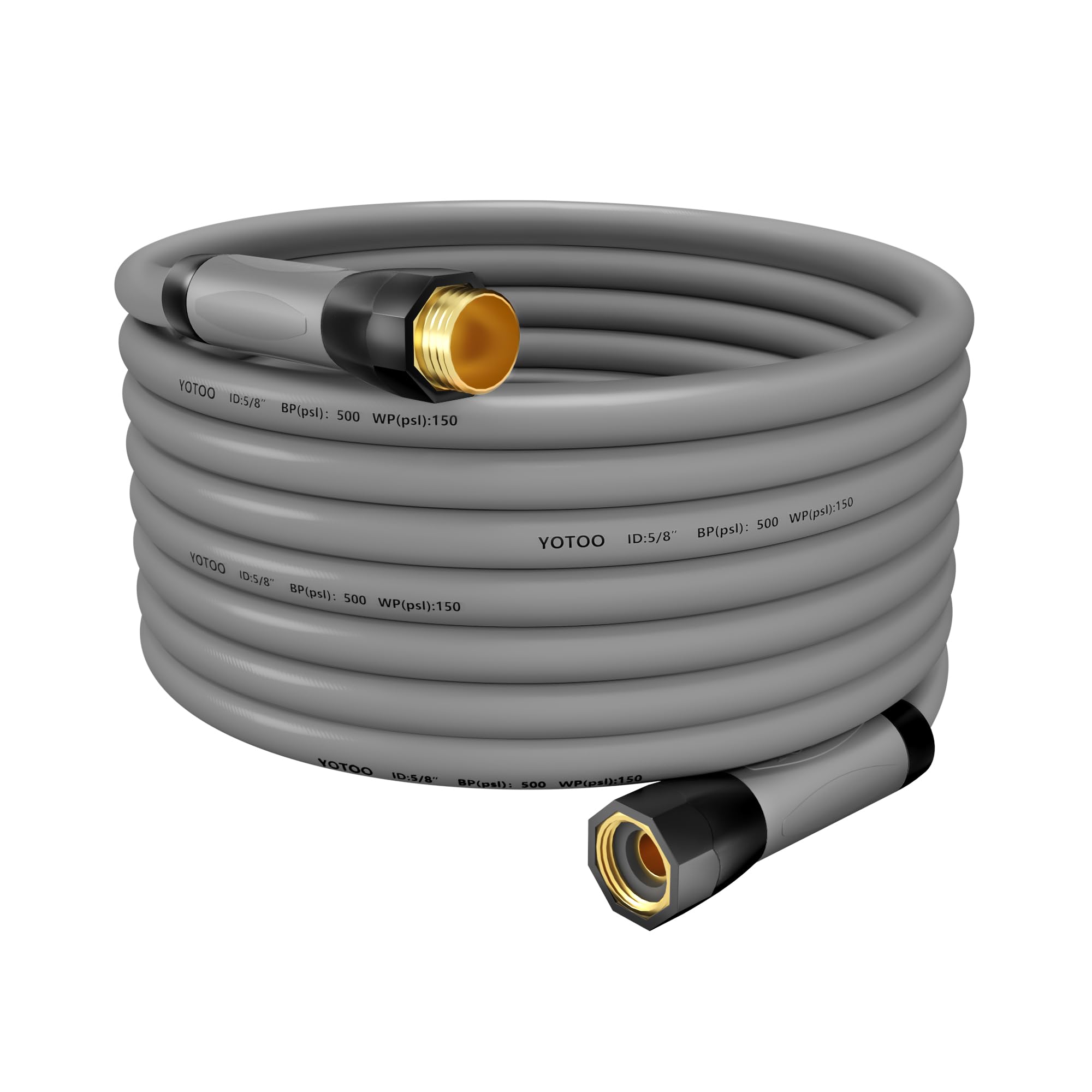
Same hybrid construction as the blue YOTOO but with slightly different pressure specs listed; 5/8-inch by 50 feet, flexible and built to last.
Why I picked it: I kept a second YOTOO on hand because it’s a reliable, affordable backup that performs consistently.
Best for: Having a dependable backup hose for frequent use or a second zone in the yard.
Good value for homeowners who need more than one dependable hose.
Pros
- Consistent performance
- Easy connections
- Works well in heat
- Good overall durability
Cons
- Can crease if left kinked
- Not as lightweight as some hybrids
My take
I own multiple YOTOO hoses and the gray one performed the same dependable work as the blue: solid fittings, steady water output and good flexibility in warm weather.
The stated working pressure and bursting specs give me extra confidence for higher-demand watering tasks.
If you want an economical second hose or a replacement for a frequently used line, this model is the one I’d buy again.
How I Choose a Rubber or Hybrid Garden Hose
Material and durability
I prioritize construction because materials determine how a hose performs long-term. Pure rubber (EPDM) is the toughest for abrasion and heat, hybrid rubber/PVC balances weight and flexibility, and metal-shelled hoses excel at puncture resistance.
If my yard gets dragged across edges, meets pet teeth, or sits in full sun year-round, I choose a heavier-duty hose over a cheap vinyl model.
- All-rubber: best for durability and heat resistance.
- Hybrid (rubber/PVC): lighter with good abrasion resistance.
- Stainless or metal-shelled: for puncture resistance and long runs.
Fittings and leak prevention
Solid brass or nickel-plated brass fittings last longer and seal better than cheap plated or plastic fittings. I always check if the hose comes with rubber washers and a good-threaded connection.
A swivel or bend restrictor at the male end is a cheap upgrade that reduces kinks and stress at the fitting.
- Prefer brass or nickel-plated fittings.
- Keep spare washers in your tool kit.
- Use swivel joints to reduce kinking at the bib.
Length, diameter, and intended use
I match length to the job: long runs need sturdy, kink-resistant construction; short leader hoses make reels and spigots easier to manage; very short utility hoses are best for drains and hot-water tank work.
A 5/8-inch hose balances pressure and flow for most garden tasks; 3/4-inch hoses are my choice for high-flow maintenance or shop work.
- 50 ft is versatile for most yards.
- 100+ ft is convenient but heavier and harder to handle.
- 3/4-inch diameter for shop/maintenance; 5/8-inch for general garden use.
Cold- and heat-performance
I consider seasonal extremes where I live. Some rubber hoses stay flexible at very low temps; hybrids advertise ranges too. For hot-water tasks, confirm the hose’s temperature rating before you use it.
If storage will leave the hose outside for months, draining it and keeping it shaded preserves life.
- Check cold-flex ratings if you work year-round outdoors.
- Confirm hot-water tolerance for maintenance tasks.
- Drain hoses before winter storage to prevent trapped water damage.
Frequently Asked Questions
Do stainless steel-shelled hoses actually stop kinking?
Yes—I used a long stainless-shelled hose across a lawn and it remained kink-free while coiling easily after use; the rigid outer layer prevents the fold and pinch kinks common with softer hoses.
Should I choose a 5/8-inch or 3/4-inch hose?
I pick 5/8-inch for general yard watering and 3/4-inch for shop or hot-water draining tasks where higher flow and durability matter.
How important are brass fittings?
Very important in my experience: brass or nickel-plated brass resists corrosion and stays watertight far longer than cheaper plated or plastic fittings.
Can rubber hoses be used with hot water?
Some can—several hoses I tested tolerate hot-water temperatures (check each hose’s spec). For draining water heaters or washing with hot water, I used hoses rated for those temperatures without issue.
What maintenance keeps a hose lasting longer?
I drain hoses before storing, keep them out of direct sun when possible, use reel storage to avoid kinks, and keep spare washers and a swivel joint handy to protect fittings.
Final Take
I keep at least two different hoses on hand: a heavy-duty rubber or stainless-shelled hose for demanding tasks and a lighter hybrid for everyday watering. Each hose in this roundup has a clear role depending on how rough your yard is and what jobs you need to do.
Match the hose material to the task, prioritize solid fittings, and treat hoses like tools—proper storage and routine checks will keep any of these models working for seasons.
