
I've tested sand anchors for umbrellas, jet skis, kayaks, and small boats so you don't have to. Here are the anchors I trust for different shore conditions and craft.
I spend a lot of time on beaches, sandbars, and shallow water, so anchoring has been a constant problem to solve. Over the years I’ve tried screw-style umbrella anchors, plastic sandbar kits, stainless spike poles, and anchor bags for PWCs.
In this roundup I compare six anchors I’ve used myself across sand types, wind, and crowds. Each entry highlights what I liked, where it failed, and the situations I reach for it so you can pick the right tool for your trips.
I separate anchors into three practical categories I use: screw/auger anchors for umbrellas, spike/pole anchors for boats and PWCs, and bag-style anchors for shore-based PWCs and inflatables. Choose an auger for umbrellas and light winds, a spike or stainless pole when you need repeatable, secure holds in shallow water, and a bag when you want a soft, compact solution that protects impellers.
1. Rio Beach Sand Anchor – Best for Beach Umbrellas
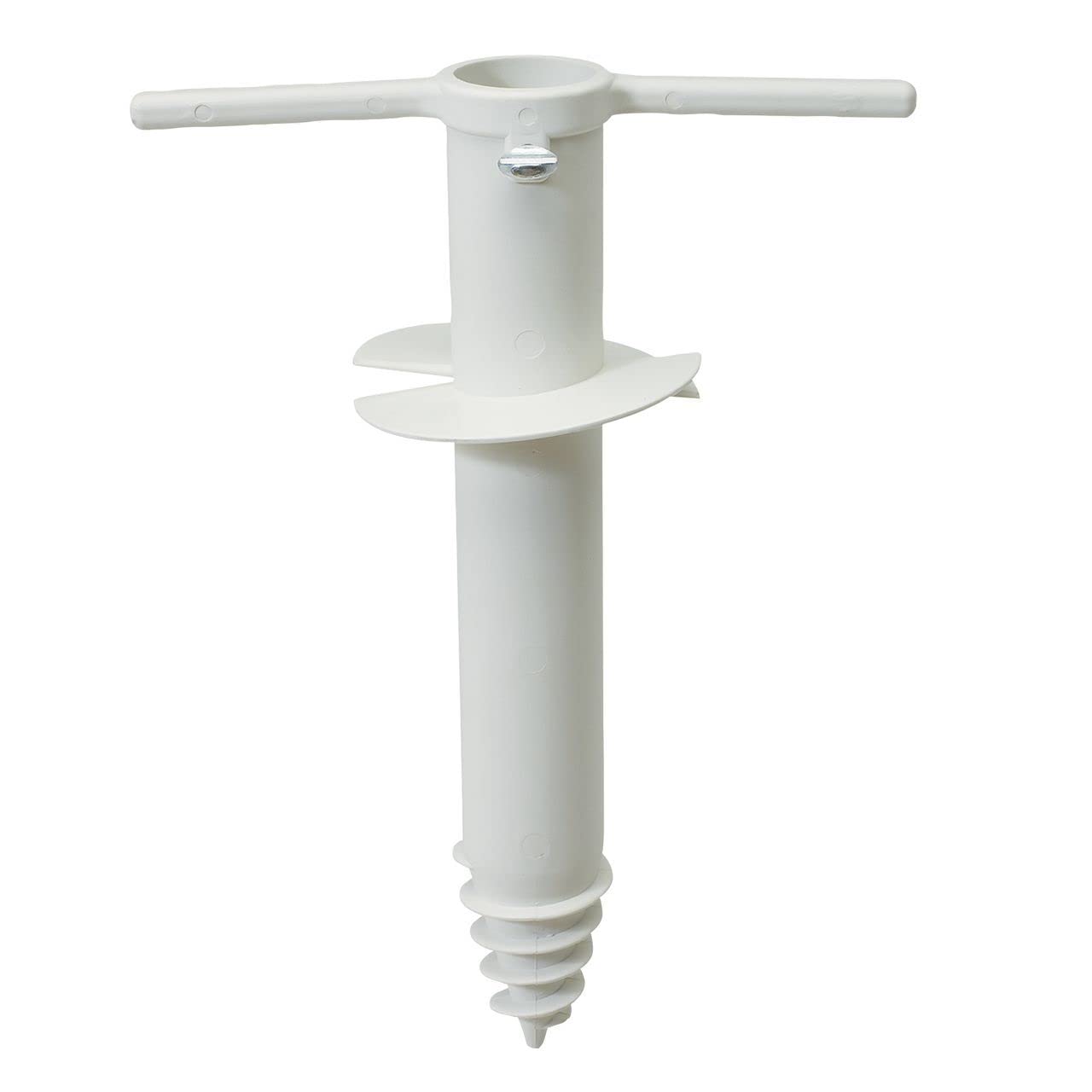
A lightweight nylon/fiberglass screw anchor that clamps umbrellas into the sand and resists rust and twisting.
Why I picked it: Simple, durable auger design that sets up in seconds and stands up to typical beach breezes.
Best for: Anchoring beach umbrellas and light shade canopies on most sand types.
Affordable, fuss-free option for casual beach days.
Pros
- Rust-proof nylon/fiberglass build
- Lightweight and easy to carry
- Quick screw-in setup
- Holds well in moderate winds
Cons
- Needs full insertion to hold
- Not for extreme wind gusts
My take
I grew up on Jersey beaches, and this is the little tool I keep in my beach bag. The Rio auger is straightforward—twist it down until it disappears and drop the umbrella shaft into the hole. When I followed that routine it held my umbrella in gusty 15–30 mph conditions without flipping.
The construction surprised me for a polymer anchor: after a couple of seasons the plastic and handles show normal wear but no cracks. The handles can bend under torque but never felt close to snapping during normal use.
Two lessons from my time with this anchor: always screw it all the way in and, if you expect very high winds, pair it with extra ballast or a secondary stake. For everyday beach work, it’s reliable and won’t rust.
2. SandShark Sport Sandbar Anchor – Best for Casual Boats and PWCs
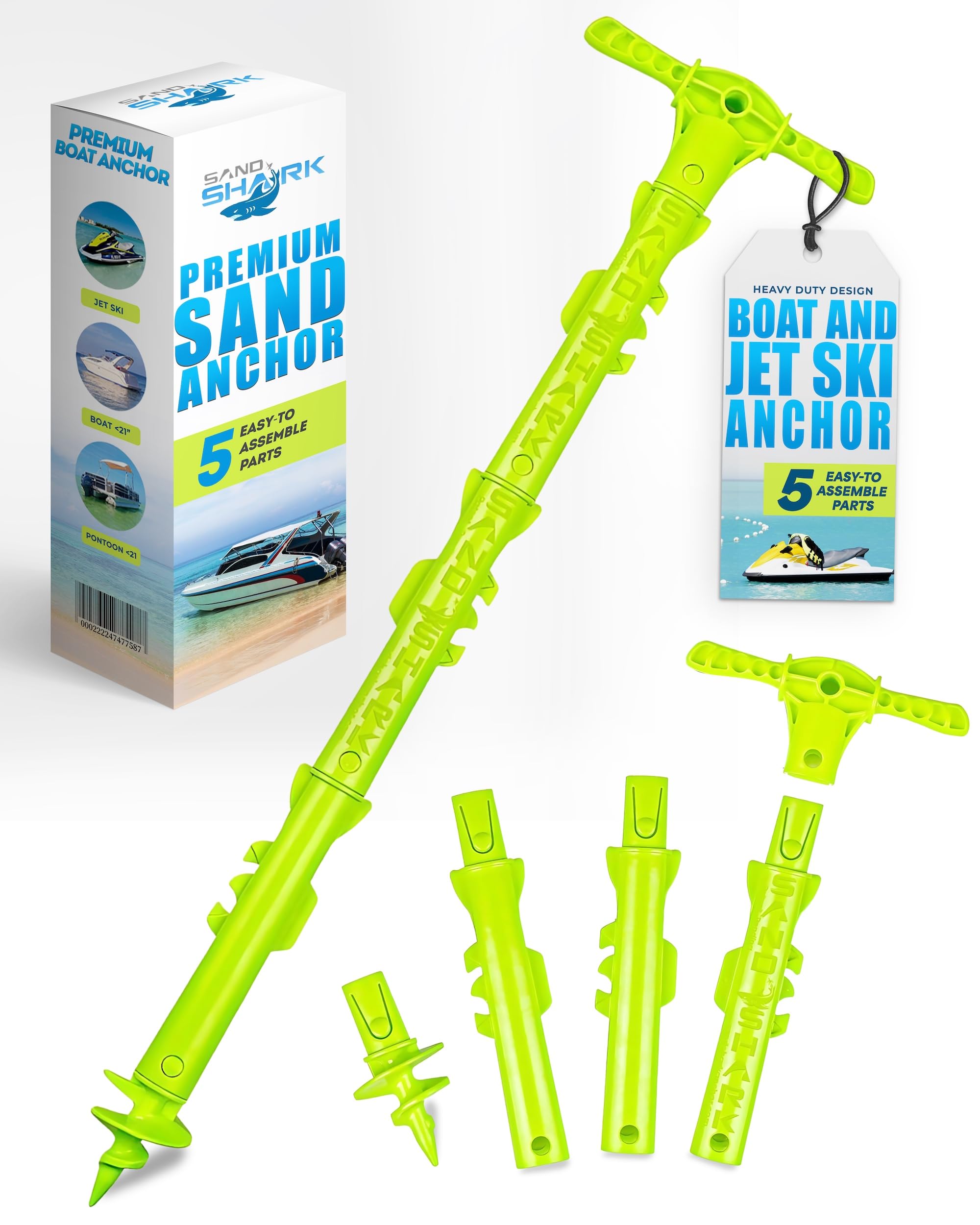
A bright, three-piece ABS sandbar anchor made for shallow-water use on pontoons, PWCs, and kayaks under about 23'.
Why I picked it: Lightweight, highly visible, and easy to assemble—great when storage space is tight.
Best for: Casual sandbar sessions with jet skis, kayaks, and small pontoons.
Good value for lightweight, portable shallow-water anchoring.
Pros
- Neon color is easy to spot
- Strong ABS plastic construction
- Breaks down for compact storage
- Drives well into softer sand
Cons
- Plastic blade wears over time
- Pieces don't lock for storage
My take
I used the SandShark Sport on multiple sandbar days and liked how quickly it assembled and dug into the bottom. The bright green makes it trivial to locate in the water, which matters when kids are jumping on and off the boat.
In softer sand and light currents it held my pontoon and a pair of PWCs for hours. I did notice the plastic blades can show wear after repeated use in gritty bottoms—if you plan heavy, repeated deployments, a metal option will outlast it.
Storage is convenient because it breaks into three parts, but I wish the pieces clicked together for compact, secure stowage. For weekend, occasional use, this anchor is a very practical, portable pick.
3. SandShark Lite Stainless Spike Anchor – Best Stainless Steel Anchor
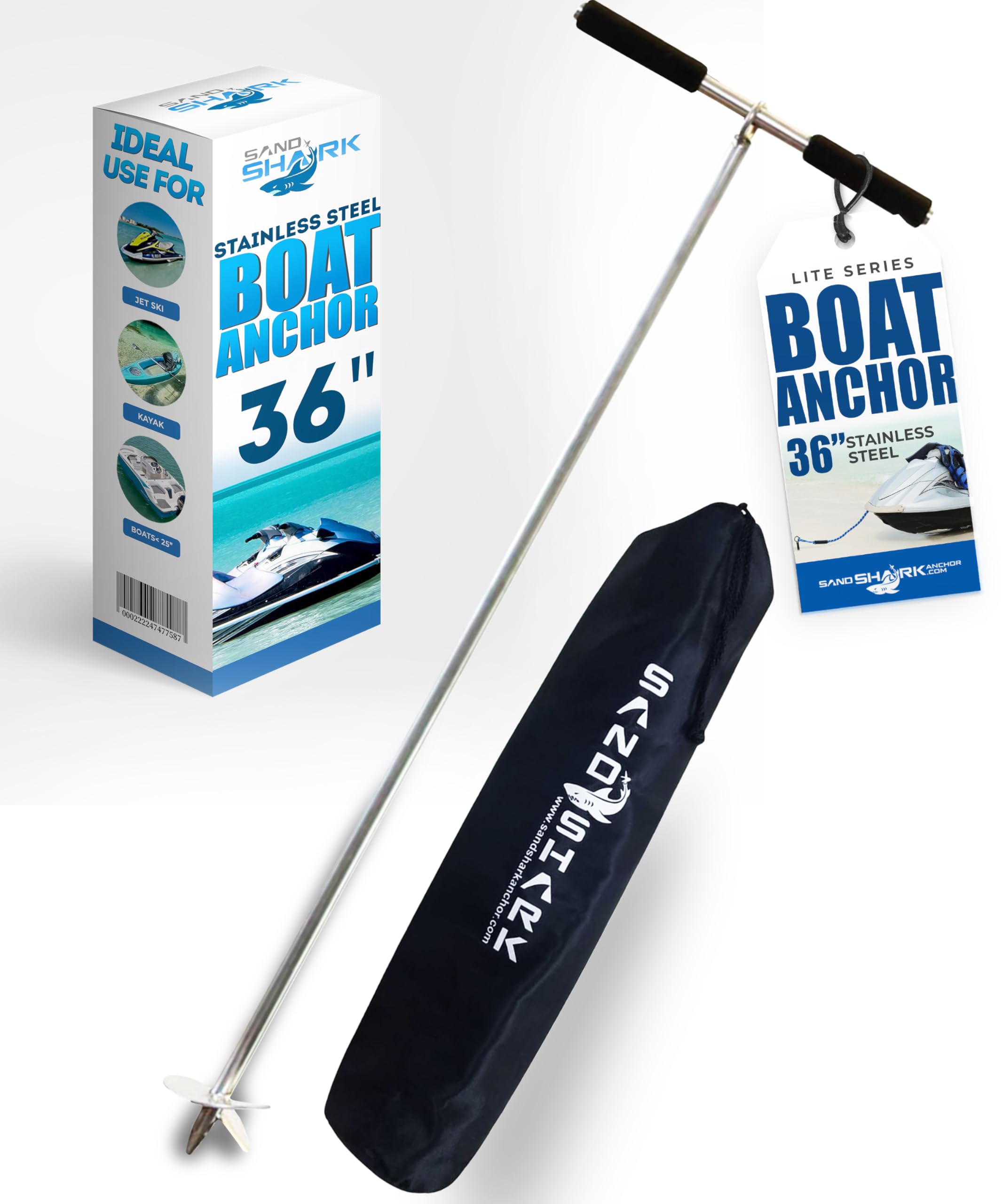
A polished 316 stainless spike pole with foam grips that augers into sand and holds small boats and kayaks securely.
Why I picked it: Marine-grade metal construction that battles corrosion and grabs soft bottoms reliably.
Best for: Kayaks, jet skis, and small boats on sandbars where a repeatable, strong hold matters.
A more durable, higher-quality choice worth the investment for frequent use.
Pros
- 316 stainless resists corrosion
- Comfortable foam grips
- Very secure in soft sand
- Compact when stowed
Cons
- Long length can get wet
- Heavier than plastic options
My take
My kayak trips improved immediately when I switched from a grapnel to this spike anchor. It augers into sand with less fuss than I expected and keeps my boat from drifting even when currents ramp up.
On one outing this anchor held my boat and a friend’s kayak during a sudden storm; the stainless construction felt premium and I appreciated that the company replaced a lost section after a capsizing incident.
If you regularly anchor near sandbars, this is the kind of tool that pays off—more effort to carry than a plastic kit but far more reliable in moderate chop and busy water.
4. Airhead PWC Sand Anchor Bag – Best Anchor Bag for PWCs
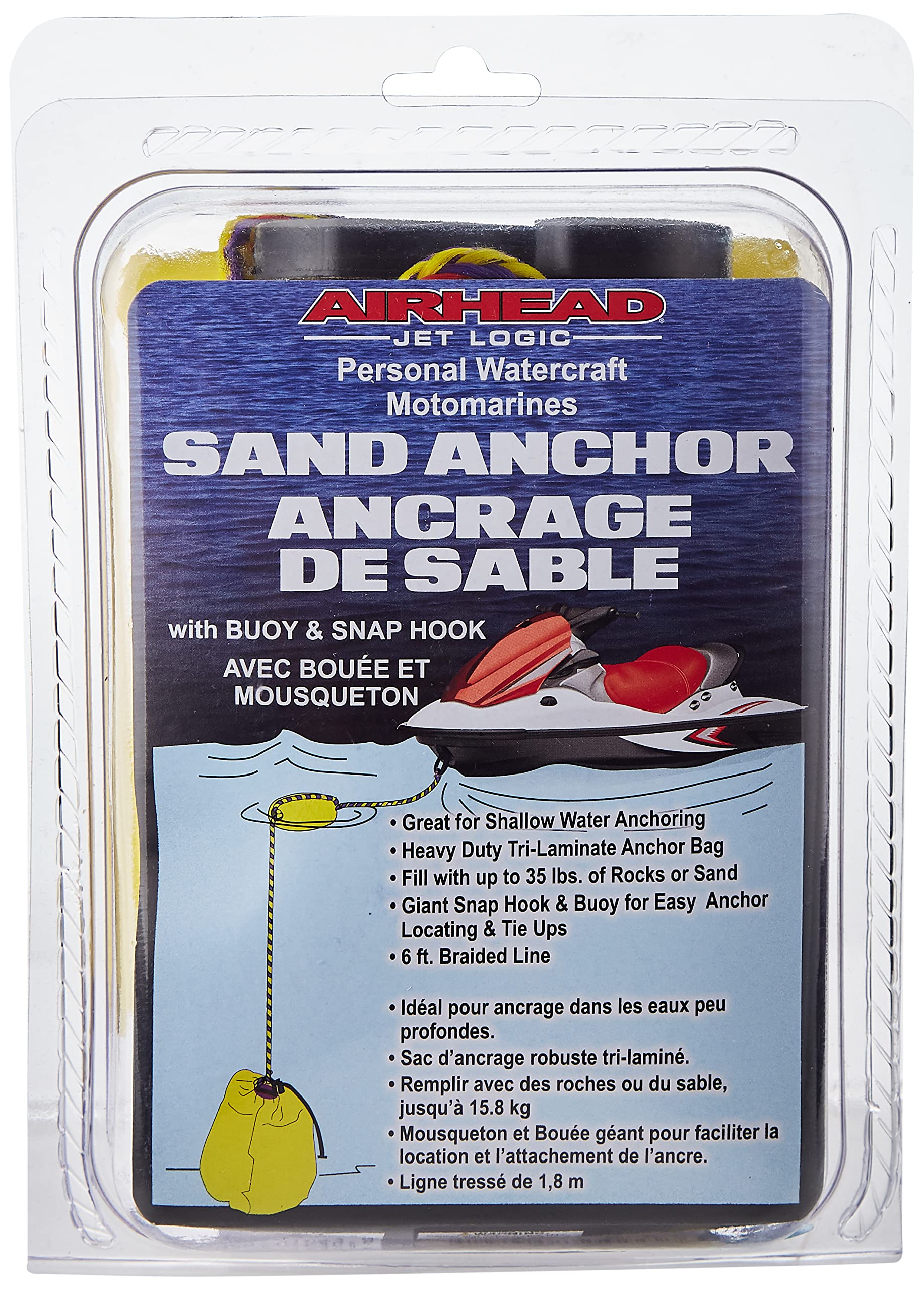
A tri-laminate anchor bag that holds ballast (up to 35 lbs equivalent), includes a buoy, 6' rope, and a snap hook for shallow-water PWC protection.
Why I picked it: Compact, protects impellers, and stows small when empty—perfect for PWCs and inflatables.
Best for: Jet skis, Seadoos, inflatables, and situations where you want a soft anchor that won’t damage hulls.
Affordable and easy to store in PWC compartments.
Pros
- Folds tiny for storage
- Protects PWC impellers
- Includes buoy and rope
- Durable tri-laminate fabric
Cons
- Drawstring can slip open
- Plastic snap hook may wear
My take
I use this bag on my Seadoo and it’s my go-to when I want to keep the impeller clear of the beach. I fill it with sand or gravel, drop it in about knee- to chest-deep water, and the craft stays put through normal wake and wash.
The bag compacts down to almost nothing when empty and the buoy keeps the hook easy to find. My only gripe is the drawstring can loosen if you don’t tie it off—sand can escape in currents—so I usually double-knot or use a small cord lock.
For anyone prioritizing storage space and impeller protection, this bag is a very practical anchor system.
5. Extreme Max BoatTector Anchor Kit – Best Value Anchor Bag
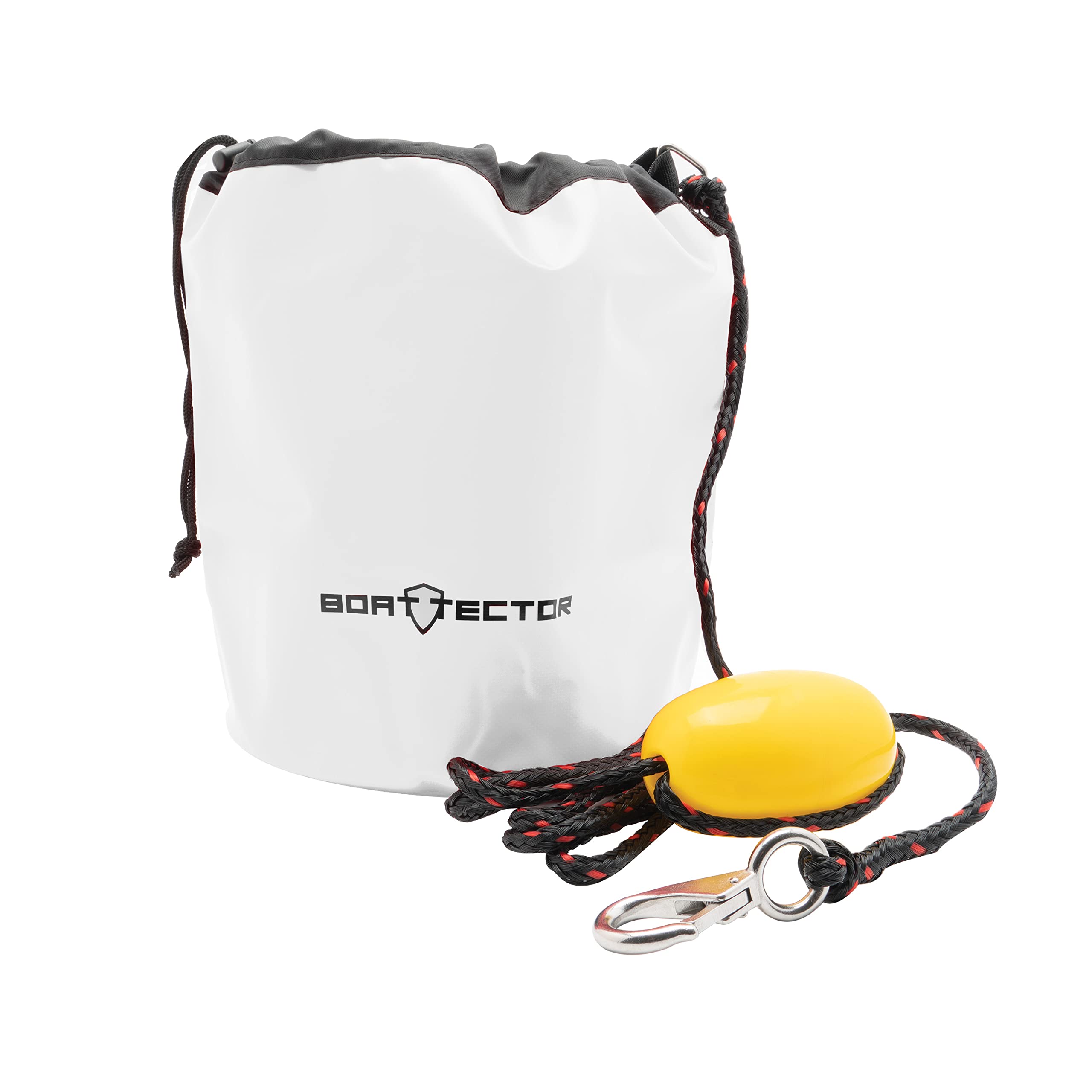
A compact tri-laminate anchor bag kit with foam buoy, 6' rope, and snap hook that supports up to 35 lbs of ballast and packs small.
Why I picked it: Robust stitching and stainless hardware give this kit real value for PWC and small-boat anchoring.
Best for: Budget-conscious PWC owners and paddlers who want a reliable anchor bag.
Budget-friendly with standout build quality.
Pros
- Solid stitching and hardware
- Easy to fold and store
- Comes with buoy and rope
- Two-year limited warranty
Cons
- Rope is short for some uses
- Drawstring could be sturdier
My take
I used this bag as a canoe and PWC anchor and appreciated the heavy-duty construction compared to cheaper alternatives. The handle and stitching feel like they can take years of use.
One practical tweak I make right away is swapping the included 6' rope for a longer 30' cord when anchoring in deeper shallows or when I want more reach. The bag’s hardware and buoy are handy and the bag dumps ballast quickly when it’s time to go.
Given the build quality and compactness, I consider this one of the best value anchor bags around.
6. WAVESRX Aluminum Spike Anchor – Best Lightweight Aluminum Anchor
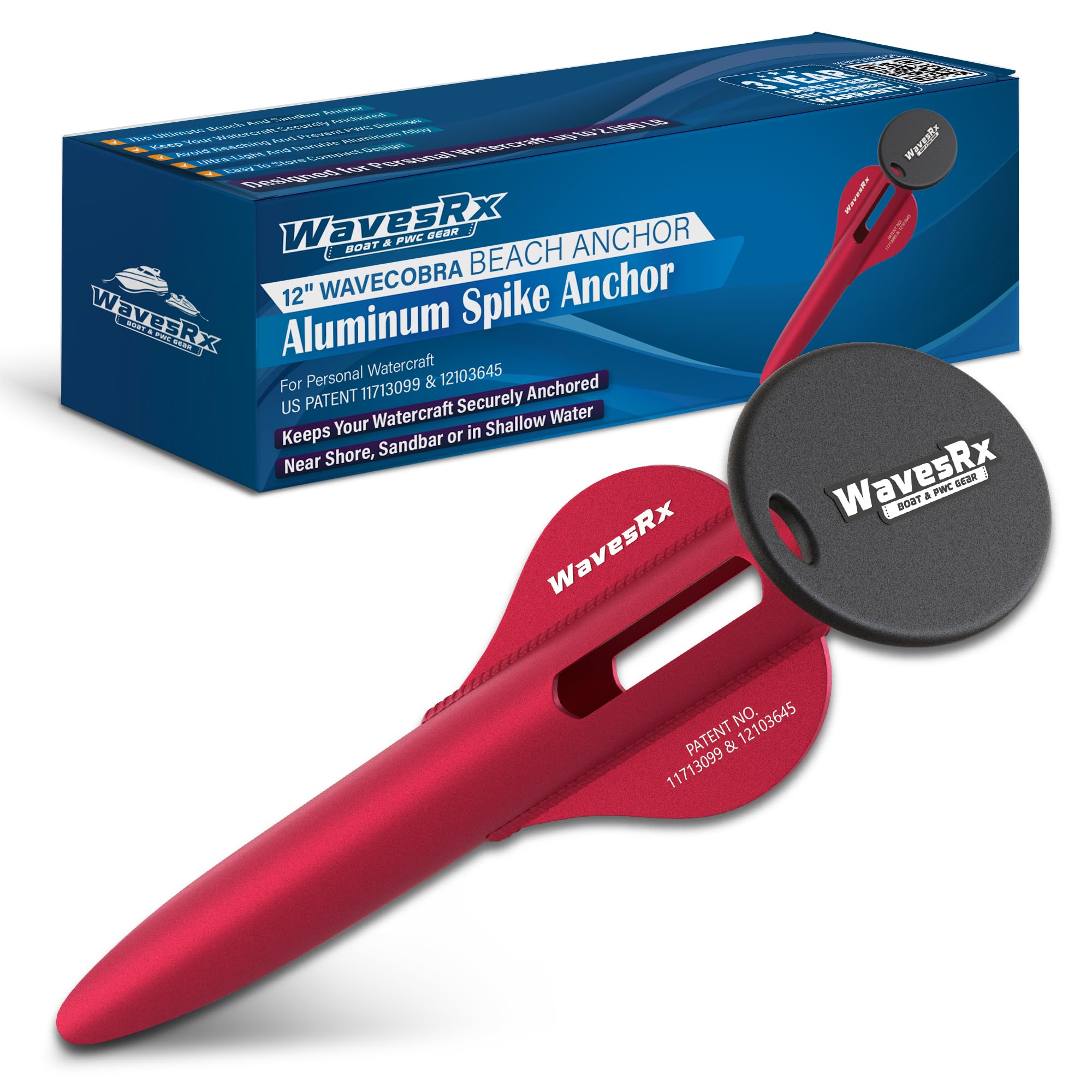
A patented aluminum spike anchor that’s ultra-light, rust-free, and designed to insert at a 15° angle for superior holding power in soft sand.
Why I picked it: Aluminum strength without the rust; extremely light to carry and effective in many sand types.
Best for: Pontoons, PWCs, and boats where you want a lightweight, rust-free spike anchor.
Premium-feeling option that’s worth it if you want light, rust-proof performance.
Pros
- Ultra-light aluminum construction
- Rust-free for life
- Easy foot-insertion design
- Backed by a warranty
Cons
- Struggles in hard-packed sand
- Hardware quality varies
My take
This anchor felt high-end straight out of the box. It’s shockingly light—my kids can carry it to shore—and it sinks into Florida sand with almost no effort when used at the slight angle the design recommends.
On one rough day the WavesRx spike held a 26-foot Sea Ray in place when I thought I might have to be constantly tweaking my lines. The aluminum never rusted and the welds and finish felt premium.
It’s not magic—if you run into very hard-packed sand or heavy clay it can be harder to seat. For most sandbars and beaches, though, I reach for this when I want a light, corrosion-free anchor.
How I Choose the Right Sand Anchor
Anchor type and use
I pick an anchor based on what I’m securing: an umbrella, a PWC, a kayak, or a 20-foot pontoon each needs a different solution.
- Screw/auger anchors for umbrellas and light winds.
- Spike or pole anchors for repeatable holds with PWCs and small boats.
- Bag anchors when you need soft ballast to protect impellers and hulls.
Match capacity to craft
I always consider the size and weight of the craft. A light inflatable needs a small bag; a PWC benefits from a 35 lb-equivalent bag or a robust spike; pontoons need anchors designed for shallower, wider holds.
- Small inflatables: compact bag anchor.
- PWCs: bag or spike depending on shore type.
- Small boats/pontoons: stainless or heavy-duty spike.
Sand type and insertion
Different anchors behave differently in fine, soft sand versus compacted, gritty sand or sand mixed with shells and clay.
- Soft, dry sand: augers and plastic blades bite well.
- Wet, compacted sand or shell: stainless or aluminum spikes often work better.
- Hard-packed sand/clay: consider metal anchors or different holding strategies.
Storage and maintenance
I always plan how the anchor will stow and how much maintenance it needs after saltwater exposure.
- Rinse metal and fabric anchors with fresh water after use.
- Choose anchors that break down or fold for limited storage space.
- Replace short, thin ropes with marine-grade cord for longevity.
Practical tips I use
Little habits go a long way toward trouble-free anchoring.
- Carry a backup anchor or extra rope for busy sandbars.
- Tie a secondary knot on drawstrings; sand works its way out otherwise.
- For umbrellas, dig a pre-hole or use the rental spike method when winds are high.
Frequently Asked Questions
Which anchor type should I take for a sandbar day?
I choose based on craft and comfort: for quick, casual stops I bring a lightweight plastic sandbar anchor; for longer stays or larger boats I prefer a stainless spike or one of the heavier bag systems.
How much rope should I carry with an anchor bag?
I usually swap the supplied 6' rope for at least 20–30' of 550 cord or marine line so I can adjust depth and keep the craft from riding over the anchor as the tide moves.
Can a plastic sandbar anchor hold a pontoon?
In soft sand and light conditions a good plastic sandbar anchor can hold a smaller pontoon, but for repeated or heavy-duty use I rely on stainless or aluminum spikes for more dependable holding.
Final Take
After using all these options, I keep a small set of anchors in my gear: a screw auger for umbrellas, a lightweight plastic kit for casual sandbar days, a stainless spike for frequent boat use, and an anchor bag for PWCs.
Match the anchor to the sand and your craft, rinse everything after saltwater, and carry longer line than the kit includes. Do those things and you’ll spend more time relaxing and less time re-seating anchors.
