
I tested rolls, sheets, discs, and assorted grit packs so you can pick the right sandpaper format and grit for woodwork, auto trim, and fine polishing.
I’ve sanded furniture, repaired car panels, and polished plastics enough to know that the right sandpaper saves time and gives a cleaner finish. In this guide I’m sharing the sandpaper types I reach for most often, why I picked each one, and how I use them in real projects.
Whether you need an aggressive roll for leveling, a huge grit range for polishing, or hook-and-loop discs for a DA sander, I explain what each product is best at and where it falls short.
I picked products across three formats—continuous PSA roll, full sheets, and discs—because each format solves different problems. Rolls and large sheets are my go-to for shaping and heavy removal, thin wet/dry sheets shine at wet polishing, and hook-and-loop discs make power sanding consistent and dust-controlled.
1. Dura-Gold 80 Grit PSA Sandpaper Roll – Best for Longboards & Auto Body
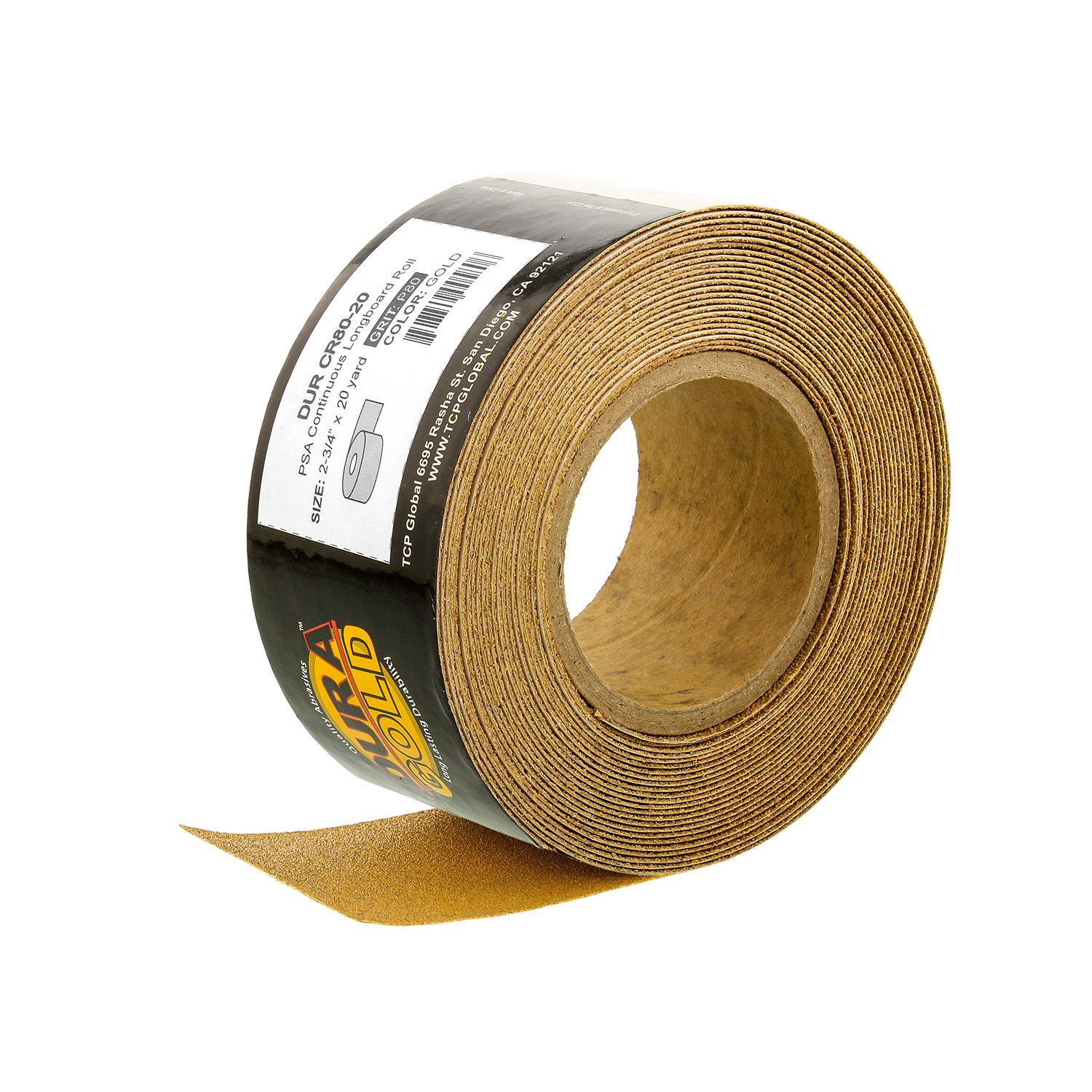
A 2-3/4" wide continuous PSA roll in coarse 80 grit that I use for fast material removal on longboards and air-file tools.
Why I picked it: I picked this for large-area leveling because the continuous roll and pressure-sensitive adhesive make it easy to dress longboards and trim to length on the fly.
Best for: Shaping wood, removing old finish, autobody leveling with longboards and air files.
High yardage makes it an affordable buy for heavy-use jobs.
Pros
- Continuous roll trims to any length
- Strong PSA adhesive
- Fast, aggressive 80-grit cut
- Clog-resistant aluminum-oxide blend
Cons
- Too coarse for finish sanding
- May not stick to every block equally
My take
I use this roll when I need to remove a lot of material quickly — door skins, glued-up edges, and body filler smoothers. The PSA backing peels cleanly and clamps to my longboard without bunching.
The abrasive is a super-coated aluminum-oxide fused with zirconia alumina, so it keeps cutting long enough for big tasks without glazing over as fast as cheaper paper.
On narrower blocks I sometimes have to clamp or tape it down because the wide strip doesn’t seat in every hand block perfectly. For me that’s a small trade-off for the convenience and yardage this roll gives.
2. Atosun Wet/Dry Sandpaper 120–5000 Grit (45pc) – Best All-in-One Grit Assortment
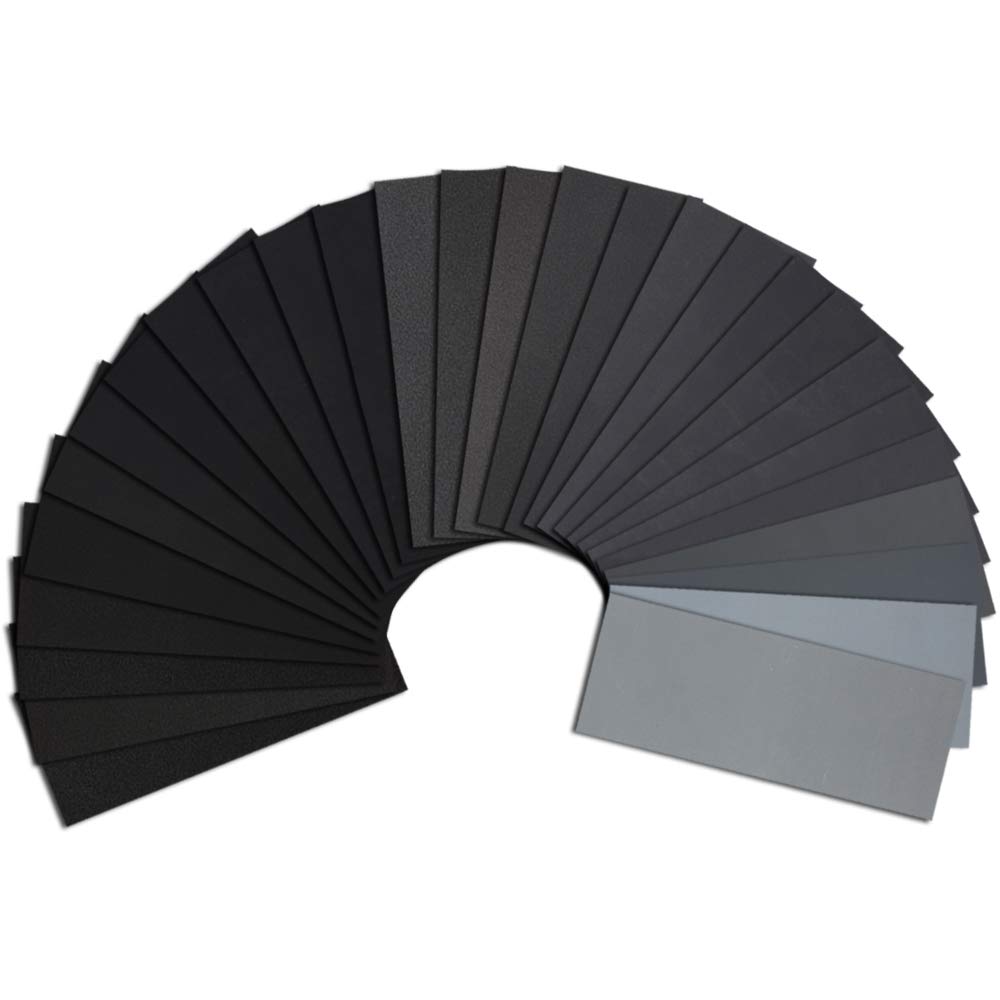
A 45-piece assortment that covers everything from aggressive 120 grit to ultra-fine 5000 grit, made from waterproof silicon carbide.
Why I picked it: I grabbed this when I wanted one kit that takes me from heavy removal through mirror polishing without hunting for extra sheets.
Best for: Mixed projects that include wood leveling, metal rust removal, and final polishing.
Very budget-friendly for a wide grit spread and wet/dry capability.
Pros
- Huge grit range in one pack
- Waterproof silicon carbide
- Grit printed on the back
- Sheets cut to usable size
Cons
- Very fine grits can clog
- Sheet edges are manually cut — small size variance
My take
I reached for this set when I had a rust spot to remove on my truck’s windshield surround. I used 120 to open the spot and then jumped through the finer grits with water — the paper held up and didn’t disintegrate.
The silicon carbide and electro-coating make these sheets robust for both wet and dry use. I also like that each sheet is marked so I avoid mixing grits mid-job.
If you’re doing heavy, repeated stock removal you’ll go through the lower grits faster than the pack supplies, but for mixed repair and polishing work this covers nearly every step.
3. FRIMOONY Wet/Dry 1000–3000 Grit (54pc) – Best for Headlight & Plastic Polishing
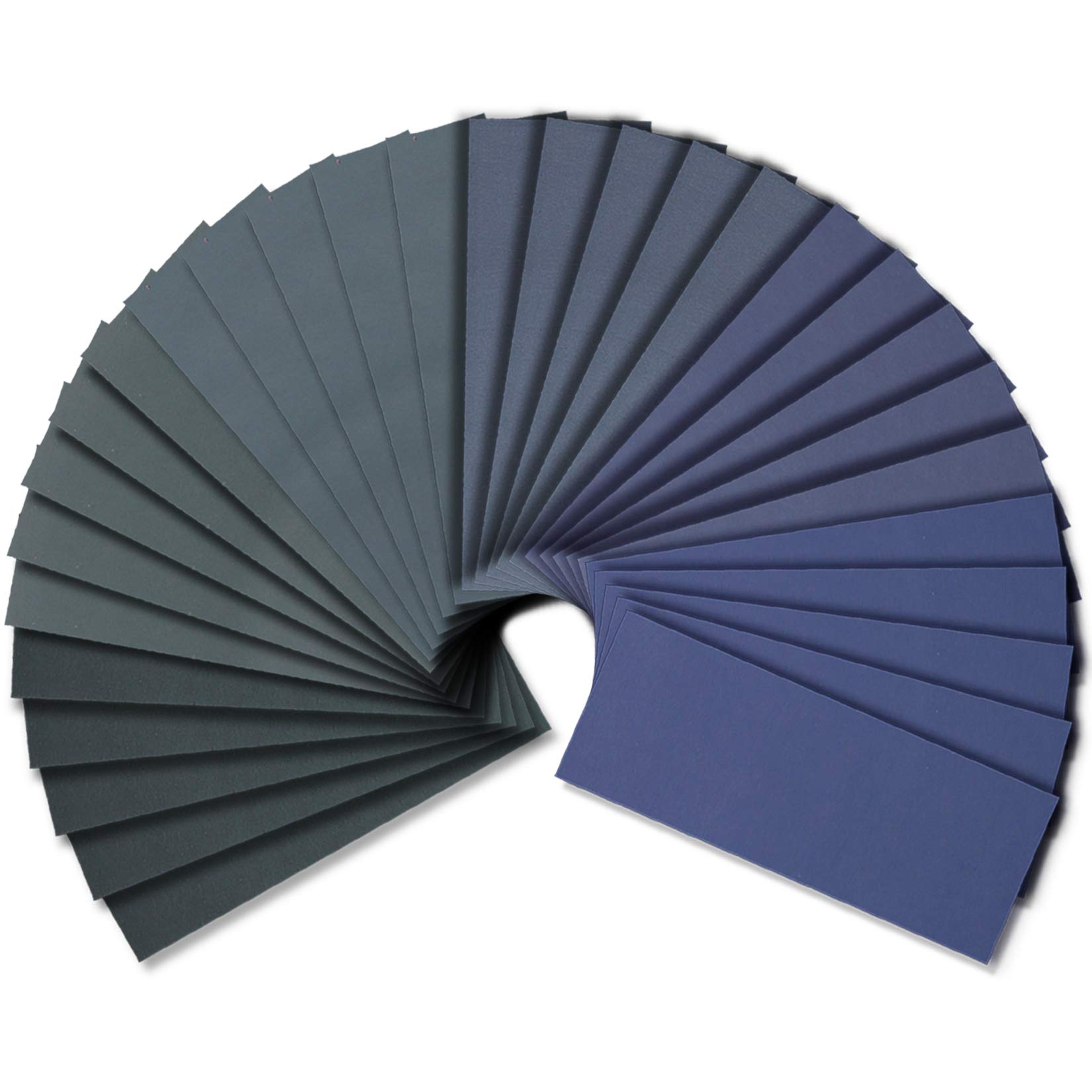
A targeted high-grit set focused on 1000–3000 grits, which I use to refine plastics and get a clear, smooth finish on headlights and trim.
Why I picked it: I chose this because the pack gives repeated passes through high grits for polishing without wasting sheets on coarser steps I don’t need.
Best for: Headlight restoration, plastic polishing, and final sanding before polishing compounds.
A sensible mid-range option if you need multiple high-grit sheets.
Pros
- Grits clearly marked on the back
- Good sheet size for blocks
- Even electro-coated grit distribution
- Performs well wet or dry
Cons
- Paper is a bit thin
- No coarse grits included
My take
For headlight restoration I cut sheets into triangles and used plenty of water. The set carried me smoothly from 1000 up through 3000 and left the lens ready for polish.
The sheets are thin, so I back them with a firm pad when using a power tool, but that thinness also helps the paper conform to curves during hand sanding.
I finished with a plastic polish after the 3000 grit and consistently got the clarity I wanted, which is exactly what I bought this set for.
4. 3M Aluminum Oxide Assorted Sheets – Best for Hand Sanding
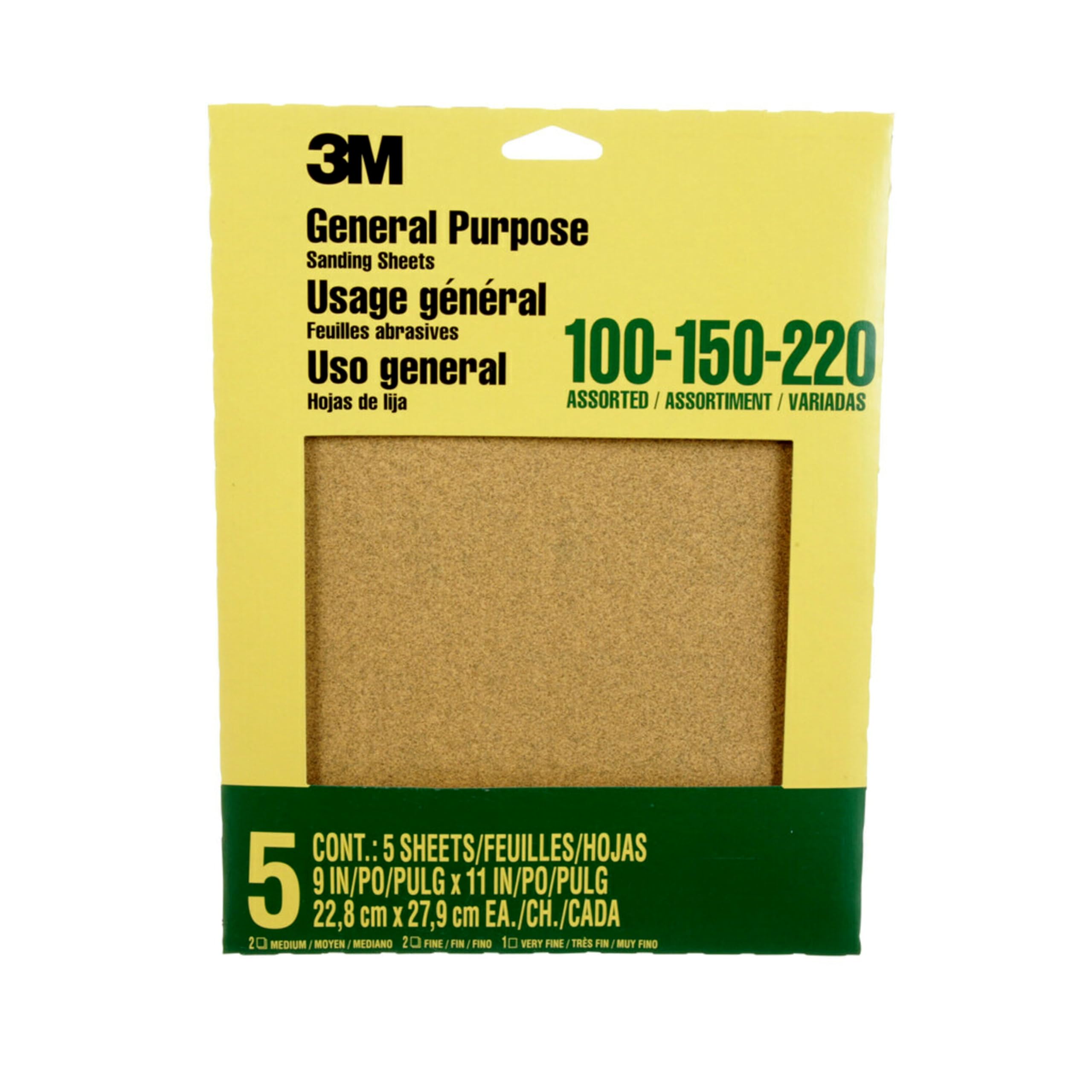
A small pack of large 9 x 11" aluminum-oxide sheets in common grits that I keep on the bench for hand-block work and quick touch-ups.
Why I picked it: I pick these when I want big sheets for hand-sanding panels and doors — 3M’s backing and abrasive are consistent for manual work.
Best for: Hand sanding, cabinet doors, and large flat surfaces where a full sheet makes the job faster.
A compact, name-brand option when I want quality sheets for hand use.
Pros
- Large sheet size
- Durable aluminum oxide mineral
- Good for paint, wood, and metal
- Easy to cut to size
Cons
- Not ideal for heavy mechanical sanders
- Small sheet count per pack
My take
I rely on these for hand sanding raised panels and trim; their large size saves time compared to strips.
They hold up well under firm pressure by hand, but I don’t use these on my orbital sander — they aren’t designed for heavy mechanical abuse.
For a quick, reliable hand-sanding session these 3M sheets are hard to beat.
5. Dura-Gold 600 Grit Wet/Dry Sheets (25pc) – Best for Fine Finish & Detailing
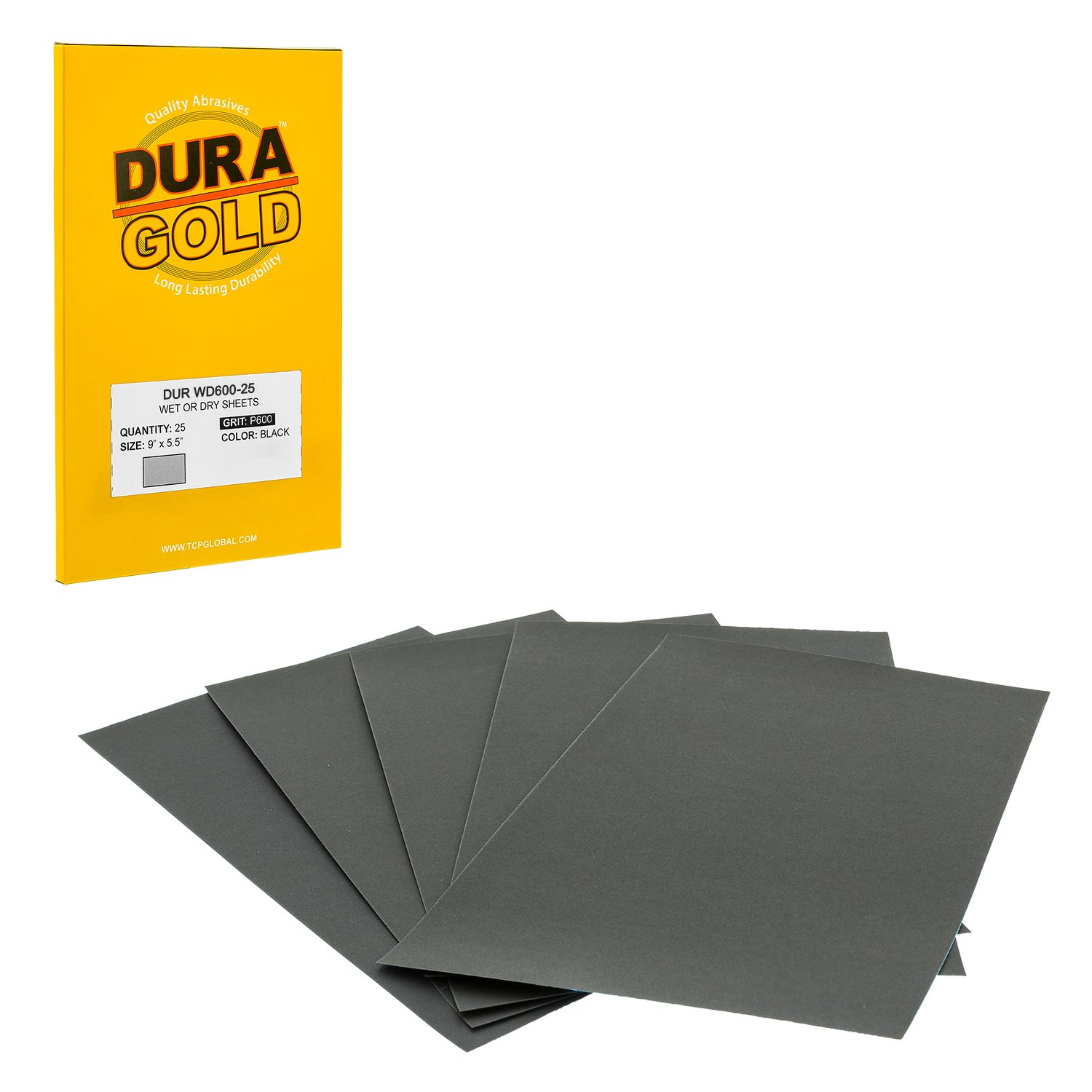
A box of flexible 600-grit wet/dry sheets that I use for extra-fine finish sanding and color-sanding before polish.
Why I picked it: I use 600-grit sheets when I need a smooth, controlled cut between coats or to refine paint and wood before buffing.
Best for: Color sanding, extra-fine finish work, hand blocks, and detail sanding.
Good value when you want professional-feeling sheets without the premium brand price.
Pros
- Flexible for wet sanding
- Uniform electro-coated grit
- Resists clogging
- Good life for hand work
Cons
- Not quite as long-lasting as premium brands
- Avoid on foam or very sharp edges
My take
I often reach for these sheets for door interiors and tractor restoration work — they’re flexible enough to follow contours and strong enough to hold up during repeated passes.
They don’t clog easily when used wet, and cutting sheets into smaller pieces stretches their usefulness across multiple tasks.
If you want a cheaper alternative to top-tier brands for consistent 600-grit work, these are a solid trade-off.
6. Dura-Gold 5″ 240 Grit Hook & Loop Discs (50pc) – Best Bulk Discs for DA Sanders
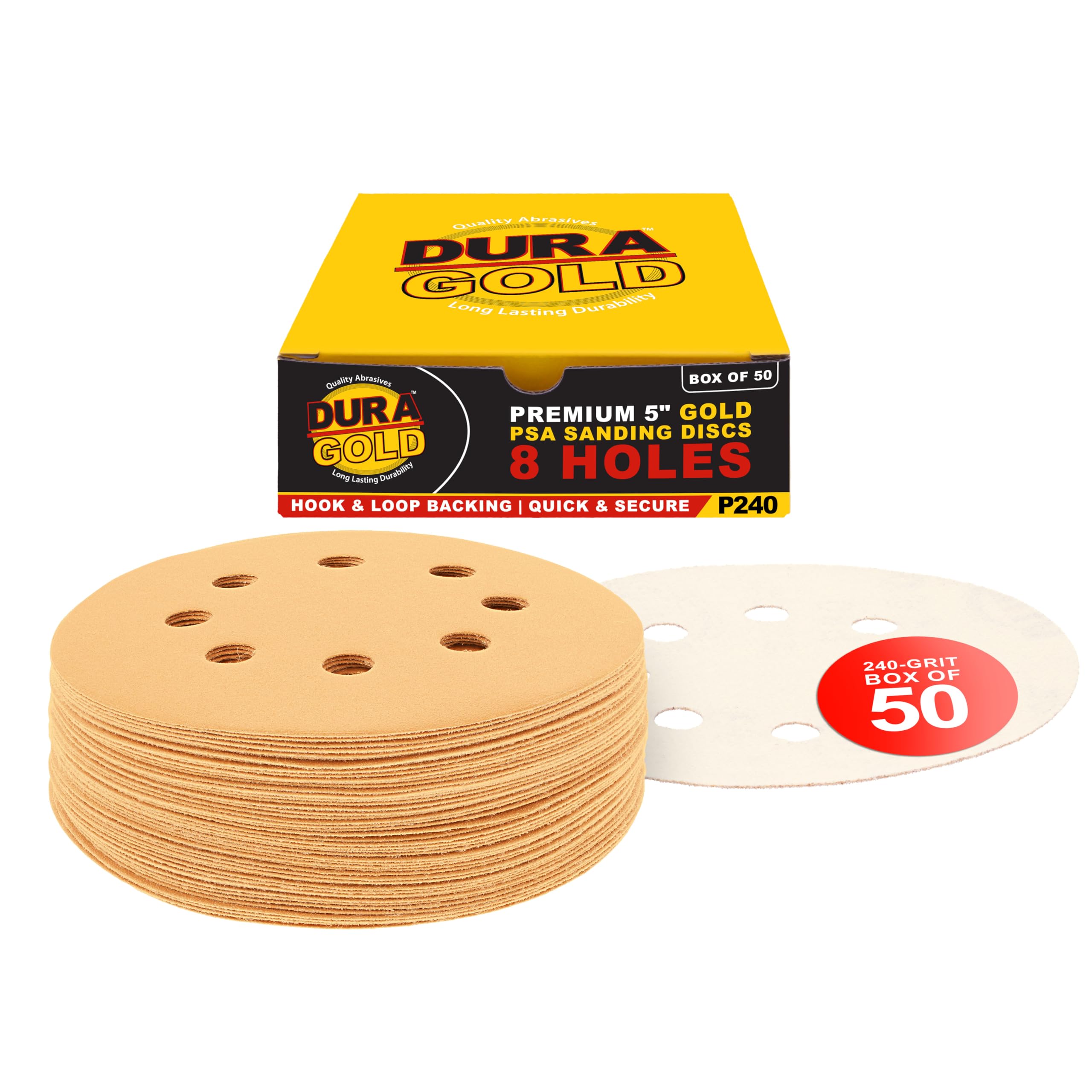
A box of 50 five-inch hook-and-loop discs in 240 grit with an 8-hole dust pattern that I use on DA sanders for paint prep and semi-aggressive finishing.
Why I picked it: I picked these discs when I wanted bulk, consistent 240-grit performance with dust extraction compatibility.
Best for: DA sanders for paint prep, primer removal, and smoothing putty or filler.
Bulk packaging makes them a cost-effective choice for frequent power-sander use.
Pros
- 8-hole pattern for dust extraction
- Hook-and-loop backing for quick swaps
- Durable, resist clogging
- Consistent 240-grit finish
Cons
- Backing may lose stick on some sanders
- Discs wear with heavy use
My take
I used these on a DeWalt DA and the discs latched securely and stayed in place through several sessions. Dust collection worked well with the 8-hole pattern.
They cut reliably and don’t glaze as quickly as cheap discs I’ve used before. On some sanders I’ve had to press firmly when reattaching after multiple removals, but that was a rarity.
For bulk finishing work they balance durability and value nicely.
7. VERONES 400–3000 Grit Wet/Dry (90pc) – Best Large-Count Assortment
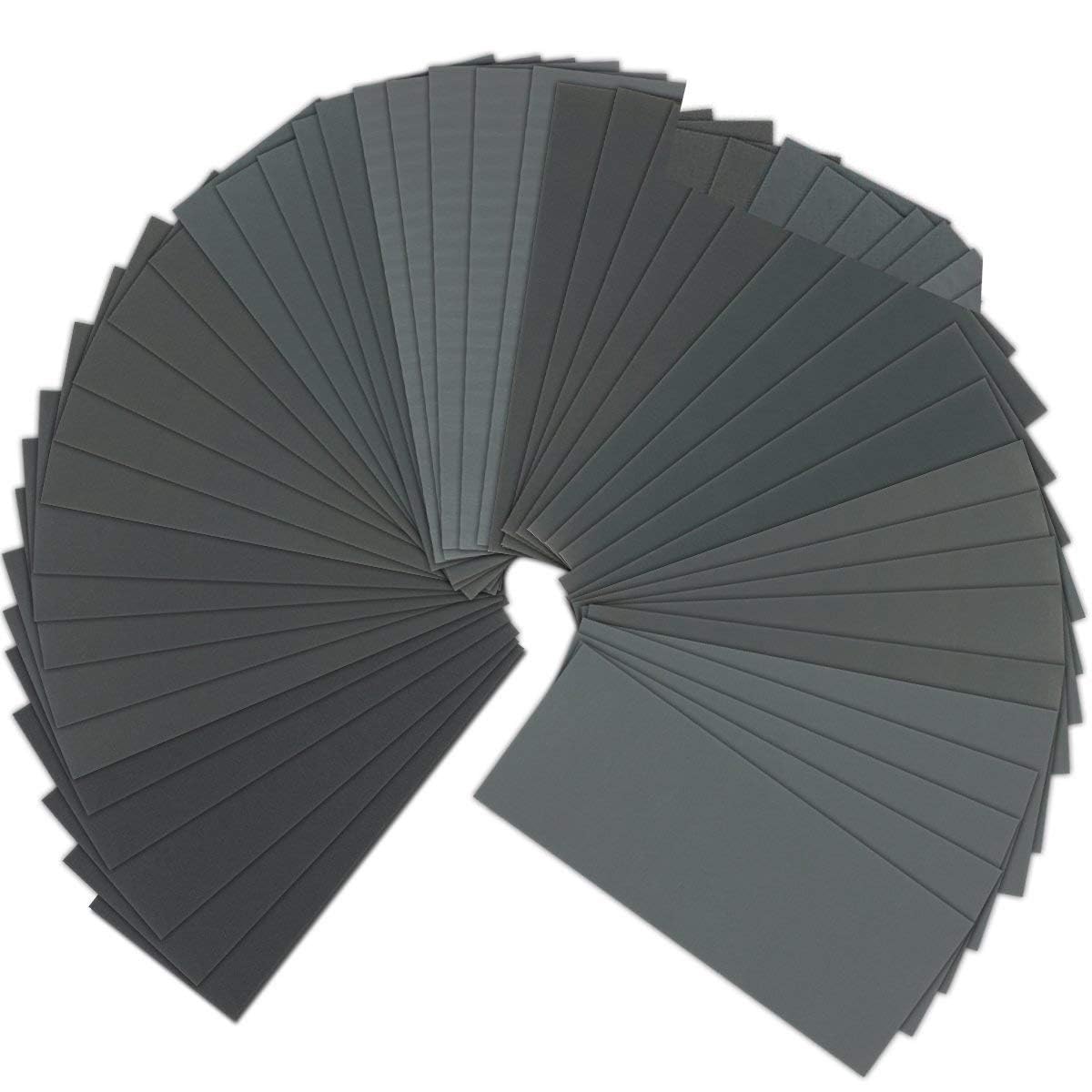
A 90-piece set spanning 400–3000 grit that I use when a project needs many repeat passes or when I’m training on various finishes.
Why I picked it: I chose this pack when I wanted quantity and flexibility for multiple projects without constantly reordering.
Best for: Furniture finishing, corian and countertop repair, and wet polishing across many pieces.
A budget-friendly large-count set for workshops and hobbyists.
Pros
- Very large quantity
- Wet/dry silicon carbide
- Good selection of fine grits
- Useful for many small projects
Cons
- No very coarse grits included
- Quality can vary across grits
My take
I used these on a corian countertop scratch and the higher grits smoothed the surface very nicely — the set even included a small grip block that’s handy for hand work.
The large count means I can cut pieces to shape and not worry about running out mid-job. For knife makers and small fabricators this is a handy stash.
They’re a solid low-cost way to stock a shop with a broad range of fine grits.
8. 3M Wetordry Extra-Fine Assortment – Best for Final Polishing
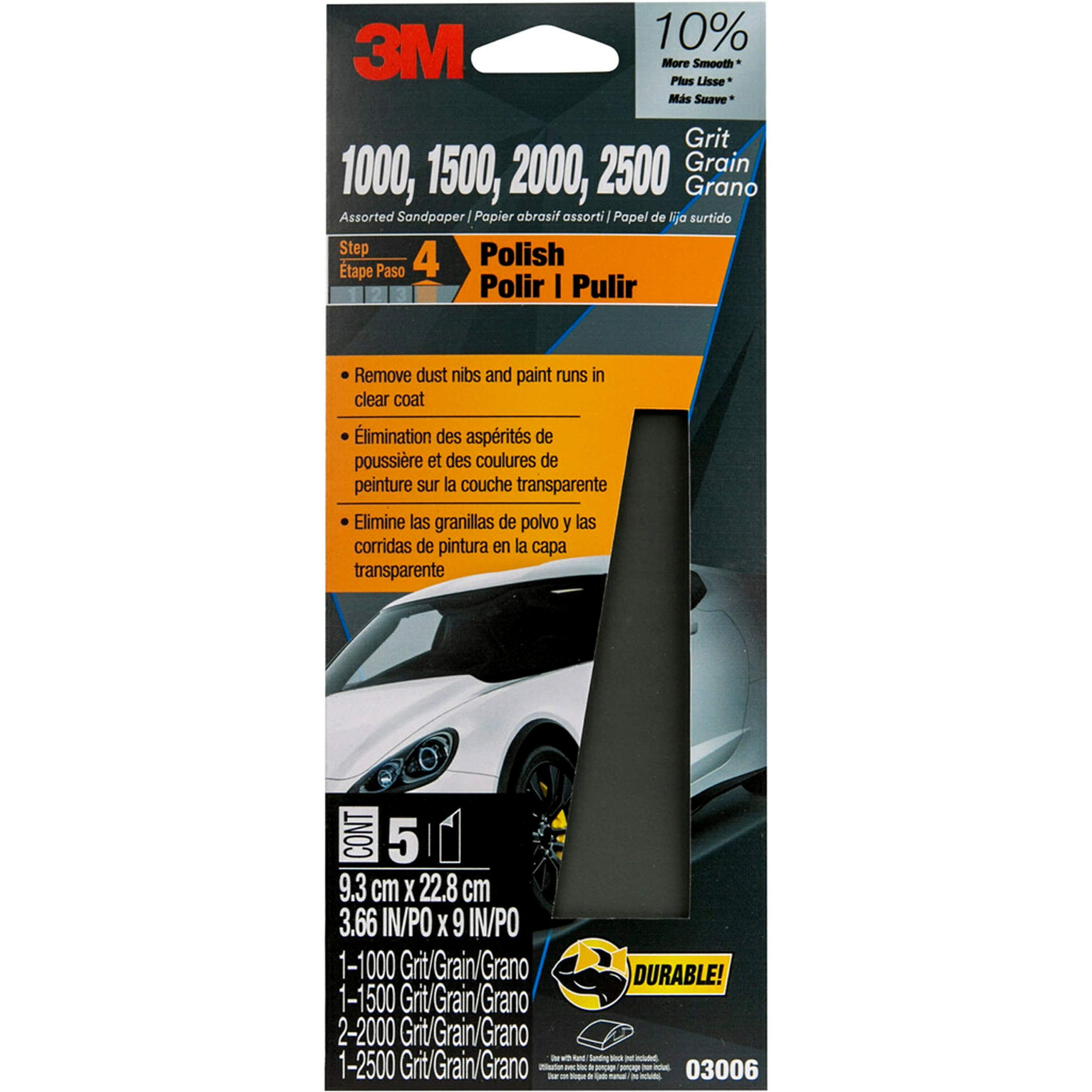
A small pack of 3M wet/dry sheets in 1000–2500 grits that I use to polish clear coat and bring out a glass-like luster.
Why I picked it: I reach for these when I need a premium extra-fine finish — they give a smooth, consistent scratch pattern that polishes out predictably.
Best for: Final clear coat polishing, polishing axles, and precision finishing work.
Small pack, premium brand — great for one-off polishing jobs or final touch-ups.
Pros
- Specifically tuned for polishing clear coat
- Works wet or dry
- Silicon carbide lasts longer
- Consistent smooth finish
Cons
- Very limited sheet count
- Small pack for single projects
My take
I use this assortment when I’m finishing clear coat or polishing small metal shafts — the gradation produces a noticeably smoother finish before polishing compounds.
The silicon carbide construction holds up well during wet sanding and gives a clean, consistent scratch pattern that a compound can remove easily.
Because the pack is small I treat it as a finishing kit rather than a go-to for heavy removal.
How I Choose Sandpaper for Wood Projects
Pick the grit for the job
I always start by matching grit to the task rather than the brand. Coarse grits (40–80) remove material fast and shape profiles. Medium grits (100–240) level surfaces and remove mill marks. Fine grits (320–600) prepare for stain or paint. Extra-fine grits (800–3000+) are for polishing clear coats and plastics.
- Use 80–120 to strip finish or remove filler.
- Use 120–240 to smooth surfaces and even out glue lines.
- Use 320–600 before staining or painting for a clean surface.
- Use 1000+ for polishing or finishing clear coats.
Wet vs dry sanding — when I use each
I wet-sand when I need to minimize dust, reduce clogging, and get a mirror-like finish on finishes or plastics. Dry sanding is faster for bulk removal and is fine for raw wood when you’ll follow with finer dry grits.
- Wet-sanding reduces sanding dust and keeps paper cutting cooler.
- Don’t wet-sand wood right before staining unless you dry and let the grain settle.
- Use waterproof silicon carbide sheets for wet work.
Choose the right format and backing
I pick continuous rolls for longboards and big shaping tasks, full sheets for hand-block sanding on large panels, and hook-and-loop discs for power sanders that need quick swaps and dust extraction.
- PSA rolls stick to longboards and air files — great for long runs.
- Full sheets let you cut custom sizes and are economical for hand work.
- Hook-and-loop discs pair with dust plates for cleaner, faster sanding.
Size, quantity, and value
I buy in bulk when I’m doing a lot of work — rolls or large-count packs save money over singles. For one-off detail work I prefer small premium assortments so I don’t waste sheets.
- Buy large-count packs if you sand a lot or work on multiple projects.
- Buy targeted high-grit packs for polishing jobs to avoid wasting coarse sheets.
Extend paper life with these habits
I keep abrasives working longer by using water for wet sanding, tapping the sheet to clear loaded grit, and switching grits incrementally to avoid overworking a single sheet.
- Use plenty of lubricant for wet sanding to limit clogging.
- Cut sheets into smaller pieces to make replacement easier and cheaper.
- Store sheets flat and dry to avoid warping or damage.
Frequently Asked Questions
What grit should I start with to remove old finish on wood?
I usually start with 80–120 grit for removing old finish or leveling uneven joints, then work up through 120–240 to smooth the surface before final sanding.
Can I wet sand wood projects?
Yes — I wet-sand for smoothing finishes and controlling dust, but I avoid wet-sanding raw porous wood right before staining because the moisture can raise the grain. Dry-sand first, then use wet techniques on finish coats or plastics.
Will hook-and-loop discs fit my sander?
I check two things: the pad diameter (5-inch, 6-inch, etc.) and the hole pattern for dust extraction. If the disc diameter and hole alignment match your backing pad, hook-and-loop discs will work and make swaps quick.
Final Take
I keep at least one roll, one sheet pack, and a small high-grit assortment in my shop — each format fills a different need. For heavy stock removal I grab the PSA roll, for hand work the full sheets, and for finishing the high-grit wet/dry packs.
Pick the format that matches how you sand, match grit to the task, and keep spare sheets on hand. That small planning step is what saves me the most time and gives the cleanest finish.
