
I tested a range of seed starter kits to find the best multi-packs, greenhouse-style domes, silicone pop-out trays, and all-in-one heat-and-light systems for indoor seedlings.
I start hundreds of seedlings each season, and over the years I've learned which starter kits actually make germination and transplanting simpler. This guide collects the kits I kept coming back to — from stackable multi-packs to all-in-one heat-and-light systems.
My picks focus on practical features I rely on: adjustable vents, reliable drainage, reusable materials, and options that pair well with heat mats and grow lights. I call out which kit I reach for depending on how many seeds I'm starting, how long I need to keep seedlings under cover, and whether I need built-in lighting.
I tested these kits side-by-side where possible. For high-volume starts I lean toward multi-tray packs; for delicate transplants I prefer silicone pop-out cells; if I need a turnkey indoor setup I choose the kits with heat mats and lights.
1. MIXC 120-Cell Seed Starter Kit – Best Overall
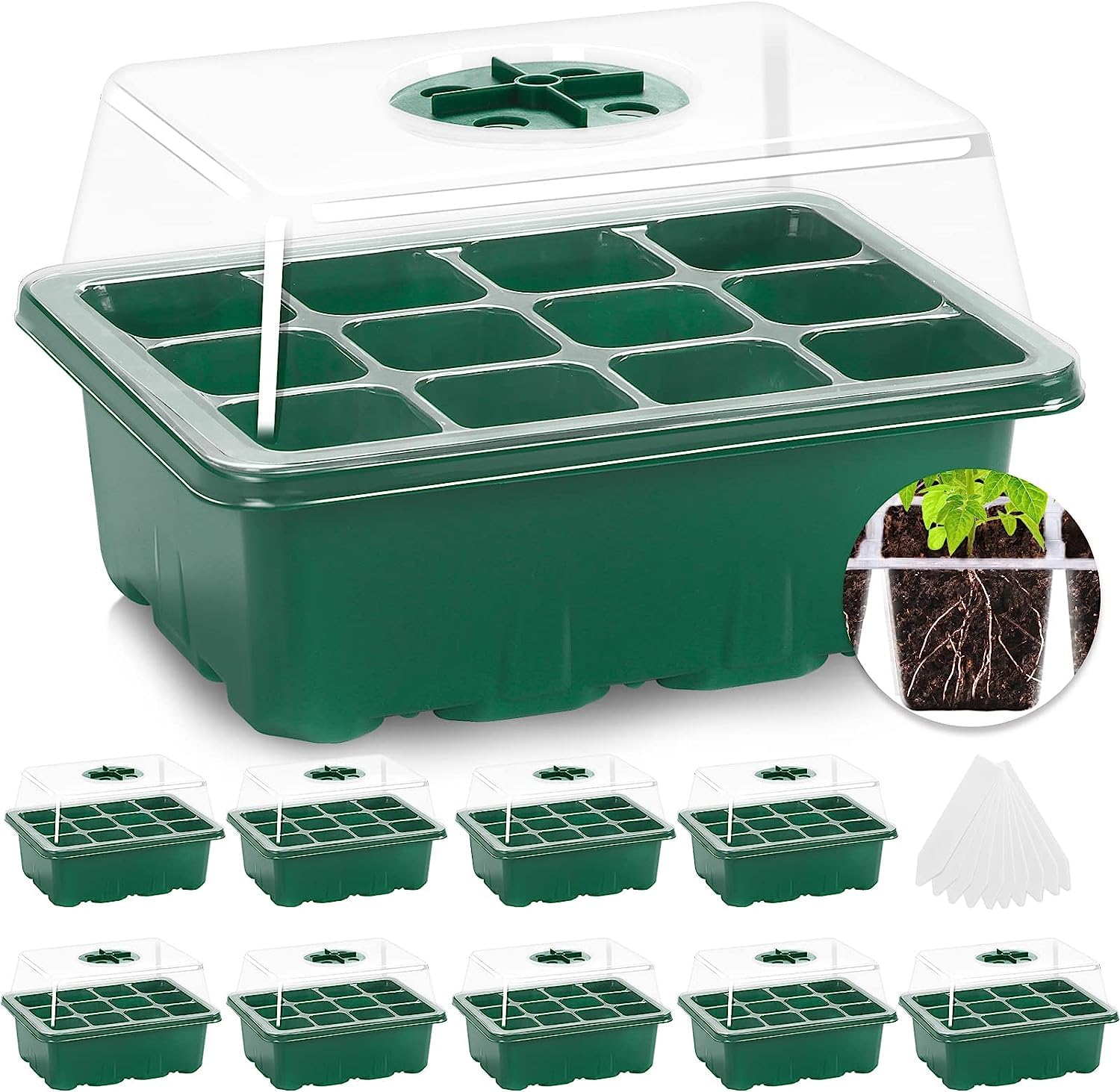
I rely on this 10-tray kit when I need flexibility and lots of starts. The clear domes, adjustable vents, and watertight bases make bottom watering and humidity control straightforward.
Why I picked it: Plenty of cells across ten trays, clear tops for monitoring, and reliable venting and drip trays.
Best for: Growing lots of small seeds and managing humidity without fuss.
Great value for a multi-pack that lasts multiple seasons.
Pros
- Clear domes for easy monitoring
- Adjustable vents for humidity control
- Watertight drip trays for bottom watering
- Reusable durable plastic
Cons
- Cells are on the small side for large seedlings
- Dome height limits longer-term coverage
My take
This is the kit I reach for when I need volume and reliability. The ten trays give me 120 cells total, so I can start a variety of seeds at once without juggling pieces.
I like that the domes are transparent — I can check root and soil moisture without disturbing fragile sprouts. The adjustable vents and watertight bases make bottom-watering simple and reduce the chance of overwatering.
Material feels sturdy enough to reuse season after season, and the trays stack well for storage. For general seed starting and repeat use, this kit consistently delivers.
2. Gardzen 40-Cell Seed Starter Kit (5-Pack) – Best Value
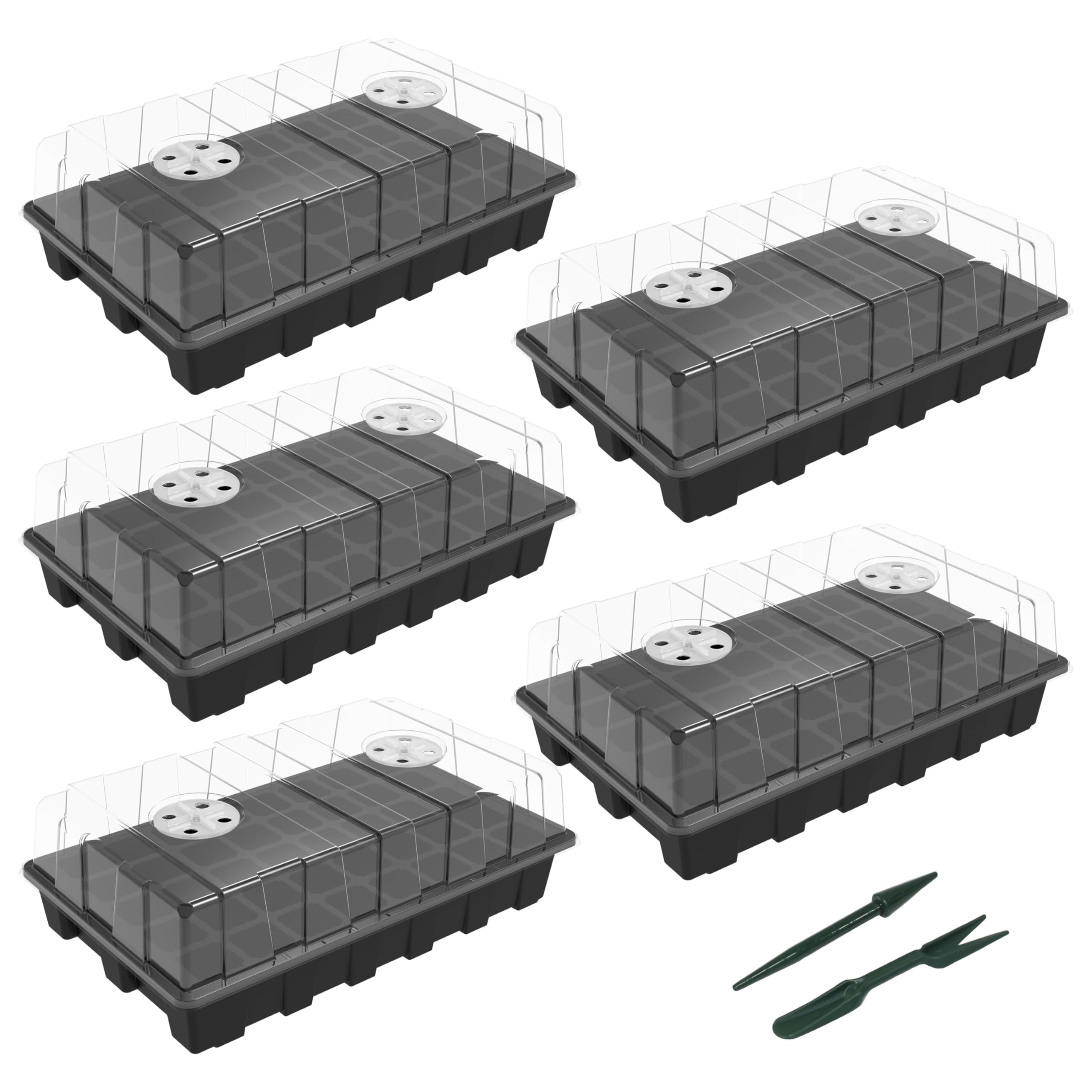
I recommend this five-tray set when I want a compact, economical option that still offers adjustable ventilation and a tight-fitting dome.
Why I picked it: Five sturdy 40-cell trays with upgraded dual vents and a snug dome fit for better humidity control.
Best for: Seed starters who want a no-fuss, inexpensive multi-pack for peppers, herbs, and vegetables.
A budget-friendly multi-pack with solid construction.
Pros
- Dual adjustable vents
- Sturdy premium plastic
- Tight-fitting domes
- Drain holes prevent overwatering
Cons
- Bottom tray edge can be a little thin
- May need tape to secure domes in windy spots
My take
I used the Gardzen set for multiple rounds of peppers, cucumbers, and marigolds. The added vents on the dome are the small upgrade that makes a difference — I can crack them for airflow without losing too much humidity.
Each 40-cell tray is roomy enough for most vegetable starts and the base catches runoff so counters stay clean. The trays feel sturdier than other cheap packs I've tried.
For the price and capacity, this kit handles a lot of starts and is easy to manage on a shelf or heat mat.
3. Burpee SuperSeed 36-Cell Starter Tray – Best for Gentle Transplants
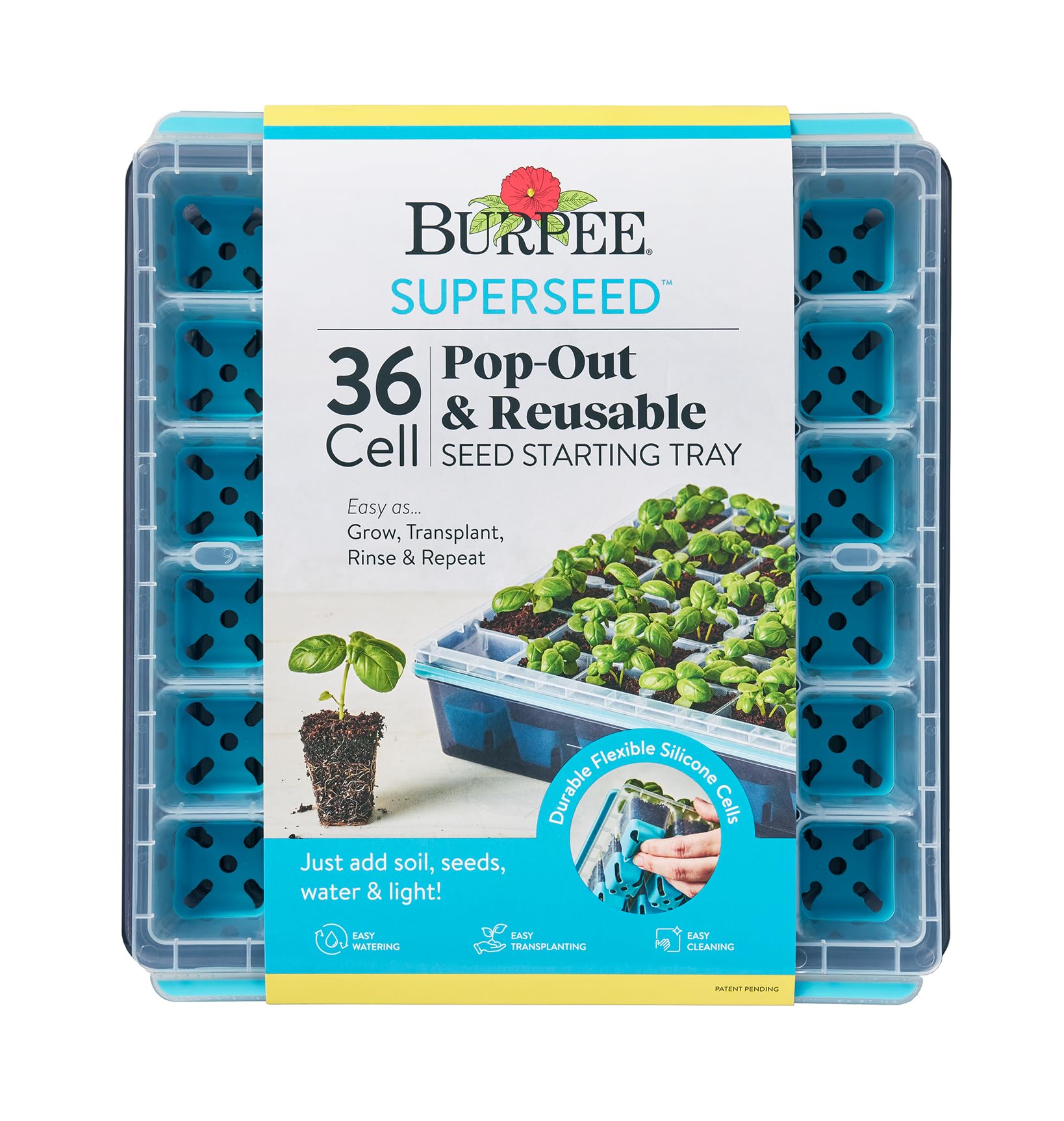
When I want the smoothest transplanting process, this tray's flexible silicone cells reduce root disturbance and make popping seedlings out painless.
Why I picked it: Flexible pop-out silicone cells that cradle roots and ease transplant shock.
Best for: Growers who prioritize gentle removal and reduced transplant shock.
A mid-range single-tray option that pays off at transplant time.
Pros
- Flexible pop-out silicone cells
- Integrated drainage channels
- Easy-to-grip side handles
- Dishwasher-safe cells
Cons
- Covers less area than multi-packs
- No humidity dome included
My take
This tray shines at transplant time. The soft, food-grade silicone cells flex so I can pop seedlings out without pulling roots or tearing stems.
The molded drainage slots and deep watering channels help me avoid soggy roots, and the handles make checking trays easy. I also like the alphanumeric grid for keeping varieties organized.
If you only need one tray and want to reduce transplant stress, this is the option I turn to.
4. Bonviee 12-Cell Starter Kit (5-Pack) – Best for Large Seeds
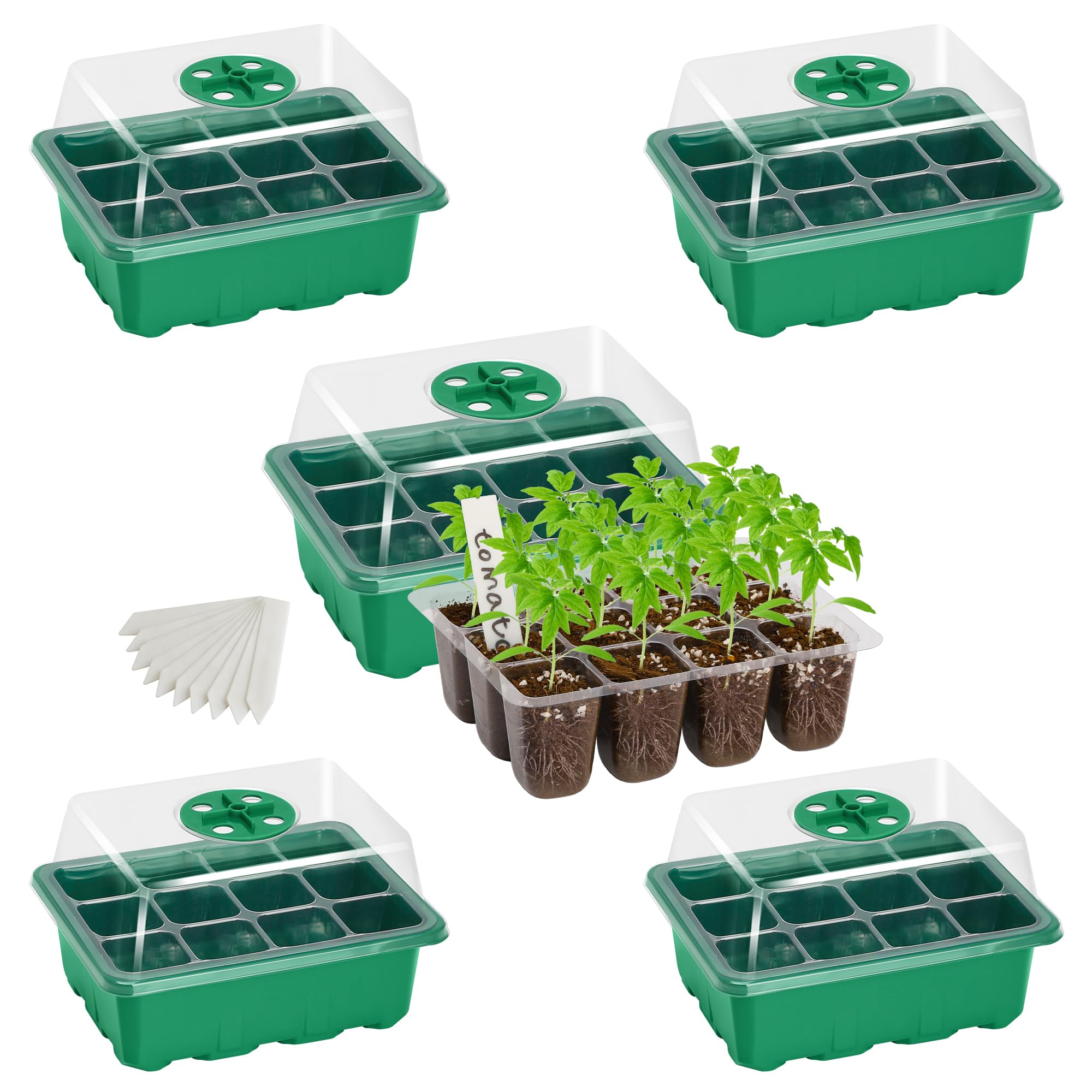
I pick these trays when I'm starting larger seeds—each 1.5-inch square cell gives big seedlings more room before they need potting up.
Why I picked it: Generous 1.5-inch square cells and heat-mat compatibility for big-seed vegetables.
Best for: Starting tomatoes, peppers, eggplants, and other large-seeded crops.
Affordable and practical for growers who start larger seeds.
Pros
- Large 1.5-inch cells
- Heat-mat safe material
- Clear lids for monitoring
- Adjustable ventilation
Cons
- Lower overall capacity per tray
- Plants need repotting sooner
My take
I use these when I want more root space from day one. The larger cells give seedlings room to develop a stronger rootball before I have to pot them up.
The plastic is thicker than many bargain trays, so they stand up to handling and the heat of a mat. The vents help me dial humidity in, and the clear lids make visual checks effortless.
If you grow big-seed crops and want sturdy, reusable trays, these are a dependable choice.
5. YAUNGEL 120-Cell Kit with High Dome – Best Durable High Dome
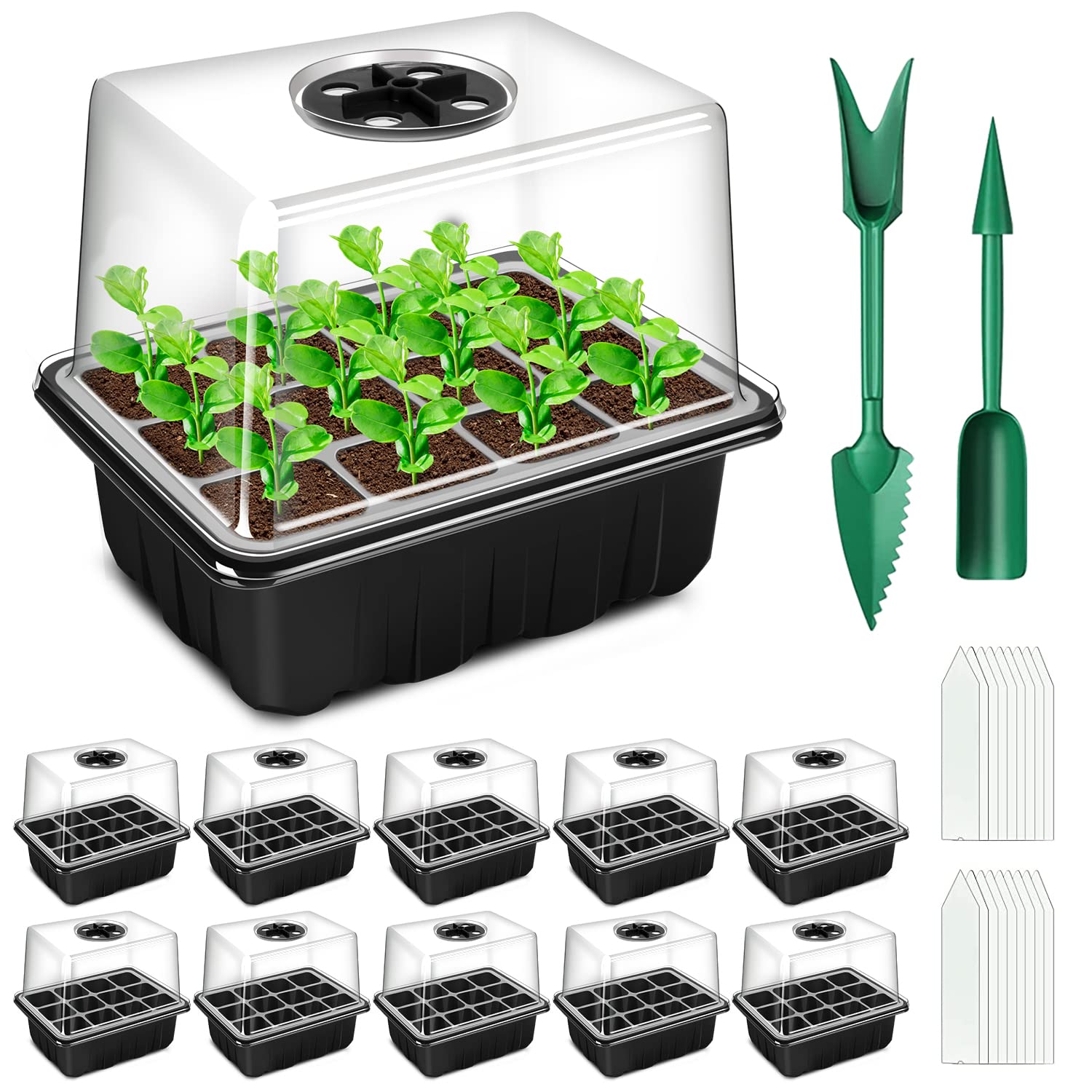
I kept these in rotation because the thicker 0.8mm material feels built to last and the heightened lid gives seedlings more vertical room than typical domes.
Why I picked it: Thicker PVC construction and a taller dome that extends coverage time for growing seedlings.
Best for: Longer-term coverage, fast-growing seedlings, and use with capillary mats.
Good value for a heavy-duty, reusable set.
Pros
- Thick 0.8mm PVC material
- Higher dome for taller seedlings
- Smooth pods clean easily
- Includes labels and small tools
Cons
- Lids sit rather than snap
- Avoid prolonged exposure to very high heat
My take
These became my go-to when I wanted durable trays that stand up to repeated seasons. The material is noticeably thicker than bargain trays and that shows in handling and longevity.
The taller dome is a real advantage — I can keep certain seedlings covered longer and delay potting up. I also appreciate the smooth pod bottoms; they clean quickly and work well with capillary watering setups.
The one small quibble is the lids don't clip in place; they simply sit on top. For my setup that's not a dealbreaker, but it's worth knowing.
6. MIXC 40-Cell Trays (5-Pack) – Best Multipack
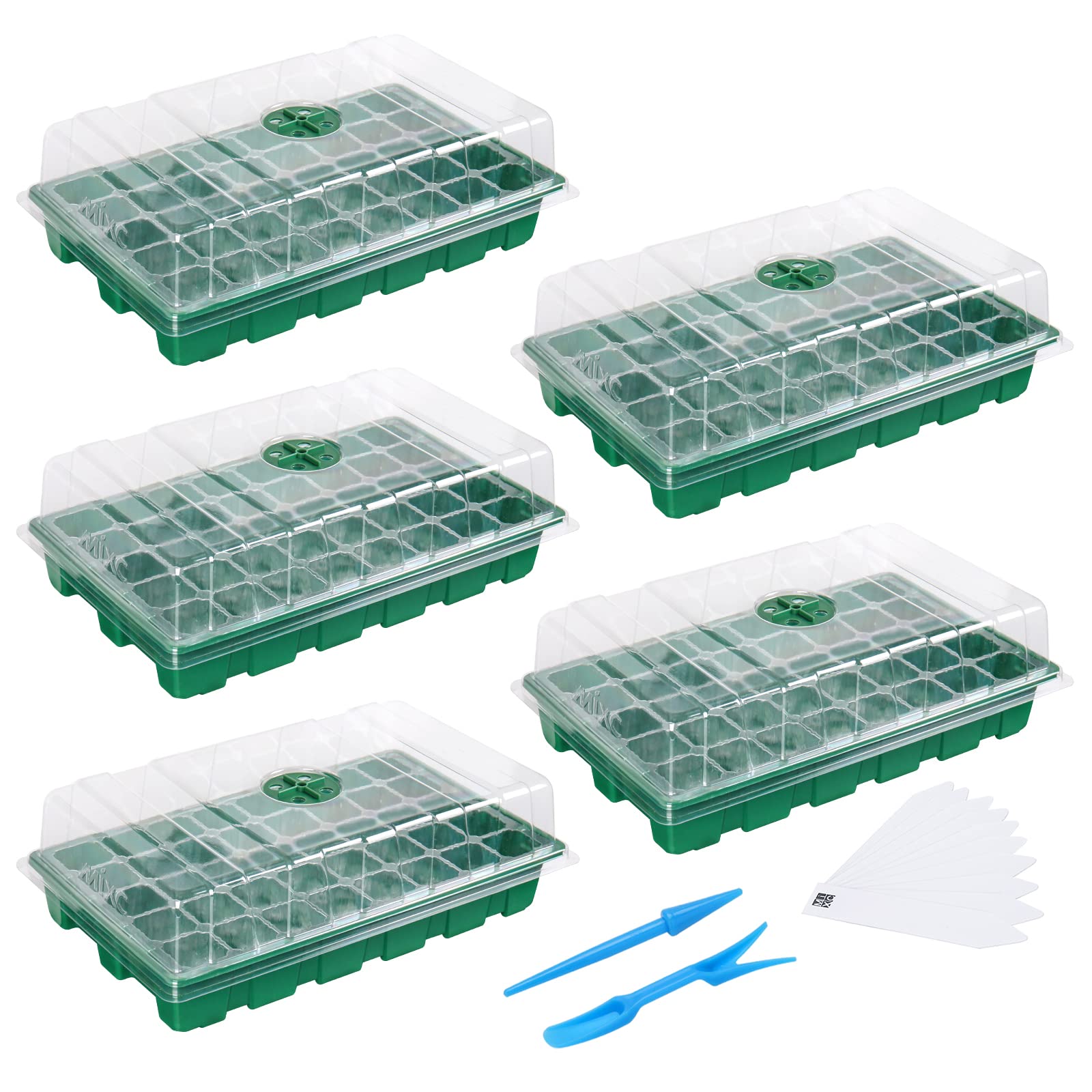
I recommend this five-pack when I need a reliable set of medium-size trays that stack, vent, and handle bottom watering easily.
Why I picked it: Clear inserts, stackable bases, and adjustable vents make large-scale starting easy.
Best for: Starting many small-to-medium seeds with easy drainage and storage.
Affordable multipack that covers a lot of starts.
Pros
- Transparent cell trays
- Stackable bases save space
- Adjustable vents
- Includes plant labels and tools
Cons
- Dome height is modest
- Cells are small for big transplants
My take
I like these trays for their clarity and practicality. The removable inserts make bottom-watering straightforward and the bases prevent mess.
They stack neatly when not in use and the venting lets me tune humidity without lifting the dome constantly. For routine seed-starting chores, these trays get the job done.
Durability is better than many similar-priced sets, so I keep them in rotation every season.
7. MIXC Elevated Kit with LED Grow Light – Best with Grow Light
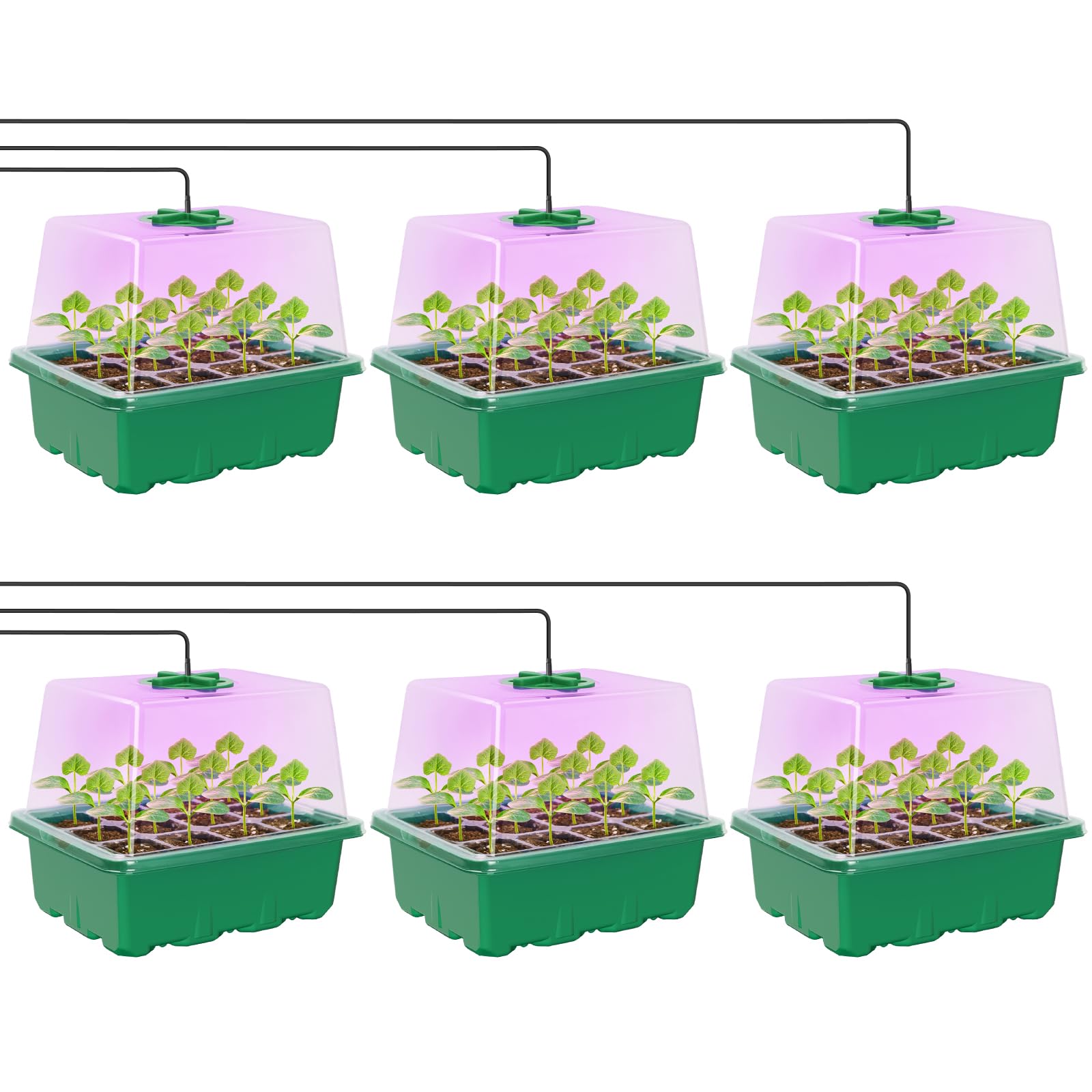
When natural light is limited, I use this kit for its built-in full-spectrum LEDs and the elevated dome that gives seedlings extra headroom.
Why I picked it: Built-in full-spectrum LEDs plus an elevated dome and side grips for easy handling.
Best for: Indoor seed starting during low-light months and small-space growers needing lights included.
A practical mid-priced kit that includes lighting.
Pros
- Full-spectrum LED light included
- Elevated dome for extra space
- Side grips ease transplanting
- Drainage in every cell
Cons
- Light intensity is modest
- Limited cell count per tray
My take
I appreciated how quickly this kit came together. The elevated dome gives seedlings more vertical space, which has reduced how often I need to repot fast growers.
The integrated LEDs mimic sunlight well enough for early growth and paired nicely with a heat mat in my low-light basement. The side-grip design makes lifting the insert easy without disturbing roots.
For small indoor setups where you want light included, this kit is a convenient all-in-one option.
8. SOLIGT 60-Cell Kit with Heat Mat and Lights – Best Complete Kit
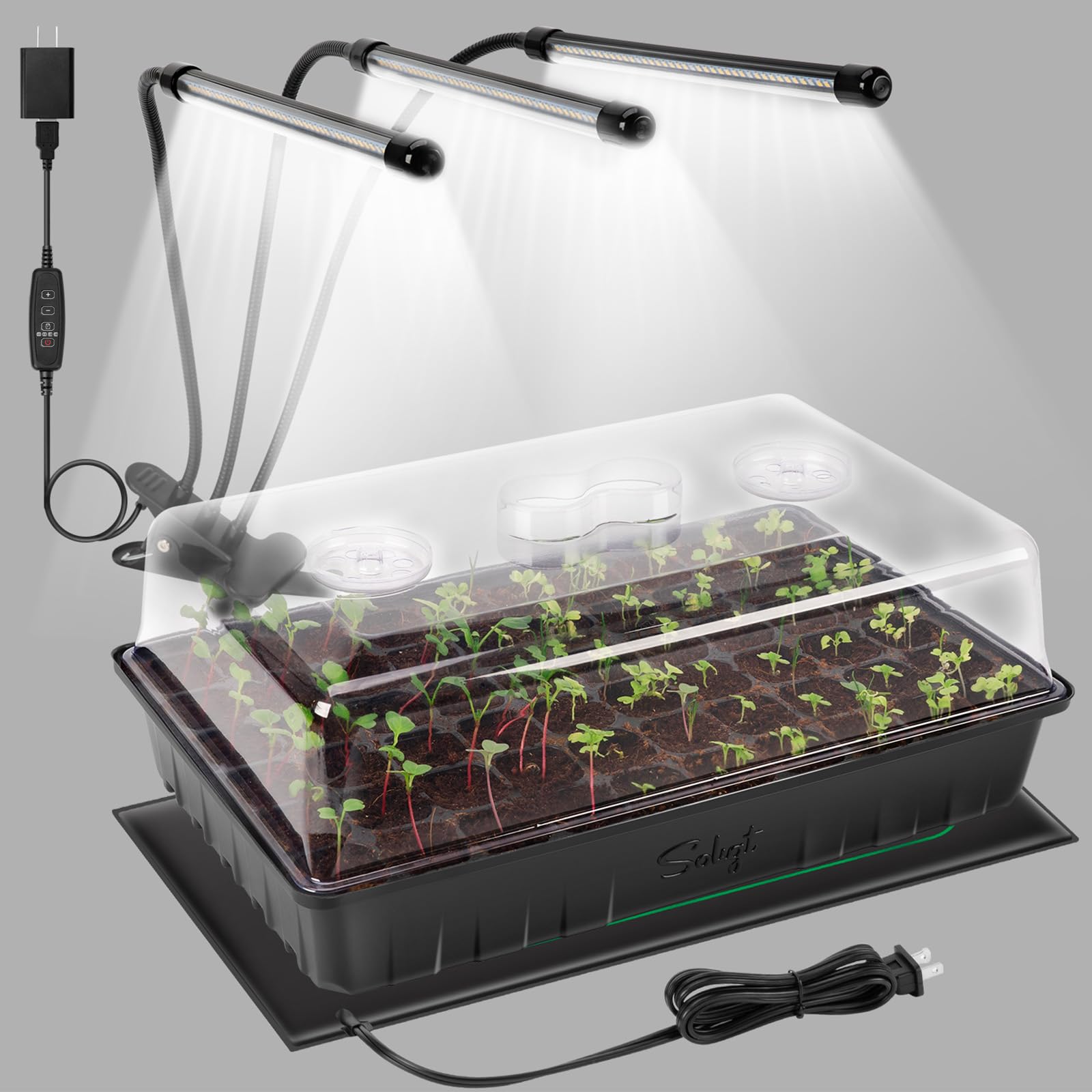
This kit is my pick when I want a true all-in-one system: heat mat, flexible lights with timers, a tall dome, and a 60-cell tray for a tidy, powered setup.
Why I picked it: Includes a waterproof heat mat, adjustable full-spectrum lights with timers, and a tall 4.3-inch dome.
Best for: Gardeners who want a turnkey indoor germination station.
A higher-end kit that bundles heat and lighting in one package.
Pros
- Waterproof heat mat included
- Flexible gooseneck LED light
- Tall 4.3-inch humidity dome
- 60-cell capacity
Cons
- Light leans warm in color
- Built-in timer options are limited
My take
When I need a ready-to-go germination station, this SOLIGT kit delivers. The heat mat produces even warmth that speeds up germination, and the tall dome keeps humidity consistent.
The flexible three-head light gives me placement options and has multiple brightness and timer settings that are handy. I did notice the light runs on the warm side and isn't the brightest grow light I've used, but it's functional for seedlings.
Overall the kit removes a lot of the guesswork for indoor starting and is a strong choice if you want heat and light in one package.
How I Choose a Seed Starting Kit
Key features to prioritize
I look for adjustable vents, reliable drainage, and a dome height that matches how long I plan to keep seedlings covered.
Durability matters to me — thicker plastic and secure dome fits mean trays survive handling and multiple seasons.
- Adjustable vents: prevent mold and let you harden seedlings gradually.
- Drainage and watertight bases: enable bottom watering and reduce overwatering.
- Dome height: choose taller domes for plants that grow quickly.
- Material thickness: thicker PVC lasts longer and resists warping.
Tray size, cell count, and transplanting
I match cell size to the crop. Use many small cells for herbs and microgreens, larger cells for tomatoes and peppers.
For easy transplanting, I favor flexible pop-out cells or trays that let me lift inserts without disturbing roots.
- Small cells = more starts, quicker potting up.
- Large cells = fewer starts, less transplant shock.
- Pop-out cells reduce root disturbance at transplant time.
Lighting and heat
If you lack a sunny windowsill, a kit with integrated LEDs saves space and hassle. I pair kits without lights with standalone full-spectrum LEDs.
A heat mat speeds germination for warm-season crops; make sure your tray material tolerates the mat's temperature.
- Full-spectrum LEDs help stretch seedlings and prevent legginess.
- Heat mats are most useful for peppers and tomatoes.
- Check that domes and trays are rated for the temperatures you use.
Frequently Asked Questions
How many seeds should I sow per cell?
I usually sow one to two seeds per cell for vegetables and one seed for larger crops; I thin to the healthiest single seedling once true leaves appear.
Can I use these trays on a heat mat?
Yes — pick trays rated for higher temperatures and monitor soil temps; many kits specify compatibility with heat mats in their product notes.
How do I prevent damping-off and mold?
I use fresh sterile seed mix, avoid overwatering, and crack vents daily to improve airflow. Good drainage and modest humidity control prevent most problems.
Final Take
Seed starting success comes down to matching kit features to your goals: volume, transplant ease, or an all-in-one heated and lit station. I use multi-packs for scale, silicone trays for gentle transplants, and the complete kits when I want a turnkey setup.
Choose the kit above that fits your space and crops, and you'll cut the guesswork out of the first critical weeks of growing.
