
I tested the most popular Brother machines for garment sewing and quilting to find the best options for beginners, quilters, and stitch-hungry hobbyists.
I spent hands-on time with a range of Brother sewing machines so I could recommend the right tool for making clothes, mending, and quilting. Each machine here earned a spot because it solved a common sewing problem I actually encountered.
Below I compare features I use every day — stitch variety, threading, bobbin system, included feet, workspace, and how forgiving each machine is when things go wrong.
If you want maximum stitch variety and monogramming options, I gravitate toward the HC1850 and XR9550. For straightforward garment sewing or learning the basics I recommend the XM2701 or GX37. The CS7000i balances quilting workspace and features, making it my pick when I want one machine that handles both clothes and quilted projects.
1. Brother CS7000i Sewing and Quilting Machine — 70 Built-in Stitches – Best Overall
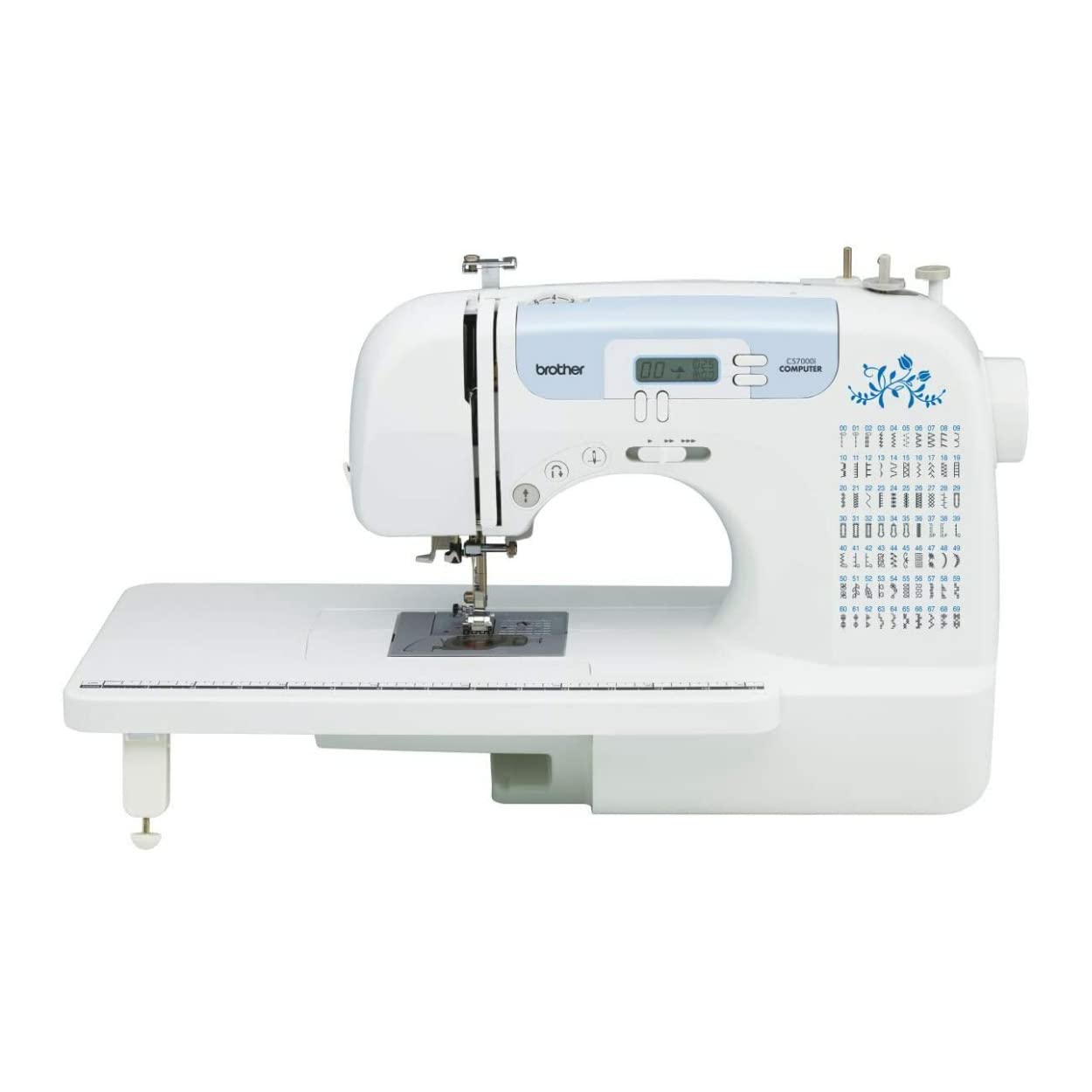
I chose the CS7000i when I wanted a single machine that handled garments and quilting without feeling complicated.
Why I picked it: Great mix of stitches, wide table, and useful accessories right out of the box.
Best for: Sewists who make clothing and quilts and need versatility.
Excellent value for the feature set.
Pros
- 70 built-in stitches
- Automatic needle threader
- Drop-in top bobbin
- Detachable wide table
- Ten included presser feet
Cons
- Mostly plastic exterior
- Not as heavy-duty for very thick fabrics
My take
I appreciate how quickly I can switch between utility and decorative stitches; the 70 options cover hemming, topstitching, and light embellishment without needing extras.
Threading and bobbin setup are one-time, low-friction tasks thanks to the automatic needle threader and drop-in bobbin. That saved me a lot of starting-frustration on small clothing projects.
The wide table makes cutting and piecing quilt blocks or stabilizing a dress hem noticeably easier. When I sew sleeves or pants cuffs I use the free arm and it performs reliably.
The included feet and protective hard case mean I can start sewing garments the same day I unpack the machine. For mixed garment and quilting work, this is the best balance I found.
2. Brother XM2701 Lightweight Sewing Machine — 27 Stitches – Best for Beginners
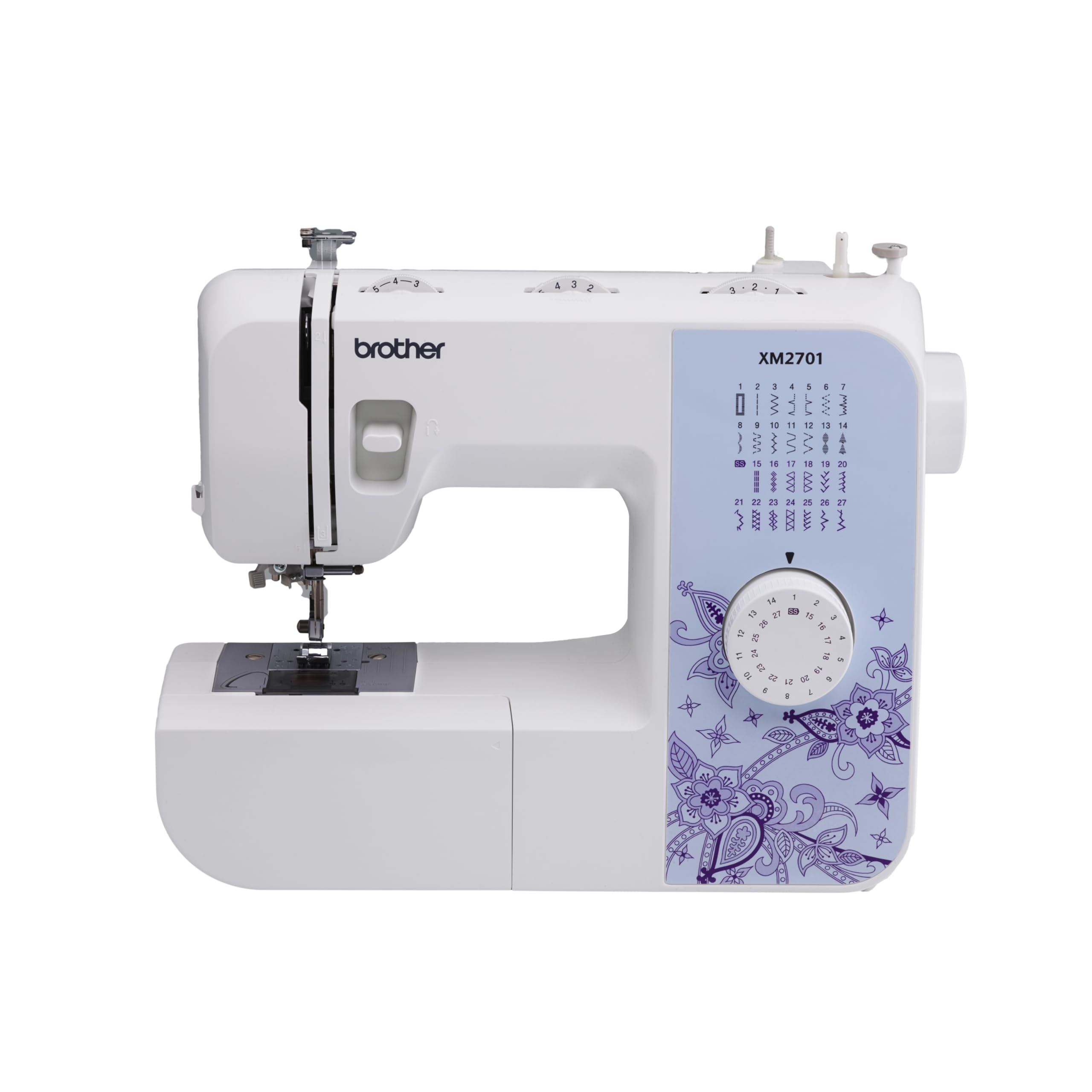
I recommend the XM2701 when someone wants an unfussy, lightweight machine that makes basic clothes and repairs easy.
Why I picked it: Simple controls, reliable stitch performance, and genuinely beginner-friendly features.
Best for: New sewists, mending, and basic garment construction.
Very affordable and low-risk for new sewists.
Pros
- Easy-to-follow threading
- 27 useful stitches
- Lightweight and portable
- Quick-change presser feet
- Free arm for cuffs
Cons
- Limited stitch selection
- Not ideal for heavy fabrics
My take
I taught a beginner to use this machine and they were stitching hems and buttonholes within an hour; the setup is that straightforward.
The automatic one-step buttonholer and drop-in bobbin remove a lot of beginner frustration, so I spent more time sewing and less time troubleshooting.
Because it’s lightweight and simple, I keep this model in my go-bag for travel sewing or last-minute repairs. It handles typical garment-weight fabrics and knits surprisingly well.
3. Brother XR3774 Sewing and Quilting Machine — 37 Stitches, Wide Table – Best for Quilters on a Budget
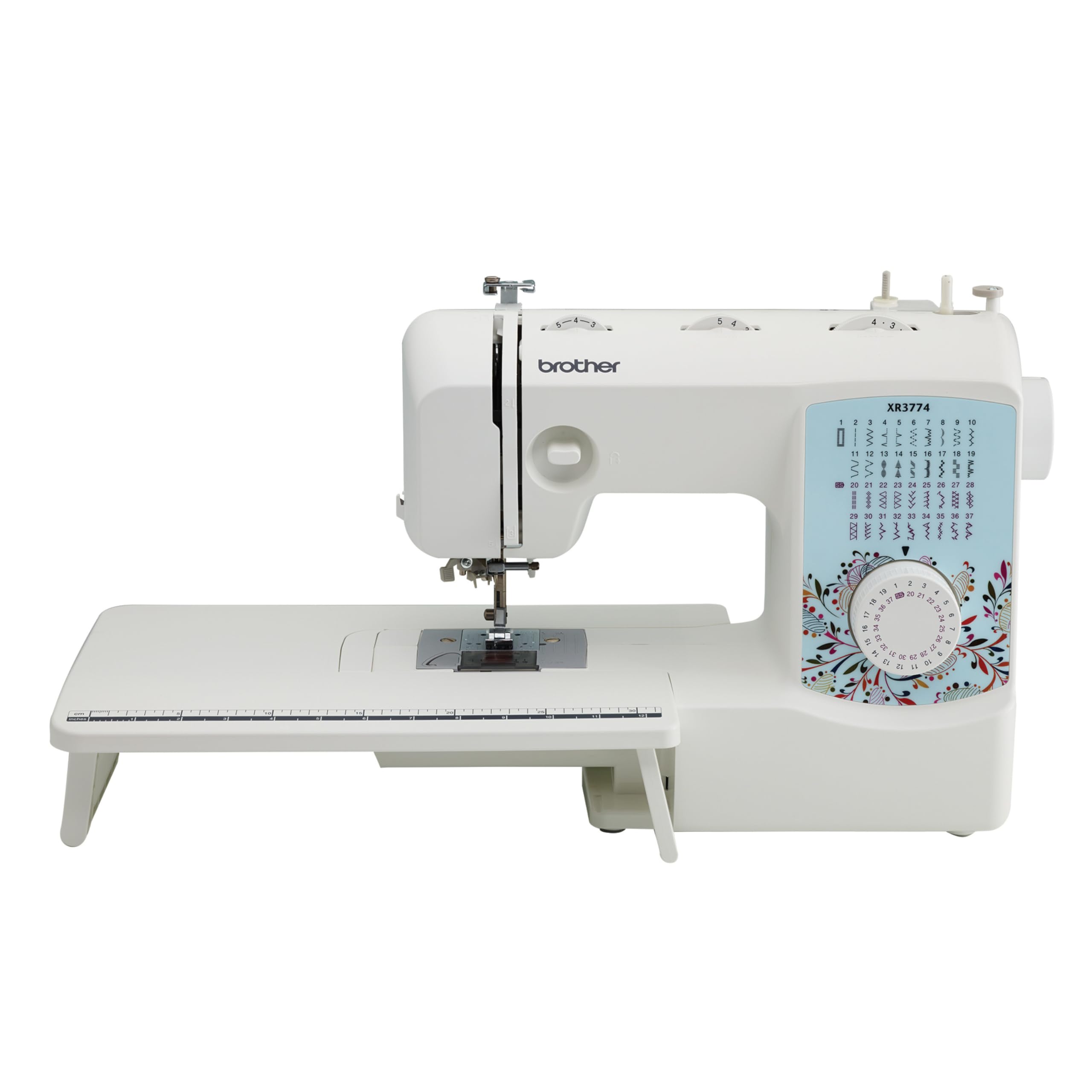
I picked the XR3774 when I needed quilting features without stepping up to a pricier computerized machine.
Why I picked it: Good quilting workspace and easy threading at a budget price.
Best for: Lap and baby quilts, plus everyday clothing projects.
Budget-friendly option for quilters.
Pros
- Wide table included
- 37 built-in stitches
- Automatic needle threader
- Instructional DVD
- Lightweight and portable
Cons
- Fewer stitch styles
- Basic feed system compared to advanced models
My take
I completed several lap quilts on this machine; the wide table and drop feed make piecing and free-motion quilting manageable for me.
Threading is quick, the needle threader works as advertised, and the machine stayed reliable through multi-layer quilt sandwich sewing.
If you want a straightforward quilting-capable machine without a steep price, this hits the sweet spot between capability and simplicity.
4. Brother HC1850 Sewing and Quilting Machine — 185 Built-in Stitches – Most Feature-Rich
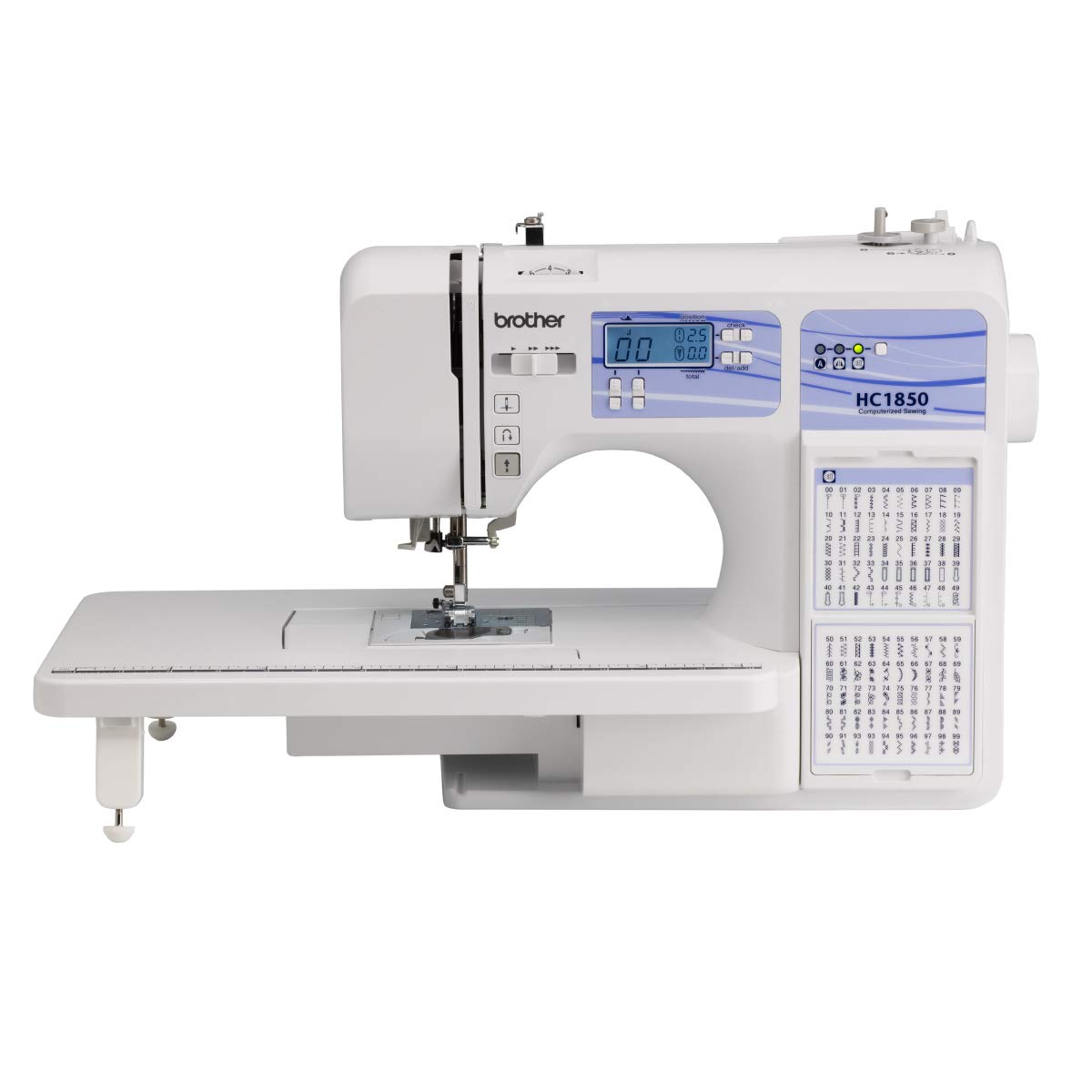
I reach for the HC1850 when I want the most stitch variety and monogramming without moving to an industrial machine.
Why I picked it: Huge stitch library plus alphanumeric font and advanced threading.
Best for: Decorative stitching, monogramming, and heavy hobby use.
More feature-heavy and priced accordingly.
Pros
- 185 built-in stitches
- 55 alphanumeric stitches
- Advanced needle threader
- Detachable wide table
- Excellent stitch customization
Cons
- Learning curve for all features
- Slightly heavier to move
My take
I used the alphanumeric stitches to add initials to a shirt pocket and the characters came out crisp — the font options are genuinely useful for personalized garments.
The advanced threading system and push-button stitch selector speed up switching between detailed decorative stitches and heavy-duty seams.
When I needed reliable stitching on a variety of fabrics, from silky blouses to medium-weight denim, this machine handled the changes in tension and stitch length better than simpler models.
5. Brother GX37 Sewing Machine — 37 Built-in Stitches – Best Simple Manual Machine
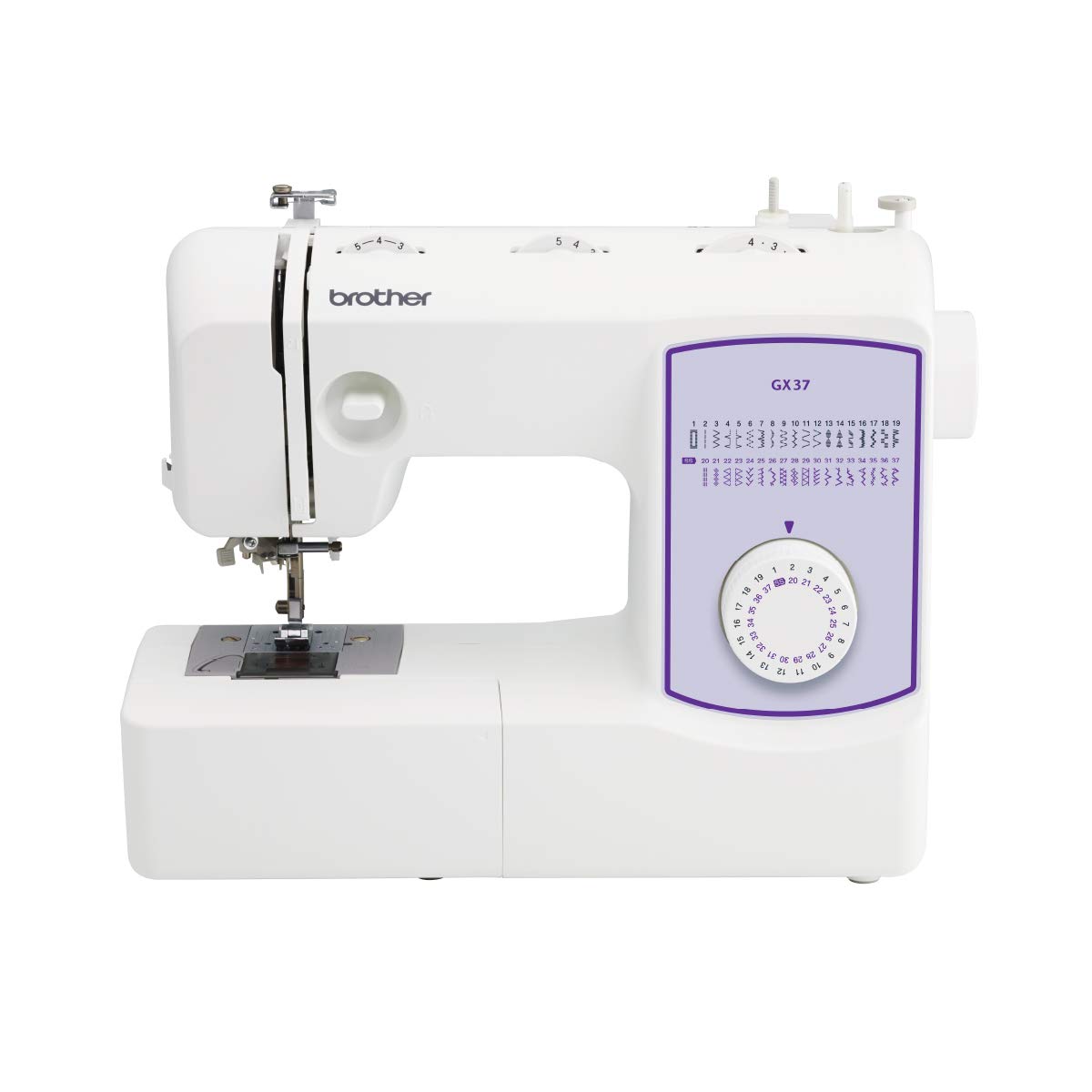
I recommend the GX37 when you want a straightforward, dial-operated machine for clothes without extra complexity.
Why I picked it: Immediate usability with clear stitch dial and essential accessories.
Best for: Hemming, repairs, and quick garment projects.
Budget-friendly and practical.
Pros
- Simple stitch dial
- 37 useful stitches
- Automatic one-step buttonhole
- Compact and lightweight
- Includes six presser feet
Cons
- Manual controls only
- Fewer advanced features
My take
I unpacked this and started sewing in minutes; the stitch icons printed on the machine make selection intuitive.
For mending and basic garment construction this machine is forgiving; I rarely had to fuss with tension when switching fabrics.
Its lightweight build makes it ideal for taking to classes or using in a small studio where space is limited.
6. Brother XR9550 Computerized Sewing and Quilting Machine — 165 Stitches – Best for Advanced Stitch Variety
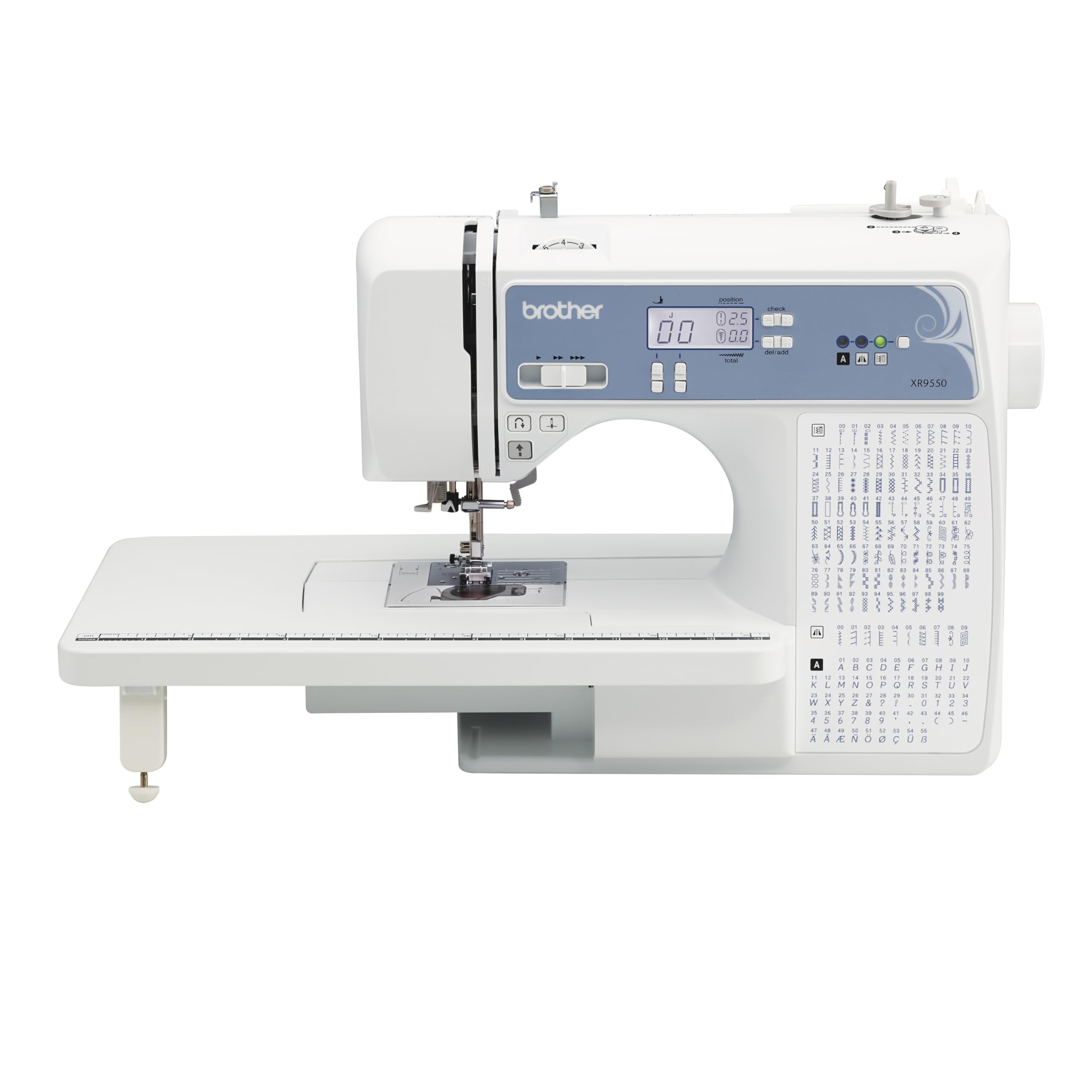
I recommend the XR9550 when I want expansive stitch choices and computerized convenience without moving to a pro-level machine.
Why I picked it: Large stitch library, alphanumeric options, and clear LCD controls.
Best for: Hobbyists who experiment with decorative stitches and monograms.
Mid-to-upper range for dedicated hobbyists.
Pros
- 165 built-in stitches
- Large LCD display
- Snap-on presser feet
- Wide table included
- Fast needle threading
Cons
- Hard cover contains styrofoam
- Slightly heavier footprint
My take
I like the intuitive LCD and push-button selectors; choosing complex stitches and adjusting settings is fast and predictable.
The snap-on presser feet make swapping from zipper to quilting foot a two-second task, which I appreciated during back-to-back projects.
A useful note: the hard cover includes protective styrofoam that should remain in place; removing it risks scratching the case or losing protective support.
How I Choose a Sewing Machine for Clothes
Stitch Variety and What It Means
I look at the number and type of built-in stitches and decide whether I need mostly utility stitches, fancy decorative options, or alphanumeric fonts for monogramming.
For basic garment sewing, 20–40 stitches cover hems, stretch stitches, and a buttonhole. If I’m decorating or monogramming, I favor machines with 100+ stitch libraries.
- Utility stitches: essential for seams and hems
- Stretch stitches: important for knit garments
- Decorative/alphanumeric: useful for personalization
Threading and Bobbin System
I prioritize machines with an automatic needle threader and a top drop-in bobbin; they remove a lot of starting frustration and reduce bobbin jams.
If a machine makes it easy to wind a bobbin and start sewing right away, I can focus on fabric and fit instead of setup.
- Automatic needle threader = time saved
- Drop-in bobbin = fewer tangles
- Clear or see-through bobbin case helps monitor thread
Workspace, Presser Feet, and Accessories
When I sew dresses or quilts I want a wide table and included presser feet such as zipper, walking/quilting, and blind-hem feet.
Snap-on feet and a good set of included accessories let me start garment projects immediately without buying extras.
- Wide table = better support for large pieces
- Walking foot helps match seams and layers
- Buttonhole and zipper feet are essential for clothing
Computerized vs. Mechanical
I choose a computerized machine when I want quick stitch selection, more stitch options, and an LCD for precise settings.
Mechanical machines are simpler, lighter, and excellent for beginners or travel; they’re also easier to repair in some cases.
- Computerized: faster selection, more features
- Mechanical: simpler, often more portable
Durability and Support
I consider warranty length and brand support; machines that offer long-term online help make troubleshooting less stressful.
Build materials matter; heavier machines handle thicker fabrics better, but lightweight models win on portability.
- Check warranty and manufacturer support
- Heavy duty for thicker fabrics, lightweight for portability
Frequently Asked Questions
Which machine is best if I only want to sew clothes?
I recommend the XM2701 or GX37 for clothing-only work — they’re easy to use, handle common garment fabrics well, and include zipper and buttonhole feet.
Do I need a wide table to sew garments?
I don’t always use a wide table for simple garments, but when I’m working on dresses, coats, or quilted garments it makes handling fabric far more comfortable.
Is a computerized machine worth it for hobby sewing?
For me, a computerized machine is worth it when I want lots of stitch designs, quick settings, or monogramming. If I only need repairs and basic garments, a mechanical machine is perfectly fine.
Should I remove the styrofoam from the hard cover?
I keep the styrofoam in place — it protects the machine during transport and the manufacturer advises not to remove it.
Final Take
I picked these machines to cover the spectrum from beginner-friendly to stitch-heavy hobbyist machines so you can choose based on how you plan to use it.
If you want a single, versatile machine for clothes and quilting, the CS7000i is my top recommendation. For beginners, the XM2701 and GX37 make good, low-friction first machines. If you crave stitch options and monogramming, consider the HC1850 or XR9550.
Whichever model you pick, focus on the features you’ll actually use: the right presser feet, a reliable bobbin system, and a comfortable workspace will make the biggest difference in your sewing.
