
I tested a range of sewing basics—from an extra-large cutting mat to bulk clip packs and multi-size seam rippers—to find which tools actually make sewing, quilting, and craft work faster and cleaner.
I spend a lot of time at my sewing table, so I prioritize tools that save time and reduce fuss. For this roundup I focused on essentials I reach for repeatedly: a cutting mat that handles full-width fabric, a few clip styles for different fabrics and presser-foot work, and several seam ripper/snips kits for precision unpicking and trimming.
In the sections below I explain why each tool earned a spot in my kit, how I use it, and which projects each one suits best. I also included a short buying guide and answers to common questions I hear from friends who sew.
I compared size, durability, markings, and practical features like replaceable blades and storage. Where tools overlap I call out the specific advantage that made me reach for one over another.
1. Fiskars Self-Healing Cutting Mat 24 x 36 – Best Overall
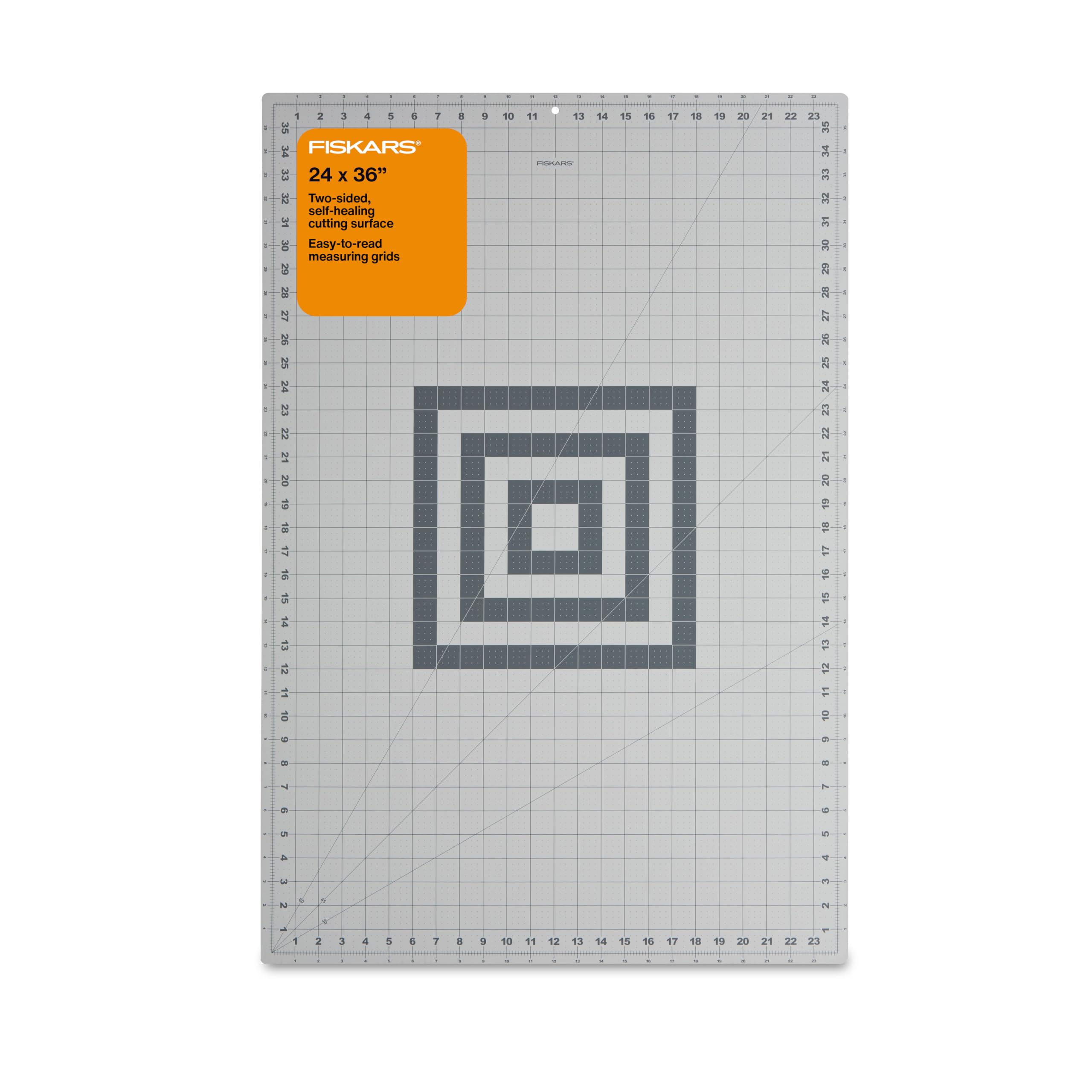
Extra-large, double-sided self-healing mat with easy-to-read grids and bias lines for accurate cutting.
Why I picked it: I needed a mat big enough to cut full fabric widths and long strips without shifting pieces.
Best for: Quilters and sewists who work with wide fabric bolts or large projects.
A more expensive option, but I view it as a long-term investment for big projects.
Pros
- Very large cutting surface
- Double-sided, self-healing finish
- Clear 30/45/60-degree bias lines
- Protects tabletop from blades
Cons
- Requires flat storage
- Bulky to move around
My take
I use this mat when I want to cut full widths straight off the bolt. The extra-large surface means I rarely have to rotate or re-position fabric mid-cut, which speeds up setup and reduces mistakes.
The grids and bias lines are sharp and easy to read from across my table, so I can measure and cut in one pass. The self-healing surface has held up to rotary cutters and repeated use on both sides.
It’s lighter than some mats I’ve used, which makes it easy to lift but also means I store it flat to avoid warping. Overall, I treat this as a serious work surface—perfect for quilting but worth the storage consideration.
2. Assorted Sewing Clips 100-Pack with Jar – Best Value Clips
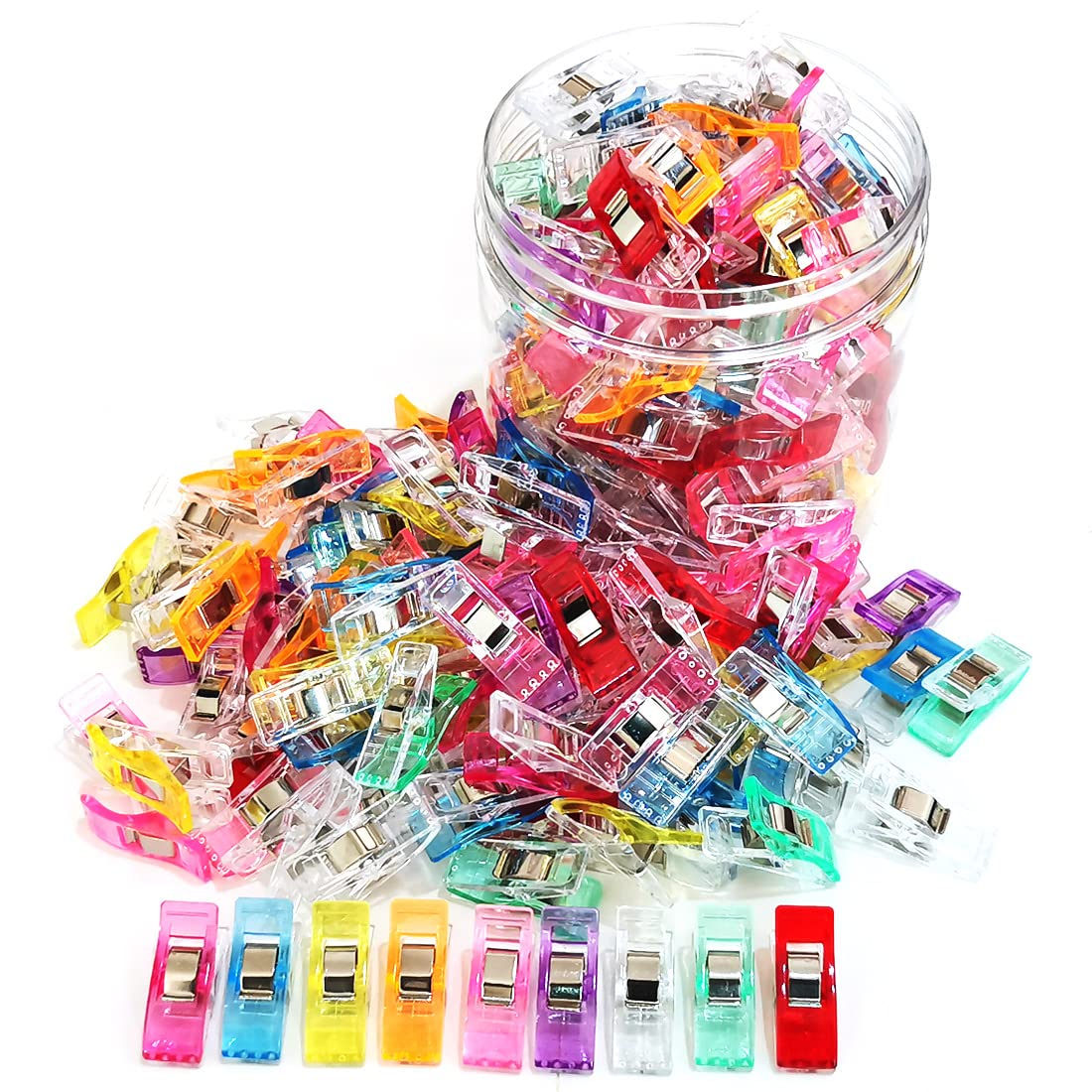
100 transparent AS-plastic clips in assorted colors, with three marking lines and a clear storage jar.
Why I picked it: I wanted a large, affordable supply of durable clips I could keep handy in a jar.
Best for: Quilting, binding, hemming, and replacing pins on thicker fabrics.
An affordable bulk set that keeps extras on hand for big projects.
Pros
- Lots of clips in one jar
- Clear plastic, bright colors
- Marking lines for measurement
- Strong grip without pinholes
Cons
- A bit heavy on very delicate fabrics
- Jar lid can be loose in some batches
My take
I keep this jar on my cutting table and reach for a clip more often than a pin now. The clips are strong enough to hold multiple layers and their flat backs feed well under the presser foot.
The three marking lines on each clip make quick seam-allowance checks simple while I’m assembling pieces, and the bright colors are easy to spot when I spill a few onto the floor.
They don’t leave pinholes, which is a big advantage on delicate or prefinished edges. For thicker materials they outperform pins, though I’m cautious using them on the flimsiest silks.
3. Seam Ripper and Thread Remover Kit (2 Large, 2 Small + Snip) – Best Small Tools Kit
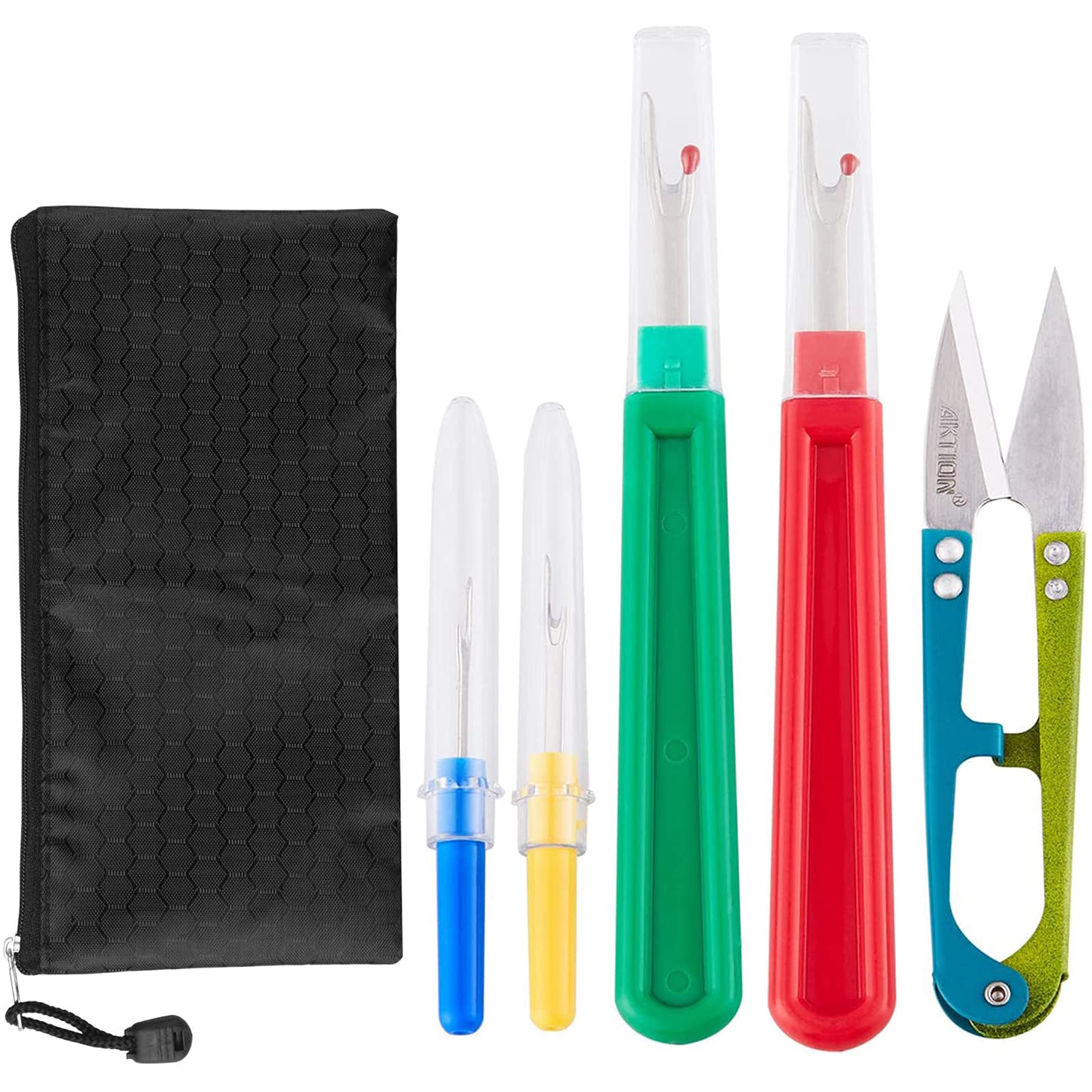
A compact set with two sizes of seam rippers, protective caps, and a trimming snip for detailed work.
Why I picked it: I wanted a small, versatile kit that covers both precision and heavy-duty unpicking.
Best for: Opening buttonholes, ripping seams, and precision thread removal.
A budget-friendly kit that covers common unpicking tasks.
Pros
- Two sizes for precision and heavy work
- Protective caps included
- Red safety ball protects fabric
Cons
- Plastic handles feel basic
- Caps can be easy to lose
My take
I rely on the smaller rippers for fine stitches and neckline repairs, and the larger ones for heavy seams. The red safety ball on the small fork keeps me from nicking delicate fabric while I work.
The metal snip is sharp and handy for trimming loose threads quickly. I appreciate that the clear cap on the small ripper doubles as a short extension for tight spots.
This kit isn’t fancy, but the tools are sharp and dependable—exactly what I want when I need to fix a stitch quickly.
4. Multipurpose Sewing Clips 30-Pack – Best for Presser-Foot Sewing
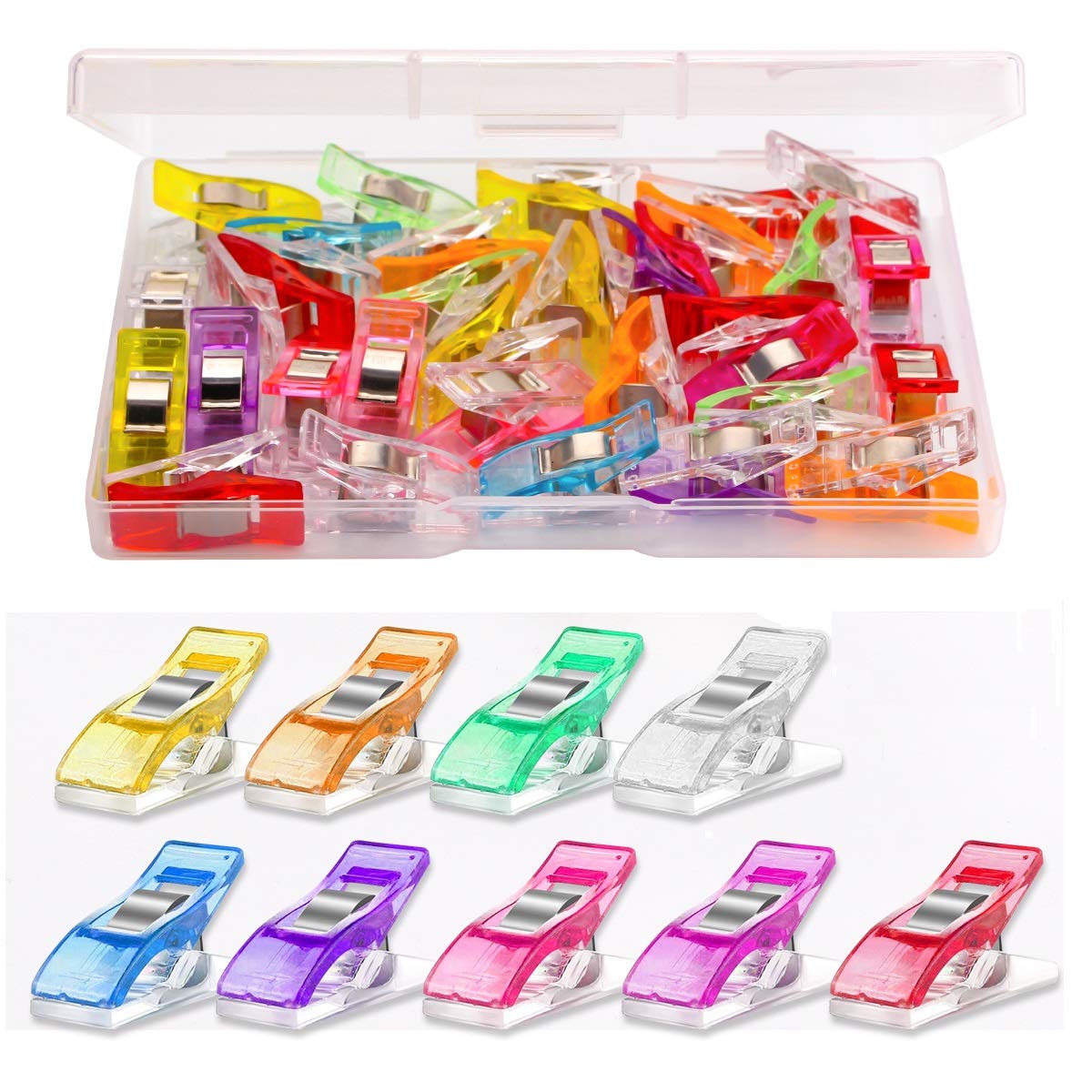
Thirty colorful clips with a flat base and guide markings for 5, 7, and 10 mm seam allowances.
Why I picked it: I needed clips that feed cleanly under my presser foot and help me keep consistent seam allowances.
Best for: Sewing with a presser foot and holding narrow seam allowances.
A low-cost way to add precise clips to a sewing kit.
Pros
- Flat base feeds under presser foot
- Guide lines for seam allowances
- Opens wide to 10 mm
Cons
- Smaller size may not suit bulky layers
- Random color mix in packs
My take
When I’m topstitching or attaching binding, these clips slide under the presser foot without tipping. The guide lines let me line up a 5 or 7 mm allowance without reaching for a ruler.
They’re smaller than some other clips but that makes them ideal for delicate seams and narrow bindings. I use them when pins would distort the edge.
They won’t replace heavy-duty clamps for thick batting, but for most garment and quilt assembly tasks they’re exactly what I need.
5. 8-Piece Seam Ripper Set (4 Large & 4 Small) – Best Bulk Ripper Set
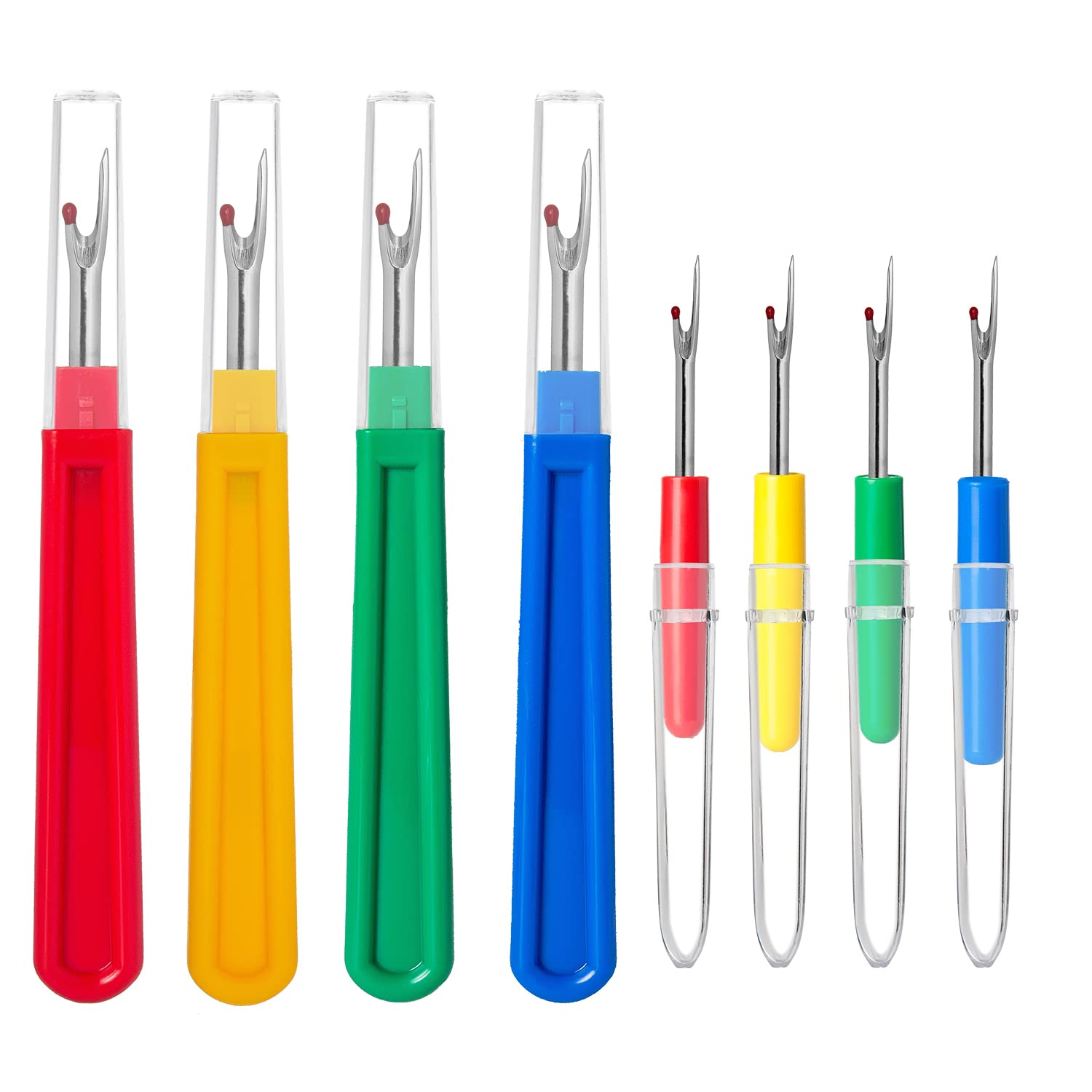
Eight seam rippers in two sizes with red safety balls and protective caps for steady, repeated use.
Why I picked it: I wanted a stash of dependable rippers so I always have the right size nearby.
Best for: Everyday mending, embroidery fixes, and label removal.
Very inexpensive and practical to stock multiple sewing zones.
Pros
- Multiple rippers for different tasks
- Red safety balls prevent fabric snags
- Good value for quantity
Cons
- Not ergonomic for long sessions
- Caps don’t attach firmly to handles
My take
I keep several of these around the house, in my machine drawer and project bag. The larger ones handle thick seams reliably while the small ones slip into fine stitches and labels.
They’re sharp out of the package and cut thread cleanly, which saves me time when fixing sewing mistakes. For marathon unpicking I’ll choose a more ergonomic tool, but for quick corrections these are great.
Because there are multiple pieces I don’t worry about misplacing one mid-project—the set makes it easy to leave a tool with each workstation.
6. Seam Ripper and Thread Cutter Kit with Scissor – Best Feature-Rich Rip Kit
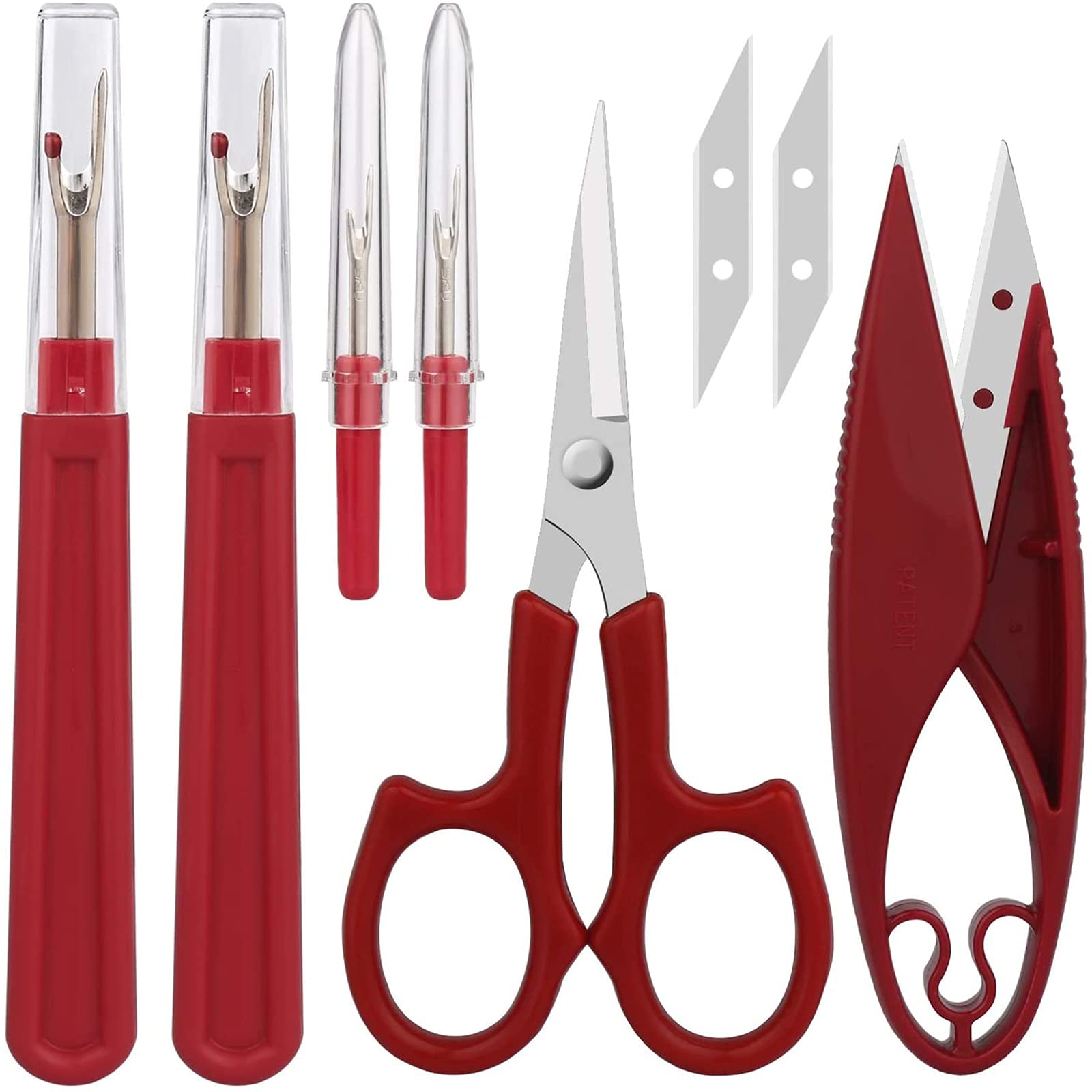
Four rippers, a double-edged thread cutter with spare blades, and a 5-inch curved scissor for trimming details.
Why I picked it: I wanted replaceable blades and a curved scissor for close trimming and appliqué work.
Best for: Sewists who value replaceable blades and fine trimming tools.
A mid-range kit that adds replaceable blades and a quality snip.
Pros
- Thread cutter has replaceable blades
- Curved scissor for precise trimming
- Multiple rippers included
Cons
- Small rippers can be hard to grip
- Extra blades require careful handling
My take
I was impressed by the thread cutter’s double-edged design and the spare blades—having replacements keeps a cutter by the machine without worry.
The curved scissor is my go-to for trimming appliqué and trimming batting close to stitching; the shape lets me see and control the cut.
I did find the small rippers less comfortable for long sessions, so I use the larger handles when I anticipate heavy unpicking. Overall the set adds practical extras that I reach for often.
7. CampTek Sewing Clips Pack of 100 with Tin Box – Best Giftable Set
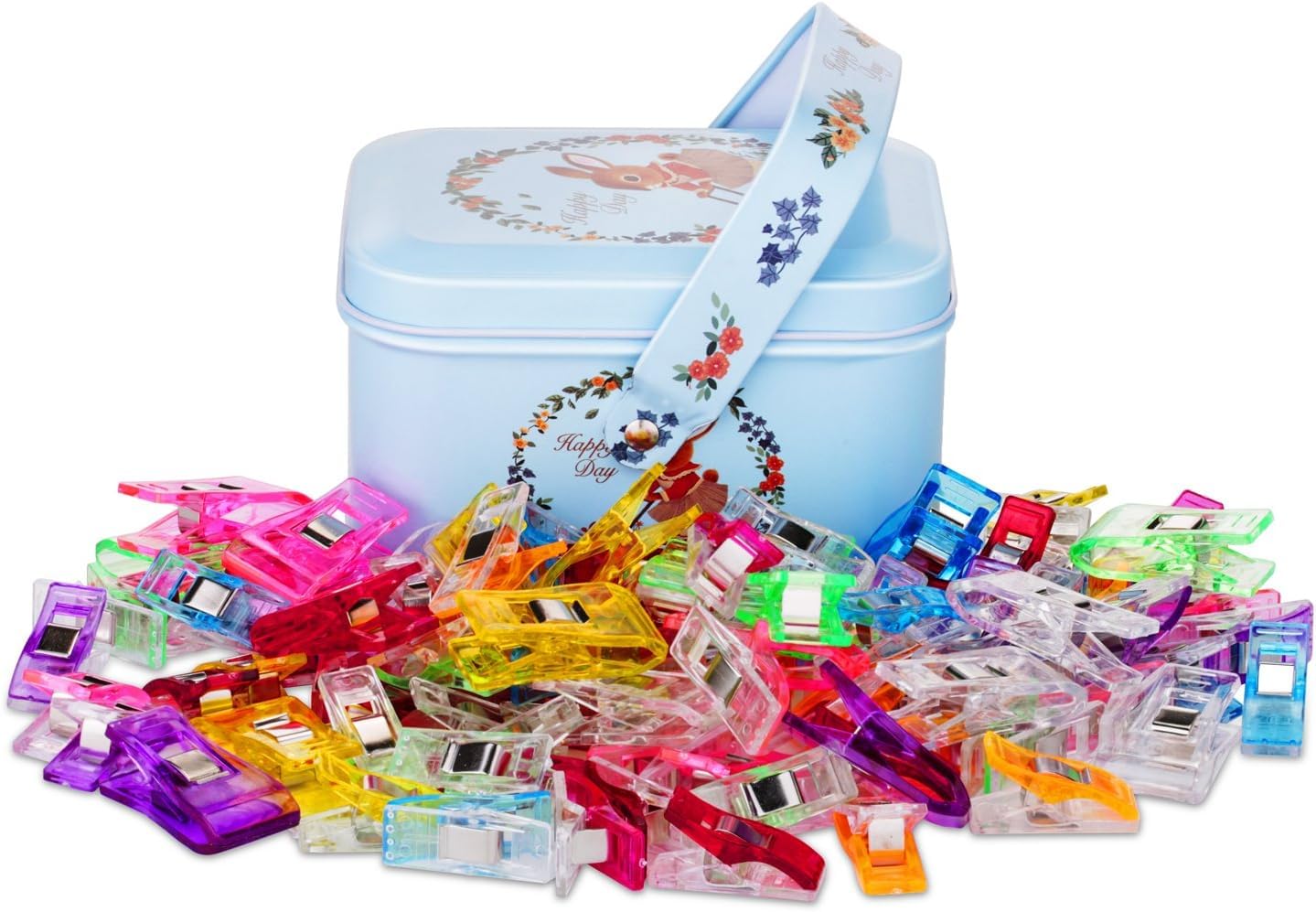
Pack of 100 clips (80 small, 20 mid-size) in bright colors, with guide lines and a tin storage box.
Why I picked it: I like having both small and mid-size clips and a sturdy tin for storage or gifting.
Best for: Mix projects that need both small precision clips and larger clips for bulkier seams.
An affordable, presentable set that makes a practical gift.
Pros
- Combination of small and mid-size clips
- Comes in a tin storage box
- Guide lines for measurements
Cons
- Tin lid can be loose
- Small clips may not suit heavy layers
My take
I used the larger clips on a fleece cushion and they held the bulky seam allowances without slipping. The mix of sizes means I didn’t have to hunt for a larger clip mid-project.
The tin box is cute and portable for classes or retreats, though I noticed the top isn’t always a tight fit. For gifting or keeping in a craft tote it’s a nice touch.
Overall the color variety and quantity make this a strong grab-and-go option when I’m juggling multiple projects.
8. Plastic Sewing Clips 120-Pack with Jar – Best Bulk Pack
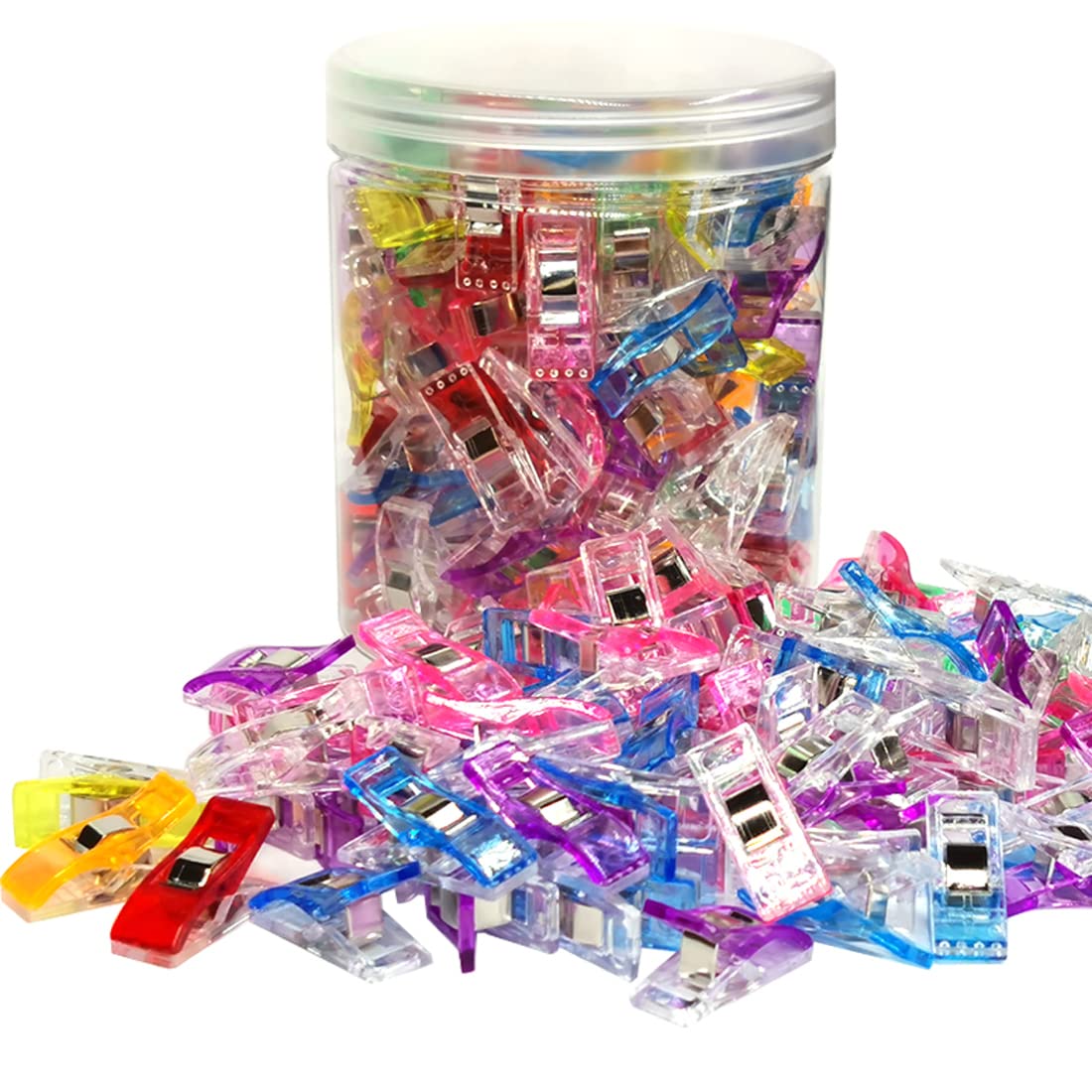
120 transparent AS-plastic clips with three marking lines and a clear jar for storage.
Why I picked it: I wanted the largest count for extended projects and multiple workstations.
Best for: Large quilts, classes, or when I need a lot of spare clips.
Excellent value for the number of clips provided.
Pros
- Huge quantity for big projects
- Clear jar for storage
- Works well on thicker fabrics
Cons
- Clips are basic size only
- Not ideal for very delicate fabrics
My take
I grabbed this pack for a large zipper-bag project and appreciated having so many clips on hand; I didn’t run out mid-seam.
They’re sturdy and clip closed without slipping, and the jar keeps them tidy on my shelf. For everyday sewing these are a reliable, cost-effective supply.
If you need specialty sizes you’ll supplement with other packs, but for bulk needs this set keeps my studio stocked.
How I Choose Sewing Tools
Key features I check
I focus on durability, ergonomics, and how each tool fits into my workflow. A tool that looks good but slows me down gets replaced quickly.
For cutting mats I prioritize size, grid clarity, and a true self-healing surface. For clips I look at opening width, base shape for presser-foot feeding, and whether they mark seam allowances. For seam rippers I check blade sharpness, whether the ripper has a safety ball, and whether caps or spare blades are included.
- Cutting mats: choose a size that fits your fabric widths and workspace.
- Clips: look for flat bases if you sew with a presser foot.
- Seam rippers: small fork for precision, larger for heavy seams.
- Storage: jars or tins keep clips from scattering around the studio.
- Replaceable blades: useful for thread cutters to extend tool life.
Project-based recommendations
When I’m quilting I always pick a large mat and a mix of clip sizes so I can handle binding and multiple layers. For garment sewing I keep smaller clips and a fine seam ripper handy.
If I’m teaching or taking supplies to a retreat I prefer big bulk packs in jars or tins so every participant can grab what they need.
- Quilting: extra-large mat + mix of clips (small + mid-size).
- Garment sewing: precise small clips + a sharp small ripper.
- Travel/retreats: compact tins or jars that close securely.
Frequently Asked Questions
Are sewing clips better than pins?
I use clips instead of pins when I want to avoid pinholes, speed up assembly, or hold bulky layers. For extremely fine fabrics I still reach for pins, but clips are my go-to for quilting and binding.
How do I care for a self-healing cutting mat?
I keep my mat flat away from direct sunlight, clean it with warm water and mild soap, and avoid heat. That routine preserves the self-healing surface and keeps grid lines readable.
Which seam ripper size should I keep close to my machine?
I keep a small ripper for buttonholes and embroidery and a larger one for long seams. Having both sizes within reach saves time and prevents fabric damage.
Final Take
I reached for these tools repeatedly because they solved real problems at the sewing table: a mat that handles full-width fabric, clips that feed under the presser foot, and seam ripper kits that cover precision and heavy-duty work.
If you’re building a toolkit, start with the mat and a mix of clip sizes, then add seam rippers and a thread cutter based on the kinds of projects you do most.
I use all of the items above in my workflow and recommend choosing the combination that matches your project size, fabric types, and storage needs.
