
I tested a range of ladder-style bookcases — from compact 4-tier racks to triple-wide shelving — and I’m sharing which ones worked best in specific rooms, how they handled weight and assembly, and which style fits whichニ
I spent hands-on time assembling and living with each of these ladder bookcases so I could judge stability, capacity, and how they fit real rooms.
In this roundup I focus on what matters most to me: footprint, shelf spacing, build materials, and how easy each unit is to move and level in an everyday home.
If you want a compact display shelf, a heavy-duty wall-spanning unit, or a tall five-tier piece, I’ve called out the strengths and trade-offs to make your decision quicker.
Short ladder shelves like the VASAGLE and HOMBAZAAR suit tight spots and entryways, while the HSH, BON AUGURE, and IRONCK scale up for tall walls or heavy collections. I balanced footprint versus capacity when choosing the standout for each category.
1. VASAGLE 4‑Tier Ladder Shelf – Best Overall
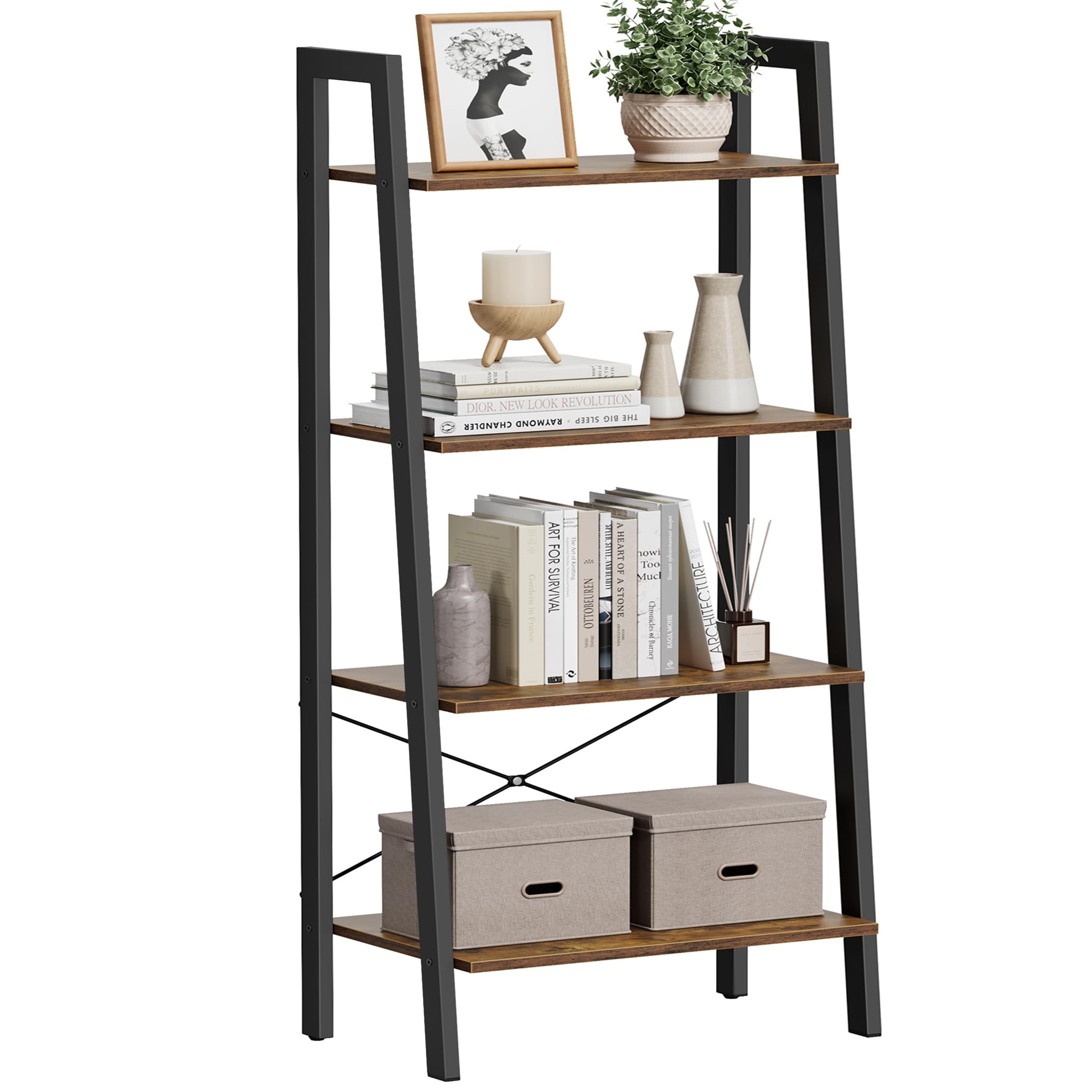
A compact 4‑tier ladder shelf with a steel frame, anti-tip kit, and sensible shelf spacing that fits small rooms.
Why I picked it: Balanced footprint, solid frame, and shelf spacing that fits taller objects.
Best for: Tight corners, entryways, and styling plants or books without taking much floor space.
An affordable, space-conscious option.
Pros
- Compact footprint
- Solid steel frame
- Shelves hold taller items
- Adjustable leveling feet
- Anti‑tip kit included
Cons
- Particleboard shelves, not solid wood
- Shorter overall height than tall units
My take
I liked how little floor space this unit consumes while still giving four usable shelves. At about 22 inches wide and 13.6 inches deep, it fit into a narrow gap beside my sofa without crowding the room.
Assembly was straightforward: numbered parts and clear illustrations made the steps quick, and the frame felt sturdy once the X-shaped braces were secured. The adjustable feet helped me level it on an uneven floor.
The shelf spacing (roughly 13 inches) is generous enough for taller decor or stacked books, but the boards are particleboard so I treat them like veneer pieces rather than solid wood. For plants and lightweight decor it worked perfectly; for very heavy bins I’d opt for a thicker shelf.
2. HOMBAZAAR 3‑Tier Bookshelf – Best Design
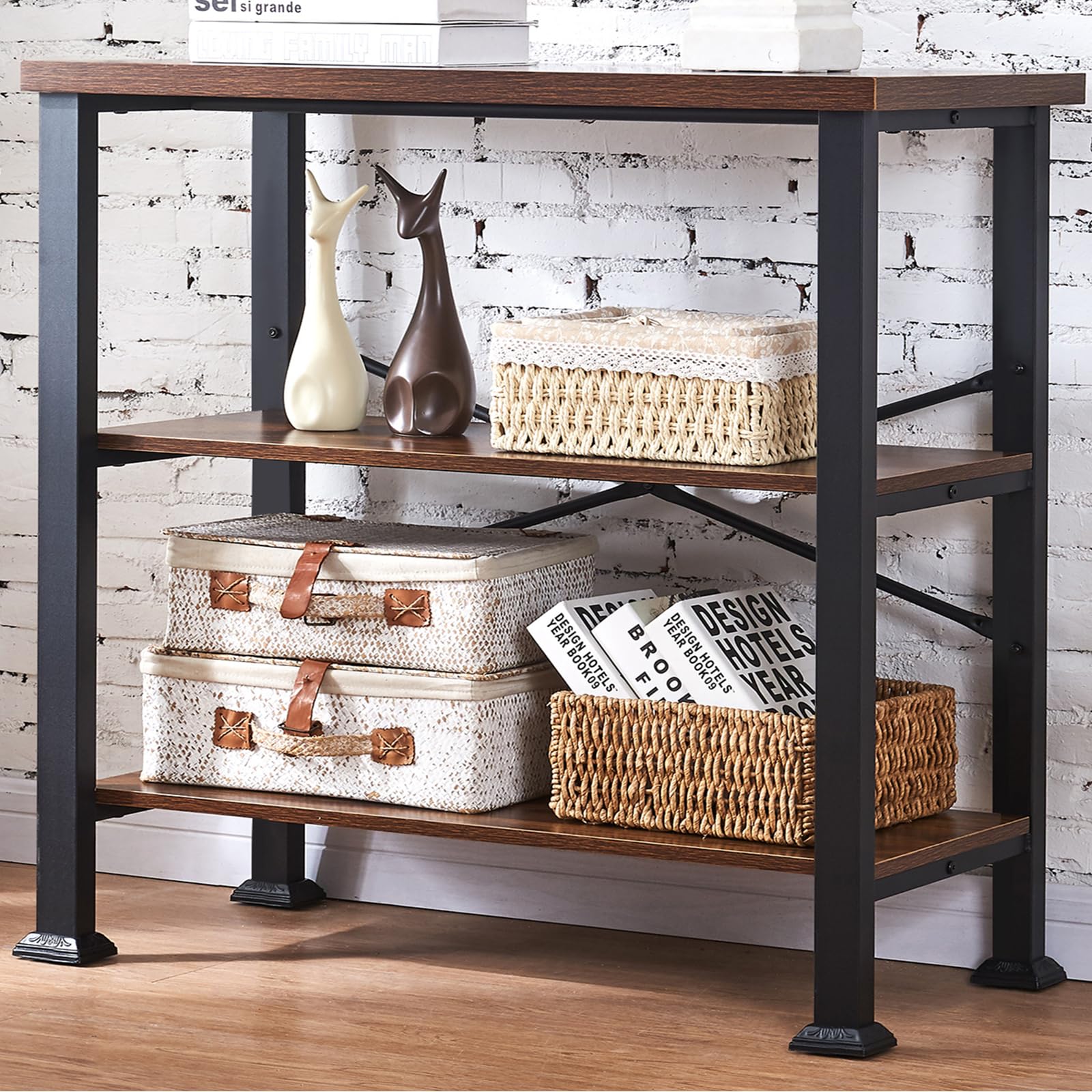
A short, elegant industrial 3‑tier shelf with deep boards and a reinforced metal frame suited to display and storage.
Why I picked it: Deep shelves and a retro-industrial look that reads like furniture rather than storage.
Best for: Entry tables, TV stands for small TVs, and decorative displays.
A mid-range small shelf with a stylish profile.
Pros
- Elegant industrial styling
- Deep, usable shelves
- Reinforced metal frame
- Adjustable feet
- Easy assembly
Cons
- MDF boards — avoid moisture
- Edges show veneer up close
My take
I chose this when I wanted something that looked intentional in a living room vignette. The carved feet and open shelving give it presence without feeling bulky.
The MDF shelves have a convincing wood-grain veneer and the frame is beefy with extra support tubes under each board. That under-shelf support makes a real difference — I loaded textbooks and craft supplies without any noticeable sag.
Instructions were clear and the included anti-tilt hardware increases confidence for use around children or pets. Close up you can tell the boards aren’t solid wood, but from a normal viewing distance it reads very well.
3. IRONCK 6‑Tier Triple‑Wide Bookshelf – Best for Big Collections
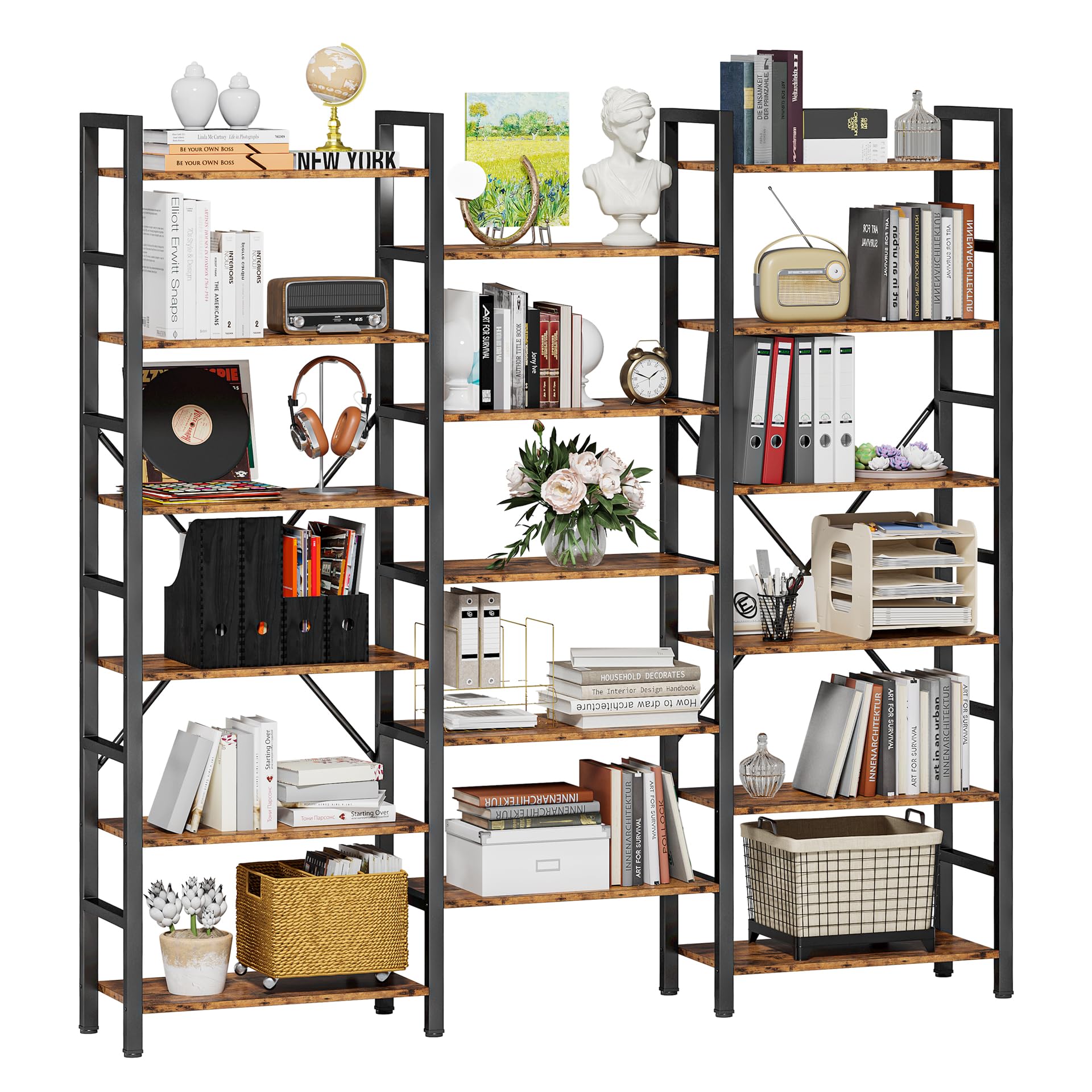
A large, triple-wide shelving system with many shelves and heavy per-shelf capacity for spanning an entire wall of storage.
Why I picked it: Massive storage footprint and high per-shelf capacity for books and collections.
Best for: Filling large wall space, media collections, and displaying lots of items.
A higher-capacity option for large rooms.
Pros
- Huge storage area
- High per‑shelf capacity
- Modular units combine well
- X‑braces for stability
- Includes tip‑over hardware
Cons
- Very heavy to move
- Longer assembly time
My take
When I needed to fill a whole wall, this triple-wide unit was the natural choice. Each shelf is rated to hold heavy loads, and the overall footprint gives you room for books, plants, and display pieces.
Assembly is doable but more involved — expect a couple of hours and a second pair of hands for positioning. The metal brackets and X-shaped back braces make the finished piece feel very rigid.
I appreciated the option to combine multiple units to create one continuous shelving run; I set two side-by-side and it transformed the wall. Because these units are heavy, I used the included tip-over attachments to secure them to the wall for peace of mind.
4. HSH 5‑Shelf Industrial Bookcase – Best Tall Shelf
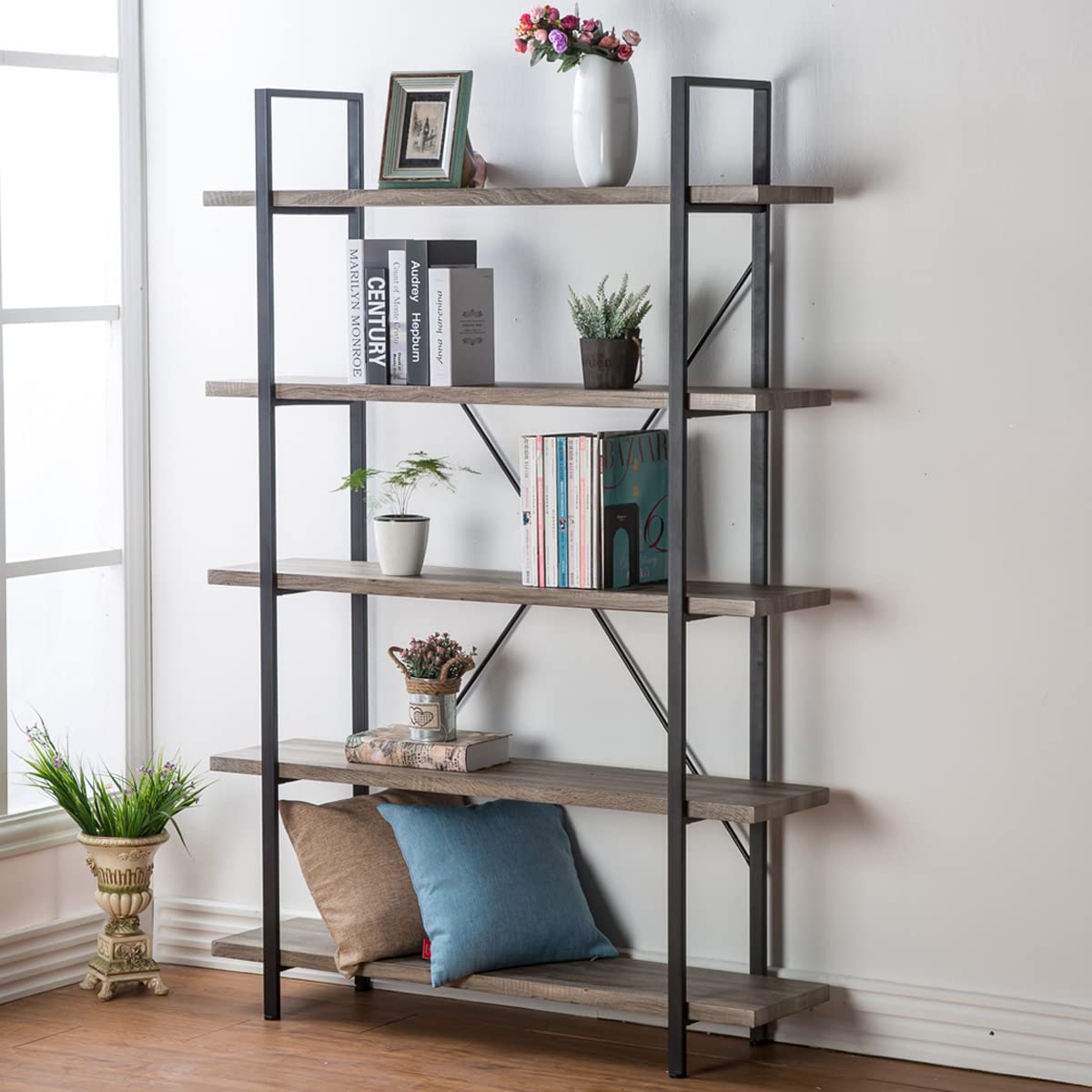
A tall five-tier etagere with clean lines, MDF shelves, and a square steel tube frame for vertical storage.
Why I picked it: Tall profile that gives a lot of vertical storage while staying visually open.
Best for: Rooms that need tall storage without solid-wall bookcases.
A value-focused tall unit.
Pros
- Tall profile with five shelves
- Clean industrial lines
- Included assembly tools
- X‑brace reinforcement
- Easy to assemble
Cons
- Not made from solid wood
- May require help to move
My take
I reached for this when I needed vertical storage that didn’t read as bulky. The five shelves are great for stacking books, baskets, and decor while keeping the room feeling open.
Assembly was one of the easier projects — parts were labeled, tools included, and the pieces lined up well. The metal cross brace and connecting bars give the finished unit a reassuring stiffness.
It isn’t solid wood — MDF with a wood-grain PVC — so I treat the shelves like veneer: avoid prolonged exposure to moisture and don’t overload the unsupported middle of a long shelf without the extra braces.
5. BON AUGURE 5‑Tier Industrial Bookcase – Best for Heavy Loads
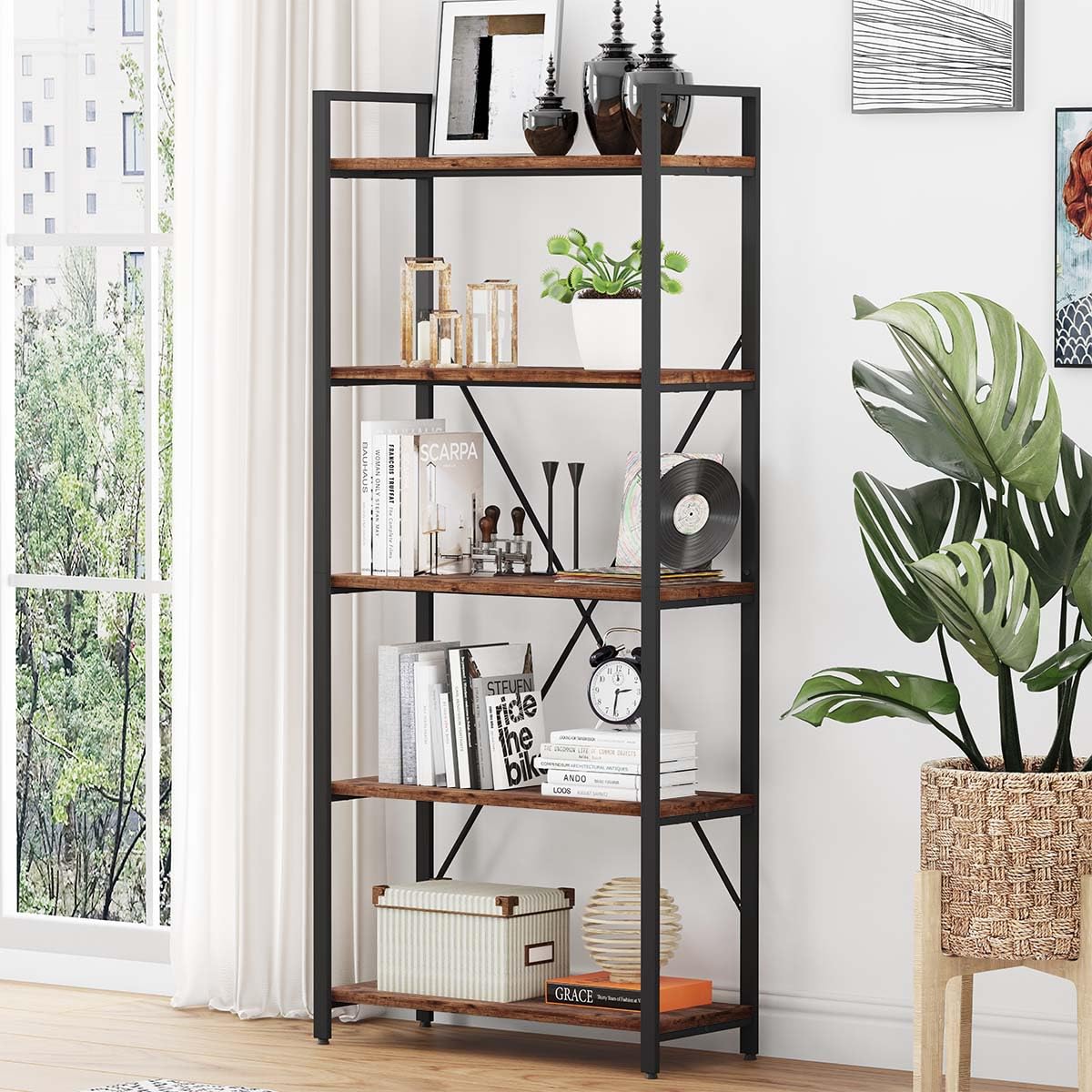
A sturdy five-tier etagere with high per-shelf capacity, adjustable feet, and FSC‑certified wood veneer for responsible sourcing.
Why I picked it: High stated weight capacity per shelf and thoughtful assembly labeling.
Best for: Heavy storage needs like hobby collections, books, or craft supplies.
A robust option for heavier loads.
Pros
- High per‑shelf weight capacity
- FSC‑certified wood veneer
- Adjustable leveling feet
- Clear, labeled hardware
- Built‑in wall‑mount holes
Cons
- Shelves are veneered MDF
- Assembly can take around an hour
My take
I assembled multiple units of this bookcase and appreciated how well labeled and organized the hardware was. The instructions were straightforward and the whole build went faster than expected.
Once assembled the shelves felt solid and I trusted them with heavier items — Lego builds, camera gear, and boxed games — without worrying about bowing. The built-in wall attachment points are a practical touch that removes the need for separate anti-tilt straps.
Appearance-wise the textured wood-grain veneer looks good in a living room. I still treat the boards as veneer rather than solid wood, but for heavy everyday use this unit has been one of the most dependable on the list.
How I Choose Shelf Ladder Bookcases
Footprint and Room Fit
I always measure the available width, depth, and vertical clearance before I buy so the shelf doesn't overpower the room or block vents and outlets.
Shallow ladder units work great beside sofas and in hallways; triple‑wide systems are best for whole-wall solutions.
- Measure width, depth, and ceiling clearance first
- Allow 2–3 inches for adjustable feet and wall attachments
- Choose shallow shelves for narrow spaces
Materials and Durability
I weigh the trade-offs between price and longevity: metal frames plus MDF or particleboard shelves are common and often very sturdy when reinforced.
If you expect heavy loads, prioritize products with extra under-shelf supports and high per-shelf weight ratings.
- Metal frame + MDF = strong, affordable
- Look for X‑braces and under-shelf support tubes
- Avoid MDF in humid locations
Capacity and Use Case
Think about what you’ll store: books and media need deeper, stronger shelves; plants and decor benefit from varied shelf spacing.
If you intend to combine units, check alignment and mounting options so they form a continuous run.
- Deep shelves for books and media
- Higher per-shelf load for collectibles
- Anti‑tip hardware is non-negotiable for tall pieces
Assembly and Placement
I plan for tools and time — small units often assemble solo in 20–45 minutes; large triple-wide pieces may take multiple hours and a helper.
Use the included leveling feet and wall anchors to improve stability on uneven floors.
- Expect longer builds for larger units
- Keep hardware organized during assembly
- Anchor tall units to the wall
Style and Finish
I pick finishes that blend with surrounding furniture; faux wood veneers can look very convincing at a distance.
If matching a specific wood tone matters, bring a sample or compare in person when possible.
- Veneers are common; inspect edges if finish matters
- Industrial black frames pair with many decors
- Choose contrasts for a layered look
Frequently Asked Questions
Are ladder bookcases stable enough for books?
Yes—when they include X‑bracing, under‑shelf supports, and anti‑tip hardware. I always anchor tall units and use adjustable feet to keep shelves level under load.
Can I use these in a small apartment?
Absolutely. I used the 4‑tier and 3‑tier styles in narrow spaces; they provide vertical storage without taking much floor area.
How much time should I set aside to assemble one?
Plan 20–45 minutes for compact units and 1–3 hours for large or triple‑wide systems. Having a second person speeds up positioning for heavy panels.
Are MDF or particleboard shelves durable?
They perform well for most uses if they have metal reinforcement underneath. I avoid placing them in humid spots and don’t overload unsupported long spans.
Final Take
I tested options for small nooks through full wall runs so you can pick the form factor that matches your space and load needs.
For a compact all-rounder I favor the VASAGLE; for serious capacity the IRONCK is the workhorse; and the BON AUGURE is my pick when I need high per-shelf strength.
If you measure carefully, anchor tall units, and match materials to expected use, any of these choices will give you reliable ladder-style shelving.
