
I tested clear stackable boxes, fabric multi-slot bins, large cabinets, and shoe-cover dispensers to find the best ways to tame shoe clutter in closets, entryways, and during open houses.
I spend a lot of time organizing closets and staging homes, so I live and breathe shoe storage. In this roundup I compared clear stackable boxes, fabric compartment organizers, multi-cubby cabinets, and shoe-cover dispensers to see which solutions actually make daily life neater and faster.
I focused on build quality, how easy each system is to access, whether shoes fit comfortably, and where each product belongs in the home. The picks below reflect what I reached for again and again during real closet and entryway projects.
If you want single-pair visibility and modular stacking, I lean toward clear plastic boxes. For maximum pair density in tight closets, fabric multi-slot organizers work best. If you need a high-capacity furniture-style solution, the multi-cubby cabinet is worth the space. And for hosting or open houses, a shoe-cover dispenser keeps floors clean without awkward conversations.
1. 7 Code Clear Stackable Shoe Boxes (6-Pack) – Best Overall
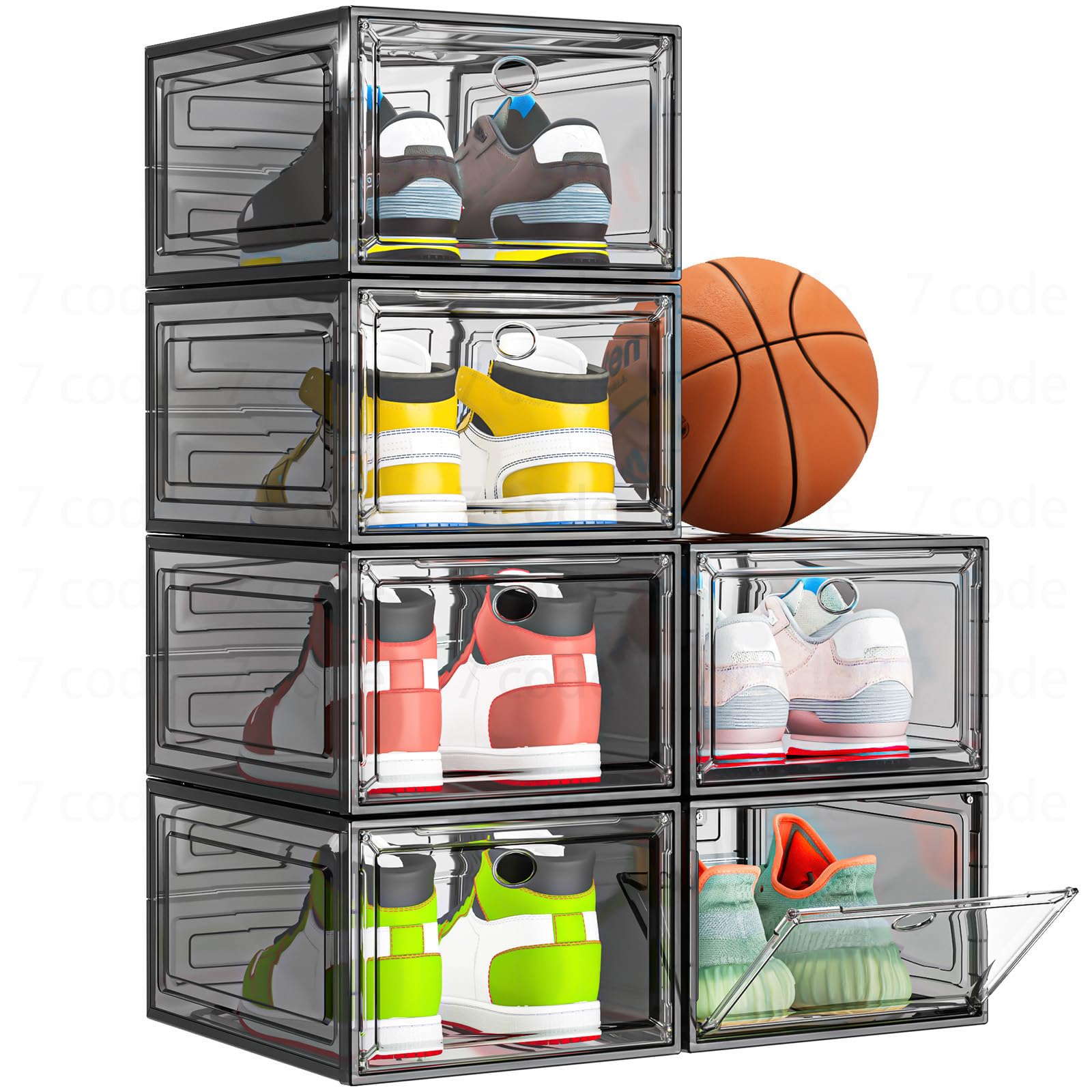
I found these six clear, thick plastic boxes hit the sweet spot between sturdiness, visibility, and easy access thanks to a front magnetic door and stable pegs for stacking.
Why I picked it: Solid plastic walls, front-drop magnetic door, and true stackability made daily access painless.
Best for: People who want one-pair-per-box visibility and tidy stacked closets.
A midrange option that balances durability and modular storage.
Pros
- Thicker, sturdier plastic than cheap boxes
- Front magnetic door for quick access
- Stacking pegs keep columns steady
- Clear panels make shoes visible
- Accommodates sneakers and many heels
Cons
- One set had a damaged panel
- Slightly bulky for very small closets
My take
I assembled these quickly and appreciated how the magnetic front opens smoothly so I can grab a pair without unstacking anything. The boxes are noticeably thicker than the flimsy alternatives I’ve used, and I could stack multiple columns without wobble when I used the included pegs.
My sneakers fit side-by-side in the larger footprint, which keeps them from getting squashed. The clear front makes outfit planning faster since I can see colors and styles at a glance.
A few boxes I handled had minor factory blemishes, so I recommend inspecting each panel during setup. Overall, these are my go-to when I want visibility plus a solid, modular stack.
2. LUVHOMEE 16-Pair Fabric Shoe Organizer – Best for Maximum Pairs
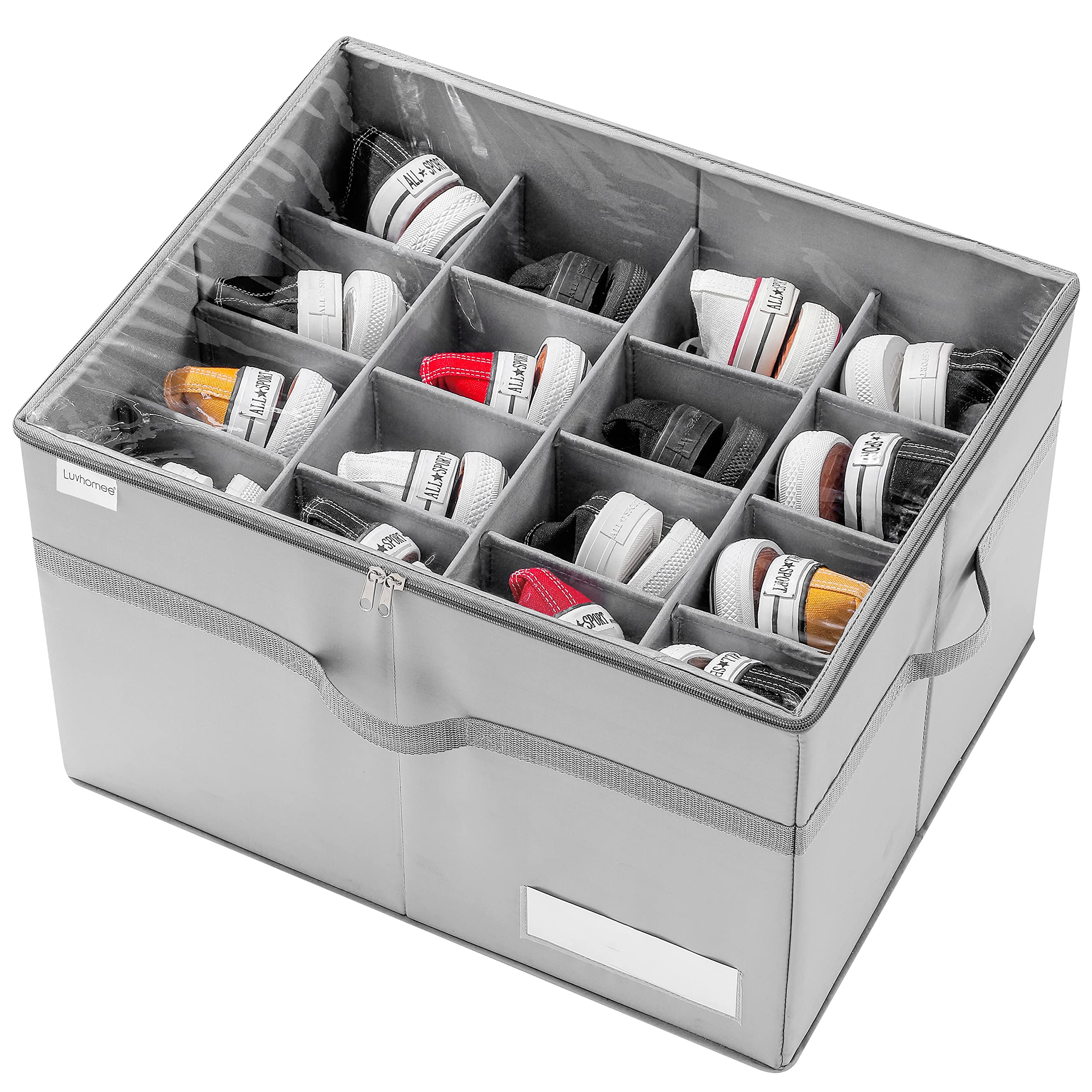
I used this fabric organizer when I needed to stash a lot of shoes in a closet shelf — its 16 compartments make it a compact, foldable solution.
Why I picked it: Holds many pairs in a small footprint with adjustable slots and a dust-cover zipper.
Best for: Closet shelves and dorms where pair density matters.
An affordable, space-saving alternative to plastic boxes.
Pros
- Holds up to 16 pairs
- Foldable when not in use
- Adjustable compartments for boots
- Zippered cover keeps out dust
- Side handles for moving
Cons
- Compartments can be small for wedges
- Not as rigid as plastic bins
My take
I set this up in a closet shelf and was impressed by how many shoes it swallowed without taking over floor space. The card-slot dividers let me open up larger compartments for boots or combine slots for bigger sneakers.
The clear zipper panel gives me quick visual access while keeping dust out, and the reinforced handles make it easy to slide the unit in and out of a shelf.
It’s not rock-solid like an acrylic box, so I avoid using it where it would be dragged across the floor constantly. For maximizing pairs on a shelf, though, this is one of the most efficient fabric organizers I’ve used.
3. Attelite XL Clear Stackable Shoe Boxes (12-Pack) – Best Large Clear Boxes
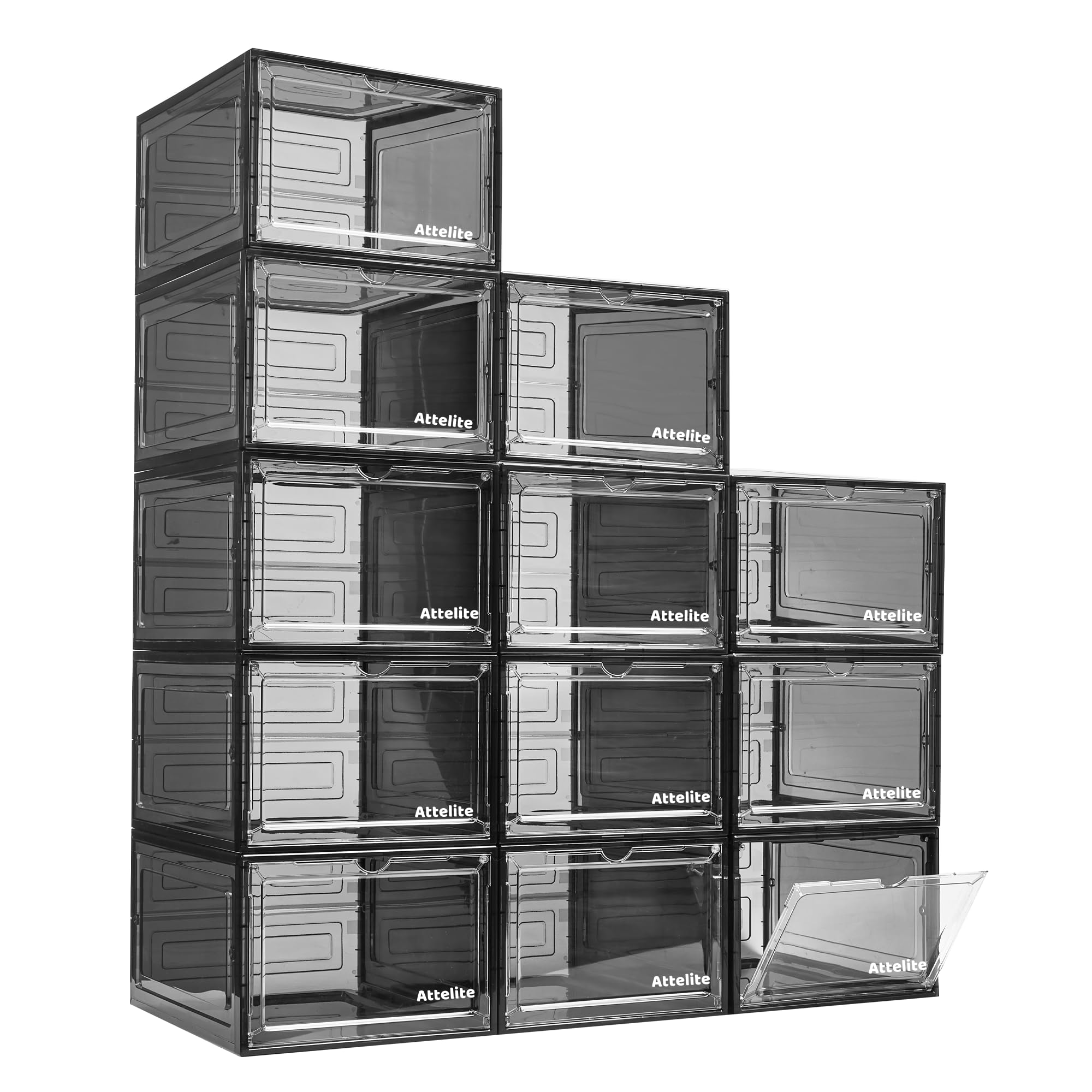
I turned to this 12-pack when I wanted bigger clear boxes—these are designed to fit larger sneakers and offer stronger magnetic doors and interlocking grooves for stacking.
Why I picked it: Larger internal dimensions and double-magnet doors for secure closure on bulkier shoes.
Best for: Collectors or anyone storing large-size sneakers and high-tops.
A higher-capacity set that trades up for size and clarity.
Pros
- Upsized interior fits larger sneakers
- Double-magnet door seals tightly
- Groove stacking avoids loose studs
- Clear walls show contents
Cons
- Side connection pieces can be fiddly
- Heavier set to move when full
My take
I appreciated that these boxes are larger than standard clear bins—my high-top sneakers and bulky trainers fit without forcing them in. The double magnetic closure felt more secure than single magnets I’ve tried elsewhere.
Stacking felt solid thanks to the concave/convex groove design. I did find the side connectors less reliable; when I pushed columns together the lateral clips sometimes gave me trouble, so I rely on vertical stacking more than side snaps.
Overall, I reached for this set when I needed one-per-pair storage for larger shoes and a neat, uniform closet aesthetic.
4. Life Charge Foldable Shoe Cover Box – Best for Open Houses
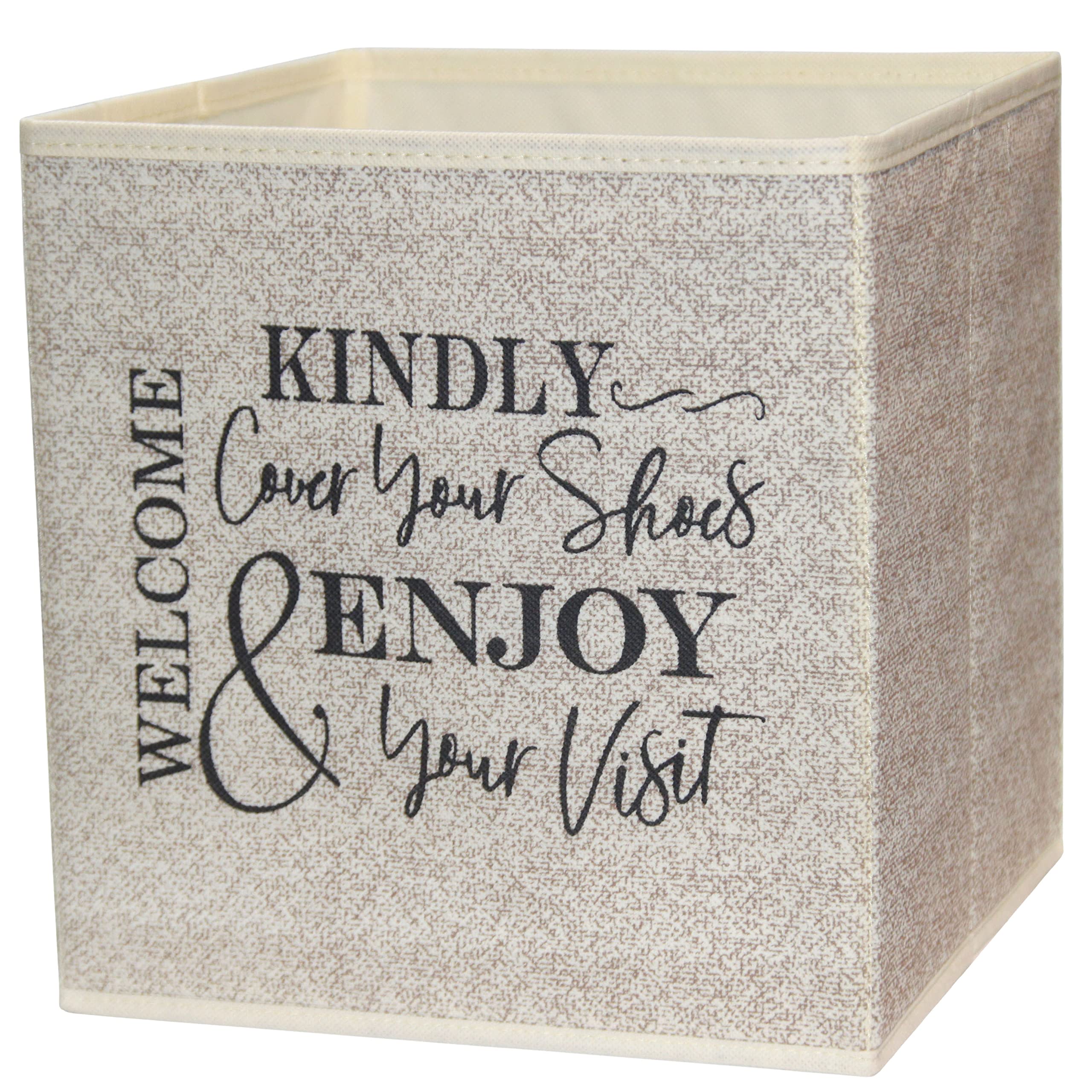
I keep this attractive, collapsible shoe-cover bin near entryways and during showings — it dispenses booties and sends a polite prompt to cover shoes without awkwardness.
Why I picked it: Designed to hold and dispense disposable covers with a professional look for hosting and showings.
Best for: Realtors, hosts, or anyone who routinely offers shoe covers.
A tasteful and practical hosting accessory.
Pros
- Holds 200+ disposable covers
- Collapses flat for storage
- Designed with an instructional look
- Internal lining adds stability
Cons
- A bit larger than I expected
- Disposable covers sold separately
My take
I used this at multiple open houses and liked how it looked under the entry table—visitors intuitively used the covers without me saying a word. The box feels more upscale than a simple basket, which helps when I want a professional presentation.
It folds flat for storage when not in use, and the internal insert gives it structure so it doesn’t flop over when people reach in.
If you only need something tiny, this runs large; for staging and frequent hosting it’s the most polished shoe-cover solution I relied on.
5. 24-Cell Shoe Storage Boxes (2-Pack) – Best Fit for Ottomans
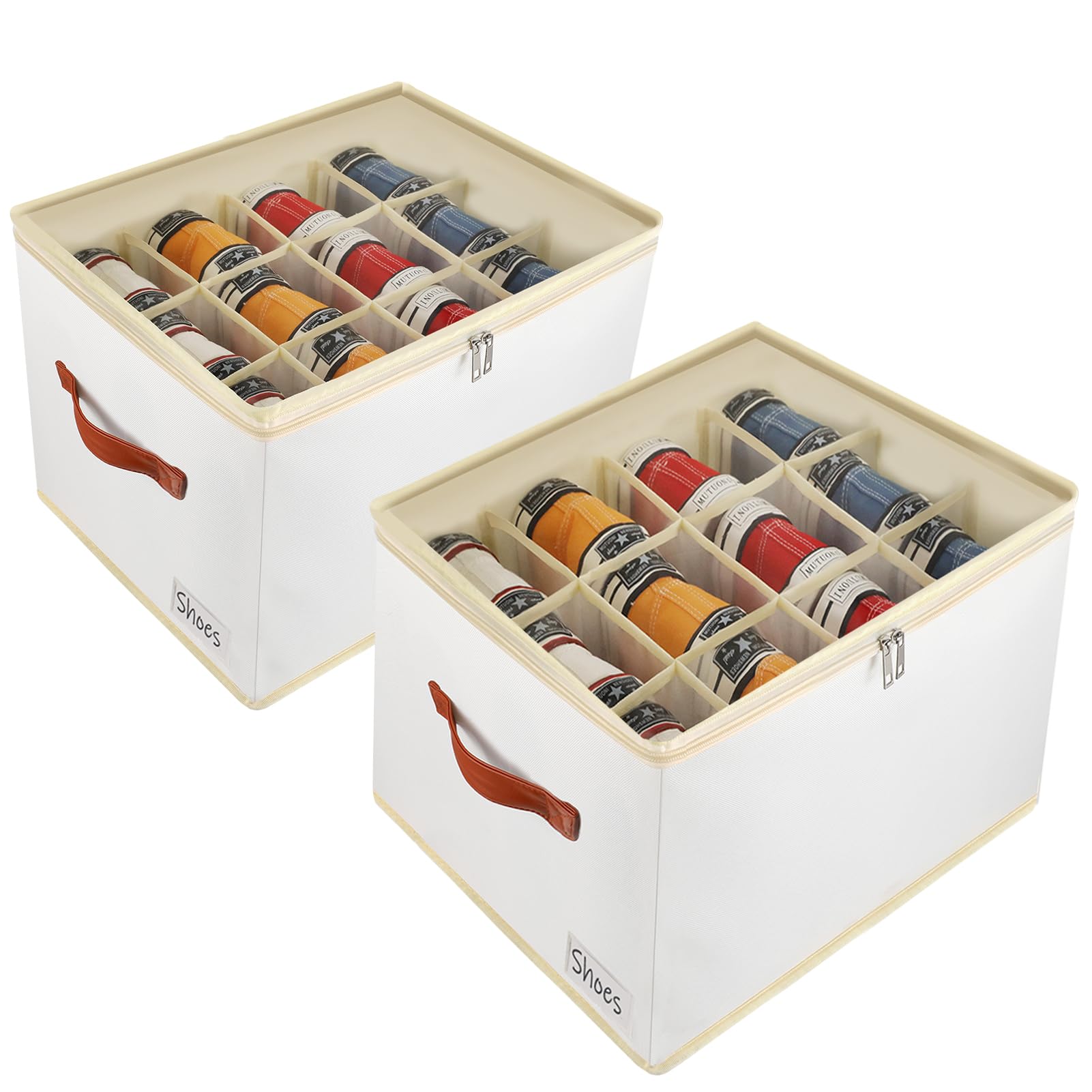
I found these two 24-cell boxes ideal for storing shoes inside ottoman benches and under beds—flexible nylon dividers and a clear lid maximize capacity without assembly fuss.
Why I picked it: Dimensions designed to tuck into ottomans and flexible dividers for varied shoe sizes.
Best for: Ottoman storage and compact wardrobe cubbies.
A space-smart, practical choice for hidden storage.
Pros
- Perfect ottoman-friendly dimensions
- Flexible nylon dividers fit varied shoes
- Transparent lid for quick ID
- No-tool setup and leather handles
Cons
- Slots small for many men's shoes
- Bottom support can be tricky to insert
My take
I slid one of these into my ottoman and it completely eliminated the pile of shoeboxes that used to live there. The clear lid means I don’t have to open every container to find a pair, and the leather-style handles make movement easy.
The nylon mesh dividers are forgiving—flats and sandals fit two-to-a-slot at times, while bulkier pumps may need one slot each. I did wrestle a little with the supporting bottom panel during initial setup, but once in place the box feels quite sturdy.
If you store mostly women’s shoes or want an ottoman solution, these deliver efficient hidden storage.
6. Aokeyee Foldable Shoe Organizer (2-Pack) – Best Adjustable Divider Option
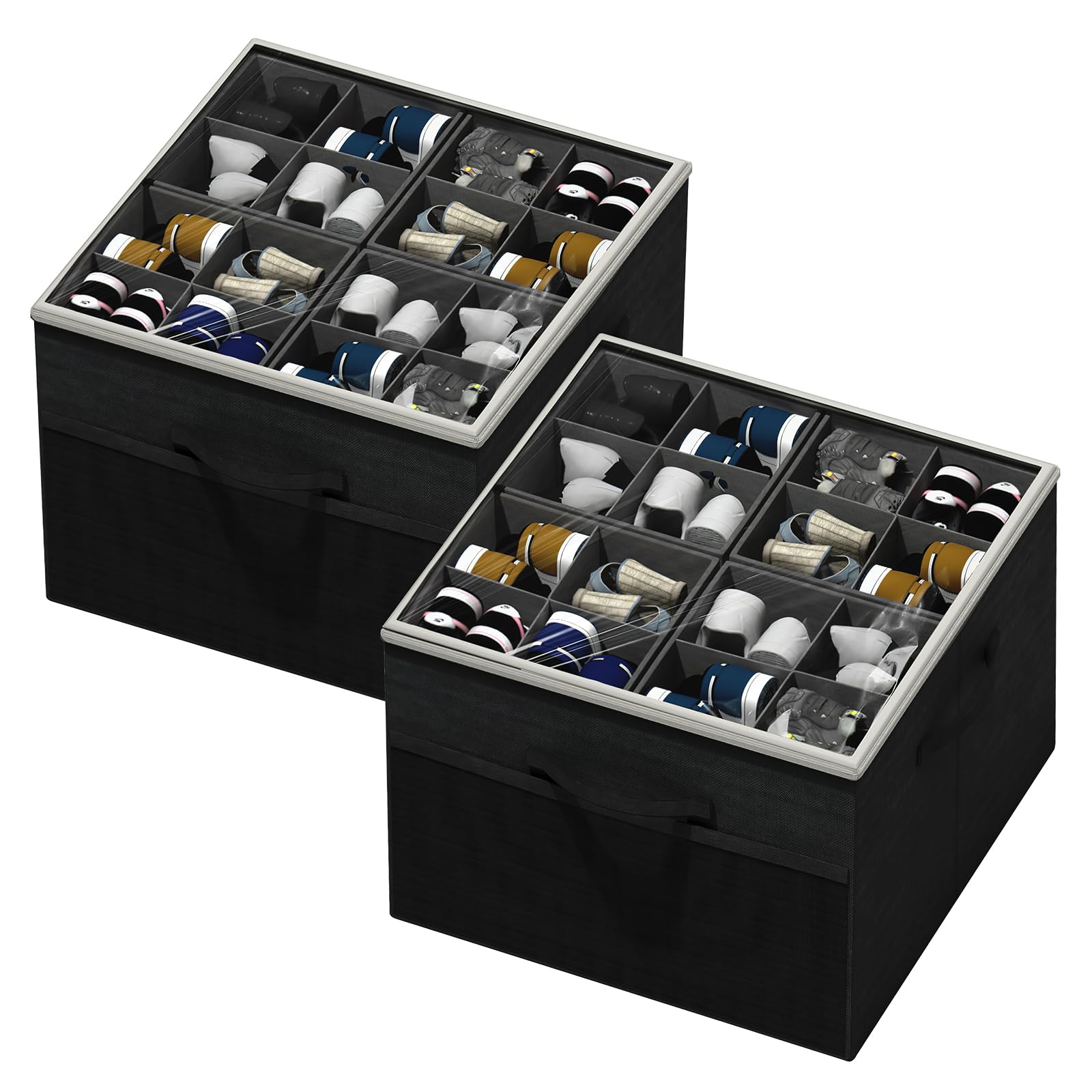
I relied on this pair of foldable organizers when I needed flexibility — adjustable dividers let me customize compartments for sandals, sneakers, or folded clothing.
Why I picked it: Customizable dividers and a clear top make it versatile for seasonal swaps and compact storage.
Best for: Families and seasonal storage where compartment sizes change.
A midpriced, flexible storage option that folds away.
Pros
- Adjustable dividers for mixed footwear
- Clear cover keeps dust out
- Sturdy zipper and PP boards
- Foldable for off-season storage
Cons
- Not ideal for very bulky shoes
- Best for lighter footwear
My take
I liked how quickly I could change compartment sizes to accommodate boots, sneakers, or sandals. The clear zipped top makes a big difference in keeping dust away while still allowing me to peek inside.
These are sturdier than typical fabric bins thanks to PP boards in the sides, and they fold flat when I rotate seasonal items out.
For heavy, bulky footwear I reach for a rigid box instead, but for everyday closet organization this adjustable option is one of the most practical I used.
7. Opret Foldable Shoe Cover Dispenser – Best Budget Shoe Cover Bin
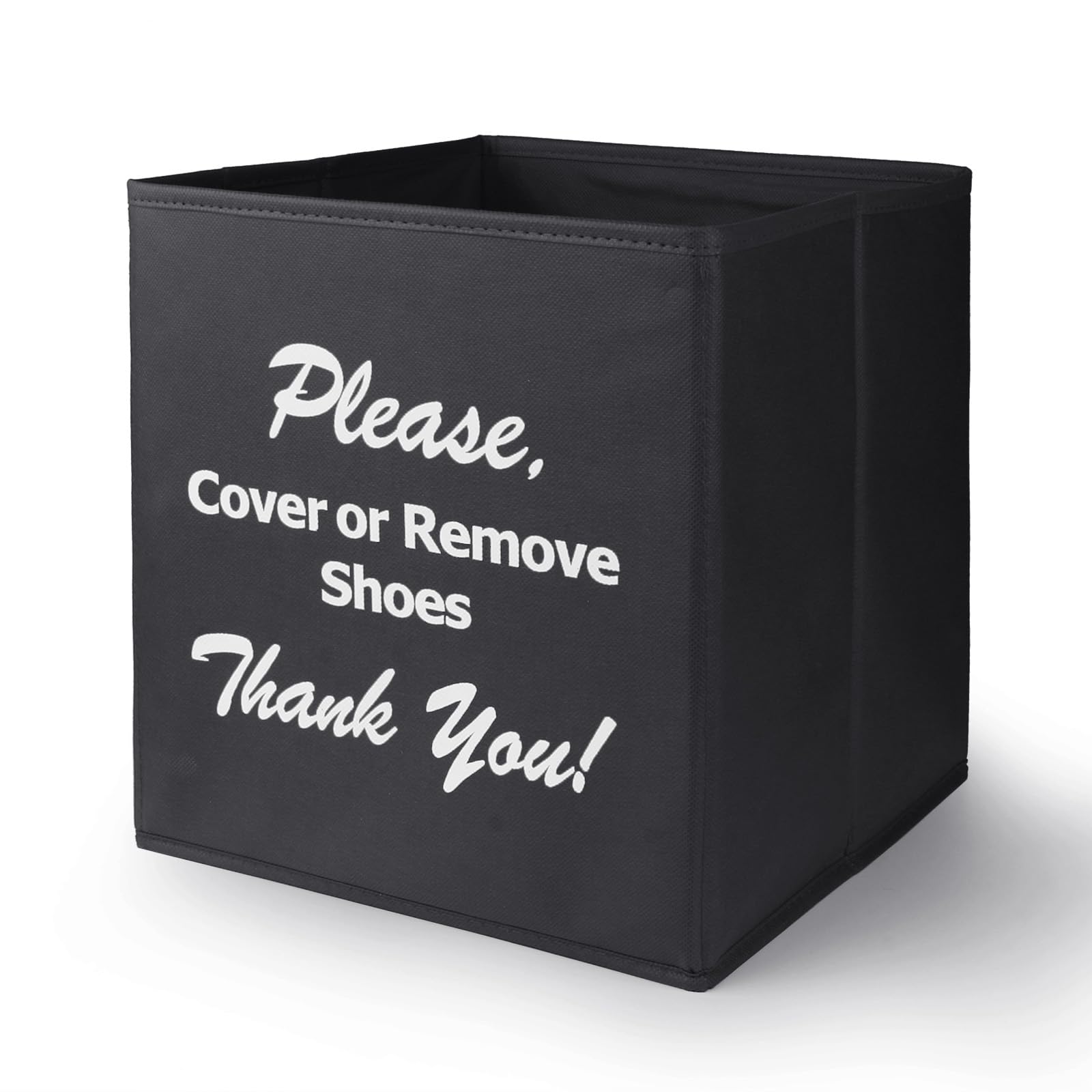
I like this canvas-style dispenser for everyday hands-off reminders to cover shoes; it’s durable, foldable, and sized to hold a large supply of disposable covers.
Why I picked it: Canvas construction and clear printed instructions make it durable and self-explanatory.
Best for: Everyday host use and real estate open houses on a budget.
A budget-friendly, reusable host accessory.
Pros
- Canvas material feels durable
- Holds 200+ disposable covers
- Folds flat for storage
- Clear printed message prompts use
Cons
- Lid isn’t attached for one-handed use
- Covers not included
My take
I keep one of these by my entry and it’s a practical, no-nonsense solution. The canvas holds up better than thin non-woven fabric I’ve tried, and the reinforced bottom prevents tipping.
The printed message is polite but firm, so guests usually use a cover without prompting. If you want a one-piece dispenser with an attached lid, this model isn’t it, but I found it the best budget option for frequent use.
8. ANTBOX 20-Grid Magnetic Door Shoe Cabinet – Best High-Capacity Cabinet
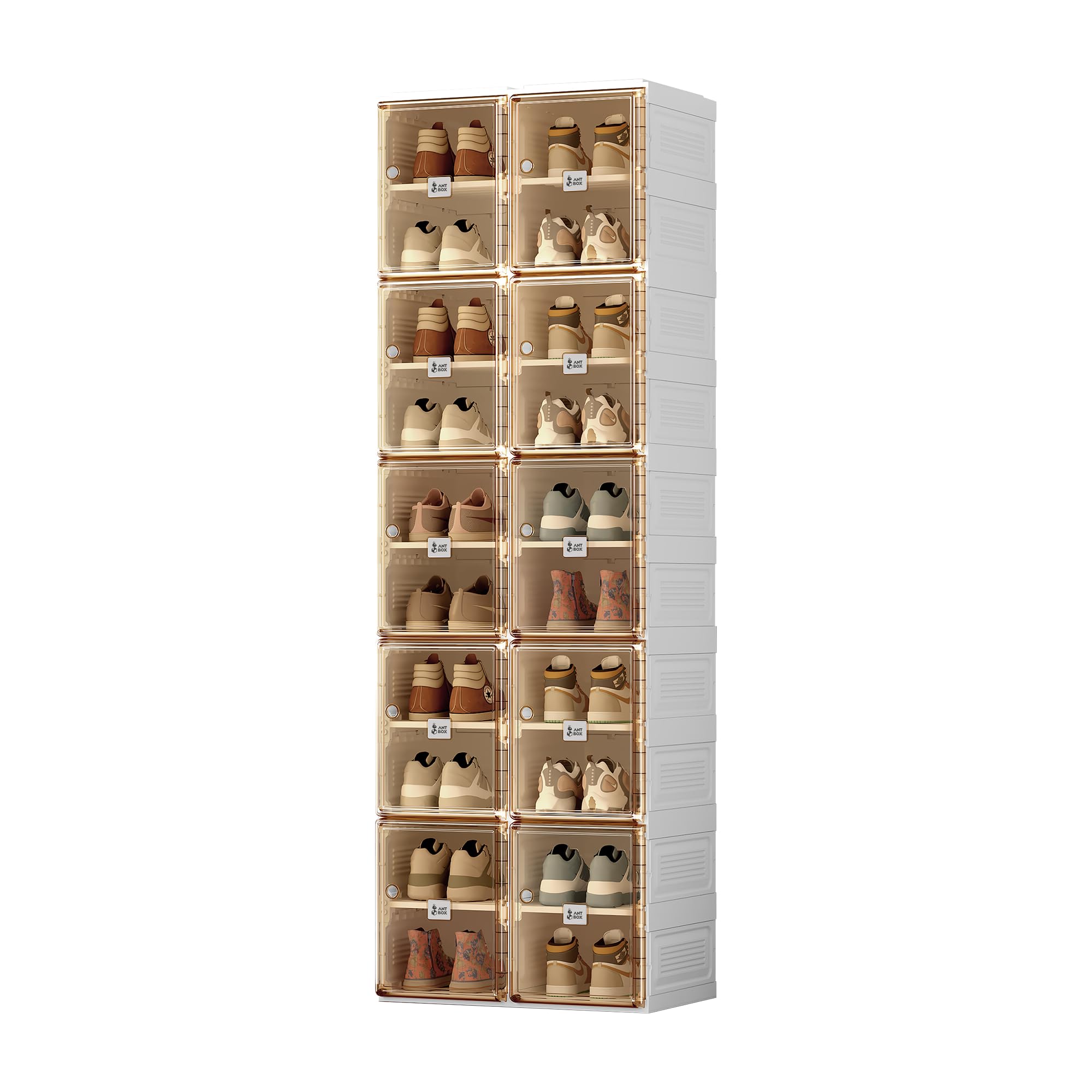
I used this folding cabinet when I needed a vertical, furniture-like solution that cleans up floors and stores a large number of pairs with magnetic doors and anti-tip hardware.
Why I picked it: High pair capacity, magnetic doors, and quick installation for a closet or garage wall.
Best for: Homes that want a visible, high-capacity shoe cabinet.
A larger investment for furniture-style, high-capacity storage.
Pros
- Holds many pairs vertically
- Magnetic doors keep dust out
- Quick one-piece install
- Anti-tip hardware included
Cons
- More expensive than simple bins
- Thin plastic sides visible if you pick tinted doors
My take
I assembled this in under 15 minutes and appreciated how many pairs it freed from the floor. The magnetic doors look clean and protect shoes from dust while still allowing quick access.
Smaller shoes can even be doubled up in a cubby, which maximizes capacity. It’s not cheap, but for a closet or garage where you want a furniture-like solution, this cabinet made the biggest immediate visual impact.
If budget is tight I’d choose individual clear boxes, but for a polished, large-capacity installation this was my preferred cabinet.
How I Choose Shoe Box Storage
Decide what you need to store
I start by taking inventory: bulky sneakers and boots need larger boxes, while flats and sandals can be doubled in smaller compartments.
If I’m organizing an entryway for hosting, I prioritize dispensers and quick-access bins rather than deep closet boxes.
- Single-pair clear boxes for display and collectors
- Fabric multi-slot organizers for maximum pairs on a shelf
- Cabinet-style units for furniture-like storage and capacity
- Shoe-cover dispensers for hosting and open houses
Measure before you buy
I always measure the shelf, ottoman, or space where the unit will live. A box that fits an ottoman or shelf can make a huge difference in usable space.
Don’t forget clearance for lids or doors—front drop doors and zip covers need room to open.
- Check internal dimensions for wide sneakers
- Account for door clearance in narrow closets
- Measure stacked height if you plan columns
Materials and durability to prioritize
When durability matters I choose thick PP or ABS-framed clear boxes. For lightweight seasonal storage, well-made fabric organizers are fine.
For cabinets, look for anti-tip hardware and solid frame connection methods; magnetic doors are a good convenience feature I rely on.
- Rigid plastic for long-term, frequent access
- Fabric and PP boards for foldable solutions
- Magnetic closures for easy single-handed access
- Anti-tip hardware for tall cabinets
Think about visibility and access
If I want to see shoes at a glance, clear fronts or lids are non-negotiable. Zips or magnetic doors protect from dust while keeping access fast.
For staging or hosting, dispensers with printed prompts reduce awkwardness and keep floors clean.
- Clear fronts for quick visual lookup
- Front-drop doors for single-pair access
- Zipped covers for shelf-stored fabric organizers
Frequently Asked Questions
Will clear stackable boxes fit high-top sneakers?
From testing, many of the larger clear boxes fit high-tops comfortably; I recommend checking the internal height listed and choosing XL or "upgrade" sizes when you have tall sneakers.
Can I stack fabric multi-slot organizers?
I avoid stacking fabric organizers when loaded because they don’t have the rigid interlocks of plastic boxes. They fold flat nicely when empty, which is their main advantage.
Are shoe-cover dispenser boxes reusable?
Yes—most dispensers I used are reusable and fold flat when empty. You will need to supply disposable booties separately.
How do I prevent tall cabinets from tipping?
I always anchor tall cabinets or use the included anti-tip hardware; even a modest push while removing an upper shoe can destabilize an unanchored unit.
Final Take
I organize differently depending on the goal: clear stackable boxes for display and shoe collectors; fabric multi-slot bins when I need the most pairs in a tight shelf; cabinets for a polished, high-capacity look; and shoe-cover dispensers for hosting or open houses.
Pick the type that matches your space, measure first, and prioritize either visibility or pair density. I’ve relied on the picks here across staging and closet projects, and each one solved a specific storage problem I face regularly.